6 Of The Best Headphones For Mowing The Lawn In 2026
Last Updated on May 5, 2026 by Duncan
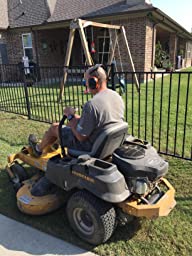
A standard gas lawnmower produces between 85 and 95 decibels of noise — roughly the same level as a chainsaw at close range.
The U.S. Occupational Safety and Health Administration (OSHA) requires hearing protection for any workplace noise exposure above 85 dB over an 8-hour period.
In other words, mowing a large lawn without ear protection isn’t just uncomfortable — it’s a genuine hearing risk.
The good news: the right pair of headphones solves the problem and lets you enjoy music, podcasts, or the radio at the same time. After years of testing headphones while mowing, here’s what actually works.
Do Noise-Cancelling Headphones Work for Lawn Mowing?
Yes — noise-cancelling and noise-reducing headphones work well for lawn mowing, and they’re among the best hearing protection options available for the task.
The common concern is that blocking too much noise means you won’t hear the mower if something goes wrong. In practice, this isn’t an issue.
The most dramatic sound change when a lawnmower sputters or chokes on grass is perceptible even through good hearing protection — the pitch and rhythm of the engine shift noticeably.
You’ll hear it. What you won’t hear is the sustained roar that causes hearing fatigue and long-term damage. That’s exactly the trade-off you want.
You can also hear someone calling to you clearly enough to stop and respond — the headphones reduce high-amplitude sustained noise without eliminating all sound awareness.
Earbuds or Over-Ear Headphones for Mowing?
My recommendation: over-ear headphones. Here’s the honest breakdown of both options:
| Feature | Over-Ear Headphones | Earbuds / In-Ear |
|---|---|---|
| Noise isolation | Excellent — full ear cup seal | Moderate — depends heavily on tip fit |
| Heat / sweat | Can get warm in hot weather | Minimal heat buildup |
| Stability | Very stable — won’t fall out | Can work loose during movement |
| NRR rating | Typically 22–31 dB | Typically 22–27 dB |
| Hat / glasses compatibility | Can conflict with hat brim | Works well with glasses and hats |
| Best for | Most homeowners; all lawn sizes | Those who wear hats or glasses; prefer lightweight |
Over-ear headphones fully encircle the ear, creating a seal that blocks substantially more ambient noise than earbuds.
If heat is a concern, look for models with breathable mesh or perforated ear cushions — they make a real difference on a hot afternoon.
Should You Use Bluetooth Headphones for Mowing?
Yes, and strongly so. A wired connection is a liability when mowing: the cord snags on clothing, gets caught in grass, and tugs earbuds out of your ears mid-pass.
Bluetooth headphones eliminate all of that. You get full freedom of movement and can leave your phone in your pocket or clipped to your belt.
I’ve been a radio listener since I was a teenager, and mowing with Bluetooth headphones connected to a radio app on my phone has made the hours in the yard genuinely enjoyable. For long mowing sessions, Bluetooth is the only practical choice.
One practical note: check the Bluetooth range before buying. Most quality headphones maintain a reliable connection at 30–33 feet (10 meters).
If your phone is inside while you mow a nearby section, confirm the model you’re buying won’t cut out at that distance.
Best Headphones for Mowing the Lawn: Top Picks
| Headphones | Type | NRR | Best For | Verdict |
|---|---|---|---|---|
| 3M WorkTunes Bluetooth | Over-ear / Bluetooth | 24 dB | Most homeowners | ⭐ Top Pick |
| ProCase Safety Ear Muffs | Over-ear / passive | Not specified | Budget buyers | ✅ Best Budget |
| Bose QC 45 | Over-ear / ANC / BT | Premium ANC | Audio quality + protection | ✅ Best Sound |
| Sony WH-1000XM2 | Over-ear / ANC / BT | Premium ANC | Large lawns, long sessions | ✅ Best Battery Life |
| Bluetooth Radio Ear Muffs | Over-ear / BT + FM radio | 29 dB | Radio listeners | ✅ Best NRR |
| ISOtunes Pro Bluetooth | Earplug / BT | 27 dB | Glasses/hat wearers | ✅ Best Earplug |
1. 3M WorkTunes Bluetooth Hearing Protector — Top Pick
The 3M WorkTunes are the headphones I personally reach for most often when mowing, and have been for years. They were designed specifically for outdoor work — not repurposed consumer headphones — and that focus shows in every aspect of how they perform.
Check Latest Price on Amazon →
Read our full 3M WorkTunes Bluetooth review for a deep dive into this model.
Noise Protection
With a Noise Reduction Rating (NRR) of 24 dB, the WorkTunes bring a 90 dB lawnmower down to approximately 79.5 dB at your ear — well within the safe exposure range. That’s a meaningful reduction that lets you mow for hours without fatigue or risk.
Audio and Connectivity
Bluetooth pairs quickly to your phone, tablet, or any Bluetooth-enabled device. The high-fidelity speakers produce clear, enjoyable sound — well above what you’d expect from hearing protection earmuffs.
I use mine connected to a radio app, and the audio quality is genuinely good. The cord and antenna-free design means no cable to snag on clothing or equipment.
Comfort and Build
At 10.7 ounces, the WorkTunes are among the lightest purpose-built mowing headphones available.
The soft ear cushions and flexible headband distribute pressure well — I wear mine for the full 5+ hours it takes to mow my lawn and rarely notice them.
The high-quality plastic housing is built to take knocks, UV exposure, and the occasional drop without cracking.
I’ve owned two pairs over the years. The first lasted about four years before the ear cushions compressed enough to need replacing — a common wear point on any over-ear headphone.
The second pair is still going strong. The only thing I regularly replace is the ear cushion foam, which is cheap and easy to find.
What I Don’t Like
Volume control is only available from your connected device — there’s no onboard volume button on the headphones themselves. This is a genuine inconvenience when your phone is in your pocket.
The battery also drains faster than I’d like: in my use, it lasts under two hours on Bluetooth, which means I either charge between mowing sessions or carry a small power bank. The batteries do recharge quickly, which softens this complaint somewhat.
| ✅ Pros | ❌ Cons |
|---|---|
| Purpose-built for outdoor work | No onboard volume control |
| NRR 24 dB — solid noise protection | Battery drains in under 2 hours on Bluetooth |
| Lightweight at 10.7 oz | Not ideal for very large lawns without recharging |
| Comfortable for multi-hour sessions | Ear cushions compress over time (replaceable) |
→ Check Latest Price on Amazon
2. ProCase Noise Reduction Safety Ear Muffs — Best Budget Pick
I’ll be honest: I bought the ProCase earmuffs expecting very little. They’re among the lowest-priced hearing protection options I’ve come across. What surprised me was how capable they are.
Check Latest Price on Amazon →
The ear cups — though not genuine leather — create a solid sound seal that blocks out the majority of lawnmower noise. For someone who just wants basic, reliable hearing protection without music or radio, the ProCase earmuffs do exactly what they need to do.
The ergonomic headband has ample soft padding, and together with 360-degree rotatable ear cups, the fit adjusts to virtually any head size.
I was genuinely comfortable wearing them for over an hour — more than I expected at this price point.
If you’re new to hearing protection for mowing and want to try it without a significant investment, start here. The only upgrade you’ll want eventually is Bluetooth connectivity — and that’s a separate buying decision, not a flaw in these muffs.
→ Check Latest Price on Amazon
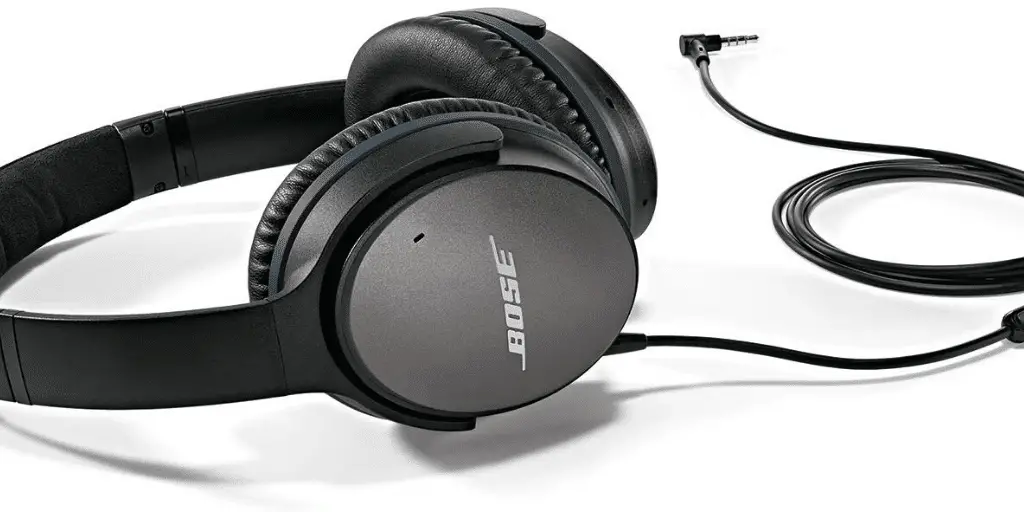
3. Bose QuietComfort 45 — Best for Audio Quality
The Bose QC 45 builds on the legacy of the QC 35 — Bose’s bestselling headphone for years — with refined active noise cancellation backed by over 50 years of acoustic research. These are premium consumer headphones first and foremost, but they perform excellently for lawn mowing.
Check Latest Price on Amazon →
Read our dedicated Bose QuietComfort noise-cancelling headphones review for a full breakdown of the QC line.
Noise Cancellation
Among the top five best active noise-canceling headphones I’ve personally used. They don’t have a published NRR rating like purpose-built ear protection, but the ANC performance is excellent — lawnmower roar becomes a distant hum.
Build Quality and Comfort
Lighter than most Sony models, with a quality plastic housing that feels solid without feeling heavy. If you’re used to heavier headphones, the lightness might initially seem like a quality concern — it isn’t.
For long mowing sessions, the lower weight is an advantage. The ear padding is well-made and comfortable from the first use; I’ve never needed a break-in period with Bose headphones the way I have with some other brands.
Controls
One of my favorite things about the QC 45: proper physical clicky buttons. No touch-sensitive panels that misfire when you’re adjusting your hat or wiping sweat off your hand. For outdoor use, physical controls are dramatically more reliable than touch surfaces.
Verdict
If your primary goal is to block mower noise and listen to music at great quality, the QC 45 delivers.
If you want earth-shaking bass, look elsewhere — the sound profile is smooth and detailed rather than bass-heavy. For long sessions of podcasts, radio, or balanced music, it’s excellent.
The absence of an auto-pause feature (music doesn’t stop when you lift the headphones) is a minor annoyance but not a deal-breaker for mowing use.
| ✅ Pros | ❌ Cons |
|---|---|
| Excellent active noise cancellation | No auto-pause when headphones are removed |
| Multi-device Bluetooth pairing | Bass is smooth rather than powerful |
| Reliable physical clicky buttons | Premium price point |
| Lightweight and comfortable from first use | No published NRR rating |
→ Check Latest Price on Amazon
4. Sony WH-1000XM2 — Best for Long Mowing Sessions
Let me be direct upfront: if you want headphones that completely drown out lawnmower noise without any music playing, the Sony WH-1000XM2 is not the answer.
The passive isolation without ANC engaged is only moderate. But if you want a capable pair of active noise-canceling headphones for mowing while listening to audio, the XM2 has features no other headphone on this list can match.
Check Latest Price on Amazon →
Smart Noise Cancellation
The XM2 features a physical atmospheric pressure optimizer button on the left ear cup that adjusts the ANC intensity based on the seal around your ear and even your current altitude.
Pair it with the Sony app and you can fine-tune the noise-canceling profile for your specific environment. For mowing, I set ANC to maximum and leave it there.
Touch Controls
Volume, track control, and pause are all managed by swiping the right ear cup. This takes getting used to — and I’ll be honest, I make accidental swipes when adjusting the headphones during mowing more often than I’d like. If you prefer physical buttons, the Bose QC 45 is a better fit.
Battery Life and Comfort
This is where the Sony pulls ahead for large lawns. The battery life is substantially longer than most competitors, which matters when your mowing session runs 5+ hours.
At just over 9 ounces, they’re comfortable to wear for extended periods — I genuinely forget I’m wearing them after the first hour. The ear cushions run slightly warmer than the Bose, which is worth noting if you mow in hot weather.
| ✅ Pros | ❌ Cons |
|---|---|
| Spectacular battery life — ideal for large lawns | Passive isolation alone is moderate |
| Adjustable ANC intensity via app | Touch controls prone to accidental input outdoors |
| Lightweight at just over 9 oz | Runs warm during extended outdoor use |
| Good sound quality and sturdy design | App required to unlock full feature set |
→ Check Latest Price on Amazon
5. Bluetooth Radio Ear Muffs — Best NRR and FM Radio
With an NRR of 29 dB — the highest of any headphone on this list — these ear muffs offer the most passive noise protection available.
That NRR translates to bringing a 90 dB lawnmower down to approximately 75 dB at your ear, well inside the safe zone for sustained exposure.
Check Latest Price on Amazon →
Beyond raw protection, these muffs include a built-in FM digital radio with station scanning, and Bluetooth pairing for streaming from your phone or tablet.
For radio listeners who want to tune in directly without a phone, the FM feature is a genuine convenience. The PU leather headband and soft ear cushion padding make them comfortable for long outdoor sessions.
The hard plastic housing is designed specifically for mowing, landscaping, and construction work — not repurposed consumer headphones. Durability is not a concern.
What I’d improve: A Bluetooth power-off feature to conserve battery when you’re listening via FM radio only would be a useful addition.
The FM station scanner is functional but not the smoothest I’ve used. And if you listen via SD card, there’s no shuffle mode — a small frustration for variety listeners.
| ✅ Pros | ❌ Cons |
|---|---|
| Highest NRR on this list at 29 dB | No Bluetooth off feature to save battery |
| Built-in FM radio — no phone required | FM scanner is basic |
| Comfortable PU leather headband | No shuffle when using SD card |
| Built for outdoor and construction use | Bulkier than consumer headphones |
→ Check Latest Price on Amazon
6. ISOtunes Pro Bluetooth Earplug Headphones — Best for Glasses and Hat Wearers
The ISOtunes Pro are the one earplug-style option on this list, and they earn their place.
They’re OSHA-compliant, limiting in-ear playback volume to a maximum of 85 dB — the threshold at which sustained exposure begins causing hearing damage. That’s a hardware-level protection that consumer earbuds simply don’t offer.
Check Latest Price on Amazon →
When inserted correctly, the comply foam ear tips reduce external noise by up to 27 dB — comparable to over-ear muffs and better than many full-size headphones.
The key phrase is “when inserted correctly.” Getting a proper seal takes practice, and if you’re using the wrong tip size for your ear canal, comfort suffers significantly.
At just 0.64 ounces, these are feather-light. They don’t conflict with safety glasses, sunglasses, or a wide-brimmed hat — the main practical advantage over over-ear headphones for people who wear those items while mowing.
Bluetooth 4.1 with enhanced data rate means a stable connection without the audio stuttering common in cheaper Bluetooth earbuds. Rated IPX4 for sweat and splash resistance.
My honest take: I wear glasses, so I appreciate earplug headphones in theory. The ISOtunes Pro are the best earplug option I’ve tested for mowing.
But they require patience to fit properly, and the smallest tip size still requires firm insertion. If you’re not comfortable with in-ear earplug style, stick to over-ear muffs.
| ✅ Pros | ❌ Cons |
|---|---|
| OSHA compliant — volume capped at 85 dB | Requires firm insertion for proper seal |
| NRR 27 dB when correctly inserted | Learning curve for new earplug users |
| Compatible with glasses, hats, and helmets | Wrong tip size causes discomfort |
| IPX4 sweat and splash resistant; ultra-light at 0.64 oz | More expensive than basic earmuffs |
→ Check Latest Price on Amazon
Buying Guide: How to Choose Headphones for Mowing
1. Understand the Noise Reduction Rating (NRR)
The NRR is the most important number on the box. It indicates how many decibels of noise the headphones reduce under standardized lab conditions. But the NRR figure on the box is not the actual reduction you’ll experience in real conditions — the calculation is different.
How to calculate real-world noise reduction from NRR:
- Subtract 7 from the NRR figure
- Divide the result by 2
- Subtract that result from your noise exposure level
Example: Headphones with NRR 30 in a 100 dB environment:
(30 − 7) ÷ 2 = 11.5 → 100 − 11.5 = 88.5 dB at your ear
For mowing, target headphones with an NRR of at least 22 dB. The higher the better, especially for gas mowers. For the full OSHA guidance on this calculation, see the OSHA hearing protection standards. Learn more about types of hearing protection devices and the basics of hearing protection for workers.
A practical tip: the NRR also varies depending on ear tip type if you’re using earplug-style headphones. Make sure you’re using the right tip size — an imperfect seal can cut the effective NRR by half.
2. Prioritize Durability for Outdoor Use
Many consumer headphones are designed for indoor use — commuting, office work, home listening. Their materials don’t hold up to UV exposure, sweat, humidity, and the occasional drop onto a concrete driveway. When buying headphones specifically for lawn work, check for:
- IP or IPX rating: Any sweat or splash resistance rating is a positive sign. IPX4 is the minimum useful for outdoor work.
- Material quality: High-grade ABS plastic or rubber-coated housings outlast thin glossy plastics in outdoor conditions.
- Replaceable ear pads: Ear cushions are the first component to wear out on any headphone. Models with replaceable pads extend usable life significantly — and replacement pads are usually cheap.
- Replaceable cable: If the headphones have a cable, confirm it’s detachable. A broken cable on a non-replaceable model means buying new headphones.
3. Comfort for Long Mowing Sessions
Comfort matters enormously for mowing — you may be wearing these headphones for 1–5 hours at a stretch. Key factors:
- Clamping force: Too tight and your ears ache within an hour. Try headphones on before buying if possible, or buy from a retailer with a good return policy and test them for a full session.
- Ear cushion material: Memory foam cushions with a leatherette or breathable mesh cover are the most comfortable for extended wear. Pure leather-look PU cushions hold heat; mesh breathes better in warm weather.
- Headband padding: A headband with sufficient padding prevents pressure hot spots on top of the head during long sessions.
- Weight: Aim for under 12 ounces for over-ear models. Every ounce adds up over hours of wear.
Remember: a slight trade-off between ultimate comfort and tight noise isolation is sometimes unavoidable. A looser fit is more comfortable but reduces the sound seal. To protect your ear health, lean toward a snugger, better-sealing fit.
4. How Much to Spend
Most quality headphones suitable for mowing and outdoor work cost between $30 and $150. Here’s how to think about it:
- Under $40: Basic passive earmuffs (like the ProCase). Good noise protection, no audio features. Fine as a starting point.
- $40–$100: Purpose-built Bluetooth work headphones like the 3M WorkTunes. The best value range for most homeowners — solid protection, audio, and durability.
- $100–$200: Premium consumer headphones (Bose QC 45, Sony XM2). Excellent audio quality and ANC, but designed for general use rather than specifically for outdoor work.
Avoid the cheapest options — under $20 hearing protection tends to fail both on noise reduction and durability, costing more in replacements over time.
The mid-price range consistently delivers the best value for headphones for cutting grass. Also, be cautious of paying a premium purely for a brand name — a $350 pair of headphones does not provide meaningfully better mowing protection than a well-chosen $80 pair.
How to Get the Most From Your Mowing Headphones
Achieve a Proper Seal
For over-ear models: run a finger around the outside of each ear pad after putting them on. There should be no gap between the pad and your skin.
Any gap is a noise leak. If you wear glasses, the temple arm of the frame can break the seal — consider a thicker cushion or a model specifically noted as glasses-friendly.
For earplug models: compress the foam tip, insert it into the ear canal, and hold it in place for 20–30 seconds while it expands to fill the canal. If you can hear the mower clearly the moment you let go, the seal hasn’t formed — try a different tip size.
Adjust ANC Settings
Premium headphones like the Sony XM2 offer adjustable ANC intensity.
For mowing, max ANC is appropriate — you’re in a consistently loud environment with no need to hear ambient conversation clearly. Some headphones include an “awareness mode” that pipes in external sound; disable this feature when mowing.
Replace Ear Pads Proactively
Worn ear cushions compress, harden, and crack — all of which degrade the seal and reduce noise isolation. When you start noticing any cracking, tearing, or visible flattening of the cushion material, replace them.
Replacement pads for most popular models cost $10–$25 and take five minutes to swap. Cleaning pads regularly with a slightly damp cloth extends their life.
Store Them Properly
After mowing, wipe the headphones down with a slightly damp cloth to remove sweat and grass dust. Store them in a case or a clean shelf location away from direct sunlight — UV exposure degrades plastic and cushion foam over time. Never run them over with the mower.
Frequently Asked Questions
Are noise-cancelling headphones safe to use while mowing?
Yes. Noise-cancelling and noise-reducing headphones are safe for lawn mowing.
They reduce sustained loud noise (which causes hearing damage) while still allowing you to hear significant changes in your mower’s sound — like sputtering or stalling — and to hear someone calling to you at close range.
What NRR do I need for mowing?
For a typical gas lawnmower producing 85–95 dB, aim for headphones with an NRR of at least 22 dB. Using the OSHA formula: NRR 24 brings 90 dB down to approximately 81.5 dB at your ear — a safe level for sustained exposure. Higher NRR values (29–31 dB) provide additional margin, especially on louder equipment.
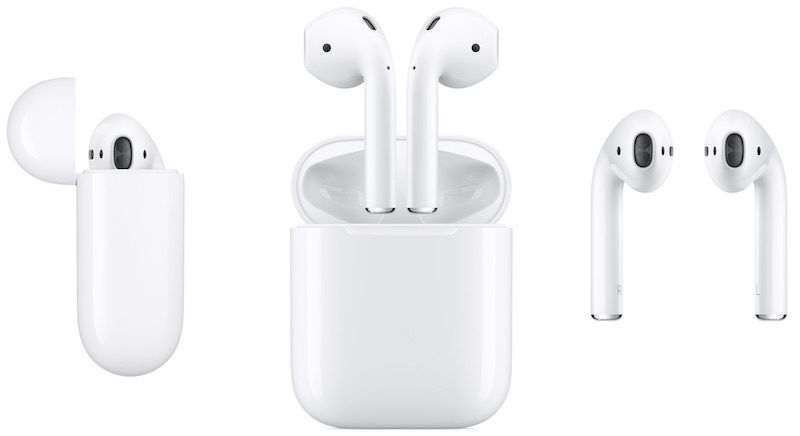
Can I use regular AirPods or earbuds for mowing?
Standard consumer earbuds are not recommended for mowing. They provide minimal passive noise isolation and no meaningful NRR rating.
They can also be hazardous if worn at high volume to compensate for mower noise — the volume itself can then exceed safe hearing thresholds. Read our full guide on whether you can wear AirPods mowing for more detail.
Is it safe to wear headphones while mowing?
Yes, when done correctly. Wearing appropriate hearing protection — including quality noise-reducing or noise-cancelling headphones — is safer than mowing without any ear protection at all. See our dedicated guide: Should you wear headphones while mowing the lawn? and Is it safe to wear headphones while mowing?
How long should mowing headphones last?
A quality pair used weekly during mowing season should last 3–5 years with basic care. The ear cushions typically wear out first (1–3 years) and are replaceable on most models.
The headband and electronics of a purpose-built work headphone like the 3M WorkTunes are typically the last components to fail.
What is the best budget headphone for mowing?
The ProCase Noise Reduction Safety Ear Muffs are the best low-cost option — they provide a solid sound seal, comfortable adjustable fit, and are built for outdoor use at a price point that makes them accessible to anyone.
They don’t include Bluetooth or audio, but as a pure hearing protection device they outperform their price.
Do I need special headphones for loud mowers?
For particularly loud equipment — commercial riding mowers, zero-turn mowers, or equipment over 95 dB — look for headphones with an NRR of 29 dB or higher.
The Bluetooth Radio Ear Muffs on this list (NRR 29 dB) and the ISOtunes Pro (NRR 27 dB, when correctly inserted) are the best options at that protection level. For more on understanding lawn mowing and the equipment involved, see our dedicated guide.
Final Verdict
For most homeowners, the 3M WorkTunes Bluetooth is the right answer: purpose-built for outdoor work, NRR 24 dB, comfortable for long sessions, and Bluetooth-ready for music or radio. If your lawn takes 3+ hours to mow and audio quality is a priority, the Bose QC 45 or Sony WH-1000XM2 are worth the premium.
Whatever you choose, use them. A gas lawnmower at 90 dB over a 2-hour session is enough to cause cumulative hearing damage over years of regular exposure.
The right pair of headphones makes mowing safer, more enjoyable, and something I genuinely look forward to — a few hours outdoors with good audio and a satisfying task.
Also explore:
- Best noise-cancelling headphones for lawn mowing
- Mpow 059 Bluetooth Headphones Over Ear review
- WulfPowerPro Noise Cancelling Headphones review
- Bose QuietComfort 35 II full review
Related Posts: