How to Make Passionflower Bloom: The Complete Guide to Turning Leaves into Flowers
Last Updated on July 14, 2026 by Duncan
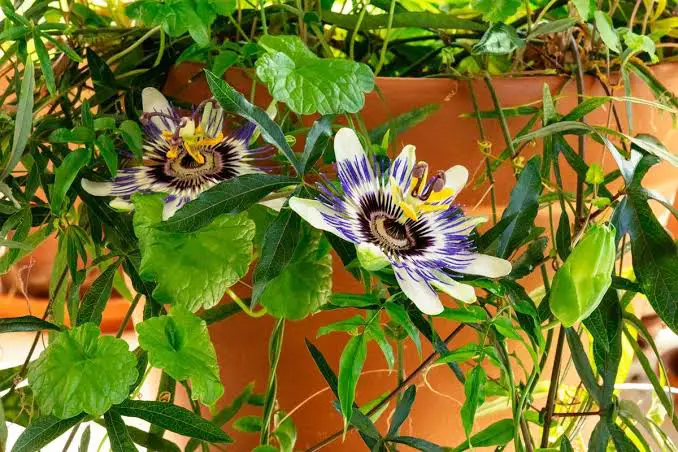
You planted a passionflower because you wanted those stunning blooms. Instead, your vine has decided its life’s mission is to cover every fence, trellis, and nearby shrub with endless green leaves.
This is frustrating, right?
I’ve seen passionflowers climb 20 feet in a season without producing more than a handful of flowers.
At first glance, they look healthy.
The leaves are lush, the vines grow at lightning speed, and neighbors compliment the greenery. Yet the flowers never come.
Here’s the good news.
A bloomless passionflower isn’t usually sick.
It’s sending you a message.
Once you understand what that message means, you can guide the plant toward producing flowers instead of endless vines.
This guide goes beyond the usual advice of “give it more sun.”
You’ll learn why passionflowers choose growth over blooms, the hidden mistakes that delay flowering, and the simple changes that encourage a spectacular display.
Stop feeding your vines too much
Here’s the part that surprises most people.
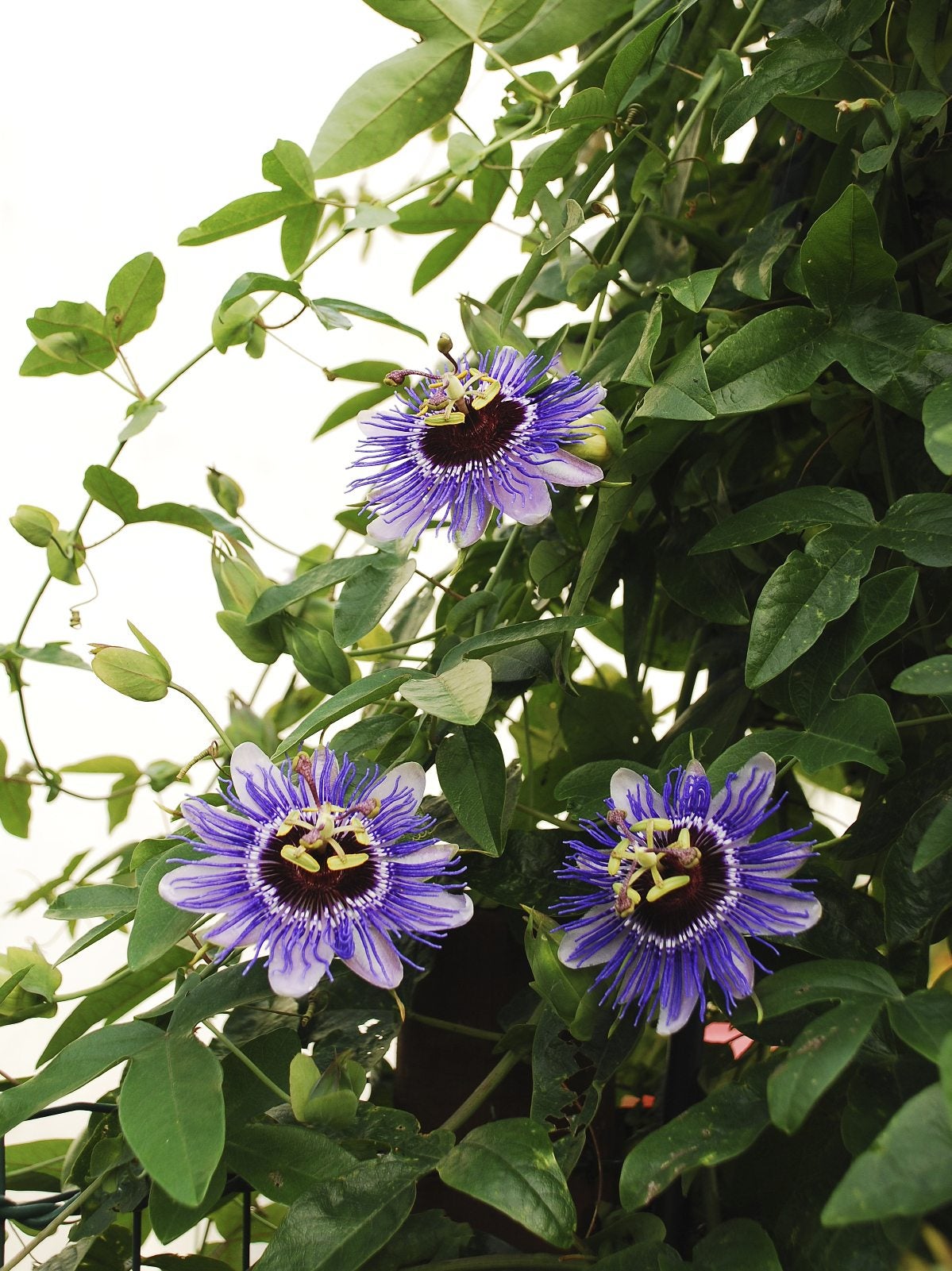
If your vine is huge and leafy but has zero flowers, you are probably being too nice to it.
Passionflower blooms when it feels a little pressure, not when it’s living in luxury.
Rich soil and heavy fertilizer send one message: keep growing leaves, you’re safe here. So the plant has no reason to bother with flowers.
Think of it like a kid who never has to work for anything. Why would they bother trying?
What to do instead:
- Switch to a bloom fertilizer with lower nitrogen. Look for a small first number on the bag, like 2 or 5
- Feed lightly in spring, then back off
- If you’re still using an all-purpose fertilizer, that’s probably your problem right there
Reduce your pot size
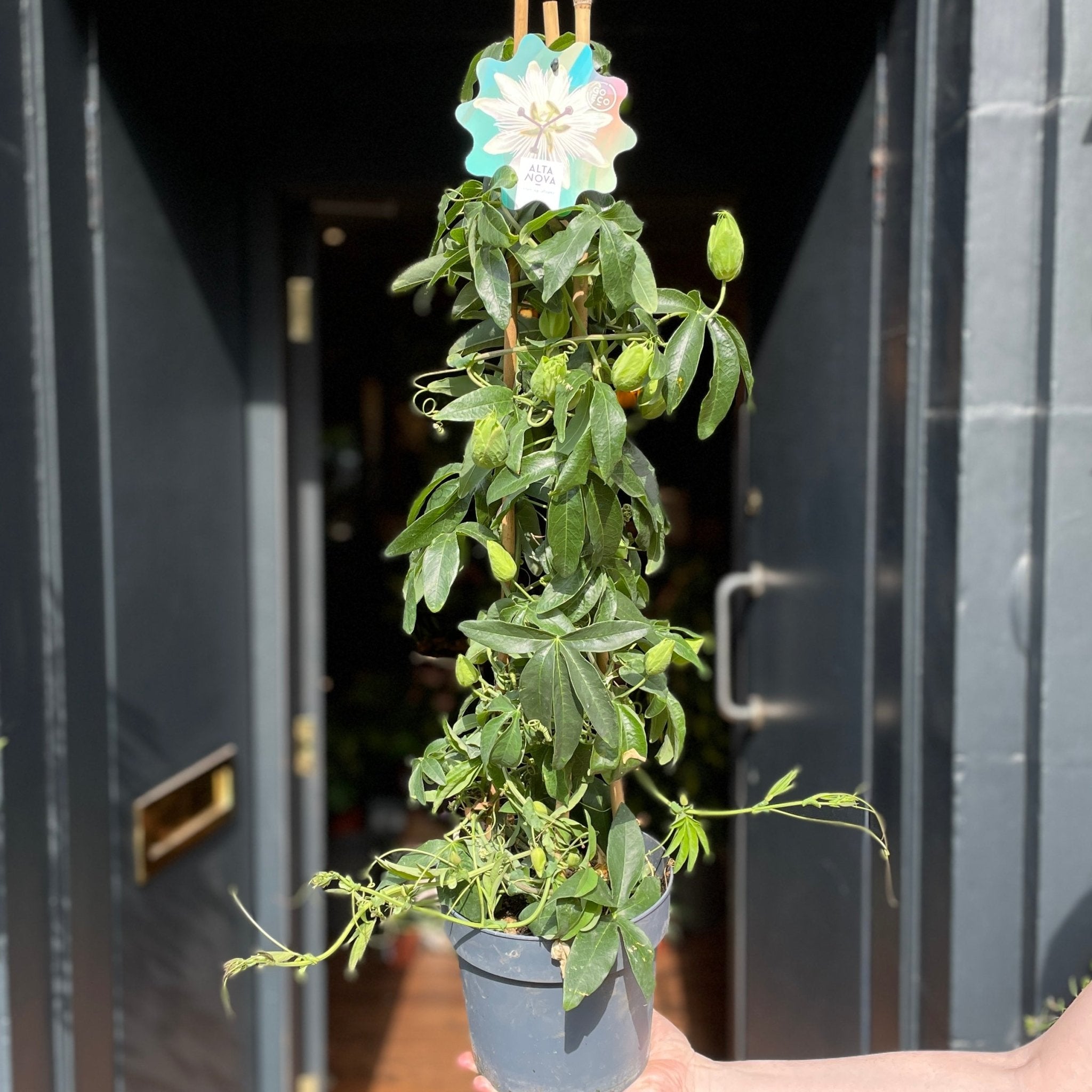
Here’s a strange one. A slightly snug pot helps your vine bloom faster than a giant, roomy one.
When roots have all the space in the world, the plant spends its energy on bigger roots and more vine.
When roots hit the edge of the pot, the plant shifts gears and starts thinking about reproducing instead.
I know it feels wrong to keep a fast growing plant in a smaller pot.
But give it one more season before you size up.
Your future self, covered in blooms, will thank you.
Keep temperatures low at night
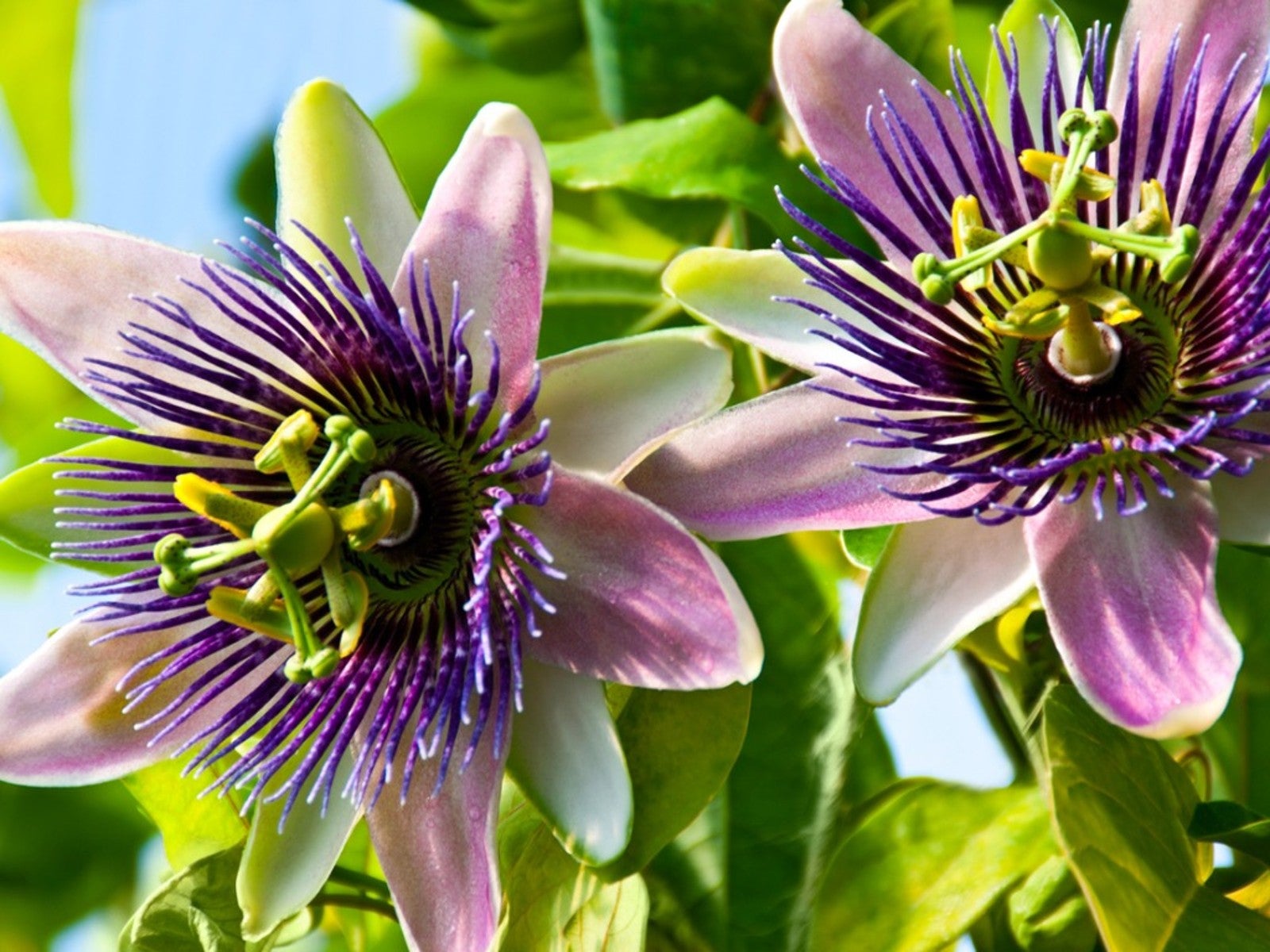
Everyone talks about sun.
Almost nobody talks about nighttime temperature, and that’s a shame.
Passionflower wants warm days and cooler nights.
If the temperature barely drops after sunset where you live, or your vine sits indoors near a heater all night, that could be exactly why it won’t flower.
A ten degree drop between day and night sends the plant a clear signal. It’s basically the cue that says time to bloom now.
If you’re growing this on a covered porch or indoors, crack a window at night when you can. Your vine will notice the difference.
Prune the passionflowers at the right time
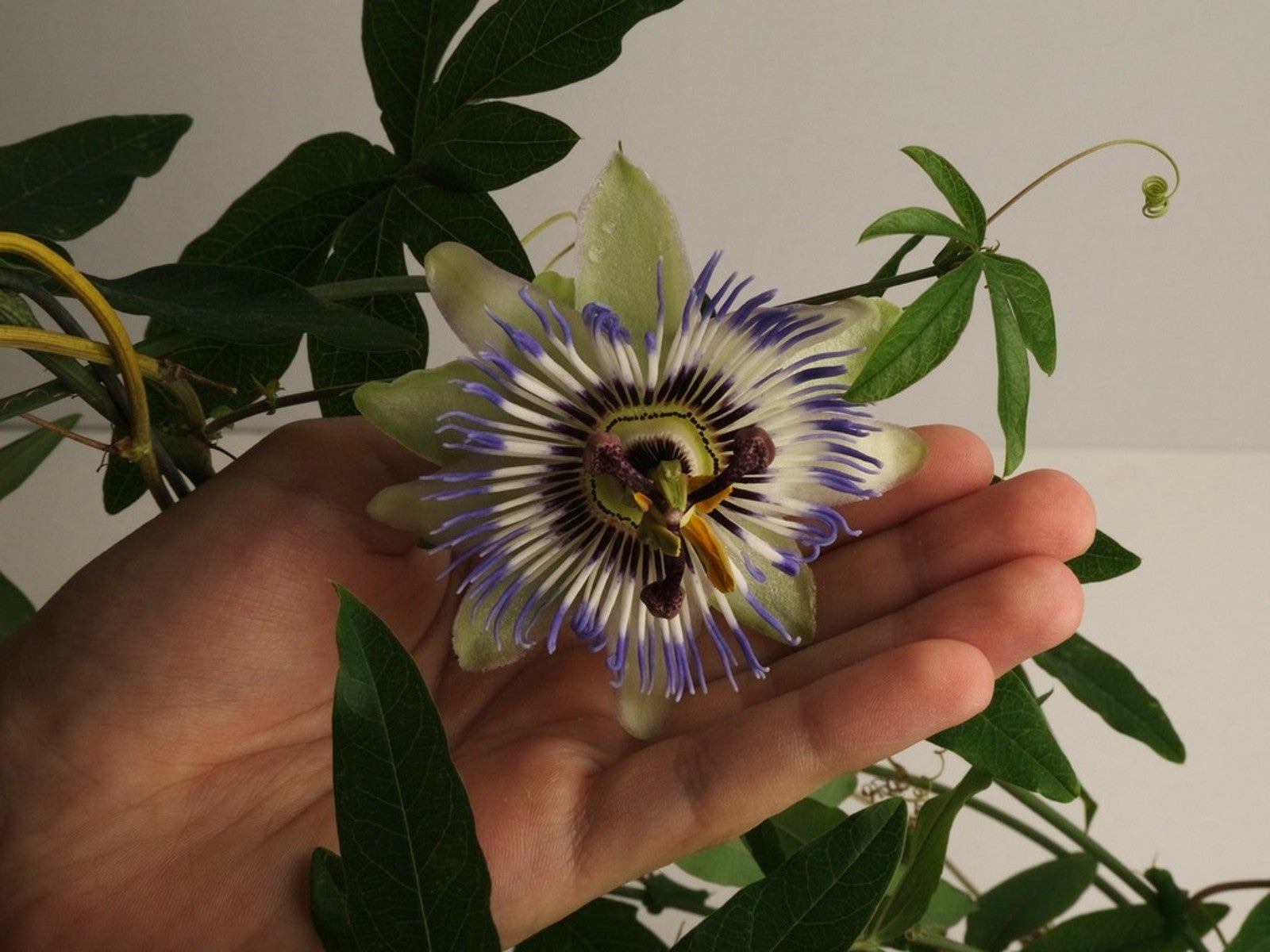
Passionflower blooms on new growth from this year, not old growth from last year.
So when you prune matters just as much as how much you prune.
Prune too late and you cut off the exact wood that was about to flower.
Prune too early, before the plant wakes up from winter, and it wastes energy regrowing branches rather than making flowers.
The sweet spot: Late winter, right before new growth starts. Cut it back hard, by up to two thirds. It feels brutal, I know, but being gentle here does not pay off.
Train it sideways
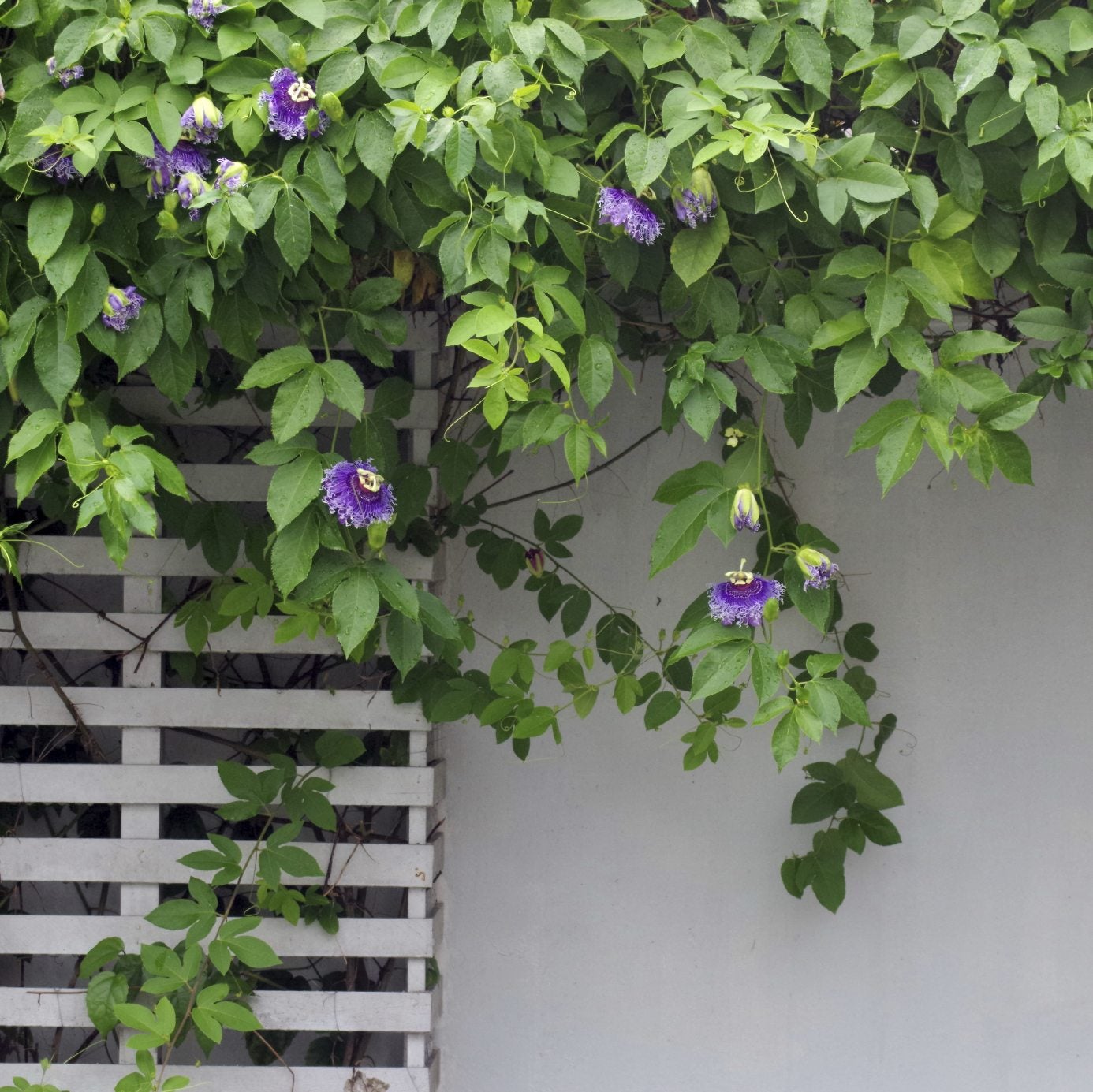
If your vine just climbs straight up a pole or fence, you’re missing a trick that makes a real difference.
Train the main stems horizontally along a wire or trellis instead of letting them shoot straight up.
This one change encourages side shoots to form, and side shoots are where most of your blooms show up.
Straight up growth is mostly the plant reaching for more sun.
Sideways growth forces it to branch out, and those branches are where the flowers form.
Give your vines time to mature

Sometimes the answer is simpler, and a little annoying.
Some passionflower varieties, especially fancier nursery hybrids, need two to three years of growth before they can bloom at all.
You could do everything right and still see zero flowers if your plant hasn’t hit that age yet.
If your vine is young, be patient with it.
Focus on keeping it healthy, and apply the light stress tips above anyway. The blooms will come when the plant is ready, not a day before.
How to Tell If Your Passionflower Is About to Bloom
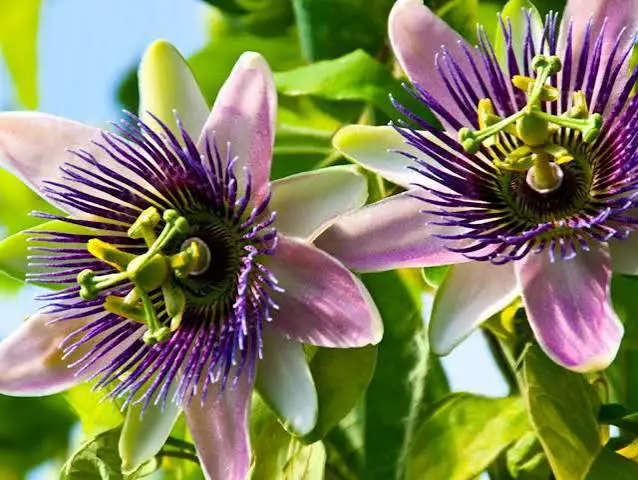
Once you start doing the right things, your vine will drop hints that flowers are coming. You only need to know where to look.
Some of the things you should look out for include:
New growth with a different look: Fresh vines coming in slightly thicker or more compact than your older growth are usually the ones getting ready to flower.
Skinny, stretchy growth reaching for the light is not a good sign.
Tiny green nubs at the leaf joints: Look closely where each leaf meets the stem. A small round bump forming there is an early bud, even before it looks like much of anything.
Tendrils showing up near new leaves: Curly little tendrils are a good sign your vine has settled into a steady rhythm rather than racing to grow bigger.
Plants under too much pressure to expand tend to skip this step.
A slight slowdown in vine length: If your vine was shooting out a foot of new growth a week and suddenly pauses, don’t panic. That pause often means the plant is redirecting energy toward flowering.
Buds that swell fast once they appear: Once you spot a bud, keep an eye on it daily. Passionflower buds can go from a small green dot to a fully open flower in just a few days.
Walk past your vine every single morning with your coffee and take a good look.
These signs are subtle, and they don’t stick around waiting for you to notice.
Watch Out for These Sneaky Bloom Killers
- A cold night during bud season. One chilly night can cause buds to quietly drop about a week later, which makes the cause hard to trace
- Suckers from the base. On grafted plants, watch for extra growth sprouting below the graft line. It can take over and grow instead of the part that flowers
- Blooming without you seeing it. Passionflower blooms open for about one day. Skip a daily check during peak season and you might miss flowers that already came and went
Parting shot
If you take away one idea from this whole article, make it this one.
Passionflower blooms when it hits what I call the stress ceiling.
That’s the point where the plant realizes unlimited growth is no longer an option, so it switches to making flowers instead.
Every tip here, the pot size, the fertilizer, the pruning, the training, is a different way of nudging your vine toward that ceiling on purpose.
Stop babying your passionflower and start giving it a reason to bloom. It’s not being difficult, it’s waiting for the right push.
FAQs
What are common passionflower problems?
The big ones are lush growth with no flowers, yellowing leaves, and sudden bud drop.
Most trace back to too much fertilizer, a pot that’s too roomy, or a cold snap at the wrong moment.
Pests like aphids and spider mites can also show up, especially on stressed plants.
How long does it take for passionflower to wear off?
If you mean the herbal version, like passionflower tea or supplements used for calming or sleep, effects usually fade within a few hours.
It’s a mild, short acting herb, not something that lingers in your system.
If you mean the plant itself, it doesn’t wear off, it just goes dormant in winter and returns in spring.
What are the diseases of passion flower?
Fungal issues are the main culprit, including root rot from overwatering, powdery mildew in humid spots with poor airflow, and leaf spot diseases that leave dark patches.
Viral infections can also affect passionflower, usually showing up as mottled or distorted leaves.
Good drainage and spacing prevent most of these before they start.
What is the lifespan of a passion flower plant?
Passionflower vines can live and produce for ten to fifteen years or more in good conditions, especially hardier types like P. incarnata.
In cooler climates, where it’s grown as an annual or dies back hard each winter, you’ll likely get fewer productive years.
With good care, this is not a short term plant.
What month do passion flowers bloom?
Most varieties bloom from early summer through early fall, so think June through September in the Northern Hemisphere.
Warmer climates can stretch that window even longer. The exact timing depends on your species and how mature the vine is.
How to keep passion flower alive?
Give it well draining soil, consistent water without soggy roots, and full sun for at least six hours a day.
Protect it from hard frost, either by bringing potted plants inside or mulching the roots of in ground vines.
Prune it back in late winter to keep it healthy and productive.
How do I make my passion flower bloom?
Cut back on nitrogen heavy fertilizer, keep the roots slightly snug instead of giving it a huge pot, and prune in late winter before new growth starts.
Train the vine sideways along a trellis instead of straight up.
Give it a cooler night temperature when you can, since that drop helps trigger blooming.
What fertilizer makes passion flowers bloom?
Look for a bloom formula with a low first number and higher second and third numbers, something like 2-10-10 or 5-10-10.
That lower nitrogen content stops the plant from pouring all its energy into leaves and vine growth. Feed lightly in spring and avoid heavy, all purpose fertilizers.
How long does it take passionflower to bloom?
An established, mature vine can bloom within its first full growing season under good conditions.
Younger plants, especially fancier nursery hybrids, might need two to three years before they can flower at all. Patience matters here as much as any single technique.
Why is my passionflower not flowering?
The most common reasons are too much fertilizer, a pot that’s too large, a vine that’s still too young, or nighttime temperatures that stay too warm.
Improper pruning timing is another frequent cause, since cutting at the wrong moment removes the wood that would have flowered.
Check these one at a time before assuming something is seriously wrong.
How to get a passion flower to flower?
Combine a few small changes at once rather than just one.
Lower your fertilizer’s nitrogen, keep the pot on the snug side, prune in late winter, and train the vine horizontally along a support.
Give it warm days and cooler nights when you can, and be patient if your plant is still young.
Related Posts: