How to Make Your Indoor Plants Happy
Last Updated on June 27, 2026 by Duncan
I want to tell you something nobody tells you in those cute plant care infographics: keeping a plant alive and making a plant happy are two completely different jobs.
A plant can survive for months looking “fine” while quietly starving, suffocating, or stressed out of its mind.
Then one day it just gives up, and you’re left wondering what you did wrong.
I’ve spent twenty years growing, killing, reviving, and obsessing over houseplants, and I’m here to tell you the stuff that the first page of Google won’t.
No finger tests.
No “mist your plants for humidity.” Just what actually works.
Save this one. You’re going to want to come back to it.
Ensure your plant receives enough light
Every plant tag says “bright, indirect light.” That phrase means nothing.
Your eyes adjust to dim rooms so fast that a spot can look bright to you while your plant is basically living in a cave.
Your eyeballs lie to you.
Plants don’t care how bright a room feels to a human standing in it.
Here’s the rule of thumb I give every client who swears their plant “gets plenty of light”:
If you’re more than three feet from an east or west facing window, or more than seven or eight feet from a south facing one, your plant is probably light starved.
Even if the room feels sunny to you.
And here’s the part nobody warns you about: that spot was perfect in June and useless by December.
The sun’s angle drops in winter, so light comes in lower and shallower, and a windowsill that lit up your whole living room in summer might barely touch your plant six months later.
If your plant mysteriously declines every winter, this is almost always why.
Not pests. Not water.
The sun moved and nobody told you.
One more thing.
Sheer curtains feel bright and dreamy to your eyes but can cut the actual usable light by half or more.
Pretty curtain, hungry plant. You don’t want this.
If you suspect that your plant isn’t receiving enough light, you should highly consider getting a grow light to compensate for the inadequate light.
Stop poking the soil with your finger
:max_bytes(150000):strip_icc():format(webp)/potting-soil-indoor-plants-container-plants-1902802-7-13c4cba1f22d4b29a03abb620858b733.jpg)
Everyone tells you to check if the soil is dry with your finger.
I want you to stop doing that immediately.
The top inch of soil dries out way faster than the rest of the pot.
So your finger can come up bone dry while three inches down, the roots are sitting in a swamp.
You’re not getting useful information, you’re getting a confident wrong answer.
Here’s what I do instead, and what every grower I respect does: lift the pot.
Water it once, lift it, feel that weight.
Let it dry out, lift it again, feel how much lighter it is.
That difference is your real watering gauge.
Within a couple weeks you’ll be able to tell if a plant needs water just by picking it up, no finger required, no guesswork, no soggy nails.
Bonus tip: Short, wide pots hold a bigger swampy zone at the bottom relative to their size than tall, narrow ones.
Same plant, same water schedule, totally different outcome depending on the pot shape.
Stop misting your plants
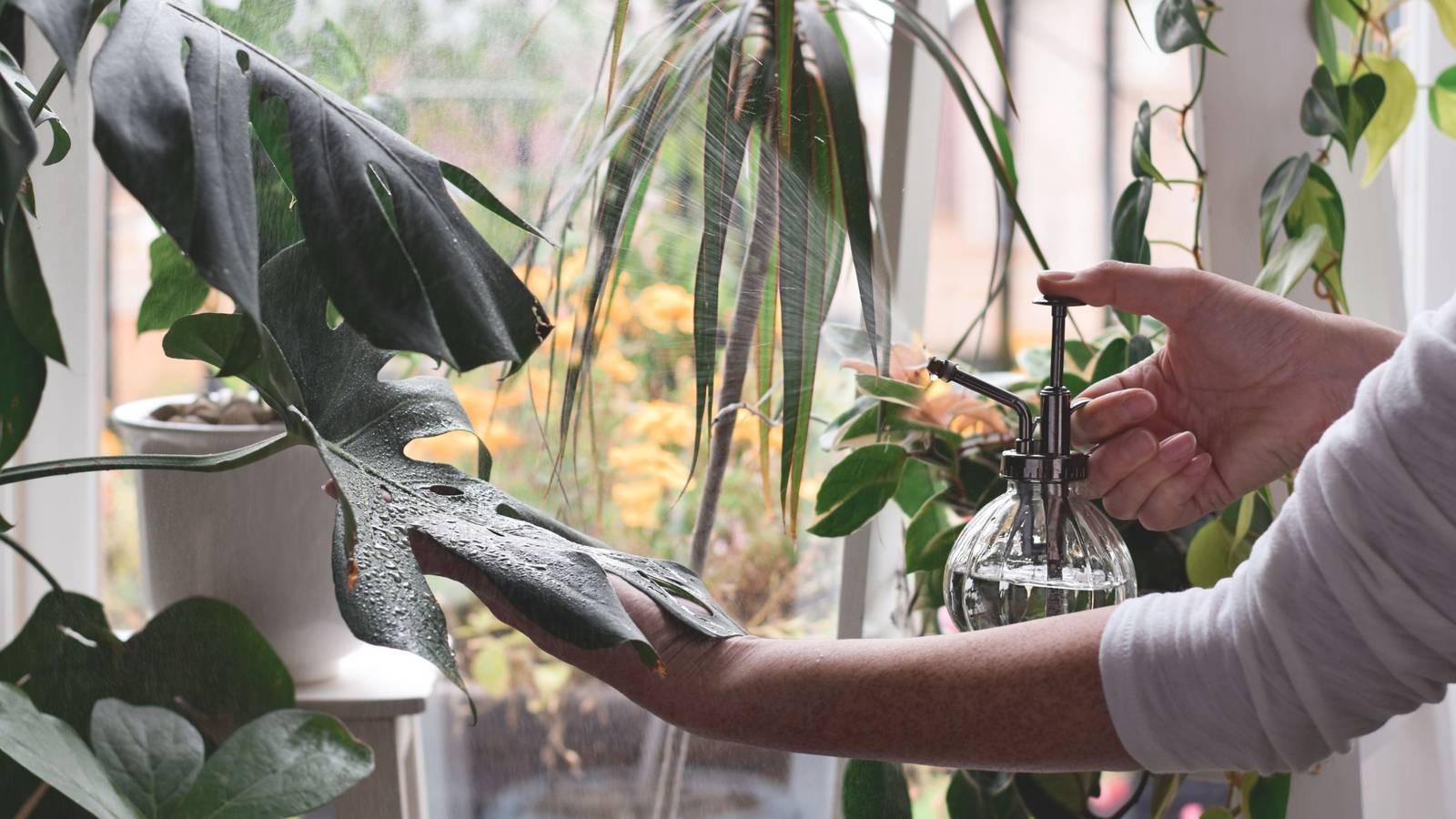
I get it, the spray bottle ritual feels nice.
It’s also doing almost nothing.
Misting raises humidity around the leaf for maybe fifteen minutes before it evaporates and you’re back to square one.
For fuzzy leafed plants, it can actually leave a thin film of water sitting on the leaf with nowhere to go, which is basically a welcome mat for fungal spots.
If you want humidity that sticks around, group your plants together.
They create a little shared humidity bubble just by being near each other, like plants throwing their own tiny house party.
A pebble tray under the pot or an actual humidifier in a plant heavy room will do more in one afternoon than a month of spray bottle sessions.
Funny side effect: If you’ve got a cluster of plants and you give one away or move it out, don’t be shocked if the others start sulking a few days later.
You didn’t do anything wrong. You popped their humidity bubble.
Get a fan

This one sounds ridiculous until you try it.
Plants need moving air.
Without it, a thin layer of stagnant, humid air sits right against the leaf and basically blocks the plant from breathing properly, even with perfect light.
That same still, damp pocket of air is exactly what spider mites and other pests love to set up shop in.
A small oscillating fan on low, running a few hours a day near your plants, does more for plant health than half the fertilizers on the shelf.
I’m not joking.
It’s the most underrated simple fix in the whole hobby.
As said, its a few dollar fix. Get a cheap fan and you are good to go.
Replace your potting soil
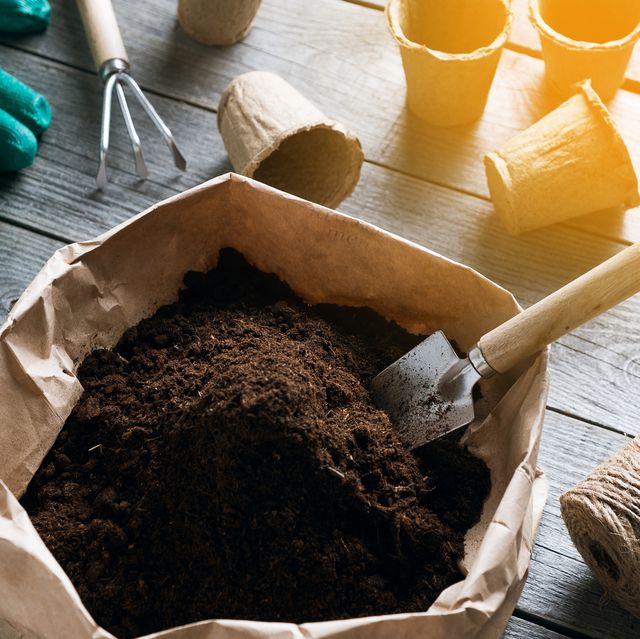
Nobody told you this when you bought your fiddle leaf fig, but bagged potting soil breaks down over time.
The bits of bark and peat shrink and compact, and the pockets of air that roots need start disappearing.
So if your plant was thriving for over a year and then suddenly tanked with zero change in your routine, this might be why.
The soil aged.
Forget the “repot every year automatically” rule.
That’s not the real trigger.
Repot when you see roots circling out of the drainage hole, or when water runs straight through the pot in a few seconds like it’s hitting concrete instead of soil.
That’s your soil telling you it’s done.
And when you do repot, size up gently.
Two inches wider, not double the size.
A pot that’s way too big holds way too much wet soil the roots can’t reach yet, and that’s a rot situation waiting to happen.
Make a note of any changes to your plant
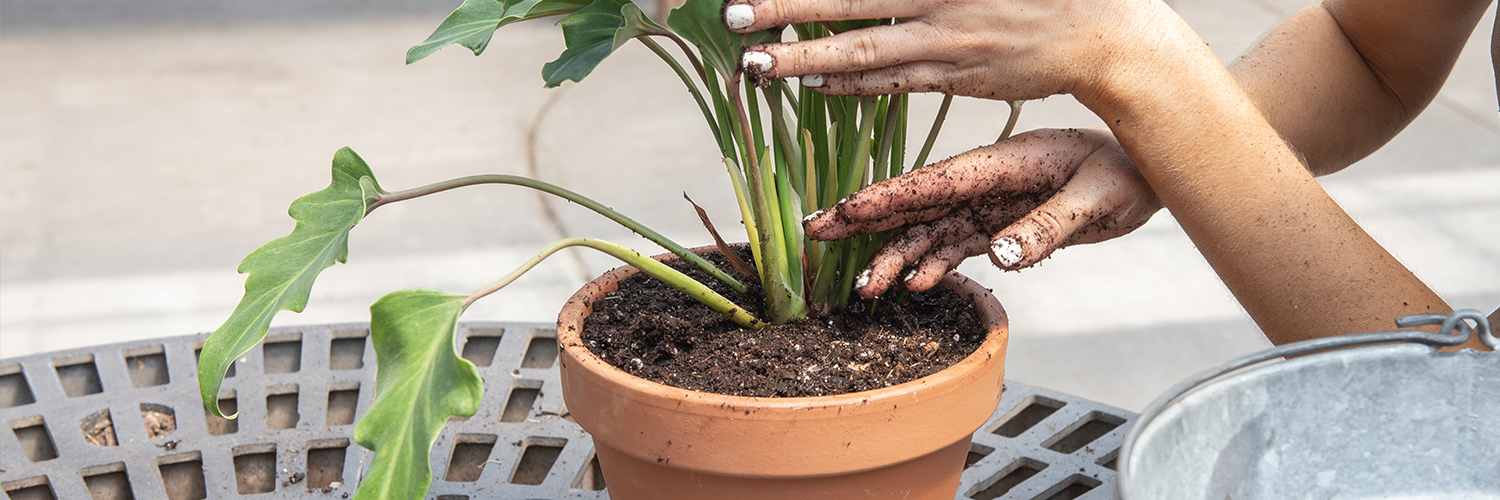
Here’s the single biggest thing that separates someone who keeps plants thriving for years from someone stuck in a constant cycle of confusion and panic.
What you see on a leaf today is reporting on something that happened three to ten days ago.
Not today. Not yesterday.
A leaf droop you’re staring at right now might be the plant’s delayed reaction to something you did last week.
This is why people get stuck overcorrecting.
A leaf droops slightly, you panic, you water it “just in case,” but the droop was actually from sitting too wet a few days earlier.
Now you’ve added more water to an already soggy plant and made the real problem worse. Round and round it goes.
I call this the Time Delay Rule, and once you understand it, plant care stops feeling like a guessing game.
Keep a tiny note on your phone with three things: the last time you watered, any recent move or location change, and any sudden temperature swings near the plant.
When something looks off, check what happened three to seven days before, not what’s happening right this second.
Nine times out of ten, that’s your answer.
Watch your watering
:max_bytes(150000):strip_icc():format(webp)/watering-plants-indoors-outdoors-0722-f6ff621e570a4e7885ee3117eb1840af.jpg)
Both overwatering and underwatering can cause the exact same droopy, yellowing leaves. Cruel, I know.
Here’s the fast way to tell them apart.
Water the plant and check it again in four hours.
If the leaves perk back up, it was thirsty.
Simple as that.
If the leaves stay limp and sad, the roots are likely too damaged from sitting wet to absorb water at all, even when you give it some.
That’s a root rot situation, and it needs a different fix entirely (think drier soil, possibly trimming damaged roots, not more water).
This one trick alone will save you from the classic mistake of drowning an already drowning plant.
Watch Out for the “I Just Repotted It and Now It’s Dying” Trap
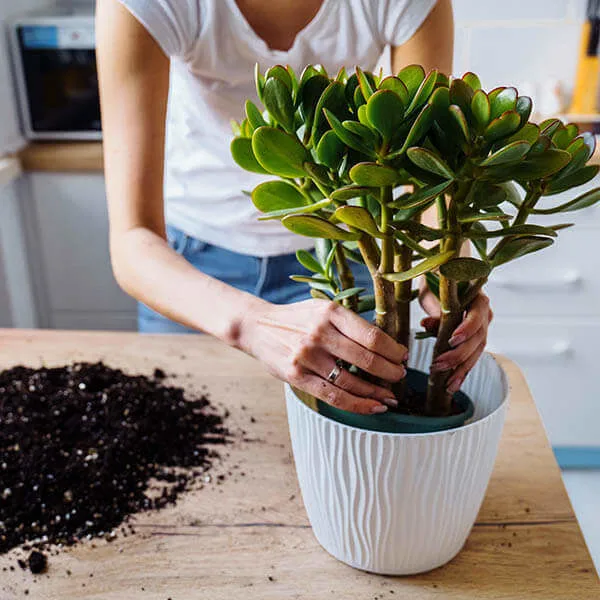
You repot a stressed plant into fresh, fertilizer loaded soil expecting it to bounce back, and instead it drops leaves a few days later.
Frustrating, right? You did the “right” thing.
You should note that fresh soil with fertilizer mixed in can pull moisture out of stressed roots rather than letting them soak it up, especially right after the disruption of repotting.
Give a freshly repotted plant about a month on plain, unfertilized soil before introducing any feeding. Let the roots settle first.
How to keep your plants happy
You don’t need a spreadsheet for this. Here’s what I actually do with my own plants every week.
Once a week: Lift each pot to check weight before deciding to water. Skip the finger test for good.
Once a week: Give each plant a quarter turn in the same direction so it grows evenly instead of leaning toward the light like it’s trying to escape the room.
A few hours a day: Run a small fan nearby if your plants live in a still, closed off room.
Every few months: Check the drainage hole for circling roots and see how fast water runs through. That’s your repotting signal, not the calendar.
Whenever something looks off: Check your notes from three to seven days back before you do anything drastic.
The Bottom Line
Happy plants aren’t about having a special green thumb gene or talking to them every morning, though I won’t judge you if you do.
Happy plants come from paying attention to the right things instead of the popular things.
Light distance over vibes.
Pot weight over finger tests.
Airflow over misting.
And remembering that whatever you’re seeing today probably started a week ago.
Related Posts: