15 Smart Passionflower Planting Ideas for Healthier, Happier Vines
Last Updated on July 23, 2026 by Duncan
Passionflowers make people stop and stare.
Their intricate blooms look almost too exotic to be real, yet these vigorous climbing vines are surprisingly easy to grow when given the right conditions.
Whether you want to brighten a plain fence, cover a pergola with colorful flowers, or create a pollinator-friendly garden, passionflowers can turn an ordinary space into something unforgettable.
One of the biggest advantages of growing passionflowers is their versatility.
They thrive on trellises, arbors, fences, and even in large containers, making them a great choice for gardens of every size.
Many varieties also attract butterflies, bees, and hummingbirds, while some reward you with delicious edible passion fruit.
In this guide, you’ll discover creative passionflower planting ideas for every type of garden.
You will also learn practical tips for choosing the best location, supporting healthy growth, and avoiding common planting mistakes.
By the end, you’ll have plenty of inspiration to help your passionflowers flourish and become one of the standout features in your landscape.
1. Create a flowering garden arch
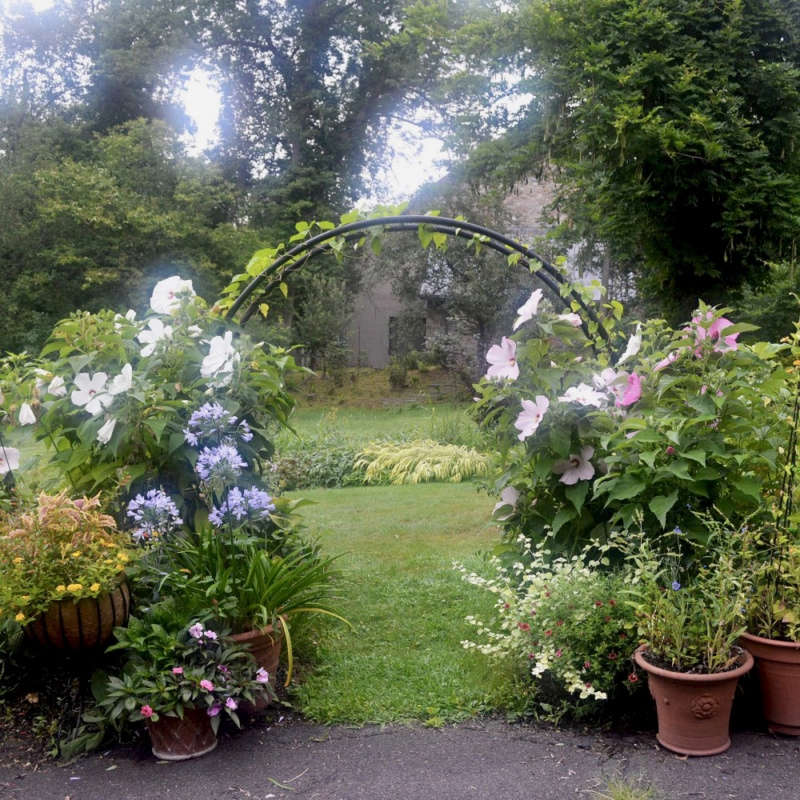
This is the showstopper idea, and for good reason.
A passionflower covered arch at your garden entrance feels like walking into somewhere magical.
Use a metal or cattle panel arch instead of a chunky wooden one.
Passionflower climbs with tiny curly tendrils, and they need something skinny to grab onto. A big wooden beam leaves the vine grasping at air for weeks.
Give it a full season before you judge the coverage. Arches fill in slower at first, then suddenly all at once.
2. Cover a wooden trellis

Wooden trellises look charming in photos, but here’s the catch.
If the slats are too thick, the vine struggles to grip and climbs painfully slow.
Fix this by stapling thin wire or garden twine across the trellis before you plant.
The vine grabs the wire instantly instead of fighting with the wood. It’s a five minute step that saves you a summer of watching a stalled vine.
3. Grow along a privacy fence
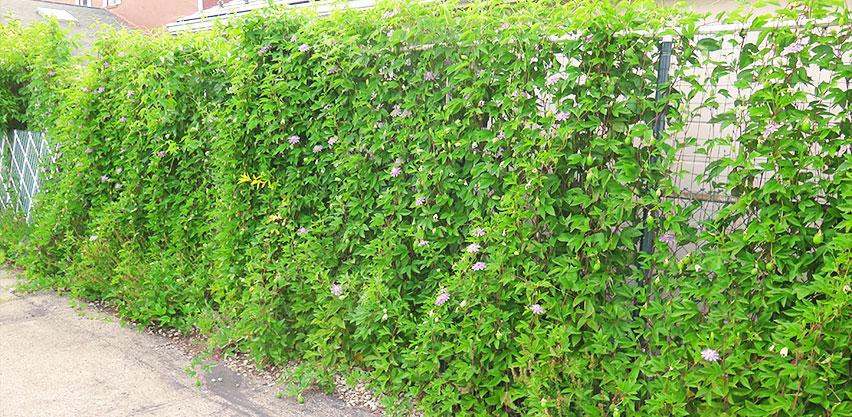
This might be my favorite use for passionflower.
Got a chain link fence you’re tired of staring at? This plant turns it into a green wall covered in strange, beautiful flowers.
Wooden privacy fence works too. Just weave some wire along it first for grip.
Leave a little breathing room between the vine and the fence panels so air can move through.
Skip that step and you’re inviting powdery mildew, that dusty white coating that shows up on stressed, stuffy plants.
4. Decorate a pergola

A pergola dripping with passionflower is gorgeous, no argument there.
But pergola beams are usually thick, so you’ll need to help the vine along early on.
Loosely tie the new growth to the beams with soft garden twine for the first few weeks. Once it finds a few anchor points, it takes over and climbs on its own.
5. Plant beside a garden gate
A gate flanked by climbing flowers feels intentional and pulled together.
Plant one on each side with a simple wire frame for support, and you’ve got a matched pair without much effort.
One thing worth knowing here.
If you want the plants to cross pollinate and produce fruit, plant two genetically different vines rather than two cuttings from the same plant.
Twin plants from the same parent won’t pollinate each other.
6. Add height to raised beds

Raised beds tend to feel flat after a season or two.
A vertical passionflower trellis tucked into a corner adds instant height and makes the space feel more layered.
Just don’t overfeed the bed if passionflower is sharing it with vegetables.
This plant flowers best when it’s a little lean.
Rich, heavily fertilized soil tends to give you a jungle of leaves with barely any blooms.
7. Grow in containers

Perfect for patios, balconies, or anyone who wants flexibility.
Stick a wire tuteur or a slim tomato cage in the pot and let the vine climb it.
Here’s the twist nobody expects. Keep the container on the smaller side.
A slightly snug pot pushes the plant to flower more, kind of like it’s a little stressed and trying to reproduce before things get worse.
Size up too early and you get lots of leafy growth and disappointing flowers.
8. Train around an obelisk
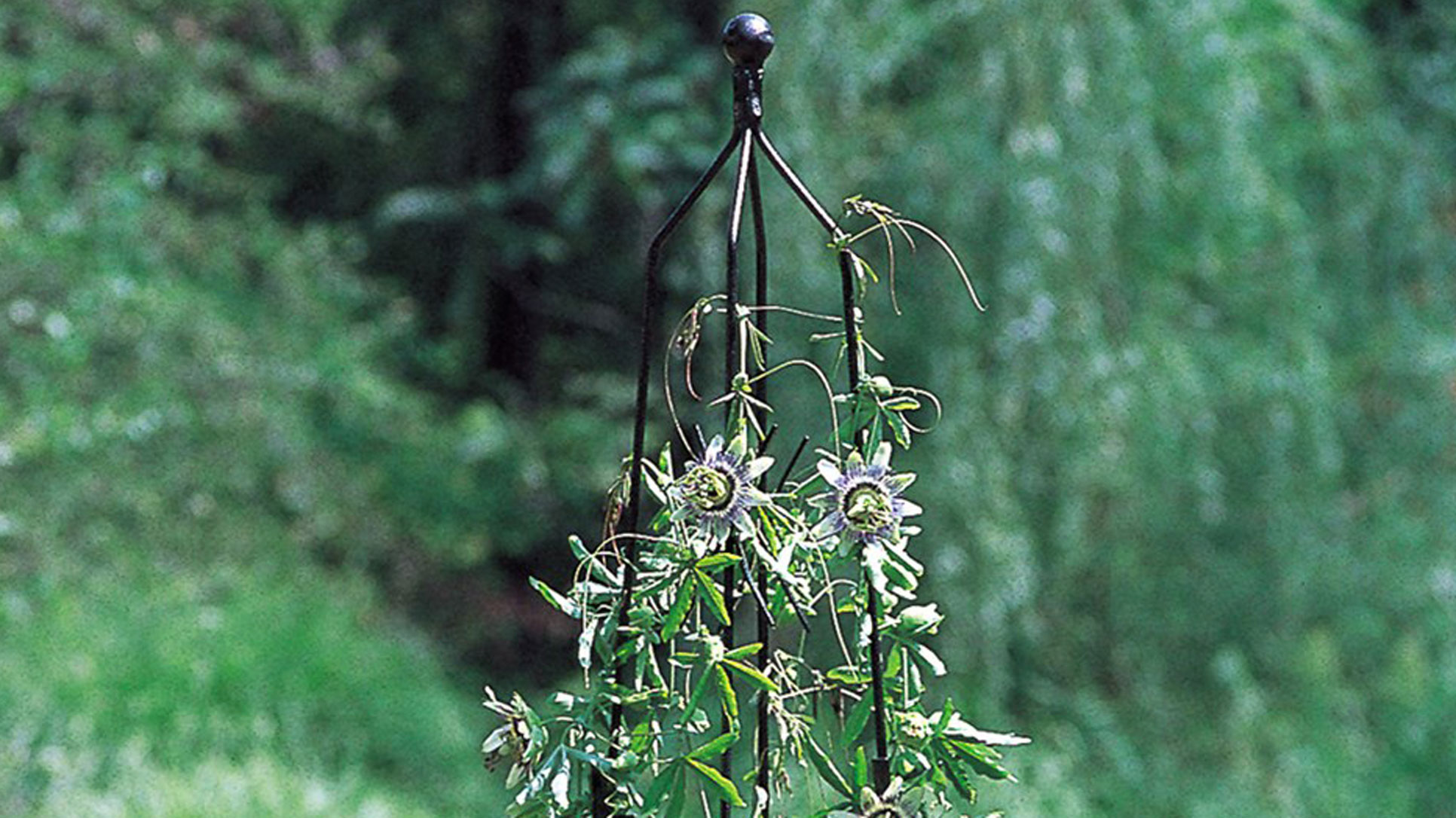
Obelisks are one of the most underrated supports for this plant.
The thin metal spokes are exactly the grip size passionflower loves, so it climbs fast and stays tidy instead of sprawling everywhere.
Place the obelisk where it gets a full six hours of sun or more.
Tuck it into shade and you’ll get a slow, sparse climb with barely any flowers to show for it.
9. Build a butterfly garden

Passionflower is basically a butterfly magnet, especially for Gulf Fritillaries and Zebra Longwings.
Pair it with milkweed and coneflower for a garden corner that’s constantly fluttering with activity.
Quick heads up so you don’t panic later. Caterpillars will chew on the leaves, sometimes a lot. That’s not a disaster, that’s the whole point.
Thankfully the vine bounces back within weeks. A little leaf damage means your butterfly garden is working.
10. Plant around a mailbox

This is a simple upgrade for a boring mailbox post.
String some thin wire from the post to a small nearby stake, and let the vine climb up and drape a little.
Keep it modest here though.
Mailbox posts sit near the road with less airflow, so a light touch works better than letting it get wild and dense.
11. Hide unsightly areas

Got an ugly utility box, a chain link section, or some ratty old fencing you’d rather not look at?
Passionflower is one of the fastest, prettiest ways to cover it up.
Just check the sun exposure first.
These hidden spots are often shadier than the rest of your yard, and passionflower without enough sun just sits there looking underwhelming.
If the area doesn’t get much light, this idea won’t deliver the coverage you’re picturing.
12. Create a tropical garden corner
Passionflower pairs beautifully with hibiscus, canna lily, and banana plants for a lush, escape somewhere warm feeling.
It’s an easy way to fake a tropical vibe even if you don’t live somewhere tropical.
One thing to know if you’re in a cooler climate.
Some passionflower varieties die completely back to the ground in winter and look brown, crispy, and dead.
When this happens don’t rip it out.
Scratch the base gently and check for green underneath before you give up on it. It’s usually just resting, and it comes back later in spring.
13. Grow over a garden arbor
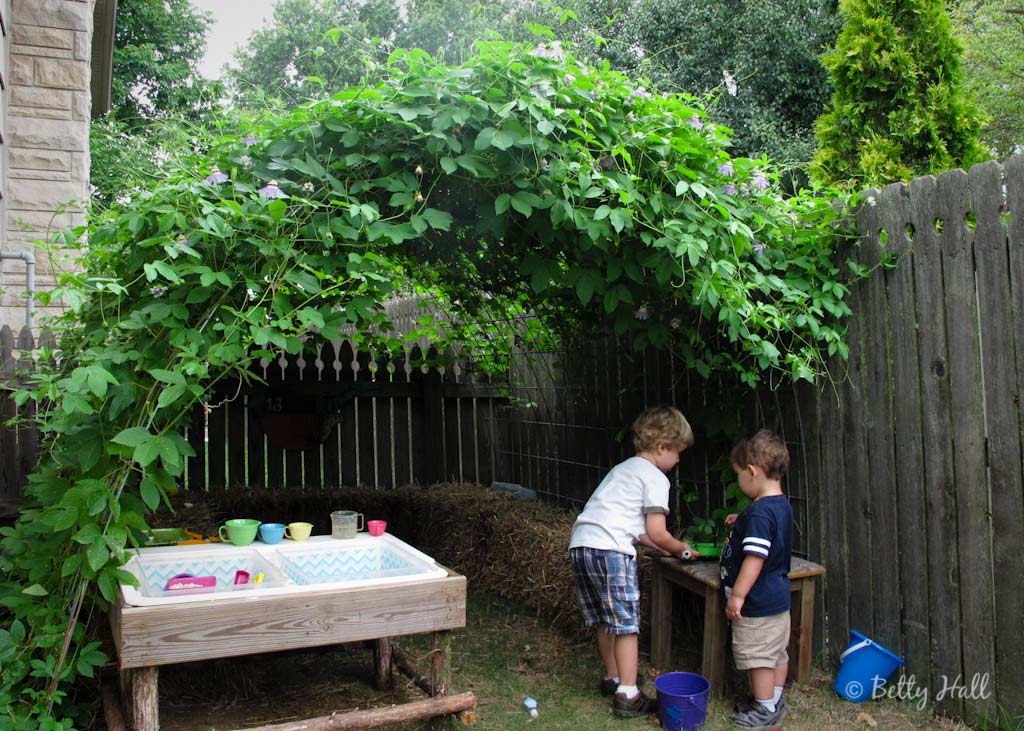
Similar payoff to the arch idea, but an arbor gives you seating or a walkway underneath, so you get shade and flowers at the same time.
Wonderful for a reading nook or a spot to sit with your coffee.
Same rule applies here. Thin support wins. Wrap the arbor beams with wire first if they’re thick, so the vine has something easy to grab onto right away.
14. Combine with other climbers
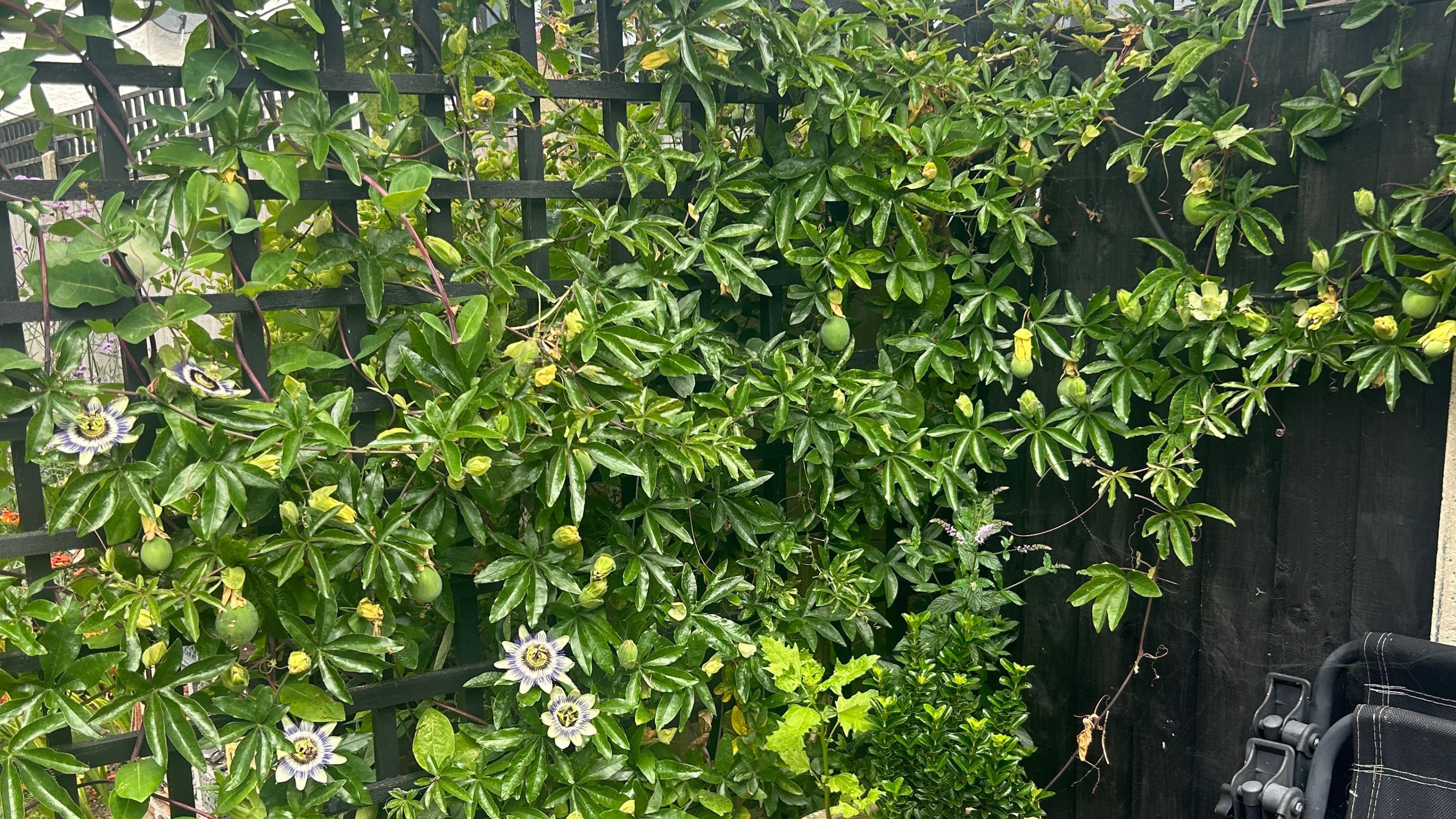
Passionflower doesn’t have to be the only climber on your structure.
Mixing textures on one trellis or fence looks incredible once everything fills in, and different bloom times mean something is usually flowering.
Clematis is a classic pairing. It flowers on a different schedule than passionflower, so you get color at different points in the season instead of one big burst and then nothing.
Climbing roses bring structure and a totally different bloom shape into the mix.
Just give the rose a head start, since it establishes slower and passionflower can swallow a young rose whole.
Jasmine adds fragrance to the mix, which passionflower doesn’t offer on its own.
Evening walks past a fence with both of these tangled together are one of the best small luxuries a garden can give you.
Sweet peas are fun for spring, since they bloom early and fade right around when passionflower starts taking off. It’s almost like a relay handoff on the same trellis.
Tips for avoiding overcrowding:
- Give passionflower more room. It grows fast once established and can easily outcompete slower climbers for space
- Plant the slower growing companion first, a season ahead if you can, so it gets a head start
- Space plants at least a foot and a half apart at the base, even if the top growth is meant to intertwine
- Prune passionflower back harder than the others. It regrows quickly, so a firm hand keeps it from hogging the light and space
- Watch for one plant shading out another. If jasmine or clematis start looking thin, that’s your sign passionflower needs a trim
15. Design an edible garden feature
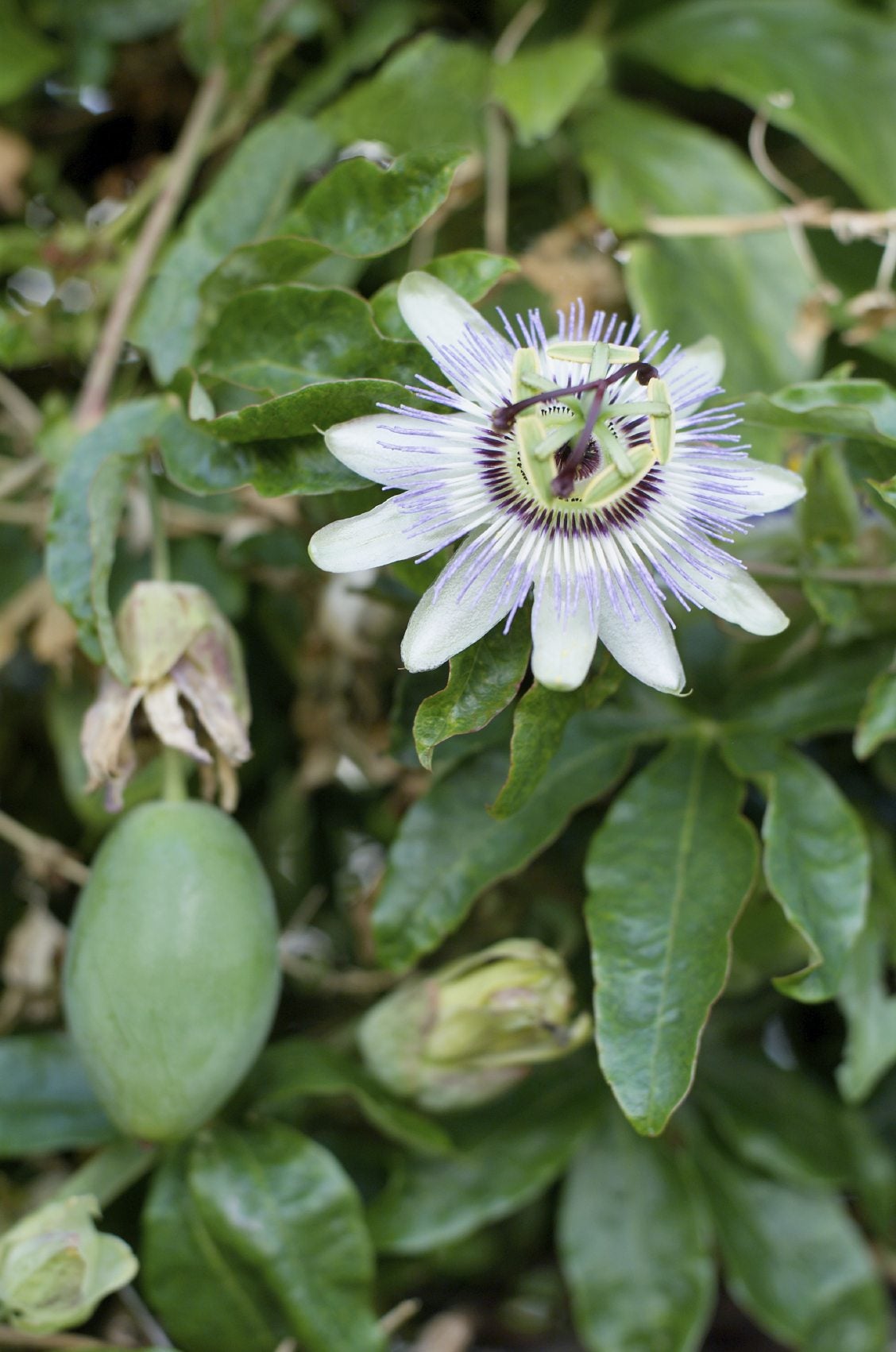
If you’re growing this for actual passion fruit, this is the idea with the most potential for heartbreak.
A gorgeous, heavily blooming vine can still produce zero fruit, and it’s rarely something you did wrong.
Many varieties need a second, genetically different plant nearby to cross pollinate. One plant alone is often just flowering for show.
You’ll also want a healthy population of carpenter bees around, since they do most of the pollinating work.
Regular honeybees usually can’t reach what they need inside these flowers.
Plant two different vines a few feet apart, skip the heavy fertilizer, and be patient. Fruit takes a full, established season to show up in any real quantity.
Passionflower Planting Mistakes to Avoid
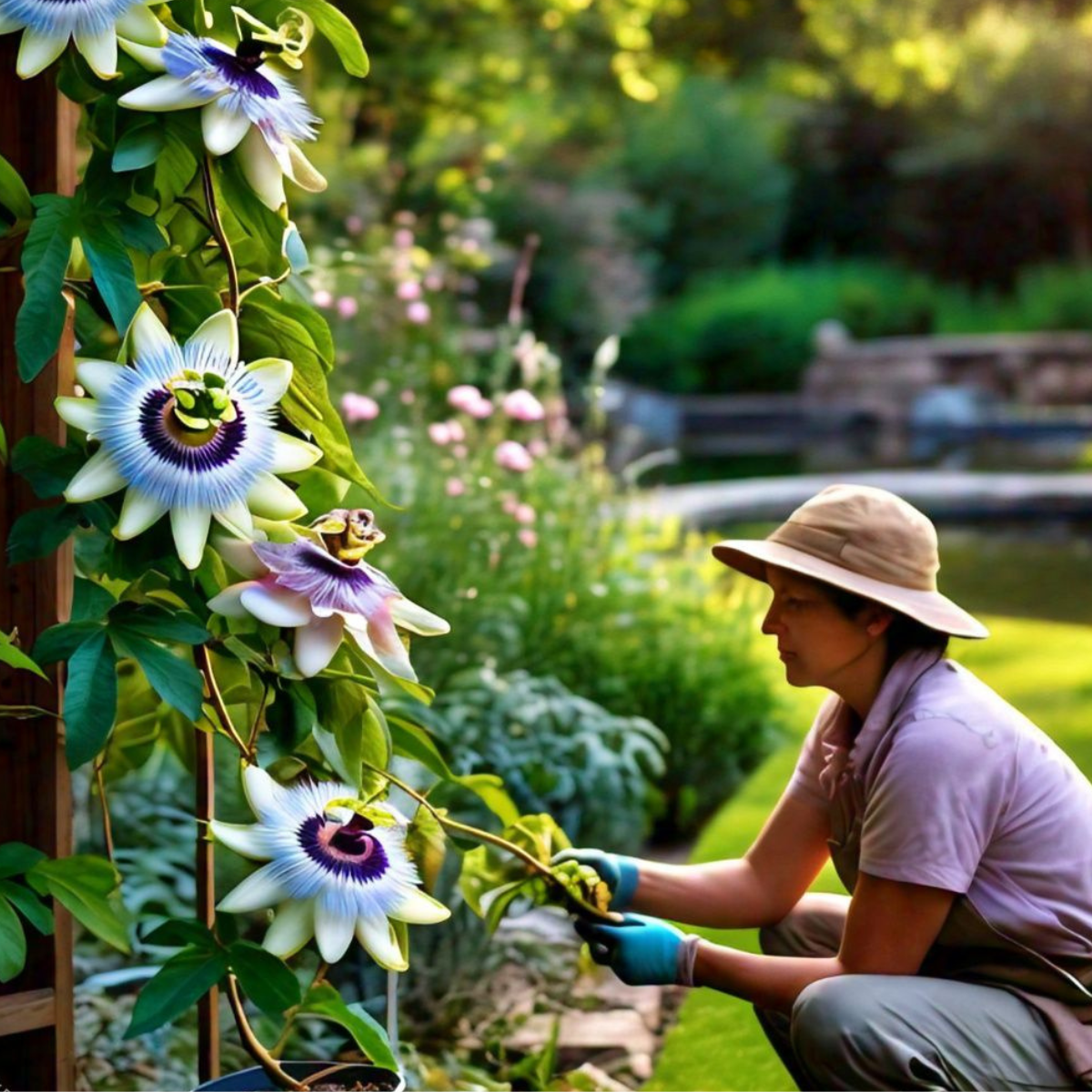
Before you pick your favorite idea from the list above, let’s talk about where people usually go wrong.
The cool thing is that every one of these is easy to avoid once you know it’s coming.
Planting in heavy clay soil: Clay holds water like a stubborn sponge, and passionflower roots do not appreciate sitting in soggy soil.
This is one of the fastest ways to end up with root rot before the plant even gets going.
If your soil is heavy clay, work in some grit or compost before planting. Or skip the ground entirely and use a container with proper drainage instead.
Too much shade: Passionflower doesn’t quietly tolerate a shady corner.
Give it less than six hours of sun a day and you’ll get a sparse vine with maybe a handful of flowers all season.
If your spot is mostly shaded, save yourself the disappointment and plant something else there.
Weak support systems: A flimsy trellis or a support that isn’t anchored well is asking for trouble once this vine fills in.
Passionflower gets heavy fast, and a wobbly structure can collapse under all that weight mid season.
Anchor your support properly before you plant, not after you notice it leaning.
Overwatering: More water does not equal a happier plant here. Passionflower wants consistent moisture, not a swamp.
Overwatering leads straight to root rot, and once that sets in, it’s genuinely hard to bring the plant back. Water deeply, then let the top layer of soil dry out a bit before watering again.
Ignoring pruning: Skip pruning and you’ll end up with a tangled, overgrown mess that blooms less every year, not more.
Flowers form on new growth, so an unpruned vine keeps pushing energy into old wood instead of fresh blooms.
A hard prune in late winter, right before new growth starts, keeps the plant flowering hard instead of just getting bigger and messier.
Planting invasive varieties without planning: Some passionflower types spread aggressively through underground roots, popping up feet away from where you planted them.
Plant one of these without a plan and you’ll be pulling surprise sprouts out of your lawn for years.
Research your specific variety first.
If it’s a spreader, put in a buried root barrier before you plant, not after it’s already loose in your yard.
Poor spacing: Cramming passionflower too close to other plants or structures cuts off airflow, and that invites powdery mildew and other fungal issues.
It also means your vine is competing for water and nutrients with whatever’s next to it.
Give it room to breathe, especially near walls or other climbers, so it can thrive instead of just survive.
FAQs
Where is the best place to plant a passion flower?
Somewhere with full sun, at least six hours a day, and something skinny nearby for it to climb, like wire, twine, or a thin trellis.
A spot with decent drainage and a little breathing room, away from a solid wall, keeps it happiest long term.
What grows well with passion flowers?
Clematis, climbing roses, jasmine, and sweet peas all pair beautifully on a shared structure.
For garden beds, milkweed and coneflower work well too, especially for a butterfly garden vibe.
What can be intercropped with passion fruit?
If you’re growing it for fruit, herbs and shallow rooted vegetables like lettuce or bush beans can share the bed without competing too hard for water and nutrients.
Just keep them a little distance from the base.
What not to mix with passion flower?
Avoid pairing it with other aggressive, fast spreading vines, since they’ll end up fighting for the same space and light.
Also skip planting it next to shallow rooted, thirsty plants that need constantly moist soil.
Does passion flower grow quickly?
Yes, once it’s established it can grow several feet in a single season.
The first few weeks after planting are the slow part while it builds roots, then it tends to take off fast.
What can I plant next to passionfruit?
Similar answer to intercropping.
Herbs, shallow rooted vegetables, or other sun loving flowers work fine as neighbors, as long as they’re not competing hard for water and light.
What pairs best with passionfruit?
For visual pairing, climbing roses and jasmine tend to steal the show alongside it.
For the vegetable garden, low growing herbs like basil or thyme make good ground level companions.
Who should avoid passion flowers?
If you’re pregnant, nursing, or taking sedatives or blood thinners, talk to a doctor before consuming passionflower in any form.
It has mild calming properties when used medicinally.
For simply growing it in your garden, most people don’t need to worry, though it’s worth checking if you have pets that like to chew on plants.
Do passion flowers like fertilizer?
Not much, and that surprises a lot of people. Heavy fertilizing tends to produce a big leafy vine with few flowers.
A light hand, or skipping fertilizer altogether once it’s established, usually gets you more blooms.
What is the lifespan of a passion flower?
It depends on the variety and your climate.
Hardy types can come back year after year as perennials for a decade or more, while tender varieties are often treated as annuals in colder climates.
What grows well with passionflower?
Same answer as above.
Clematis, climbing roses, jasmine, and sweet peas make great climbing companions, while milkweed and coneflower work well nearby for a pollinator friendly space.
Is passionflower aggressive?
Some varieties, yes, especially the hardy native types that spread through underground roots.
If you’re worried about it taking over, plant it in a container or install a buried root barrier.
Choose a less aggressive variety if you want something more well behaved.
Treat this plant a little tough instead of pampered, give it something skinny to climb, and it rewards you with some of the most dramatic, unforgettable blooms your garden has ever seen.
Related Posts: