What Should a Witch Have in Her Garden?
Last Updated on July 5, 2026 by Duncan
So, you want a witchy garden?
Good.
This is one of my favorite things to help people plan, because it’s the rare garden project where the plants have to work just as hard emotionally as they do physically.
Here’s the thing nobody tells you upfront.
A witchy garden isn’t about buying every plant with a spooky name at the nursery.
I’ve seen so many gorgeous gardens turn into a sad patch of dead lavender by August because nobody thought about what these plants need to survive.
So for every plant here, I’m giving you two things. Why you want it in the first place, and how to keep it alive long enough to use it.
Start with plants that earn their spot
Every plant in your garden should earn its spot. Not just because it looks pretty in a mason jar, but because you’ll use it.
Rosemary

Rosemary is your workhorse.
It’s tied to protection and clarity, it’s a go to plant for clearing stale energy in a room, and you can toss it straight into dinner without a second thought.
It also smells incredible every time you brush past it, which is a small daily joy you don’t get from most plants.
To keep it happy, give it full sun and soil that drains fast.
Rosemary hates wet feet more than almost anything else on this list.
If your soil holds water, plant it in a raised bed or a pot with drainage holes, and only water once the top two inches feel dry.
Overwatering is the number one way people kill this plant, not underwatering. So, be ultra cautious about it.
Lavender

Lavender calms everything down.
Anxiety, a bad day, and anything else.
It brings peace into a space and pairs well with dream work, since a lot of people tuck dried buds into their pillowcase.
Lavender needs the same thing rosemary does, tons of sun and soil that drains well.
Skip the rich, fluffy garden soil you’d use for tomatoes.
Lavender prefers lean, slightly poor soil, almost like it’s from a hot dry hillside, because that’s exactly where it’s from.
Water deeply but rarely, and never let it sit in a puddle.
Sage
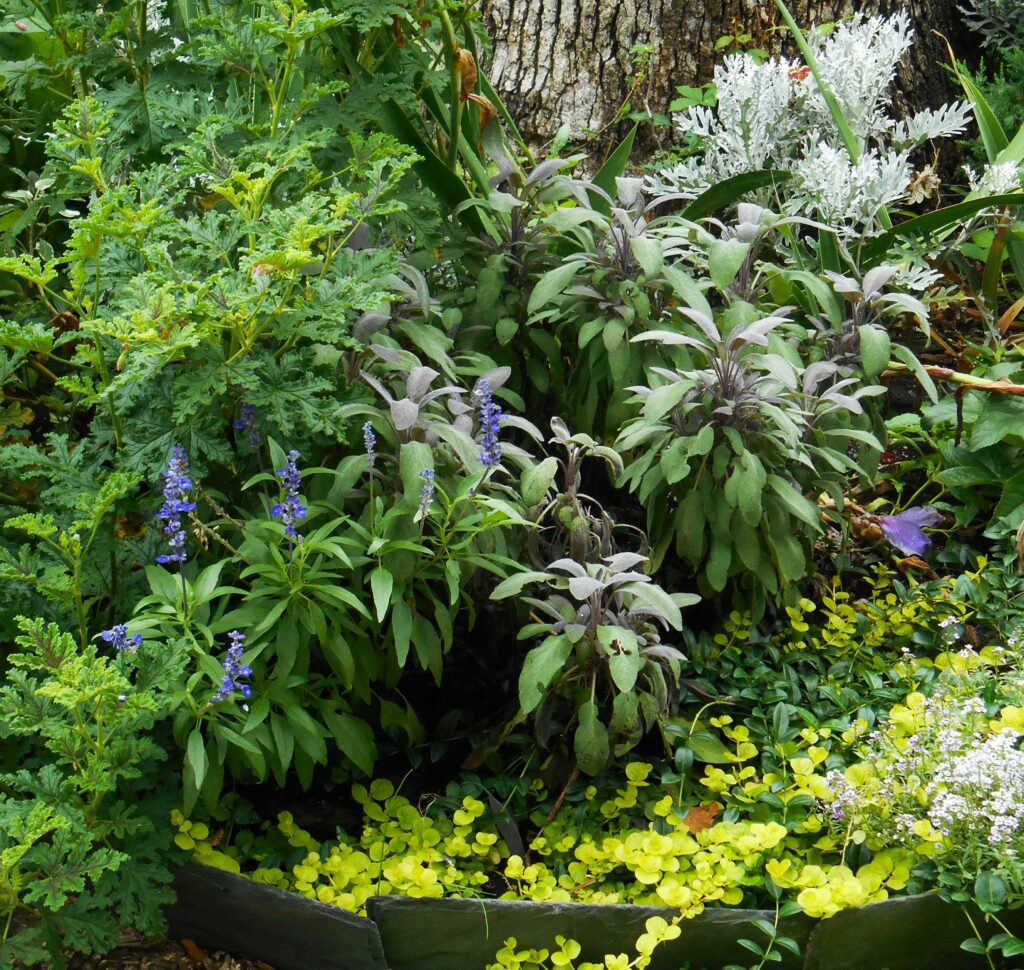
Sage is for clearing stagnant energy and inviting wisdom, which is why it’s the go to plant for smudging.
It’s also a fantastic cooking herb, so you’re never wasting a harvest.
Sage wants full sun and, again, soil that drains.
Are you noticing a pattern with these Mediterranean herbs?
They all come from hot, dry, rocky hillsides, so treat them like they’re on vacation there.
Trim it back after it flowers to keep it bushy instead of woody and leggy.
Mugwort

Mugwort is the plant every witch eventually grows, usually by accident, because it spreads like it owns the place.
It’s a staple for dream work, divination tea, and any kind of psychic opening work, since it’s one of the oldest visionary herbs out there.
It thrives almost anywhere, which is exactly the problem.
Plant it somewhere it can misbehave a little, ideally in a spot with a physical barrier in the soil like a buried bucket with the bottom cut out, or in its own container entirely.
Give it average soil and regular water and it will reward you by trying to conquer the rest of your yard.
Mint

Mint is for prosperity and protection, and also mojitos, so it’s a win either way.
It’s an easy, reliable plant to work protection spells with, and it grows so fast you’ll never run out.
Same warning as mugwort.
Mint in open ground with no boundaries is basically an invasive species with good PR.
Always grow it in a pot, even if that pot is sunk into the ground, or it will run the whole garden by year two.
It likes partial shade and consistent moisture, unlike its dry loving cousins above.
The protective border plants
Every witch’s garden benefits from a boundary, both energetically and literally, because deer do not care about your intentions.
Rue
Rue has a long history as a protective plant used to ward off negativity and the evil eye, and it doubles as a natural pest deterrent for your other plants.
Plant it along the edges of your garden as a kind of energetic fence line.
Give it full sun and dry, average soil, and don’t overwater.
Wear gloves when you handle it, since the sap can irritate skin in sunlight and cause a rash that will make you regret skipping this step.
Nettle

It looks like a weed and stings like one too, but it’s a powerhouse for protection work and genuinely good for you steeped as tea.
It’s a solid pick for grounding, protection, and adding something nutrient dense to your herbal cabinet.
Plant it at the edge of your yard, not where bare ankles are going to find it during a summer barbecue.
It’s not picky about soil, tolerates part shade, and honestly grows better with a little neglect.
Wear gloves when you harvest it, to protect yourself.
The moon plants
If you want your garden to feel alive after dark, and you should, plant a few things that only show up at night.
Nighttime is when a lot of intuitive and dream related work happens, so it makes sense to have plants that match that energy.
Moonflower and evening primrose
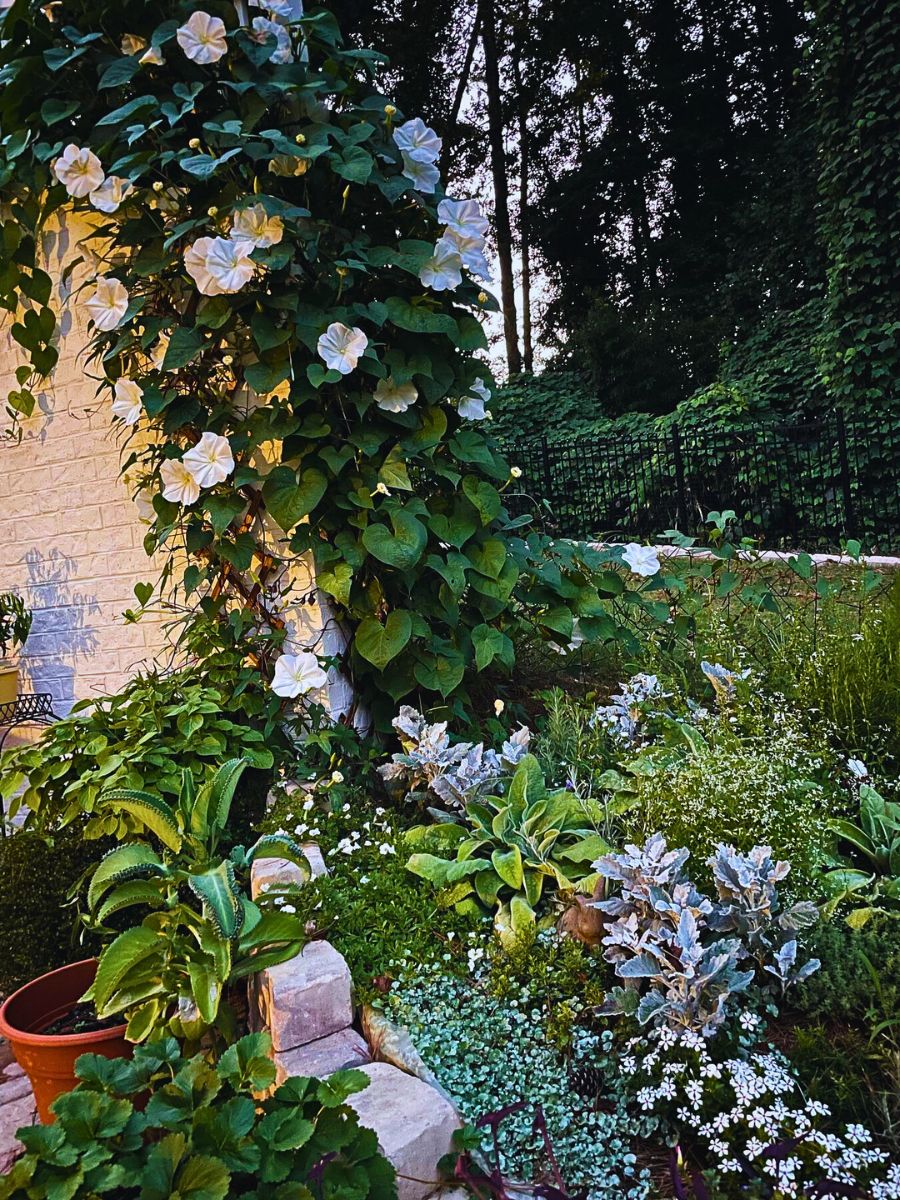 These release their scent and open their blooms after sunset, which is why they’re tied to moon magic and intuition work.
Sitting in a garden that smells different at night than it does during the day is one of those small magical experiences that makes the whole project worth it.
Both need full sun during the day to fuel that nighttime bloom, plus soil that drains well.
Moonflower is a vine, so give it a trellis or fence to climb, or it will sprawl across everything nearby.
Lamb’s ear
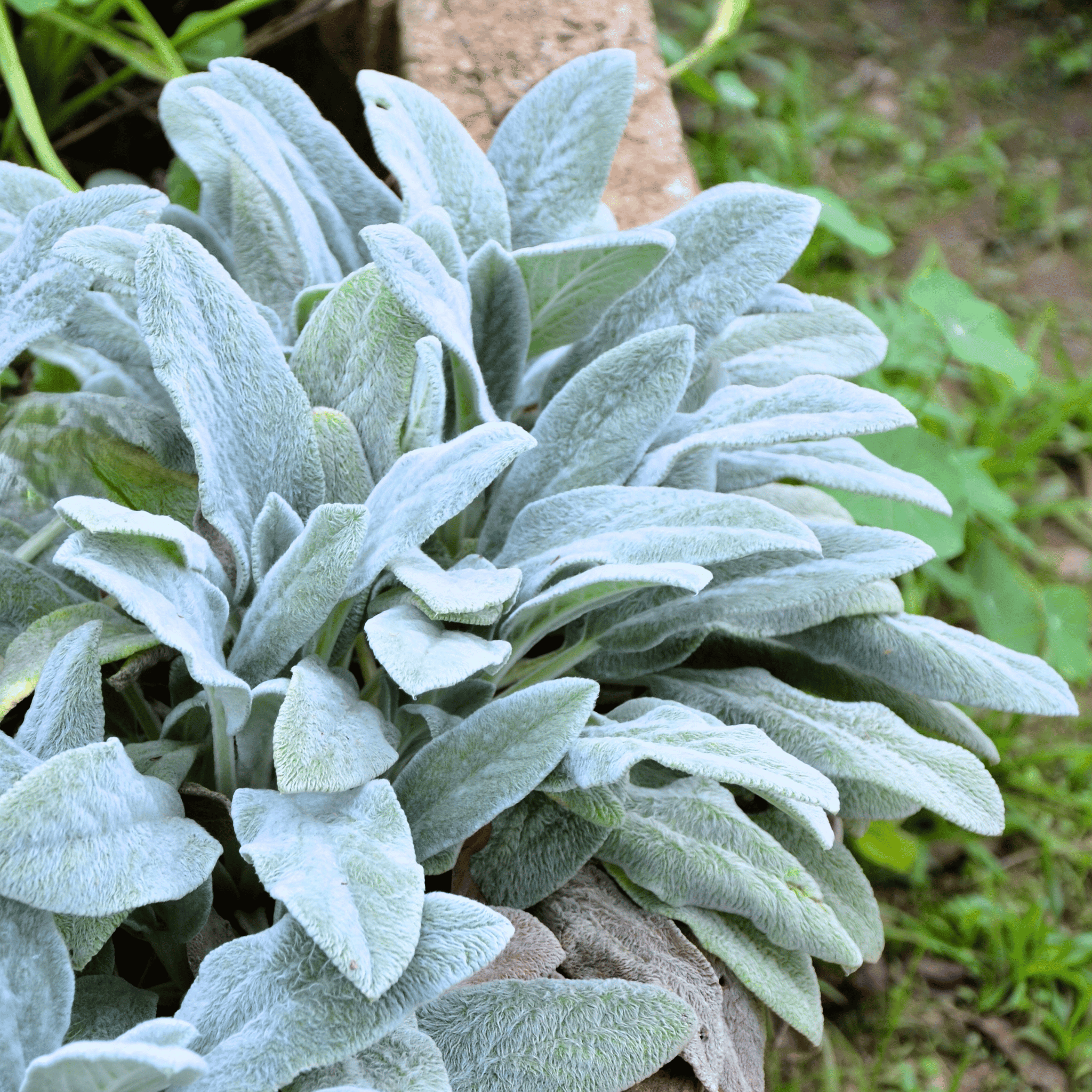
They catch moonlight in a way colored flowers don’t, which is why moon gardens lean so heavily on silver and white foliage.
If you’re doing any kind of evening ritual, or just want a garden that photographs beautifully at dusk, this is your move.
Lamb’s ear and dusty miller, two easy silver leafed options, want full sun and soil on the drier side.
Lamb’s ear especially hates soggy soil and will rot if it sits wet.
Plants for love and relationship
Rose

Ris the obvious one, and yes it’s a little needy, but the payoff is worth it.
Roses are tied to love magic across nearly every tradition, and dried petals are gorgeous in jar spells or bath rituals for self love or romance.
Roses want at least six hours of sun, rich soil, and consistent watering at the base rather than overhead, since wet leaves invite fungal problems.
Feed them in spring and after their first big bloom if you want repeat flowers all season.
Yarrow

It is for love and also for courage, which go together more often than people admit.
It’s tied to strengthening bonds and healing rifts in relationships.
It’s also one of the easiest plants you’ll ever grow, so if you’ve killed everything else on this list, start here.
Yarrow tolerates poor soil, drought, and neglect better than almost anything in this article.
Full sun is all it asks for.
Overwater or over fertilize it and it gets floppy and weak, so less is more here.
Basil
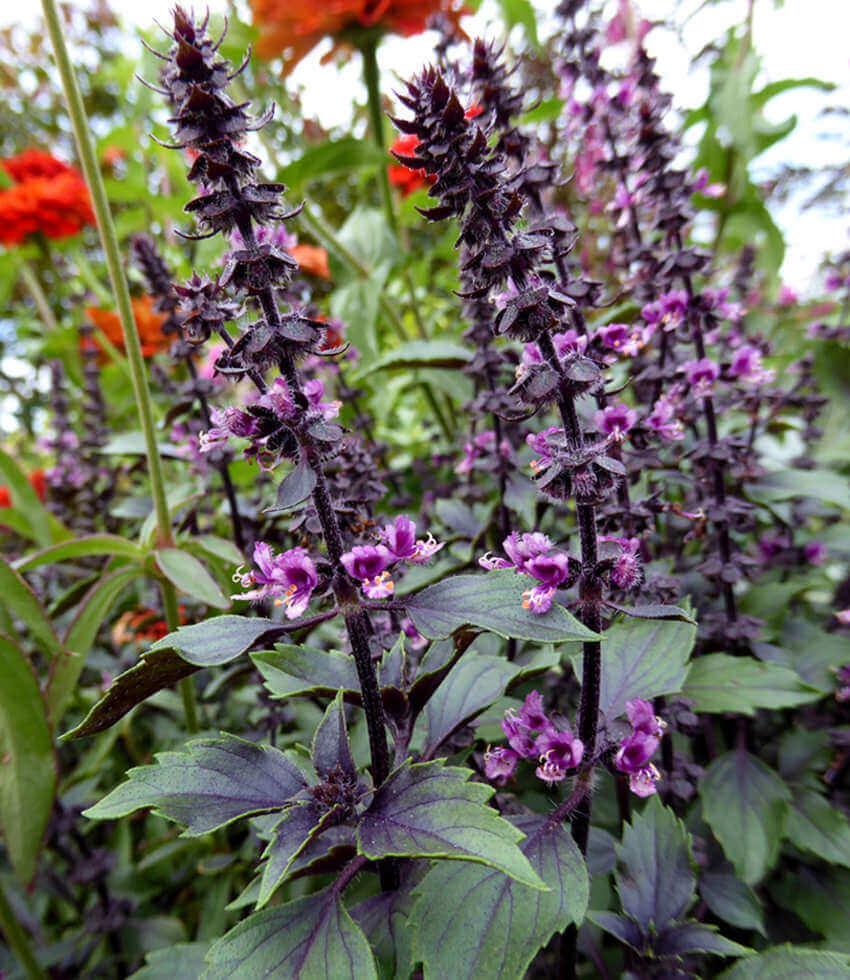
Basil brings love and wealth, and it makes your pasta sauce taste great.
Keep it near the kitchen door for both spellwork and dinner, since it’s one of the few plants that’s equally useful for magic and for cooking.
Basil wants warmth, at least six hours of sun, and consistently moist soil.
It hates cold, so don’t rush it outside in early spring.
Pinch off flower buds as they appear to keep the leaves coming instead of the plant going to seed.
Divination plants
Wormwood
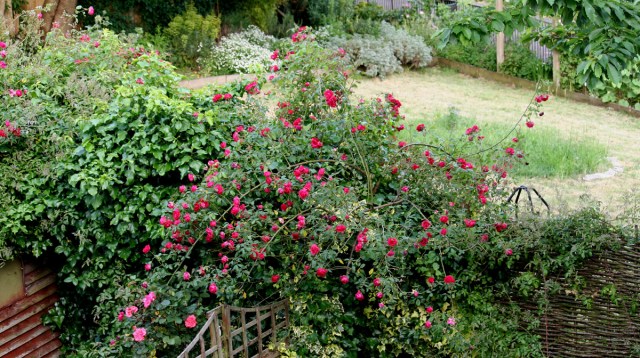
Wormwood is the classic divination herb, tied to psychic work and scrying because of its long association with visions and the otherworld.
It’s bitter and a little intense, much like everyone’s favorite aunt, but it earns its place in the garden.
It wants full sun and, like most of the herbs in this article, well draining soil that’s on the leaner side.
Give it a little room to spread since it gets bushy, and cut it back hard in fall.
Chamomile
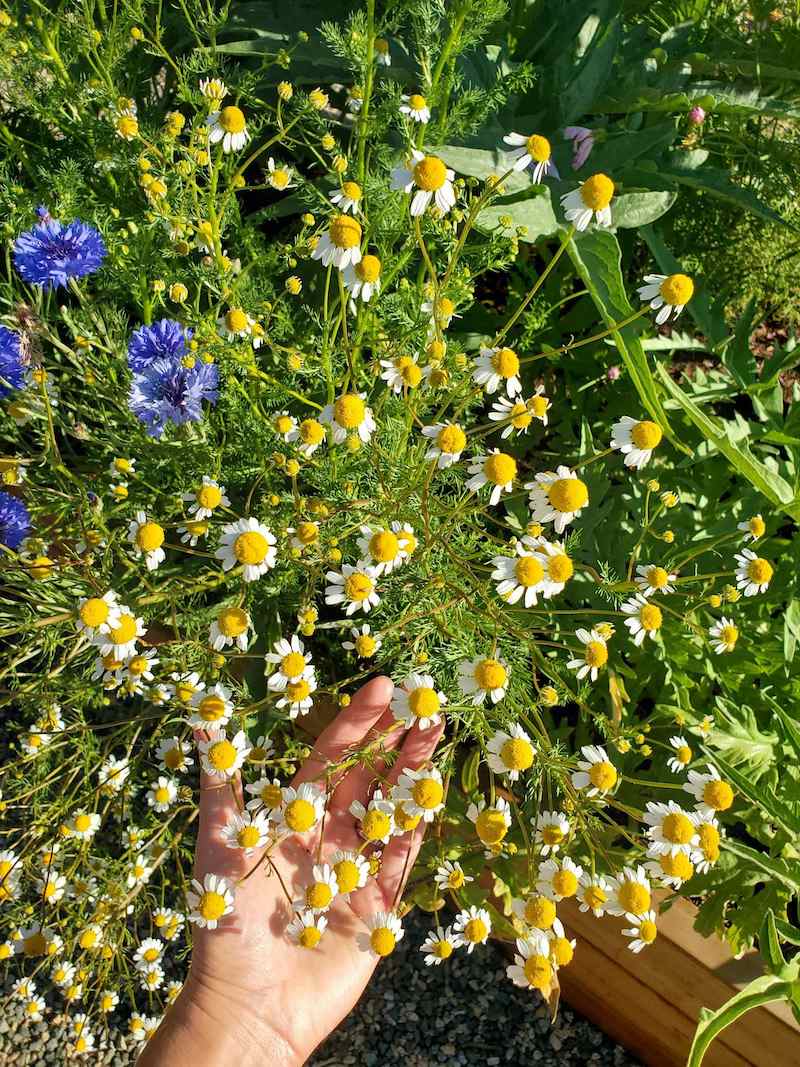
Chamomile is gentler and better for beginners.
It calms the nervous system, supports restful sleep, and makes a lovely tea to sip before any kind of dream work or meditation, easing you into a receptive state.
Chamomile likes full sun to partial shade and regular water, though it doesn’t want to sit soggy.
It reseeds itself easily, so once you plant it, you’ll likely have it coming back on its own for years.
Jasmine
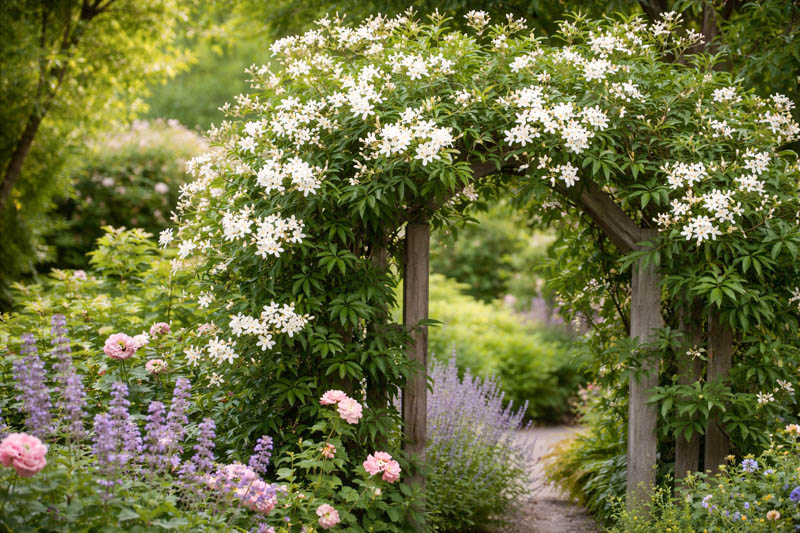
This is another nighttime bloomer worth adding if your climate allows it.
It’s tied to prophetic dreams and psychic opening because of its intoxicating evening scent.
The scent alone is worth growing it even if you never do a single spell with it.
Jasmine wants warmth, bright light, and a trellis to climb since most varieties are vines.
Keep the soil evenly moist and bring potted jasmine indoors before frost if you’re in a cooler climate.
The plants to be cautious about

Here’s where I get a little serious for a second, because this matters.
Foxglove, monkshood, datura, and belladonna show up on every witchy plant list because they look dramatic and have a spooky history tied to old world witchcraft and protection work.
They are also seriously toxic, some of them just from skin contact.
If you have kids, pets, or you’re the kind of person who forgets to wash their hands before touching your face, skip these entirely.
If you must have them, keep them in a locked, clearly labeled area far from anything edible.
There is no spell worth a trip to the ER. I say this with love.
Be strategic with your witchy plants

Don’t just scatter everything randomly and hope for the best. Group plants by what they need to survive, not by vibe.
Put your sun lovers, rosemary, lavender, thyme, yarrow, together in the driest, sunniest spot you’ve got.
Put your moisture lovers, mint in its container, lemon balm, chamomile, somewhere a little shadier and damp.
This isn’t just plant nerd advice, it’s the difference between a garden that thrives and one you’re constantly replacing.
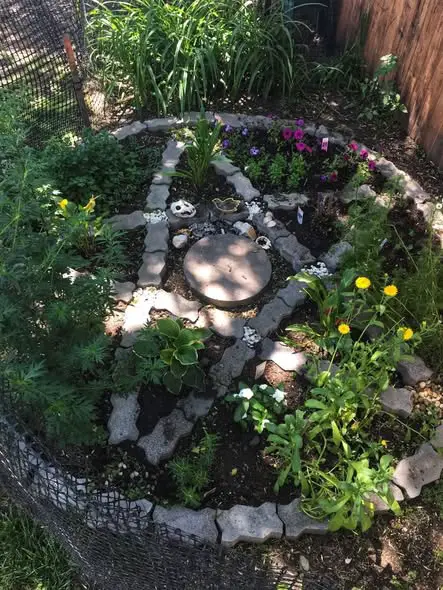
A spiral shaped raised bed is a favorite trick of mine for small spaces.
The top of the spiral dries out faster and gets more sun, so that’s where your Mediterranean herbs go.
The base holds moisture, perfect for mint and lemon balm.
One structure, three different growing zones, and it looks stunning from above.
Plant your protective and threshold plants, rosemary or rue, right where you walk into the garden.
You want to brush past them on your way in.
That small physical contact and burst of scent does something to your brain, shifting you from regular mode into “I’m about to do something intentional” mode.
It sounds small but it changes how the whole space feels.
How to properly harvest your witchy plants
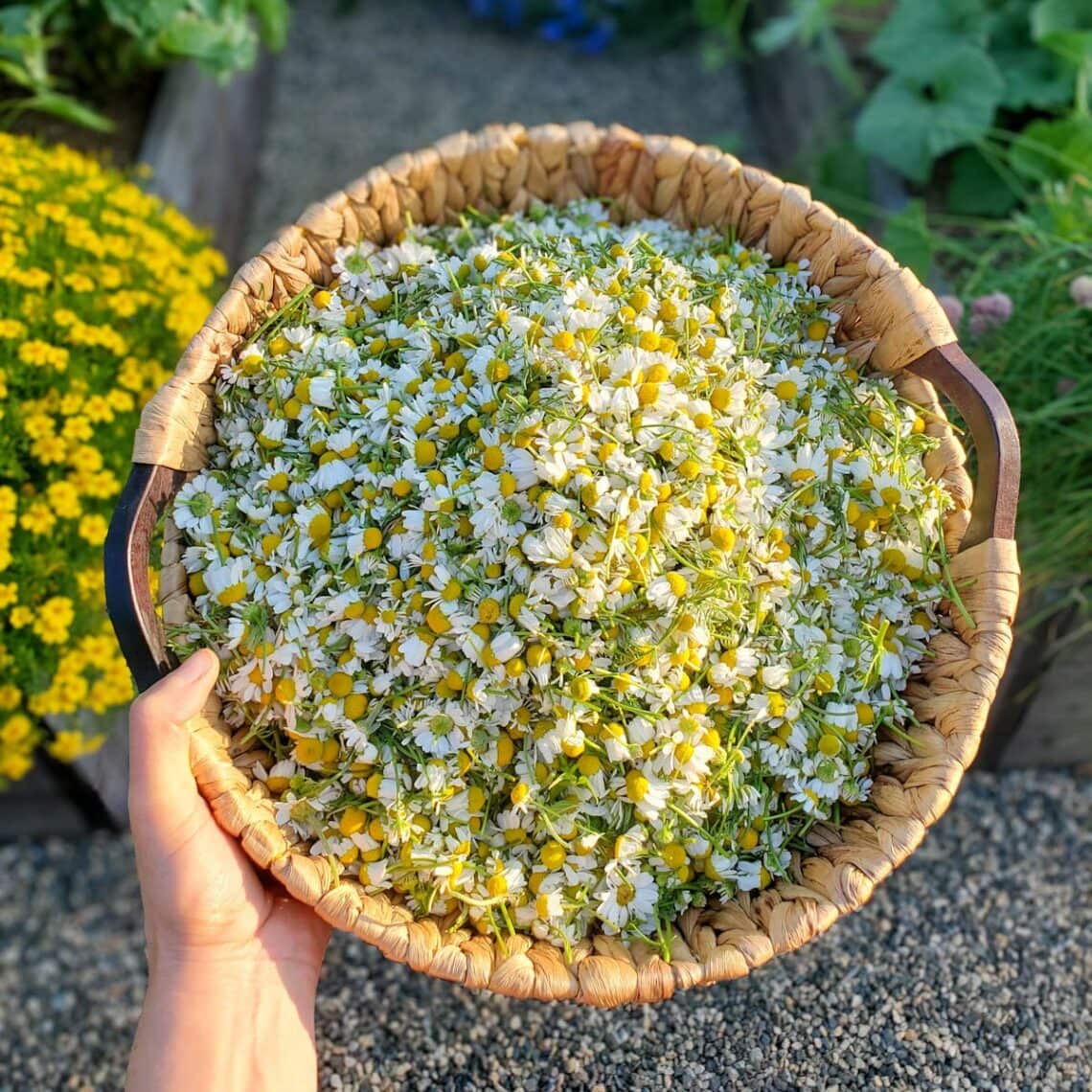
Harvest leaves and stems in the morning after the dew dries but before the day heats up.
This is when the oils are most concentrated, which means more scent, more flavor, more potency for whatever you’re using it for.
Harvest flowers the moment they open, not after they’ve been sitting in the sun for a few days.
Roots are best dug up in fall after the first frost, once the plant has pulled all its energy down into the ground for winter.
When you’re drying herbs for spell jars or tea, make sure they’re in a spot with good airflow, not a humid bathroom or a closed cabinet.
Mugwort and yarrow in particular can look dry on the outside while staying damp inside, and that turns into mold fast.
Snap the thickest stem before you store anything.
If it bends instead of snapping clean, it’s not ready.
Witchy plant mistakes to avoid
- Planting mugwort or mint directly in the ground with no barrier and being shocked a year later when it’s eaten the whole bed. Contain it or accept your fate.
- Putting toxic plants right next to your kitchen herbs. Cross contamination during pruning is a real thing, so give anything poisonous its own separate space.
- Buying every plant with a witchy reputation instead of picking the ones you’ll genuinely use. A garden full of plants you never touch isn’t magical, it’s just a lawn ornament with extra steps.
- Giving Mediterranean herbs like rosemary, lavender, and sage rich, wet soil because that’s what you’d use for vegetables. These plants come from dry, rocky hillsides and rich wet soil is often what kills them, not the cold.
- Skipping the smell and touch experience. A witch’s garden should engage more than your eyes. Walk through it. Brush past things. Let it smell different at 8am than it does at 8pm.
FAQs
What do witches plant in their garden?
Most witches lean toward a mix of protective herbs, healing herbs, and a few plants for divination or dream work.
Think rosemary, lavender, sage, mugwort, mint, and yarrow.
The exact lineup depends on what kind of practice you’re building.
Whether that’s kitchen witchery, protection work, or dream and psychic focused work.
Regardless of what it is, you should know that almost every garden includes at least a few of these staples because they’re useful in more than one way.
What items would a witch have?
Outside the garden itself, a lot of witches keep a small toolkit that pairs with what they grow.
Things like a mortar and pestle for grinding dried herbs, glass jars for storing them, candles, a journal or grimoire for tracking what works, and something to burn dried herbs safely, like a fireproof dish.
None of this needs to be fancy or expensive.
A lot of it can be secondhand or homemade, and honestly the plants you grow yourself usually mean more than anything you buy.
What plants do witches hate?
This one depends on the witch, but a few common frustrations come up again and again.
Mint and mugwort planted without any containment, because they will take over an entire bed within a season or two.
Anything toxic planted too close to edible herbs, since that turns harvesting into a hazard instead of a joy.
And honestly, finicky plants that need constant babying for very little payoff tend to get pulled out after a year or two in favor of something more reliable.
What plants are associated with witches?
The classics are rosemary, sage, lavender, mugwort, rue, yarrow, nettle, wormwood, and belladonna.
There are also nightshades like foxglove and datura for their dramatic and dangerous reputation.
Roses show up often too.
Plants with a long folk history in protection, healing, or ritual work tend to earn the label, dangerous or not.
What herbs do witches use most?
Rosemary, sage, lavender, and mint top the list for most people, mainly because they’re easy to grow, useful in the kitchen, and work well for everyday protection or calming spells.
Mugwort and yarrow come in close behind for anyone doing dream work or divination.
If you’re just starting out, these six herbs alone will cover most of what you need before you branch into anything more specialized.
What do witches carry for protection?
A lot of witches carry a small sachet or pouch with dried protective herbs like rosemary, rue, or sage tucked inside.
Others carry a specific stone alongside the herbs, like black tourmaline or obsidian, or wear jewelry with a protective symbol.
The exact combination varies a lot from person to person, but the idea is the same across the board, something small and portable that you can touch or smell when you need a quick sense of grounding or safety.
Parting shot
A witch’s garden isn’t a checklist of spooky plants.
Every plant on this list earns its place because it does something, calms you, protects you, feeds you, or opens up your intuition, and it only does that job if you understand what keeps it alive.
Start small.
Pick five or six plants from this list that speak to you, match them to the light and water they need instead of where you think they’d look best, and build from there.
Your garden will teach you more than any list ever could.
Mine certainly did, mostly through trial, error, and one very aggressive mint incident I still haven’t fully recovered from.
Related Posts: