When Shouldn’t You Aerate Your Lawn?
Last Updated on January 18, 2026 by Duncan
The secret to healthy, bright grass lies beneath the surface. It’s all about aeration, a simple procedure that delivers air into the soil, allowing roots to obtain essential nutrients and water. While this is the case, it’s critical to understand when you shouldn’t aerate your lawns.
If you are wondering when you shouldn’t aerate your lawn? Well, there are several situations in which you shouldn’t do it. These situations include:
During a drought: Aerating at this time can increase stress to the grass, making recovery more difficult.
When the weather is hot: Aerating during exceptionally hot weather can also put additional stress on the grass, making it more susceptible to disease.
When the grass is dormant: Aerating during the dormant season, when the grass is not actively growing, can be ineffective and impose additional stress on the grass.
Growing seasons: In warm areas, cool-season grasses are most active and susceptible to aeration damage during their growing season (October-April).
You should avoid aerating your lawn during these times to keep it healthy and vibrant. If you are unsure when to aerate your lawn, consult a lawn care specialist.
When is the best time to aerate your lawn?
When it comes to the optimal time of year to aerate your lawn, there is no one-size-fits-all answer, since lawn aeration is more than just punching holes in the soil; it is a strategic move tailored to the type of grass you’re growing.
If you’re wondering, “What is the best time of year to aerate lawns?” the idea is to aerate your grass while it’s at its peak growth phase, ensuring it gets the most out of the process.
Keep the following seasonal considerations in mind when aerating:
Cool-Season Grasses: Aerating lawns with cool-season grasses, such as Kentucky bluegrass and fescue, is best done in the early spring or fall. These grasses experience their most intense growth spurts during these transitional seasons, making aeration ideal.
Warm-season grasses, such as Bermuda and Zoysia, thrive in late spring and early summer. These months provide a lush expanse during their peak development period and this is considered the best time of year to aerate such a lawn.
Regardless of your grass type, selecting the optimal time of year to aerate your lawn isn’t the only consideration; soil condition is also essential. Always aerate when the soil is damp, not waterlogged. This allows the aeration equipment to penetrate the earth easily.
Understanding your lawn’s demands and determining the ideal time of year to aerate it are critical to keeping it healthy. You should treat your lawn like a living organism, attending to its development cycles and needs, and it will reward you with a lush, green carpet all year.
Best practices when aerating the lawn
For the best experience and results, you should consider these tips when aerating:
Aerate at the right time
When preparing to aerate your grass, time is critical. The right season can significantly improve your lawn’s health. For best outcomes, you should do spring or fall aeration.
In the spring, aerate when the grass begins to green up, typically between late April and early May. During this time, aeration delivers a boost of nutrients and moisture to your lawn, allowing it to recover faster.
Many people treat fall aeration as the optimal aeration time. Aerating in early to mid-September allows your lawn to strengthen before winter sets in. This way, cooler temperatures and more rainfall help in recuperation, supporting strong root growth.
Finally, selecting the appropriate time ensures that your grass receives the aeration it requires to grow, instilling a sense of communal pride in your lush, healthy environment.
Prepare your lawn before aerating.
To reap the most benefits from aerating your grass, you must first prepare the space. Begin by checking that your soil moisture levels are optimal; the ground should be damp but not waterlogged.
This balance allows the aerator to penetrate the soil more effectively, improving airflow and nutrient absorption. If your lawn is parched, consider watering it the day or two before aeration.
Next, remove any debris on the surface, such as leaves, twigs, or rocks. This not only protects your equipment, but also ensures that the aeration process targets the soil directly, thereby improving grass health.
Finally, mow your grass to a lesser height of 2 to 3 inches before aerating. This allows the aerator to perform more efficiently and lowers the possibility of grass damage.
It goes without saying that carefully preparing your grass will lay the groundwork for a strong, vibrant lawn that you will be proud of.
Go with plug aerators.
There are two primary ways for aerating a lawn: plug aeration and spike aeration. Plug aeration involves removing soil plugs from your yard, whereas spike aeration involves pushing a hole into the soil using a fork or tine.
Both methods promote drainage and increase root space, but plug aeration creates less compaction and allows your grass to benefit from the aeration process for a longer period. Forks or tines pushed into your yard develop holes, but they also compact the surrounding soil, which is why plug removal is better.
For the best results, use an aerator with holes 2 to 3 inches deep and 1/2 to 3/4 inch in diameter.
Removing plugs creates space for your root system to expand, breathe, and absorb nutrients; the stronger and healthier your root system, the better your yard will look overall. And this is what you want, right?
Preserve the plugs
You should leave the plugs that you remove during aeration strewn on your grass around the hole they left. Do not remove these plugs because they contain essential elements that must be reintroduced to your grass.
Instead of gathering and removing plugs, run a lawnmower over them once they’ve dried. Running plugs over with a lawnmower or breaking them up with a rake causes them to disintegrate and return to the holes from which they originated.
Aeration is like a facelift for your lawn, and the plugs are an essential part of the process. The plugs will disappear in a matter of weeks, and your lawn’s health and appearance will improve dramatically.
Consider overseeding as you aerate
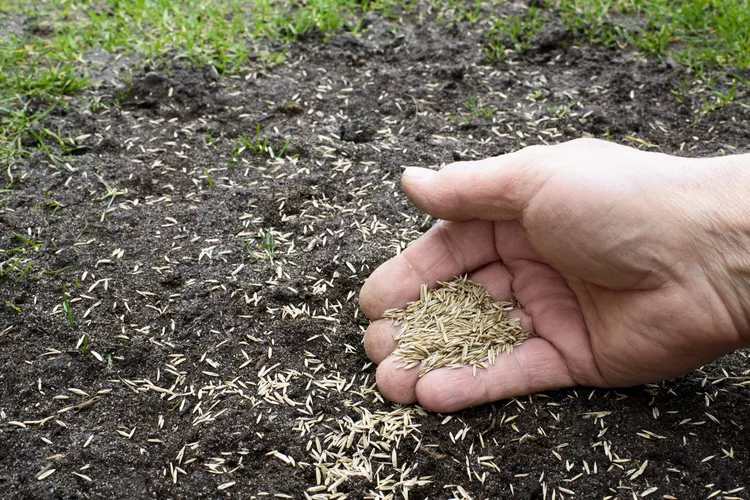
Overseeding is an excellent way to address patches or other weak areas in your yard. The enhanced root growth of fall, along with aeration, allows you to get the most out of your overseeding treatment.
Aerating the lawn creates fertile ground where new seeds can thrive. The mix of air, nutrients, space, and water allows a new seed to grow and fill in a patch of grass.
If you’ve already invested in seed and fertilizer, it makes sense to add aeration to promote the fastest and healthiest growth.
Aerate when your lawn is properly hydrated.
Moisture is always essential in lawn maintenance, but it is critical for aeration. Consider the contrast between sticking a fork into a dry lawn and how the body of a moist cake responds.
With the dry lawn, inserting the tines requires a lot of pressure, and the surface chips and crumbles. A moist lawn makes it easy to insert and remove a fork.
Unfortunately, a difficult-to-aerate lawn is likely to require the most aeration. If you try to aerate parched, compact grass, your equipment will be complex to operate, resulting in a long, stressful day.
Aerating a lawn that is too dry can be tough, but aerating one that is too wet can be annoying. For the best results, the grass should be strong enough to keep the cylindrical plug shape but not so hard that long plugs cannot be withdrawn.
Aerating the day after watering or spring showers typically yields the best benefits. To maximize the benefits of aeration, wait until your lawn is moist but not wet. Always make multiple passes to ensure uniform, consistent aeration.
Finish with proper lawn care.
To ensure that your lawn reaps the full benefits of aeration, you need to maintain it properly. Begin by using effective lawn fertilization strategies. After aeration, your grass can absorb nutrients more efficiently, so adding a balanced fertilizer can help recover any nutrients lost and promote healthy growth.
Look for slow-release options to ensure consistent nutrient delivery.
Next, change the watering frequency based on the season and recent weather. Aeration creates holes that allow more water to penetrate. You should water your lawn, but avoid overwatering.
Instead, focus on deep, infrequent watering to promote root development. Monitor your lawn’s moisture levels and adjust accordingly to keep it hydrated without getting soggy.
FAQs
What do I do after aerating my lawn in the fall?
After aerating your grass in the fall, consider overseeding and using a slow-release nitrogen fertilizer. This can help to stimulate new growth and keep your grass healthy and ready for the next growing season.
Should you aerate in the spring or in the fall?
The optimal time to aerate depends on the type of grass you have. For cool-season grasses, aerate in early spring or fall. Aerating warm-season grasses is most effective from late spring to early summer.
How many times each season should you aerate your lawn?
Aerate cool-season grasses once each year in the fall, and warm-season grasses in late spring or early summer. If your lawn has heavy clay soil or is often used, consider aerating twice a year.
For sandy soils, less frequent aeration works great. Always contact a local lawn care specialist for precise recommendations based on your lawn’s characteristics.
Related Posts: