Cactus Flower Bed Ideas: 11 Ways to Create a Gorgeous Desert Garden
Last Updated on October 27, 2026 by Duncan
A cactus flower bed will turn a plain, sun baked corner of your yard into a striking landscape filled with sculptural shapes, colorful blooms, and beautiful textures.
The secret is choosing cacti that suit your climate, arranging them so each plant has room to grow, and designing a bed that looks intentional even when nothing is flowering.
Whether you have a small front yard, a sunny driveway, a spacious backyard, or a narrow strip beside your house, these cactus flower bed ideas will help you create a garden that matches your personality.
Use black gravel for a modern cactus flower bed

Black basalt or lava rock makes every plant look like it’s under a spotlight. Silver agave, green barrels, and hot pink blooms all jump off a dark background.
It’s the fastest way to make a bed look planned. Add a steel edge and a few charcoal boulders and you’re done.
The catch is heat. In a hot climate, keep black gravel off the west side of the house, or mix in some tan stone so the plants aren’t roasting from below.
Try a cactus flower bed with white gravel and pale stones

White gravel and pale limestone give you a calm, bright, dry creek bed look. It’s the opposite of the black bed, soft and airy instead of bold.
It glows at dusk, which is a lovely surprise from a patio chair.
White rock bounces light up into your plants, so in a blazing climate keep it to spots with afternoon shade, and hose off dust every so often or it turns beige fast.
Design a colorful cactus flower bed with bright blooms

Want color that stops traffic? Plant in drifts of three or five, not one of everything.
One lonely yellow Opuntia looks like a mistake. A cluster of five looks like a plan.
Pick two or three bloom colors and repeat them across the bed. Then park a silver or blue plant in between to cool things down so the colors don’t fight.
Create a cactus flower bed with contrasting shapes

I once saw a bed made entirely of prickly pear paddles. It looked like a stack of green pancakes.
Mix your shapes instead. Round barrels, spiky agave rosettes, flat paddles, tall columns, and a trailing something along the edge.
A good rule is three shapes, repeated. Your eye needs a little rhythm, and the repeats give it somewhere to rest.
Add flowering ground covers between your cacti

Bare gravel between plants is where weeds move in. A low, flowering carpet fills that space and ties the bed together.
Try ice plant (Delosperma), Sedum, or sandpaper verbena for colors that run from hot pink to yellow.
They spill over the gravel and soften the spiky edges.
Keep them about 6 inches off each cactus base. Ground covers like a little more water, and a damp collar around a cactus is how you lose a cactus.
Create a curved cactus flower bed along your fence

A straight bed against a fence looks like a hallway. A sweeping curve looks like a landscape.
Lay a garden hose on the ground and push it around until it looks right.
Then leave it overnight and look at it from the kitchen window, because that’s where you’ll see it most.
Keep spiny plants at least 18 inches off the boards so you’re not scratched every time you stain the fence.
Tall plants go at the back, and low ones swing out along the curve.
Build a small cactus flower bed along your front walkway

A small bed does more for curb appeal than a big messy one. Aim for 3 to 4 feet deep and limit yourself to three plant types.
Low, tidy plants go at the path edge. Think hedgehog cactus, small barrels, and ground covers, not cholla.
Repeat one plant every few feet and the whole strip looks intentional. Add one low path light and your front walk looks like a boutique hotel at night.
Make a cactus flower bed in a small courtyard

Courtyards hold heat like a brick oven. Walls and pavers soak up the sun and push it back out all evening.
That’s a gift if you live where winters bite, because tender cactus often survive there when they’d die in the open yard.
In a hot climate, give your plants a bit of shade cloth or an afternoon umbrella.
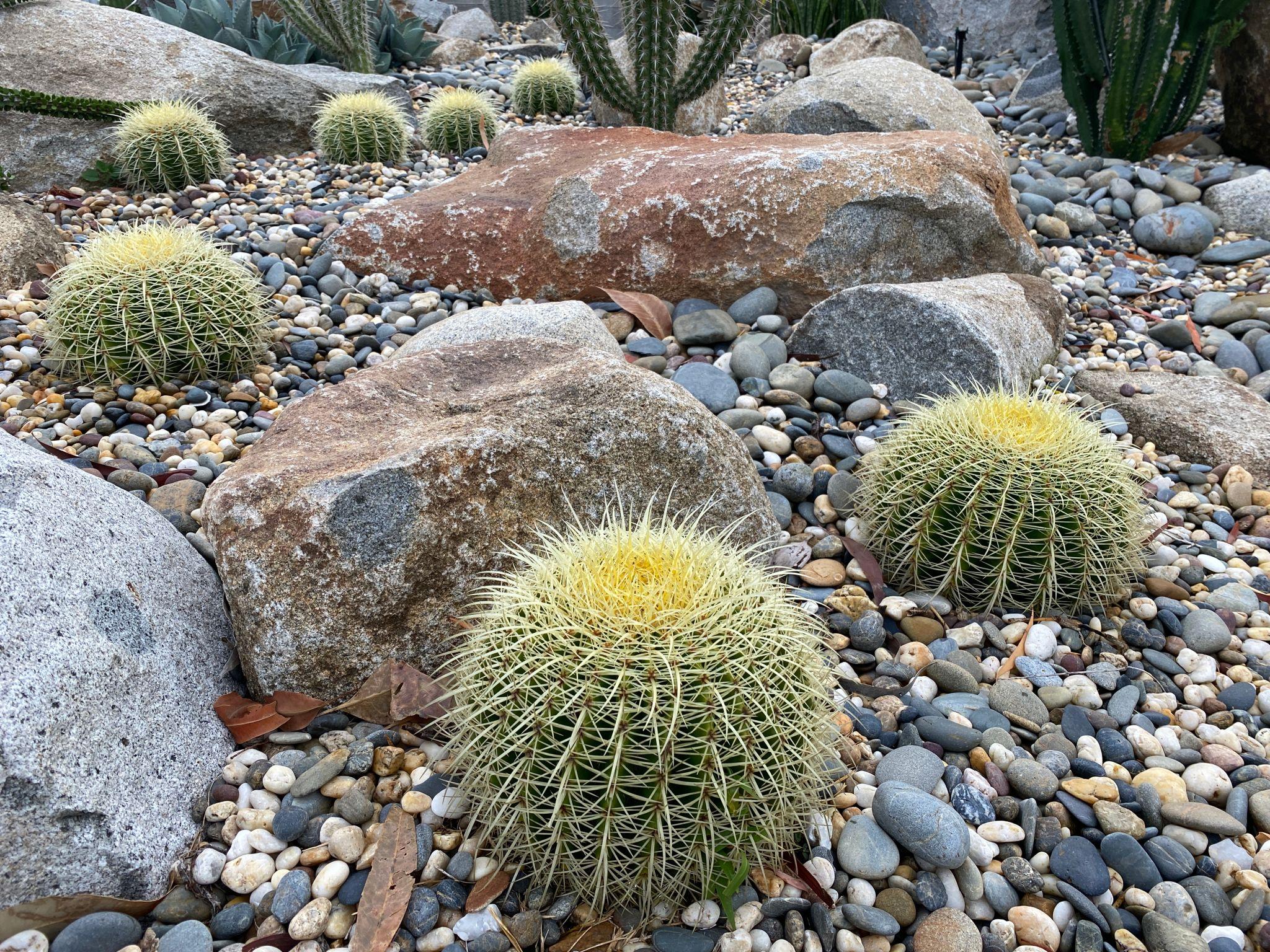
Choose one star plant, like a big golden barrel or a columnar cactus, and let everything else support it.
Keep the spiny ones away from where chairs scrape and people squeeze past.
Plant a cactus flower bed for a sloping yard

Slopes are a cactus dream, because water drains off them without any issues. The trouble is the gravel, which slides downhill after the first big storm.
Use bigger stones, around 1 to 2 inches, and set boulders across the slope like little retaining walls.
Plant in pockets behind each rock so soil stays put.
Check where the runoff ends up at the bottom.
A soggy puddle at the base of your slope is a bad home for anything, and you’ll want to plant your thirstiest things there.
Make a raised cactus flower bed for better drainage

A raised bed 12 to 24 inches tall gives you drainage on demand. It also puts the blooms closer to eye level, which is a lovely thing.
Build the bed from stone, block, or steel, and leave gaps or weep holes so water can leave. Fill it with your gritty mix, not bagged potting soil.
If your yard is clay, break up the ground under the bed first. Otherwise your raised bed turns into an expensive bathtub.
Create a low maintenance cactus flower bed with gravel mulch

A 2 to 3 inch layer of gravel is the closest thing to a self cleaning bed. Weeds struggle, soil stays put, and the plants stay dry at the crown.
Choose stone around 3/8 to 3/4 inch. Finer stuff packs down like concrete, and big chunks trap leaves you can’t reach.
Once a year, top it up and run a leaf blower on low to clear debris. That’s your whole maintenance routine, about ten minutes.
Cactus flower garden best practices
Avoid wood mulch

Bark and shredded wood hold water and break down into exactly the damp, rich mess cactus hates.
They also invite fungus gnats and the occasional mushroom colony.
Stick with inorganic stuff like gravel, decomposed granite, or crushed stone. Your future self, standing in the bed with a trowel, will thank you.
Don’t trust landscape fabric
Fabric under gravel sounds smart.
Within a couple of seasons, dust and leaf bits settle on top, weeds root right into that layer, and the fabric becomes impossible to pull.
Pulling weeds from a bed of spiny plants is already a bad time. Doing it through shredded plastic is worse.
Instead, pull weeds early, hand weed after a rain when roots slide out, and top up your gravel once a year.
Keep soil off the stem
This is the quiet killer. Soil piled against the base of a cactus holds moisture right where the plant can least handle it.
Set each plant slightly high on a little mound. Then finish with gravel that touches the base but doesn’t bury it.
Picture the plant as a lamp sitting on a table, not a post stuck in concrete.
Watch your flower color combos

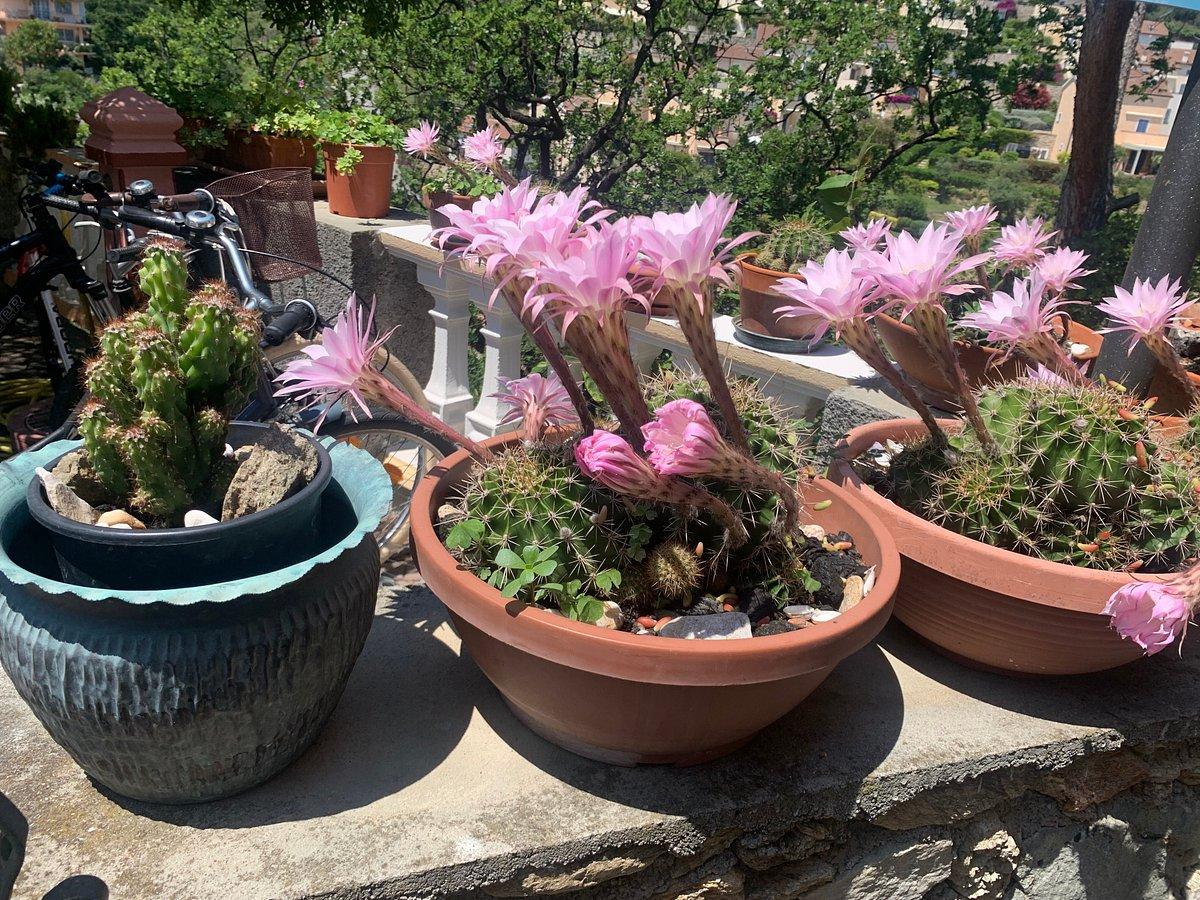
Magenta Echinopsis flowers next to orange Opuntia flowers? Loud, and not in a fun way.
Pick one warm family and one cool family for the bloom season. Then let a neutral like silver agave or gray santolina calm things down in between.
Know which cactus will take over

Prickly pear pads root anywhere they land. A dropped pad becomes a new plant, and a new plant becomes a thicket.
Cholla joints break off at the lightest touch and hitchhike on pets and pants. Plant them where they can sprawl without hurting anyone.
If you want a tidy bed, choose clumping barrels, hedgehogs, and columnar types. If you want a wild one, go bold, but give them room.
Use boulders to your advantage

A big rock half buried in your berm does three jobs. It anchors the design, shades the soil on one side, and holds warmth overnight on the other.
Put frost sensitive plants on the sunny side of the boulder.
Plants that hate afternoon heat belong on the east side, where the rock shades them.
Bury a third of each boulder so it looks like it grew there. Rocks sitting on top of the ground look like they were delivered, because they were.
Acclimate new plants
Nursery cactus are often grown under shade cloth. Drop one into full sun and you’ll get pale, bleached patches that never heal.
Set new plants in dappled light for a week or two first. Then move them to full sun a few hours at a time.
If you can’t wait, cover with a piece of shade cloth for the first month. It’s ugly for a minute and saves the plant forever.
Keep grass out

Lawn grass creeps into gravel like it has somewhere to be. Within a year you’ve got a green fringe choking your plants and soaking them with lawn water.
Steel edging, set 4 to 6 inches deep, beats plastic every time. It’s thin, it’s tough, and it disappears into the design.
Leave a 6 inch gravel buffer between lawn and cactus. It makes mowing easier and keeps the sprinklers honest.
Have a frost plan
If your winters dip below freezing, choose cold hardy types. Many Opuntia, Cylindropuntia, Echinocereus, and Escobaria shrug off the cold.
For the tender ones, keep frost cloth in the garage before the first cold snap. Scrambling for a bedsheet at 9 pm in the dark is not a strategy.
Cover the plants at dusk and pull the cloth off in the morning. Plastic touching the plant will do more harm than the cold.
Related Posts: