Should You Get a Robot Lawn Mower? (Honest Review From a Gardener Who Tried One)
Last Updated on April 30, 2026 by Duncan
A robot lawn mower is worth buying if you have a flat-to-moderately-sloped lawn under half an acre, a budget of at least $1,200, and you’d rather reclaim your weekends than push a mower.
It is not the right tool if you want striped lines, have a heavily obstructed yard, or live somewhere with frequent theft risk and no secure fence.
I’ve been gardening since I was 15 — that’s when my family handed me the responsibility of keeping our yard tidy. Today at 32, I grow guavas, peaches, onions, and a lot more in my garden.
Lawn mowing has always been part of the routine, and after years of gas mowers, I finally tested a robot mower on my own lawn. This article shares what I found, alongside the key facts every homeowner should weigh before buying.
What Is a Robot Lawn Mower?
A robot lawn mower is a battery-powered, autonomous device that cuts grass on a pre-programmed schedule without human intervention.
Popular brands include Husqvarna, Stihl, Gardena, and Worx. Models range from entry-level units for small gardens to professional-grade machines covering multiple acres.
Unlike a robot vacuum, a robot mower operates outdoors in rain, heat, and uneven terrain — and uses spinning or pivoting blades rather than suction. Most current models use a boundary wire or GPS mapping to stay within your lawn’s edges.
If you’re still researching the downsides specifically, this article on what the disadvantages of a robotic lawn mower are goes deeper on the limitations.
5 Reasons to Consider a Robot Lawn Mower {#pros}
1. It Frees Up Significant Time Each Week
The single biggest advantage of a robot mower is time recovery. Mowing a typical suburban lawn by hand takes 30–90 minutes per session. With a robot mower, that time drops to near zero once setup is complete.
When I first set up mine, I spent about two hours on the boundary wire and app configuration. After that initial week of supervision — checking that it handled the dips and raised roots in my yard — I simply scheduled it and forgot about it. The difference in my Saturday mornings was immediate.
Robot mowers require a one-time setup of 1–3 hours, followed by roughly one week of supervised runs to confirm correct operation across your lawn’s terrain variations.
2. Robot Mowers Are Significantly Quieter Than Gas Mowers
Lawn mowing has historically been loud. Gas mowers typically produce 85–95 dB — loud enough to require hearing protection. Robot mowers operate at 60–70 dB, roughly equivalent to a normal conversation.
This noise reduction has a practical consequence: you can mow your lawn at any time without violating lawn mowing etiquette or disturbing neighbors. Many users schedule their robot mower to run overnight or during work hours when the lawn is empty.
I personally run mine at 6 AM. My neighbors have never once complained — something that would have been unthinkable with my old gas mower.
At operating distance, robot mowers produce approximately 60–70 dB of noise, which is 15–30 dB quieter than a standard gas mower and below the threshold that typically disturbs neighbors.
3. Maintenance Is Low Compared to Gas Mowers
The main maintenance tasks for a robot mower are:
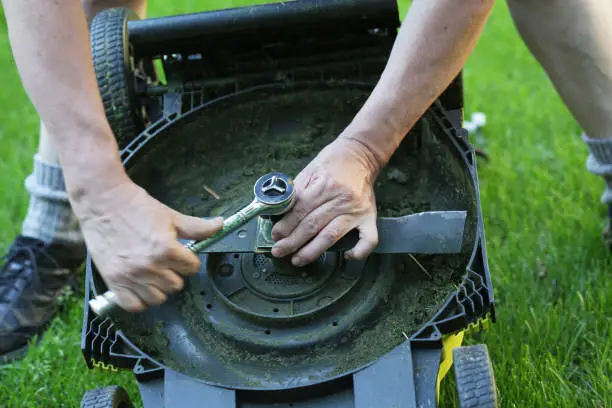
- Blade sharpening or replacement — typically every 1–3 months depending on lawn size and grass type. See: are lawn mower blades worth sharpening?
- Battery replacement — lithium-ion packs typically last 3–5 years
- Cleaning — hosing off the undercarriage after muddy sessions takes 5 minutes
Compare this to a petrol mower: fuel purchase and storage, oil changes, spark plug replacement, air filter cleaning, and carburetor servicing. In my experience, the cumulative maintenance time for a gas mower is 3–4× that of a robot unit over a full season.
Robot mowers have lower ongoing maintenance requirements than gas mowers because they eliminate fuel management entirely. The primary consumables are the blades (replaced every 1–3 months) and the lithium-ion battery (replaced every 3–5 years).
4. Smartphone App Control Gives You Precision Scheduling
Most current robot lawn mower models include companion apps that let you:
- Set mowing schedules by day and time
- Define separate zones with different cutting heights
- Pause, recall, or redirect the mower remotely
- Receive alerts if the mower is lifted, stuck, or leaves its boundary
App quality varies significantly between brands, so research the app reviews before committing to a specific model — not just the mower hardware. Some apps are polished and intuitive; others are clunky and unreliable.
5. Built-In Safety Features Reduce Risk
A common concern is setting a blade-equipped machine loose near children, pets, or plants. Modern robot mowers address this with:
- Blade auto-stop on lift — blades halt within milliseconds if the mower is picked up
- Obstacle sensors — ultrasonic or camera-based sensors detect and avoid objects
- Boundary wire compliance — the mower stops and reverses if it crosses its programmed edge
Despite these protections, young children and their toys should always be kept away from an operating robot mower, just as they would be kept away from any powered garden equipment.
4 Reasons to Think Twice {#cons}
1. The Upfront Cost Is High
Robot mowers currently range from $1,200 to $5,000+ for residential models, with commercial-grade units going higher. The price is driven primarily by the lithium-ion battery pack and the precision motors.
Before buying, measure your lawn accurately and buy for a slightly larger coverage area than you need — the mower’s rated coverage area is the maximum, and real-world performance will vary based on slope, obstacles, and grass density.
2. Theft Is a Real Risk in Unsecured Yards
Robot mowers typically weigh between 6 and 15 kg — light enough for someone to pick up and carry off in seconds. If your yard is not enclosed by a secure fence, this is a genuine vulnerability.
Better models include anti-theft features:
- PIN-code lockout — the mower becomes unusable without the owner’s code
- Anti-theft alarms — audible alerts if the mower is lifted without authorization
- GPS tracking — real-time location monitoring via the companion app
If you can’t secure your yard, factor the cost of a GPS-equipped model into your budget.
3. Lawn Prep Work Is Required
Robot mowers navigate large fixed obstacles — trees, fence posts, clothesline poles — well. But they struggle with:
- Leaf cover and debris — thick leaf litter clogs the cutting mechanism and must be raked before each session
- Scattered toys or garden tools — anything lying on the grass needs to be cleared first
- Grass clippings — robot mowers don’t use collection bags, so fine clippings are mulched back into the lawn (which is actually beneficial for soil health, but means no clean collection)
The prep time is less than mowing manually, but it isn’t zero.
4. You Won’t Get Striped, Patterned Cuts
Robot mowers navigate in randomized or overlapping curved patterns rather than the straight parallel passes of a traditional mower. The result is an evenly cut lawn, but without the decorative stripes or checkered patterns many homeowners love.
If visual lawn patterning matters to you — for aesthetics or for tips on how to cut grass properly with defined lines — a robot mower is not the right tool.
At a Glance: Pros vs. Cons
| Factor | Robot Mower | Traditional Mower |
|---|---|---|
| Time required per mow | Near zero (after setup) | 30–90 min |
| Noise level | 60–70 dB | 85–95 dB |
| Upfront cost | $1,200–$5,000+ | $200–$800 |
| Maintenance | Low (blades + battery) | High (fuel, oil, filters) |
| Lawn pattern output | Random, no stripes | Straight lines possible |
| Theft risk | Moderate without fencing | Low |
| Prep work needed | Some (clearing debris) | Minimal |
| Smartphone control | Yes (most models) | No |
Who Should (and Shouldn’t) Buy One
A robot mower is a good fit if you:
- Have a lawn between 500–5,000 sq ft (standard residential size)
- Have a yard with a secure fence or are willing to use anti-theft features
- Dislike or physically can’t perform regular mowing
- Don’t mind sacrificing decorative stripes for convenience
- Have $1,200+ available for the initial investment
A robot mower is likely NOT right for you if:
- You take pride in perfectly patterned lawn lines
- Your yard has heavy tree coverage requiring frequent raking
- You live in an area with high theft risk and can’t secure the mower
- Your lawn has steep slopes (above ~35–45% grade, which most models can’t handle)
- You’re on a tight budget — the technology hasn’t dropped to affordable mass-market pricing yet
So, Should You Invest in a Robot Lawn Mower? {#verdict}
Robot mowers are a genuinely practical solution for homeowners who want to eliminate the chore of grass cutting and have the budget for the technology.
After using one myself, I’d say the time savings alone justify the cost for anyone who mows weekly — you recover that time across a single season.
The caveats are real: the upfront cost is significant, setup takes effort, and a robot mower won’t give you the visual satisfaction of clean parallel stripes. But for low-fuss, consistent lawn maintenance, the technology has matured enough to be reliable.
My recommendation: Measure your lawn, read current model reviews for the specific brands in your budget, and pay close attention to app quality and battery capacity.
Then decide. Don’t over-buy — a mower rated for a larger lawn than yours will last longer and run more efficiently.
FAQs
How much does a robot lawn mower cost?
Residential robot mowers range from approximately $1,200 to $5,000.
The primary cost driver is the lithium-ion battery pack. Larger coverage area and premium features (GPS, camera-based obstacle detection) push prices toward the higher end.
How loud is a robot lawn mower?
Robot mowers operate at 60–70 dB at close range, which is comparable to a normal conversation.
This is significantly quieter than gas mowers (85–95 dB) and allows operation early in the morning or late in the evening without disturbing neighbors.
Do robot lawn mowers work in the rain?
Most robot mowers include rain sensors and will return to their charging dock when rain is detected.
Some models can continue operating in light rain, but heavy rain sessions are generally paused automatically to protect both the mower and the lawn.
Can a robot mower handle slopes?
Most residential robot mowers handle slopes up to 35–45% grade. Steeper slopes require models specifically rated for inclines. Always check the manufacturer’s slope specification against your actual terrain before purchasing.
Do robot mowers collect grass clippings?
No. Robot mowers do not use collection bags. They cut grass into very fine clippings that are mulched directly back into the lawn.
This is beneficial for soil health (returning nutrients to the soil) but means there are no clippings to dispose of — or collect.
How long do robot mower batteries last?
Lithium-ion battery packs in robot mowers typically last 3–5 years before performance degrades enough to warrant replacement.
Per-charge run time varies by model and lawn size, but most units recharge automatically at their docking station between sessions.
Are robot mowers safe around children and pets?
Modern robot mowers include safety features such as blade auto-stop on lift and obstacle sensors.
However, children and pets should always be kept away from an operating robot mower as a precaution — the same standard that applies to any powered garden equipment.
Can a robot mower be stolen?
Yes. At 6–15 kg, robot mowers are portable and can be removed quickly. Anti-theft measures — PIN lockout, audible alarm,
GPS tracking — are available on mid- to high-range models and should be considered essential if your yard is not securely fenced.
Related Reading
- What Is the Disadvantage of a Robotic Lawn Mower?
- Understanding Lawn Mowing
- Lawn Mowing Etiquette
- Is It Okay to Mow Your Lawn at 7 AM?
- Are Lawn Mower Blades Worth Sharpening?
- Tips on How to Cut Grass Properly
Related Posts: