What Items Should Never Be Stored in a Shed?
Last Updated on September 15, 2026 by Duncan
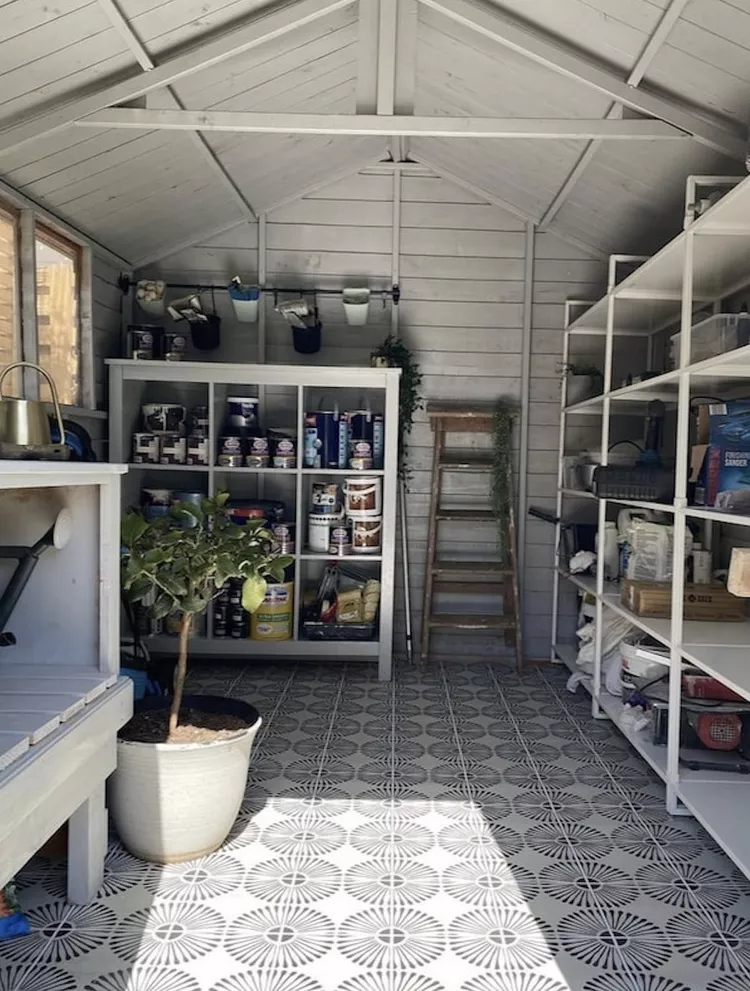
A shed can be one of the most useful spaces around your home, until you start treating it like an outdoor attic.
Some things handle a little dust and temperature change just fine, while others come out warped, ruined, rusty, leaking, or covered in unwanted visitors.
After seeing how quickly a well-organized shed can turn into a cramped dumping ground, I am pretty firm about what belongs there.
Here are some of the things that you should never store in a shed.
Cardboard boxes

Cardboard soaks up humidity like a sponge at a pool party.
In a shed with zero climate control, the moisture swings between morning dew and afternoon heat turn every box into a slow, silent mold farm.
You know that musty smell when you open a shed that’s been sealed all winter? That’s usually the boxes talking.
Swap cardboard for clear plastic bins with locking lids.
Paint and stain cans
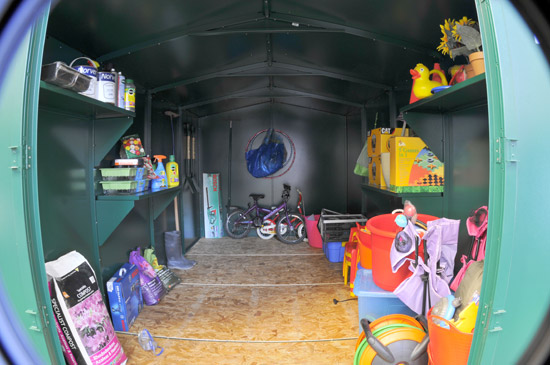
Paint doesn’t like extremes, and a shed is basically a temperature roller coaster.
Freeze and thaw cycles wreck the chemical makeup, so the paint you’re saving for touch ups turns into separated, chunky goo by spring.
Half used cans are worse.
That empty air space at the top speeds up skinning and drying, so you crack it open a year later to find a paint colored hockey puck.
If you must store paint in the shed, keep it in the coolest, most insulated corner and check it every few months.
Better yet, store it in a basement or closet where temperatures stay steady.
Food, pet food, and birdseed
This one’s personal.
Nothing announces “free buffet” to rodents like a bag of birdseed or kibble sitting on a shed floor.
Mice can chew through a paper feed bag in about the time it takes you to walk back inside for a coffee.
Once they’re in for the seed, they stay for the nesting material, and suddenly your shed has tenants.
The same goes for any human snacks left in a cooler or bag out there for a weekend project.
Store any kind of food, feed, or seed in airtight metal or heavy duty plastic containers, and never leave a bag just sitting open on the floor.
Firewood
Stacking firewood directly on a shed floor is basically rolling out a welcome mat for termites, carpenter ants, and every spider in the neighborhood.
Wood touching wood, especially damp wood, creates the exact bridge pests need to get from the woodpile into your shed’s framing.
Bark holds moisture against the floor too, so you end up with a soft, rotting patch right where the stack sits, even if the rest of the floor is fine.
Keep firewood off the ground on a raised rack, and ideally store it outside the shed entirely, a few feet away from the structure.
If it has to be inside, a rack with airflow underneath makes all the difference.
Musical Instruments
Guitars, violins, and anything with wood, glue, and strings hate humidity swings.
The wood expands and contracts, glue joints loosen, and strings go wildly out of tune or snap outright from the tension shifts.
I’ve seen a guitar with a warped neck so bad it looked like a banana, all from one summer in an uninsulated shed.
That’s not a cheap fix. In most cases you have to get a new instrument.
If an instrument is worth playing, it’s worth keeping inside in a case, away from vents and windows, not tucked behind the lawn mower.
Mattresses
Mattresses, couch cushions, and any fabric covered furniture soak up moisture from the air the same way a towel does, except you can’t just throw a mattress in the dryer to fix it.
That moisture sits inside the padding and turns into mold you often can’t even see from the outside.
Upholstery is also a favorite nesting spot for mice, since the stuffing makes ideal insulation for a den.
You might not notice until you go to use the mattress again and find it’s been chewed through from the inside.
If you’re storing a mattress short term, you need to wrap it in a sealed plastic mattress bag and keep it off the floor, and even then a shed is a last resort, not a first choice.
Pool chemicals
Chlorine tablets, shock, and other pool chemicals are reactive by design, and that reactivity gets more dangerous as shed temperatures climb in summer.
Heat can cause some pool chemicals to react with other stored chemicals nearby.
Mixing pool chemical storage with things like fertilizer or gasoline in the same shed corner is a genuinely bad idea, since a leak or spill can trigger a reaction you really don’t want happening near your lawn mower’s gas tank.
Store pool chemicals in their original, tightly sealed containers, away from any other chemicals, and check your area’s fire code guidance since some jurisdictions have specific rules about this.
Anything made of rubber
Garden hoses, rubber boots, bike tires, the rubber grips on your tools.
Rubber breaks down from heat and UV exposure even indoors, because sunlight sneaks through gaps around doors and windows.
Dry rot doesn’t announce itself.
One day your hose bends without any problem, the next it cracks and sprays water sideways the moment you turn on the spigot.
Hang rubber items instead of letting them sit coiled or stacked, and keep them away from any south facing wall or window where sun gets in.
Photos, documents, and paper
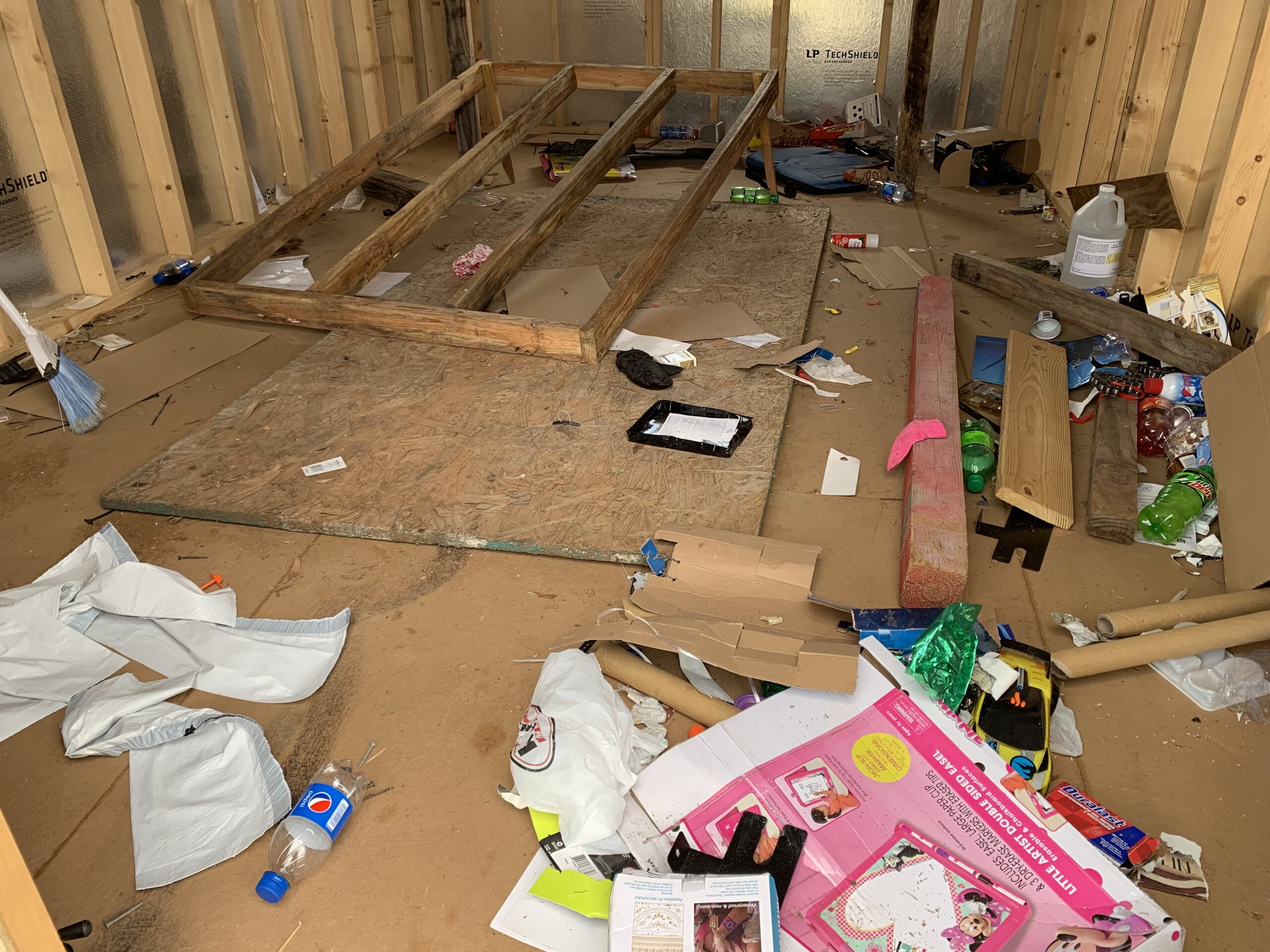
People store “just for now” boxes of old photos and paperwork in the shed constantly, thinking it’s temporary. It never is.
Humidity curls photos, fades ink, and paper is basically a five-star hotel for silverfish and mice looking for nesting material.
Once mold sets into a photo, there’s no getting that back.
If it’s irreplaceable, it belongs inside your house. A shed is not a filing cabinet.
Batteries
Batteries left in a shed go through the same temperature swings as everything else, and that’s exactly what speeds up corrosion.
A 9-volt battery rolling around in a junk drawer bin for a year can leak and crust over anything it touches.
Remote controls, flashlights, and old power tools left with batteries still inside are the worst offenders. That white crusty buildup isn’t just gross, it can ruin the device entirely.
Pull batteries out of anything going into shed storage, and keep loose batteries in their original packaging or a dedicated battery case instead.
Fertilizer and pesticides

Fertilizer bags absorb moisture and start to clump, cake, or even combust under the wrong conditions if they get wet and then dry repeatedly.
Some fertilizers are also chemically unstable once exposed to temperature swings, breaking down into something less effective and, in some cases, more hazardous.
Pesticides degrade too, and a bottle that’s baked in shed heat all summer might not work the way the label promises anymore.
Keep these in a cool, dry spot with a stable temperature range, ideally in a locked cabinet, not stacked on a shed shelf next to the lawn mower.
Wood furniture and anything with veneer
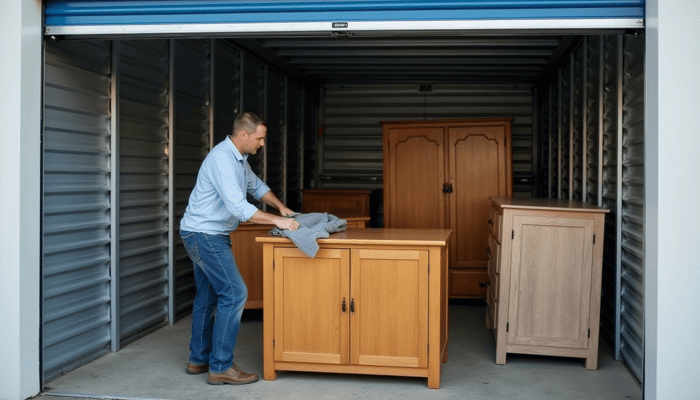
Solid wood expands and contracts with humidity, and veneer pieces are even more sensitive because the glue holding that thin wood layer weakens with repeated swelling.
You’ll notice bubbling or peeling edges first, usually right where the veneer meets a joint.
That antique dresser you’re “storing for now” while you redecorate is aging faster in the shed than it would sitting untouched in a spare room.
If furniture has to go somewhere temporary, a garage with some insulation beats a shed every time.
Canned goods

Freezing temperatures expand the liquid inside cans, and that expansion can pop seams or cause subtle leaks you won’t notice until you’re scooping out soup and something smells off.
Heat isn’t much better, since it speeds up spoilage even in sealed cans.
A shed pantry overflow shelf feels efficient until you realize you’re ruining your canned tomatoes.
Keep backup groceries in the house, and reserve shed shelving for things that can handle the swings, like tools and pots.
Leather goods
Leather gloves, boots, tool belts, and bags dry out and crack in low humidity, then mildew in high humidity, sometimes within the same month depending on your climate.
There’s no happy medium for leather in an unconditioned space.
You’ll know it’s happened when the leather feels stiff and starts flaking at the folds, right where you bend it most.
Condition leather before long term storage and, if possible, keep it somewhere with steadier humidity, like a mudroom closet.
Sentimental or one of a kind items
Every shed I’ve cleaned out has at least one box of items nobody meant to leave there permanently.
A grandparent’s tools, a kid’s art project, a wedding album that got shuffled out during a move.
Sheds get forgotten in a way that closets don’t, mostly because you’re not walking past them every day.
Things sit for years, and by the time someone remembers, moisture and pests have already done their damage.
If an item would upset you to lose, it doesn’t belong in shed storage, no matter how good the container looks.
Parting shot
Most shed disasters happen because people organize by category instead of by how well something handles temperature and humidity swings.
Tools and pots can take it. Paper, leather, and electronics cannot.
Before anything goes into your shed, ask yourself one question: could this survive a Minnesota winter and a Texas summer in the same year?
If the answer is no, it needs a different home.
Related Posts: