Does Adding Sugar to a Spider Plant Help?
Last Updated on August 1, 2026 by Duncan
If you’ve spent any time scrolling through gardening groups or Pinterest, you’ve probably seen someone recommend adding a spoonful of sugar to a spider plant.
The promise is tempting.
Faster growth, greener leaves, and healthier babies with almost no effort.
It sounds like a clever gardening shortcut.
The problem is that it doesn’t work the way many people think.
After growing spider plants for years, I’ve found that sugar is one of those garden myths that refuses to disappear.
In some cases, it doesn’t seem to cause immediate harm. In others, it quietly creates problems that don’t show up until weeks later.
Before you sprinkle sugar into your pot, here’s what you need to know.
It doesn’t work
Adding sugar to a spider plant does not help it grow.
Spider plants make their own sugar through photosynthesis.
Every healthy green leaf acts like a tiny food factory, using sunlight, water, and carbon dioxide to produce the energy the plant needs.
Adding table sugar to the soil doesn’t give your spider plant extra food.
Instead, it feeds the microorganisms living in the potting mix.
That’s a big difference.
While your plant continues making its own energy, bacteria and fungi enjoy the free buffet you’ve provided.
Why this myth started
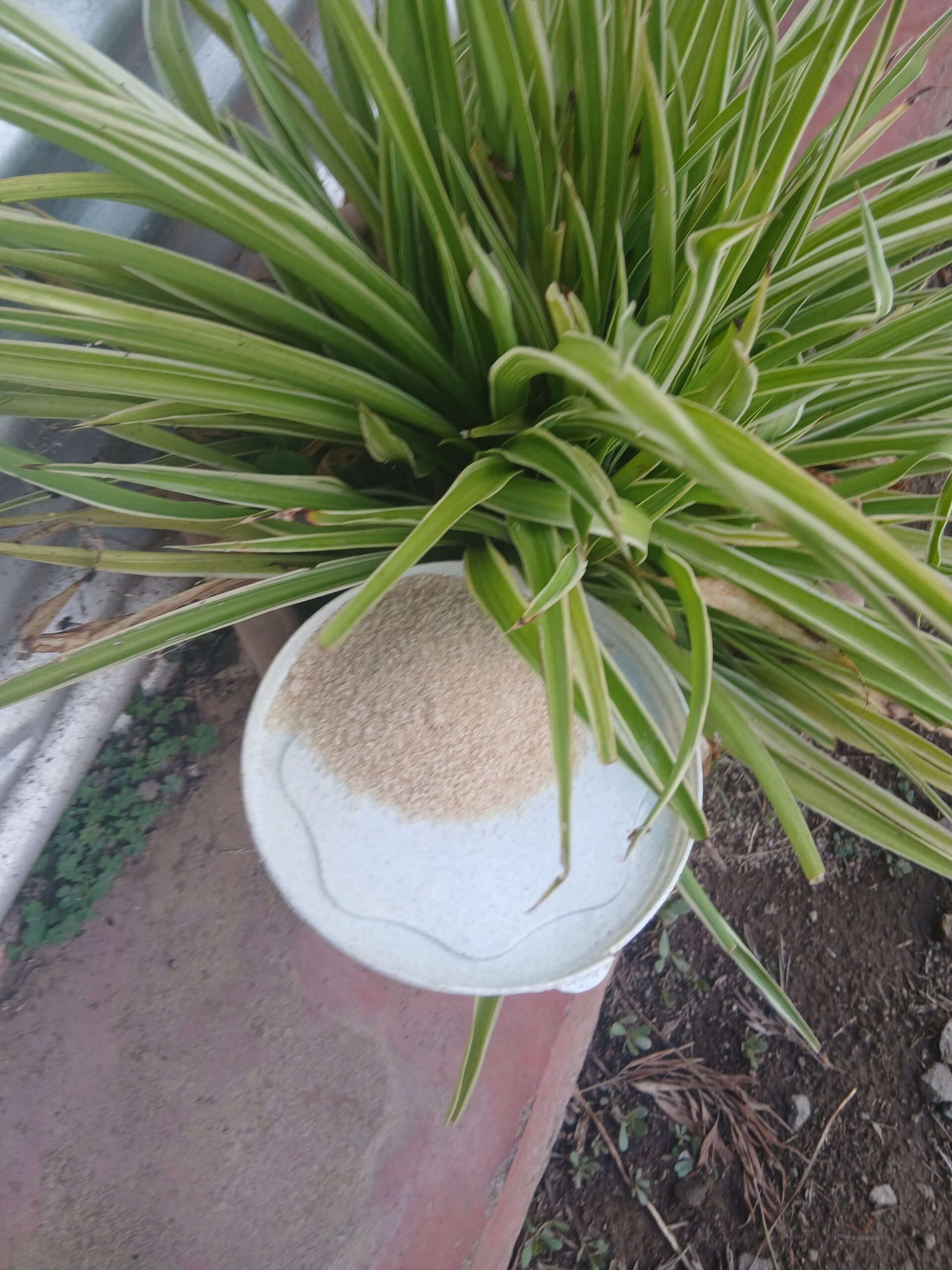
It’s easy to understand how the idea spread.
People hear that plants produce sugar through photosynthesis.
From there, it’s a short leap to thinking that adding sugar from the kitchen must give plants an energy boost.
Plants don’t work that way.
Their roots are designed to absorb water and dissolved minerals like nitrogen, potassium, phosphorus, calcium, and magnesium.
Table sugar isn’t on the shopping list.
What happens when you add sugar to the soil?
The sugar doesn’t sit around waiting for your spider plant.
Tiny organisms living in the soil find it first.
As bacteria and fungi begin breaking down the sugar, their populations can increase quickly.
While healthy soil contains beneficial microbes, sudden population booms can upset the balance inside a flowerpot.
Sugar can reduce oxygen around the roots
Healthy roots don’t just need water.
They need oxygen too.
As microorganisms consume sugar, they also consume oxygen.
That means your spider plant roots suddenly have competition for something they depend on every day.
When oxygen levels fall, roots become less efficient at absorbing water and nutrients.
You might notice slower growth, drooping leaves, or yellowing foliage even though you’re trying to help the plant.
It can make overwatering problems worse
Spider plants already dislike soggy soil.
Adding sugar doesn’t directly create root rot, but it can encourage conditions that make wet soil stay biologically active for longer.
If you’re someone who waters on a schedule instead of checking the soil first, sugar stacks the odds against your plant.
Healthy roots love fresh air.
Constant moisture steals that opportunity.
Fungus gnats may develop
Nobody invites fungus gnats into the house.
Sometimes they show up anyway.
Sugar can encourage microbial activity that creates an attractive environment for these annoying little insects, especially when combined with damp potting soil.
Once fungus gnats settle in, getting rid of them often takes much longer than preventing them in the first place.
Why some people think sugar works
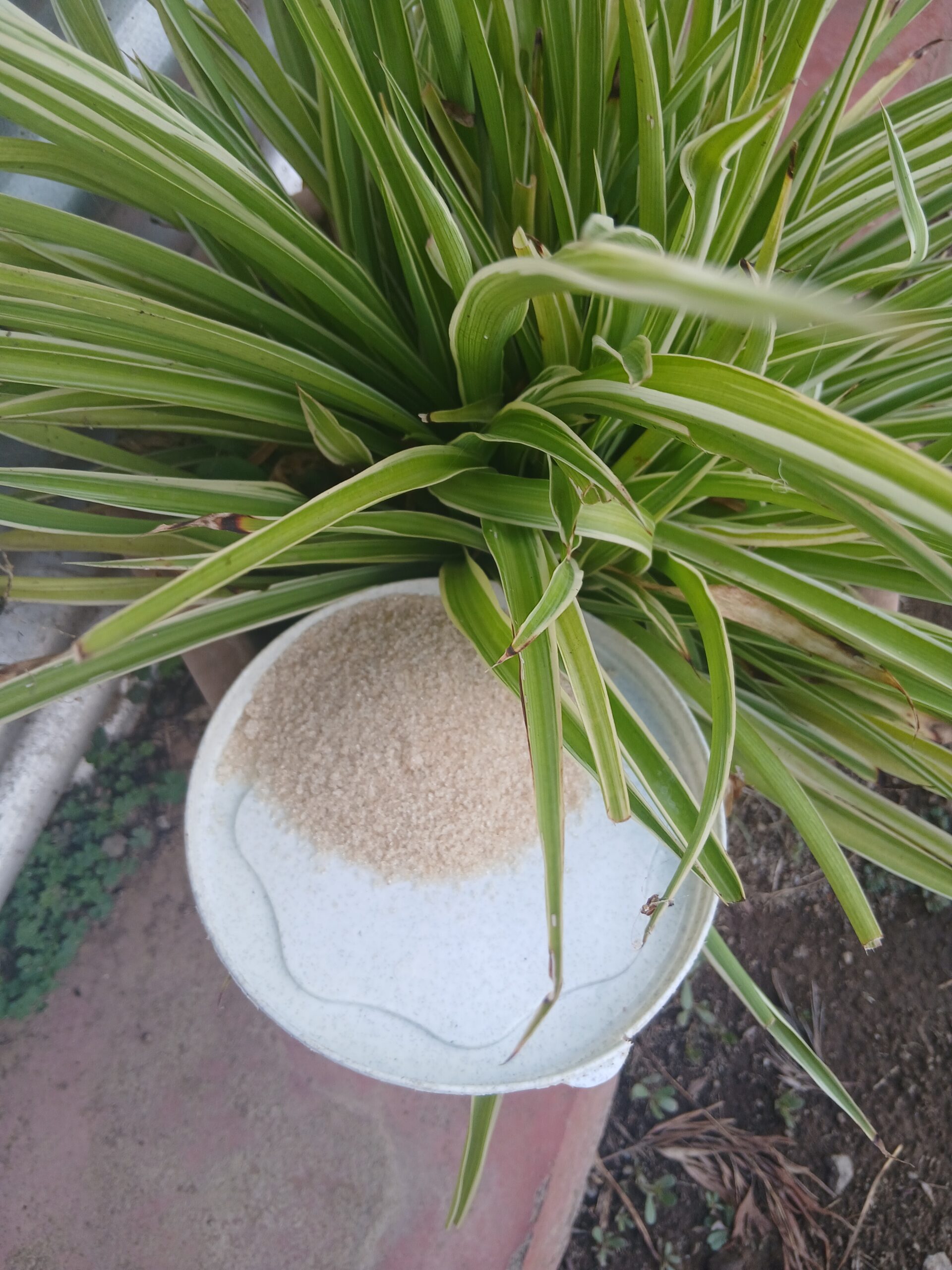
This is where things become interesting.
Many gardeners swear sugar transformed their spider plant.
Did it?
Maybe not.
Often, several things changed at the same time.
Perhaps they moved the plant closer to a brighter window.
Maybe spring arrived and natural growth increased.
Perhaps they started watering more consistently or repotted into fresh soil.
The sugar receives the praise while another improvement deserves the credit.
Can sugar ever help a spider plant?
Under normal growing conditions, no.
Professional growers don’t use sugar as fertilizer because there are safer and far more effective ways to encourage healthy growth.
If your spider plant looks unhealthy, sugar won’t solve the underlying problem.
Instead, ask yourself these questions.
- Is it getting enough bright indirect light?
- Am I watering too often?
- Has it been sitting in the same soil for years?
- Is the pot draining properly?
- Have I fertilized lightly during the growing season?
Fixing these issues almost always delivers better results than adding sugar.
Better ways to encourage growth on your spider plant
If you want a fuller spider plant with greener leaves and more baby plants, focus on the basics that make the biggest difference.
Give it plenty of bright indirect light
Spider plants grow fastest near a bright window with filtered light.
Too little light slows growth.
Too much direct afternoon sun can scorch the leaves.
Finding that sweet spot makes a noticeable difference.
Water only when the soil begins to dry
Stick your finger about an inch into the soil.
If it still feels damp, wait another day or two.
Spider plants forgive slightly dry soil much better than constantly wet roots.
Feed lightly during spring and summer
A balanced houseplant fertilizer diluted to half strength every four to six weeks is usually enough.
More fertilizer doesn’t mean faster growth.
It often means brown leaf tips instead.
Refresh old potting soil
Potting mix doesn’t last forever.
Over time it becomes compacted, drains more slowly, and loses nutrients.
Repotting every couple of years gives the roots fresh space to breathe.
Choose the right pot
Spider plants enjoy being slightly root bound.
Don’t jump to a huge container.
A pot that’s only one or two inches larger than the current root ball usually produces healthier growth than one filled with excess wet soil.
Signs sugar may be causing problems
If you’ve already tried the sugar trick, watch for these warning signs.
- Soil staying wet longer than usual.
- A sour smell coming from the pot.
- Tiny fungus gnats flying around the soil.
- Slower growth instead of faster growth.
- Yellow leaves despite regular watering.
- Brown leaf tips becoming more common.
These symptoms don’t always mean sugar is the only cause, but they’re worth investigating.
Common Questions
Do spider plants like sugar?
No, and they’ve never needed it.
Your spider plant makes all the sugar it requires through photosynthesis every time light hits its leaves.
Adding more from the outside doesn’t help it grow, it just gives the bacteria in your soil something to feast on.
Why add sugar to plants?
Most people try this because it sounds logical on the surface.
Sugar equals energy for us, so it seems like it should equal energy for a plant too.
The problem is a plant’s roots aren’t built to absorb sugar the way our bodies do, so the logic falls apart the moment you look at how roots unction.
How much sugar water should I give plants?
Honestly, none, if you’re talking about soil. If you’re determined to test it in a propagation jar, keep it to a tiny pinch, something like a quarter teaspoon per glass.
Remember to change that water every two to three days.
Any more than that and you’re basically brewing bacteria soup next to your plant’s roots.
What do plants do with sugar?
Plants use the sugar they produce internally as fuel for growth, root development, and everyday cellular function.
It’s created in the leaves and shipped down through the plant to wherever energy is needed.
It’s an internal process, not something you can top off from a bag in your pantry.
Does brown sugar help plants grow?
No more than white sugar does.
Brown sugar has a touch of molasses in it, which contains trace minerals, but the amount is so small it won’t move the needle for your plant’s health.
You’d get more benefit from a proper fertilizer than from raiding your baking cabinet.
Is sugar actually good for plants?
For the plant itself, no. Where sugar does have a legitimate use is in certain composting methods, where it can feed beneficial microbes in a controlled way.
Sprinkling it directly around a houseplant is a different situation entirely, and it tends to cause more harm than good.
What liquid makes a plant grow faster?
Plain water paired with a proper liquid fertilizer, used on a consistent schedule, is what drives faster growth.
Light plays a bigger role than any liquid you could pour into the pot.
No drink from your kitchen replaces bright, indirect sunlight and a good watering routine.
What happens if you add sugar to your plants?
In small, occasional amounts, probably not much happens right away, and that’s part of why the myth sticks around.
Keep doing it regularly and you’ll likely see slowed drainage, a bacteria or mold problem, and roots that struggle to get enough oxygen.
It’s a slow decline, not an instant disaster, which makes it easy to miss the cause.
What is the purpose of sugar in plants?
Inside the plant, sugar is the primary energy source that fuels growth, repair, and every function that keeps it alive.
It’s produced through photosynthesis and used internally, cell by cell.
It was never designed to be absorbed from the outside in the first place.
Should I put sugar in my spider plant?
No.
Put your energy into bright indirect light, a proper dry out between waterings, and a diluted fertilizer once a month during the growing season instead.
Your spider plant will thank you with new pups and healthy leaves, no sugar required.
Does sugar water help spider plants grow faster?
No. Spider plants produce their own sugars through photosynthesis.
Sugar water doesn’t speed up healthy growth and may encourage unwanted microbial activity in the soil.
Can sugar revive a dying spider plant?
No.
A struggling spider plant needs the real cause identified.
Poor lighting, overwatering, underwatering, root rot, or old compacted soil are much more common reasons for decline.
Is sugar harmful to spider plants?
A single small application may not cause visible damage, but repeated use can upset the balance in the potting soil and increase the risk of problems such as poor root health and fungus gnats.
What should I use instead of sugar?
Bright indirect light, proper watering, fresh potting mix, and occasional balanced fertilizer will give you far better results than any homemade sugar treatment.
So should you add sugar to your spider plant?
Sugar belongs in your coffee, not your spider plant.
While the idea sounds harmless, it doesn’t provide the boost many gardeners hope for.
Spider plants are remarkably independent.
Give them bright indirect light, well-draining soil, careful watering, and a little fertilizer during the growing season, and they’ll reward you with lush green leaves and plenty of baby spider plants.
Sometimes the simplest care routine beats most of the internet gardening hacks.
Related Posts: