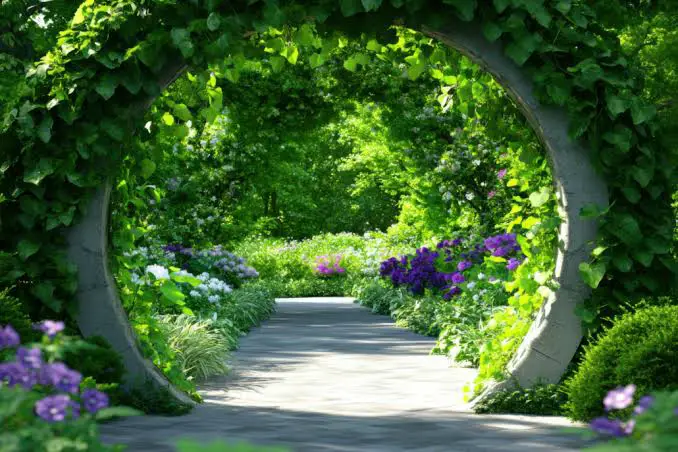
How to Decorate a Secret Garden: 17 Charming Ideas for a Magical Backyard Retreat
Last Updated on July 17, 2026 by Duncan
A secret garden has a way of making the outside world disappear.
Step through a vine covered arbor or follow a winding path, and suddenly the noise, the neighbors, and the day’s worries seem miles away.
Decorating a secret garden isn’t about filling every corner with ornaments.
It’s about creating a space that feels peaceful, inviting, and a little mysterious.
The best gardens reveal themselves slowly, drawing you in with hidden seating areas, colorful flowers, bubbling bird baths, and charming details that make you want to stay awhile.
Whether you have a spacious backyard or a small outdoor corner, you can create a garden that feels like your own private escape.
In this guide, you’ll discover beautiful secret garden decorating ideas that add charm, attract birds and butterflies, and turn an ordinary yard into a magical retreat you’ll enjoy in every season.
Create a hidden entrance
Your entrance decides everything.
If people can see the whole garden the second they approach, you have built a nice yard, not a secret one.
Block the view with something at eye level.
A tall trellis, a leaning arch covered in vines, even a thick clump of ornamental grass works.
The goal is simple.
Make people curious about what is on the other side before they step through.
Add a charming garden path
:max_bytes(150000):strip_icc()/72946425_2501475720072462_1957380120657116612_n-02577d3db90f46648c4dff3fca3a6406.jpg)
Skip the straight path.
A straight line shows the destination immediately and kills the sense of discovery.
Curve your path instead, even slightly.
That small bend makes visitors lose sight of what is ahead for just a moment, and that moment is doing more work.
Narrow the path near the entrance too.
Something around two feet wide feels intimate.
Wide paths feel like a driveway, and nobody dreams about a driveway.
Use natural materials for the path itself.
Gravel, flagstone, or wood chips all feel more discovered than a poured concrete slab ever will.
Design a cozy seating nook

A secret garden without a place to sit is just a garden you walk through and leave.
Give people a reason to stay.
A small bench tucked at the far end works beautifully.
It can be a wooden bench, a bistro set, or a pair of comfortable chairs beneath a tree or pergola.
Position it so it faces something worth looking at, whether that is a birdbath, a flower bed, or simply the path you just walked.
Choose weathered wood or aged metal over anything brand new and shiny.
New furniture in a secret garden feels out of place.
Make a bird bath the centerpiece
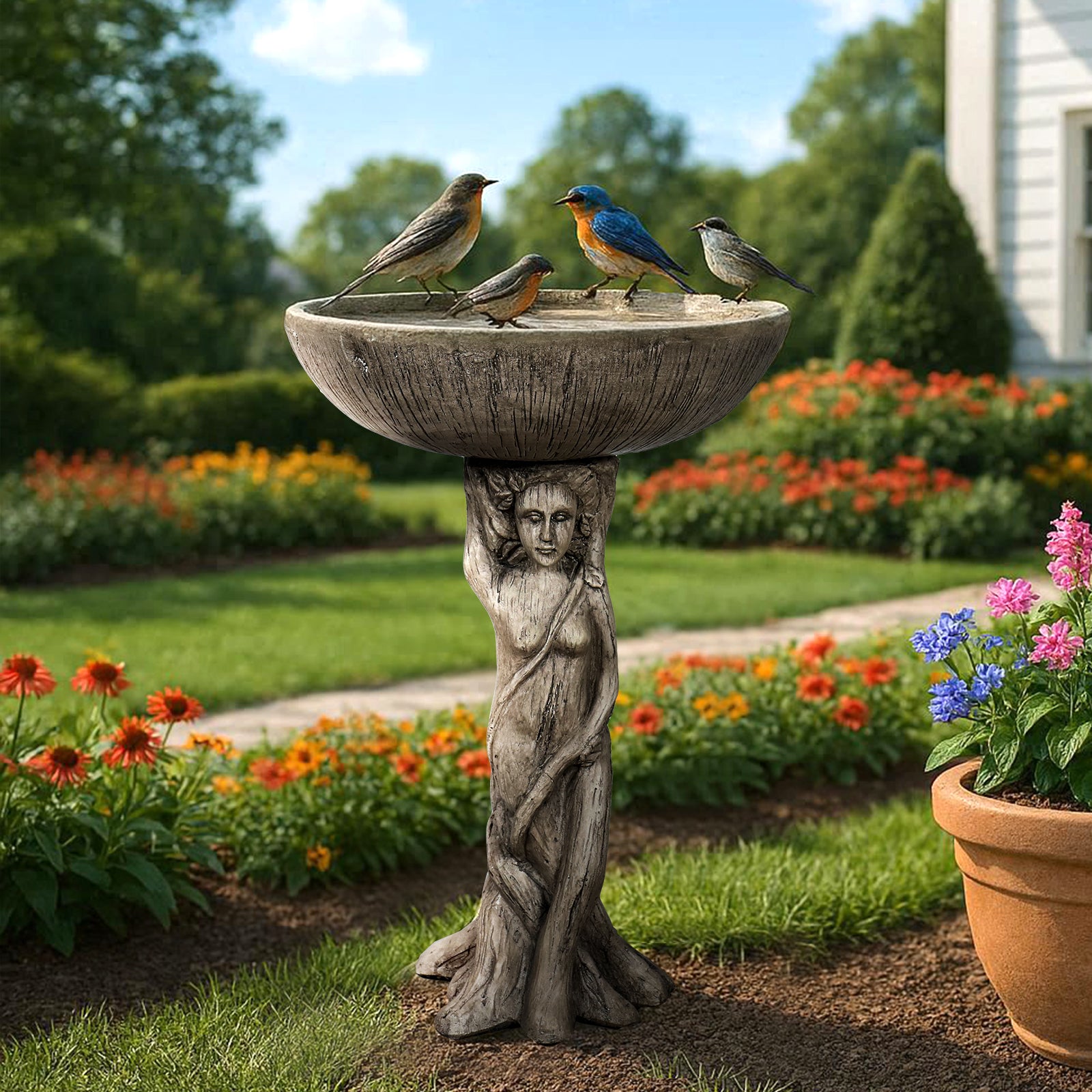
I will say this every single time someone asks me for garden advice.
A birdbath belongs in a secret garden.
Moving water calms people almost instantly, and the birds it attracts bring life into a space that would otherwise sit quiet and still.
That sound alone changes the whole mood of the area.
Place a bird bath where you can see it from your favorite chair, and you’ll soon enjoy a steady stream of feathered visitors.
Surround it with flowering plants so it looks like it has always belonged there.
Place it slightly off center rather than dead in the middle.
Dead center feels staged.
Off to the side feels like something you stumbled upon.
Clean it weekly without fail.
Algae builds up fast, and nothing kills the charm of a garden faster than a dirty birdbath.
Decorate with vintage garden finds

Old watering cans, weathered wheelbarrows, chipped ceramic pots, rusty garden tools hung on a fence.
These pieces carry a sense of history that new decor simply cannot fake.
Flea markets and estate sales are goldmines here.
You are not looking for perfect condition, you are looking for character.
One or two well placed vintage pieces beat five scattered around the space.
Overcrowding a small garden with too many finds turns charming into cluttered fast.
Grow climbing plants
Climbing plants do double duty in a secret garden.
They screen views and soften hard structures like arbors, fences, and trellises at the same time.
Roses, clematis, jasmine, and climbing hydrangea are all reliable choices depending on your climate.
Give them something sturdy to climb and be patient, because most climbers take a full season or two to really fill in.
Train vines along your entrance arch specifically.
That green curtain effect is one of the most effective, low cost ways to build mystery into your garden.
Add garden statues
A single statue tucked into greenery creates a small moment of surprise.
Too many statues scattered around just creates visual noise.
Weathered stone or aged bronze finishes blend into a garden far better than bright white or shiny new pieces.
You want your statue to look like it has been there for decades, not delivered last Tuesday.
Placement matters as much as the statue itself.
Half hidden by foliage feels magical.
Standing out in the open feels like a showroom display.
Create layers with containers
Grouping containers at different heights adds depth to even a small space.
Use a mix of tall urns, medium pots, and low troughs rather than everything sitting at the same level.
This layering trick works especially well against walls, fences, or in corners where ground planting is not an option.
It fills vertical space and draws the eye upward, which makes the whole garden feel larger than it actually is.
Odd numbered groupings, three or five pots together, tend to look more natural than pairs.
Include soft garden lighting

Skip lighting on a fixed timer.
Sunset shifts by over an hour across the seasons, so a fixed timer means your lights either turn on in broad daylight or stay dark during the first hour of evening use.
A dusk sensor solves this problem completely and costs just a little more.
Your future self will appreciate not having to reset it every few weeks.
Warm white lighting beats cool white every time in a garden setting.
Cool white feels clinical.
Warm white feels like candlelight, which is exactly the mood you are going for.
String lights along the entrance arch, small lanterns along the path, and a single soft light near the seating area is usually enough.
You are creating ambiance, not stadium lighting.
Add a water feature
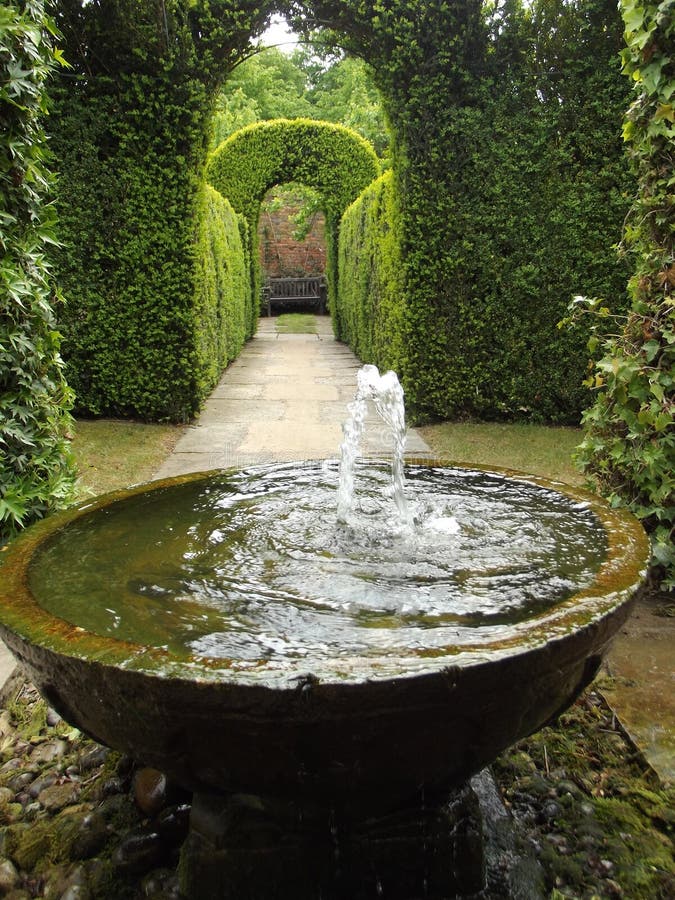
Beyond a birdbath, a small fountain or trickling water feature adds another sensory layer to the space.
Sound is a huge part of what makes a garden feel private and calming.
Even a small tabletop fountain tucked into a corner can mask outside noise like traffic or neighbors.
That sound buffer does more to create a sense of privacy than a tall fence ever could.
Keep maintenance in mind before you commit.
A water feature you forget to clean or that develops a clogged pump becomes an eyesore fast and you don’t want this.
Plant flowers
:max_bytes(150000):strip_icc()/438734225_18428664511039581_5229012115795111371_n-aa8eab31944149aabd01c5344b7e2019.jpg)
Layer your flowers by height, just like your containers.
Tall flowers toward the back, medium height in the middle, low growing blooms up front.
Choose a mix of bloom times so something is always flowering from spring through fall.
A garden that peaks for three weeks and looks empty the rest of the year loses its magic fast.
Cottage garden classics like foxglove, delphinium, and hollyhock give height and drama.
Fill in with lower growing flowers like alyssum or creeping phlox for softness at ground level.
Introduce fragrance
Scent is the detail most people forget, and it might be the most memorable part of the whole experience.
Visitors will remember how your garden smelled long after they forget what any single decor piece looked like.
Plant fragrant options near your seating area specifically.
Lavender, jasmine, climbing roses, and sweet alyssum all release scent that lingers in a way visual decor never can.
Herbs like rosemary and thyme planted along path edges release fragrance every time someone brushes past them.
That small sensory detail makes a garden feel alive.
Decorate with natural materials

Wood, stone, woven rattan, and aged metal all belong in a secret garden.
Plastic and bright synthetic materials break the illusion instantly, no matter how good the rest of your design is.
Stone edging along beds, wooden plant markers, and woven baskets for smaller potted plants all add up to a cohesive, grounded feeling throughout the space.
Natural materials also age gracefully outdoors.
A wooden bench weathers beautifully over time, while plastic furniture just looks tired and faded.
Create hidden corners
A secret garden should have more than one moment of discovery.
A single hidden nook tucked behind a shrub or around a bend gives visitors a reason to keep exploring.
Small details work best here.
A tiny stepping stone path leading to a single chair, a small statue tucked behind foliage, a cluster of containers around a corner nobody expected.
You do not need a large space to do this.
Even a modest garden can have two or three small discovery moments if you plan the layout with intention.
Add decorative gates
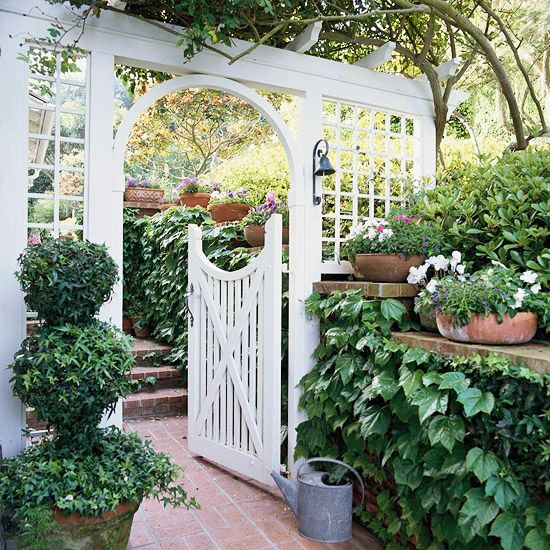
A gate signals arrival before anyone even reaches your garden.
It does not need to lock or even fully close to do its job, it just needs to mark the transition from outside to inside.
Weathered wood, wrought iron, or a simple lattice screen covered in climbing plants all work well.
The material matters less than the message it sends.
Screens work well too if a full gate feels like too much.
A simple woven panel or trellis section can divide your secret garden from the rest of the yard without a formal entryway.
Use color sparingly
A secret garden thrives on greens, soft neutrals, and occasional pops of color rather than a rainbow of competing shades.
Too many bright colors fight for attention and break the calm.
You don’t want this.
Pick one or two accent colors and repeat them throughout the space, in flowers, cushions, or decor pieces.
Repetition reads as intentional design rather than random collecting.
Soft blues, whites, and blush tones tend to feel more romantic and secretive than bold reds and oranges, though this comes down to personal taste and the mood you want.
Let nature take over

A secret garden should look a little wild, not perfectly manicured.
Overly trimmed hedges and rigid rows of flowers feel formal, and formal is the opposite of secret.
Allow some plants to spill over path edges and let climbing vines grow slightly unruly along fences and arbors.
That relaxed, slightly overgrown look is exactly what makes a space feel discovered rather than designed.
Leave a few areas intentionally loose and untamed.
Perfection is not the goal here, atmosphere is.
Secret garden decorating mistakes

Overdecorating the entrance is one of the biggest mistakes I see.
The entrance should be the calmest part of your garden, not the busiest, so save your statement pieces for further inside.
Mixing too many styles together confuses the whole space.
Pick one mood, whether that is cottage, woodland, or whimsical, and stick with it rather than blending five different aesthetics.
Forgetting evergreen plants is a mistake that only shows up in winter.
Deciduous shrubs drop their leaves eventually, and suddenly your hidden garden is visible from the street until spring returns.
Ignoring maintenance access causes small problems to become big ones.
A tucked away birdbath or fountain is easy to forget about, so build in a quick weekly walkthrough just to catch algae, clogged pumps, or burnt out lights early.
Planting new shrubs directly under mature trees without amending the soil sets your plants up to struggle.
Big trees compete hard for water and nutrients, so choose tough, shade tolerant plants like hellebores or heuchera in those spots instead.
A secret garden succeeds in the details most people rush past.
Get the entrance right, layer your plants and containers with intention, and let a little bit of wildness creep in.
Do that, and you will have built something worth walking through again and again.
Related Posts: