How to Grow Passionflower from Seed: A Complete Beginner’s Guide
Last Updated on July 16, 2026 by Duncan
Growing passionflower from seed takes patience, but the reward is a vigorous vine covered in stunning, exotic blooms.
While the seeds can be slow to germinate, using the right techniques can greatly improve your chances of success.
In this guide, you’ll learn how to grow passionflower from seed step by step, from preparing and planting the seeds to caring for young seedlings and helping your vine thrive.
Whether you’re a beginner or an experienced gardener, these tips will set you up for success.
Can You Grow Passionflower from Seed?
Yes, and it’s one of the most rewarding ways to start this plant.
Nurseries will happily sell you an established vine for a premium price.
Starting from seed lets you grow way more plants for way less money. The tradeoff is patience.
Seed grown passionflower asks for more time than a nursery starter.
You’re working with a tough little seed that moves on its own clock, not yours.
Think of it less like planting a tomato seed. Think of it more like coaxing a shy houseguest out of their room.
Give it the right conditions and it will come around eventually.
The Best Time to Start Passionflower Seeds

Start your seeds indoors about eight to ten weeks before your last expected frost date. This gives seedlings enough time to develop before heading outside.
If you live somewhere warm with mild winters, you can start seeds almost any time of year.
Spring is still your safest bet, since seedlings get stronger light as the days grow.
Starting too late means seedlings won’t be big enough to handle a full summer outdoors.
Starting too early means babysitting tiny seedlings inside for months longer than needed.
Aim for that eight to ten-week window.
Where to Get Passionflower Seeds

Reputable seed companies online are your best bet.
They test for germination rates and store seeds properly before shipping.
You can also collect seeds straight from a passionflower fruit if you or a neighbor already grows a vine.
Scoop out the pulp and rinse the seeds under water to remove the fleshy coating.
Let them dry for a few days before storing or planting.
Skip seeds that have been sitting around for years in someone’s junk drawer.
Passionflower seed viability drops fast, sometimes within just a year of harvest.
Fresh seeds germinate far more reliably than old ones.
Always check for a recent harvest date if you’re buying online.
Should You Soak or Scarify Passionflower Seeds?
Both, honestly.
Soaking alone is the advice you’ll see everywhere, and it’s not wrong.
It’s just incomplete.
These seeds have a seed coat so tough it might as well be wearing armor.
Water alone struggles to get through it.
That’s the top reason so many people assume their seeds are duds.
They just never got a fair shot at breaking through.
Before you soak, scarify your seeds. Gently scuff the surface with a piece of sandpaper or a nail file.
You’re not trying to crack the seed open.
Just scratch the surface enough that water can soak in.
Think of it like scoring a piece of meat before you marinate it.
Skip that step and the marinade just sits on top doing nothing.
Once scuffed, soak your seeds in warm water for about 24 hours. Change the water once halfway through so it stays fresh.
Supplies You’ll Need
Here’s what to have on hand before you start:
- A packet of fresh passionflower seeds
- Sandpaper or a nail file for scarifying
- A bowl for soaking
- A seed starting tray or small pots with drainage holes
- A light, well-draining seed starting mix
- A humidity dome or plastic wrap
- A seedling heat mat
- A spray bottle for gentle watering
- A sunny window or grow light
You don’t need anything fancy or pricey. This whole setup can cost less than a takeout meal, and most of it gets reused season after season.
How to Plant Passionflower Seeds (Step by Step)

Once your seeds are scarified and soaked, you’re ready to plant.
- Fill your tray or pots with a light, well-draining seed starting mix. Skip the garden soil sitting in your garage, since it holds too much moisture and invites fungus gnats and mold.
- Plant each seed about a quarter inch deep, no deeper. They need to stay close to the surface to catch warmth and light.
- Water gently so the soil is moist but not soaked.
- Cover the tray with a humidity dome or plastic wrap poked with a few small holes.
- Place the tray on a seedling heat mat to keep the soil consistently warm.
- Crack the cover open for a few minutes daily to let fresh air in and keep mold away.
That’s it. Now comes the part that tests your patience.
How Long Do Passionflower Seeds Take to Germinate?
This is where most people throw in the towel too soon.
Standard advice says two to three weeks.
In practice, passionflower seeds can take anywhere from two weeks to four months.
Four months. I’m not exaggerating.
I like to call this the Patience Window.
Instead of checking your tray daily and panicking when nothing happens, mark a date on your calendar sixteen weeks out.
Keep the tray warm and moist that entire stretch.
Check in once a week instead of every morning.
Most failed passionflower attempts aren’t failures at all. They’re just seeds that got tossed right before they were ready to sprout.
Treating the wait as normal instead of alarming is the biggest mindset shift here.
It’s what separates people who succeed with this plant from people who give up and buy a nursery starter instead.
Ideal Growing Conditions for Seedlings
You can put your seed tray on the sunniest windowsill in your house and still get nothing.
Why? Because air temperature and soil temperature are two completely different things.
Your soil needs to sit somewhere between 75 and 85 degrees.
A windowsill might feel warm to your hand, but the soil underneath can still be cool, especially at night.
This is exactly why a heat mat is worth the small investment.
Passionflower seeds also hate drying out, even for a day or two.
A dry patch at the wrong moment can stall the whole germination process.
Keep that humidity dome on, cracked daily for airflow, and this problem solves itself.
How to Care for Young Passionflower Seedlings

When you finally see that first little sprout, resist the urge to move it straight into full sun. I know the excitement is real, but baby steps here.
Keep your seedling under bright, indirect light or a grow light for now. Direct sun on a brand new sprout can scorch it before it builds up any strength.
Water lightly whenever the top layer of soil feels dry to the touch. Overwatering at this stage is one of the fastest ways to lose a seedling, so lean toward less rather than more.
When and How to Transplant Seedlings

Wait until your seedling grows two true leaves, the second set that appears after the first round little ones.
That’s your green light to transplant.
Gently loosen the soil around the seedling and lift it out with as much of the root system intact as possible.
Passionflower roots are delicate at this stage, so handle them like a strand of cooked spaghetti.
Move it into a slightly bigger pot with fresh potting mix.
Keep it in the same warm, bright indoor spot for another week or two before thinking about the outdoors.
Choosing the Perfect Growing Location

Passionflower loves full sun for the best blooms, though it can tolerate partial shade if your yard doesn’t get much direct light.
Just don’t expect as many flowers in a shadier spot.
Give the roots room to spread.
These vines get enthusiastic once established, so plant them somewhere they can stretch out without competing for space and nutrients.
If you’re growing in a container, choose one at least 18 inches deep.
Passionflower has an ambitious root system, and a cramped pot will stunt the whole plant no matter how well you tend the leaves up top.
Give Your Passionflower a Strong Support System

Passionflower vines love to climb, so give them something sturdy to grab onto right from the start.
A trellis, a fence, or even an old bird bath structure repurposed as a climbing frame works beautifully.
Set up your support system before you transplant, not after. Adding a trellis to an already sprawling vine is like trying to leash a dog that’s already halfway down the street.
These vines put on serious growth once established. Make sure whatever you’re using can handle some real weight and wind without toppling over.
Watering and Feeding for Fast Growth
Once your passionflower is settled outdoors, water deeply whenever the top couple inches of soil feel dry.
These vines like consistent moisture but hate sitting in soggy soil.
Feed your vine every four to six weeks during the growing season with a balanced fertilizer.
A little extra phosphorus can help encourage more blooms.
Skip heavy nitrogen fertilizers once your vine is established.
They push out a ton of leafy growth at the expense of the flowers you’re growing this plant for in the first place.
How Long Until Passionflower Flowers?
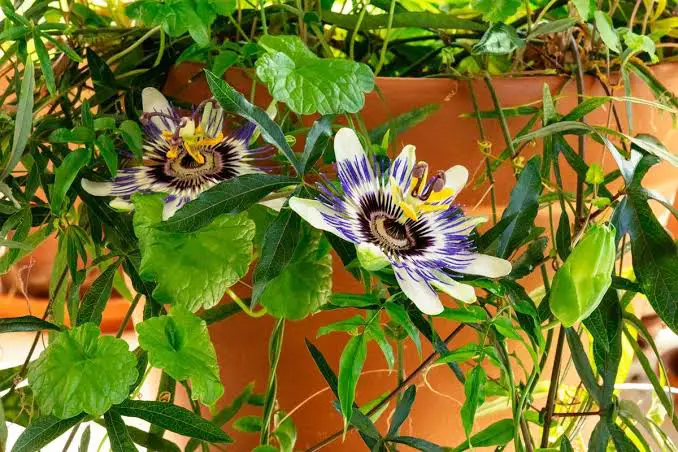
Most seed grown passionflower vines take one to two years to produce their first blooms.
I know that’s not the instant gratification most people hope for.
But this plant rewards the patient gardener in a big way.
Vines grown from cuttings or bought as established nursery plants can flower much sooner, sometimes within the same season.
That’s the tradeoff you make by starting from seed.
A longer wait in exchange for a bigger, healthier root system and far more plants for your money.
Once your vine starts flowering, it tends to keep going strong through the warm months.
You’ll end up with one of the most striking blooms you can grow in a home garden.
Common Problems When Growing Passionflower From Seed
A sour or swampy smell coming from your tray means rot has already set in underground.
That’s different from patience.
That’s a soil problem, usually caused by overwatering or poor drainage.
A thin white fuzz at the base of a sprouted seedling signals damping off, a fungal issue that can take down a healthy looking seedling overnight.
Catch it early, remove the affected seedling, and improve airflow around the rest.
A sudden cold snap near your tray, like a drafty window at night, can reset your seed’s internal clock and send it back into dormancy.
You won’t see dramatic signs of this. You’ll just see nothing happening for even longer.
Yellowing leaves on seedlings often point to overwatering rather than a lack of nutrients.
Let the soil dry out a bit more between waterings before reaching for fertilizer.
Mistakes That Keep Passionflower Seeds From Growing
Skipping the scarification step is mistake number one.
Water can’t get through that tough seed coat fast enough on its own, and seeds sit dormant for months longer than necessary as a result.
Using garden soil instead of a proper seed starting mix invites fungus and pests that kill seedlings before they even get established.
Giving up too early is the mistake I see most often. People check their tray for three or four weeks, see nothing, and toss the whole batch.
Remember the Patience Window and give it the full sixteen weeks before writing off your seeds.
Letting the soil dry out completely, even once, can undo weeks of progress. Consistent moisture matters more than almost anything else in this whole process.
Skipping the hardening off period when moving seedlings outdoors can shock a plant right when it’s finally getting started.
Always ease seedlings into outdoor conditions gradually, over one to two weeks.
Parting Shot
Growing passionflower from seed is not a race.
It’s more like waiting for a slow friend to finally text you back, annoying in the moment, worth it once it happens.
Keep the soil warm, keep it moist, prep your seeds properly, and give the whole process far more time than you’d expect a seed packet to need.
Do that, and you’ll end up with a vine that produces some of the most striking, otherworldly flowers you can grow in a home garden.
Your future self, sipping coffee next to a blooming passionflower vine, will be glad you didn’t give up in week three.
Related Posts: