
How to Make Rocks Look Good in a Garden
Last Updated on August 27, 2026 by Duncan
Rocks can make a garden look finished, natural, and expensive without spending a fortune on plants or complicated features.
But there is a catch: rocks look good when they appear to belong there, not when they look like someone dumped a truckload of gravel beside the flower bed.
After working on hundreds of rock gardens and landscape projects, I have seen the same pattern repeatedly.
The best looking spaces are rarely the ones with the most rocks, they are the ones where the rocks have a clear purpose, a thoughtful arrangement, and enough plants to soften the hard edges.
If your garden currently has a pile of stones that looks more like a construction site than a landscape, do not worry.
A few deliberate changes can make a dramatic difference.
Stop using rocks as filler
I see this constantly, and it drives me crazy because it’s the easiest trap to fall into.
You fill a bed with rocks because you think it looks clean and low-maintenance, then six months later it looks like an abandoned construction site.
Rocks work best when they’re part of a design, not the whole design.
Your eye needs something to land on besides pebbles and mulch.
Without plants, texture, and layers, even expensive river rocks look like you gave up halfway through.
The homes with the best rock gardens use rocks to complement plants, not replace them.
Rocks should frame, define, and set off what you’re growing. Think of them as jewelry for your garden, not the outfit itself.
Use rocks that match your vibe
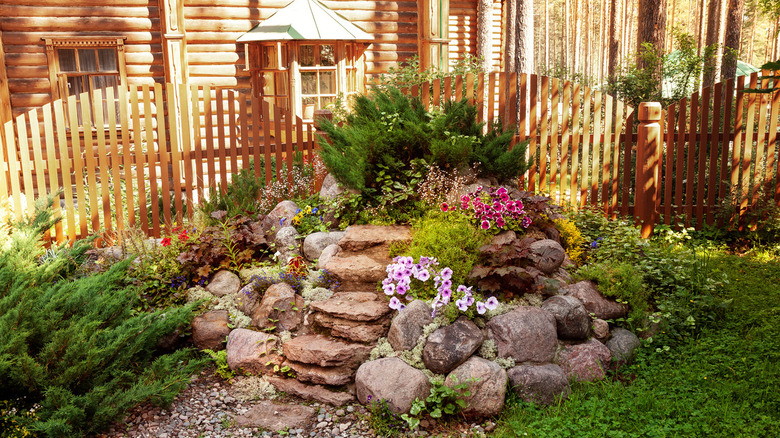
Every rock choice sends a message, and I learned this the hard way when a client installed hot pink gravel that clashed with their entire landscape scheme.
Now I’m that person who won’t shut up about coherence.
Large boulders work if you want a modern or Japanese garden feel.
River rocks and smooth stones read as softer and more naturalistic.
Gravel can feel contemporary or cottage-y depending on color and size.
The mistake you can make is mixing everything together in the same bed. That’s how you end up with visual chaos that confuses the eye instead of calming it.
Pick one rock type per area and commit to it.
Your neighbor’s flagstone path doesn’t need to show up in your planting beds.
When rocks feel intentional, everything else in the garden suddenly feels intentional too.
Go bigger with boulders
I’ve noticed people are consistently timid about boulder size, and it undercuts the whole effect.
You plan one medium-sized rock and it disappears into the landscape like it never happened.
One substantial boulder creates impact. Three smaller rocks in the same bed feel fussy and disjointed.
A single large stone acts as an anchor and gives your eye a resting place. Multiple large rocks start to feel like a composition instead of scattered pebbles.
Plant beside and behind your boulders, not just around them.
This makes the rock feel intentional, like it was always meant to be there.
Regularly redistribute the rocks
This is where most people’s rock gardens start looking rough about eighteen months in.
Rocks don’t stay where you put them.
They settle, rain pushes them around, and bare soil begins showing through like your whole design is falling apart.
Every couple of years, you need to rake and redistribute your rocks, fill in gaps, and top-dress bare patches.
If you’re not willing to do this maintenance, don’t use rocks. Period.
A neglected rock garden looks worse than no rock garden because people can see exactly where you’ve abandoned it.
The solution is topping off every spring.
Add fresh material, rake it even, and your garden will look maintained rather than tired. Treat it like you would a mulched bed.
Layer your rocks
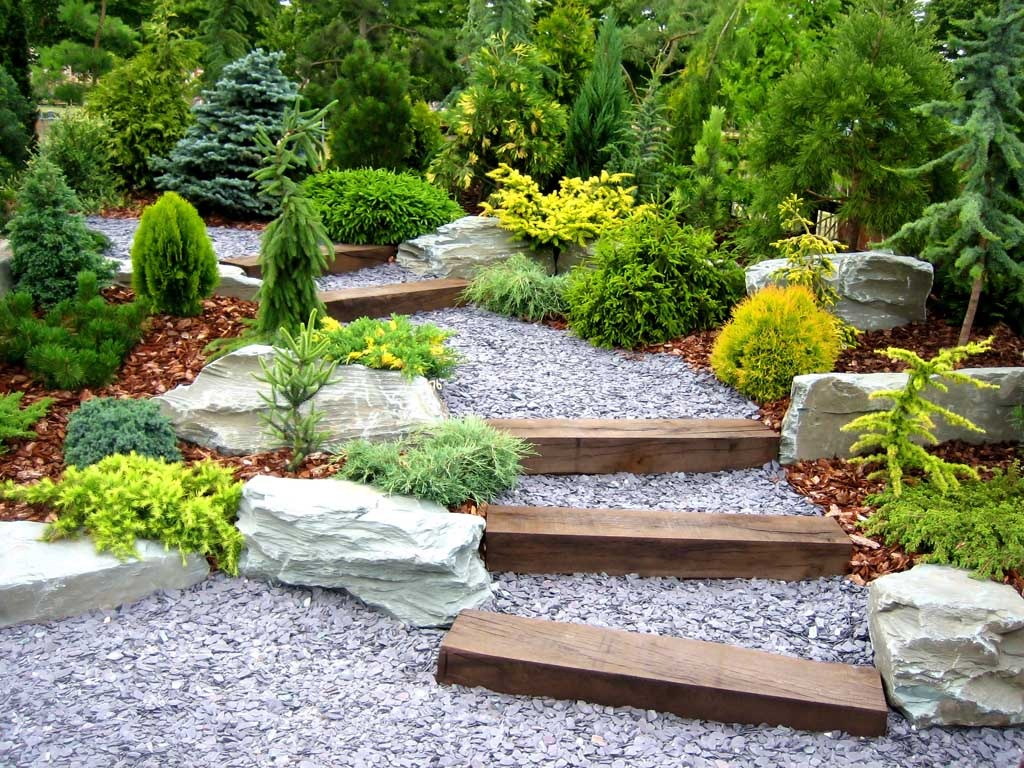
Here’s what happens when you try to stretch a truckload of gravel over too much area: it looks cheap and thin, and you start seeing soil, weeds, and bare spots immediately.
People blame the rock, but its usually inadequate material.
Calculate your square footage and buy enough to get at least 2 to 3 inches of coverage.
Going thin might save you a few bucks, but you’re looking at a mediocre garden for three years.
Spend the money now and enjoy your garden instead of resenting the thinness every time you look at it.
Remember one thicker, well-layered rock bed beats two thin ones across different areas of your garden.
Concentration creates impact, so do it.
Be cautious of the color you choose
:max_bytes(150000):strip_icc()/mochagirlplacerockgarden-1c2f1c0d92fd4ba48d317294261ff19e.jpeg)
I’ve seen a tan gravel that made a beautiful garden look muddy and depressed.
Same space, better-quality pea gravel in a cool gray tone, and suddenly the whole thing feels polished.
Most people default to whatever’s cheap at the local landscape supply place.
But rocks are visible every single day, and the wrong color will drag down your entire aesthetic.
Gray and buff tones feel contemporary and clean.
Warm tan and rust tones feel cottage and rustic.
Pure white reads as beachy or modern but can feel harsh in some settings.
Look at photos of gardens you love and notice what color rocks they’re using.
You can also visit landscape supply yards in your area in person so you can see rocks in actual daylight.
Separate rocks with edging

This is the detail that separates professional gardens from DIY situations.
When rocks meet pathways or patio edges without a clear boundary, everything blurs together and looks unmaintained within weeks.
What you should is to install metal or plastic edging between rocks and hardscape.
It keeps gravel from creeping onto your patio, prevents weeds from establishing at the boundary, and creates a crisp line that immediately reads as intentional design.
Spend a few dollars on edging materials and it will be worth it.
Have a weed barrier
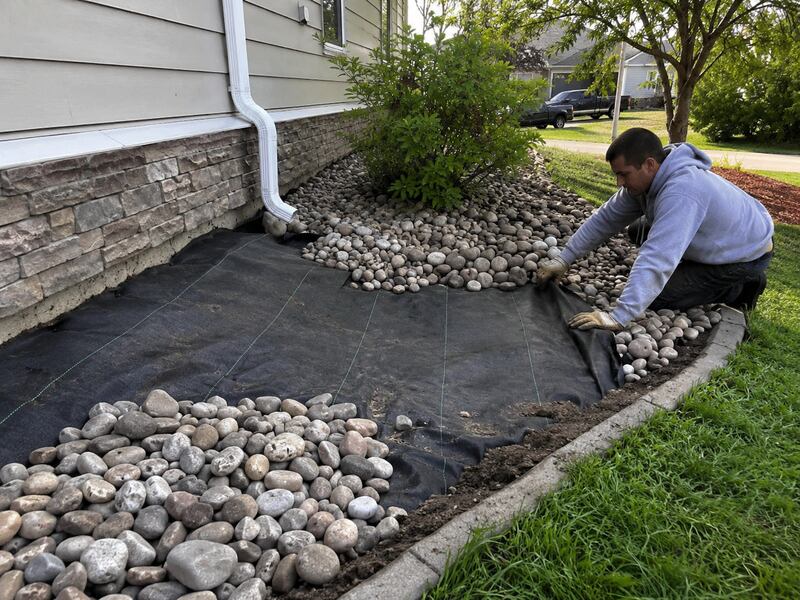
Weed barrier sits between the soil and rocks and prevents weeds from rooting through.
If you are installing it, ensure its high quality.
The thin landscape fabric that most people use tears, deteriorates in sunlight, and gets colonized by roots.
After a year, weeds are growing right through it, and now you have a barrier that’s doing nothing but trapping moisture and looking dingy from below.
Use thicker woven barrier or none at all and plan to maintain your bed more actively with weeding.
Combine rock textures
Variety keeps a garden from feeling static.
A bed of identical pea gravel can feel monotonous, but mix in some larger angular stones or a different texture and suddenly it feels more sophisticated and intentional.
Maybe you use larger river rocks as a border and smaller gravel as the filler.
Or you incorporate flagstone pathways through a gravel bed.
Or you nestle smooth stones between coarser pebbles.
Small textural variation makes the whole composition feel elegant.
This works because your eye doesn’t get bored.
The contrast between textures makes the garden feel more dynamic and cared for.
Place rocks around plants
So many people plant first, then scatter rocks around randomly like they’re hiding mistakes.
That’s backward thinking.
Your rocks should frame and highlight what you’ve planted.
Before you spread gravel, imagine each plant’s mature size.
Place rocks to draw attention to the plants, not away from them.
Use rocks to create depth, define spaces between plantings, and emphasize your best plants.
A strategically placed stone near a focal plant makes that plant more important.
Think of your rocks as a frame and your plants as the picture. That mentality changes everything about how you lay them out.
Use rocks to define garden rooms and transitions
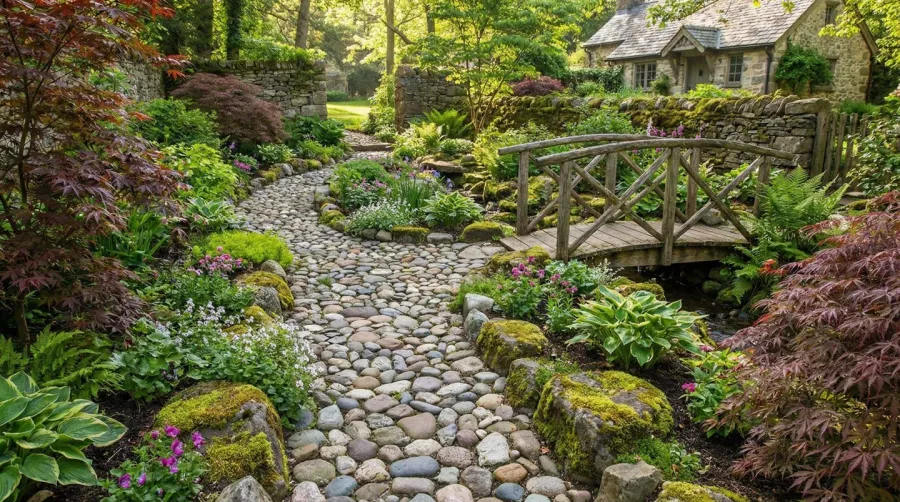
This is a sophisticated move that makes gardens feel larger and more intentional.
Instead of using rocks just for decoration, use them to create visual boundaries between different areas of your yard.
Rock borders between the perennial garden and the hardscape make each space feel more purposeful.
A gravel path through planted areas creates flow and makes the space feel more connected.
Rocks around the edge of an area define where attention should land.
These moves make your garden feel like a composition rather than a collection of random plants.
Think about the journey someone takes through your yard and how rocks can signal transitions between spaces.
Avoid rocks in high-traffic areas
Rocks look beautiful in pathways for about six weeks.
Then people walk on them, they shift, they compact, bare soil appears, and they become a maintenance headache.
Unfortunately, most people don’t maintain them, and it shows.
Use rocks for borders and accents.
Use actual pavers, stepping stones, or mulch for paths where you walk regularly.
This isn’t a hard rule, but it’s a real-world observation about what actually works long-term versus what looks nice in photos.
If you love the look of a gravel path, install it with proper edging and commit to maintaining it every season.
Otherwise, choose a harder surface that won’t require constant attention.
Go with rocks that work with your climate
In dry climates, river rocks and smooth stones feel right.
In wet climates, they can feel out of place and create drainage issues if you’re not careful about soil underneath.
I’ve seen gorgeous rock gardens fail because they didn’t suit the climate’s visual or practical characteristics.
Your rocks should feel like they belong in your region, not like they were imported from somewhere else.
Look at what successful gardens in your area use.
That’s your starting point.
Parting shot
If there’s one thing I could tell every homeowner about rock gardens, it’s this: a beautiful rock garden reflects regular attention, not just good initial design.
The most stunning ones I’ve worked on aren’t stunning because of some magic formula—they’re stunning because someone rakes and maintains them regularly.
Three times a year, spend an hour raking, pulling weeds, checking edging, and topping off thin spots.
That’s it.