15 Secret Garden Ideas for Small Spaces
Last Updated on July 17, 2026 by Duncan
You don’t need a sprawling backyard to create a magical secret garden. A secret garden is not about size. It is about mystery.
Some of the most enchanting gardens I’ve visited could fit inside a small patio, tiny courtyard, or narrow side yard.
In fact, smaller spaces often feel cozier because every plant, pathway, and decorative touch is close enough to enjoy.
The secret isn’t filling every inch with flowers.
It’s creating a sense of discovery.
When a visitor can’t see everything at once, your garden instantly feels larger and far more inviting.
Whether you’re working with a compact backyard, balcony, or small corner beside the house, these secret garden ideas will help you create a peaceful retreat that feels hidden from the outside world.
Build a “garden within a garden”
Every great small garden hides a layer inside it.
A tucked away corner you only find if you walk the space instead of just glancing at it from the door.
Set aside one small section, even four feet by four feet. Give it its own personality with different plants, a different bench, a different mood entirely.
One corner becomes a reading nook.
Another becomes a butterfly patch.
A third holds herbs.
When you do this the space instantly feels twiceas large because your brain experiences multiple destinations instead of one backyard.
Borrow scenery outside your fence
You do not own the view past your fence, but you can still use it.
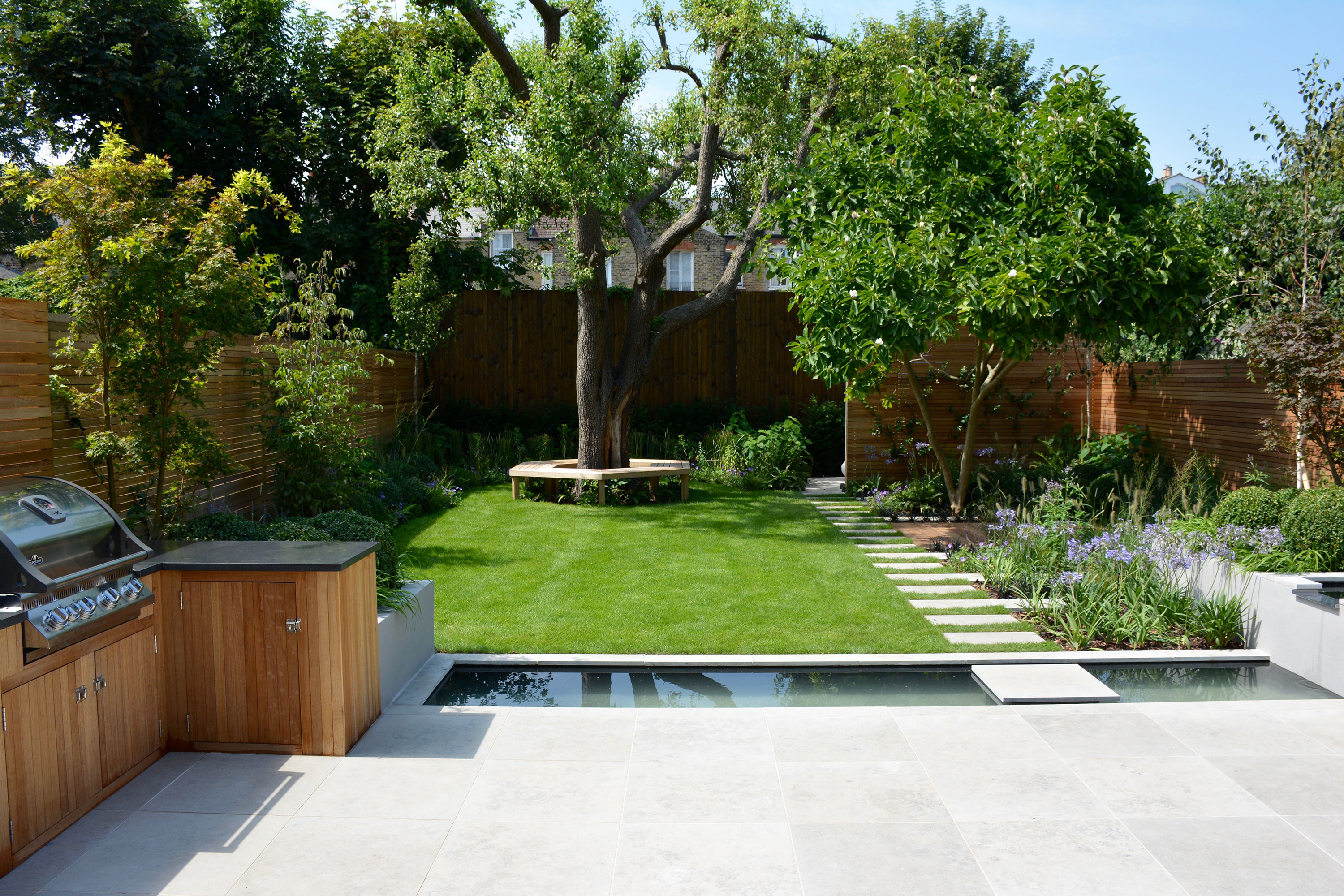
A neighbor’s tall tree, a distant rooftop, or a nice patch of sky can become part of your backdrop.
You can even angle your own plants so they lead the eye toward whatever is worth looking at beyond your property line.
This way your small garden borrows depth it never had to pay for.
Use one dramatic oversized feature
A garden filled with only small things feels cramped, no matter how healthy the plants are.
One bold, oversized feature fixes this instantly.
Try a giant urn, a dramatic arch, or one enormous leafed plant in a big pot.
Something that makes people pause and ask where you found it.
When your brain sees room for something big, it assumes there must be more space around it.
You should know that one hero feature does more work than ten small ones combined.
Create a secret only visible at night
Daytime gardens get all the attention, but a secret garden reveals a different side of itself after dark.
Try solar lanterns tucked low along a path or one string of warm lights overhead.
Choose warm toned light, not bright white.
Warm light feels intimate, while white light feels like a parking lot.
Plant white flowers, silver foliage, and moonflowers that glow under evening light.
You can also add subtle solar lighting that highlights only a few plants instead of flooding the whole garden.
This way you give your garden a second personality once the sun goes down.
Design around sound instead of sight
Most people design gardens for what they see.
Try designing for what you hear instead.
Wind chimes, a small trickling water feature, or ornamental grasses that rustle in the breeze all work well.
Sound fills a small space in a way that feels expansive, not cramped.
Close your eyes in your own garden sometime and just listen.
If all you hear is traffic, that is your first clue about what to fix.
Plant for movement
Everyone plants for color.
Almost nobody plants for movement, and that is a mistake.
Choose ornamental grasses that sway, tall airy plants that bend in the wind, or vines that shift on a trellis.
Movement makes a garden feel alive, even once the flowers are gone.
A garden that moves feels bigger than a garden that just sits there.
Make visitors slow down
A garden people rush through never feels like a secret.
A garden that slows their pace feels like a discovery every time.
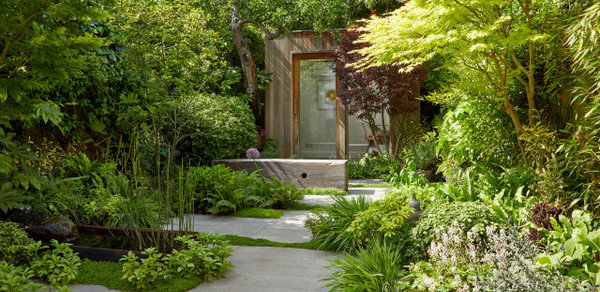
Curve your path instead of running it straight, even in a tiny space.
A gentle bend hides what comes next, so people naturally walk slower.
Change the texture underfoot too, like stepping stones followed by gravel.
Small shifts in footing pull people out of autopilot.
This makes the people naturally slow their pace and begin noticing flowers, scents, butterflies, and tiny details they would have missed.
A slower walk makes a small garden feel bigger and richer.
Hide tiny “pause points”
A pause point gives someone a reason to stop moving.
Think:
- A stepping stone with a view.
- A stump beneath a tree.
- A small shelf holding a teacup planter.
These tiny pauses encourage exploration.
Create a seasonal secret
Most gardens peak once and disappear for the rest of the year.
A secret garden holds something back for later.
Plant one thing that only shows its magic in a specific season.
Bulbs that surprise you in early spring, a vine that turns brilliant red in fall, a shrub that blooms late when everything else has gone quiet.
Give your garden a reason to surprise you more than once a year.
One seasonal secret keeps it feeling like it is always about to show you something new.
Give wildlife its own area
Birds, bees, and butterflies turn a quiet garden into a living one.
Set aside a small patch just for them instead of treating wildlife as an afterthought.
A shallow dish of water, a few native flowering plants, or a small brush pile in a hidden corner all help.
Instead of scattering bird feeders, insect hotels, bird baths, and pollinator flowers everywhere, dedicate one hidden corner entirely to wildlife.
Soon you’ll notice birds spending longer in the garden because they have food, water, shelter, and nesting spots close together.
Tell a story
The most memorable gardens feel like they are telling you something, even if you cannot explain exactly what.
Maybe yours feels like an abandoned cottage.
Maybe it looks like an old woodland chapel.
Maybe it resembles a forgotten artist’s courtyard.
Once you choose a story, every plant and decoration becomes easier to select.
For a great look, choose two or three meaningful objects instead of a dozen random decorations.
Too many props feel cluttered, while a few chosen with intention feel like clues to a story only you know.
Make the garden feel older than it is
New gardens often look a little sterile, even when they are beautifully planted.
Secret gardens feel like they have been quietly growing for years, even if you planted everything last spring.
Choose materials that age well, like weathered wood, aged terra cotta, or stone instead of bright new plastic.
Let a little moss grow on a shaded pot instead of scrubbing it clean.
A garden with a bit of patina feels discovered instead of installed.
Frame one perfect view
Every secret garden needs one moment that makes people stop and take a photo.
Pick a single spot, a bench, an arch, or a gap between two shrubs, and frame it around your garden’s best angle.
Everything else can be a little imperfect if this one view is right. People remember the one great photo spot far more than the overall layout.
Walk your space with your phone camera before you plant anything.
Find that spot first.
Design for rain
Most people design a garden for sunny days and forget rain entirely.
A secret garden that only looks good when dry is only half finished.
Choose something that looks beautiful wet, like broad leafed plants that hold raindrops or a path that develops a nice sheen instead of turning into mud.
Plan drainage so a storm feels like part of the garden’s charm, not a mess to clean up later.
Some of the most magical garden moments happen right after rain, when everything smells green.
Design for that moment on purpose.
Parting shot
The best secret gardens never explain themselves completely.
Think a path that curves out of sight before it ends, a gate that leads to nowhere in particular, or a small locked box tucked under a shrub that nobody ever opens.
Resist the urge to make every corner fully understandable at a glance.
A little unresolved mystery is what turns a garden from pretty into unforgettable.
Give people one thing to wonder about on their way out.
They will think about your garden long after they leave it.
Related Posts: