Secret Garden Ideas Hiding Places: 20 Creative Ways to Create a Private Escape
Last Updated on July 20, 2026 by Duncan
A secret garden is not defined by high fences or thick hedges.
It is a place that feels tucked away from everyday life, even if it’s only a few steps from your back door.
The best hiding places make you slow down, take a different path, and forget you’re still in your own backyard.
One thing I’ve noticed after visiting countless gardens is that the most memorable ones don’t reveal everything at once.
They invite you to explore.
A corner disappears behind flowers, a path bends out of sight, or a quiet spot seems to appear out of nowhere.
That feeling of discovery is what transforms an ordinary garden into something magical.
If you’re dreaming of your own hidden retreat, these secret garden ideas will help you create secluded spaces that feel personal, peaceful, and full of charm.
I’ve built a lot of these over the years.
The ones that get talked about at every dinner party for the next decade aren’t the fanciest.
They’re the ones that surprise you.
A smell before a sight.
A dip in the ground.
A sound you weren’t expecting.
Here are twenty hiding places worth building, plus the small details that make each one land instead of falling flat.
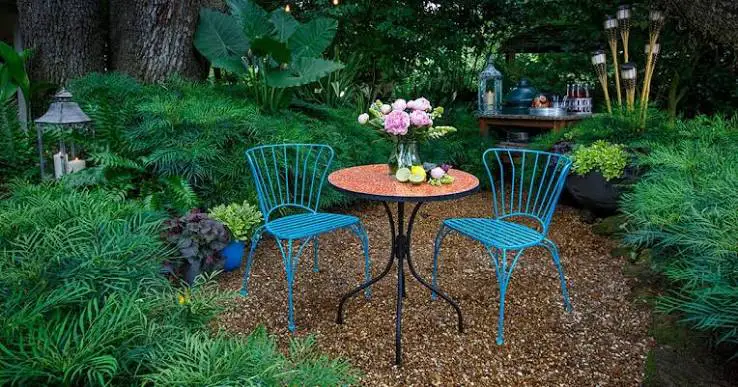
A hidden tea garden
Tuck a tiny table and two chairs behind a screen of tall grasses or a low wall.
Keep it just out of sight of the main patio.
The trick here isn’t the furniture.
It’s the walk to get there.
Give yourself thirty seconds of path before you reach the table.
That short walk is what turns “sitting outside” into “having tea in my secret garden.”
Plant fragrant flowers and herbs such as roses, lavender, and jasmine so every visit feels like an afternoon in the countryside
Brush past any of these when walking and the whole space smells like the drink before you even sit down.
This way the fragrance becomes part of the experience, not just the view.
A woodland hideaway
If you’ve got even three trees clustered together, you already have the bones of this one.
Underplant with shade lovers like hostas, ferns, and foxglove.
Skip the mulch and use leaf litter instead.
Bare mulch reads as landscaped.
Leaf litter reads as forest.
Add one log or flat stone as a seat, nothing fussier than that.
The less designed it looks, the more it feels like you stumbled into it by accident.
I’ve watched people whisper in these spaces without meaning to.
Something about tree cover makes people lower their voices, even fifteen feet from a fence.
A children’s secret fort

Every kid wants a spot that feels like it belongs to them and nobody else.
Skip the plastic playhouse.
A ring of tall sunflowers or a teepee made from pole beans does more for a kid’s imagination than anything from a box store.
Keep the entrance low, at kid height, so adults have to duck or crawl to follow.
That small barrier is exactly what makes it feel like theirs.
My niece has claimed a bean teepee in her mom’s garden for three summers running. She still won’t tell me the password to get in.
A hidden wildlife watching spot
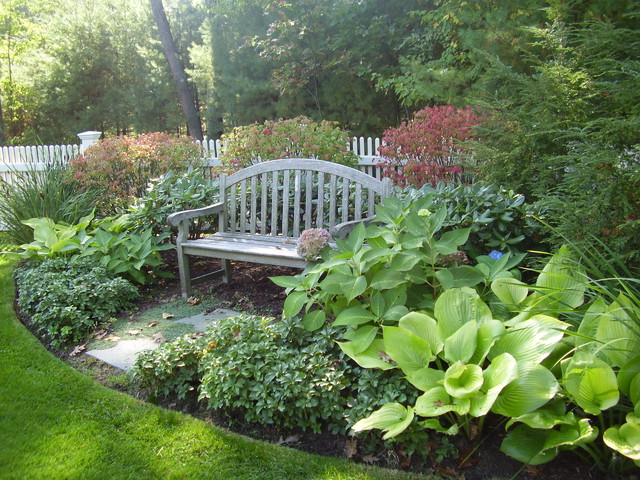
This one isn’t about hiding yourself from people.
It’s about hiding yourself from birds and rabbits so they forget you’re there.
Set a bench behind a loose screen of shrubs, angled toward a feeder or birdbath.
The gaps should be small enough to see through, but not so open that your movement spooks anything on the other side.
Skip bright colors on cushions or clothing.
Muted greens and browns matter here a lot.
Sit still for ten minutes and you’ll be shocked what wanders close when it thinks nobody’s watching.
A moonlight escape
Most gardens are planned for daylight and abandoned the second the sun goes down.
Flip that.
Plant white flowers, silver foliage, and anything with pale bark near your seating.
They’ll practically glow once the light drops low.
Moonflower vine is the showstopper here.
It opens at dusk and closes by morning, so the whole space feels like it only exists at night.
Add one small warm light on a timer, low enough not to compete with the moon.
You want it to feel lit by the sky, not by a fixture.
A garden room
You don’t need walls to make a room.
You need plants tall enough to block a standing adult’s line of sight.
Joe Pye weed, tall miscanthus, and dahlias in the eight foot range all work.
Leave one narrow gap as your doorway.
The mistake people make is planting a full circle with even spacing.
Break the ring on purpose, and the space feels grown rather than built.
I did this with nothing but perennials in a client’s yard. She calls it her outdoor living room now.
A hidden orchard corner
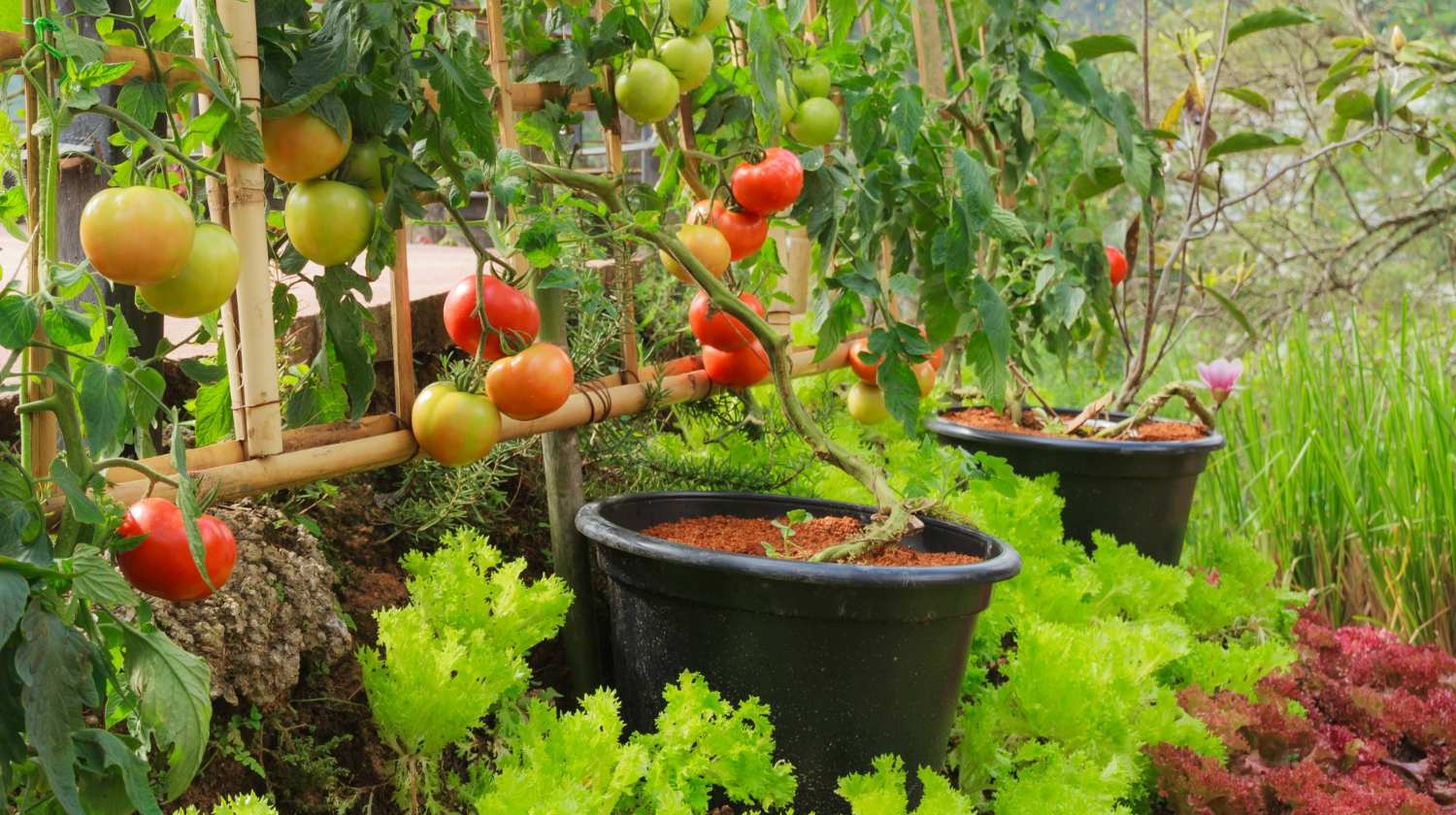
Even three dwarf fruit trees planted close together create a canopy dense enough to duck under and disappear.
Underplant with something low and soft, like clover or creeping thyme.
It keeps the ground feeling intentional instead of bare.
The payoff here compounds every year.
What starts as a thin patch of shade becomes a fully enclosed little room by year four or five.
Patience is the whole cost of admission on this one.
Nothing about it is fast, but nothing about it needs to be.
A mossy stone retreat
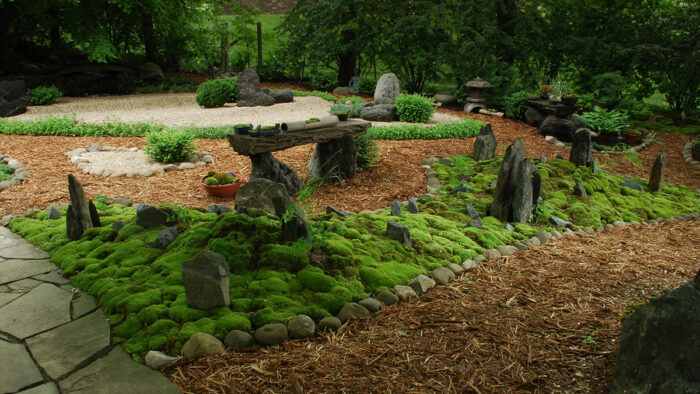
Damp, shaded corners that most people treat as a problem spot are a gift if you lean into them instead.
Let moss take over natural stone or old pavers instead of scrubbing it off.
Add ferns and hostas, and resist the urge to tidy every edge.
This is one of the only hidden spots where doing less work gets you a better result.
Moss needs shade, moisture, and time left alone.
The green on stone shows up within two or three seasons.
It’s a strange kind of magic for something that costs you nothing but patience.
A secret herb sanctuary
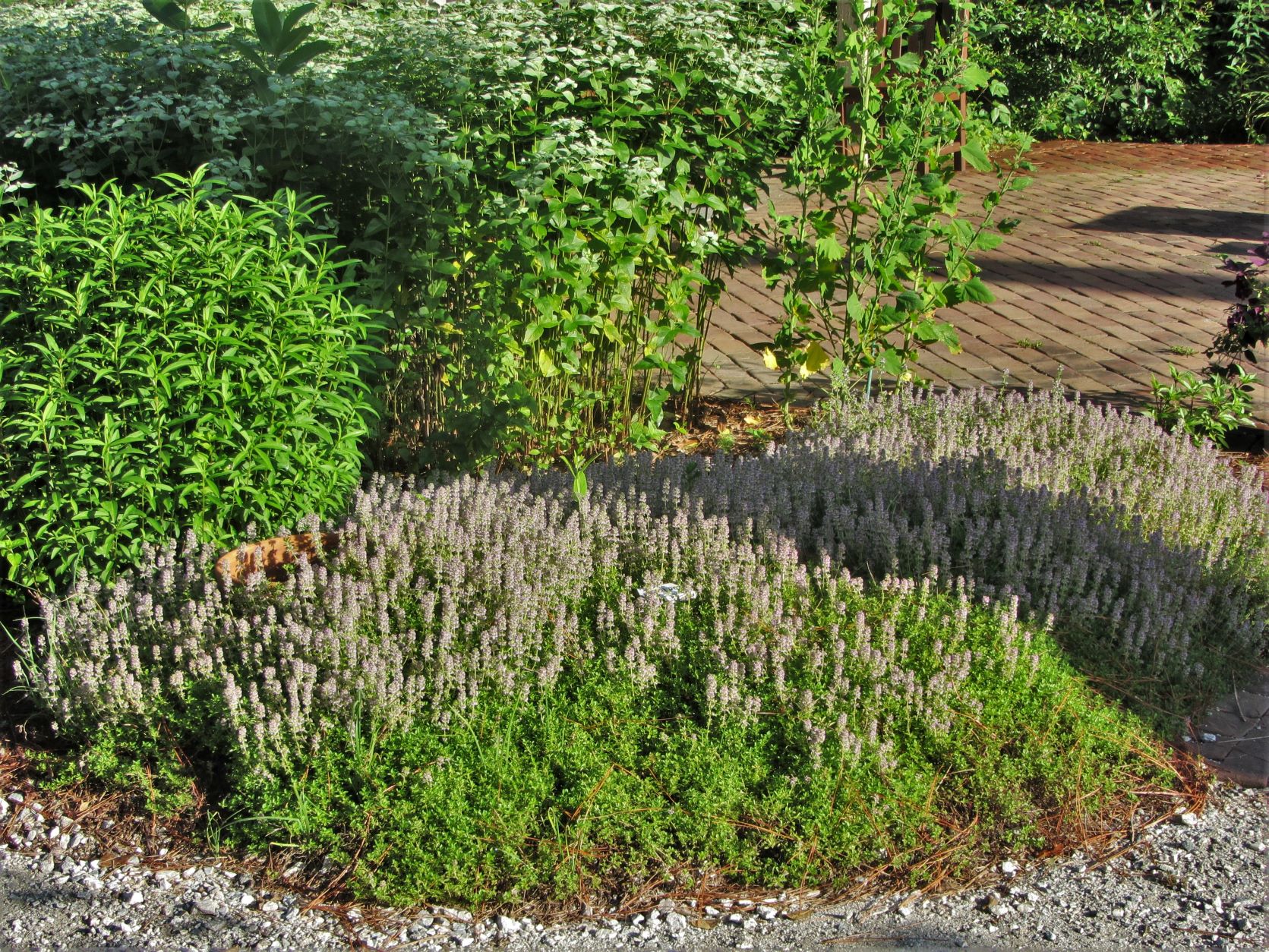
Tuck a small raised bed of culinary herbs behind a low wall or a dense row of rosemary standing sentry at the entrance.
The genius of this one is that it earns its keep.
You’re not just building a hidden space, you’re building a reason to visit three times a week for dinner.
Plant thyme or chamomile between stepping stones so every walk in releases scent underfoot.
That detail alone makes the whole space feel considered.
I put basil right at the entrance of one of these. The client says she smells it from her kitchen window on hot days.
A pergola
A bare pergola is just a frame.
Give it two or three growing seasons under wisteria or climbing roses, and it becomes a room with a ceiling.
The trick most people miss is density.
A pergola with gaps still lets in full sun and full view.
You want the canopy thick enough that dappled light is the most you get through it. Grapevine is the underrated choice here.
Fast growing, dense leaves, and you get actual fruit hanging over your head by the third summer.
Sit under a fully grown one on a hot afternoon and you’ll understand why.
A bamboo refuge

Bamboo gets a bad reputation because people plant running varieties without a barrier and regret it for a decade.
Choose a clumping variety instead.
You get the same dense, whispering privacy screen without the invasive spread.
The sound is the real payoff here.
Wind through bamboo has a hollow rattle no other plant replicates.
It masks conversation better than any water feature I’ve installed.
Give it a contained bed or a root barrier if you go this route.
A wildflower pocket
Not every hidden spot needs a bench.
Sometimes the hiding place is the plants themselves.
Let a corner of your yard go a little wild.
Native wildflowers and tall grasses, mowed with a single path cut through the middle.
The height does the hiding.
Stand at the edge of a chest high patch and you cannot see six feet in.
This is the lowest effort, lowest cost hiding place on this whole list.
It might also be the one that draws the most bees, butterflies, and compliments.
A hidden fire pit circle

A fire pit tucked behind a loose ring of shrubs feels completely different from one sitting in the open middle of a lawn.
Leave two entrances instead of one, positioned across from each other.
It keeps the space feeling like a room, not a dead end.
Check your screening height against seated eye level, not standing eye level.
People spend almost the entire time here sitting down.
Add rocks or low seating right at the edge of the fire ring itself.
Extra chairs pulled in from elsewhere always ruin the feeling.
A sunken seating area
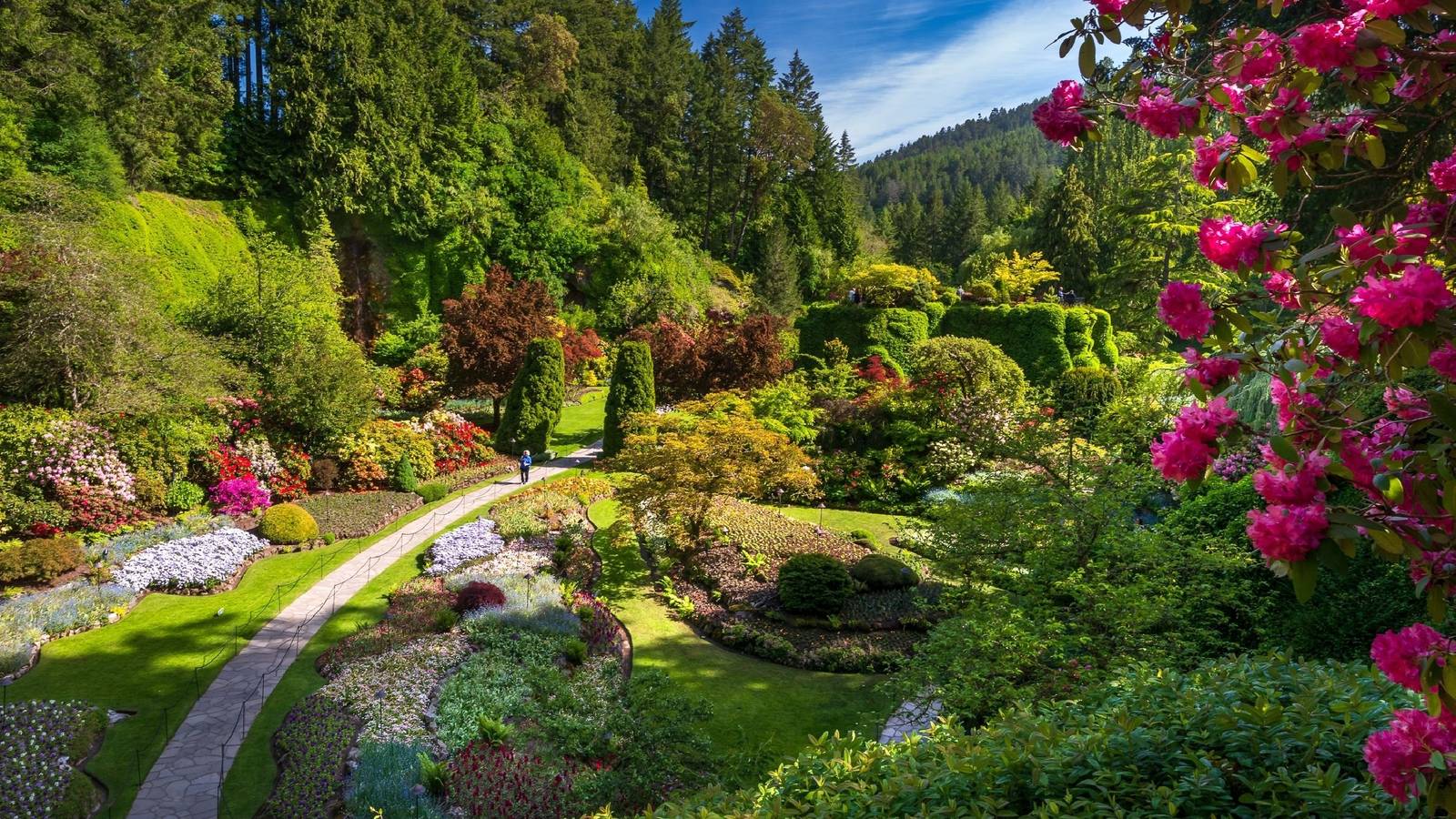
Drop your seating six to eight inches below the surrounding grade.
The whole area disappears from a standing sightline.
You don’t need a full excavation project.
A shallow dig, some reclaimed pavers, and a weekend gets you most of the effect.
Sunken spots trap a little warmth and block a little wind.
That means they stay usable on cooler evenings when the rest of your yard isn’t.
I built one for myself with a shovel and a rented plate compactor.
My neighbor didn’t know it existed for a full year.
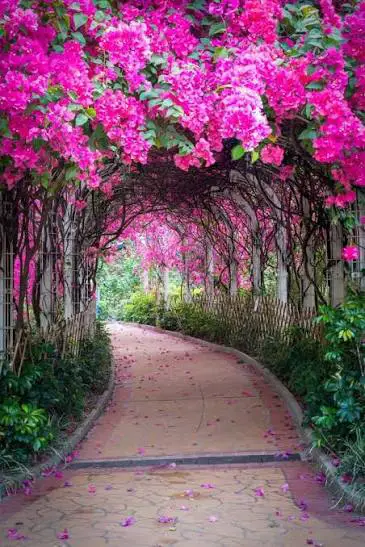
A living tunnel
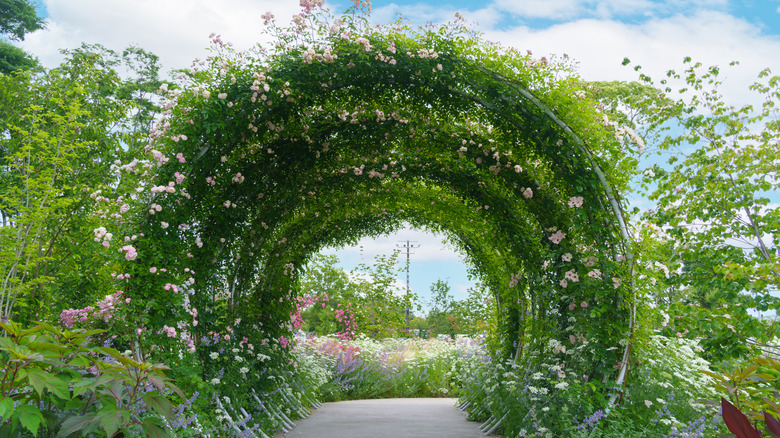
Trained trees or shrubs, bent and woven overhead into an arch you walk through, take longer to build than almost anything else on this list.
Willow, hazel, and hornbeam all work well for training.
Weave the branches together while they’re young and flexible.
Tie them loosely until the graft points hold on their own.
This is a multi year project, not a weekend one, and I won’t pretend otherwise.
But walking through a fully grown living tunnel does something a purchased arbor never will. Start small and extend it later.
A fern grotto
:max_bytes(150000):strip_icc()/ms-ferns-primary-getty-13f53344c7c64567bf9e31b978843479.jpg)
Damp, low light corners near a foundation or fence line are usually treated as wasted space.
They’re some of the easiest hiding places to build.
Layer several fern varieties at different heights.
Ostrich fern in back, maidenhair up front, until the ground disappears entirely.
Add a single stone or small statue tucked into the greenery, just visible, not centered.
Half hidden objects feel discovered rather than placed.
Filtered green light through fern fronds has a different quality than open shade.
It’s calmer, and you’ll feel it the moment you step in.
A hidden meditation garden
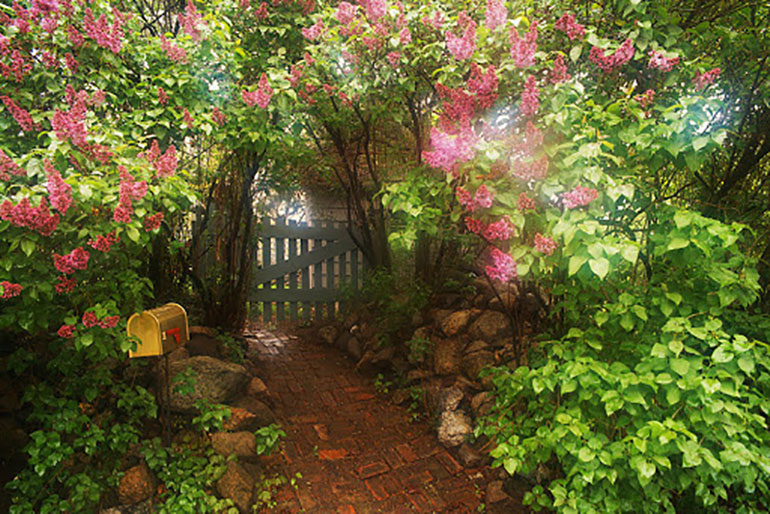
Simplicity is the whole design brief here.
It’s harder to pull off than it sounds, because our instinct is always to add more.
One flat stone or low bench. A single specimen plant, and enough screening that you can’t see your own house from inside it.
Gravel or fine bark underfoot changes the acoustics in a way grass doesn’t.
Every step makes a small sound, which makes the silence around it feel more complete.
Resist decorating this space.
The empty parts are doing as much work as the planted ones.
A secret courtyard
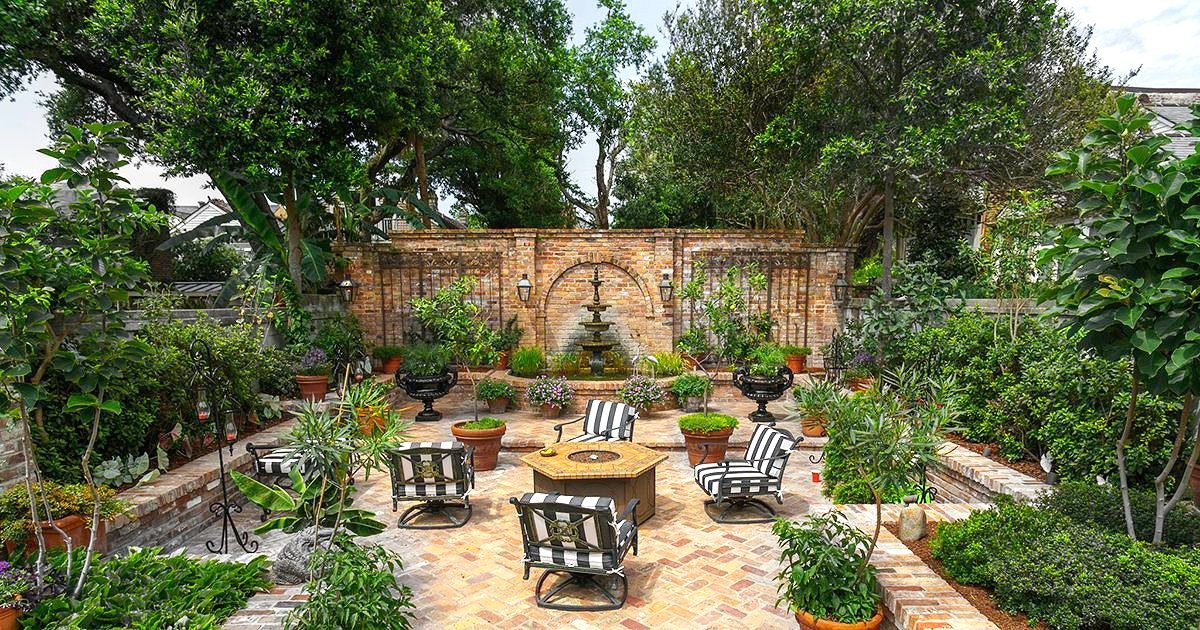
Even a small side yard between two houses can become a proper hidden courtyard with the right entrance treatment.
A gate or a change in paving material at the threshold signals something before a person has taken a single step inside.
Vertical space matters more here than anywhere else on this list, since courtyards are usually narrow.
Climbing plants on every wall do the work ground level planting can’t.
I turned a six foot gap between two garages into a client’s favorite spot on the whole property.
All it took was pots, trellis, and string lights.
A rustic potting hideaway
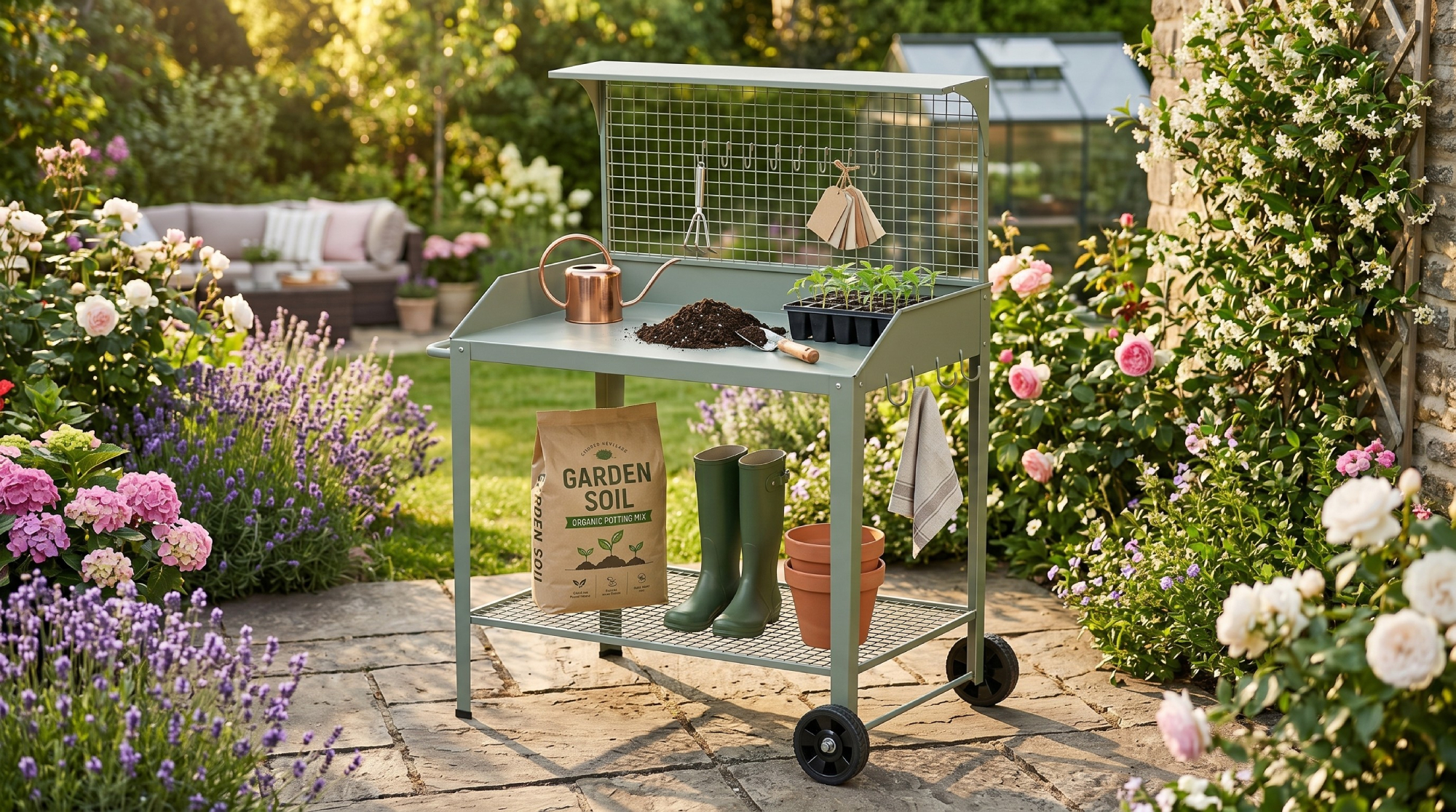
Not every hidden spot needs to be for sitting still.
This one is for puttering, and puttering deserves its own corner too.
A small potting bench tucked behind a shed or under a lean to roof gives you somewhere to get your hands dirty without an audience.
Old tools, mismatched pots, and a bit of visible clutter help here.
A potting space that’s too tidy looks staged rather than used.
This is the hiding place that’s purely for you, not for guests.
I think every gardener deserves one spot nobody else is invited into.
A storybook corner

Somewhere between a reading nook and a fairy tale set piece, this hiding place leans all the way into whimsy.
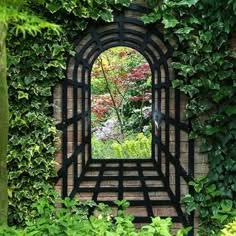
An arched doorway cut into a hedge.
A tiny bench painted a color that doesn’t match anything else in the yard.
String lights woven through low branches.
Kids and adults respond to this one the same way, which is rare.
Something about a clearly imaginative space gives grown adults permission to feel delighted.
Don’t overthink the plant choices here.
Parting shot
You don’t need all twenty. Pick the one that matches how you spend your evenings, not the one that photographs best.
A tea drinker wants the tea garden. A parent wants the fort. Someone who can’t sleep wants the moonlight escape.
Whatever you choose, remember what separates a real hiding place from a decorated corner. Something has to be delayed.
A scent, a sightline, a dip in the ground, a bend in the path.
Give a visitor half a second of not knowing what’s ahead, and you’ve built a secret.
Skip that, and you’ve just built a nice spot with a bench in it.
Related Posts: