
32 Things To Do With Fallen Acorns
Every October my backyard turns into a minefield.
One minute you are carrying a cup of coffee across the patio, the next you are doing an involuntary ice skating routine on a pile of acorns.
If you have oak trees, you know exactly what I am talking about.
If you search “What can I do with fallen acorns?” Most articles tell you to “rake them up and compost them.” Thanks, very helpful.
I went down a rabbit hole this year trying to find every legitimate use for these things, and it turns out the list is way longer than I thought.
So grab a bucket, here is everything I found.
1. Rake Them Up Before Someone Gets Hurt
This sounds obvious, but hear me out. A pile of acorns on a wood deck or a sloped driveway is basically a layer of marbles.
I learned this when my father in law nearly went down the porch steps visiting for Thanksgiving.
Do not wait for “acorn season” to end before clearing them.
Do a quick pass every few days.
Your ankles will thank you, and so will your insurance agent.
Don’t have a rake for acorns? Here are options to choose from.
2. Let Your Mower Eat Them
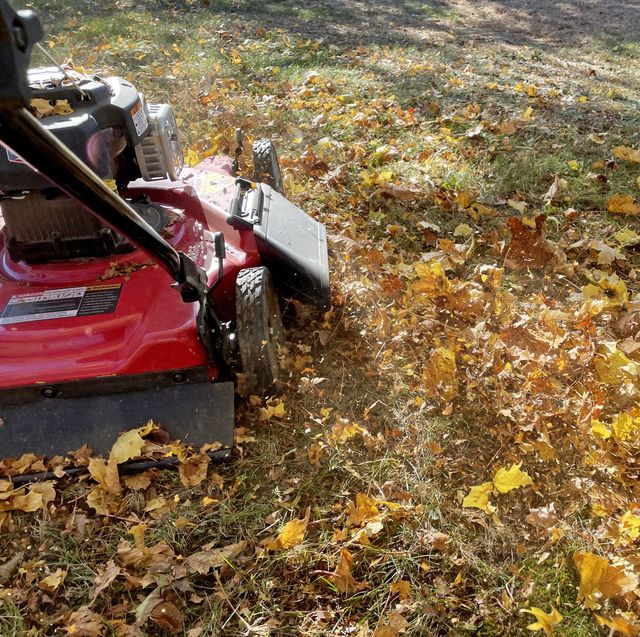
Here is the lazy person’s trick that actually works.
Run your mulching mower over a light scattering of acorns instead of bagging them separately.
The blades chop them up small enough that they break down fast and feed your lawn instead of becoming squirrel snacks buried in your flower beds.
Just do not try this with a thick carpet of acorns or you will be picking shell fragments out of your shoes for a week.
3. Turn A Big Batch Into Acorn Mulch
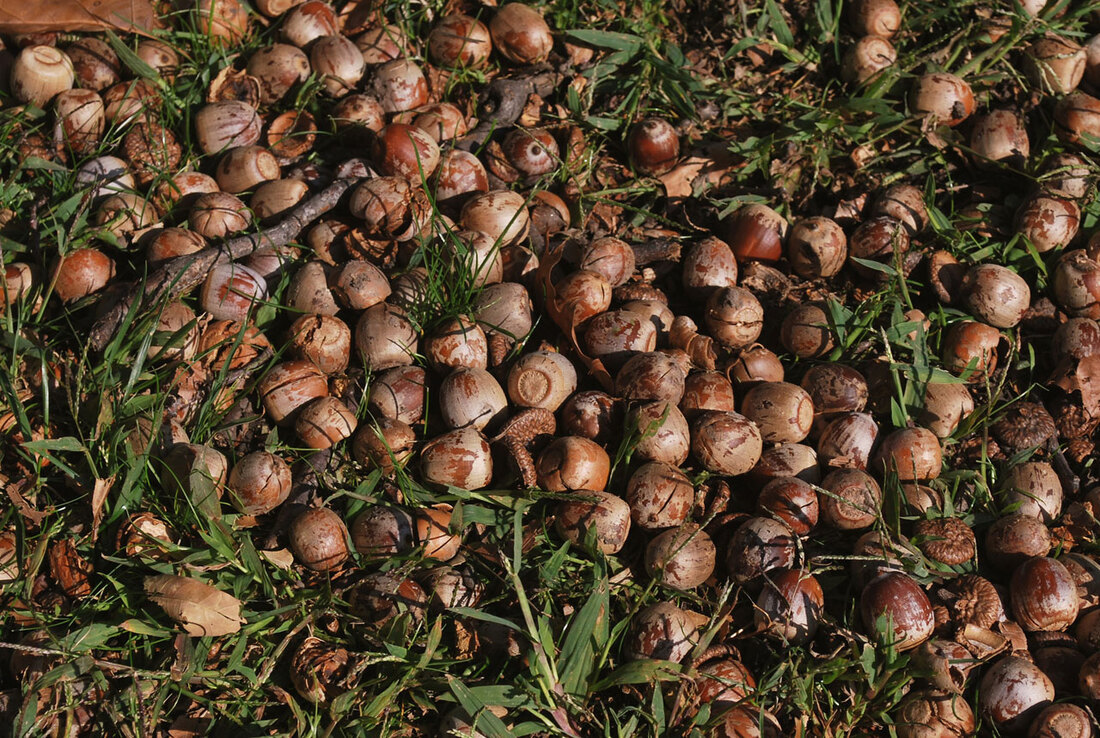
This is different from the quick mower pass above.
If you have a genuinely heavy acorn year, rake a big pile into one spot and run the mower over it on the bagger setting, going back and forth until it is ground down to something close to coffee grounds.
No mulching blade? No problem.
Spread the acorns on a tarp on your driveway and drive your car over them a few times.
It feels a little ridiculous the first time you do it, but it works, and you end up with a free batch of mulch for your beds or potting containers.
4. Use Them As Mulch For Acid Loving Plants
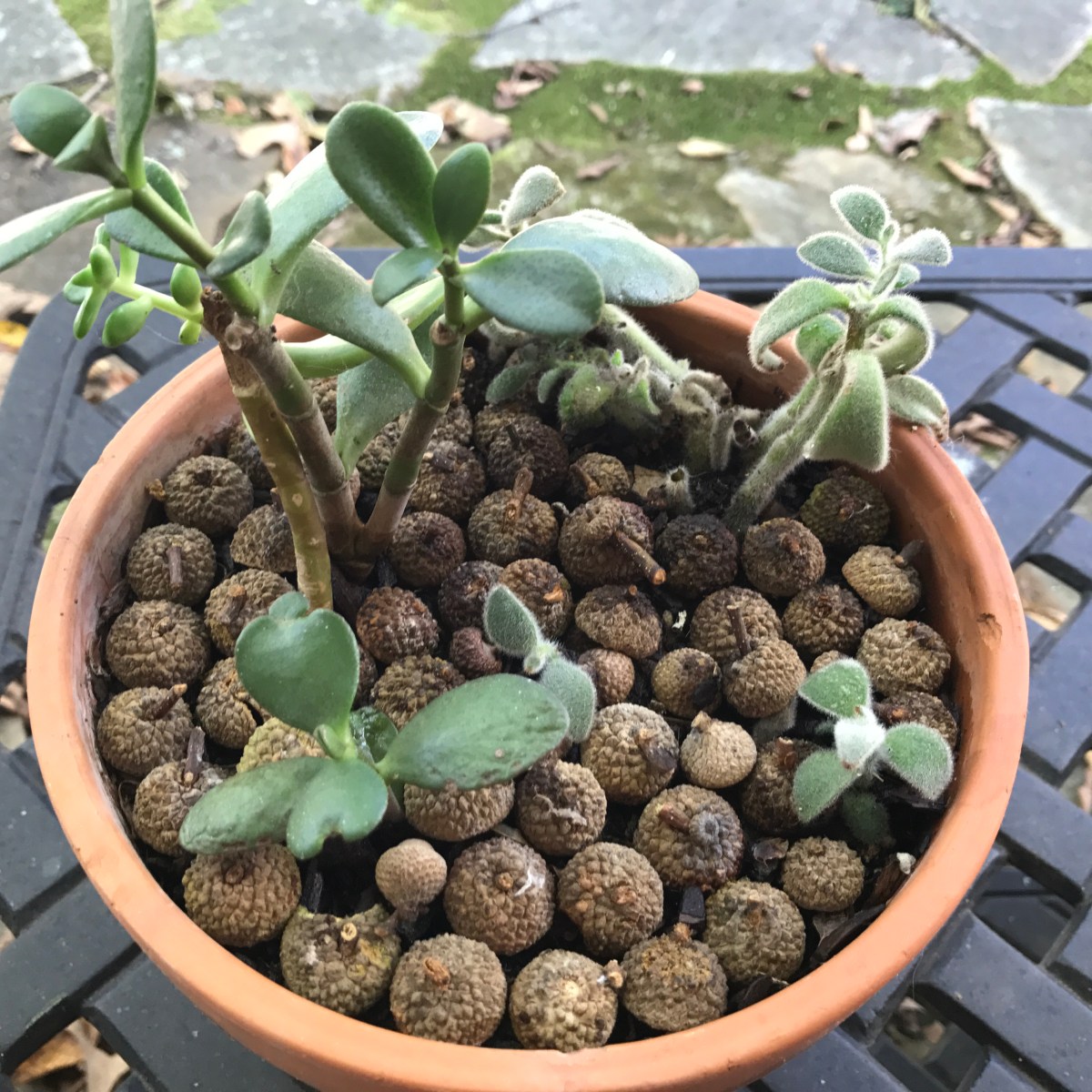
If you grow blueberries, azaleas, or rhododendrons, oak based mulch is actually a nice fit because it breaks down slightly acidic.
Chop up some acorns along with the leaf litter and spread it around the base of these plants.
Do not pile it on thick right against the stems though. That is just asking for rot and unhappy roots.
5. Compost Them, But Do It Right

You can absolutely compost acorns, but dumping a giant pile of whole acorns into your bin is a mistake.
They take forever to break down on their own and the tannins can slow down decomposition of everything around them.
The right way to go about it is to crush or chop them first, then mix them in with your regular greens and browns instead of letting them sit in a solid layer.
Your compost will thank you, and so will your patience.
6. Make Your Own Acorn Flour
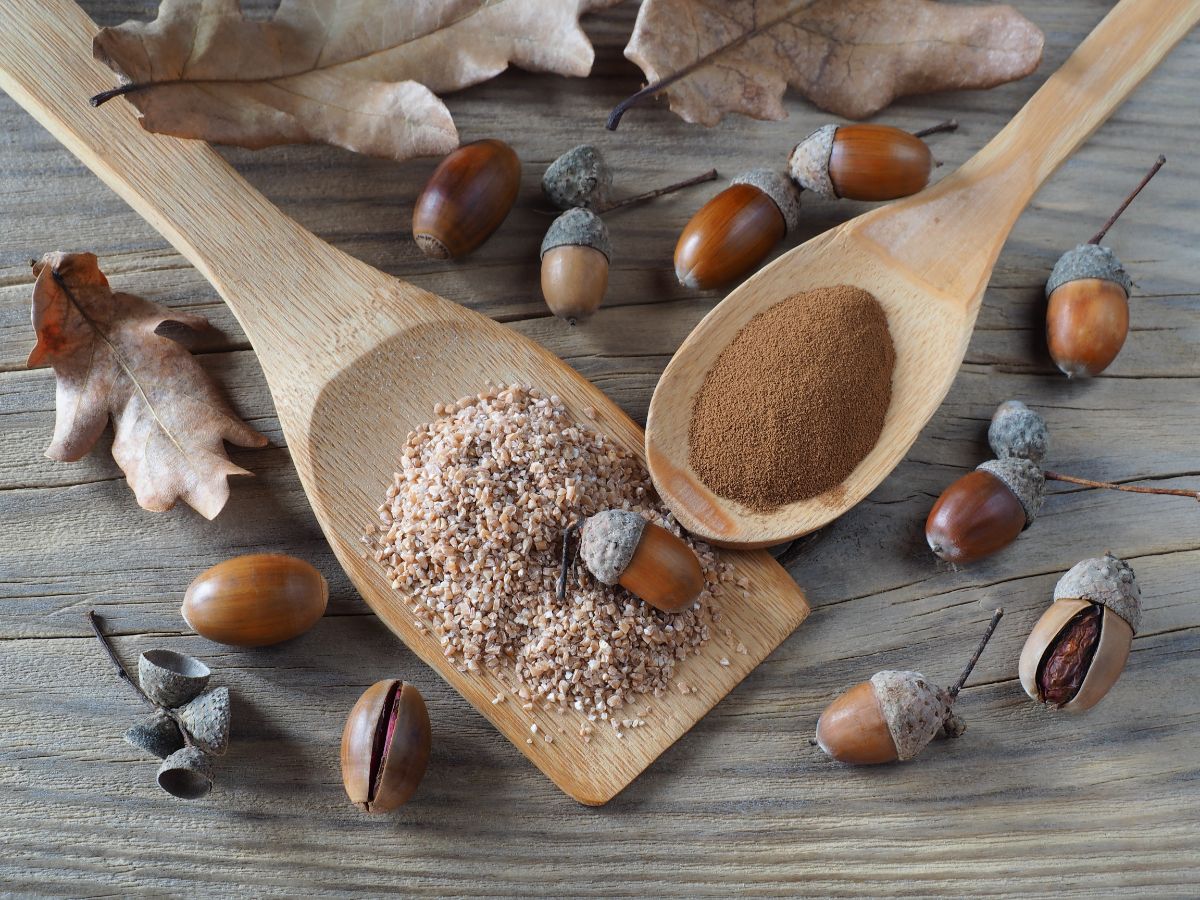
Yes, this is a real thing, and yes, people have survived on it for thousands of years.
The trick nobody tells you is that boiling them is not actually the best method.
Cold leaching, meaning soaking shelled and ground acorns in cold water and changing it every day for a few days, gives you a better texture for baking.
Boiling can make the starch gummy before the bitterness is even gone.
I ruined a batch this way once and ended up with something closer to wallpaper paste than flour.
You don’t want to have the same experience as me, do you?
7. Brew Acorn Coffee
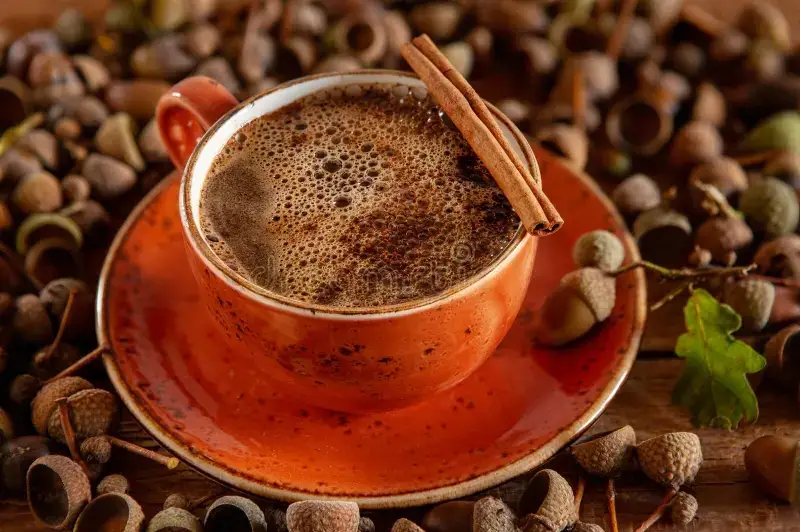
This sounds like a joke until you try it.
Roast shelled, leached acorns in the oven until they are dark and fragrant, then grind them like coffee beans.
It is nutty, a little earthy, and completely caffeine free, so do not expect it to wake you up.
My uncle used to make this during power outages and called it his “survivalist espresso.” It is not espresso.
It is fine though.
8. Make Acorn Soup

Once your acorns are leached and cooked, they actually work really well in soup.
Toss leached, simmered acorns into a pot with carrots, onion, and a good stock, and you get a hearty, slightly nutty soup that feels like it came out of a much fancier kitchen than yours.
This is a great way to use up a leached batch that did not turn out fine enough for flour. Nothing has to go to waste here.
9. Bake With Leached Acorn Meal
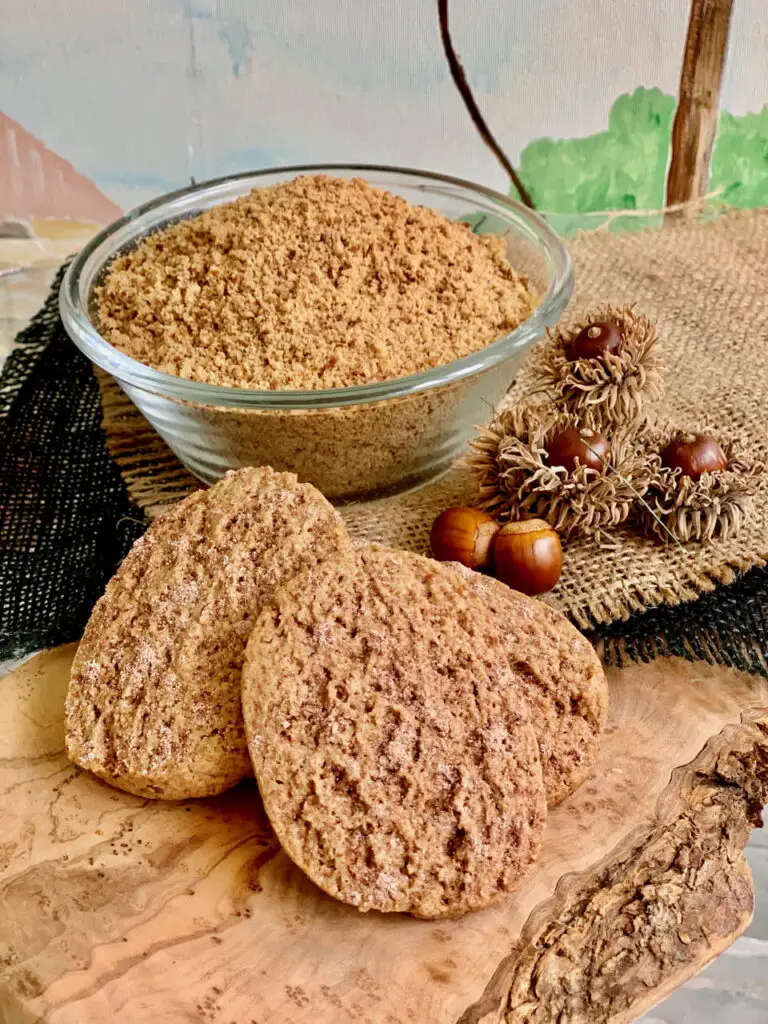
Once you have leached acorns properly, you can grind them into a coarse meal and fold a portion into pancake or muffin batter for a nutty, slightly earthy flavor.
Do not replace all your flour with it, just swap in a quarter to start.
It is an acquired taste, but it makes for a great “guess what is in this” conversation at brunch. Just be ready for some confused faces.
10. Sort The Good Ones From The Buggy Ones
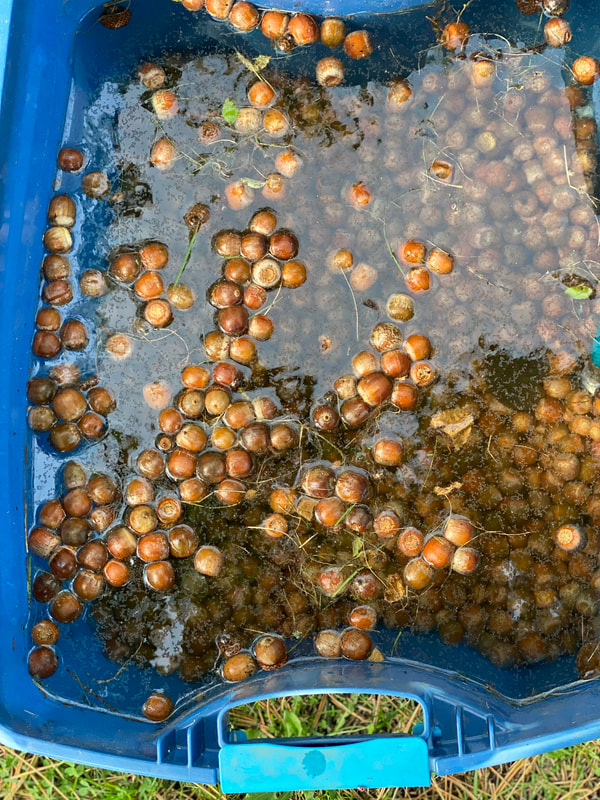
Do not trust the float test alone.
I used to think sinking acorns were automatically good and floating ones were automatically bad, but that is not the full story.
Look for a tiny pinhole near the cap before you commit to storing or cooking with a batch.
If you see one, toss that acorn immediately, no matter how it floats.
This single habit will save you from a moldy, half eaten surprise later.
11. Set Up A Decoy Feeding Spot

Squirrels are going to dig wherever they find acorns, and if that happens to be your tulip bed, you are going to have a bad spring.
So give them somewhere better to dig.
Pile fallen acorns in a far corner of the yard, away from anything you actually care about.
It will not stop every squirrel, but it pulls a surprising amount of digging traffic away from your garden beds.
12. Feed Them To Chickens, In Moderation
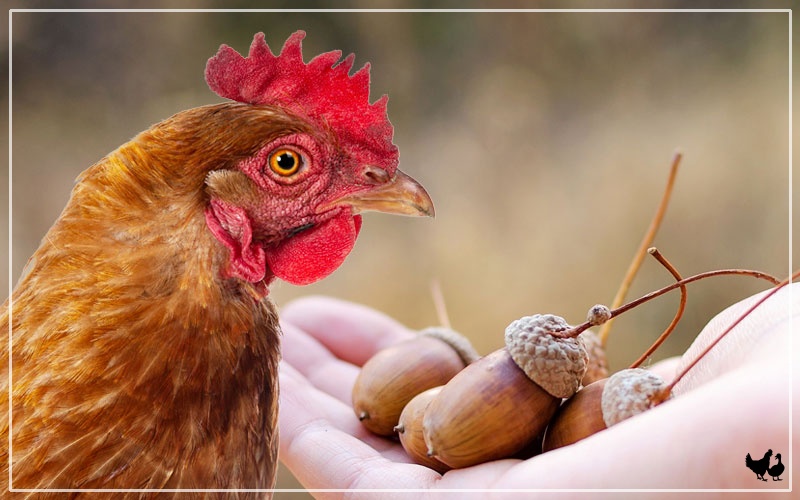
If you keep chickens, a small handful of crushed acorns mixed into their regular feed is a fine treat.
The tannins in large amounts are not great for them, so this is a topping, not a meal.
My neighbor swears his hens go nuts for them in the fall.
I have not noticed a difference in egg production, but the hens seem happy, and that counts for something.
13. Use Them As Deer Bait

If you or someone you know hunts, acorns are basically deer candy.
Spreading them in a spot you are watching during hunting season is an old trick that still works, and it is part of why there is an actual market for buying and selling them.
If you do not hunt yourself, this is also a nice excuse to offload a few buckets to a neighbor who does.
Everybody wins, except possibly the deer.
14. Donate The Extra To A Rescue Or Nature Center

If your yard produces more acorns than you could ever use, ask around.
Local wildlife rehab centers, nature centers, and even some schools running nature programs will happily take a bucket or two off your hands.
This is one of those small things that feels good for no real effort.
You are not even giving up anything you wanted.
15. Offer Them To A Zoo For Animal Enrichment
:max_bytes(150000):strip_icc():focal(962x0:964x2):format(webp)/squirrel-donated-nuts-1-2000-846e5a6cccb3424b8f8c43833b32f6c9.jpg)
This one surprised me.
Some zoos and animal sanctuaries use acorns and other foraged items in enrichment activities, basically giving captive animals something interesting to search for and chew on.
A quick call to a local zoo or sanctuary can tell you if they take donations like this.
It is a strange feeling knowing your backyard mess might end up entertaining a bear.
16. Sell Them Online
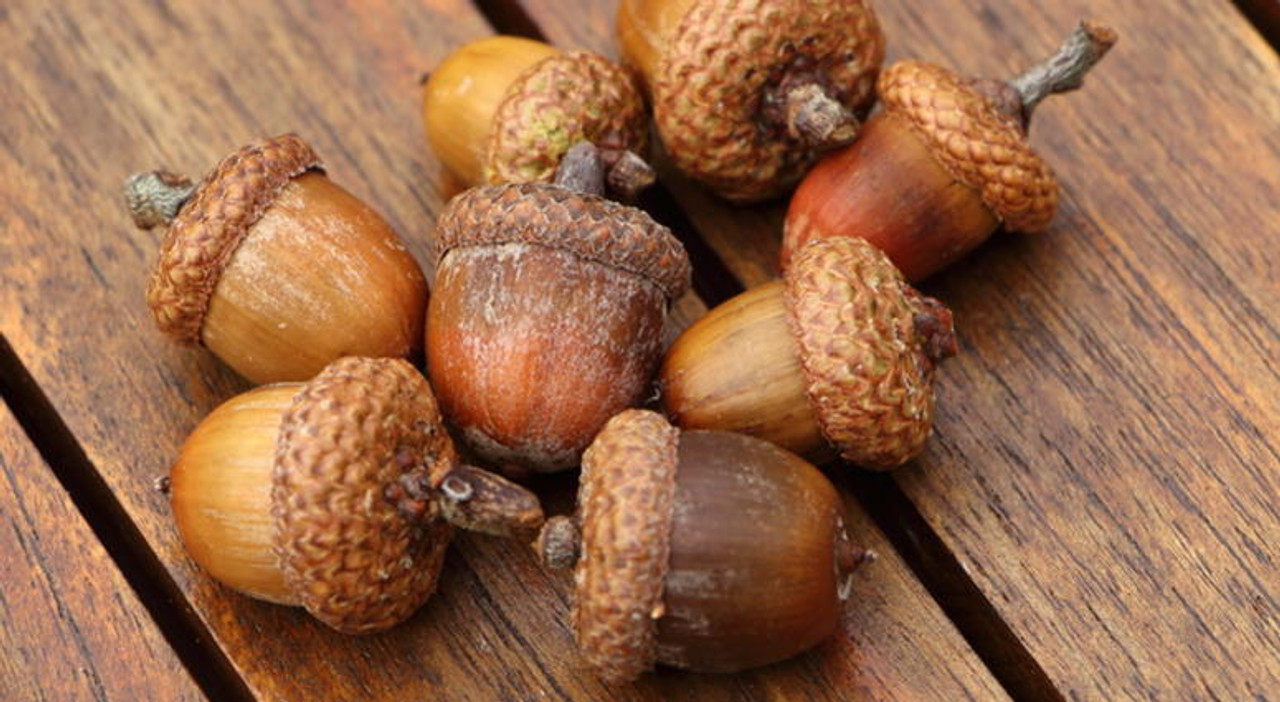
There is an actual market for raw acorns, mostly to people without oak trees of their own who want them for crafts, decor, or deer bait.
Etsy, Facebook Marketplace, and Craigslist are the usual spots people sell from.
Buyers want whole acorns with the caps still attached, so sort through your pile before bundling anything up.
And yes, if you somehow turn this into a real side hustle, that counts as income, so do not be shocked if the IRS has opinions about your acorn empire.
17. Grow Your Own Oak Tree
:max_bytes(150000):strip_icc():format(webp)/plant-acorns-grow-oaks-5203188-Hero-99e12c9297304a3bba2d360ce1d3b53d.jpg)
This one takes patience but it is genuinely satisfying.
Plant an acorn about as deep as it is long, in a spot with decent drainage, and keep the soil from drying out completely.
Here is the part most people miss.
White oak acorns sprout almost immediately after they fall, so if you wait too long to plant them, the little root tip that already formed can snap off in handling and the seed dies.
Red oak acorns are more patient and will sit through winter before sprouting in spring.
18. Give Away Rooted Seedlings As Gifts
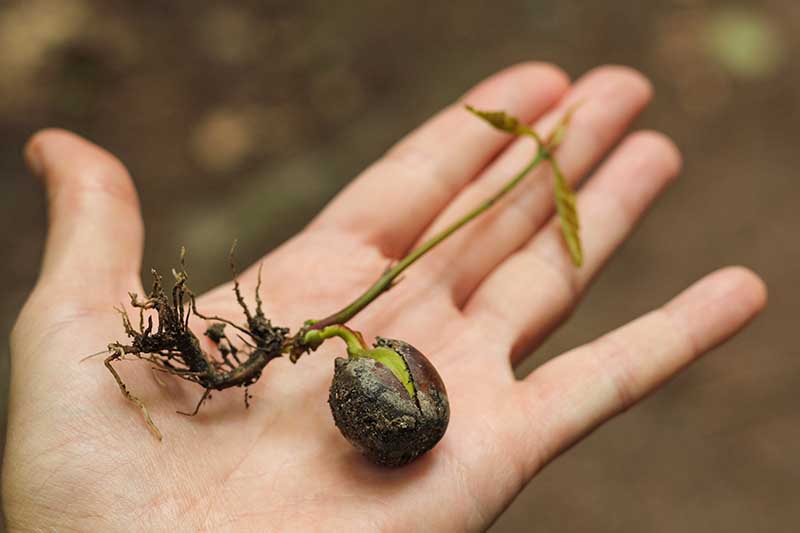
Once you have a few acorns sprouted in pots, you have got yourself a genuinely nice, free, slightly sentimental gift.
People love getting a little oak seedling for a birthday, a wedding, or a new baby.
It beats another candle, and unlike most gifts, this one is still growing twenty years later.
19. Preserve Them Before You Craft With Anything
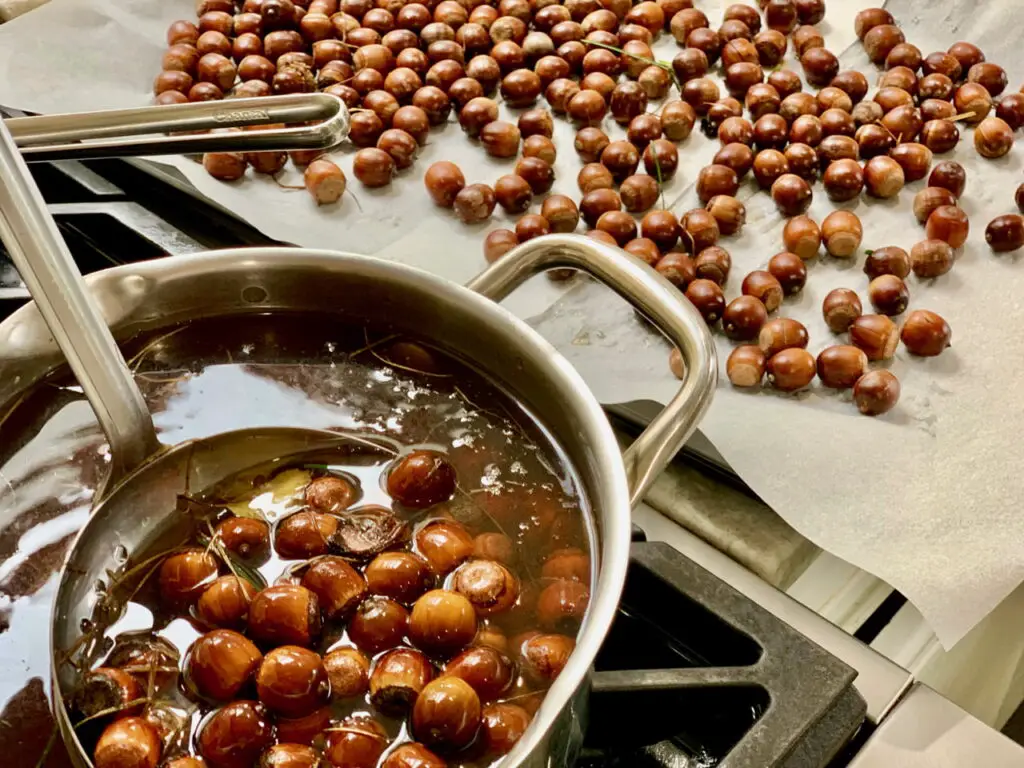
Before you turn a single acorn into decor, give them a quick wash and a low bake in the oven.
This kills off any hitchhiking bugs and dries them out so they do not mold sitting in a bowl on your shelf for the next two months.
I skipped this step once and regretted it.
A wreath that smells faintly like a damp basement is not the fall aesthetic anyone is going for.
20. Use The Caps For Fall Decor

Those tiny acorn caps are basically free craft supplies.
Glue them onto a wreath, glue magnets to the back for the fridge, or scatter a handful into a glass vase as a centerpiece filler.
My kids and I do this every year and it is one of the cheapest, easiest fall projects out there.
21. Turn The Caps Into Tiny Tea Light Candles

This one is oddly satisfying.
Fill clean, dried acorn caps with melted candle wax and a tiny wick, and you have got the world’s smallest, most adorable candles.
They burn for a few minutes at most, so think of them as decor with a party trick rather than actual lighting.
22. Make Natural Dye Or Ink

Acorns are loaded with tannins, which is the same stuff used historically to make natural fabric dyes and even old fashioned iron gall ink.
Simmer crushed acorns in water for a while and you get a brown liquid that can dye fabric or paper a soft tan to deep brown depending on how concentrated you make it.
If you boil that liquid down further and let it dry on a tray, it turns into a powder you can mix with a few drops of water whenever you want fresh ink.
This is a fun weekend project if you have ever wanted to dye a tote bag without buying anything from a craft store.
23. Make Acorn Jewelry
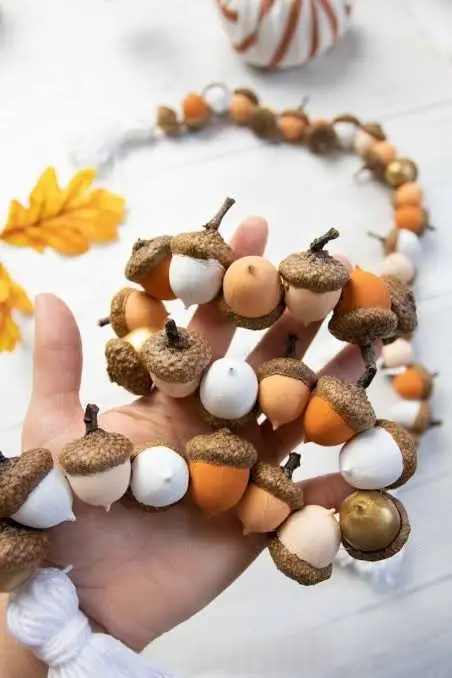
Necklaces, earrings, and bracelets made from real acorns and a little wire or string have a nice rustic charm that store bought fall jewelry never quite matches.
Kids can do a simple version with string and beads, and if you want something fancier, leather cord and small metal findings dress it up fast.
It is one of those crafts that photographs way better than it sounds when you describe it out loud.
24. Build An Acorn Wind Chime

Tie pieces of string or fishing line at different lengths to a small branch or even an old wooden spoon, glue or tie an acorn to the end of each one, and hang the whole thing somewhere it can catch a breeze.
It will not sound like a fancy metal wind chime, more like a soft, woody clatter, but there is something nice about a decoration that is basically free and slightly different every time the wind picks up.
25. Make Acorn Fridge Magnets
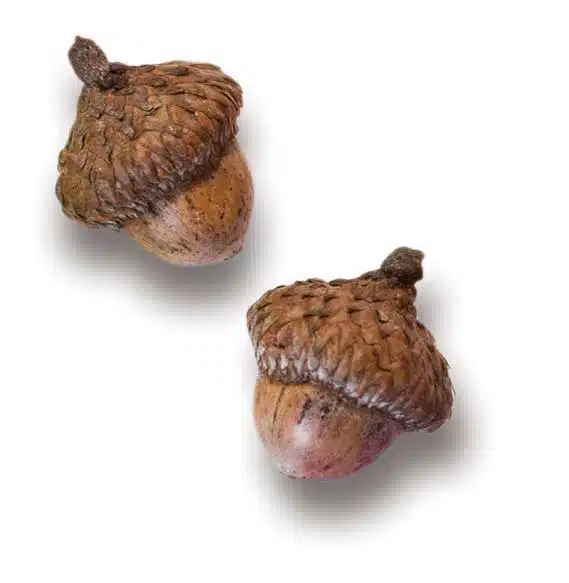
Glue a small, strong magnet to the flat side of a dried acorn and you have got a tiny, slightly nutty looking fridge magnet.
It sounds almost too simple to mention, but it ends up being one of those small touches that always gets a comment from guests.
26. Build Tiny Acorn Critters

Glue a few acorns together, add toothpicks or pipe cleaners for legs and antennae, and you can make a surprisingly cute caterpillar, a tiny owl using the caps as eyes, or even a little acorn family if you want something to represent your own household.
This is hands down the best rainy afternoon activity for kids during acorn season.
Mine still ask to make a new “acorn family member” every single fall.
27. Cover A Styrofoam Ball In Acorns
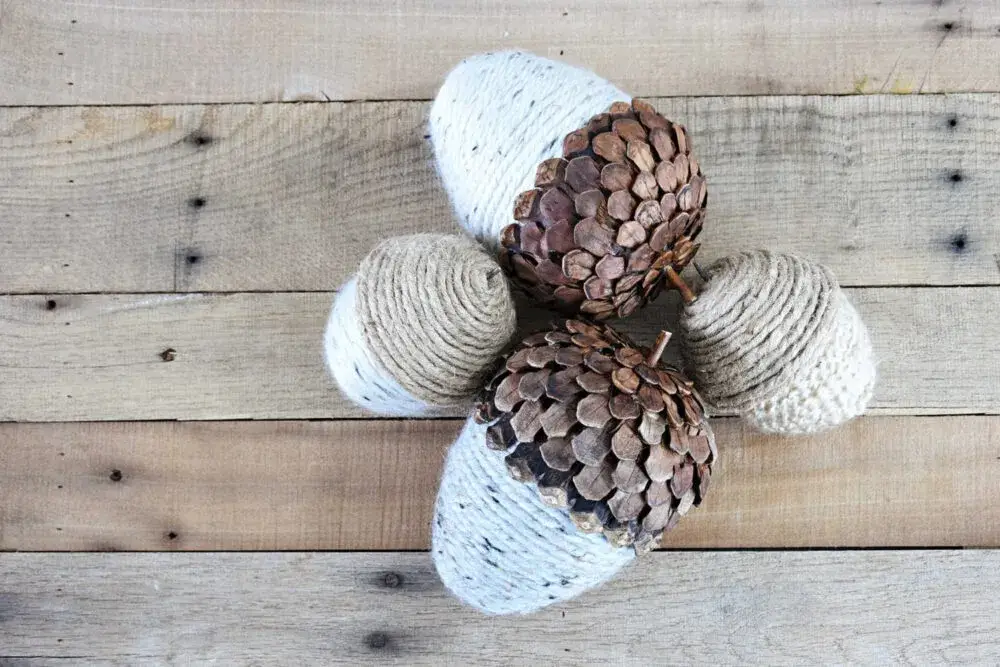
Hot glue acorns or just their caps all over a styrofoam ball, tie a ribbon through the top, and you have got a rustic ornament or door hanger that looks like it came from an expensive home decor catalog.
Add a few pinecones and cinnamon sticks into the mix if you want extra texture.
This is one of those projects where the final result looks far more impressive than the actual effort involved, which is exactly the kind of craft I respect.
28. Use Them As Tablescape Confetti

If you are hosting Thanksgiving or any fall dinner, scatter a handful of clean, dried acorns down the center of your table like confetti, mixed in with a runner or some candles.
It is a small touch that makes a table feel intentional instead of thrown together at the last minute.
Just give them a quick wipe down first, nobody wants to wonder what was crawling on the centerpiece an hour ago.
29. Try Your Hand At Bark Tanning A Hide

This one is for the more adventurous reader, but if you or someone in your circle hunts and processes their own hides, acorns can be used as a tannin source for natural bark tanning.
It is worth knowing that oak bark itself is a stronger, more reliable tannin source than acorns alone, so most serious tanners use acorns as a supplement rather than the main ingredient.
This is not a quick weekend project, more of a slow, smelly, genuinely interesting hobby if leatherwork is your thing.
Do not start here if you are looking for instant results.
30. Turn It Into A Kid’s Science Project

Acorns are a great hands on way to show kids how a seed becomes a tree.
Put one in a clear jar with a damp paper towel, keep it moist, and watch the root emerge over the following weeks.
This worked great with my own kids until our cat decided the jar was a toy. Lesson learned, keep it somewhere the pets cannot reach.
31. Let Them Tell You Something About Your Yard
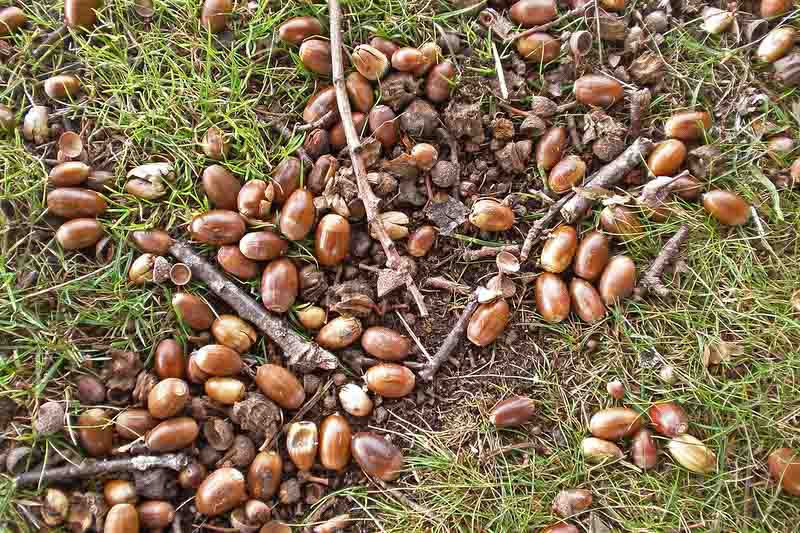
This sounds strange, but a heavy acorn year is often nature’s way of giving you a heads up.
Oaks tend to produce huge “mast years” every few seasons, and a bumper crop usually means more deer, more squirrels, and more activity in your yard over the following months.
Pay attention to which areas pile up the most.
That is usually exactly where the local wildlife traffic is heaviest, which is useful information if you are trying to protect a garden bed.
32. Just Let Some Of Them Be
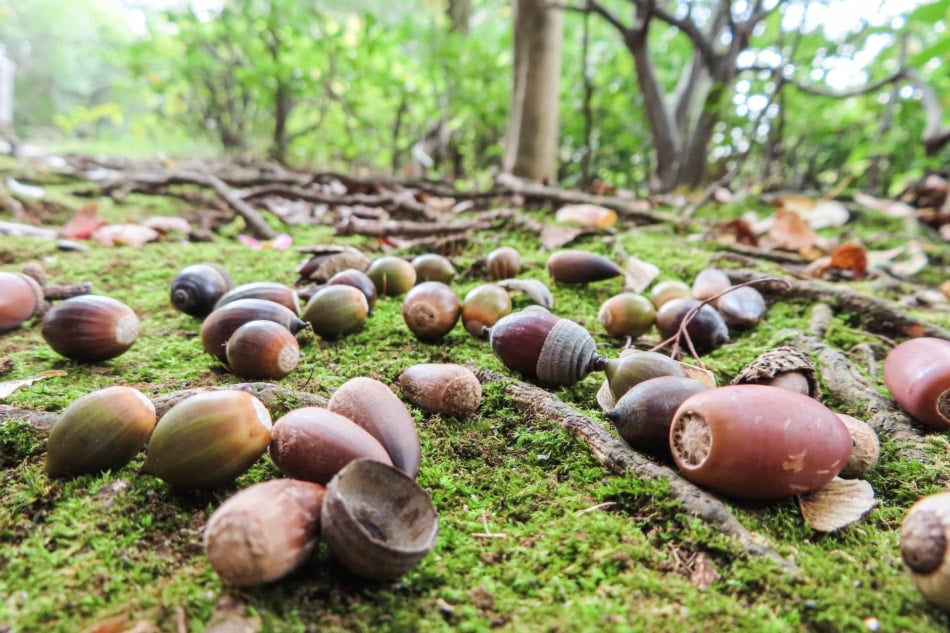
Not everything needs a project attached to it.
Leaving a portion of fallen acorns under your trees feeds local wildlife through the winter and supports the whole little ecosystem happening in your yard whether you notice it or not.
You do not have to use every single acorn that falls. Sometimes the best move is just to let nature do its thing in the corners of your yard you are not actively using anyway.
Parting Shot
So there you have it. Thirty two ways to deal with the avalanche of acorns your trees dump on you every fall, instead of just sweeping them into a bag and forgetting about them.
Pick a few that fit your lifestyle, skip the ones that sound like too much effort, and enjoy the fact that your yard is basically handing you free flour, dye, decor, candles, jewelry, and chicken treats every single year.