What Is the Best Thing to Kill Weeds but Not Grass?
Last Updated on April 23, 2026 by Duncan
Spring brings fresh life to lawns, but it also brings weeds.
These opportunistic plants compete with grass for nutrients, water, and sunlight — and if left unchecked, they can take over a well-kept lawn quickly. The challenge is eliminating them without harming the grass around them.
The best approach combines selective herbicides with cultural practices like proper mowing, fertilizing, watering, and overseeding.
Each method targets weeds at a different stage of their life cycle, making them far more effective together than any single treatment alone.
Understanding Lawn Weed Types Before Treating Them
Choosing the right weed control method starts with identifying the type of weed you’re dealing with. Lawn weeds fall into three main categories:
- Perennial weeds — such as dandelions and creeping Charlie — live for multiple years and develop deep root systems that make them difficult to fully eradicate.
- Summer annuals — such as crabgrass and bindweed — germinate in spring and grow through the warm months before dying in winter.
- Winter annuals — such as henbit and chickweed — germinate in autumn, bloom in early spring, and then die off.
Applying the wrong treatment for the weed type — or at the wrong point in its life cycle — significantly reduces effectiveness. When in doubt, bring a sample to a local garden center or consult a lawn care professional.
1. Selective Herbicides: The Most Direct Weed Control Method
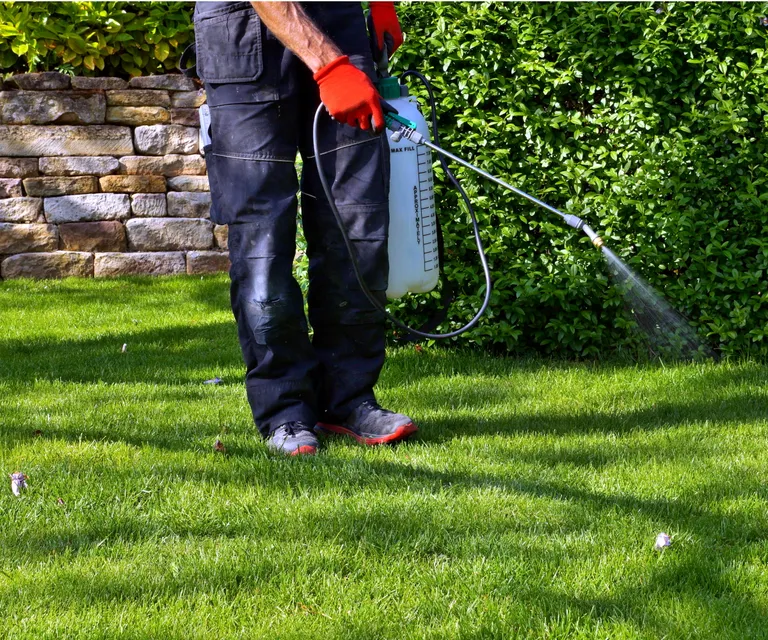
Selective herbicides are formulated to kill specific plant types while leaving others unharmed. Used correctly, they are the most effective single tool for eliminating lawn weeds without damaging grass.
Pre-Emergent Herbicides
Pre-emergent herbicides work by creating a chemical barrier in the soil that prevents weed seeds from germinating. They do not kill existing weeds — they stop new ones from sprouting.
Pre-emergents are most effective against summer annual weeds like crabgrass and should be applied in early spring, before soil temperatures consistently reach 55°F (13°C). Applying too late — after germination has already begun — renders them ineffective.
Important limitation: Pre-emergent herbicides also prevent grass seed from germinating. Do not apply them if you plan to overseed your lawn within the following 8–12 weeks.
Post-Emergent Herbicides for Broadleaf Weeds
Post-emergent herbicides target weeds that are already growing. For broadleaf weeds — including dandelions, clover, and plantain — the most widely used active ingredients are:
- 2,4-D — effective on dandelions, plantain, and most common broadleaf weeds
- Dicamba — targets a wide range of broadleaf weeds, often combined with 2,4-D
- Mecoprop (MCPP) — particularly effective on clover and chickweed
These ingredients are safe for most common turfgrasses when applied as directed and do not affect grass at labeled rates.
Post-Emergent Herbicides for Grassy Weeds
Standard broadleaf herbicides are not effective on grassy weeds like crabgrass or nutsedge. These require specialized active ingredients:
- Quinclorac — the most widely used active ingredient for post-emergent crabgrass control
- Halosulfuron — the primary herbicide used to control nutsedge (nutgrass) in lawns
Iron-Based Herbicides
Iron-based herbicides control broadleaf weeds by delivering a concentrated dose of iron that is toxic to broadleaf plants but harmless to most grasses.
They are considered a lower-risk option for households with children or pets and are less harmful to the surrounding environment than synthetic alternatives.
Application Guidelines
- Apply when weeds are actively growing, not during drought or extreme heat
- Do not mow for 48 hours before or after application — weeds need adequate leaf surface to absorb the product
- Avoid application on windy days to prevent herbicide drift onto garden beds
- Always follow label directions — exceeding recommended rates does not improve results and can damage turf
2. Hand-Pulling: Effective for Small or Young Infestations
Hand-pulling is one of the most reliable and environmentally safe weed control methods, particularly when weeds are young and have not yet developed large root systems.
For annual weeds, grasping the plant near the base and pulling firmly is usually sufficient. Their shallow roots come out cleanly, especially when the soil is moist after rain or irrigation.
For perennial weeds with deep taproots — such as dandelions — the entire root must be removed. If even a small portion of the taproot remains, the plant will regenerate.
Use a hand weeder or narrow garden trowel to dig alongside the root, loosen it from the soil, and extract it whole.
The most effective time to hand-weed is early spring, before weeds flower and set seed. A single dandelion can produce more than 150 seeds before dying — removing it before it flowers prevents that spread.
3. Specialized Weeding Tools for Deep-Rooted Perennials
Standard hand-pulling is often insufficient for established perennial weeds like dandelions and plantain, because leaving any portion of the root behind results in regrowth.
Specialized weeding tools are designed to extract the full root system with minimal soil disturbance:
- Dandelion digger (fishtail weeder): A long, forked blade that slides deep into the soil beside a taproot and levers it out intact.
- Stand-up weed puller: Extracts weeds from a standing position by gripping the base of the plant and using a foot-operated lever to pull the root — useful for larger weeding jobs.
After removing a weed, the grass around it will fill the gap naturally within a few weeks. Overseed any exposed patches larger than a few square inches to prevent weeds from recolonizing the bare soil.
4. Mowing Height: A Overlooked Weed Suppression Tool
Mowing height directly affects how competitive your lawn is against weeds. Grass cut too short develops shallow roots, thins out, and exposes soil — all conditions that allow weed seeds to germinate and establish.
Taller grass shades the soil surface, which inhibits germination of light-dependent weed seeds. It also develops deeper roots that are more resilient during drought and more effective at competing with weeds for water and nutrients.
The one-third rule: Never remove more than one-third of the grass blade in a single mowing session. Cutting more than this amount in one pass stresses the grass, weakens it, and promotes weed invasion.
Recommended mowing heights by grass type:
- Kentucky bluegrass: 2.5–3.5 inches
- Tall fescue: 3–4 inches
- Bermuda grass: 1–2 inches
- Zoysia grass: 1–2 inches
- St. Augustine grass: 3–4 inches
Mow based on growth rate, not a fixed calendar schedule — weekly during fast-growing seasons, every two weeks during slower periods.
5. Fertilization Timing: Feeding Grass, Not Weeds
A well-fertilized lawn grows thick and dense, which naturally reduces the space available for weeds to establish. However, fertilizing at the wrong time can feed weeds before your grass is even out of dormancy.
For warm-season grasses (Bermuda, Zoysia, St. Augustine): Begin fertilizing approximately two weeks after spring green-up, when the grass is actively growing. Fertilizing too early primarily benefits weeds, which emerge from dormancy before most warm-season grasses do.
For cool-season grasses (Kentucky bluegrass, tall fescue, perennial ryegrass): Fertilize during peak growth periods in early spring and early fall.
Avoid heavy fertilization in summer, when these grasses are semi-dormant and cannot efficiently use the nutrients.
Slow-release fertilizers are preferable to quick-release formulations because they deliver a steady supply of nutrients over several weeks, promoting consistent growth rather than rapid top growth followed by a stress period.
Always apply at the rate recommended on the label — over-application does not improve results and can burn turf.
6. Watering Practices That Favor Grass Over Weeds
Irrigation habits significantly influence which plants thrive in a lawn. Frequent, shallow watering encourages shallow root growth in grass and creates ideal conditions for many weed types.
Deep, infrequent watering stimulates grass roots to grow deeper, improving drought tolerance and competitive ability against weeds. Each watering session should wet the soil to a depth of 4–6 inches, applied only after the top 1–2 inches of soil have dried.
Nutsedge (nutgrass) in particular thrives in chronically moist soil. Reducing surface moisture by allowing the soil to dry between waterings is one of the most effective cultural controls for this weed.
For best results, water in the early morning. Evaporation is lowest at that time, more water reaches the root zone, and the grass blades have time to dry before nightfall.
Grass that stays wet overnight is more susceptible to fungal diseases, which weaken turf and create entry points for weeds.
7. Overseeding Bare Spots: Closing the Door on Weeds
Bare and thin areas in a lawn are the most common entry points for weeds. Overseeding those areas with grass seed is one of the most effective long-term weed prevention strategies available.
Timing for overseeding depends on grass type:
- Cool-season grasses: Early fall (late August to mid-October) is optimal; early spring is a secondary option.
- Warm-season grasses: Late spring to early summer, once soil temperatures are consistently above 65°F.
To overseed a bare patch effectively: remove any existing weeds, lightly rake the soil surface, apply grass seed at the recommended rate, rake it in gently, and keep the area consistently moist until germination.
A light topdressing of compost improves seed-to-soil contact and provides early nutrients to developing seedlings.
Using a starter fertilizer formulated for new grass speeds up establishment — faster-growing grass closes bare spots more quickly and reduces the window during which weeds can move in.
Conclusion
The most effective way to eliminate weeds without harming grass is to combine the right selective herbicide with consistent lawn care practices.
Selective herbicides — particularly post-emergents containing 2,4-D, dicamba, or MCPP for broadleaf weeds, and quinclorac for grassy weeds — address existing weed problems directly.
Mowing at the correct height, fertilizing at the right time, watering deeply but infrequently, and overseeding bare areas all work together to create a dense, healthy lawn that resists future weed invasion.
A thick, well-maintained lawn is the strongest long-term defense against weeds. After eliminating the current weed population, keeping up with these practices reduces the chance of weeds reestablishing in subsequent seasons.
Related Posts: