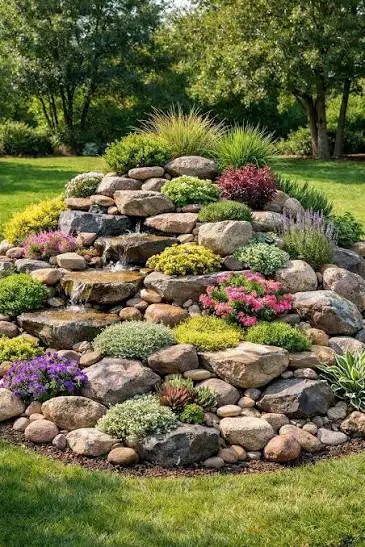
What Plants Look Good in a Rock Garden?
Last Updated on August 28, 2026 by Duncan
A rock garden is bound to be stunning when the plants and rocks look like they belong together, almost as if they have been sitting there for years.
The trick is choosing plants that enjoy the same conditions your rocks create, especially sharp drainage, lean soil, plenty of sun, and occasional dry spells.
If you want your rock garden to look intentional instead of like a pile of stones with a few struggling plants stuck between them, start with the plants below.
Sedums and sempervivums
I see this all the time.
A rock garden planted entirely with varieties of sedum and sempervivum, all in shades of green and dusty purple, looking like someone ordered the starter package.
These plants absolutely belong in a rock garden, but they’re your anchor plants, not your whole story.
You need contrast, texture, and seasonal interest happening around them.
Sedums and sempervivums survive conditions that would kill almost everything else, require zero supplemental water once established, and come back year after year.
You should note that the variety ‘Autumn Fire’ sedum turns bright red as temperatures drop, ‘Dragon’s Blood’ stays compact and spreads like a carpet, and ‘Autumn Joy’ grows tall enough to block views through the garden if you’re not careful.
Sempervivums (hens and chicks) are even tougher. They produce rosettes that spread outward, filling gaps in your rock garden without looking like you planted them.
The ‘Chick Charms’ series comes in colors from burgundy to chartreuse and can handle a freeze better than sedum.
The only downside is they flower once, then the rosette dies.
You barely notice it happening if you have enough younger plants generating new growth.
Dianthus
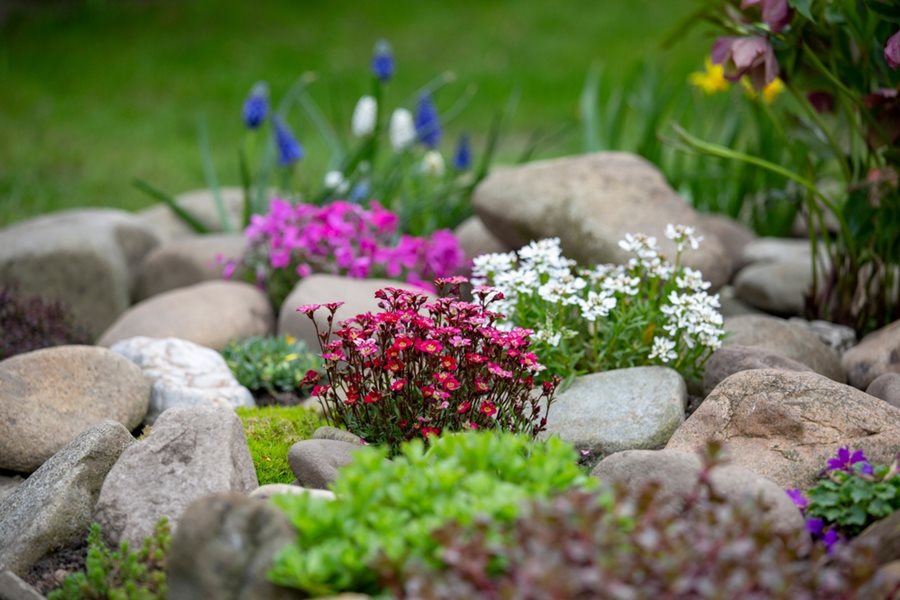
Dianthus are my secret weapon in rock gardens.
While everyone else is fussing over their saxifraga or alpine phlox, your dianthus are throwing out clumps of pink or red flowers and asking for nothing.
‘Tiny Rubies’ stays under 6 inches tall and produces blooms for three months straight.
Plant it in spring and by July it’ll be a dense mound of flowers with almost no effort.
The reason dianthus work so well is they want fast-draining soil, tolerate heat, and their narrow, needle-like foliage looks at home surrounded by stone.
Plus they smell incredible if you plant them near a seating area.
Ornamental grasses
A rock garden full of sedums and dianthus can feel static, like a still life that never changes. Ornamental grasses fix that completely.
‘Sesleria autumnalis’ (autumn moor grass) grows about 12 inches tall with fine, blue-green foliage, and it moves in wind without looking wild or unkempt.
The trick is choosing grasses short enough to feel proportional to a rock garden, not planting towering miscanthus and wondering why your garden looks unbalanced.
‘Festuca ovina’ stays under 8 inches, has fine silvery texture, and tolerates the hottest, driest spots.
Plant it in clusters of three or five so the movement is visible but not overwhelming.
Alpine phlox
Alpine phlox flowers in April and May when most rock gardens are still waking up.
‘Amazing Grace’ grows as a tight mound and produces flowers in hot pink, ‘White Delight’ blooms pale and delicate, and if you choose right, you can layer bloom times across spring.
This is not a plant that will grow 3 feet tall and require pruning.
Alpine phlox stays compact and flowers in its first year from seed.
The reason to make space for phlox is that it gives you color before your sedums wake up, and it tolerates some spring moisture better than most rock garden plants.
After it blooms, it recedes into the background while other things take over.
Saxifraga
Saxifraga (saxifrage) is not for everyone.
It’s beautiful. It blooms with intricate flowers on delicate stems, and when it thrives it looks like a tiny masterpiece.
But saxifraga wants drainage that’s almost unrealistic, humidity that most people can’t provide, and cool summers that don’t exist if you’re anywhere warm.
If you’re south of zone 6 with a hot, dry rock garden, skip it.
If you’re in a cool climate with reliable moisture in spring, plant ‘Southside Seedling’ in a crevice where water won’t pool and it’ll reward you with flowers that look like they belong in a botanical illustration.
The key with working with the plant is being honest about your climate.
Armeria
Armeria (sea pink) is one of the few rock garden plants that doesn’t completely hate moisture.
It produces button-like flower clusters in pink or white, stays evergreen through winter, and even looks better if you give it slightly more water than you’d give most sedums.
‘Victor Reiter’ grows compact and flowers in bright pink.
The reason to plant armeria is that your rock garden probably doesn’t drain perfectly everywhere.
Some spots stay damper than others.
Armeria fills those wet pockets while sedums would rot.
Plus it flowers for six weeks, giving you sustained color.
Helianthemum
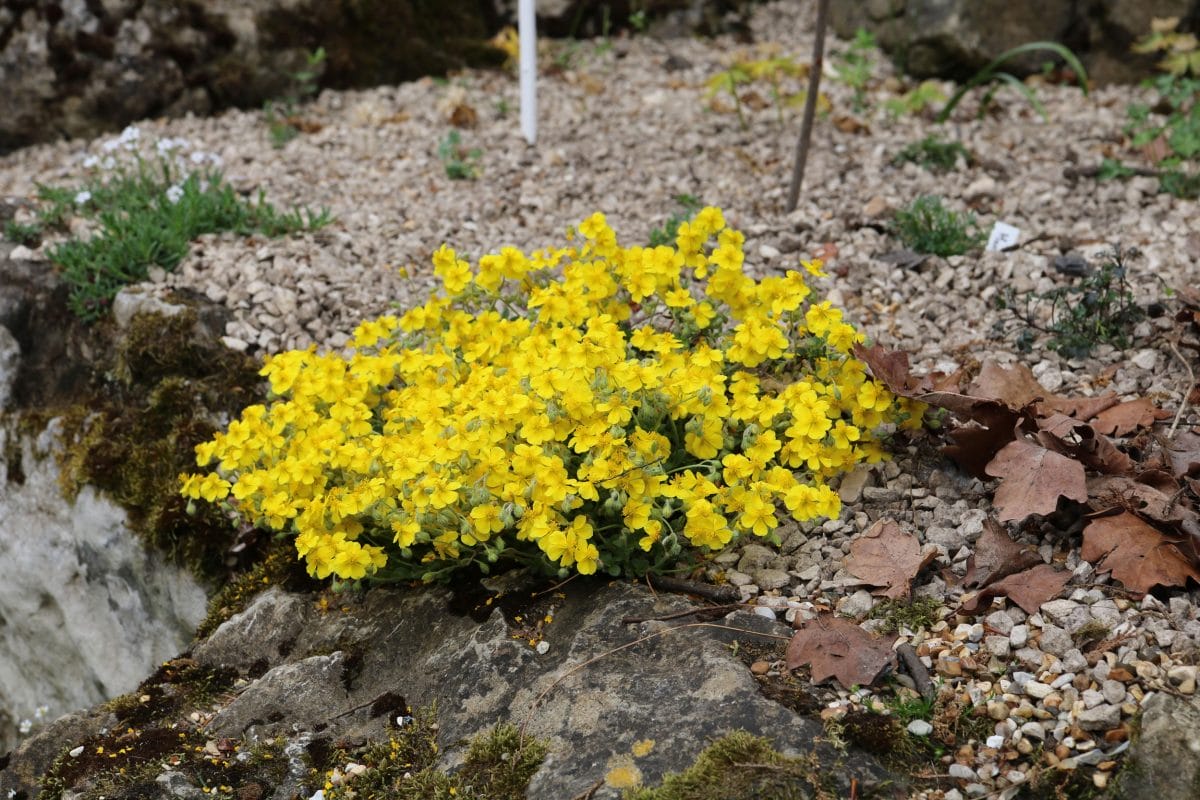
Rock rose (helianthemum) produces sunny flowers in yellow, pink, or red and blooms prolifically.
While this is the case, you should know that it needs water more often than sedum and sempervivum.
This doesn’t mean babying it.
It means watering once a week in your first growing season and checking on it during hot spells.
The trap I see people fall into is they plant helianthemum alongside sedums, water everything on the same schedule, and the helianthemum dies while the sedums shrug.
Plant helianthemum in the part of your rock garden that gets afternoon shade or close to a spot where water collects slightly.
It’ll bloom longer and you won’t have dead woody stubs by midsummer.
Pussy toes
Antennaria (pussy toes) produces delicate, fuzzy flower clusters in white, pink, or red and spreads into a soft mound.
It tolerates extreme drought, looks good for months, and doesn’t care if you ignore it.
Most people skip it because the name sounds silly or because it doesn’t have the drama of other rock garden plants.
That’s a mistake. Pussy toes fill space between showier plants and look intentional while doing it. Plant it as filler and you’ll be surprised how much character it adds to your composition.
Lamium
Dead nettle (lamium) produces silvery foliage and delicate flowers and seems perfect for a rock garden at first glance.
Then it spreads aggressively, smothers neighboring plants, and takes over sections you didn’t intend for it to cover.
Use lamium only if you’re planting it in a contained pocket where it can’t escape, or if you’re willing to edit it back twice a year.
It’s a beautiful plant when managed, but in an open rock garden it’ll eventually become the only thing you see.
Stonecrop

When people say “stonecrop,” they usually mean sedum, but technically every sedum is a stonecrop, not every stonecrop is a sedum.
When planning for these plants you should know that there are trailing types like ‘October Daphne’ that spread outward and soften edges, and upright types like ‘Autumn Joy’ that provide vertical structure.
Mixed plantings work better than one or the other alone.
‘Autumn Fire’ and ‘Frosty Morn’ stay under 18 inches, produce flowers, and turn color in fall.
‘Angelina’ turns orange-red in cool weather.
Planting three or four varieties gives you layers of color and texture.
Geranium
You’re probably thinking of the tender pelargoniums people put in containers. I’m talking about those.
Actual geraniums (hardy geraniums) are something else entirely.
‘Roxanne’ blooms for six months straight, produces magenta flowers with black eyes, and tolerates summer drought once established.
Hardy geraniums spread wider than most rock garden plants but stay under 18 inches tall, so they act like a glue holding visual spaces together.
Plant ‘Rozanne’ as your backbone plants and build other things around them.
Penstemon
Penstemons are prolific bloomers that most people overlook in rock gardens.
‘Husker Red’ produces white flowers on burgundy stems and grows 18 inches tall.
‘Firecracker’ stays compact and blooms in red. They tolerate heat, need fast drainage, and produce flowers for two solid months.
Penstemons don’t look weedy or tentative.
When they bloom, they commit.
Plant them in clusters and you’ll have focal points that rival any commercial garden design.
Achillea

Yarrow (achillea) produces flat flower clusters in yellow, pink, red, or white and spreads aggressively if you’re not careful.
It’s hardy, drought-tolerant, and flowers all summer.
To be on the safe side, give it dedicated space away from your delicate plants, and trim it back after it flowers.
If you let it sprawl uncontrolled, it’ll overgrow and your rock garden suddenly looks choatic, not like you designed it intentionally.
Ornamental onions

Allium (ornamental onion) produces spherical purple or yellow flowers on tall stems and tolerates complete neglect.
‘Christophii’ grows 18 inches tall and produces enormous purple flower heads that last for weeks.
Plant allium among lower-growing sedums and dianthus and you’ll get vertical interest in your garden without blocking sightlines.
The flowers dry beautifully too, so you get color even after they’re technically finished blooming.
Catmint
Nepeta (catmint) produces small purple or lavender flowers and fragrant foliage.
It tends to grow larger than most rock garden plants, but when you position it correctly, it’s one of your most reliable bloomers you can have.
‘Six Hills Giant’ grows 18 inches tall and flowers for months.
Use catmint as a transition plant between your rock garden and the rest of your landscape.
It bridges the gap between your drought-tolerant alpines and regular garden plants without looking out of place.
Eryngium
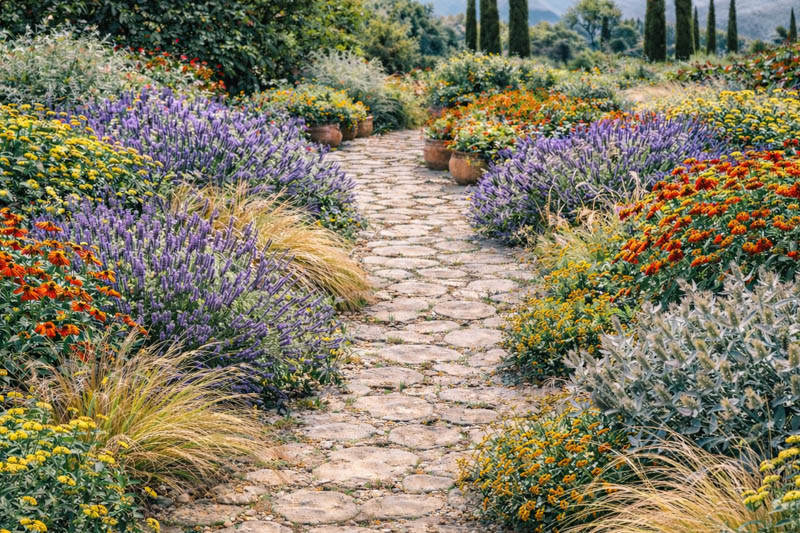
Sea holly (eryngium) produces spiky, architectural flower heads in blue or white and tolerates complete drought.
‘Neptune’s Gold’ has yellow foliage and blue flowers. ‘Amethyst’ stays compact and blooms in purple.
The visual impact is huge.
A single eryngium plant commands attention in a way that ten dianthus won’t.
Use it strategically as a focal point, don’t scatter it.
Japanese spurge

Pachysandra terminalis isn’t typically planted in rock gardens, but the variegated forms work beautifully in shaded sections.
It stays low, spreads steadily without being aggressive, and gives you textural interest when everything else is struggling in afternoon heat.
Plant variegated pachysandra in north-facing rock gardens where direct heat isn’t a factor.
It’ll soften edges and fill space that might otherwise look empty.
Best practices when growing plants in your rock garden
Timing your plantings right
Spring and fall are the only times to plant in a rock garden if you want decent success rates.
Plant in summer and your new plants are establishing roots in 140 degree soil while you’re scrambling to water every other day.
Plant in winter and frost heave will kill them before they establish.
Spring planting, ideally April through May, gives your plants the whole summer to grow roots before winter stress.
Fall planting, September through October, works if you’re in a cool climate.
If you miss these windows, wait for the next season.
Water deeply
I see people daily misting their rock gardens lightly and wondering why things die.
This unfortunately encourages shallow root systems that make plants more vulnerable, not less.
Water infrequently and deeply so plants develop roots that can chase moisture down into cooler soil layers.
After your first growing season, most rock garden plants shouldn’t need supplemental water unless you’re experiencing genuine drought.
If you find yourself watering weekly by July, your plants aren’t adapted to your conditions or your drainage isn’t what it should be.
Mulch your rock garden ruthlessly
I don’t mean traditional mulch. I mean gravel.
Coarser gravel or small stones around the base of your plants keeps soil temperatures more stable, prevents splash-up from soil to foliage during rare rain events, and looks intentional.
Fine bark mulch retains moisture and invites rot.
Use stone instead.
Edit as plants mature
Your rock garden composition will look different every year as plants spread, some outcompete others, and visual balance shifts.
This isn’t failure. This is gardening.
Pull out things that stopped working. Move things to better locations. Add new varieties when gaps appear.
A static rock garden looks designed in a spreadsheet. A living rock garden looks like you’re paying attention and caring for it.
Plant what you like
At the end of the day, your rock garden lives in your yard for you to look at.
If you’re bored by pure sedums, plant something that interests you even if it’s slightly higher maintenance.
If you love ornamental onions, grow onions. If you’re the type who notices color shifts in fall, lean into that.
The rock garden rules are guidelines, not commandments. Build something you actually want to spend time near, and you’ll maintain it better and enjoy it more.
Related Posts: