Garden Trellis Best Practices for Climbing Plants
Last Updated on July 4, 2026 by Duncan
So you bought a gorgeous trellis, stuck it in the ground, planted your clematis or your sweet peas, and now you’re standing in your yard wondering why nothing is climbing.
Sound familiar? You’re not doing anything wrong. You just weren’t told the things that matter the most.
I’ve been growing things up walls, fences, and arbors for 15 years, and I’m going to walk you through everything I wish someone had told me before I killed my first three clematis plants.
Grab a coffee.
This is the trellis guide that should exist.
Let the soil settle before planting your climbing plants
Here’s a mistake almost everyone makes.
You buy your trellis and your plant on the same trip, install both the same afternoon, and feel accomplished.
Your soil disagrees with you.
When you drive a post into the ground or anchor a trellis, you’re disturbing the soil around it.
If your plant’s roots are already in there, all that vibration and shifting can snap the tiny feeder roots your plant needs to survive.
Young vines especially have delicate root systems that do not appreciate construction happening next door.
My rule: Install your structure two to four weeks before you plant anything near it. Let the soil settle.
Then plant into stable ground.
Yes, this requires patience.
Gardening is basically a four-month lesson in patience, so you might as well start now.
Match the plant to the trellis

This one blew my mind the first time I understood it, and it explains 90% of the “why won’t my plant climb” complaints I hear.
Every climbing plant has a maximum size it can wrap itself around.
It’s not a preference.
It’s biology.
Sweet peas and other delicate tendril climbers need something thinner than a pencil.
We’re talking under a quarter inch, or their little curly tendrils literally cannot close around it.
Something like wisteria or hops can handle a much thicker post because their whole stem does the wrapping.
So if you bought a beautiful chunky wooden trellis and planted delicate sweet peas at the base, your plant isn’t lazy or dying.
It physically cannot grip that post.
It’ll just flop against it and sulk.
Before you buy any trellis, look up what kind of climber your plant is.
A little research here saves you a full season of confusion.
Twist the plants in their natural direction

Plants that twine, meaning the whole stem wraps around the support, have a direction they naturally want to spiral.
Most morning glories twist counterclockwise.
Try to force them the other way and you’re basically fighting your plant’s instincts every single day.
Here’s how you’ll know you’re doing it wrong: your vine keeps unwinding itself.
You wrap it one way, you come back the next day, and it’s undone your work.
That’s not the plant being difficult.
That’s the plant telling you which way it wants to go.
Watch what it’s trying to do naturally for the first few days and work with it instead of against it.
You’ll save yourself so much frustration.
Leave some breathing room behind the trellis
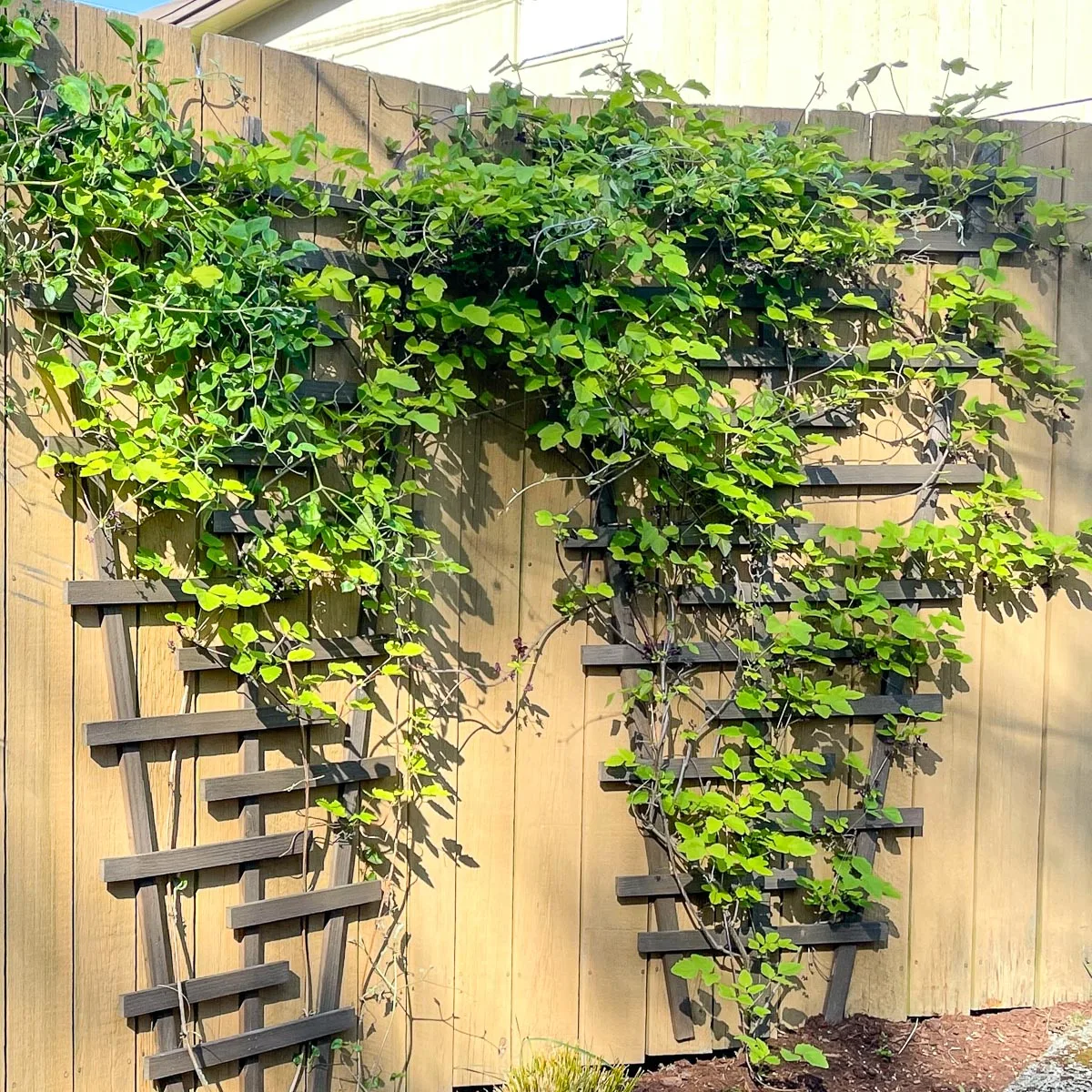
If you’re putting a trellis flush against a wall or fence, stop right there.
Plants need airflow behind them just as much as they need sun in front.
When a trellis sits right up against a solid surface, the air back there gets still and humid, kind of like a mini greenhouse nobody asked for.
That’s exactly the environment powdery mildew loves.
Leave at least six inches of gap between your trellis and any wall or fence.
If you live somewhere humid, go closer to eight or ten inches.
Your roses and clematis will thank you by not developing that gross white fungal coating every August.
Watch out for hot metal trellises
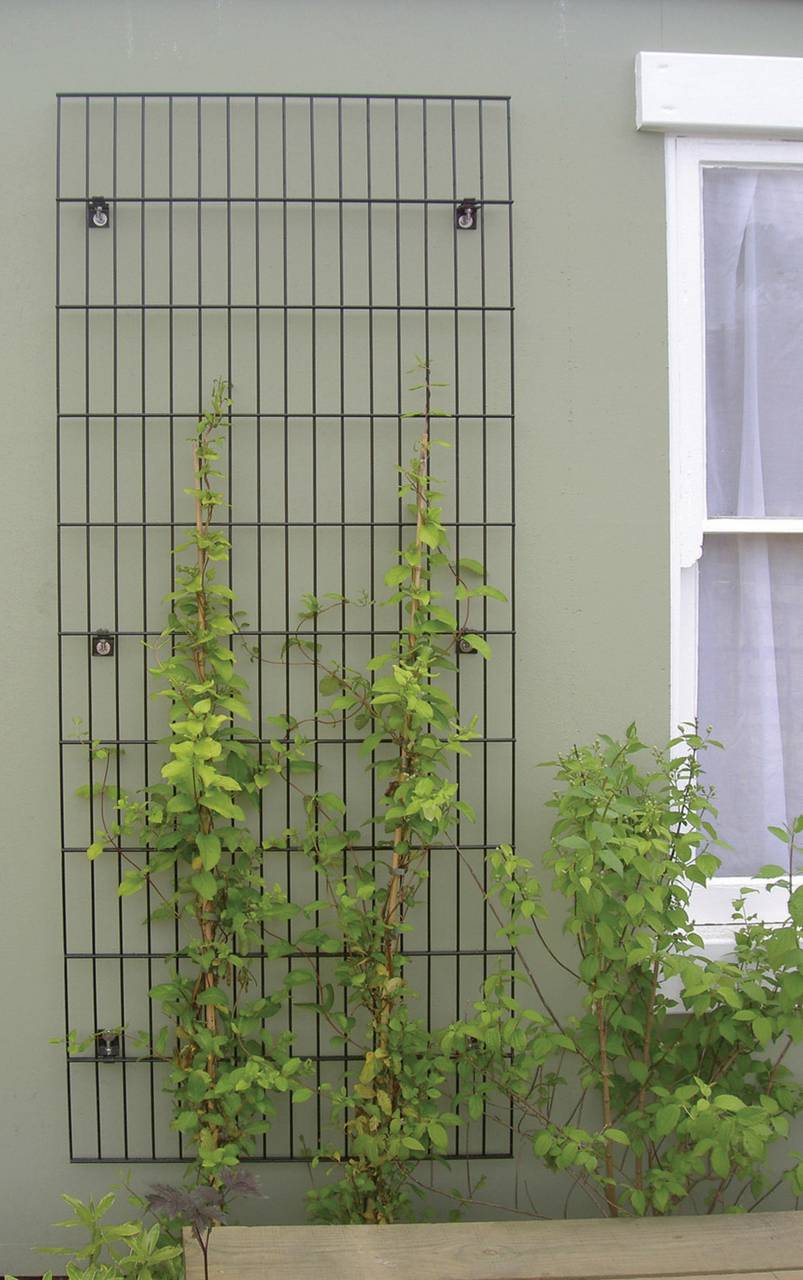
I learned this one the painful way with a beautiful black metal trellis I installed against my south facing fence.
On a sunny summer afternoon, that metal can get hot enough to burn your hand.
Now imagine a young, tender vine tip pressed right against it.
The stem essentially cooks right where it touches.
You won’t notice right away.
A few weeks later you’ll see random dieback and wonder what disease got your plant.
It wasn’t a disease.
It was a stovetop you didn’t know you installed.
If you’re set on a metal trellis in full sun, go with a lighter color that reflects heat instead of a dark one that absorbs it, or plan to train your vine along the shadier side.
Start tying your vine early and often
:max_bytes(150000):strip_icc():format(webp)/MS_GardenTrellisIdeas_Getty_SimonMcGill-4d809d869ea44fd1a498019e63478de6.jpg)
Standard advice tells you to tie up your plant as it grows.
That advice is too slow.
If you let a young vine grow unsupported for even a week before attaching it, it develops weak, floppy stems that never fully toughen up.
It’s like how a kid who never does chores struggles with independence later.
The plant needs that early structure to build strength.
Once your vine starts producing those first reaching shoots, get in there with soft ties every couple of days.
Don’t wait for it to look messy.
By the time it looks messy, the damage to the stem is already done.
Use something soft like garden twine or velcro plant tape.
Never wire, and never anything that can cut into the stem as it thickens.
Give your plants room to grow
:max_bytes(150000):strip_icc():format(webp)/MS_GardenTrellisIdeas_Getty_CatherineMcQueen-c4869bec20254548b963dd07455697f4.jpg)
Nobody thinks about this when their vine is a cute little six inch sprout in a nursery pot.
But that wisteria you’re babying today can put out hundreds of pounds of force on a mature structure within a couple of years.
I’ve seen trellises that looked completely overbuilt in year one get pulled apart by year three.
The plant simply outgrew what it was given.
Buy a sturdier trellis than you think you need, especially for aggressive growers like wisteria, hardy kiwi, climbing hydrangea, or grapes.
A flimsy decorative trellis is fine for annual sweet peas.
It is not fine for anything woody and permanent.
Angle your trellis slightly backward
:max_bytes(150000):strip_icc():format(webp)/lean-to-cucumber-trellis-8e1b7829cbf14456aa078a68fcb12552.png)
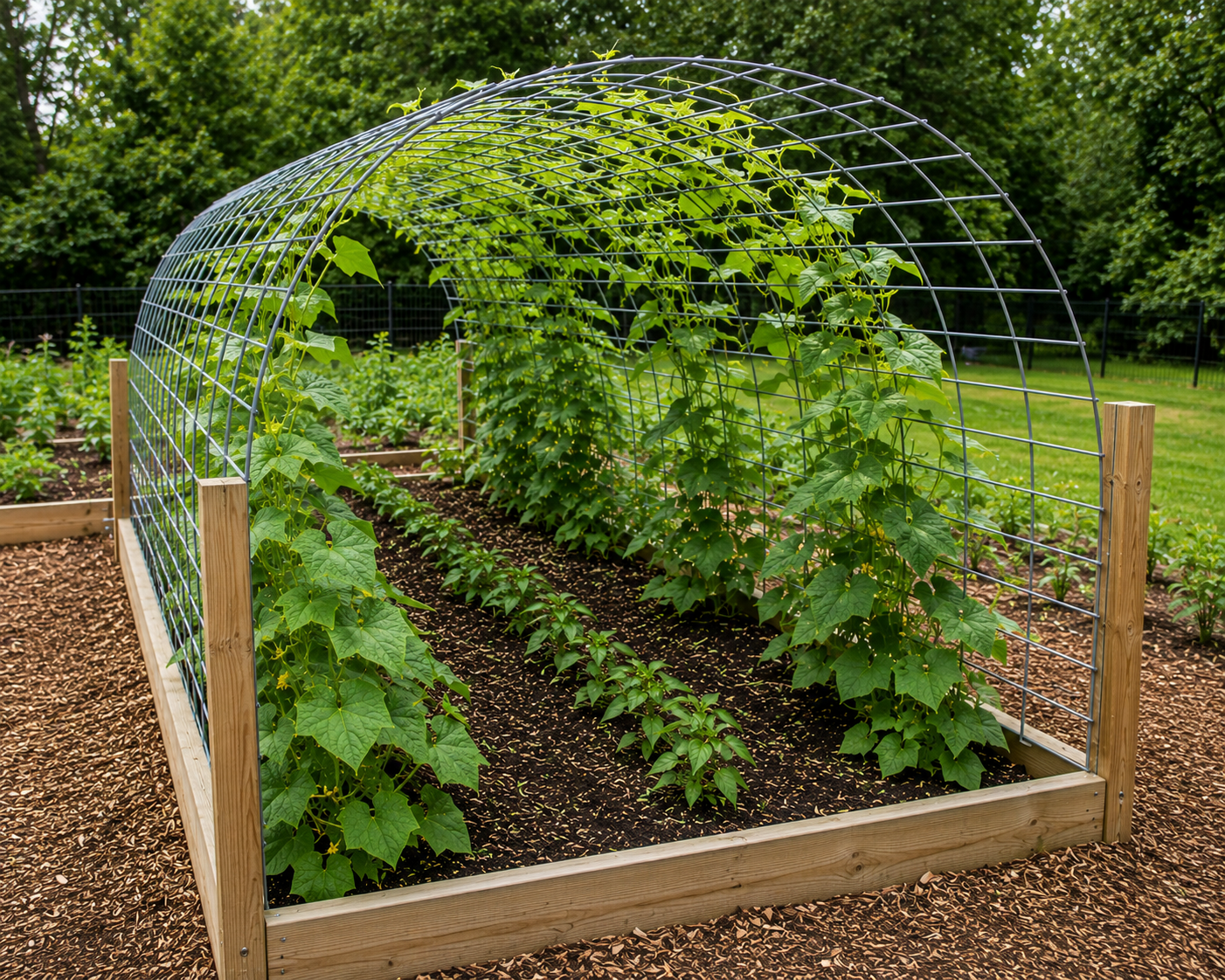
This feels wrong when you’re building it, but hear me out.
A trellis leaning back into a wall or fence at a slight angle handles weight far better than one standing perfectly straight up.
When your plant gets heavy with foliage or fruit, that lean helps push the weight into the support instead of pulling it forward and eventually snapping it.
You don’t need to overthink the math here.
A gentle backward lean, just enough that you can visibly notice it, makes a real difference over the years.
Check your posts every fall

If you live somewhere that freezes in winter, your trellis posts are moving even when you’re not looking.
Freezing and thawing cycles push posts upward a tiny bit at a time, called frost heave.
It’s slow enough that you won’t notice week to week.
Then one spring you look outside and your trellis is leaning like it’s had a rough night.
Do a quick check every fall before the ground freezes.
Push on your posts, check if they’re still level, and reset anything that’s started shifting.
It takes five minutes and saves you from replacing an entire structure.
Don’t let your plants get too crowded
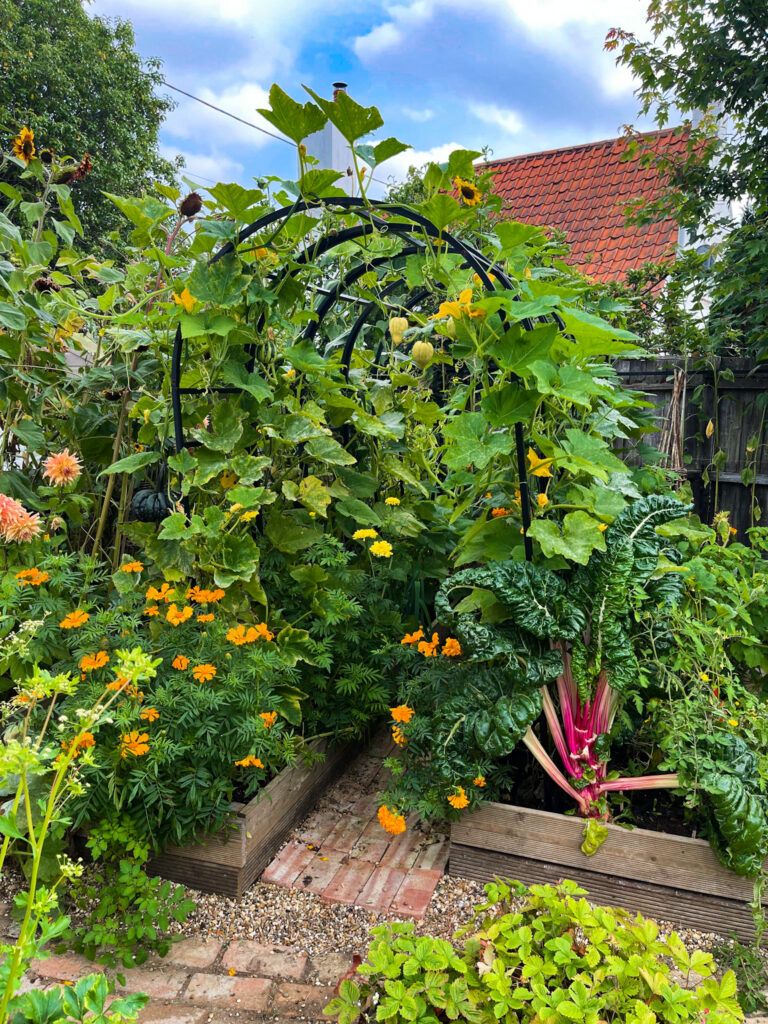
More coverage feels like more success, right?
Not always.
When a trellis gets too densely covered, the plants at the top start blocking light from everything below.
The bottom of your vine goes bare and leggy while the top looks lush and full.
This is that classic look where the top of your trellis looks like a magazine cover and the bottom looks abandoned.
If you notice bare lower sections, it’s usually not a watering or soil problem.
It’s a light competition problem.
Thin out some of the top growth so light can reach further down, and your whole plant will fill out more evenly.
Parting shot
Your climbing plants want to succeed.
Most of the time they just need you to set them up with the right conditions instead of fighting their natural habits.
Get the structure right, and the growing part takes care of itself.
FAQs
How do you grow climbing plants on a trellis?
Start with a trellis that matches your plant’s grip style, install it before you plant, and tie your vine to it early instead of waiting for it to find its own way.
Most climbing plants need a little help getting started even if they’re technically “self climbing.” Think of yourself as a coach, not a bystander.
How do you make garden trellis climbing?
If your trellis isn’t getting climbed, the issue is almost always material or spacing.
Vines need something they can physically wrap around or grip with tendrils, so a solid flat panel with no gaps or grooves gives them nothing to hold onto.
Add some horizontal wires, mesh, or lattice grid if your current trellis is too smooth.
How do you use trellis for plants?
Place the trellis first, plant your climber six to twelve inches away from the base, and gently lean the young stems toward the structure so they know where to go.
Don’t plant right up against the post itself.
Your plant needs a little room at the base for roots and airflow.
What is the best climbing plant for a trellis?
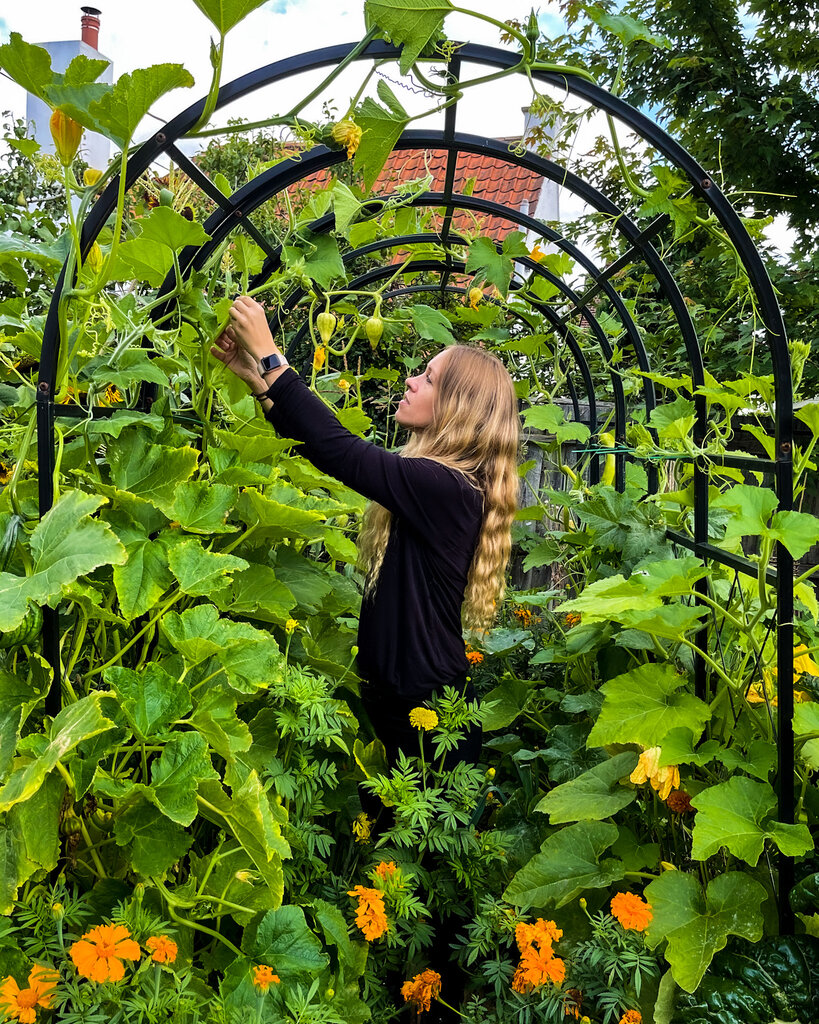
Depends entirely on your goals. Clematis gives you gorgeous blooms with minimal fuss.
Sweet peas are perfect for beginners and smell incredible, and climbing roses give you that classic cottage garden look.
If you want fast coverage over flowers, morning glory or hops will outgrow your expectations within weeks.
What plants grow well on a trellis?
Clematis, climbing roses, sweet peas, morning glory, honeysuckle, climbing hydrangea, hardy kiwi, grapes, and pole beans are all reliable choices.
Cucumbers and certain squash also do surprisingly well vertically if you want to save ground space in a vegetable garden.
What materials are best for a trellis?
Cedar and redwood hold up outdoors for years without rotting, and they look good doing it.
Metal trellises are sturdy and long lasting but get hot in full sun, so keep that in mind for delicate young vines.
Bamboo is budget friendly and great for annual plants, but it breaks down faster and usually needs replacing every couple of seasons.
What plant grows the fastest on a trellis?
Morning glory and hops are the speed demons of the climbing plant world, often covering a trellis within a single summer.
Pole beans and cucumbers move fast too if you’re growing food instead of flowers.
Just know that fast growth almost always means aggressive growth, so give these plants sturdy support and enough room.
How do you train a plant to climb a trellis?

Gently guide young stems toward the structure and secure them loosely with soft twine or plant tape every few days while they’re actively growing.
Don’t wait until the plant looks unruly to start tying it up, since that early support is what builds strong stems later.
Once it grabs on with tendrils or starts twining on its own, you can back off and let it do its thing.
How do you support climbing plants with trellis?
Use soft, flexible ties that won’t cut into the stem as it thickens, and check them every few weeks to loosen anything getting too tight.
For heavier plants like climbing roses or grapes, add extra anchor points along the structure instead of relying on just a few ties to hold all that weight.
The goal is support without strangling.
Does a trellis need maintenance?
Yes, more than people assume when they buy one.
Wood trellises need occasional sealing or staining to prevent rot.
Metal ones benefit from a rust check each spring, and every trellis needs a post stability check each fall, especially if you get freezing winters.
A little maintenance once or twice a year keeps your structure from becoming a surprise collapse.
What is the best shape for a trellis?
It depends on the plant, but a fan shape or angled lean works beautifully for most vines because it spreads growth out instead of forcing everything up one narrow column.
Flat panel trellises look clean and modern but can limit airflow if placed too close to a wall.
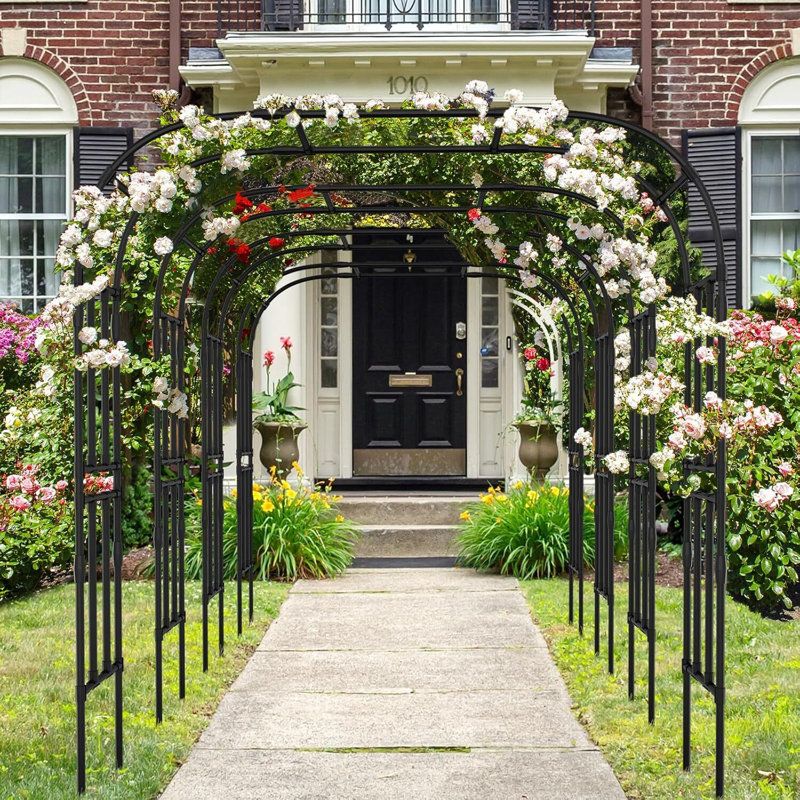
Arches and obelisks are great if you want your climbing plant to become a garden focal point instead of just a background feature.
How do you grow plants on a trellis?
Match your plant to the right trellis material, install the structure before planting, and stay consistent with early ties until the plant establishes its own grip.
After that, it’s mostly about watering, occasional pruning, and keeping an eye on airflow.
Climbing plants are pretty low maintenance once the structure and training phase is behind you.
How do you connect plants to a trellis?
Loop soft ties in a figure eight pattern, with one loop around the stem and one around the trellis, instead of cinching both together tightly.
This gives the stem room to grow thicker without getting choked by the tie.
Check back every couple weeks and loosen or replace ties as needed.
How do you get vines to grow on trellis?
Give the vine something nearby to reach, since most vines won’t travel far to find support on their own.
Plant within a few inches of the structure, angle the first growth toward it by hand, and keep the area free of competing weeds that might distract the roots.
Once it makes contact with the trellis, most vines take it from there.
How do you setup a trellis?
Choose a spot with the right sun exposure for your plant, dig your post holes to at least a third of the trellis height, and let the soil settle for a couple weeks before planting anything nearby.
Angle the structure slightly backward for better weight support down the road, and leave breathing room if it’s going against a wall or fence.
Get the setup right the first time and you’ll avoid rebuilding it later.
Related Posts: