The Ultimate List of Plants That Benefit from a Trellis
Last Updated on July 3, 2026 by Duncan
If you have ever bought a trellis, stuck it in the ground, and then watched your plant completely ignore it, you are not alone.
I have done this.
I put a gorgeous cedar trellis behind my cucumbers one spring, felt very proud of myself, and then watched those cucumbers sprawl across the ground like they had never seen the thing.
Here is what nobody tells you: not every climbing plant climbs the same way.
Some plants grab.
Some plants twist.
Some plants just flop against a structure and hope for the best.
If you match the wrong plant to the wrong trellis, you end up with a mess instead of the lush vertical garden you pictured.
So let’s fix that.
Here is your real guide to which plants benefit from a trellis, why, exactly how to help each one thrive, and which style of trellis is the right match for it.
But, first
Before you pick a single plant, ask: how does this thing hold on?
Some plants have little curly tendrils that wrap around anything thin, like string.
Some plants twist their whole stem around a pole like a candy cane stripe.
And some plants, like tomatoes, have no grabbing mechanism at all.
Zero.
They need you to tie them up like a tiny green hostage situation.
Once you understand this, gardening with a trellis stops being a guessing game.
You start picking the right support for the right plant, and everything gets so much easier.
This is also the key to picking the right trellis, because the plant’s grip style should be driving that decision, not how the trellis looks in the garden center.
Vegetables that can grow on a trellis
Cucumbers
Cucumbers use little curly tendrils to grab on, so they need something thin to wrap around.
This can be a string, wire, or narrow netting.
A thick wooden post is basically invisible to a cucumber vine.
This is exactly the mistake I made.
The trellis keeps the leaves of the cucumber drier and cuts down on that powdery white mildew that ruins plants.
For the best outcome: Plant your cucumbers about a foot apart at the base of the trellis so the roots have room but the vines can still find the netting fast.
Water at the soil level, not overhead, because wet leaves are an open invitation for mildew even on a trellis.
Once vines reach the top of your structure, pinch the growing tip so the plant puts its energy into side shoots and fruit instead of trying to keep climbing.
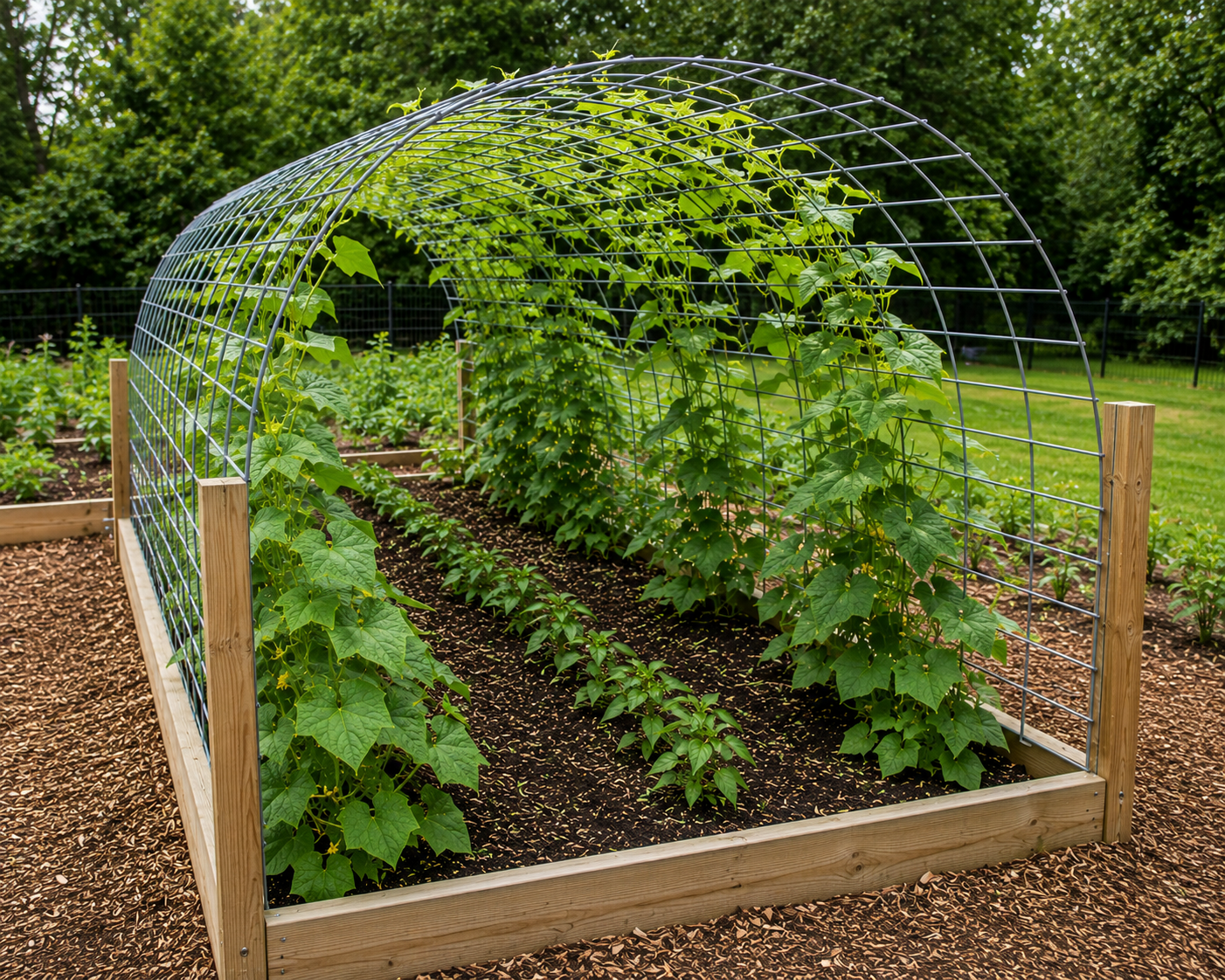
Best trellis for cucumber: Nylon netting or a cattle panel arch.
The small, thin openings give those tiny tendrils something to grab onto.
The arched shape lets the cucumbers hang down freely instead of pressing against a flat surface, which keeps them straighter and easier to spot at harvest.
Peas
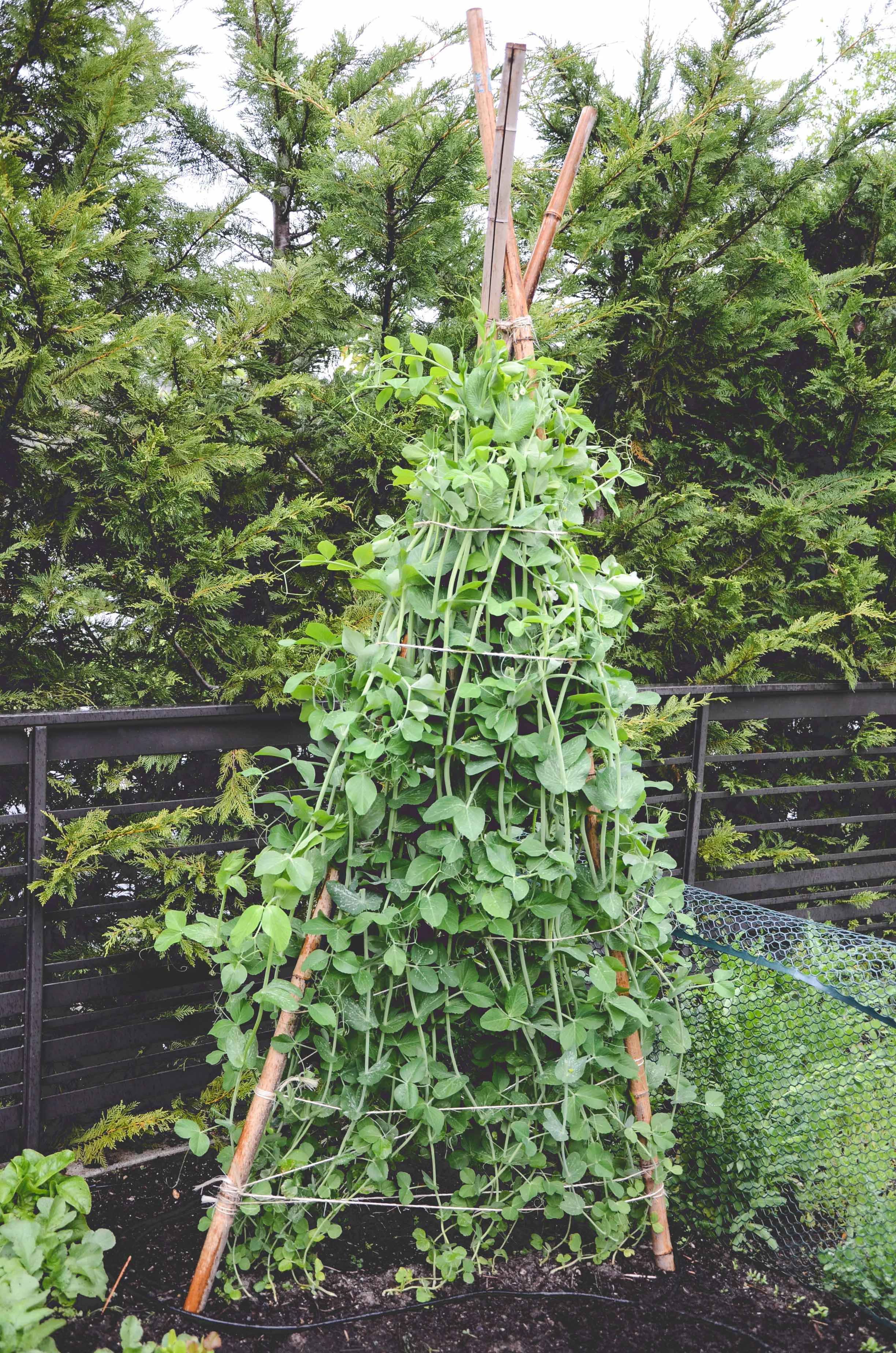
Peas are tendril grabbers too, and they are honestly the easiest, most forgiving plant to trellis.
Give them netting or twine with small gaps and they will climb happily without any help from you.
Low maintenance, high reward.
My kind of plant.
How to help peas thrive: Get your netting up before the seeds even sprout.
Peas send out tendrils almost immediately, and if there is nothing nearby to grab, they will grab each other and turn into a tangled knot.
Peas prefer cooler weather, so plant them early in spring and pick often.
The more you harvest, the more the plant produces.
Best trellis for peas: Simple pea netting or a row of twiggy branches pushed into the soil, what old gardeners call pea sticks.
Both give the tendrils a dense web of thin points to grab, and pea sticks in particular are free, since you are basically using trimmed branches from your yard.
Pole Beans

Pole beans twist their whole stem around the support instead of using tendrils.
That means they need something they can physically wrap around, like a pole or a thick string.
Smooth, wide, flat trellis panels do not work well here because there is nothing for the stem to grip.
How to help pole beans thrive: Give the plant a gentle nudge in the right direction when it is young, wind the top few inches of stem around the pole yourself.
After that, it takes over and climbs on its own.
Beans are heavy nitrogen users early but fix their own nitrogen in the soil as they grow, so go light on fertilizer once they get going or you will get gorgeous leaves and disappointing pods.
Best trellis for pole beans: A bamboo teepee or a single tall wooden pole.
The round shape gives the twisting stem something to wrap around continuously, and a teepee shape lets you plant several beans at the base of each pole.
As you can tell this packs a surprising amount of harvest into a tiny footprint.
Tomatoes
Here is a myth that drives me a little crazy: people think tomatoes don’t need a trellis because they are not technically a vine.
Wrong.
Indeterminate tomatoes keep growing and producing fruit all season, and their stems never get sturdy enough to hold that weight on their own.
Without support, your tomato plant will collapse under its own fruit by midsummer, usually right when you finally have a ton of tomatoes coming in.
Cruel timing.
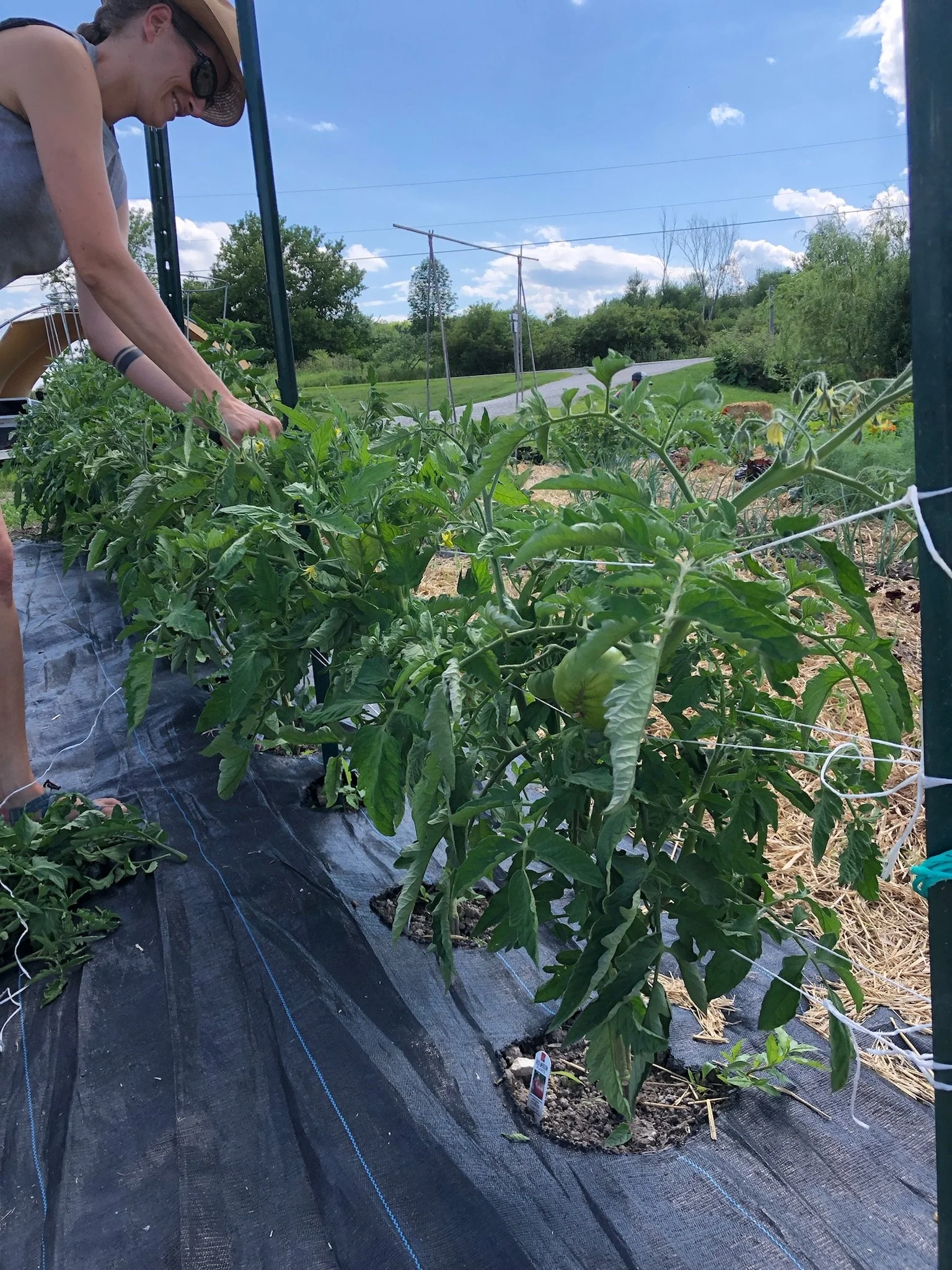
Cage them, stake them, or trellis them early, because tomatoes have zero natural grabbing ability.
You are doing all the work here.
How to help tomatoes thrive: Tie the main stem to your support every ten inches or so as it grows, using soft cloth strips or garden tape.
Don’t use anything that can cut into the stem.
Tie loosely, in a loop, not a tight knot, because the stem will thicken and the fruit will pull the angle over the season.
Pinch off the little side shoots that pop up in the joint between the main stem and a branch, so the plant focuses its energy upward instead of sideways into a jungle.
Best trellis for tomatoes: A sturdy stake or a string trellis system, sometimes called the Florida weave, where horizontal string runs between posts on either side of a row.
You should weave the plants between the lines as they grow.
Since tomatoes cannot grab anything themselves, they need a rigid structure you can tie to directly, not netting or anything flexible that will sag under the fruit’s weight.
Squash and Melons

Yes, you can trellis these, and it is a fantastic way to save space in a small yard.
But here is the part most people skip: Once the fruit gets heavy, the stem connecting it to the vine can snap under the weight, especially in wind.
If you are growing anything bigger than a softball, like cantaloupe or butternut squash, sling the fruit in a little mesh bag or an old pair of pantyhose tied to the trellis.
I know it sounds ridiculous. but it works.
How to help the melon thrive: Use the sturdiest trellis you own for these, something anchored deep in the ground, because a flimsy structure will tip over once fruit starts loading up one side.
Start slinging fruit as soon as it is the size of a golf ball, do not wait until it looks heavy, by then the stem may already be stressed.
Give these plants full sun and consistent watering, because inconsistent watering is the number one reason squash and melon fruit crack or rot on the vine.
Best trellis for melon: A cattle panel or heavy-duty metal A-frame, anchored firmly into the ground on both sides.
These plants get genuinely heavy once fruit sets, and a wobbly wooden trellis or thin netting will not hold up.
You want something you could almost lean on yourself without it budging.
Flowers that can grow on a trellis
Sweet Peas

Sweet peas are tendril climbers, delicate, fragrant, and honestly one of the most rewarding flowers you can grow vertically.
Give them thin twine or netting early in the season and they will reward you with armfuls of cut flowers.
How to help sweet peas thrive: Sweet peas like cool soil to start, so get them in the ground early and give the roots a deep, shady mulch even while the top of the plant is out in full sun.
Cut flowers constantly, and I mean constantly, because the second you allow the plant to set seed pods, it decides its job is done and stops blooming.
Best trellis for sweet peas: Twine strung between posts, or the same fine netting you would use for peas or cucumbers.
The tendrils on sweet peas are delicate and short, so anything thick or widely spaced leaves them grasping at air.
Morning Glories and Moonflowers
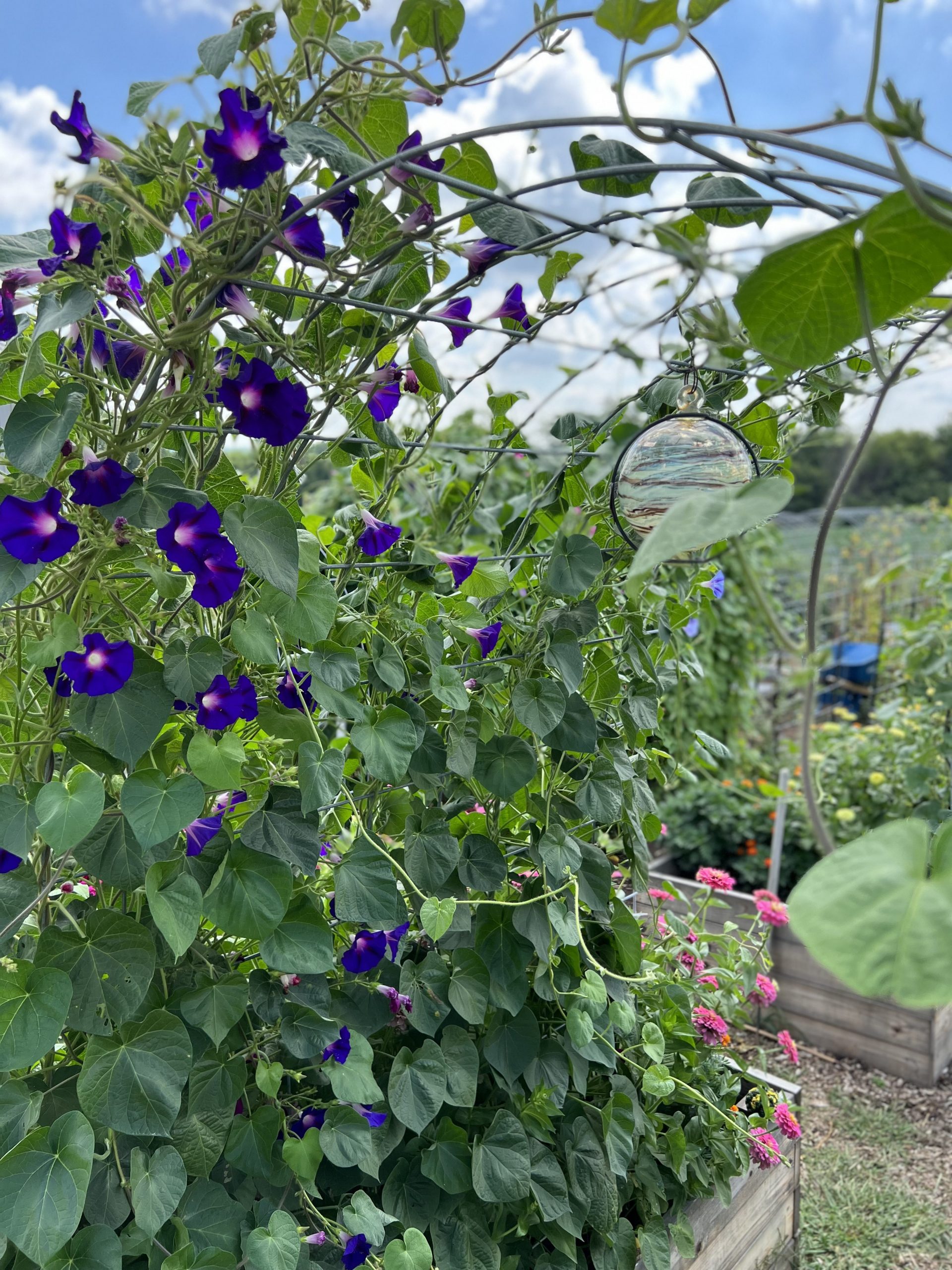
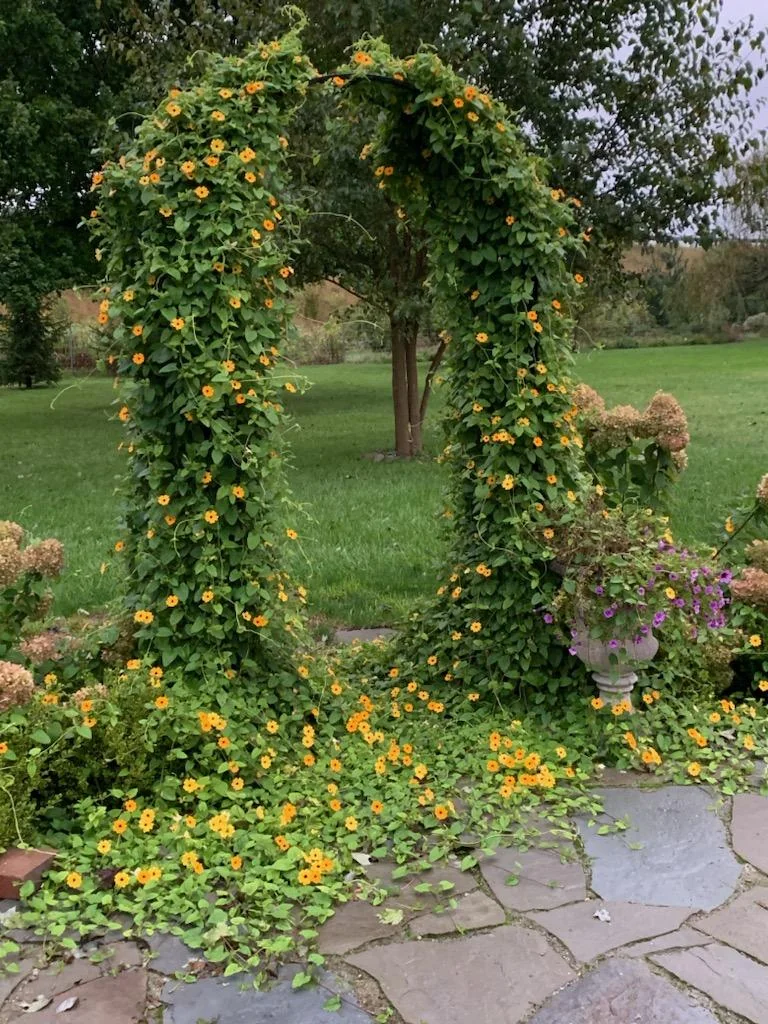
These are twiners, meaning the stem wraps around whatever it touches.
Give them a pole, an arch, or thick twine, and stand back.
They grow fast, sometimes shockingly fast, so give them plenty of vertical room or they will start wrapping around your porch railing, your mailbox, and anything else nearby.
How to help morning glories thrive: Soak the seeds overnight before planting, their shells are hard and this speeds up germination dramatically.
Keep them away from your other trellised plants unless you want a wrestling match, because morning glory vines will happily climb right over the top of a neighboring plant and shade it out.
Go light on fertilizer here too, as too much nitrogen gives you a wall of leaves and hardly any flowers.
Best trellis for morning glories: A tall obelisk, an arch, or thick twine strung on a fence.
Since the stem itself does the wrapping, it needs something round and graspable rather than a flat panel, and a tall structure gives this fast grower somewhere to go instead of taking over everything nearby.
Clematis

Clematis is a little different.
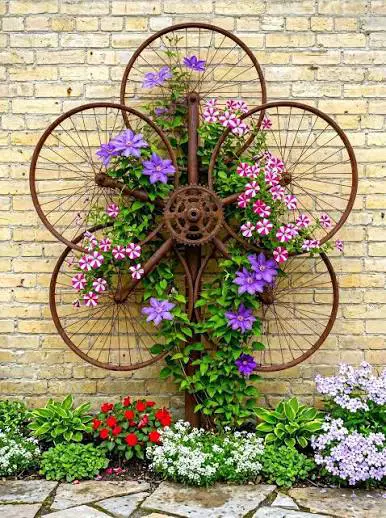
It climbs by wrapping its leaf stems around thin supports, so it prefers delicate wire or narrow lattice over a thick wooden trellis.
This is one of those details that separates a thriving clematis from a sad, floppy one.
How to help clematis thrive: Clematis has a saying that holds up in real gardens, cool feet, warm face.
The roots want to stay shaded and cool, so mulch heavily or plant something low and leafy at the base, while the top of the plant reaches up into full sun.
Prune according to which type you have, because pruning a clematis wrong at the wrong time of year can cost you an entire season of blooms, so check the variety before you cut anything.
Best trellis for clematis: Thin wire, narrow metal lattice, or a mesh obelisk.
Clematis grips with delicate little leaf stems, not tendrils or twining stems, so anything thicker than a pencil is too wide for it to close around.
In such a case it will just flop instead of climbing. And you don’t want this.
Climbing Roses

Technically, climbing roses do not climb at all.
They have no grabbing mechanism whatsoever.
You have to physically tie the canes to the trellis as they grow, training them where you want them to go.
It is more work, but the payoff, an entire wall covered in roses, is worth every minute of tying.
How to help the roses thrive: Train the main canes horizontally along the trellis instead of straight up.
It feels counterintuitive, but a horizontal cane produces far more flowering side shoots than one that shoots straight up.
This way a horizontal training pattern gives you a fuller, more floral wall.
Use soft ties and check them once a season so they do not girdle the cane as it thickens.
Best trellis for the roses: A wide, sturdy wooden or metal fan trellis, or horizontal wires mounted on a wall or fence.
Since you are tying every single cane by hand, you need a wide, permanent structure with plenty of horizontal points to attach to.
You don’t need a narrow obelisk that only gives you one direction to grow.
Fruits that can grow on trellis
Grapes
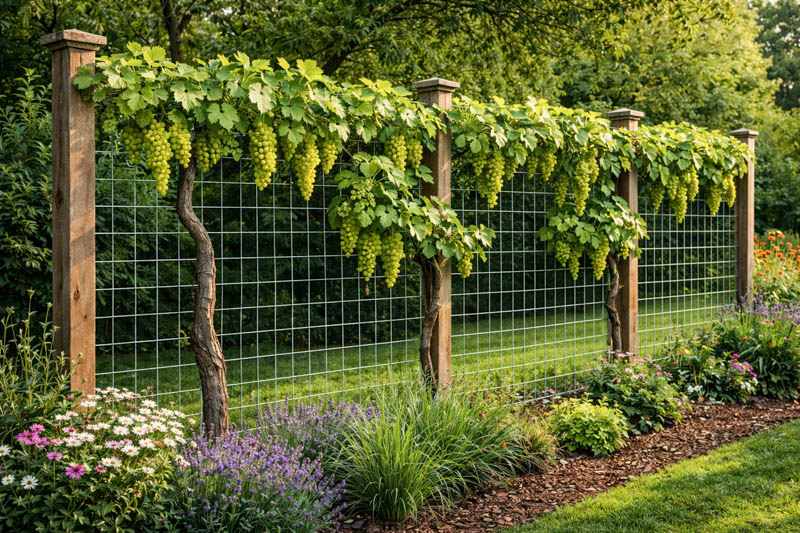
Grapes are a long game.
You are not just growing a plant, you are building a structure that will support a woody vine for years.
Once established, grape vines get a real woody trunk and mostly support themselves.
While this is the case, you still need a strong horizontal trellis system to organize the fruiting branches and keep grapes off the ground.
How to help grapes thrive: Prune hard in late winter while the vine is dormant, this feels brutal the first time you do it.
The cool thing is that grapes fruit on new growth and a vine you do not prune turns into a tangled mess with tiny, disappointing grapes.
Choose a trellis site with excellent airflow, as cramped, humid spots are a fast track to fungal disease on the fruit.
Best trellis for grapes: A two or four wire horizontal trellis system strung between sturdy posts, the kind you see running down a vineyard row.
Grapes fruit on canes that grow along horizontal wires, so this setup is not just support, it is the entire training system that determines your harvest.
Hardy Kiwi
Similar story to grapes.
Young hardy kiwi vines need real support and guidance, but after a few years the main trunk toughens up.
At that point, the trellis is less about holding the plant up and more about keeping the fruiting wood organized so you can reach your kiwis at harvest time.
How to help kiwi thrive: Plant a male and female vine if you want fruit, most hardy kiwi varieties need both to produce.
Give the roots plenty of space away from other hungry plants, kiwi vines are aggressive feeders and will happily starve out anything planted too close.
Best trellis for kiwi: A T-bar or overhead pergola style trellis with horizontal wires.
Kiwi vines get heavy and woody over the years, so you need something permanent and strong enough to hold real weight.
The overhead style lets the fruit hang down where you can reach it easily come harvest time.
Mistakes that ruin a trellis garden
Putting the trellis in too late.
If you wait until your plant is already sprawling to add support, you are fighting an uphill battle.
Roots get disturbed, growth gets set back, and the plant sulks for over a week.
Install your trellis at planting time, not as a rescue mission later.
Using ties that are too tight
As fruit grows and gets heavy, it pulls the stem in a different direction than it started.
A snug tie that looked fine in June can cut into the stem by August.
Always tie with a little slack, loose loops, not tight knots.
Assuming bushy plants are self-sufficient
Determinate tomatoes and dwarf peas look sturdy early on.
Then one heavy rainstorm hits, the leaves get soaked, the whole plant gets top heavy, and it collapses overnight.
If you skip support because a plant “looks fine,” you are gambling on the weather.
Ignoring light and airflow
Run your trellis rows north to south if you can.
East to west rows shade themselves for most of the day, which means the lower leaves never get enough light and your harvest suffers.
Planting your trellis plant on top of another heavy feeder
Grapes and kiwi have big root systems and will happily steal nutrients and water from anything else you plant underneath them.
If your climbing plant looks thin and stretched even with good light, check what is competing with it underground.
Parting shot
Whenever you are staring at a plant tag trying to decide if it needs a trellis, ask yourself this: can this plant hold itself up on its own, and if not, what is it using to grab on?
If the answer is nothing, it grabs with nothing, plan to tie it yourself all season and pick a wide, sturdy structure.
If it has tendrils, give it something thin like netting or wire.
If it twists, give it something round and graspable like a pole or an obelisk.
Match the plant to the right kind of support and you will stop fighting your garden and start enjoying it.
That is the whole secret.
Not fancy tools, not an expensive trellis, just understanding how your plant wants to climb, and giving it the exact structure that works with it instead of against it.
FAQs
What plants should I use a trellis for?
Use a trellis for anything that vines, twines, or produces heavy fruit on soft stems.
This can be cucumbers, peas, pole beans, tomatoes, squash, sweet peas, morning glories, clematis, climbing roses, grapes, and hardy kiwi.
If a plant cannot hold its own weight once it is loaded with fruit or flowers, it belongs on a trellis.
What are the benefits of using a trellis for plants?
A trellis saves space by sending your plants up instead of out, which is huge if you have a small yard or a container garden.
It also improves airflow around the leaves, which cuts down on fungal problems like powdery mildew.
And it makes harvesting so much easier, no more digging through tangled vines on the ground to find your cucumbers.
What is good to grow up a trellis?
Cucumbers, pole beans, peas, and indeterminate tomatoes are the classic vegetable picks.
For flowers, sweet peas, morning glories, and clematis are gorgeous and grow fast.
If you want fruit, grapes and hardy kiwi are the long term investment that pays off for years.
What plants grow up a trellis?
Any plant with a tendril, a twining stem, or a habit of sprawling can be trained up a trellis.
That includes cucumbers, peas, pole beans, squash, melons, sweet peas, morning glories, moonflowers, clematis, climbing roses, grapes, and kiwi.
Even tomatoes, which have no natural climbing ability, thrive when you tie them to one.
What is the best climbing plant for a trellis?
For an easy win, peas are hard to beat.
They practically climb themselves, ask for very little, and reward you fast.
If you want something show stopping, clematis paired with a climbing rose on the same trellis is a classic combination that looks incredible by midsummer.
What are some creative ways to use a trellis in my garden?
Use a trellis to create a shady little nook by growing something leafy like grapes or hardy kiwi over a pergola.
Line a fence with sweet peas for a fragrant privacy screen.
Or grow a trellis of pole beans and cucumbers on the north side of a garden bed so it does not shade your shorter plants.
A trellis over an arch at the entrance to your garden is also a simple way to make the whole space feel intentional.
What flowering plants grow up a trellis?
Sweet peas, morning glories, moonflowers, clematis, climbing roses, and climbing hydrangea are all excellent choices.
Each one grabs onto a trellis differently, so match the plant to the right support.
For example, thin wire for clematis, a sturdy pole for morning glories, and a wide structure for roses since you are tying those by hand.
What is the best climbing plant for trellis?
Same answer as above, it depends on what you want.
For low effort and fast results, peas or morning glories are hard to beat.
For a fragrant, romantic look, sweet peas or climbing roses win every time.
What grows up a trellis quickly?
Morning glories and moonflowers are some of the fastest growers you can put on a trellis, often covering several feet in a single season.
Pole beans and cucumbers are close behind and will fill in a trellis within a few weeks of steady warm weather.
What is the most fragrant climbing plant?
Sweet peas are the classic answer, their scent is the whole reason people grow them.
Climbing roses and moonflowers are close runners up, and moonflowers release their strongest scent at night.
This makes them a wonderful choice near a patio or bedroom window.
How to grow plants on a trellis?
Start by figuring out how your plant climbs, tendrils, twining stems, or no grip at all, and choose a trellis material to match.
Install the trellis at planting time so you are not disturbing roots later.
Then guide young growth toward the support, tie anything that needs tying, and keep an eye on watering and airflow as the plant fills in.
How deep should a trellis be in the ground?
For a lightweight trellis holding annuals like peas or sweet peas, six to twelve inches in the ground is usually enough.
For anything heavier, like squash, climbing roses, or grapes, you want at least eighteen to twenty four inches.
You should note that setting the posts in concrete is worth it for a permanent structure like a grape arbor that needs to hold up for years.
How to make a trellis for outdoor plants?
The simplest version is a few sturdy posts driven into the ground with netting, wire, or twine strung between them.
For a teepee style, tie several bamboo poles together at the top and spread the legs into a triangle or cone shape.
Whatever you build, match the spacing and material to your plant’s grip style.
Thin and narrow for tendril plants, round and graspable for twiners, and wide with plenty of tie points for anything you will be training by hand.
What are the different types of trellises?
Flat panel trellises, obelisks, A-frames, arches, teepees, fan trellises, and horizontal wire systems are the main types.
Flat panels and lattice work well against a wall, obelisks and teepees are great for containers or small spaces.
Arches make a dramatic entrance, and horizontal wire systems are what you want for grapes and other heavy, long term vines.
What are common trellis building mistakes?
Building it too flimsy for what you are growing is the biggest one, a trellis that looks fine in May can buckle under a loaded squash vine by August.
Not anchoring the posts deep enough is another, especially in windy spots.
And choosing a material that is too thick for a tendril plant, or too thin for a twining plant, means your trellis just sits there while the plant flops beside it.
Why is a trellis important?
A trellis lets you grow more in less space, keeps fruit and flowers off the damp ground where they rot or attract pests.
It also improves airflow so your plants stay healthier all season.
For plants like tomatoes with soft stems, a trellis is the difference between a productive harvest and a collapsed, sprawling mess.
How do you strengthen a trellis?
Anchor the base posts deeper into the ground, or set them in concrete if the trellis is meant to be permanent.
Add a diagonal brace between the post and the ground for extra stability in windy areas.
And for anything holding real weight, like squash or grapes, use metal or thick wood instead of thin decorative materials that are built to look pretty, not to hold a harvest.
Do plants need a trellis?
Not every plant needs one, but plenty benefit hugely from one.
A plant that vines, twines, or produces heavy fruit on a soft stem will almost always grow healthier, stay cleaner, and produce more when it is trellised.
Bushy, self supporting plants like peppers or determinate tomatoes can usually skip it.
Even this being the case, those sometimes appreciate a little extra support once they are loaded with fruit.
Related Posts: