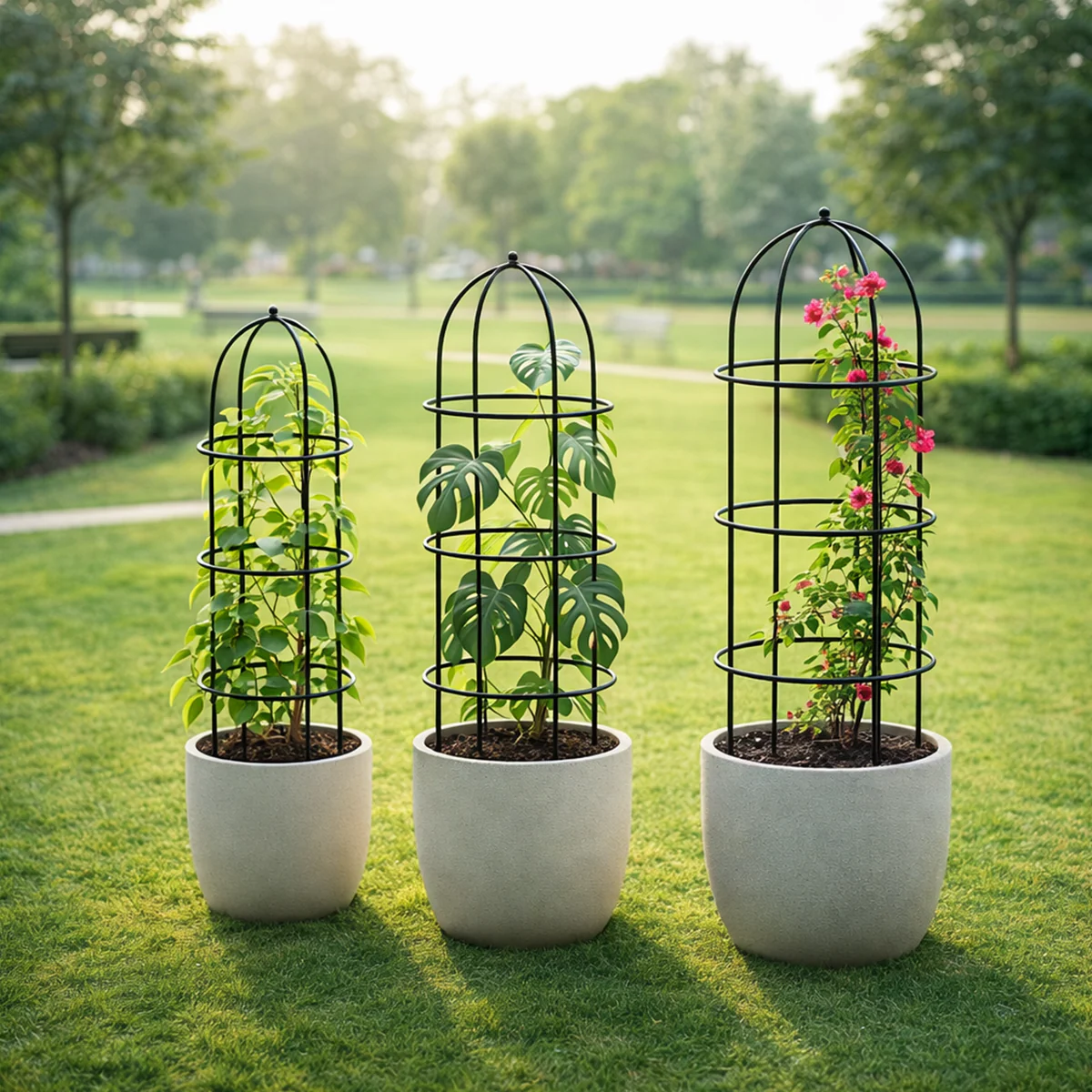
11 Genius Trellis Alternatives That Work Even Better
Last Updated on July 2, 2026 by Duncan
So you don’t want to buy a trellis.
Maybe it’s the price tag.
Maybe your garden style doesn’t call for one more piece of wood leaning against the fence.
Or maybe, like me, you bought a trellis once, watched it collapse under a single overachieving cucumber vine, and swore off store-bought supports forever.
Whatever brought you here, good news.
You have options.
Fifteen years of getting my hands dirty in gardens of every size has taught me that a “trellis” is just a fancy word for “something my plant can climb.”
Once you accept that, a whole world opens up and you have plenty of options to choose from.
Let’s get into it.
1. Cattle panels
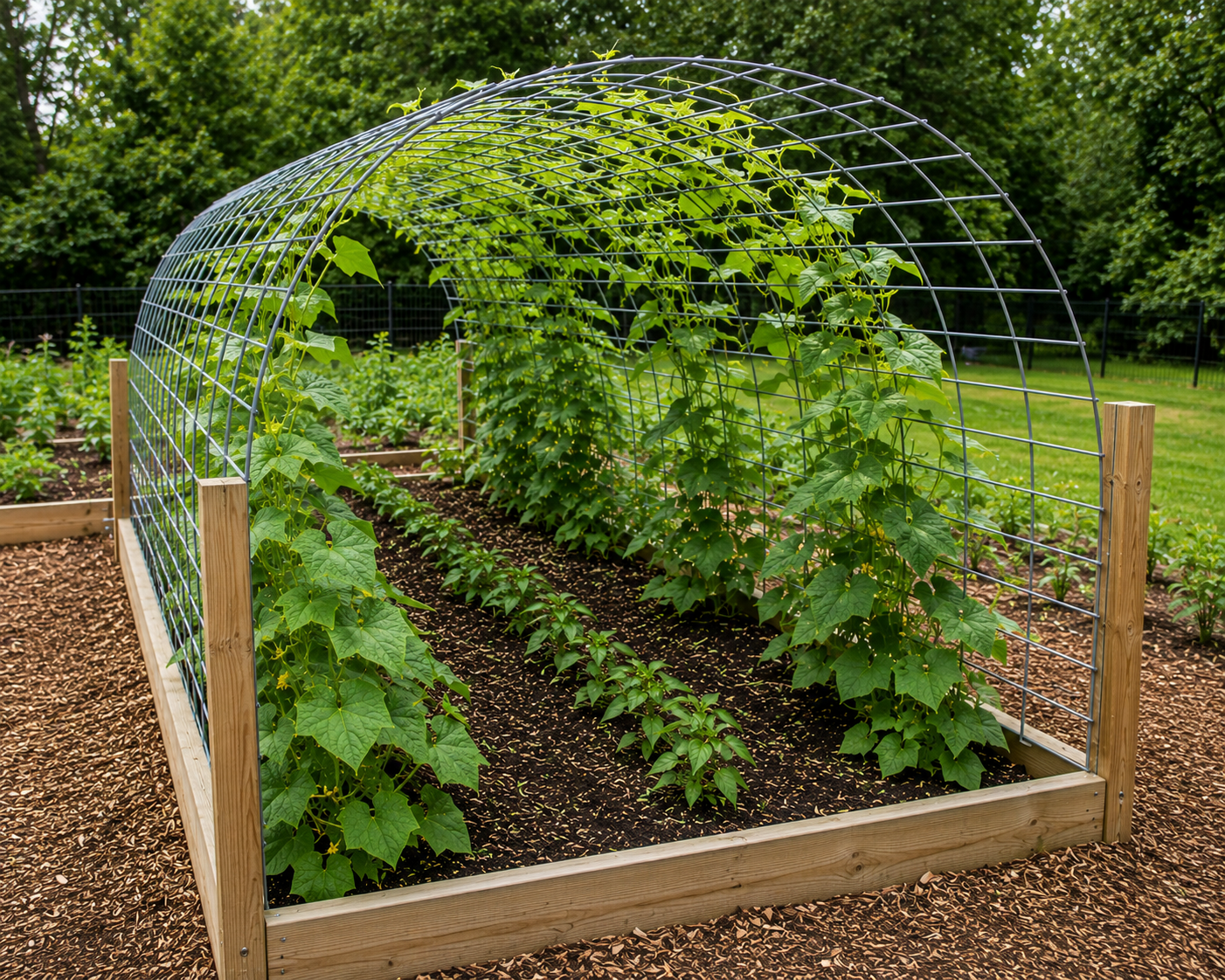
If you have never seen a cattle panel, picture a giant sheet of thick metal fencing, usually 16 feet long.
Farmers use them to pen livestock.
Gardeners use them because they are basically indestructible.
Bend one into an arch over a garden bed and you have a tunnel your cucumbers and pole beans will fight to climb.
I did this in my own backyard and my neighbor asked if I was building a chicken coop. No, Karen, it’s for the zucchini.
Here’s the catch nobody tells you.
Cattle panels get hot in direct sun.
If your vines are pressing right up against the metal on a scorching July afternoon, you can actually scorch the stems where they touch.
Keep an eye on that if you live somewhere with brutal summers.
Budget wise, one panel runs you somewhere between 25 and 40 dollars at a farm supply store, and it will outlive your marriage.
Worth it if you’re planting the same spot year after year.
2. Cedar branches
Got a tree that needs pruning?

Save those branches.
Bundle a few together, stick them in the ground in a teepee shape, and tie the top with jute twine.
This is the option that looks like it belongs in a cottagecore fantasy.
Sweet peas love climbing these, and they photograph beautifully, which matters if you’re the type who takes plenty of photos of your garden.
The downside is durability.
Branches rot.
You’re looking at one to two seasons before you need to replace them.
For short lived annuals like peas and beans, that’s totally fine.
For something you want climbing year after year, this isn’t your best bet.
3. An old ladder

Wooden ladders that are too wobbly to make gorgeous plant supports. Lean it against a wall or a fence and let your climbers do the rest.
I found mine at an estate sale for eight dollars and it might be my favorite garden purchase ever.
It gives you built in shelves too, so you can tuck small pots along the rungs while vines wind around the sides.
One thing to watch for. If it’s a wooden ladder, check whether it’s been treated with anything before you put it near food crops.
Old paint can contain lead, and you do not want that leaching into your tomato bed.
If you’re not sure of its history, save it for flowering climbers instead of edibles.
4. Wooden pallets

Pallets are everywhere and usually free if you ask nicely at a hardware store or garden center.
Stand one upright, secure it so it won’t tip, and you have instant vertical structure with built in slats for weaving vines through.
Here’s the part that actually matters and almost nobody mentions.
Not all pallets are food safe.
Flip it over and look for a stamp.
You want “HT,” which means heat treated.
Skip anything stamped “MB,” which means it was fumigated with a chemical you do not want anywhere near your vegetables.
Once you find a clean one, this is one of the cheapest, sturdiest options on this whole list.
5. Bamboo stakes

This one is a classic for a reason.
Grab five or six bamboo stakes, push them into the soil in a circle, and tie the tops together with twine or wire.
It’s cheap, it’s simple, and it works beautifully for beans and peas.
My grandmother used this exact method for forty years and never once had a plant she couldn’t manage.
The mistake people make is spacing the stakes too far apart at the base, which makes the whole structure wobbly the second wind picks up.
Keep your circle tight, about a foot and a half across for most annuals, and drive the stakes at least six inches into the soil so they hold.
6. Tension wire
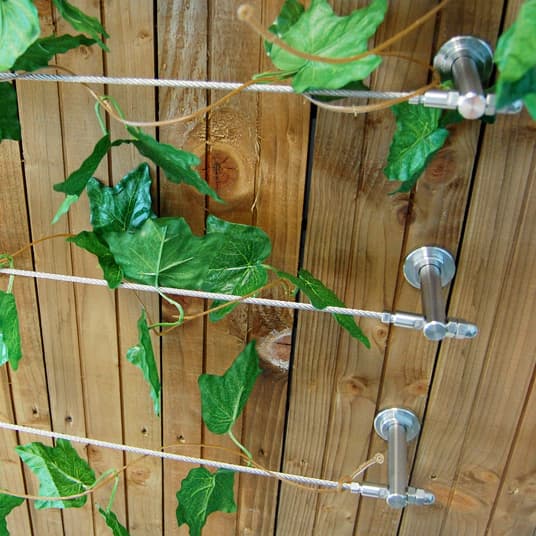
If you have a bare wall or fence, this is criminally underused.
Screw eye hooks into the wall in a grid pattern, then run galvanized wire between them.
Instant vertical growing space with almost no visual bulk.
This is the option I recommend most for small patios and balconies, because it takes up zero floor space.
You’re using a wall you already have instead of adding another object to a tight footprint.
The one thing that trips people up is spacing.
Too wide and your climbing plant won’t find the next wire in time and just flops.
Aim for wires spaced six to eight inches apart for lighter climbers like peas, and closer for anything with small tendrils.
7. A repurposed bike wheel
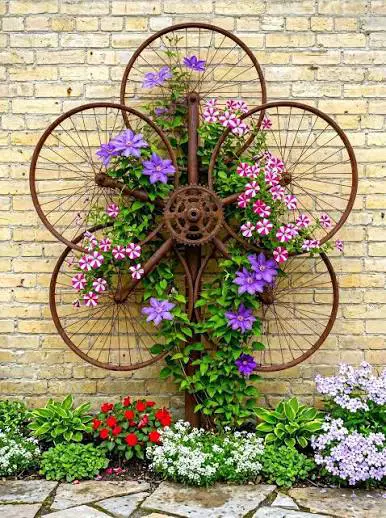
This sounds like a Pinterest fantasy, but it genuinely works, which is probably why you’re already picturing it.
Mount an old bike wheel on a post or hang it from a hook, and let a flowering vine like clematis or morning glory wind through the spokes.
It’s a statement piece and a plant support at the same time, which is exactly the kind of two for one deal I’m always chasing in my own yard.
Just make sure whatever you’re using is rust resistant or you’re okay with the rust becoming part of the look.
Some people love that weathered patina. If you don’t, seal it first.
8. Living Supports
:max_bytes(150000):strip_icc():format(webp)/GettyImages-494375935-4d6d10ee8eb840bea91a7365db4babcd.jpg)
This is the method your great grandmother probably used without ever calling it a “technique.”
Plant a sturdy plant like corn or a tall sunflower, and let a vining plant like beans climb right up its stalk.
This is the backbone of the classic Three Sisters planting method.
It’s charming, it’s free, and it feels a little bit magical watching two plants support each other.
Here’s the timing trick that makes or breaks this method.
Plant your support plant about three to four weeks before your climber.
If they go in at the same time, your climbing plant will outpace the support and topple the whole thing over before it has a chance to get sturdy.
I learned this with a sad pile of collapsed bean vines and a bruised ego.
9. Concrete reinforcing mesh
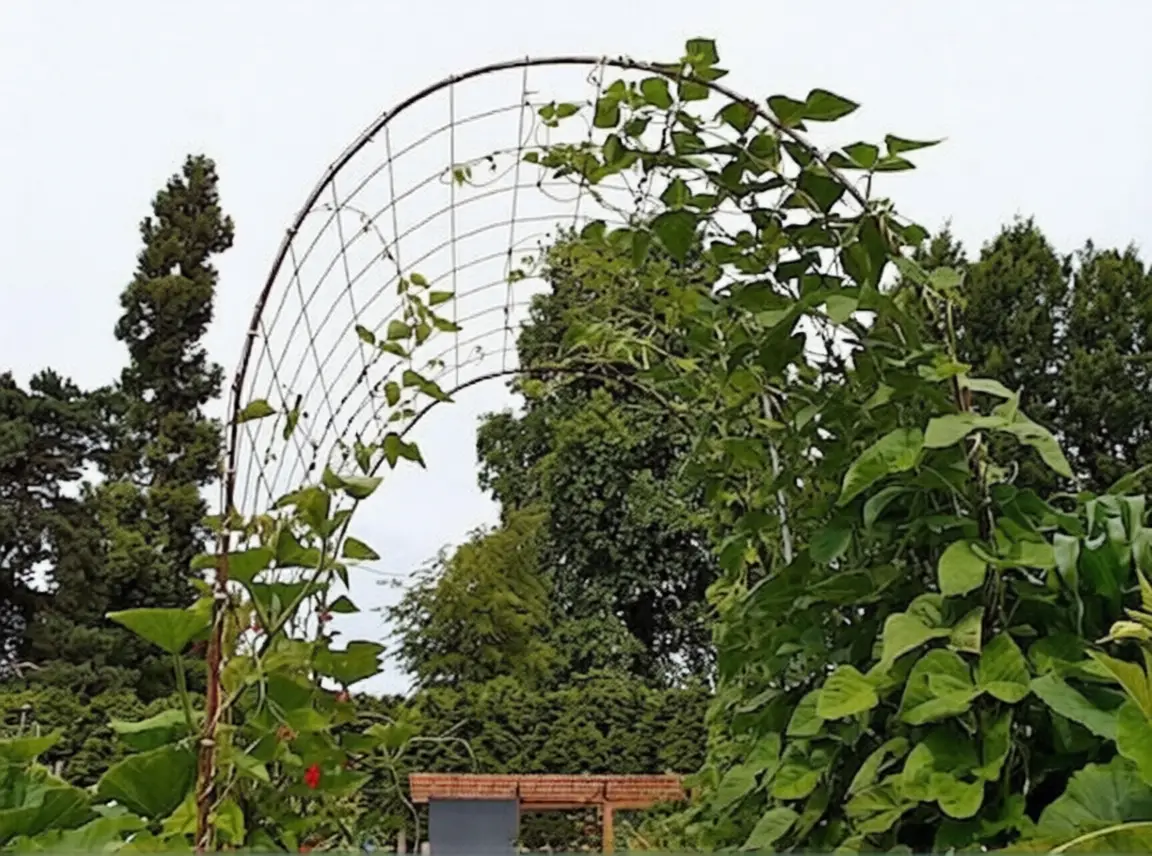
You’ll find this at any hardware store in the concrete section, sold in rolls or flat sheets.
It’s stiff, it’s a grid pattern, and it makes an excellent low cost trellis alternative for heavier climbers.
Bend it into an arch, stand it upright against a fence, or curve it into a cylinder for a tomato cage that holds up.
Wear gloves when you’re cutting and shaping this mesh.
The cut edges are sharp enough to earn you a trip to urgent care if you’re not careful.
10. String and cup hooks

If you’re growing on a balcony or you’re not allowed to drill into anything, this is your move.
Screw a few cup hooks into a wooden beam, ceiling, or overhang, tie strong garden twine to each, and let it hang down to soil level for your plant to climb.
Tomatoes especially love this.
Commercial greenhouses use this exact method because it’s cheap and it works.
The trick is using twine that has some texture to it, not slick nylon rope.
Plants grip rough surfaces far better.
Smooth string means your plant is constantly slipping and you’ll spend your whole summer re-tying it.
You don’t want this, do you?
11. Cedar arch
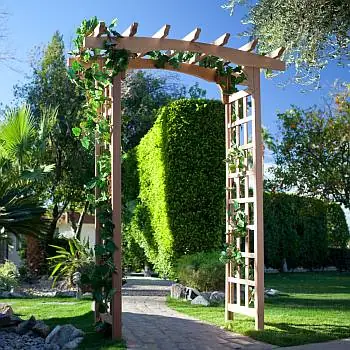
If you want something a little more permanent and a lot more photogenic, build a basic arch out of untreated cedar posts.
It doesn’t need to be complicated.
Two vertical posts and a crossbeam will do the job.
This is the option for anyone dreaming of a rose covered entrance or a grape vine you can walk under with a glass of wine in hand.
It’s an investment of time and a little money, but it becomes the centerpiece of your whole garden.
Set your posts at least two feet deep if you’re in a windy area, because a mature vine gets heavy fast and a shallow post is asking for trouble down the road.
A cheatsheet you can use to your advantage
Here’s my cheatsheet, based on what I’d tell a friend standing in their backyard asking me which is the best trellis alternative they should go for:
Tight budget, need it fast: Bamboo teepee or string and cup hooks.
Small balcony or patio: Tension wire against the wall.
You want it to look intentional and pretty: Cedar branches or a bike wheel hoop.
Heavy vines like squash or melons: Cattle panel or concrete mesh, no contest.
You’re broke but resourceful: A free pallet, just check for that HT stamp.
You want a whole vibe, not just a support: Build the arbor.
Parting shot
Whatever you choose, get it in the ground before your plant starts reaching for something to grab onto.
There’s a short window, about a week, where training a young vine onto a support is easy.
Miss it, and you’ll spend the rest of the season wrestling stems into place instead of just letting them grow.
Pick the option that fits your space, your budget, and your patience level.
Your plants genuinely don’t care what their support looks like.
They just want something to hold onto. Don’t complicate it.
FAQs
What can I use in place of a trellis?
Cattle panels, bamboo teepees, old ladders, wooden pallets, tension wire on a wall, or even a living plant like corn or sunflowers.
Pick based on how heavy your climber gets and how much space you’re working with.
What is similar to a trellis?
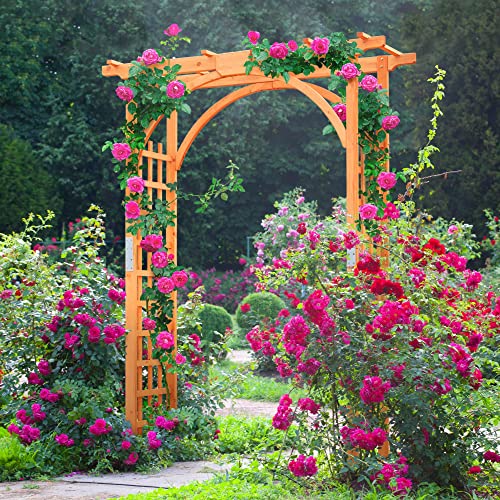
An obelisk, a tuteur, a wall of tension wire, or a cattle panel arch.
They all do the same basic job, giving a plant something vertical to climb.
What can I use for a cheap trellis?
Bamboo stakes tied together with twine, a free wooden pallet, or cup hooks and string.
All three cost under 15 dollars and take about twenty minutes to set up.
How can I make my own trellis?
Grab whatever rigid material you have on hand, wood stakes, branches, leftover wire fencing, and give it some kind of grid or ladder shape for vines to grip.
Anchor it deep enough that a gust of wind won’t take it down, and you’re basically done.
What material to make a trellis?
Untreated cedar, bamboo, galvanized wire, or metal cattle panel are your best bets.
Cedar resists rot naturally, bamboo is lightweight and cheap, and metal options last the longest if you don’t mind the industrial look.
What is the best kind of trellis?
Honestly, it depends entirely on what you’re growing.
Heavy fruiting vines like squash need something sturdy like a cattle panel.
Light climbers like sweet peas do just fine on twine.
There’s no single best, only best for your plant.
What is the difference between a trellis and arbor?
A trellis is a flat panel your plant climbs against, usually leaned or mounted on a wall or in a bed.
An arbor is a freestanding structure with two sides and a top, like a small archway you can walk through.
Is a pergola a trellis?
Not exactly.
A pergola is a much bigger, open roofed structure meant to create shade over a patio or walkway.
It can support climbing plants like a trellis does, but it’s built more for people to sit under than for a single plant to climb.
Can a trellis be free standing?
Yes.
Plenty of trellis styles, like an obelisk or a bamboo teepee, stand on their own without needing a wall or fence for support.
These come in handy in the middle of a garden bed where there’s nothing to lean against.
Is it cheaper to make your own trellis?
Almost always, yes. A store bought trellis can run you 30 to 100 dollars depending on the material.
Building your own from bamboo, branches, or a free pallet usually costs a fraction of that, sometimes nothing at all.
How to make a trellis at home with sticks?
Gather sturdy branches or bamboo, push several into the soil in a circle or a row, and tie the tops together with twine or wire.
A simple teepee shape works great for beans and peas, and it takes less time than you’d expect.
What are some creative trellis ideas?
An old bike wheel mounted on a post, a wooden ladder leaned against a wall, an embroidery hoop for a small potted vine, or tension wire strung in a geometric pattern across a bare fence.
From this you can tell that your garden can double as a piece of art if you let it.
What is an alternative to a garden trellis?
Any vertical structure your plant can grip works, including fencing, cattle panels, netting, string grids, or even another sturdy plant growing right next to it.
The trellis itself isn’t magic, it’s just a shape for the plant to follow.
What can be used as a trellis?
Fencing, pallets, ladders, tension wire, string, cattle panels, concrete reinforcing mesh, or a strong neighboring plant.
If it’s vertical and your climber can grab onto it, it counts.
How big should a trellis be?
Match the height to your plant’s mature size, not its current size.
Cucumbers and pole beans usually need six to eight feet of vertical space.
Peas and smaller flowering vines are happy with four to five feet.
What is a large trellis called?
Once a trellis gets big enough to walk through or under, it’s usually called an arbor, an arch, or a pergola depending on the shape and how open it is.
How to make a pergola trellis?
Set four sturdy posts in the ground in a rectangle, connect them with horizontal beams at the top, and add crossbeams or lattice panels between the posts for climbing plants to grip.
This is a bigger project, so plan on a full weekend and a helper.
What are common trellis building mistakes?
Spacing the support posts too far apart, not anchoring deep enough into the soil, and using a material that traps humidity around the leaves.
Building the whole thing after the plant has already started reaching for something to climb is also wrong.
Timing and depth solve most of these before they start.
What’s the difference between a pergola and a trellis?
A trellis is a single flat support panel.
A pergola is a full overhead structure with posts and open roof beams, built more for shade and outdoor living space than for supporting one plant.
What is the difference between a trellis and a lattice?
Lattice refers to the crisscross pattern itself, usually thin strips of wood or vinyl woven into a diamond grid.
A trellis is the whole structure, and lattice is often just the material used to build one.
What is another name for a trellis?
Obelisk, tuteur, arbor (for the bigger versions), or simply a plant support.
Garden centers use these terms almost interchangeably depending on the shape.
How to make an indoor trellis?
A small tomato cage, a bundle of chopsticks tied together, or a mini bamboo teepee stuck into a houseplant’s pot all work beautifully.
Keep it proportional to the pot size so it doesn’t tip the whole thing over.
Related Posts: