
What Is the Best Shape for a Trellis?
Last Updated on July 2, 2026 by Duncan
If you’ve been trying to figure out what shape trellis to buy, I need you to stop for a second.
Because here’s the thing nobody tells you: the trellis that looks perfect in the photo is often the exact wrong shape for what you’re planting.
I’ve watched this happen in my own garden and in many client gardens over the years.
Cute trellis, sad plant, confused homeowner standing in the yard wondering what went wrong.
So let’s actually fix that. Grab your coffee.
The big mistake most people make
Most articles will tell you to pick your trellis shape based on the plant. Climbing rose? Get an arch. Clematis? Get an obelisk. Tomatoes? Get a cage.
That’s not wrong exactly. But it’s missing the part that actually matters.
Your trellis isn’t just holding up a plant on day one.
It’s holding up a plant that’s going to triple in size, get heavier, catch more wind, and lean on that structure way harder in August than it did in May.
I call this the plant’s “growth curve,” and it’s the one thing that separates a trellis that lasts five seasons from one that’s lying face down in your flower bed after the first real storm.
You need to always consider these when choosing the right shape of trellis for your plants. Some of the options that you have include:
Obelisks
:max_bytes(150000):strip_icc():format(webp)/diy-trellises-for-your-garden-5187165-hero-4191e6c443554642a8166879f897d8a8.jpg)
Obelisks are the trellis equivalent of a little black dress.
They look good everywhere, which is exactly why people overuse them.
Here’s what nobody mentions:
Most obelisks you buy at garden centers have a narrow base compared to their height.
That’s fine for a light annual vine like sweet peas or morning glory.
It is not fine for a mature clematis that’s about to put on a growth spurt, or anything that gets top-heavy by midsummer.
If you love the obelisk look, just check the base width before buying. If it looks skinny compared to the height, either size up or plan on staking it down further.
Your future self will thank you the first time the wind picks up.
Best for: Light vines, annual flowers, small containers, patio pots
Skip it for: Heavy climbers, anything fruiting, windy yards
Flat panel trellises

You know the classic lattice panel you lean right up against your fence or house?
I get why you want to do it.
It looks tidy, saves space, feels intentional.
But here’s what actually happens.
When you jam a trellis flush against a wall, you create a tight little wind tunnel in that gap.
Once your plant fills in and gets leafy, wind gets funneled through that narrow space and speeds up instead of slowing down.
This is why a trellis that survived every storm for two years suddenly topples the one time you had a big gust.
It’s not bad luck. It’s physics.
My rule of thumb: Leave a hand’s width of space, at minimum, between the panel and the wall.
Your plant gets better airflow, less mildew, and your trellis stops acting like a sail.
Best for: Espalier fruit trees, structured climbers, small space gardens
Skip it for: Placing flush against a solid wall (leave that gap, I mean it)
Arches
:max_bytes(150000):strip_icc():format(webp)/lush-garden-stone-steps-c10c8634-27d767ffabb64c2dbf873d8c5631461f.jpg)
An arch is the showstopper of the trellis world.
Roses tumbling over a garden arch are elegant to look at.
But an arch only works if you’re honest about how much plant weight it needs to hold, and for how many years.
A cheap thin metal arch holding a mature climbing rose is a disaster waiting to happen. I’ve seen them bend like a sad rainbow by year three.
If you want the arch look, spend the extra money on a sturdier one, or accept that you’ll be pruning aggressively every year to keep the weight manageable.
There is no shame in a well-pruned rose.
Your arch will last longer and honestly still look just as romantic.
Best for: Entryways, walkways, statement pieces, roses and wisteria (with regular pruning) Skip it for: Budget thin metal arches if you want a heavy climber long term
A-frames and tunnels
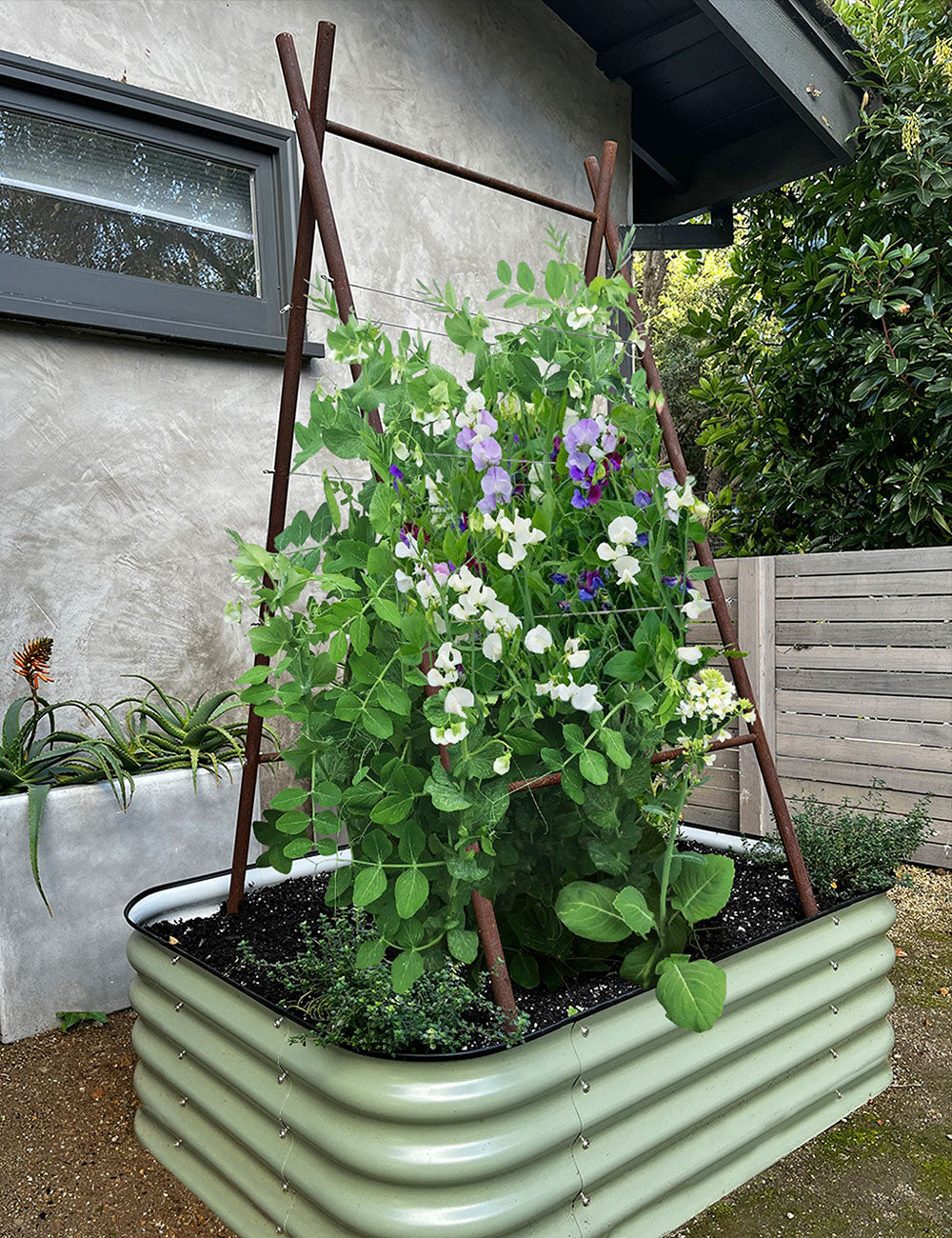
If you’re growing anything that fruits, like squash, cucumbers, or pole beans, this shape is your best friend.
Here’s why.
A-frames are self-bracing.
If one side shifts a little in soft or rain-soaked soil, the other side is still holding everything up.
It’s basically a trellis with a backup plan built in.
They also solve a problem you’ve probably had without realizing what caused it.
Ever notice how the top of your climbing plant looks lush and the bottom looks bare and sad?
That’s because flat trellises shade themselves out as the top fills in.
A-frames and tunnel shapes let light hit the whole plant more evenly, top to bottom, because of the angle.
Less bare bottom growth, more even coverage. Not glamorous, but it works.
Best for: Vegetable gardens, fruiting vines, anything heavy, anyone who’s had that “why is the bottom half dead” problem
Skip it for: Small decorative spaces where you want a delicate look
Fan trellises
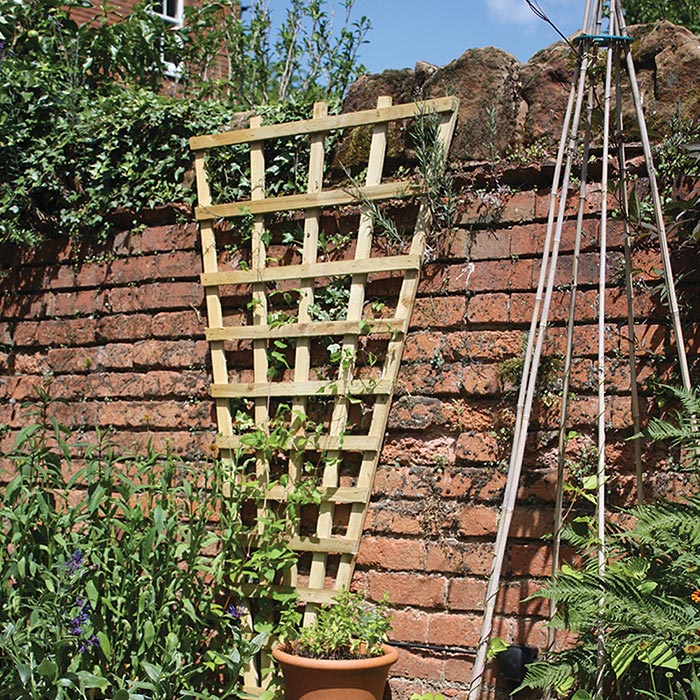
If you’re working with a tight balcony or a narrow side yard, fan-shaped trellises come in handy.
They spread the plant out wide instead of tall, which means better light exposure without needing a ton of vertical room.
They’re also fantastic for anything you’re training against a wall on purpose, like a fig tree or a fan-trained fruit tree.
Just remember that gap rule from earlier. Keep it off the wall a little.
Best for: Small yards, balconies, fan-trained fruit trees
Skip it for: Anything that needs a lot of vertical climbing room
So, which trellis should you get?

Here’s my honest answer.
Stop picking your trellis based on what looks cute in a styled photo.
Pick it based on what your plant is going to become in three months, not what it looks like the day you plant it.
Ask yourself these three things before you buy anything:
- Is this plant going to get heavy? If yes, go wider at the base, not narrower.
- Is this spot windy? If yes, avoid flat panels pressed against walls, and lean toward A-frames or diagonal lattice patterns instead of straight up and down grids.
- Is this a fruiting plant? If yes, skip the delicate decorative lattice and get something with reinforced joints.
Parting shot
I know it’s tempting to buy the trellis that matches your garden aesthetic first and worry about function later.
I’ve done it too, more times than I’d like to admit.
But a trellis that fails halfway through the season isn’t saving you money or time.
It’s costing you a whole summer of work and a plant you probably grew from a tiny seedling with a lot of hope.
Pick the shape that matches what your plant is going to become, not just what it looks like today.
Your garden will thank you, and so will your Pinterest board, because nothing photographs worse than a trellis lying in the dirt.
FAQ
How high should a trellis be?

Depends entirely on what you’re growing, but here’s a simple gut check.
Look up your plant’s mature height and add a foot.
Most flowering vines do great with a trellis between 6 and 8 feet.
Vegetables like cucumbers and beans are usually happy around 5 to 6 feet.
Anything shorter and you’ll be constantly fighting the plant for control, trying to redirect growth that just wants to keep going up.
Go too tall and you’ve wasted money on height your plant will never use. There’s no prize for the tallest trellis on the block.
What do you use instead of a trellis?
If you’re not ready to commit to a full trellis, you’ve got options.
Cattle panels bent into an arch work beautifully and cost way less.
A simple string and stake setup does the job for lighter annual vines like sweet peas.
Even an old ladder leaned against a fence can become a trellis in a pinch.
I’ve used one in my own garden for two summers and it’s honestly one of my favorite pieces.
The main thing any of these need to do is give your plant something to grip and enough height to grow into. The fancy part is optional.
How do you choose a trellis?
:max_bytes(150000):strip_icc():format(webp)/PVCoutdoortrellis-d48062b396684e848128292de73a3001.png)
Start with your plant, not with what’s cute at the store.
Ask how heavy it’ll get, whether it fruits, and how windy your spot is.
Heavy or fruiting plants need a wide base and reinforced joints.
Windy spots need diagonal patterns instead of straight grids.
Light annual vines can get away with almost anything, including the cheap options.
If you’re still torn between two shapes, pick the one with the wider base. It’s rarely the wrong call.
What are common trellis building mistakes?
The biggest one I see is placing a flat panel trellis flush against a wall with zero gap.
That little space matters, because it stops wind from getting funneled and trapped once the plant fills in.
Second most common mistake is undersizing the base for how big the plant will actually get. People buy for the seedling, not the mature plant.
Third one, and this trips up so many first timers, is spacing the grid too wide for twining vines.
If the openings are bigger than about a fist width, the plant can’t find anything to grab and just flops around looking sad.
Are metal trellises better than wooden ones?
:max_bytes(150000):strip_icc():format(webp)/Bamboogardentrellis-c8e6a0a40e0a4868aa39cebda50a03d3.png)
Neither one wins across the board, so it depends on what you need.
Metal trellises last longer, handle heavy plants better, and don’t rot.
Great for anything permanent or anything fruiting and heavy.
Wooden trellises look warmer, are usually cheaper, and are easier to modify or repair yourself.
They’re a great fit for lighter annual plants or if you like changing up your garden layout every year.
If you want one trellis to just last and not think about again, go metal.
If you like a rustic look and don’t mind replacing it every few years, wood is completely fine.
What are the different types of trellis?
The main shapes you’ll come across are obelisks, flat panels, arches, A-frames or tunnels, and fan trellises.
Obelisks are the tall pyramid shaped ones, great for light vines and container plants.
Flat panels are the classic lattice look, good for espalier and structured climbers.
Arches are the statement piece for entryways and roses.
A-frames and tunnels are the workhorse shape for anything heavy or fruiting.
Fan trellises spread wide instead of tall, perfect for small spaces.
Pick based on your plant’s needs first, and let the look be the tiebreaker.
How do you stabilize a trellis in the ground?
:max_bytes(150000):strip_icc():format(webp)/BrightGardentrellis-376d97ac6dcb4610b6874e99774f6bb1.jpg)
Depth matters a lot.
You want at least a third of the total trellis height buried or anchored, especially for anything freestanding.
For soft or sandy soil, use concrete footings or wide anchor plates instead of just pushing the legs into the dirt.
Rain softens soil more than you’d guess, and a trellis that felt sturdy in June can wobble badly by August after a wet week.
If you’re working with a lightweight trellis, driving stakes at an angle on either side gives you extra hold without much extra work.
How tall should a trellis be?
Same answer as the height question above, so I’ll keep it quick.
Match it to your plant’s mature height plus a little extra room, generally 5 to 8 feet for most home garden plants.
If you’re not sure how tall your plant gets, check the seed packet or plant tag.
It’s usually right there and saves you a guessing game later.
How do you strengthen a trellis?
Widen the base if you can, since that’s the single biggest factor in stability.
Add cross bracing or diagonal supports if your trellis only has straight up and down bars.
For an existing wobbly trellis, driving in a couple of extra stakes at an angle works better and takes ten minutes.
You can also anchor it to a nearby fence or wall for extra support, as long as you keep that airflow gap we talked about earlier.
How do you position a trellis?
:max_bytes(150000):strip_icc():format(webp)/Entrytrellis-8393d2e6dc7040b99f0f75f2c32186ea.png)
Face it so your plant gets good sun exposure for most of the day, ideally with the open side facing south if you’re in the northern hemisphere.
This keeps light hitting the whole plant evenly instead of just the top.
Leave breathing room from walls and fences, at least a hand’s width, so air can move through once the plant fills in.
And think ahead about mature width too, not just height, so your trellis isn’t crowding a walkway or blocking a window by midsummer.
How do you build a trellis cheaply?
Cattle panels are the best budget secret in gardening, hands down.
Bend one into an arch or prop it straight up and you’ve got a sturdy trellis for a fraction of the cost of a store bought one.
Bamboo stakes tied together in a teepee shape work great for lighter plants and cost almost nothing.
Even repurposed materials like an old bed frame or ladder can become a trellis with a little creativity.
The main thing to spend money on, if anything, is sturdy anchoring. Everything else can be improvised.
How far apart should a trellis be?
If you mean grid spacing, aim for openings no wider than about a fist width for twining vines to actually grab on.
Wider than that and the plant tends to search around and miss the structure entirely.
If you mean spacing between multiple trellises in a row, give each one enough width for the plant’s mature spread, usually 2 to 4 feet apart depending on what you’re growing.
Crowd them too close and you’re fighting airflow problems all over again.