What Is the Best Color to Paint a Bird Bath?
Last Updated on August 11, 2026 by Duncan
Everyone wants their bird bath to pop.
To be the star of the garden. A little statement piece.
Unfortunately, birds do not care about your garden aesthetic.
What they care about is survival. And a bright, eye-catching bird bath doesn’t just catch your eye.
It catches a hawk’s eye too. A cat’s eye. Every predator scanning your yard for lunch.
I’ve watched this play out too many times.
Homeowner paints their bath a gorgeous turquoise, sets it in the middle of the yard, feels proud.
Six months later they’re wondering why no birds ever show up.
The bath isn’t the problem. The color is screaming “look at me” to everything, not just the finches.
As a bird lover your goal is to make protect the birds by ensuring that the bird bath blends into the background, not stand out from it.
Think about the plants, fences, and mulch already in your yard. What tones show up the most? Soft greens? Warm browns? Muted grays?
Your bird bath should sit somewhere in that same family.
The best bird bath colors
Soft slate gray: Blends into almost any yard, shows dirt and algae early, and looks classy without trying too hard.
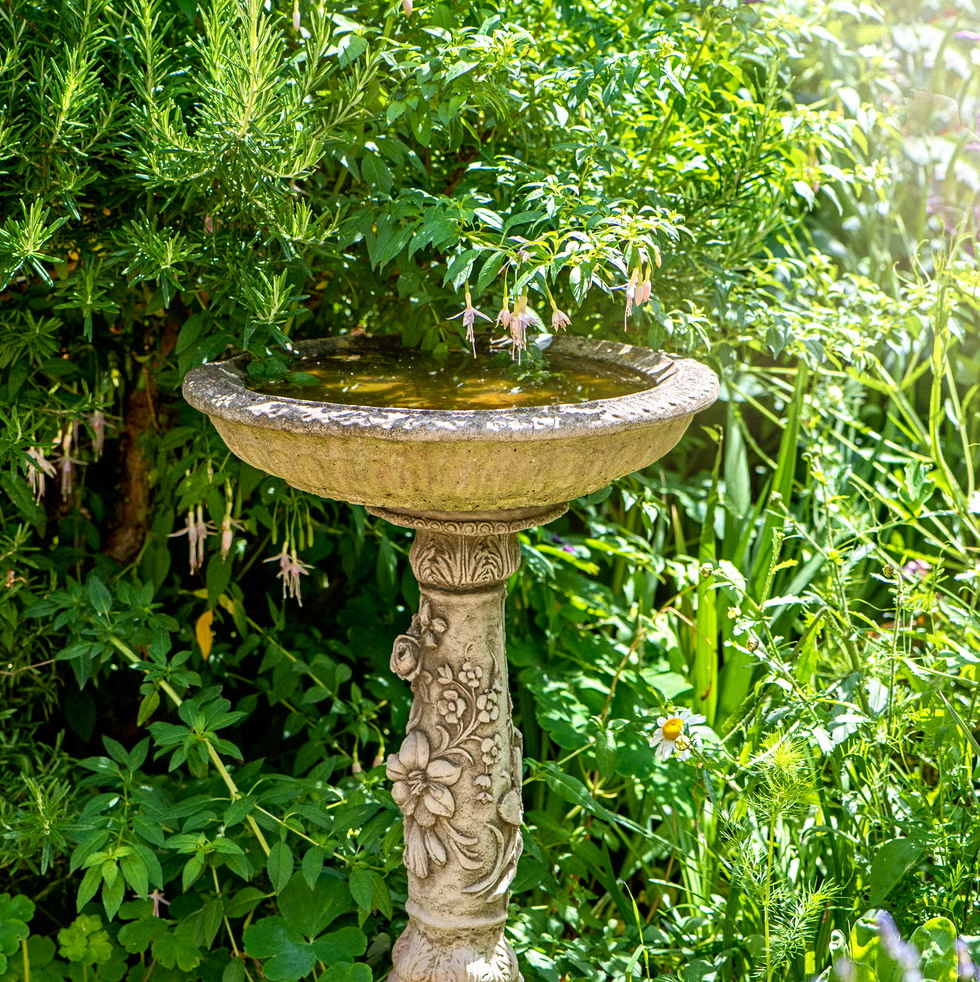
Warm sandy tan: Beautiful next to greenery, doesn’t overheat in the sun, and reads as natural instead of decorative.
Muted sage green: A gentler green than the bright stuff, works well in garden settings, just watch it closely for algae since it’s still in that green family.
Weathered stone gray-brown: My personal favorite for yards with a lot of natural landscaping. It practically disappears into rock beds and garden borders.
Any of these, painted in matte, with a lighter interior, will outperform a trendy bright color every single time. Every time.
| Garden setting | Color I recommend |
| General backyard garden | Muted blue-green |
| Green, leafy garden | Sage green |
| Modern garden | Soft gray-green |
| Stone or concrete surroundings | Warm gray |
| Dark foliage background | Medium earthy green or gray |
| Sunny location | Light to medium natural tone |
| Rustic garden | Muted tan or warm gray |
Why blue isn’t the best color to paint your bird bath
You will find plenty of advice telling you to paint a bird bath blue because birds associate blue with water.
It sounds convincing.
There is one problem.
Birds do not need your bird bath to be blue to recognize water.
Birds use vision, movement, reflections, surrounding vegetation, and environmental cues when navigating their surroundings.
A bird approaching your garden is not looking for a blue bowl with a sign saying “WATER HERE.”
It is assessing the entire area.
That includes the water itself, the rim, nearby branches, ground cover, shadows, movement, and potential escape routes.
So if you love blue, go ahead and use it.
Just don’t choose blue because you believe it is a guaranteed bird magnet.
In addition to painting your bird bath blue, you have to strategically place it in an area where the birds feel safe.
Skip white
White sounds clean.
Unfortunately, a bird bath isn’t a kitchen sink.
A bright white bird bath tends to create strong visual contrast and may show mineral deposits, dirt, algae, and droppings quickly.
Despite this, there is one advantage, though.
Because contamination is easy to see, a light-colored basin can encourage you to clean it more frequently.
If you love white, you can use it.
Just understand that you may spend more time maintaining its appearance.
What about black?

Black bird baths can look stunning.
I’ve seen them work beautifully in contemporary gardens, especially against pale stone, light gravel, or colorful flowers.
But I would not make black my first recommendation for a bird bath sitting in full sun.
Dark surfaces absorb more solar radiation than lighter surfaces, and the combination of a dark basin and intense sunshine can contribute to heating.
That creates a bigger problem than aesthetics.
You want birds bathing in comfortable water, not taking a hot soak.
If you love a black bird bath, placement becomes especially important.
Give it some shade during the hottest part of the day.
Skip green and teal

I get it.
Green feels like the obvious choice. It matches the grass, the leaves, nature, all of it.
But green and teal do something sneaky. They hide algae.
Algae loves to creep in quietly, and a green-tinted bath camouflages it perfectly.
By the time you notice your bird bath looks a little off, that algae has probably been growing for a week or two already.
Birds notice before you do, and they’ll stop showing up long before you spot the problem.
A soft gray, tan, or stone color will show algae early, so you catch it and clean it before it becomes a whole situation.
Trust me, cleaning early is way less gross than cleaning late.
Skip the shiny finish
This one’s simple. Skip the shiny finish.
Glossy paint reflects light in a way that mimics movement, almost like something flashing or watching.
Birds are wired to notice movement because in the wild, movement often means danger.
A glossy bird bath at sunrise or sunset, which happens to be peak bathing time, can look like it’s flickering. That’s enough to keep a cautious bird away entirely.
Matte finishes stay calm and still looking, no matter the time of day. Always choose matte.
Be careful about painting the inside
Here’s a tip most people never think about, and it’s the one thing I always tell clients who ask me this.
The outside of your bath is about matching your yard. The inside of your bath is about making the water feel safe.
A dark interior with light water sitting on top can trick a bird into thinking the water is deeper than it is.
And a nervous bird doesn’t stick around to find out. It hops in, hops out, and leaves.
Paint the inside a shade or two lighter than the outside. It keeps things looking shallow, friendly, and low risk.
Birds relax faster in shallow-looking water, and a relaxed bird is a bird that actually bathes instead of just dipping a toe in and bailing.
The inside of the basin has direct and repeated contact with water.
You should never assume that a random outdoor paint is suitable simply because the label says it is weather-resistant or non-toxic.
Those descriptions do not automatically mean the product is intended for continuous water exposure.
Before painting the interior, check the manufacturer’s instructions for:
- Water immersion
- Potable water contact
- Outdoor use
- Required primer
- Required curing period
- Compatibility with concrete, ceramic, metal, or other surfaces
If the product is not intended for the type of water contact your bird bath will experience, don’t improvise.
The safest decorative approach is often to use an appropriate coating system designed for the specific surface and exposure.
When should you repaint?
Once a year, ideally in early spring, before nesting season kicks into gear.
That’s when birds are actively scouting for reliable water sources, so a fresh, well matched bath makes its best first impression right on time.
And once you paint it? Let it cure for about a week before filling it with water.
Fresh paint can off-gas a bit, and birds pick up on smells and chemical scents way faster than we do.
A quick word on trends
:max_bytes(150000):strip_icc()/spr-mumtop-hanging-bird-bath-dena-ogden-06-758dd2a1ffc64623aefbe12af0a5fd85.jpeg)
Pinterest is full of bright, bold, hand painted bird baths with polka dots, stripes, and rainbow swirls.
They’re adorable. I’m not here to ruin your fun.
But if your actual goal is a yard full of visiting birds, save the wild patterns for a garden ornament and let your bird bath do its real job in a calm, natural color.
You can absolutely have both. Just don’t expect the neon one to pull in the visitors.
Parting shot
Color isn’t decoration here. It’s a signal.
A well matched, matte, softly colored bird bath tells birds “this is safe, this is calm, come on in.”
A bright, glossy, attention grabbing one sends the opposite message, even if it looks stunning in your garden photos.
Pick a color that disappears a little. Your birds will notice, even if your neighbors don’t.
Related Posts: