How to Make a Bird Bath That Birds Actually Use
Last Updated on July 23, 2026 by Duncan
You can spend hours building a beautiful bird bath, place it in the perfect flower bed, and never see a single feather splash in it.
I’ve watched this happen countless times.
The bird bath wasn’t the problem. Its location and design were.
Birds don’t care whether your bird bath matches your patio furniture.
They care whether it feels like a place they can visit without getting attacked.
Once you understand how a bird judges a water source, everything changes.
You don’t need an expensive fountain or an elaborate design.
You simply need to create a place your feathered visitors trust.
Here’s how to build a bird bath that the birds will use and return to every day.
Think like a bird
.jpg)
Before you gather supplies, picture life from a bird’s perspective.
You’re smaller than a golf ball.
Neighborhood cats patrol the garden.
Hawks circle overhead.
Even a squirrel can become a problem.
Now imagine spotting a pool of water sitting in the middle of an open yard.
Would you fly straight in?
Probably not.
Most backyard birds spend far longer inspecting a bird bath than using it.
They’ll perch nearby, watch the area, and wait until they’re convinced it’s worth the risk.
That means your bird bath isn’t simply a source of water.
It’s a test of trust.
Security comes first
One of the biggest myths in backyard birding is that fresh water is all you need.
Clean water matters.
Feeling secure matters first.
Every time a bird approaches your yard, it silently asks four questions.
- Can I spot danger before it reaches me?
- Is there an easy escape route?
- Can I land without slipping?
- Is this water worth using?
Notice where water falls on the list.
If the first three answers are “no,” your bird bath might stay empty no matter how often you clean it.
Be strategic with your location choice

If you remember only one tip from this guide, make it this one.
Don’t build the bird bath first.
Choose the location first.
A well-designed bird bath in the wrong spot becomes nothing more than another garden ornament.
Look for an area with open views in every direction.
At the same time, make sure there’s a tree or shrub nearby where birds can retreat if danger appears.
The distance is important.
A tree about ten feet away makes an excellent escape route.
A shrub twelve feet away offers welcome cover.
A shrub two feet away gives a cat the perfect hiding place.
Sometimes moving a bird bath just a few feet is enough to turn an ignored feature into the busiest spot in the garden.
Don’t put it under a tree
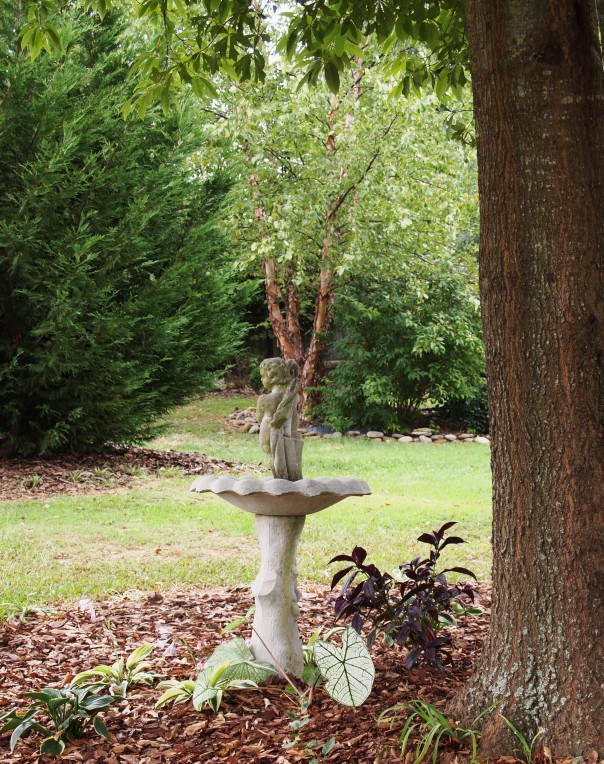
This advice surprises many homeowners.
Trees seem like the obvious choice because birds spend so much time in them.
The problem isn’t the birds.
It’s everything the tree drops.
Leaves collect in the water almost every day.
Sap sticks to the bowl.
Bird droppings quickly make a clean bath unpleasant.
Instead, place your bird bath close enough for birds to reach the tree easily, but far enough away to avoid constant debris.
This way you’ll spend less time scrubbing and more time enjoying the visitors.
Keep the water shallow

Many decorative bird baths are far too deep.
They look attractive in a garden center, but that’s not how most backyard birds prefer to bathe.
They don’t dive beneath the water.
They crouch.
They flutter.
They splash water over their feathers before hopping back onto the rim.
Aim for water that’s about half an inch deep around the edge and gradually slopes to no more than two inches in the center.
Picture a gently sloping beach rather than a swimming pool.
That’s the shape birds instinctively prefer.
Avoid smooth, slippery surfaces

A neighbor of mine once bought a stunning glazed ceramic bird bath.
It looked like it belonged in a magazine.
Weeks passed without a single visitor.
The problem wasn’t the water.
The bowl was too slippery.
After adding a few flat river stones, robins began using it within days.
Good footing gives birds confidence.
If your hand slides easily across the wet surface, tiny claws will struggle even more.
People often choose bird baths with their eyes.
Birds choose them with their feet.
Concrete.
Natural stone.
Unglazed clay.
Textured resin.
These materials provide the grip birds need when they land, drink, and bathe.
Glossy finishes may look elegant, but they rarely inspire confidence.
As mentioned, if you already own a smooth bird bath, a few flat stones on the bottom can make a noticeable difference.
Give the birds room to land
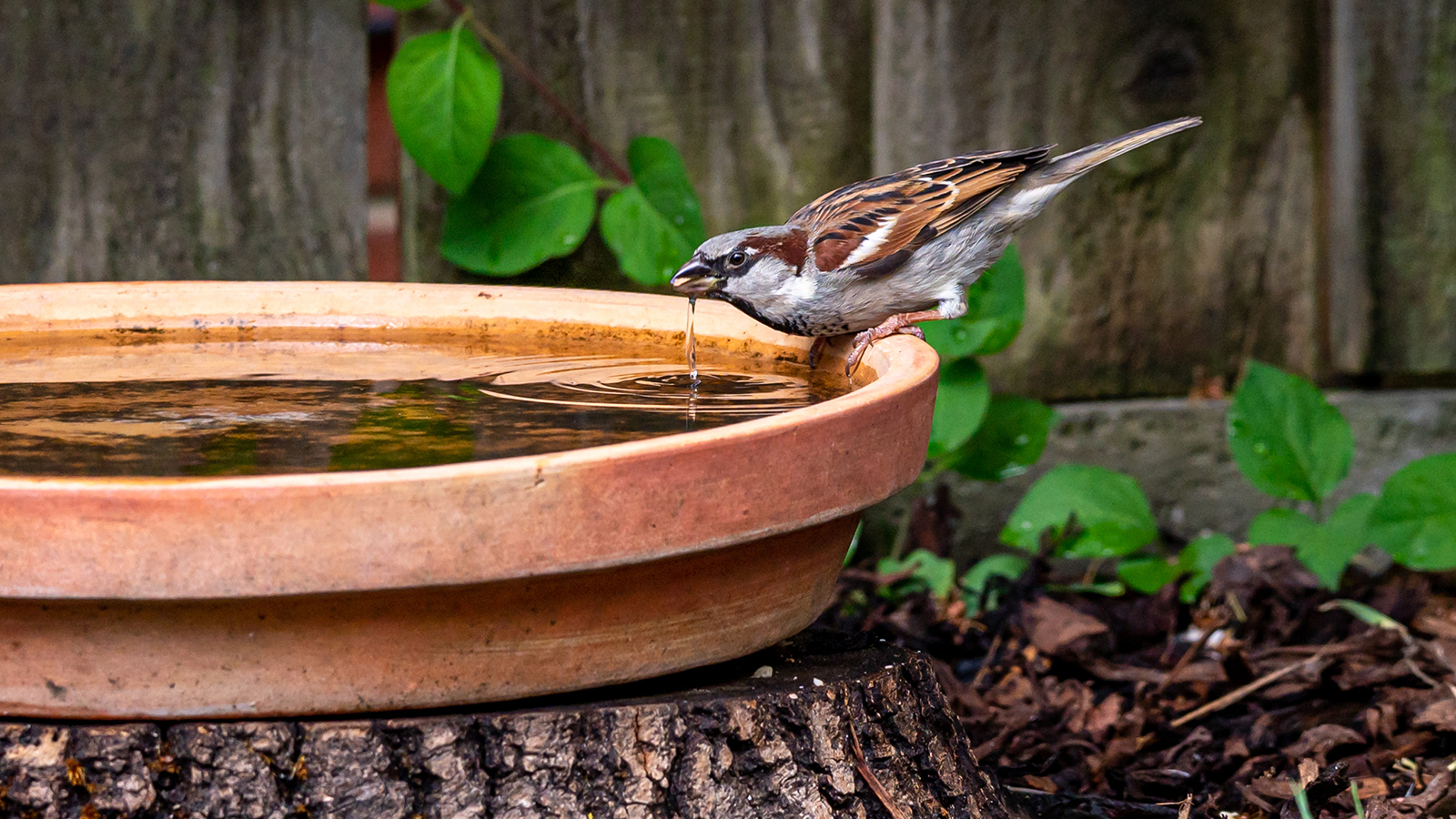
Watch a robin approach a bird bath and you’ll notice something interesting.
It almost never flies straight into the water.
It lands nearby.
Looks around.
Hops closer.
Pauses again.
Only then does it step into the water.
A wide rim gives birds time to make those decisions.
Tiny decorative edges force them into the water too quickly.
The more comfortable they feel during those first few seconds, the longer they’ll stay.
Have a few flat stones inside the bowl
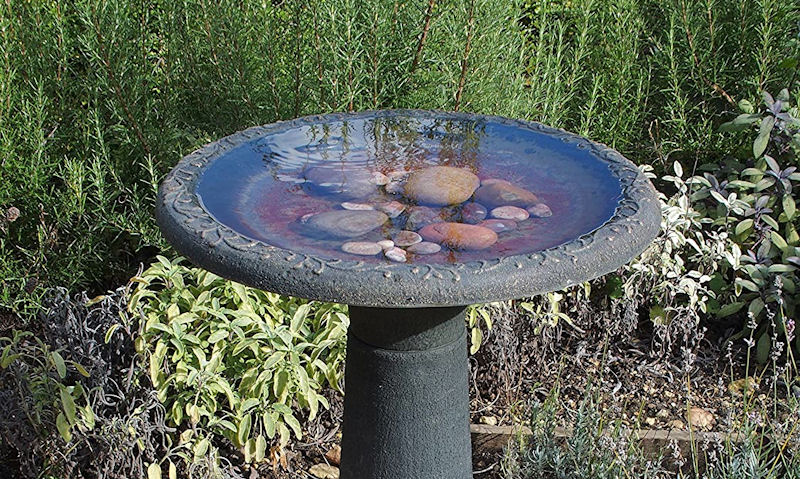
Not every visitor wants the same water depth.
Thankfully, a few flat rocks solve that problem.
They create shallow shelves for smaller birds.
Larger species can move into deeper water if they choose.
Butterflies and bees often use these stones as landing spots too.
Add gentle movement
Here is something that surprised me the first time I noticed it in the field.
You would think birds want calm, peaceful, still water.
Like a little zen pond.
Nope.
Still water is what mosquitoes love.
Birds love movement.
A splash, a ripple, a drip catching the light.
That is what pulls a bird’s eye from across your yard and makes it think “something is happening over there, let me check it out.”
Silence and stillness just make your bird bath blend into the background like a lawn ornament nobody notices.
To attract the birds you need to add movement.
A simple dripper, a small solar fountain, or even a cheap mister attachment will change your bird bath from wallpaper into a magnet.
Even hanging a slow drip bottle above the bath works in a pinch. The sound alone does most of the heavy lifting here.
The gentle ripples suggest fresh, clean water.
I’ve watched quiet bird baths sit untouched for weeks, only to become popular within a day after adding a simple dripper.
Sometimes the smallest change brings the biggest reward.
Give the water some shade
Water heats up quickly during summer.
Dark-colored bowls become especially warm by mid-afternoon.
Cooler water stays fresher, slows algae growth, and feels inviting on hot days.
A spot with morning sunshine and light afternoon shade usually offers the best balance.
It’s also much easier to maintain throughout the season.
Avoid making birds feel cornered

Imagine sitting in a restaurant with only one exit.
You’d probably spend the entire meal watching the door.
Your feathered visitors think the same way.
Leave plenty of open flying space around the bird bath.
This calls for you to avoid surrounding it with tall flower pots, thick ornamental grasses, or dense shrubs.
The easier it is to escape, the more relaxed birds become.
And relaxed birds spend far longer bathing.
One concept has transformed the way I place every bird bath.
I call it the Escape Triangle.
Picture three points.
The first is your bird bath.
The second is a nearby perch where birds can stop and look around.
The third is a tree or shrub that offers quick shelter if danger appears.
Birds naturally move between these three locations.
Perch.
Bathe.
Retreat.
When your garden provides all three, your bird bath becomes part of their daily routine instead of something they cautiously investigate once and ignore.
Be cautious of cats

Even if you don’t own a cat, there’s a good chance one wanders through your neighborhood.
Your feathered visitors know it.
Before placing your bird bath, crouch down and look around at ground level.
Could a cat hide behind that shrub?
Could it wait behind a tall clump of ornamental grass?
If the answer is yes, move the bird bath.
A few extra feet of open space can make all the difference.
Keep it clean
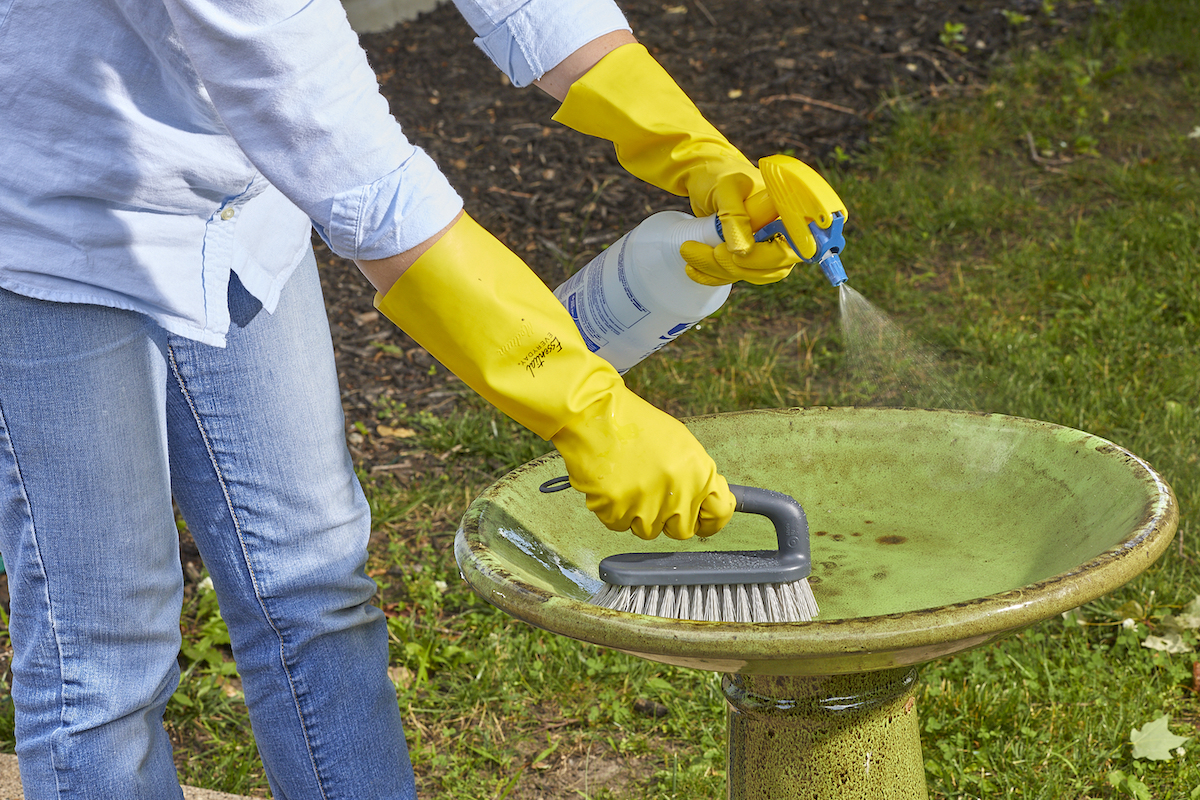
Birds don’t need sparkling water.
They need clean water.
Empty the bath every two or three days.
Give it a quick scrub with a stiff brush and refill it with fresh water.
During hot weather, changing the water every day is even better.
If algae starts to build up, scrub the bowl using a solution of one part household bleach to nine parts water.
Rinse it several times until there’s no trace of bleach left.
Let the bowl dry before adding fresh water.
Skip dish soap.
Even a small amount of soap residue can interfere with the natural oils that keep feathers waterproof.
Be patient

One of the biggest mistakes people make is giving up too soon.
It’s easy to assume something is wrong after a few quiet days.
Sometimes birds discover a new water source within hours.
Other times, it takes a week or two.
Once one bird decides your bath is safe, others usually follow.
Birds watch one another.
When they see another bird drinking or bathing without trouble, they’re much more likely to give it a try.
Resist the temptation to keep moving your bird bath around the yard.
Consistency helps birds include it in their daily routine.
Build for birds

Some of the busiest bird baths I’ve ever seen wouldn’t win a garden design award.
They’re plain.
They’re simple.
And they’re full of life.
On the other hand, I’ve seen stunning decorative bird baths that remained untouched all summer.
Why?
They were too deep.
Too slippery.
Too exposed.
Or simply in the wrong place.
Your feathered visitors aren’t looking for designer finishes or trendy colors.
They’re looking for a place where they can land with confidence, enjoy a quick splash, and leave safely.
When you focus on those needs, your garden changes.
The bird bath becomes part of a daily routine.
Soon you’ll recognize familiar visitors arriving at the same times every morning.
One robin may stop by just after sunrise.
A pair of goldfinches might arrive before lunch.
Later in the afternoon, chickadees could turn the bath into their neighborhood gathering place.
Those moments are far more rewarding than owning the prettiest bird bath on the block.
A few details that make a difference
Most DIY guides stop after telling you to add water.
That’s only the beginning.
These little touches can make your bird bath far more inviting.
Add a perch
:max_bytes(150000):strip_icc():format(webp)/diy-bath-serving-dish-5b5c85c646e0fb002c63d365.jpg)
A small branch, shepherd’s hook, or low fence gives birds a place to land before approaching the water.
Think of it as a waiting room.
Many species prefer to observe the area before committing to a bath.
Use natural colors

Gray.
Tan.
Weathered stone.
Soft brown.
These colors blend into the garden while making the water easy to see from above.
Bright colors and highly reflective finishes can make some birds more cautious.
Keep feeders nearby
Food and water naturally attract the same visitors.
That doesn’t mean they should share the same space.
Place bird feeders several feet away.
This keeps seed out of the water and reduces the amount of droppings around the bath.
Your maintenance routine becomes much easier.
Don’t forget winter
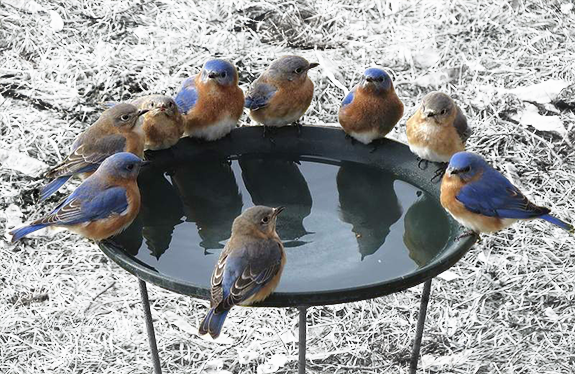
Many homeowners pack away their bird bath when cold weather arrives.
That’s often when wildlife needs it most.
In areas where water freezes, a heated bird bath can become one of the busiest spots in the yard.
Liquid water is surprisingly difficult for birds to find during winter.
Providing it gives them one less challenge to overcome.
Final thoughts
Building a bird bath isn’t about creating a beautiful garden ornament.
It’s about creating a place where wildlife feels comfortable stopping every day.
Keep the water shallow.
Choose a textured surface.
Give birds a clear view of their surroundings and an easy escape route.
Refresh the water often and be patient while your new visitors discover it.
Do those simple things well, and your homemade bird bath won’t stay empty for long.
Before you know it, you’ll find yourself pausing with your morning coffee, watching robins splash, finches chatter, and chickadees dart in for a quick drink.
Those everyday moments are what make a backyard feel alive.
FAQs
What kind of bird baths do birds like the most?
Birds prefer simple, practical bird baths over fancy decorative ones.
Look for a shallow bowl with gently sloping sides, a rough surface for grip, and water no deeper than about 2 inches in the center.
Natural materials like concrete, stone, and unglazed clay are excellent because they provide secure footing.
If you have to choose between a beautiful bird bath and one that’s easy to use, choose the practical one.
Your feathered visitors will thank you.
How do I attract birds to a bird bath?
The fastest way to attract birds is to make the bath easy to find and comfortable to use.
Start with these simple improvements:
- Add a slow dripper or small solar bubbler.
- Keep fresh water in it every day.
- Place it where birds have a clear view in every direction.
- Position it about 10 to 15 feet from nearby shrubs or trees.
- Add a few flat rocks for smaller birds to perch on.
Moving water is often the biggest game changer because birds can spot it from much farther away than still water.
How long does it take for birds to discover a bird bath?
Every yard is different.
Some birds discover a new bird bath within hours.
Others may take a week or two.
Once one bird begins using it, others often follow.
Birds pay close attention to where other birds find food and water.
Be patient and avoid moving the bath every few days.
A consistent location helps wildlife make it part of their daily route.
Why won’t birds come to my bird bath?
The location is usually the problem, not the bird bath itself.
Take a careful look around your yard.
Ask yourself:
- Is it hidden behind plants?
- Is it sitting beneath a tree that drops leaves?
- Can a cat sneak up unnoticed?
- Is the bowl too deep?
- Is the surface slippery?
- Has the water become dirty?
Correcting just one of these problems can make a surprising difference.
What are the disadvantages of a bird bath?
A bird bath isn’t something you can fill once and forget.
Without regular care, algae can grow, leaves can collect, and mosquitoes may begin breeding.
Dirty water can also spread disease among birds that share the same water source.
Fortunately, most of these problems disappear with fresh water and a quick scrub every few days.
What is the best color for a bird bath to attract birds?
Natural colors blend beautifully into the garden and make birds feel comfortable.
Gray, tan, weathered stone, and soft brown are all excellent choices.
Very dark bowls heat up quickly during summer, while shiny or highly reflective finishes can make some birds hesitate before landing.
What should you put in a bird bath besides water?
Simple additions work best.
Consider adding:
- Flat river rocks
- Small pebbles
- A branch resting across one edge
- A solar bubbler
- A slow dripper
These additions create secure footing, different water depths, and gentle movement.
Avoid decorative glass, marbles, or chemical additives that aren’t specifically approved for use around wildlife.
How deep should a bird bath be?
Most backyard birds enjoy shallow water.
Aim for:
- About ½ inch around the edges
- 1 to 1½ inches across most of the bowl
- No deeper than 2 inches in the center
The gradual slope allows birds of all sizes to choose a depth that feels comfortable.
Why do people put a penny in a bird bath?
This old gardening tip comes from the idea that copper helps slow algae growth.
Modern pennies contain little copper, so they don’t have much effect.
Changing the water often and scrubbing the bowl regularly will keep it cleaner than a handful of pennies ever will.
How do you make an inexpensive bird bath?
You don’t need expensive materials to create a bird-friendly water source.
Some easy options include:
- A large plant saucer on an upside-down flower pot
- A shallow concrete mixing tray surrounded by stones
- A sturdy ceramic bowl placed on stacked bricks
- A terracotta saucer resting on a simple pedestal
Spend your budget on choosing the right location instead of expensive decorations.
How do you encourage birds to use a bird bath?
Think about comfort from a bird’s point of view.
Keep the water fresh.
Make the bowl shallow.
Add gentle movement with a dripper or bubbler.
Provide a nearby tree or shrub where birds can retreat if they feel threatened.
Many gardeners also place a feeder nearby, though it’s best to keep food and water several feet apart to reduce mess.
How do I encourage my pet bird to bathe?
Every pet bird has its own preference.
Some enjoy a shallow dish of lukewarm water.
Others prefer a light mist from a spray bottle.
You can also offer wet leafy greens or a larger bathing dish during supervised playtime.
Never force a bath. Most birds settle into their own routine once they feel comfortable.
Can you put bird seed in a bird bath?
No.
A bird bath should contain water only.
Wet bird seed quickly spoils, attracts insects, encourages bacteria, and turns clean water into a mess.
Keep feeders a short distance away instead.
How do you keep bird bath water clean?
Fresh water makes all the difference.
Empty the bowl every two or three days.
Scrub it with a stiff brush before refilling it.
During hot weather, changing the water every day is even better.
Removing leaves before they sink also helps slow algae growth.
How do you make a bird bath more attractive to birds?
You don’t need major changes.
A few simple improvements can encourage many more visitors.
Try adding:
- A gentle dripper
- A solar bubbler
- Flat stones for secure footing
- Native flowers nearby
- A small perch close to the bath
Small details often have the biggest impact.
Where should you not put a bird bath?
Avoid placing a bird bath:
- Directly beneath trees
- Beside dense shrubs where cats can hide
- Along busy walkways
- In full afternoon sun
- Near reflective windows
- Under roof edges where dirty runoff may enter the water
A little planning saves a lot of frustration later.
Can a bird bath be too shallow?
Yes.
If there’s barely enough water to cover the bottom, birds won’t be able to drink or splash comfortably.
Aim for about ½ inch around the edge with a gentle slope toward the center.
That gives both small and medium-sized birds plenty of room to bathe.
Why do people put a copper sheet in a bird bath?
Copper releases tiny amounts of copper ions that can slow algae growth.
Even so, it shouldn’t replace regular cleaning.
If you choose to use copper, use only a small piece and continue changing the water frequently.
Clean water is always the better solution.
Why do people put a tennis ball in a bird bath?
A floating tennis ball moves with the breeze and creates gentle ripples across the water.
The movement may discourage mosquitoes from laying eggs and can make the bird bath easier for passing birds to notice.
Even so, a dripper or small bubbler creates a much stronger attraction while looking far more natural.
Can you use bleach to clean a bird bath?
Yes, provided you use it correctly.
Mix 1 part household bleach with 9 parts water and scrub the bowl thoroughly.
Rinse it several times until there’s no bleach smell left.
Allow the bird bath to dry completely before refilling it with fresh water.
Never mix bleach with other cleaning products, and never refill the bath until you’re confident all traces of bleach are gone.
Related Posts: