What Is the Best Ground Cover Instead of Grass?
Last Updated on June 16, 2026 by Duncan
Let me save you the hours of Googling I wasted. There’s no single “best” grass alternative. There’s just the right one for your yard, your climate, and honestly, your patience level.
Ask yourself: how much shade does the spot get?
Do your kids or dogs tear through it? Are you on a water restriction? Those answers matter way more than what looks pretty on Pinterest.
I’ve ripped out sections of lawn and replaced them with everything from clover to crushed granite.
Some choices I’d make again in a heartbeat. Others? Well, let’s just say I learned some things the expensive way. Here’s what I actually know.
Quick Comparison Table
| Option | Best For | Foot Traffic | Maintenance | Upfront Cost |
|---|---|---|---|---|
| Clover lawn | Eco-friendly, pollinators | Moderate | Very low | Low |
| Creeping thyme | Sunny, dry spots | Moderate to high | Low | Low to medium |
| Moss | Shady, damp areas | Low | Very low | Low |
| Sedum / stonecrop | Hot, dry slopes | Low | Very low | Low to medium |
| Ajuga (bugleweed) | Shade, slopes | Low to moderate | Low | Low |
| Artificial grass | High-traffic, no watering | High | Very low | High |
| Mulch | Under trees, garden beds | None | Low | Low |
| Gravel / decomposed granite | Dry climates, modern look | Moderate | Very low | Medium |
| Native wildflower meadow | Large areas, wildlife | None | Low (once a year) | Low |
| Permeable pavers | Patios, paths, entertaining | Very high | Very low | High |
Living Ground Covers
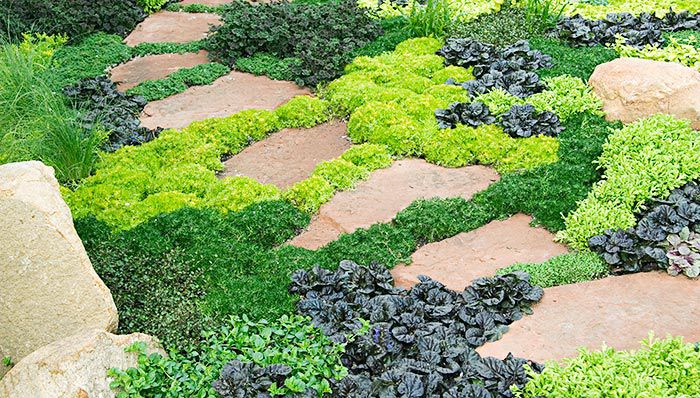
These are actual plants that spread across the soil, crowd out weeds, and give you something green without making you push a mower every weekend.
Most of them are also better for the environment than grass which is basically a monoculture that needs constant water, fertilizer, and attention to stay alive.
Clover Lawn
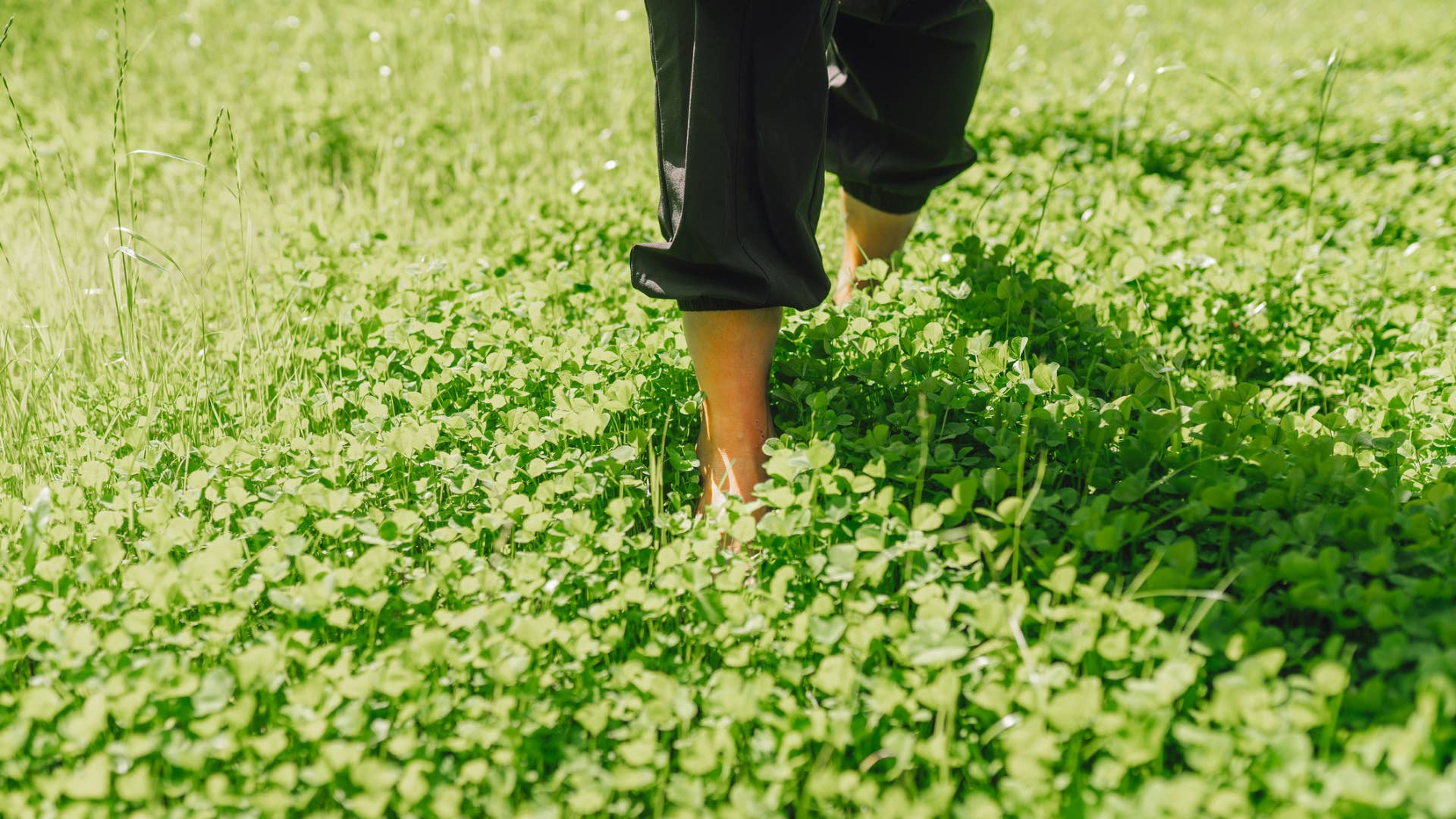
Clover might be the single smartest swap most homeowners can make.
White Dutch clover stays lush and green right through the summer heat, even when your neighbor’s grass looks like a wheat field in August.
It fixes its own nitrogen from the air, so you almost never need to fertilize it. And the little white flowers? Bees go absolutely wild for them.
I put clover in the strip between my sidewalk and the street a few years back.
Zero watering, zero fertilizing, still green. I kind of want to redo the whole front yard at this point.
The one honest downside: if someone in your household has a bee allergy, the flowers might make that spot off-limits during bloom.
And it can creep into your garden beds if you don’t edge it.
But for a low-effort, good-looking lawn alternative, nothing beats it on price or ease.
To get started: Scatter seed in early spring or fall. About 2 to 8 ounces covers 1,000 square feet. It establishes fast.
Creeping Thyme

If you’ve got a dry, sunny slope that you’re tired of mowing (or worse, weed-eating), creeping thyme is your answer.
It forms a flat, dense mat of tiny leaves and pops with little pink or purple flowers in late spring.
Step on it and it releases this gentle herbal scent.
It’s genuinely one of those plants that makes the yard smell like a Tuscan hillside.
It handles drought and poor soil far better than grass. It also does well between stepping stones, which is where a lot of people discover it for the first time.
The catch: it needs full sun.
Put it in shade and it sulks and dies. It’s also slow the first year, so you’ll need some patience while it fills in.
Don’t plant it where kids are going to be playing full-contact games, either. It handles moderate foot traffic, not a soccer match.
Moss

Moss is the underdog of ground covers.
Everyone overlooks it, and that’s a shame because it’s genuinely beautiful and requires basically zero effort once it’s happy.
Here’s the thing though: moss thrives where grass dies.
Deep shade, steep slope, acidic soil conditions that defeat everything else are exactly where moss wants to live.
You don’t mow it. You don’t fertilize it. You mostly just leave it alone and it spreads.
The one non-negotiable: your soil needs to stay consistently moist and lean acidic, around pH 5.0 to 5.5.
If you’re in a dry climate or have alkaline soil, moss will not work for you no matter what you try.
But if your conditions are right, it’s the most hands-off option on this entire list. You can even transplant chunks from elsewhere on your property for free.
Sedum (Stonecrop)
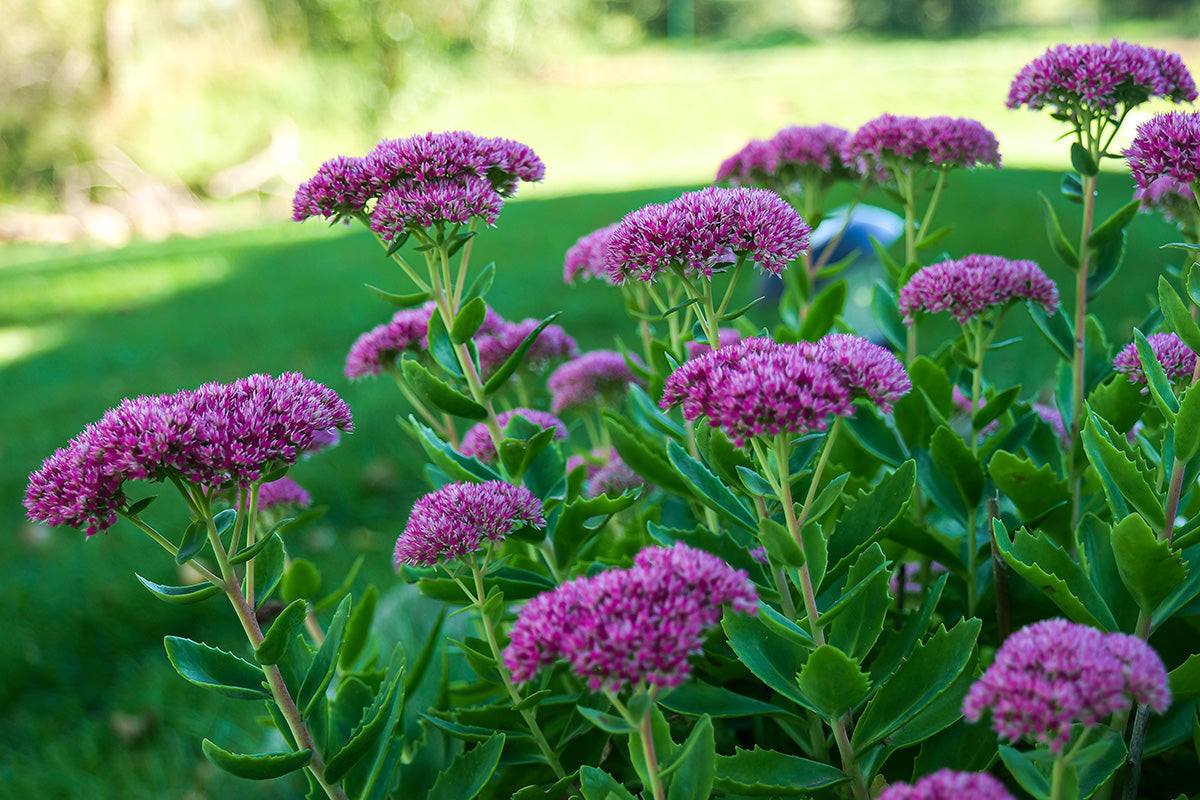
Sedum is basically unkillable.
It’s a low-growing succulent that thrives in hot, dry, rocky spots where most plants give up entirely.
Some varieties turn beautiful shades of red and bronze in autumn, which is a nice bonus. It’s especially good on slopes where mowing is a pain and erosion is a real concern.
Just don’t plan on walking across it.
Sedum is not a foot-traffic plant. But as a “set it and forget it” cover for a tough spot? It’s hard to beat.
Ajuga (Bugleweed)
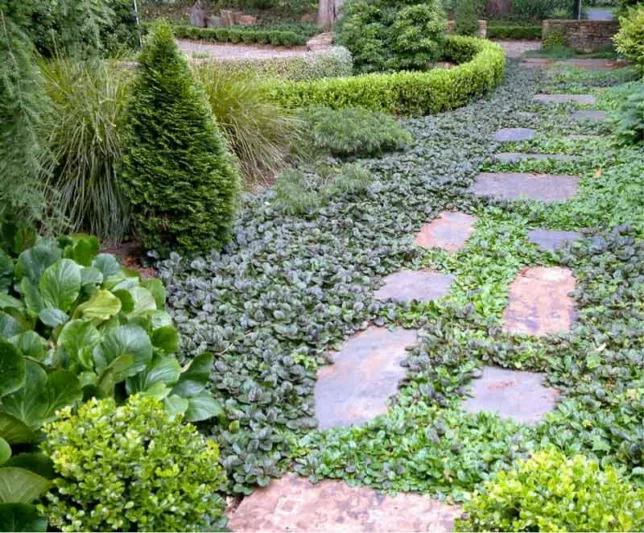
Ajuga is my go-to recommendation for anyone fighting that frustrating dead zone under a big tree.
You know the spot, nothing grows there, it’s always bare, and it looks awful.
Ajuga handles that dry, low-light situation better than almost anything else and spreads on its own through runners to fill in the gaps.
In spring it shoots up these little spikes of blue flowers that look great.
The foliage itself comes in deep green or purple depending on the variety.
Fair warning: it spreads with enthusiasm.
That’s great for filling in a problem area, less great if it’s right next to a garden bed you care about. Edge it regularly and you’ll be fine.
Native Wildflower Meadow
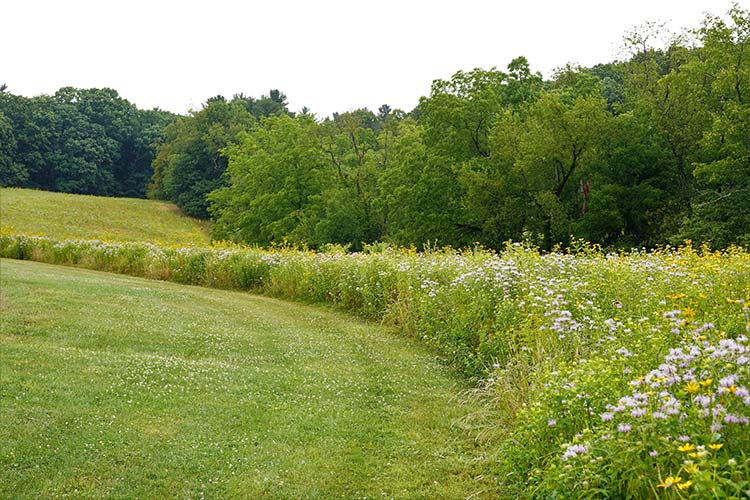
This one is the long game.
Converting a patch of lawn to a native wildflower meadow looks rough for the first couple of seasons while things establish.
But once it fills in, it’s genuinely stunning and you mow it once or twice a year instead of every week.
The ecological upside is real, too.
Native bees, butterflies, birds all show up and stick around.
If you’ve got a larger area (500 square feet or more) and you’re willing to wait a couple of seasons, this is the most rewarding option on the list.
Two things to sort out before you start: clear the existing grass first (the cardboard mulch method works well, or a non-selective herbicide), and check whether your HOA has restrictions.
Some do. More are loosening up as native plantings become mainstream, but verify before you go ripping out your lawn.
Hardscaping Alternatives
Sometimes no plant is going to work. Heavy shade plus compacted soil plus zero rainfall plus heavy foot traffic, that combination beats everything living.
and that’s when you go hardscape. Some of the options that you have include:
Mulch
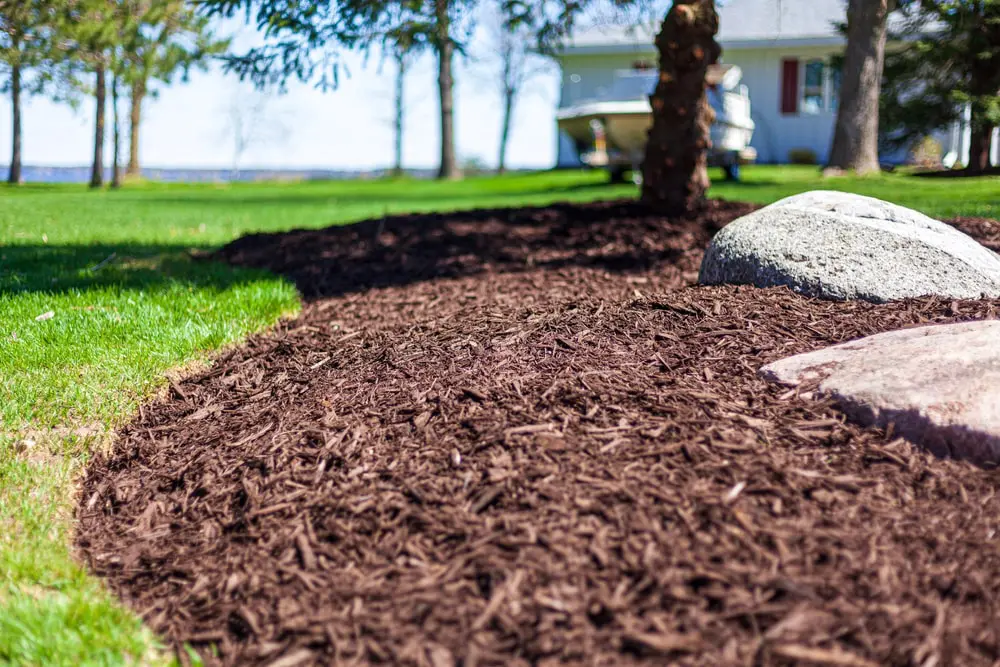
Mulch is the simplest answer for spots where nothing will grow, especially under large trees.
Lay 2 to 3 inches of wood chips or shredded bark, and you’ve got weed suppression, moisture retention, and a clean-looking finish.
It improves the soil as it breaks down, too.
It needs topping up every year or two, which is the main drawback. And keep it away from tree trunks and house foundations.
If you can source wood chips locally from a tree trimming company, this is by far the cheapest option on this list.
Many companies will drop a load off for free just to avoid paying disposal fees.
Gravel and Decomposed Granite

Gravel is the obvious choice for dry climates and modern garden styles.
It drains perfectly, requires zero maintenance once it’s down, and pairs beautifully with drought-tolerant plants and ornamental grasses.
The downsides are real though. Walking barefoot on gravel is unpleasant.
In full summer sun, gravel absorbs and radiates heat in a way that can make a small yard feel like a pizza oven.
And if you ever want to rip it out and plant something, you’ll be regretting it.
Lay permeable landscape fabric underneath before you spread it, not solid plastic sheeting, which kills soil health and causes drainage problems.
Artificial Grass
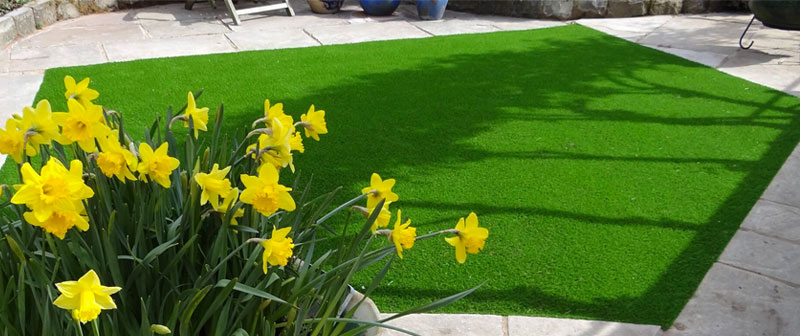
I’ll be honest: I have mixed feelings about artificial grass.
The modern stuff looks genuinely realistic, it holds up to dogs and kids and heavy use, and you never have to mow or water it.
For a small courtyard or a dog run, it makes real sense.
But it gets hot. Like, really hot in direct sun. It provides zero ecological value.
It costs $8 to $20 or more per square foot installed, and eventually it needs replacing.
If you’re covering a small, heavily used area and just need something that works, fine. For a large lawn replacement? I’d look at other options first.
Permeable Pavers
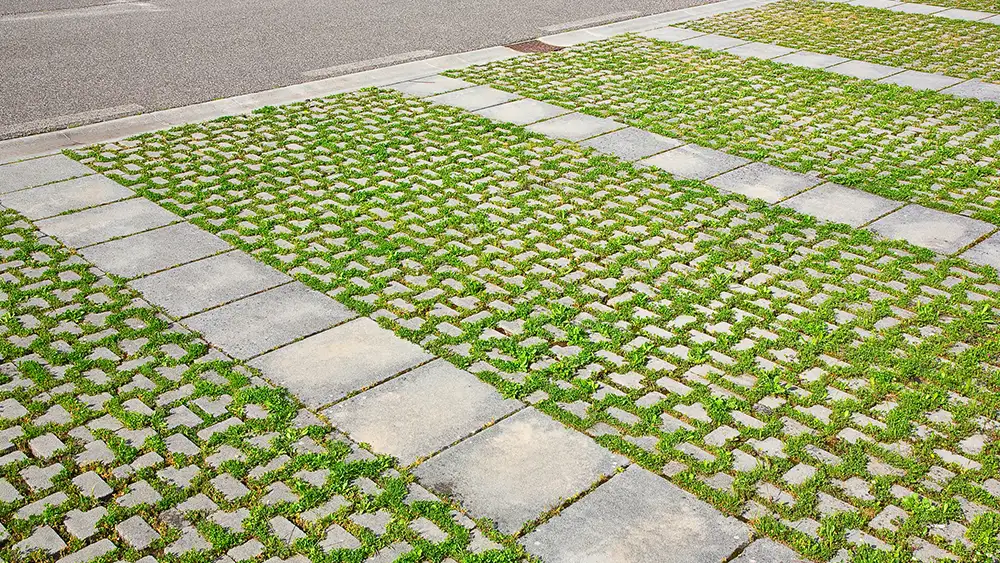
For an actual entertaining space, a patio, a path, or anywhere you need to put furniture and have people standing around, permeable pavers are the premium solution.
They’re durable, they drain reasonably well, and they come in enough materials and styles that you can make them look like whatever you want.
They’re expensive. Weeds will eventually find the joints.
But for an outdoor living area that has to hold up to years of actual use, they’re the right call.
How to Pick the Right One for Your Situation
Your spot is shady: Go with moss, ajuga, or just lay mulch. Grass doesn’t work here, and neither do most ground covers. These three were basically designed for low-light conditions.
Your spot is hot and dry: Creeping thyme, sedum, or gravel. Don’t fight your climate. These options want the conditions you’re dealing with.
You want something living but low effort: Clover or native wildflowers.
Both are genuinely low maintenance once established, and both do more ecological good than a traditional lawn ever did.
Kids and dogs are involved: Artificial grass or permeable pavers for the high-traffic zones.
Living ground covers aren’t going to survive daily heavy use from kids or dogs, and you’ll just end up frustrated.
You’re watching your budget: Clover seed is almost free, mulch can be free, and ajuga and thyme are cheap if you start from seed or split existing plants.
Don’t let anyone talk you into expensive solutions for problems that have cheap answers.
You want to do something genuinely good for your yard’s ecosystem: Native wildflower meadow or clover.
These two do more to support pollinators and soil health than anything else on this list.
Questions I Get Asked All the Time
What actually works in deep shade under trees?
Moss if the soil stays moist and slightly acidic. Ajuga if it’s drier shade. Mulch if you just want to cover the ground cleanly and move on.
Grass is not an option here, so stop fighting it.
What’s the least work?
Artificial grass, technically, but it costs a lot upfront.
Among living options, moss and sedum need the least once they’re established.
Here you don’t need to do any mowing, almost no watering, no fertilizing. Just occasional appreciation.
Can I actually replace my whole lawn with clover?
Yes, and plenty of people have. It stays green through drought, it self-fertilizes, and bees love it.
The appearance is a bit less uniform than grass, and you’ll need to edge it away from garden beds. But it’s legal basically everywhere and it works.
Will it stop weeds?
A dense, established ground cover does a solid job of blocking weeds by shading out the soil.
The first year or two while things fill in is when you’ll have to deal with weeds the most. Keep mulch between plants early on and it helps a lot.
How do I kill my existing grass first?
The easiest no-chemical method is to lay cardboard over the grass and pile 4 to 6 inches of mulch on top.
Come back in two to three months and the grass under there will be dead. Then plant into it.
If you want faster results, a non-selective herbicide works too; just wait for it to break down before planting.
What if I’m in an HOA?
Check your CC&Rs before you do anything drastic.
Some HOAs restrict anything that looks “wild” wildflower meadows especially.
That said, a lot of HOAs are relaxing these rules, and several states now limit HOAs from banning drought-tolerant or native plantings.
So, it’s alwayws wise to ask or resserch about the option before you assume it’s not allowed in your area.
Related Posts: