
18 Best Mosquito Repelling Plants Around Your Pool (That Actually Work)
Last Updated on June 14, 2026 by Duncan
What can I plant around my pool to keep mosquitoes away? Are you asking this question?
Let me be honest with you. I’ve owned a pool for over a decade, and I’ve wasted more money on tiki torches, citronella candles, and bug zappers than I care to admit. None of it worked the way I needed it to.
Then I got serious about plants. Not in a gardening-magazine way. In a “I am NOT going inside at 7pm because the mosquitoes won” kind of way.
First, The Thing Nobody Tells You
You know those “mosquito plant” pots they sell at Home Depot every spring? The ones labeled “citronella plant” with the little mosquito graphic? Yeah.
Those are lemon-scented geraniums. They smell nice. Mosquitoes don’t care.
The real secret is this: Plants only repel mosquitoes when their oils are actually in the air. An unbruised plant sitting in a pot is basically just a pretty decoration.
You have to crush the leaves, put them near heat, or position them where the breeze does the work for you.
Once I understood that, everything changed.
Here are the 18 plants that earned a permanent spot around my pool, and exactly why each one made the cut.
1. Lemongrass

This is the undisputed heavyweight.
Lemongrass contains citronellal, the same compound in commercial mosquito repellents, but at much higher concentrations than most other plants.
I keep mine in dark-colored pots along the sunny side of the pool.
In the afternoon, the sun heats those pots up and the oils start releasing on their own. It’s passive repellency, and it smells incredible.
One clump gets massive fast. Split it every spring and you’ll have enough to line the entire pool perimeter within two seasons.
Best for: Creating a perimeter barrier on the sun-exposed side of your pool.
2. Lavender
:max_bytes(150000):strip_icc():format(webp)/ladylandscape1-8a1452c7c6ed4fd89db02ddaf1c37369.jpg)
If you are one of those people who ask, is lavender good around a pool? Yes, it is.
But here’s what most people get wrong about lavender: They treat it like a soft, decorative plant.
It’s not. It’s a tough Mediterranean shrub that produces linalool, a compound mosquitoes genuinely avoid.
The trick is to let it get a little stressed. Over-water it, over-fertilize it, and it gets lush and green and basically useless as a repellent.
Grow it lean, in sandy or rocky soil, and the oil concentration skyrockets.
I planted mine along the pool fence where it gets blasted by afternoon sun and minimal irrigation. It’s thriving, it repels mosquitoes, and it looks stunning. That’s a rare trifecta.
Best for: Fence lines and borders where you want something permanent and low maintenance.
3. Basil

Basil is the one plant on this list you can also eat, which I find deeply satisfying.
It releases beta-caryophyllene continuously, even without bruising, which makes it one of the better passive repellents in the group.
Place it near where you sit, and it works while you do nothing. Brush past it on the way to the pool? Even better.
The problem is basil hates cold and bolts quickly in heat. Treat it as a seasonal plant, replace it mid-summer if needed, and don’t feel bad about it. A fresh basil plant costs two dollars, after all.
Best for: Putting right next to seating areas where you’ll brush it accidentally.
4. Catmint (Nepeta)

Okay, catmint is my personal obsession and I will not apologize for it.
It contains nepetalactone, which studies have shown to be more effective than DEET at the molecular level. Yes, you read that right. More effective than DEET.
It’s just not as concentrated in the plant as it is in a lab setting, but it still works remarkably well outdoors.
It’s also perennial, blooms purple all season, attracts pollinators, and requires almost zero care. If I could only pick five plants for the poolside, catmint would be on the list without question.
Fair warning: your neighbor’s cat will visit. Frequently.
Best for: Mixed borders, edges of pool decking, anywhere you want something that comes back every year.
5. Rosemary

Rosemary is the workhorse that never gets enough credit.
It releases camphor and eucalyptol all season long, even in heat, and it’s one of the few plants that actually improves its oil output in dry, hot conditions.
Perfect for poolside environments where everything else is struggling.
I shaped mine into a low hedge along one side of the pool. It’s been there for six years, requires almost no water once established, and pumps repellent compounds into the air every single afternoon.
It also means I’m never short on rosemary for cooking. Which is a bonus.
Best for: Permanent hedging, dry sunny spots, or container focal points near the grill area.
6. Mint (Spearmint or Peppermint)
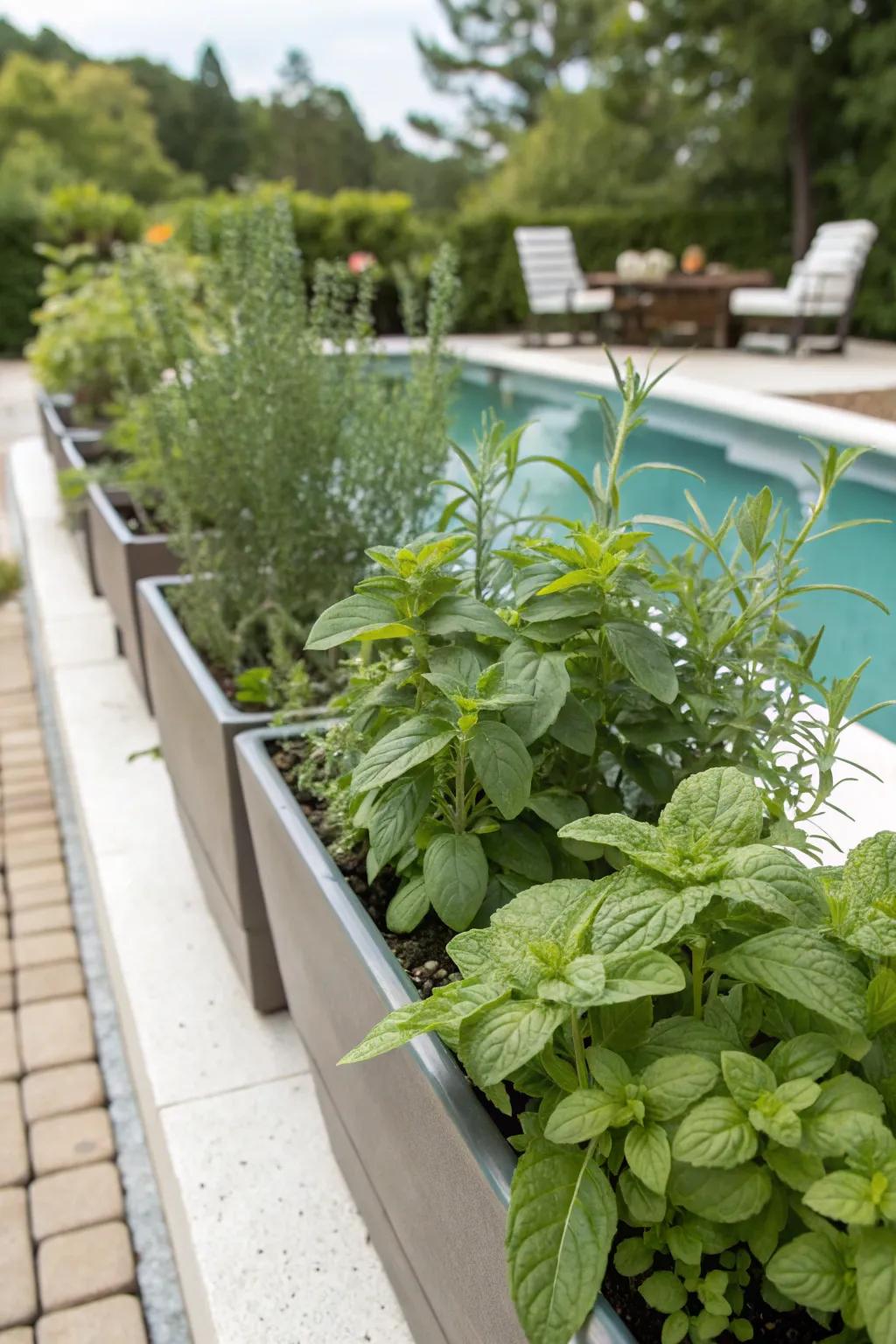
Let’s talk about mint’s reputation versus reality. Yes, it spreads aggressively. Yes, it will take over your garden if you plant it in the ground. But that’s why you keep it in containers.
In a pot, mint is one of the strongest-smelling, most reliably repellent plants you can grow.
The menthol content is high, the plant grows fast, and you can grab a handful to rub on your arms before an evening swim.
It’s basically a free, all-natural bug spray growing on your patio.
I keep three pots of it near the pool steps. When guests arrive in the evening, I tell them to pinch a few leaves and rub them on their ankles.
Nobody has complained about mosquitoes.
Best for: Container planting near seating, pool steps, anywhere high-traffic.
7. Lemon Balm
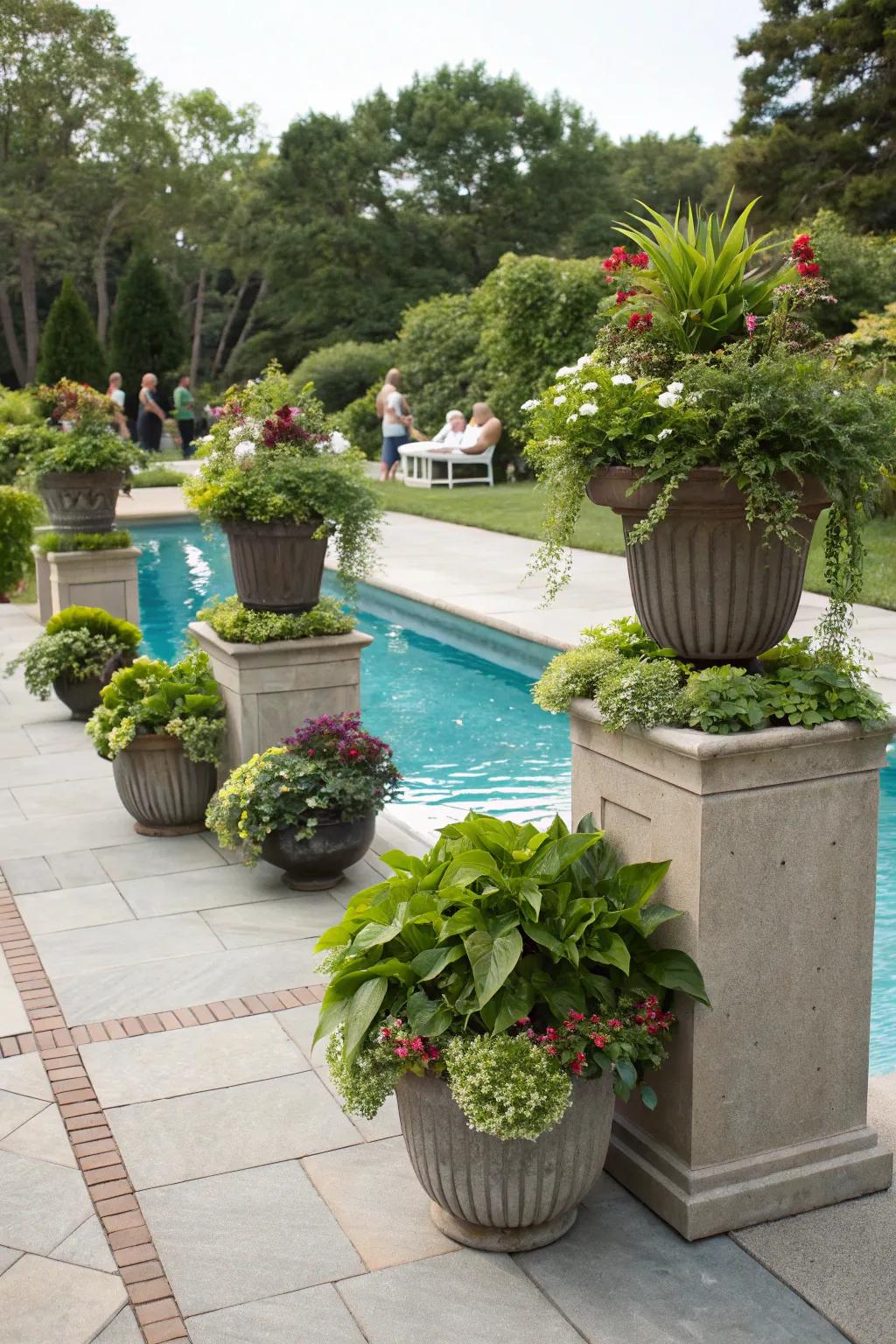
Lemon balm looks like a messy cousin of mint, smells like a lemon drop candy, and quietly contains citronellal at high concentrations.
It’s also one of the easiest plants on this entire list to grow. It tolerates partial shade, inconsistent watering, and neglect.
If you’re the kind of person who forgets to water things, lemon balm was made for you.
Plant it in spots where you’re not getting full sun, because that’s where lemon balm thrives and where mosquitoes often gather in the late afternoon anyway.
Best for: Shadier spots around the pool where other plants struggle.
8. Marigolds

Marigolds are the plant that every listicle includes and then fails to explain properly. They contain pyrethrum, a compound so effective it’s used in commercial insecticides.
But here’s the thing: you need to plant them densely. One marigold does almost nothing.
Fifteen marigolds planted in a thick band? Now you’re creating a real barrier. Think of them less as individual plants and more as a carpet you’re laying down.
I plant a thick border of French marigolds every year around the far edge of the pool deck. They bloom all summer, they cost almost nothing as seeds, and they keep the perimeter clean.
Best for: Dense border planting, especially around the outer edges of your pool area.
9. Catnip
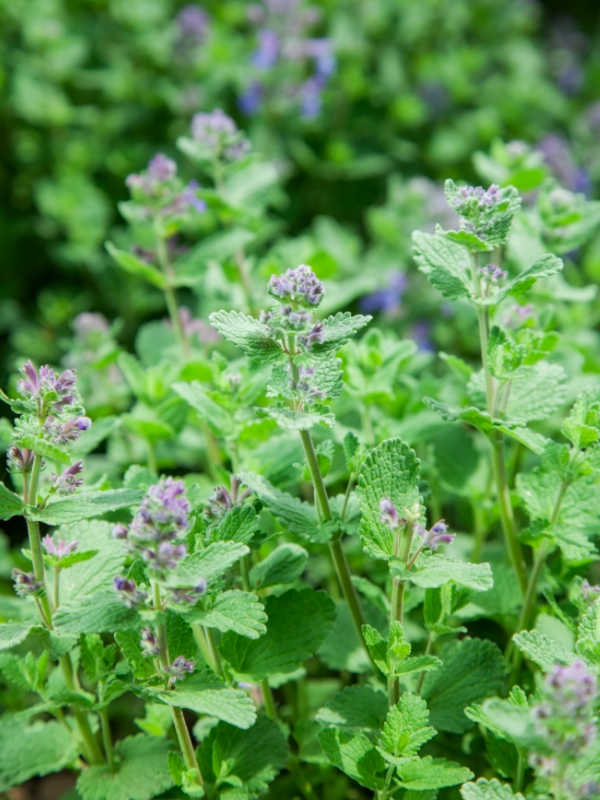
This is lemongrass’s quieter, weirder sibling.
Catnip contains nepetalactone (same as catmint, they’re in the same family) and in studies has consistently outperformed many synthetic repellents.
It’s arguably the most chemically potent plant on this entire list in terms of raw mosquito-repelling ability.
It’s also incredibly easy to grow and spreads easily if you let it go to seed.
Keep it contained, harvest it before it flowers to maintain potency, and dry it for use in homemade repellent sprays during winter.
Best for: Anyone willing to do a little maintenance in exchange for maximum chemical punch.
10. Lemon Eucalyptus
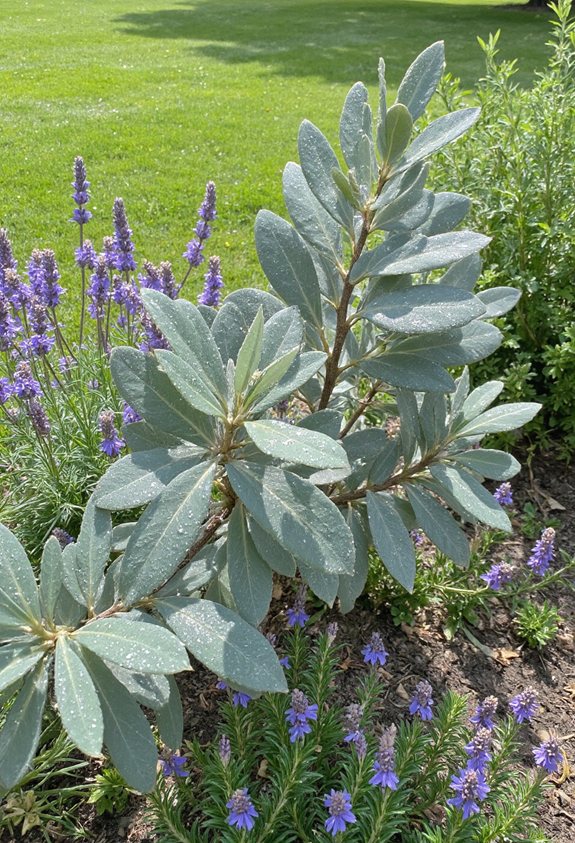
This one is different from other eucalyptus trees.
Lemon eucalyptus (Corymbia citriodora) contains PMD, which the CDC actually recognizes as an effective mosquito repellent.
That’s a rare thing for a plant to have going for it.
It grows fast, gets big, and in warm climates can serve as a screening tree that also repels mosquitoes.
In colder climates, grow it in a large container and bring it in for winter.
The smell is clean and sharp and nothing like the sickly-sweet citronella candles you’re probably used to.
It smells like something that actually works, and it does.
Best for: Larger pool areas that need height and screening in addition to repellency.
11. Pennyroyal

Pennyroyal is the most underrated plant on this list.
It’s a low, creeping mint relative that you can plant along the very edge of your pool coping or in cracks in the pavers.
Every time someone walks past it, the oils release. It’s essentially a passive, people-activated repellent system built into your pool deck.
It’s also extremely aggressive, which is actually useful here. Let it fill in the gaps where nothing else will grow and you end up with a repellent ground cover that takes care of itself.
One caution: Don’t overexpose yourself to it. It’s safe for normal contact but toxic in high doses. Just don’t make pennyroyal tea. Otherwise, you’re fine.
Best for: Planting in pavers, cracks, ground cover around pool decking.
12. Scented Geraniums (Citronella Variety)

Let’s settle this once and for all. Scented geraniums sold as “citronella plants” are NOT citronella grass. They’re Pelargonium citrosum.
They contain some citronellal, but far less than true lemongrass.
That said, they still work. They’re just not the superheroes the garden center makes them out to be.
Use them as part of a layered planting strategy, not as a standalone solution.
They’re gorgeous, easy to grow, and do contribute to your overall scent barrier. Just keep your expectations realistic.
Pair them with lemongrass, not instead of it.
Best for: Adding to mixed container plantings alongside stronger species.
13. Peppermint

Peppermint is spearemint’s stronger, sharper cousin and it means business.
The menthol concentration is higher, the smell is more intense, and mosquitoes dislike it more intensely.
Crush a leaf and rub it between your palms before sitting outside and you’ll notice the difference almost immediately.
I keep a pot of peppermint near every outdoor seating cluster I have. It’s my version of a natural bug spray dispenser.
Grab a leaf, crush it, rub it on your wrists and ankles. Done. It works.
Best for: High-traffic seating areas and anyone who wants a plant-based personal repellent option.
14. Bee Balm (Monarda)

Bee balm contains thymol and carvacrol, the same compounds in thyme and oregano that repel insects.
It’s also one of the most spectacular-looking plants on this list, with big, shaggy flowers in red, pink, or purple.
The trick with bee balm is that it works better when you deadhead it regularly.
Removing spent flowers keeps it blooming longer and keeps the essential oil production high.
If you’re a person who actually pays attention to their garden and does maintenance, bee balm rewards you handsomely.
Best for: Anyone who wants repellent plants that also look stunning in summer.
15. Thyme (Lemon Thyme Especially)

Regular thyme repels insects. Lemon thyme does it better and smells more pleasant doing it.
Like pennyroyal, thyme is excellent for planting in and around pool decking where foot traffic releases the oils automatically.
It handles heat and drought well, requires almost no maintenance, and the oils it releases include thymol and linalool, a powerful combination.
Plant it densely in a band around your pool and let people walking to and from the pool do the oil-releasing work for you.
It’s a hands-free repellent system once it’s established.
Best for: Filling gaps in pool decking, planting between stepping stones and pavers.
16. Floss Flower (Ageratum)

This is the dark horse of the list.
Floss flower contains coumarin, a compound that actively interferes with mosquitoes’ ability to detect hosts.
It doesn’t just smell bad to them. It actually disrupts their sensory system.
That’s a different, and more powerful, mechanism than most plants on this list.
It’s an annual, so you replant it each year, but it blooms all season in blue and purple clusters and looks beautiful massed together. Plant it in drifts of 12 or more for maximum effect.
Best for: Front edges of pool beds, anywhere you want annual color combined with genuine repellency.
17. Sage

Common sage, garden sage, whatever you want to call it.
It belongs near your pool and there’s a reason people burn it: The smoke repels insects effectively.
But you don’t need to burn it. Even as a living plant, sage releases terpene compounds that mosquitoes avoid.
It’s drought-tolerant, perennial in most climates, and incredibly easy to grow.
If you have an outdoor fire pit near the pool, toss fresh sage onto it on summer evenings.
That’s a dual-use move that works spectacularly well.
Best for: Growing near outdoor fire pits, planting in the hot, dry spots nothing else wants.
18. Pitcher Plants (Sarracenia)
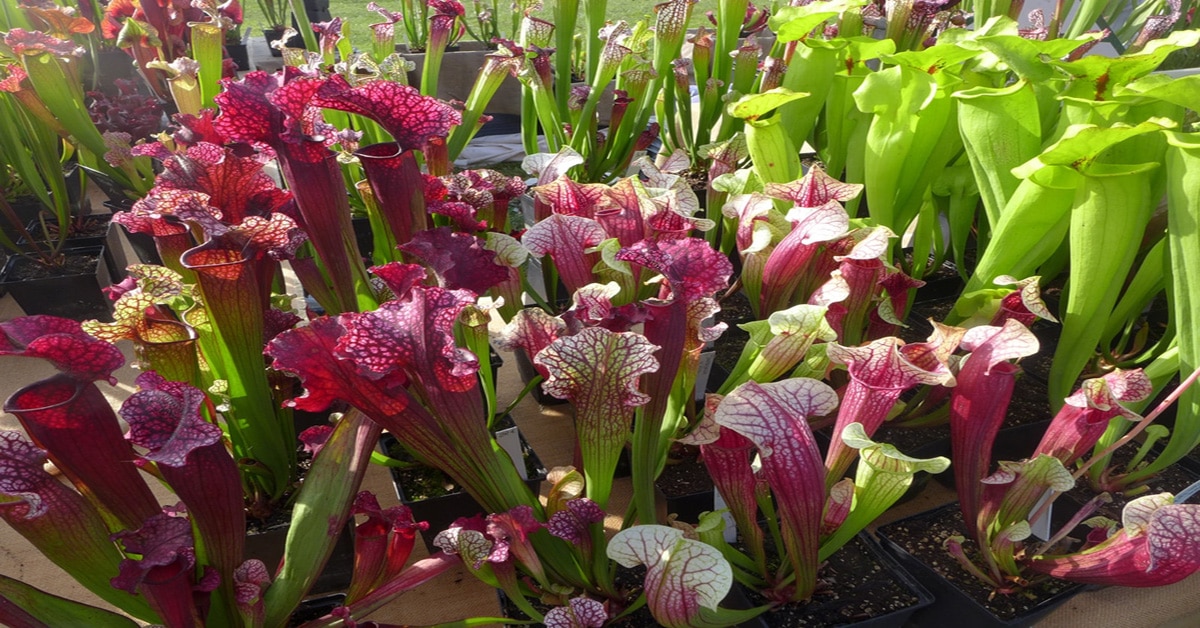
Okay, this one is a plot twist.
Pitcher plants don’t repel mosquitoes. They eat them.
Specifically, they drown mosquitoes in enzyme-filled water inside their tubes.
If you have a consistently damp spot near your pool where standing water tends to collect, a cluster of pitcher plants will actively reduce mosquito populations by killing them before they breed.
They look extraordinary, require no feeding, and perform actual biological mosquito control rather than just making the air smell strange.
They do need acidic, nutrient-poor soil and consistent moisture. But if you’ve got a boggy corner near the pool that’s being wasted, pitcher plants are the ones to go for.
Best for: Wet corners, bog gardens, anywhere near water features adjacent to the pool.
How to Actually Make This Work: The VOC Cascade
Here’s the thing I want you to walk away with. Planting one of these is nice. Planting a layered system is what actually stops you from going inside at dusk.
Think of it in three phases.
Phase one is your always-on background layer. Lavender, rosemary, lemon thyme, and catmint planted permanently around the pool perimeter.
They’re always releasing small amounts of repellent compounds into the air, all day, every day.
Phase two kicks in during the afternoon. Your lemongrass and dark-potted herbs absorb heat and start releasing oils more aggressively as temperatures rise.
This pre-loads the air before mosquitoes even start flying.
Phase three is what you do 20 minutes before you sit outside at dusk, which is prime mosquito time.
Grab a few leaves of mint, basil, or lemon balm and crush them between your fingers.
Walk around the seating area and brush the catmint. That burst of concentrated oil into the air at exactly the right moment? That’s what actually keeps you outside until 9pm.
None of these steps is hard. None costs much money. But you have to be intentional about it.
The One Thing That Ruins Everything
You can plant all 18 of these and still get eaten alive if you have standing water anywhere within 30 feet of your pool.
A pot saucer with half an inch of water. A hollow chair leg that collected rain. A pool noodle stored in a bucket. Mosquitoes need almost no water to breed, and they will find it.
Every adult mosquito you’re trying to repel with plants might have hatched 10 feet away in a container you forgot about.
Walk your entire pool area right now and flip, empty, or remove anything holding water. Do it before you spend a single dollar on plants.
That one habit will do more for your mosquito problem than anything else on this list.
Final Word
I’m not telling you that plants will give you a mosquito-free pool.
I’m telling you that a well-planned combination of the right plants, positioned correctly, timed correctly will make an enormous difference.
Combined with eliminating standing water and occasionally bruising leaves before you sit outside, these 18 plants have genuinely transformed evening pool time at my house.
The mosquitoes are still out there. They’re just not winning anymore.
And that’s enough for me.