
Best Pots for Growing Herbs Indoors
Last Updated on June 27, 2026 by Duncan
If you’ve ever bought the cutest little pot at Target, planted your herb with so much hope, and then watched it slowly turn into a sad brown stick within a month, this article is for you.
What to Look for When Buying Pots for Growing Herbs Indoors
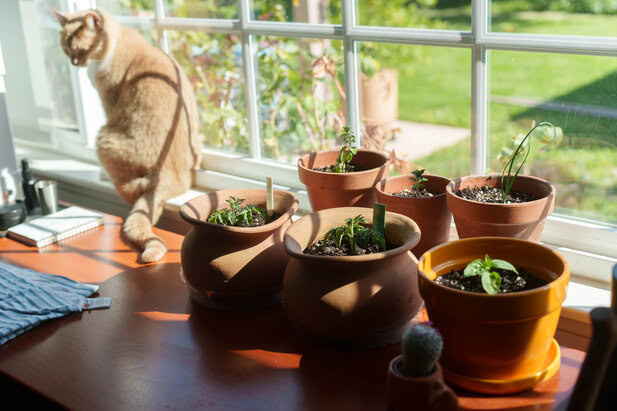
Before you click add to cart on that adorable little pot set, run through this checklist.
It’ll save you from buying something that looks perfect on your counter and kills your herb in three weeks.
Drainage holes, plural: One tiny hole at the bottom isn’t enough for a pot over 6 inches.
Look for several holes, or a hole that takes up a decent chunk of the base.
A pot with one pinhole sized opening is basically decorative at that point.
Depth before width: A wide shallow dish might look cute styled on a tray, but most herbs need depth more than they need square footage.
Pick depth first, then worry about how it looks on your shelf.
Material that matches the herb: It’s true that unglazed terracotta and glazed ceramic behave completely differently with water, and we’ll get into exactly why in a minute.
Pick the herb first, then the material.
Weight you can comfortably lift: Soil is heavy, water makes it heavier, and you will be moving this pot to chase sunlight at some point.
A giant stone planter looks amazing in photos but is a nightmare to rotate on your windowsill every few days.
To be on the safe side and save yourself a lot of hussle, get a pot that you can easily move around.
A separate saucer, not a built in one: Pots with a saucer fused to the bottom trap water against the drainage holes with nowhere to go.
A pot and saucer that are two different pieces let you empty out standing water with no fuss.
Avoid anything sealed on the inside with no exit for water: Some of those gorgeous painted ceramic planters are basically waterproof inside and out, without any holes anywhere.
Pretty on a shelf, a death trap for roots.
If you love it, use it as a cover pot with a plain plastic nursery pot hidden inside.
Price isn’t a deciding factor: A three dollar plastic pot with great drainage will outperform a forty dollar ceramic one with poor drainage every single time.
Save your money for the pots you love looking at, and put your practical herbs in the boring ones.
Once you’ve got a pot that checks these boxes, the rest comes down to the details most people never think about. Let’s get into them.
Things you should know
Go for a deep pot always
:max_bytes(150000):strip_icc():format(webp)/plant-a-kitchen-herb-garden-1762222-02-28eb943176934cbd82747b31655f6b8a.jpg)
Everyone tells you to look for drainage holes. Fine. True.
But here’s what nobody mentions: A drainage hole doesn’t fix the real problem on its own.
Water gets trapped at the bottom of every pot, hole or no hole.
Basically, the bottom inch or two of soil stays wet no matter what, because water clings there through capillary tension.
In a small pot, that wet zone takes up almost the whole container.
Your herb’s roots are basically sitting in a swamp the whole time, even though the soil on top looks bone dry.
This is why your herb can have “perfect drainage” and still rot from the bottom up. The pot wasn’t deep enough to give the roots a dry zone to live in.
My rule: If a pot is shorter than it is wide, skip it for anything other than shallow-rooted herbs like basil or cilantro.
Terracotta isn’t the hero you think it is
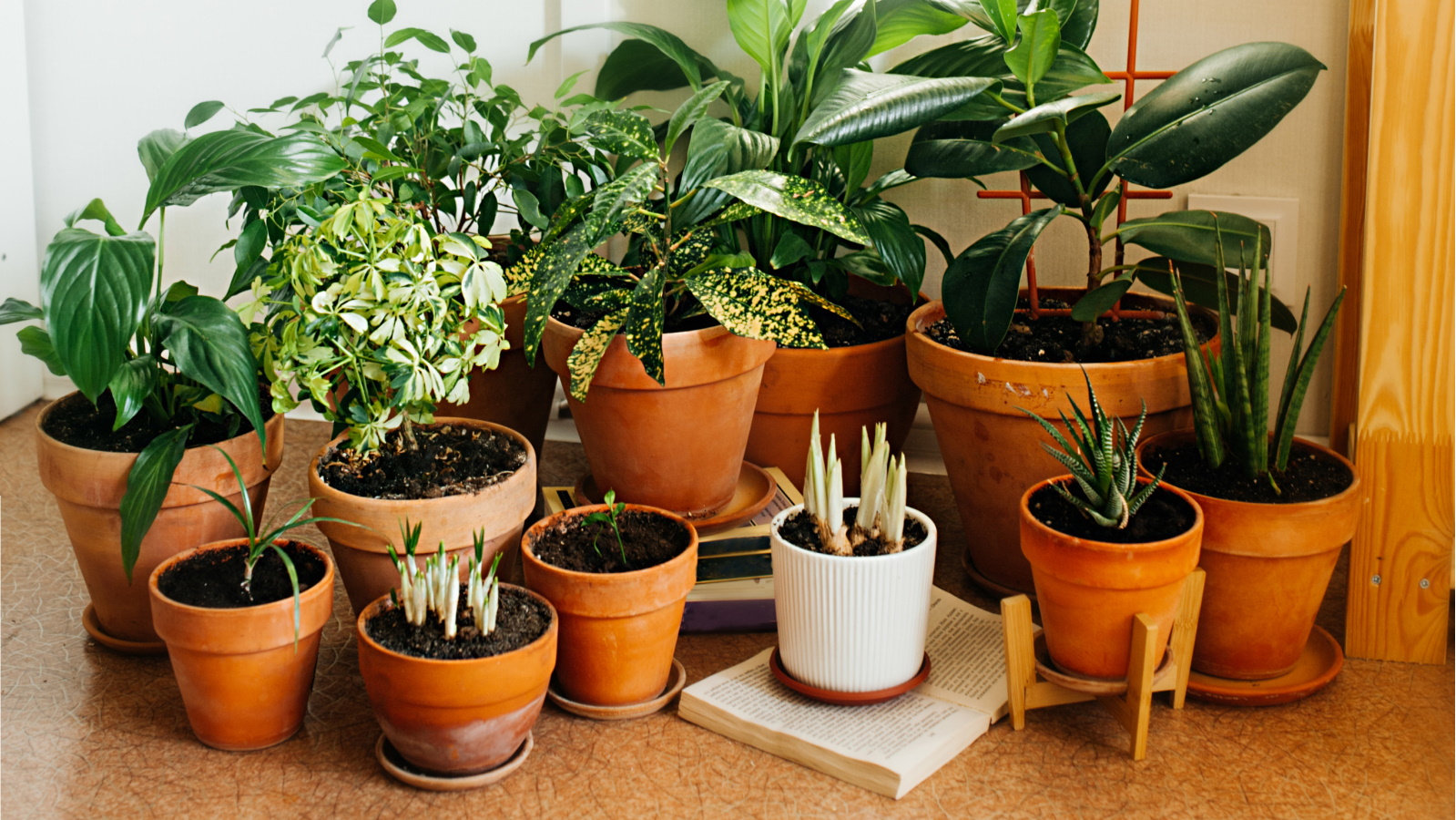
I used to be obsessed with terracotta pots.
They look gorgeous, they’re cheap, they’re everywhere. But here’s the catch nobody mentions.
Terracotta is porous, which means it breathes. Great in theory.
Terrible if your home has central heating or AC running most of the year, which, let’s face it, most of our homes do.
That breathability means your soil dries out fast. Faster than your herb can drink.
So your plant ends up stressed and thirsty constantly, even though you’re watering it on schedule.
What does that look like in real life? Leggy, weak stems. Slow growth.
Leaves that curl a little even though you just watered yesterday.
You’ll think you’re doing something wrong with your watering routine when the pot is the actual problem.
Small terracotta pots (anything under 6 inches) are the worst offenders.
If you love the look, go bigger, or just be ready to water way more often than the tag says.
Bigger pots aren’t always better

You’d think the solution to all this is just sizing up, right? Grab the biggest, prettiest pot you can find and give your herb room to stretch out.
Please don’t.
Oversized pots hold onto extra soil your plant’s roots can’t even reach yet.
That unused soil stays wet for way longer than it should, and wet soil that nobody’s drinking from turns sour. Literally.
You’ll smell it before you see it.
This is how you end up with root rot that shows up as yellow leaves starting from the inside of the plant, which is so confusing because everything looked fine from the outside last week.
Size up gradually.
Think one or two inches bigger in diameter at a time, not jumping your herb from a tiny nursery pot straight into a giant ceramic planter you found at a flea market.
Pay close attention to the personalities of the herbs you are putting in the pots
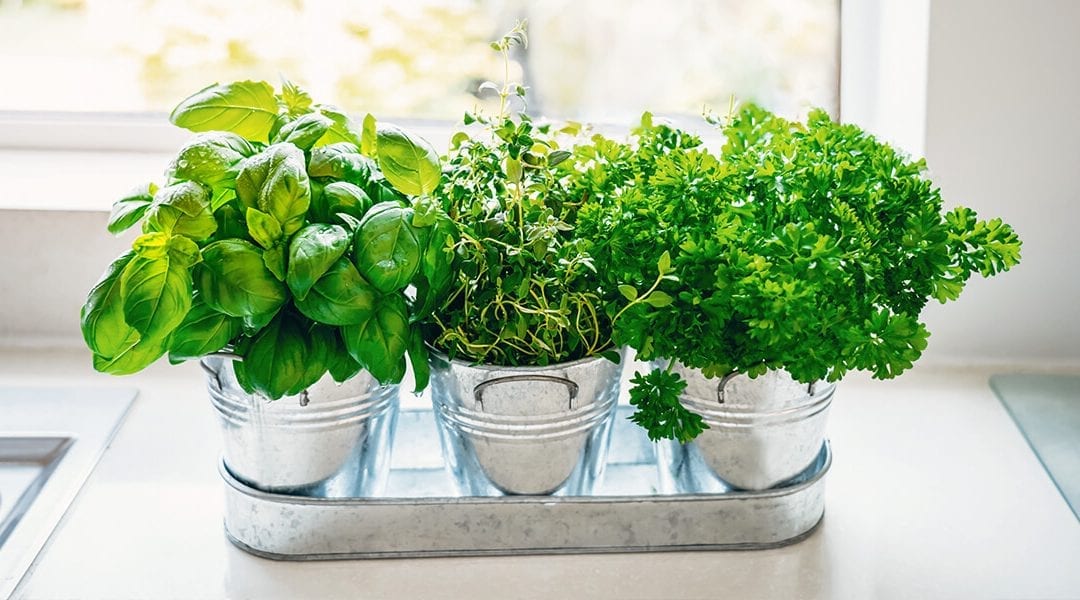
Here’s the thing nobody breaks down for you, and it’s honestly the single biggest shift in how I choose pots now.
Herbs basically fall into two personality types based on where they originally come from in the world.
The Thirsty Ones: Basil, mint, parsley, cilantro, chives.
These guys come from places that are naturally moist.
They like consistent water and don’t love drying out completely between waterings.
The Tough Ones: Rosemary, thyme, sage, oregano, lavender.
These herbs evolved in dry, rocky, Mediterranean conditions.
They genuinely want to dry out between waterings.
Keeping them constantly moist is basically a slow death sentence.
Once you know which category your herb falls into, pot choice becomes so much easier.
Self watering pots? Amazing for your Thirsty Ones. A total trap for your Tough Ones.
I learned this the hard way with a rosemary plant that looked totally fine for almost two months and then collapsed overnight.
The roots had been quietly rotting the entire time and I had no idea because the top of the soil never looked wet.
Use this as your shortcut: Glazed ceramic or plastic with good drainage for your moisture lovers, unglazed terracotta with extra drainage for your dry lovers.
Pot mistakes you should avoid making for the best results
A few things that look harmless but absolutely aren’t:
Crowding your pots together

I get it, a little herb garden on your windowsill looks adorable lined up close together. But cramming pots side by side traps humidity between them.
That humid little pocket is exactly what basil hates, and it’s a major reason people end up with powdery white fungus on their leaves and blame it on “bad soil.”
Give your pots at least two to three inches of breathing room.
Putting plants directly into metal pots
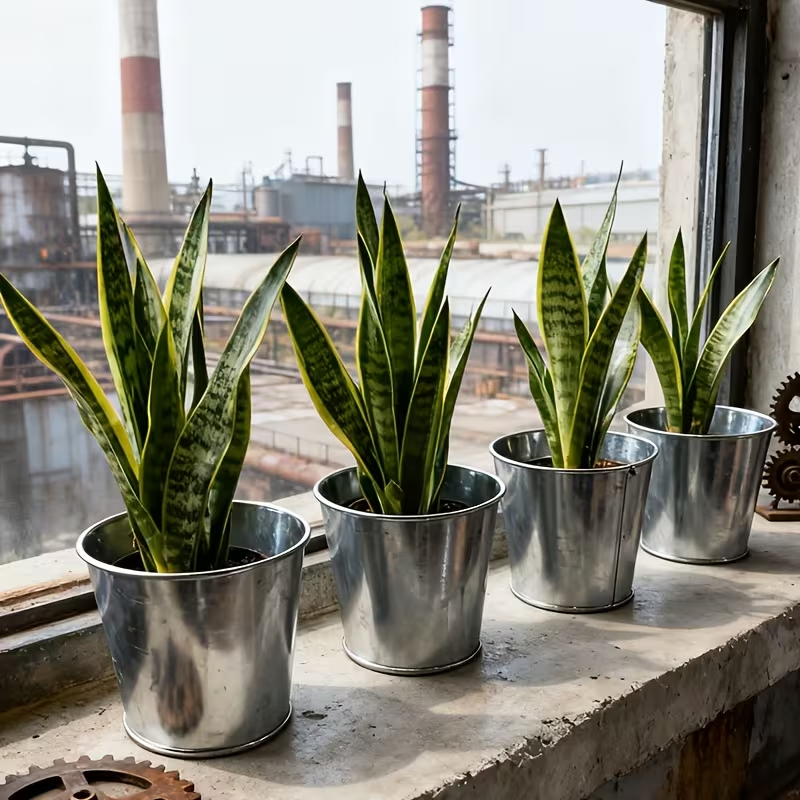
Those cute galvanized metal planters?
Gorgeous.
But metal heats up fast in sunlight, and it can quietly cook your roots even when your room feels comfortable.
Always use a plastic liner pot inside metal containers. Never plant straight into the metal.
Letting pots sit flush against a cold window in winter
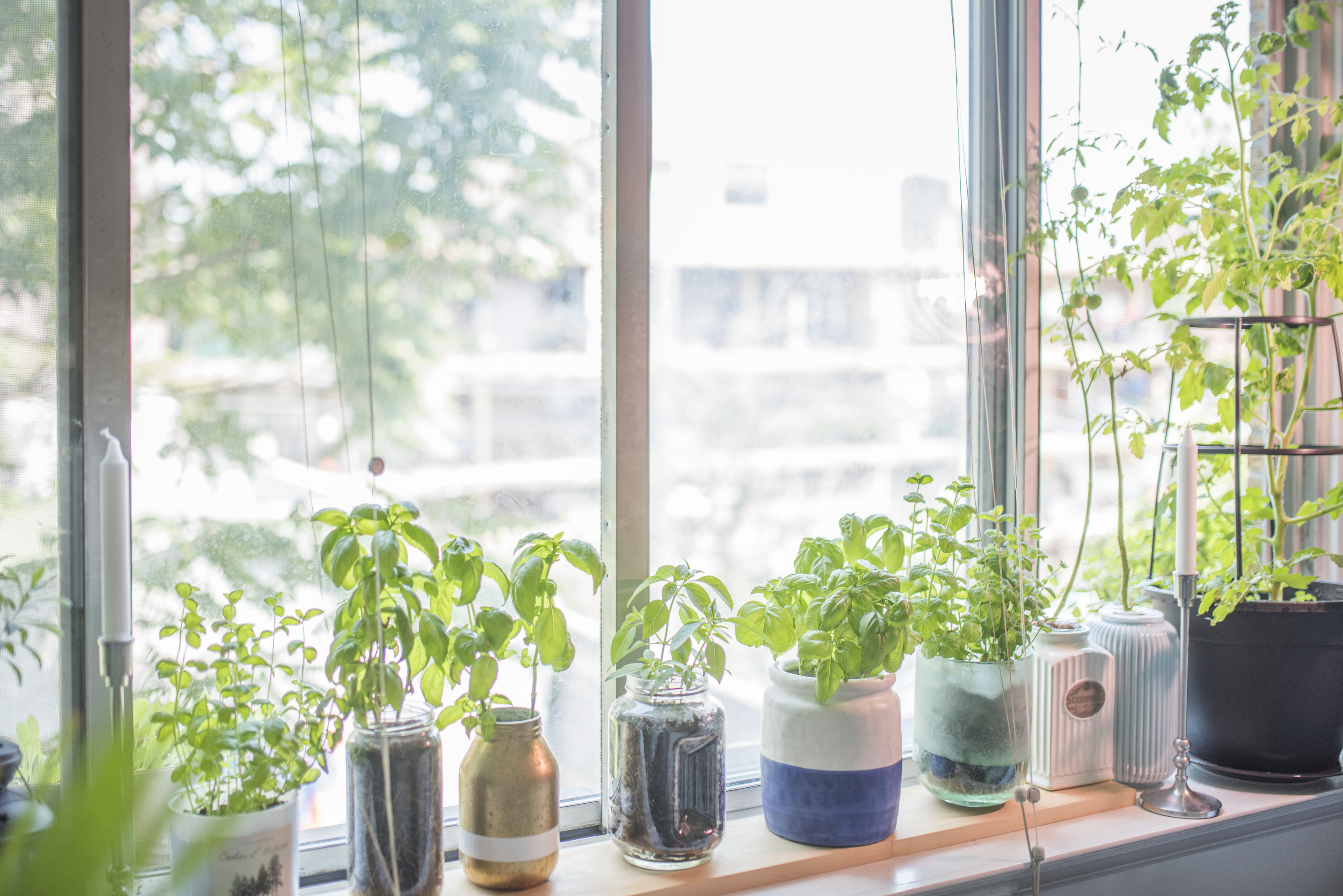
Glass gets cold.
Your soil touching that glass gets cold too, even if your thermostat says 70 degrees.
Roots basically shut down below a certain soil temperature and stop absorbing nutrients properly.
Leave a few inches of breathing room between your pot and the window glass.
Ignoring a clogged drainage hole
If your pot used to drain quickly and you suddenly notice water just sitting on top for the first time, that’s not normal, that’s a warning.
Roots have probably grown into the hole and blocked it. Don’t ignore that change.
What Pot Size and Shape Works Best for Each Herb?
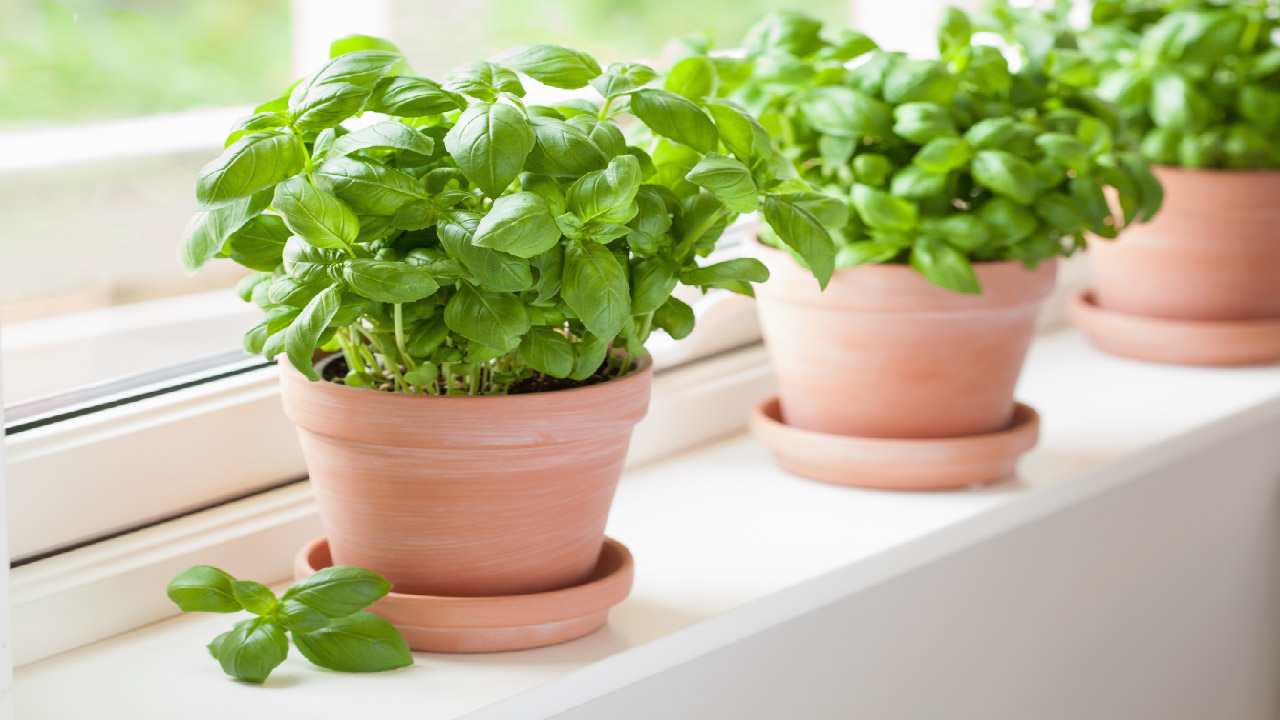
Quick cheat sheet based on root type, because shallow rooted herbs and deep rooted herbs need completely different setups.
- Basil, cilantro, parsley: Wide and shallow works, around 6 to 8 inches across and roughly 6 inches deep
- Rosemary, thyme, sage: Prioritize depth over width, at least 8 to 10 inches deep
- Mint: Its own pot, always, no roommates.
- Mint spreads aggressively underground and will choke out anything sharing its space within weeks
And please lift your pots off their saucers using little risers or pot feet.
Even a quarter inch gap stops the soil from sucking up standing water sitting in the saucer below.
This one tiny habit solves so many “why is my plant always soggy” mysteries.
Signs Your Pots Are Too Small or Too Big for Your Herbs
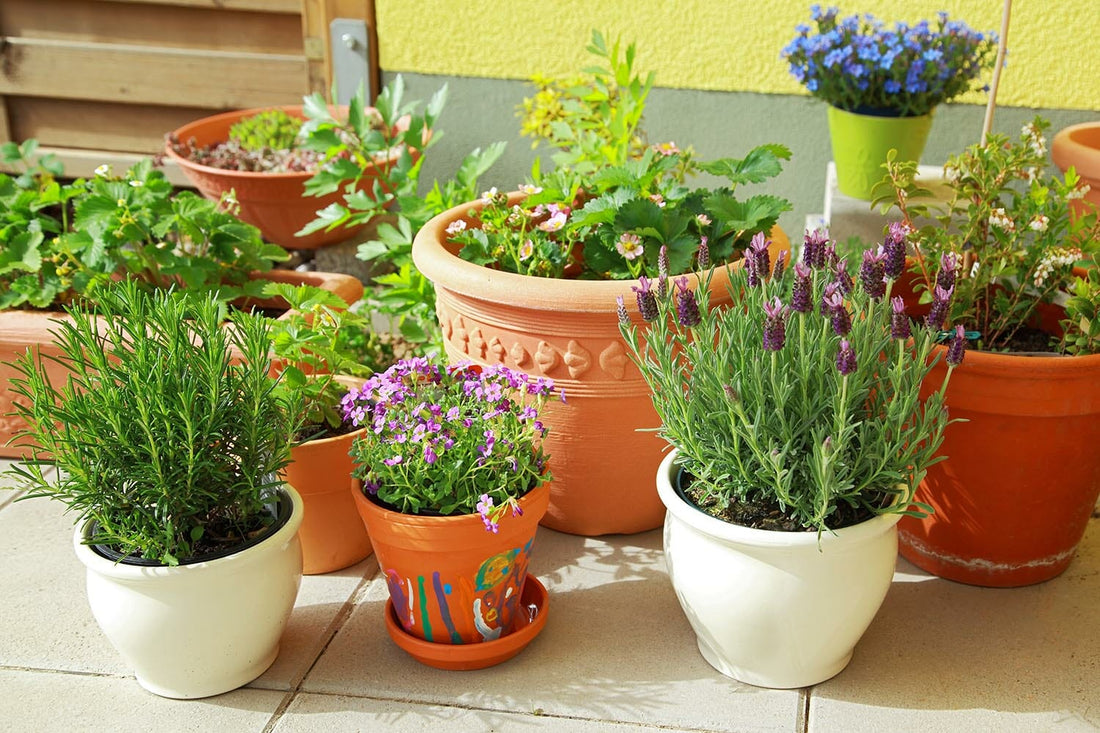
Your herb can’t exactly send you a text saying “hey, this pot isn’t working out.” But it’ll show you in other ways, if you know what to look for.
Signs the pot is too small:
- Soil dries out within a day, sometimes less, even right after watering
- Roots peeking out of the drainage holes or circling visibly around the surface
- The plant wilts between waterings no matter how often you water it
- Growth has basically stalled, the plant looks “stuck” at the same size for weeks
- The pot tips over because the plant has gotten top heavy for its base
Signs the pot is too big:
- Soil stays wet for days after watering, even with decent light and airflow
- A sour or musty smell coming from the soil
- Yellow leaves starting from the bottom or inside of the plant first
- Tiny fungus gnats hovering around the soil surface
- The plant just sits there barely growing, even though it has plenty of “room”
If you’re noticing any of these, don’t panic and don’t immediately repot.
Read through the rest of this article first, because the fix isn’t always “get a different size,” it’s sometimes “fix the watering” or “fix the drainage” instead.
How Often Do You Need to Repot?
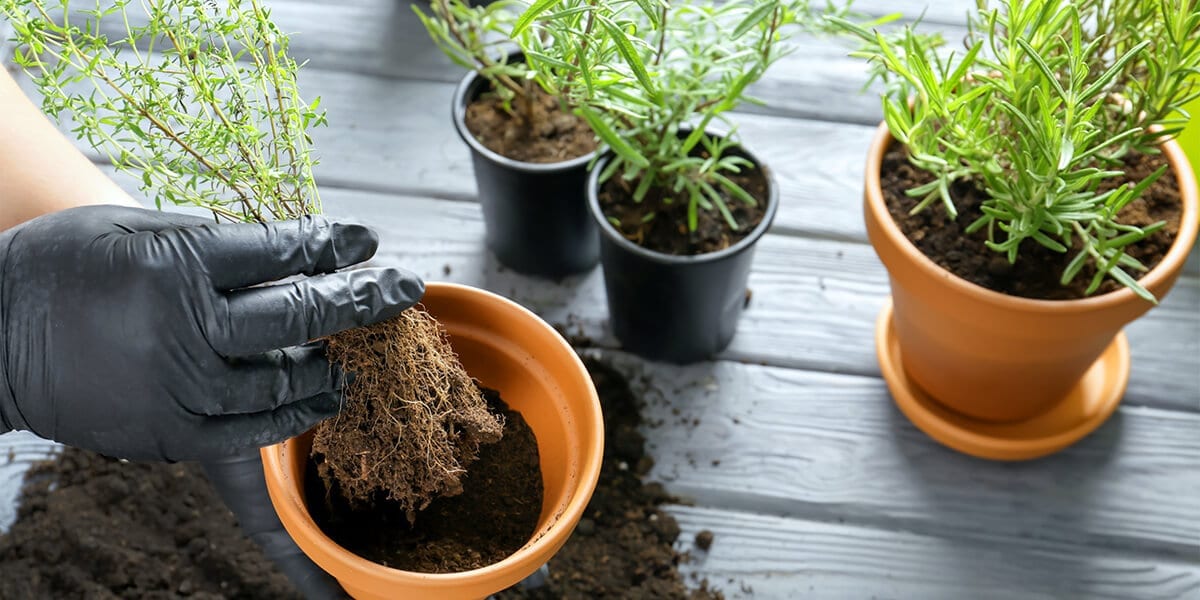
Forget the “repot once a year” advice. That’s for outdoor garden beds, not your windowsill herb collection.
Small pots run out of usable soil structure and nutrients fast.
If your herb is living in anything under 6 inches, plan to refresh the soil or size up every two to three months.
Yes, that often.
Your tiny pot is basically a tiny apartment with limited groceries, and your herb is going through them quickly.
Signs It’s Time to Repot or Replace Your Herb’s Pot

A calendar reminder is nice, but your herb and its pot will usually tell you it’s time way before any schedule does. Here’s what to keep an eye on.
Water runs straight through without slowing down
If you water and it comes out the bottom almost instantly, the soil has likely broken down and lost its ability to hold moisture.
That’s a soil refresh or repot situation, not a watering problem.
The soil shrinks away from the sides of the pot
You’ll notice a little gap forming between the soil and the pot wall, especially after the soil dries out.
That gap means water is running down the sides and straight out the bottom instead of soaking into the roots.
A thick, white, crusty buildup forms on the soil surface or pot rim
That’s mineral and salt buildup from tap water and fertilizer, and it can mess with your herb’s ability to take up nutrients.
Time to refresh the soil, even if the pot size is still fine.
You flip the pot over and see a tangled mat of roots at the bottom
That’s a root bound plant, plain and simple. The roots have run out of room and started circling instead of growing outward like they should.
The pot itself is cracked, chipped, or crumbling
Terracotta especially gets brittle over time, particularly if it’s been through a few temperature swings near a drafty window.
A cracked pot won’t hold moisture evenly anymore, even if the crack looks small.
Your store bought herb is still sitting in its flimsy plastic grower pot
Those thin little pots from the grocery store or nursery are meant to be temporary.
If your herb has been living in one for more than a few weeks, it’s already overdue for an upgrade.
The plant looks visibly too big for its container
Sometimes it’s that simple.
If your herb looks like it’s wearing a pot two sizes too small, like a kid in last year’s shoes, trust your eyes.
If you spot more than one of these at once, that’s your sign to stop putting it off.
A ten minute repot now beats slowly losing a plant you’ve been growing for months.
How to Get the Most From Your Herb Pots
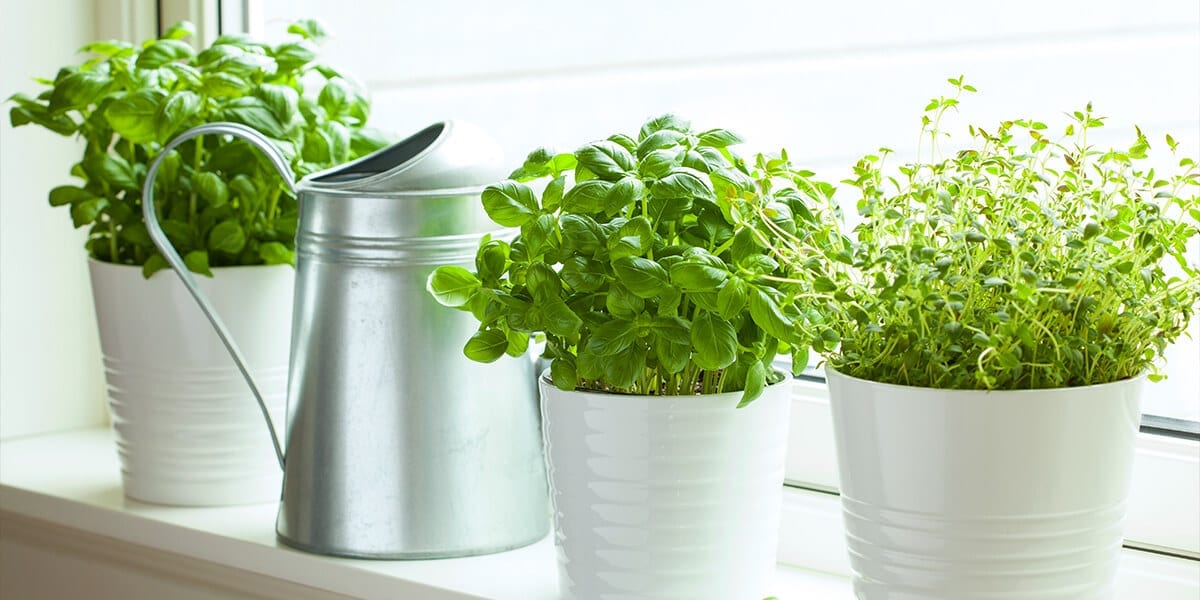
Owning the right pot is half the battle. Here’s how to make it work for you long term.
Rotate your pots weekly
Herbs lean toward their light source, which is adorable until your basil looks like it’s trying to escape out the window.
Give the pot a quarter turn every few days so it grows upright instead of sideways.
Harvest often, not just when you need it for dinner
Cutting your herbs back regularly encourages bushier, fuller growth instead of tall, leggy stems.
Most people are way too precious with their herbs and end up with one sad stalk instead of a full little bush.
Skip whatever soil is sitting in your garage
Regular garden soil is too dense for pots and suffocates roots.
Grab a potting mix made for containers, and for your drought loving herbs, mix in a little extra perlite or sand to help it drain even faster.
Feed lightly, more often
A small pot has a small nutrient budget, and watering washes nutrients out faster than you’d guess in an outdoor garden bed.
A diluted liquid fertilizer every few weeks keeps things going without overwhelming the plant.
Refresh the top layer of soil between full repots
You don’t always need to repot completely to give your herb a boost.
Scooping out the top inch or two of old soil and replacing it with fresh mix can buy you a few extra weeks before a full size up.
Empty the saucer every single time
Water sitting in a saucer doesn’t just disappear, it gets pulled right back up into the soil through capillary action.
Dump it out within an hour or two of watering, every time, no exceptions.
Peek at the roots occasionally
Every couple months, gently lift the plant out and take a look at the root ball. It tells you more about what your herb needs than the leaves do.
The Bottom Line
Stop choosing pots based on what looks cute on your kitchen counter (guilty, we all do it). Choose based on what your specific herb truly needs to thrive.
Match thirsty herbs with moisture friendly pots.
Match tough, drought loving herbs with fast draining terracotta and extra patience between waterings.
Give every pot enough depth for actual root growth, and don’t crowd them together like sardines.
Do this and you’ll stop replacing dead basil every few weeks.
Trust me, your wallet and your windowsill will thank you.
Frequently Asked Questions
What pots are best for indoor herbs?
It depends on the herb, not one single pot.
Moisture loving herbs like basil and mint do best in glazed ceramic or plastic with good drainage, while drought loving herbs like rosemary and thyme prefer unglazed terracotta that dries out faster.
Will herbs survive winter in pots indoors?
Yes, most herbs handle winter just fine indoors as long as they get enough light, ideally six or more hours from a sunny window or a grow light.
Growth naturally slows down in winter, so don’t panic if your herb looks less lush than it did in July.
How best to grow herbs indoors?
Pick a pot that matches your herb’s root depth and water habits, set it somewhere with plenty of light, and check the soil before watering instead of sticking to a strict schedule.
Most herb failures come down to the wrong pot or wrong watering rhythm, not bad luck.
What are common mistakes growing indoor herbs?
Overwatering on autopilot, picking pots with poor drainage, cramming too many herbs into one container, and not giving them enough light.
Mixing thirsty herbs and drought loving herbs in the same pot is another sneaky one people don’t catch until it’s too late.
How big should indoor herb pots be?
Most herbs are happy starting in a pot around six to eight inches across.
Depth matters even more than width, especially for woody herbs that need room for longer roots.
Do herbs do well in small pots?
For a little while, sure, but small pots dry out fast and run out of nutrients quickly.
Think of small pots as a short term home rather than a forever one.
What are the best pots for indoor herbs?
Whatever pot matches your specific herb’s water needs and gives the roots enough depth to spread out properly.
There’s no single best pot, just a best pot for that particular plant.
What herbs grow well in 4 inch pots?
Thyme, chives, and compact basil varieties can handle a 4 inch pot for a while.
Just expect to water more often and size up sooner than you would with anything roomier.
Do plants do better in ceramic or plastic pots?
Neither one wins overall, it comes down to the plant.
Plastic holds moisture longer, which is great for thirsty herbs, while glazed ceramic with solid drainage is a reliable middle ground for almost any herb.
How big of pots do you need for herbs?
Around six to eight inches across for most leafy herbs, and at least eight to ten inches deep for woody ones like rosemary and sage.
Size up gradually as the plant grows instead of guessing big from the start.
Do herb pots need drainage?
Always. Without it, water has nowhere to go and just sits at the bottom of the pot, which is one of the fastest ways to end up with root rot.
What herbs come back every year in pots?
Perennial herbs like rosemary, thyme, sage, oregano, and chives can come back year after year if they’re kept somewhere protected through winter.
Annuals like basil and cilantro usually need to be replanted each season.
Can herbs stay in small pots?
For a short stretch, yes, but you’ll need to repot or refresh the soil more often to keep up with how quickly small containers run out of nutrients.
Long term, most herbs grow better once they’re sized up.
What pots do herbs grow best in?
Pots that match the herb’s natural water preference and give the roots enough room to spread out properly.
A gorgeous pot with the wrong drainage will lose to a plain one with the right setup every time.
How big do pots need to be for herbs?
Six to eight inches across is a solid starting point for most herbs, with extra depth for anything woody like rosemary or sage.
Mint needs its own pot regardless of size, since it spreads and takes over.
What herbs cannot be planted together in pots?
Mint should never be planted with anything else, period, since it spreads aggressively underground.
Avoid pairing thirsty herbs like basil with drought loving herbs like rosemary in the same pot, since one of them will end up unhappy with the watering routine.
What herbs do well in shallow pots?
Basil, cilantro, and parsley have shallow, fibrous roots and do fine in a pot around six inches deep. These are your easiest herbs to fit into smaller spaces.
What herbs like deep pots?
Rosemary, sage, and thyme have longer roots and want at least eight to ten inches of depth to thrive properly.
Skimping on depth for these herbs is one of the quickest ways to stunt their growth.
Will herbs survive winter in pots?
Yes, as long as they’re getting consistent light and aren’t sitting right against a cold window.
Keep a few inches of space between the pot and the glass so the roots don’t get chilled overnight.
Do herbs like deep or shallow pots?
It depends entirely on the herb. Leafy, soft stemmed herbs like basil prefer shallow pots, while woody Mediterranean herbs like rosemary and thyme want depth.
Can I grow herbs indoors in pots?
Yes, and that’s exactly what this whole article is about.
With the right pot, enough light, and a watering routine that matches the herb, most culinary herbs grow happily indoors all year round.