How to Grow Herbs Indoors Fast
Last Updated on June 24, 2026 by Duncan
Growing herbs indoors fast isn’t about fancy grow lights or some elaborate setup you saw on Pinterest.
It’s about picking the right herbs, giving them what they actually need, and not fussing over them so much they give up and die.
So if you want fresh herbs without driving to the store every time a recipe calls for thyme, stick around.
I’ll walk you through exactly what works, what’s a waste of money, and how to get your first harvest in weeks instead of months.
Give them enough light
Here’s an unpopular opinion: That sunny windowsill everyone recommends is barely keeping your herbs alive, not helping them thrive.
Plants need a lot more light than a window can give them, even a south-facing one.
By the time sunlight passes through glass and travels across your kitchen, it’s a fraction of what your basil actually wants.
This is why your windowsill herbs grow so slowly you forget they exist.
They’re not dying.
They’re just stuck in survival mode, doing the bare minimum to stay alive.
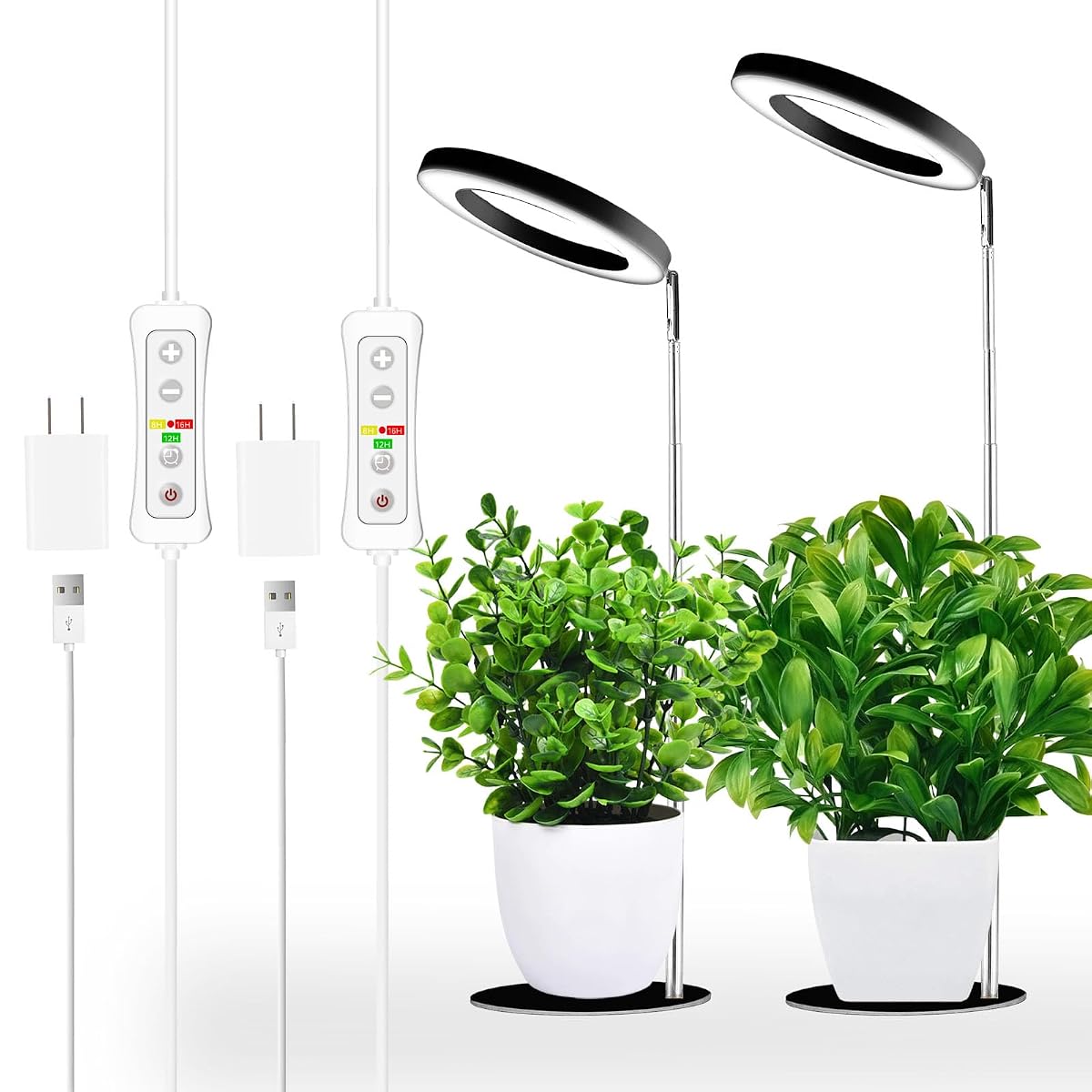
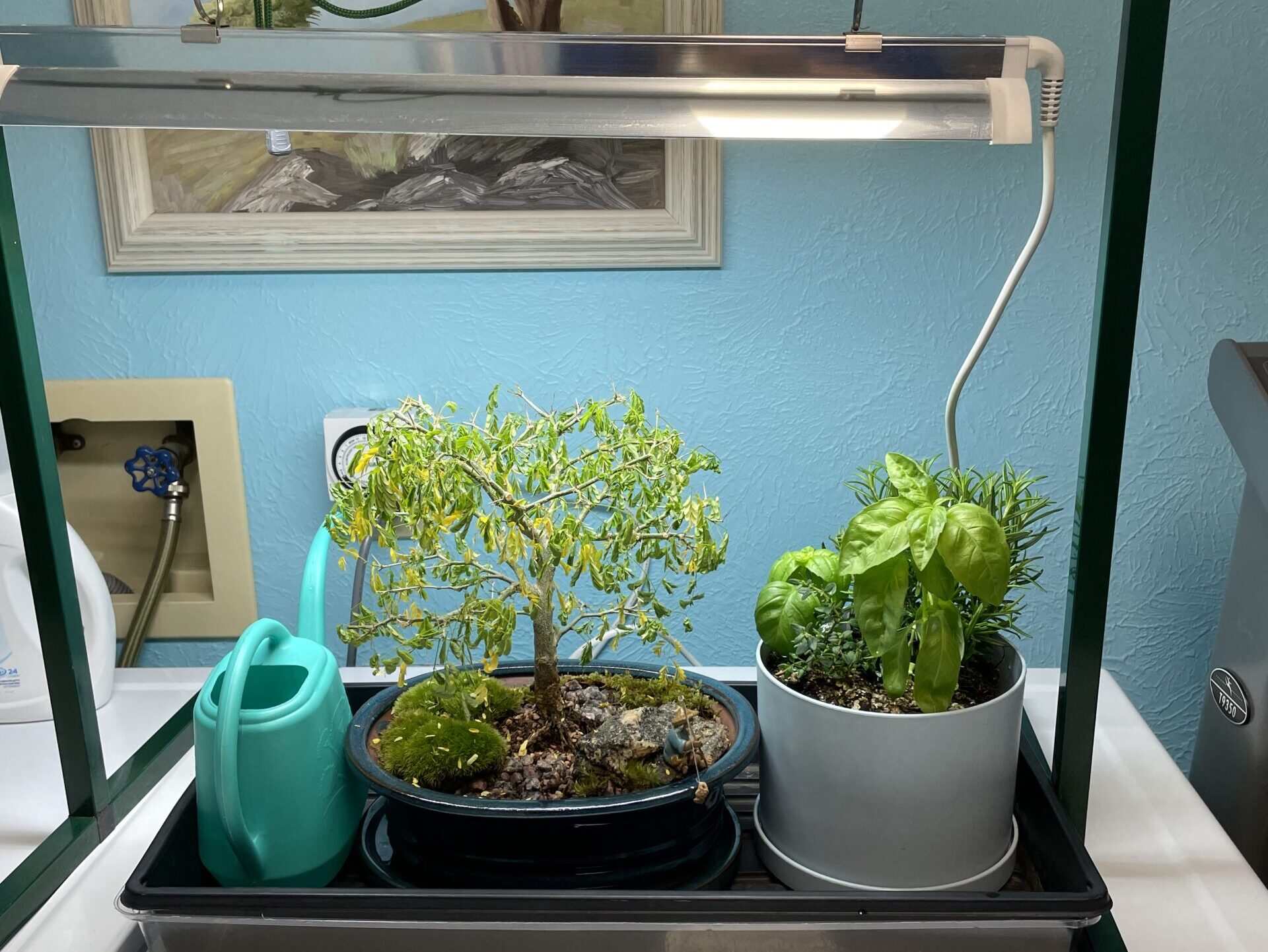
The fix: A small grow light changes everything. You don’t need anything fancy or expensive.
Even a cheap clip-on LED grow light, kept close to the plant, will outperform your prettiest window every single time.
Set it for about 14 to 16 hours a day, then turn it off completely.
Herbs need real darkness to rest, just like you do.
Leave the light on 24/7 thinking you’re helping and you’ll actually stress them out.
Water optimally
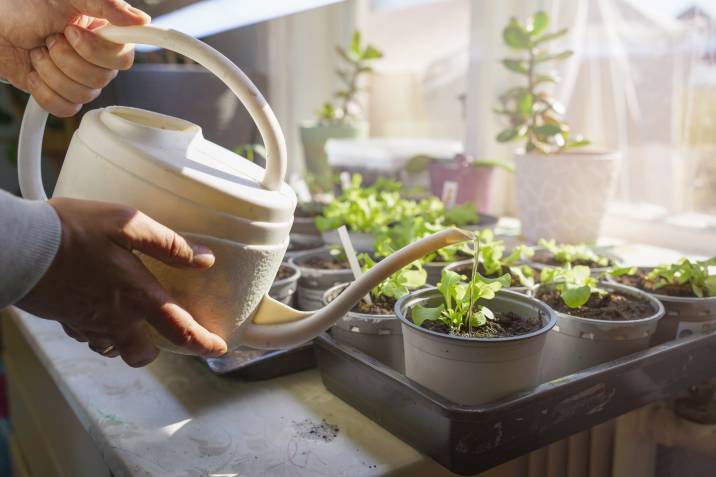
You’ve heard “water when the top inch of soil feels dry.” Sounds simple. It’s also where most herb gardens go to die.
Here’s the part nobody explains.
The problem with overwatering isn’t the water itself.
It’s that soaked soil pushes out all the oxygen roots need to breathe.
Roots can’t drink properly if they can’t breathe. So your herb sits there looking thirsty and droopy, and your instinct is to water it more, which makes the problem worse.
I learned this the hard way with mint. I was “helping” it by watering every single day because the leaves looked a little sad. I was drowning it.
The fix: Check drainage before you check moisture. Your pot needs a hole at the bottom, no exceptions, and the water needs somewhere to actually go.
Lift the pot after watering.
If it feels like a brick, you’re good. If it feels soggy a day later, you’ve got a drainage problem, not a watering schedule problem.
Keep air flowing

This one sounds strange, but stick with me.
Still air around your herbs slows everything down, even with great light and perfect watering.
Leaves need moving air to breathe properly and pull in what they need to grow.
A perfectly still kitchen corner, even a bright one, can quietly stall your plants without a single obvious symptom.
I noticed this when I moved my herbs from a busy spot near the back door to a “better” sunny corner with no air movement.
Same light, same water, slower growth. The only difference was the breeze.
The fix: A cheap desk fan on low, pointed near (not directly at) your herbs for part of the day, makes a noticeable difference.
You want a gentle leaf flutter, not a wind tunnel.
If you’ve got a window you crack open sometimes, even better. Your herbs want fresh moving air the same way you want it after being stuck inside all day.
Watch out for cold feet
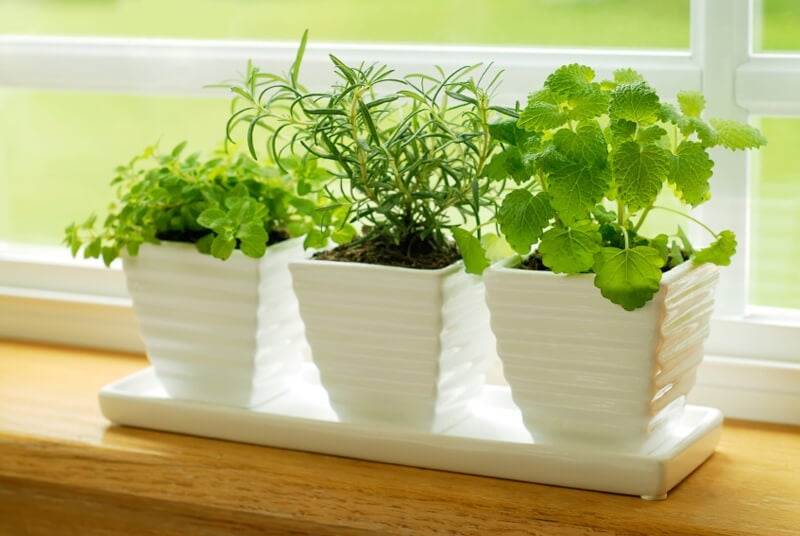
Here’s a detail almost nobody mentions. Your plant’s roots can be freezing even when the room feels warm.
Pots sitting directly on a cold windowsill, a metal shelf, or a chilly counter pull heat away from the roots fast.
Warm room, cold roots, slow growth. It’s the indoor plant version of standing around in wet socks.
The fix: Put something between your pot and the cold surface.
A small wood board, a folded towel, even a coaster works. Your herbs will notice the difference within days.
Create a climate staircase
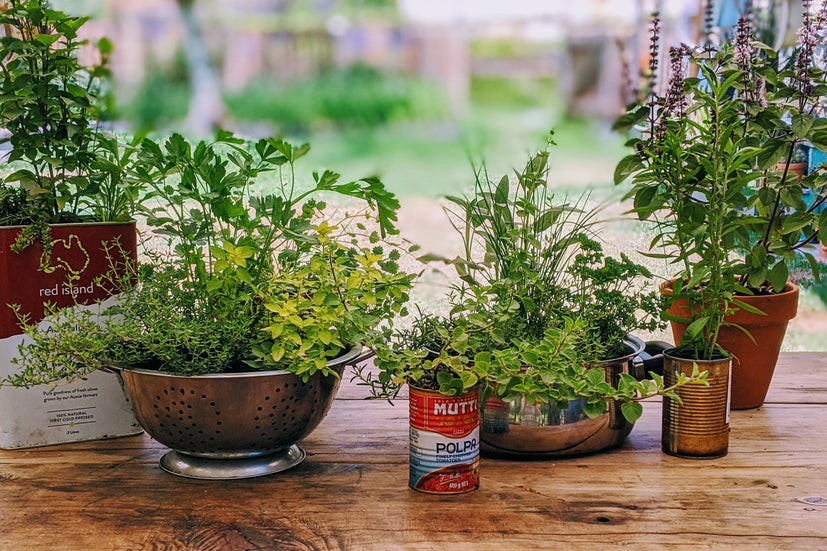
If you only remember one thing from this whole article, make it this one.
Most advice tells you to set your light and your watering and walk away.
Same intensity, same routine, day after day. That’s exactly why growth eventually flatlines.
Plants don’t just respond to how much light or warmth they get.
They respond to change.
A flat, unchanging environment teaches your herb to settle into a steady, slow pace and stay there.
I call this trick the Climate Staircase, and it’s the difference between herbs that grow and herbs that grow fast.
Instead of one flat setting all day, you gently step things up and back down, mimicking an actual sunrise and sunset:
- If your grow light has a dimmer or timer with ramping, use it. Light climbs gradually in the morning, peaks midday, fades in the evening.
- If it doesn’t, simply moving your herbs a little closer to a light source in the morning and slightly further by evening does the same job.
- Let your room cool down a bit at night instead of keeping it locked at one constant temperature.
Plants raised this way cycle and regrow noticeably faster than plants kept in a perfectly flat, robotic environment.
Nature was never flat, so why would your kitchen counter be?
hink of it as letting your eyes adjust when you walk outside after a movie.
Get your timing right
- Light: 14 to 16 hours on, full darkness the rest of the time. No exceptions, no “just a little extra.”
- Light distance: Keep small grow lights close, roughly 12 to 18 inches above the plant, and move it up as your herb grows taller.
- Watering: Check drainage and pot weight, not a calendar. Every plant and every home is different.
- Temperature: A noticeably cooler night than day helps growth, so don’t fight a slightly chilly room at night.
- Spacing: Give each plant a few inches of breathing room. Crowded herbs compete instead of growing.
Harvest properly
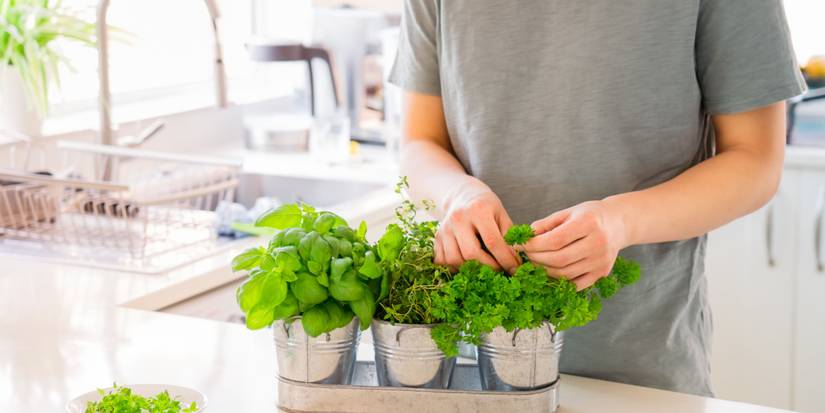
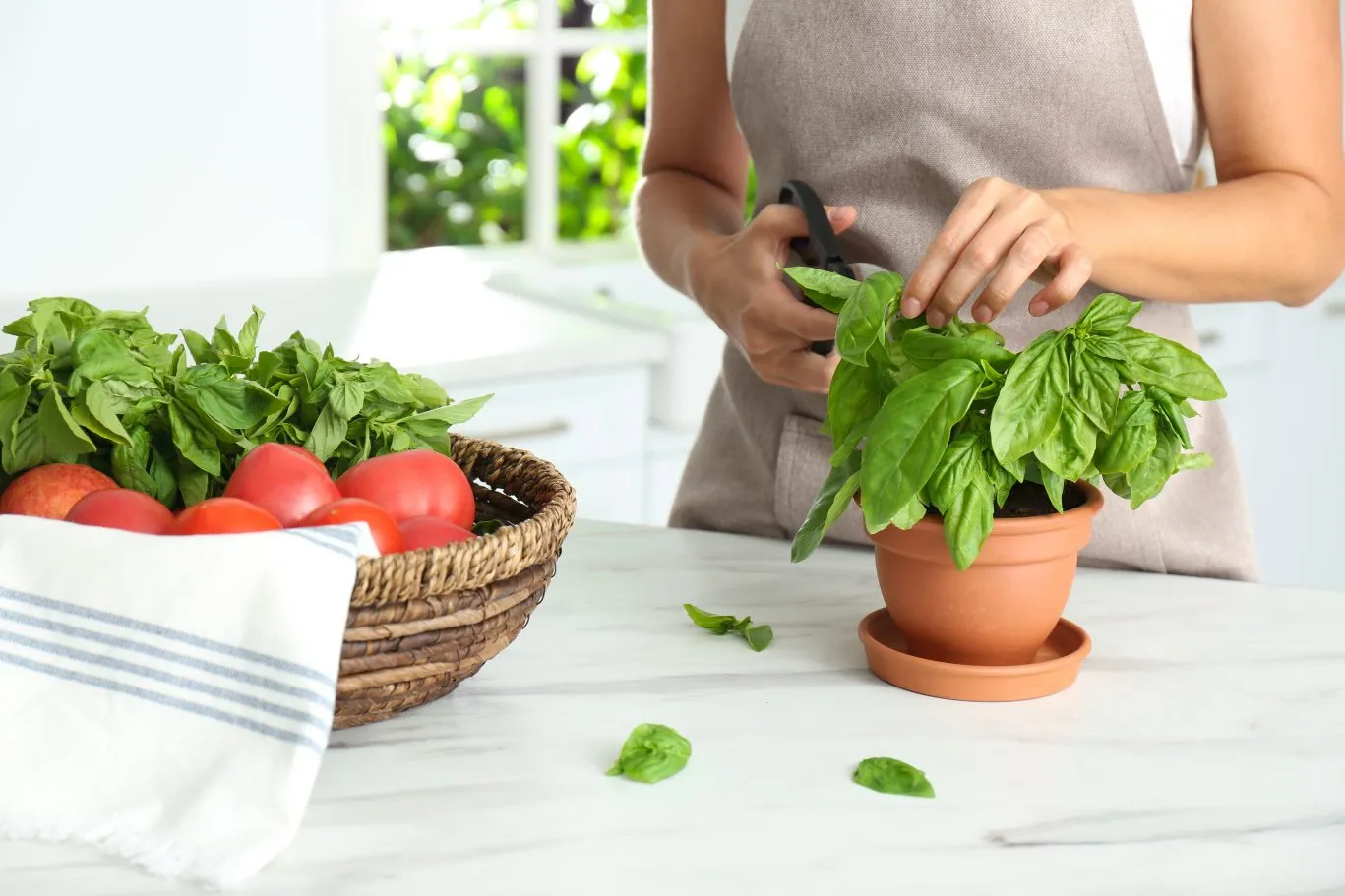
Here’s one more thing that trips people up. Where you cut matters just as much as how often.
Always cut right above a spot where leaves are growing in pairs, leaving at least two sets of leaves below your cut.
This tells the plant exactly where to branch out and grow back fuller and faster.
Snip randomly in the middle of a bare stem and you’ll just be left staring at a sad, lopsided plant wondering what you did wrong.
You didn’t do anything wrong, you just cut in the wrong spot.
Signs you have a problem and what to do
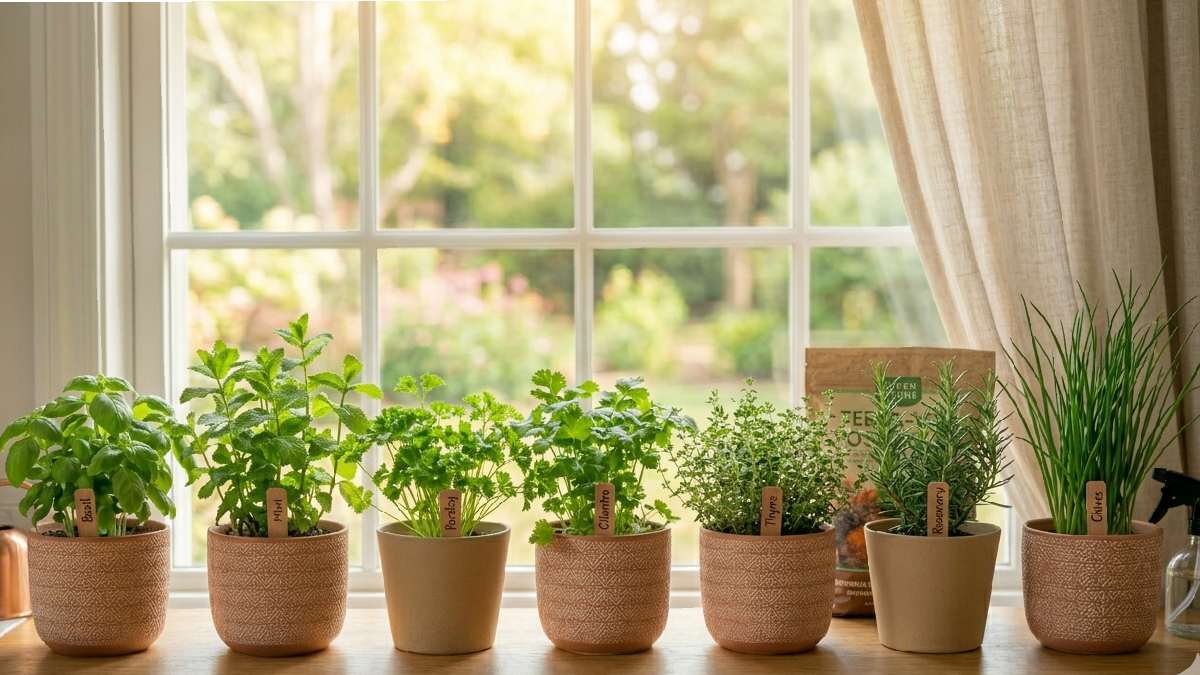
Leggy, stretched out stems with big gaps between leaves. Your herb is reaching for light because it doesn’t have enough. Move the light closer or get a stronger one before it gets worse.
Yellow leaves starting from the inside or bottom of the plant. This gets blamed on nutrients constantly, and it’s almost never that.
It’s usually overcrowding blocking light and air from reaching the lower leaves. Thin it out.
A plant that looked thriving and then suddenly wilts overnight. Check the soil immediately. This is almost always a watering or drainage issue, not something dramatic.
Fuzzy white spots or a musty smell. Stop everything and improve your airflow today.
Damp, still air is exactly what mold and mildew are waiting for, and once it starts it spreads fast.
A seedling moved straight under a strong new light looks bleached or stressed. Ease it in over about a week instead of switching all at once. T
Parting shot
Growing herbs indoors fast isn’t about finding a magic fertilizer or the “best” pot on Pinterest.
It’s about giving your plant light it can actually use, air it can actually breathe, roots that aren’t sitting in a swamp or freezing on a windowsill, and a little daily rhythm instead of one flat boring routine.
Get those pieces right and your herbs won’t just survive on your counter.
They’ll take off, and you’ll be the one giving your friends cuttings instead of asking them for tips.
Frequently Asked Questions
Which herbs can be grown indoors easily?
Basil, mint, chives, parsley, and oregano are the easiest indoor herbs for beginners.
They forgive mistakes, don’t sulk over imperfect light, and bounce back from a rough week.
Rosemary and lavender are gorgeous but moody indoors. Save those for once you’ve got a few wins under your belt.
How do I make my indoor herbs bushier?
Pinch the top of your herb regularly, right above a leaf pair, even when you don’t need it for cooking.
This little snip tells the plant to grow two stems instead of one.
Skip this step and you’ll end up with one sad, leggy stalk instead of a full, bushy plant.
A few minutes of pinching a week makes a bigger difference than any fertilizer.
What are the common problems with indoor herb gardens?
Not enough light tops the list every time.
After that it’s overwatering, stale air, and pots crammed together so tightly nothing can breathe.
Most “I have a black thumb” stories trace back to one of these four things going wrong quietly in the background.
What makes herbs grow faster?
Strong, consistent light.
Air that moves instead of sitting still.
Roots that get a chance to breathe between waterings.
And a small drop in temperature at night instead of one flat setting all day.
Get those four right and you’ll notice the difference within a week, not a month.
What is the easiest herb to grow inside?
Mint, hands down.
It grows so eagerly indoors that your biggest challenge will be stopping it from taking over the whole windowsill, not keeping it alive.
If mint dies on you, the problem usually isn’t the plant. It’s the setup.
What is the secret to growing herbs?
Light intensity, not light exposure.
People assume a sunny spot is enough, but a window only gives your herb a fraction of what it needs to grow quickly.
A simple grow light fixes more “mystery” problems than any fertilizer, trick, or plant food ever will.
What are common mistakes growing indoor herbs?
Watering on a schedule instead of checking the pot.
Leaving the grow light on around the clock instead of giving real darkness.
Crowding plants together.
Choosing a pretty pot with no drainage hole.
Every single one of these is fixable once you know to look for it.
What is the best liquid fertilizer for indoor herbs?
A balanced liquid fertilizer, diluted to about half the strength listed on the label, works well for most kitchen herbs.
Feed every couple of weeks rather than every watering.
Herbs you’re growing to eat don’t need to be pushed hard with food. Overfeeding shows up as weak, floppy growth, not faster growth, so more is not better here.
What herbs need to be watered every day?
None of them should need watering every single day if your pot drains properly.
Basil and mint are the thirstiest of the bunch and might need checking daily in a hot, dry room.
But checking and watering aren’t the same thing.
Check the weight of the pot daily, water it only when it needs it.
Why do my indoor herbs keep dying?
Nine times out of ten it traces back to one of three things: not enough light, a pot with nowhere for water to drain, or roots sitting in soggy soil because of both.
The plant rarely dies from one dramatic event.
It usually fades slowly while you’re doing everything you think is right, which is exactly why it’s so frustrating.
Do herbs like deep or shallow pots?
It depends on the herb, and this trips people up constantly.
Basil, mint, and chives are happy in shallower pots since their roots spread out more than down.
Rosemary and other woody herbs prefer something deeper since they build a sturdier root system over time.
When in doubt, a pot around 6 to 8 inches deep covers almost everything you’d want on a kitchen counter.
Related Posts: