How to Use Grow Lights for Indoor Herbs Without Killing Them
Last Updated on June 25, 2026 by Duncan
If you’ve ever bought a cute grow light off Amazon, plugged it in, and waited for magic to happen, only to end up with sad, stretchy, sparse herbs, this guide is for you.
Grow lights are not plug and forget.
But once you understand a few things, they’re honestly the easiest gardening upgrade you’ll ever make.
Let’s fix your herb situation for good.
Buy the right light
Here’s the thing nobody tells you when you buy a grow light.
The brightness you see with your own eyes has almost nothing to do with what your plant can use.
Your eyes and a basil leaf are not measuring light the same way. At all.
That “super bright” panel might look dazzling in your kitchen, while your herbs are quietly starving for the exact wavelengths they need to grow.
This is why so many people end up disappointed with their grow light and assume it’s broken or a scam.
It’s not broken.
It’s just not giving your plant the right kind of light, or enough of it where it matters.
The fix: Stop shopping by how bright a light looks to you.
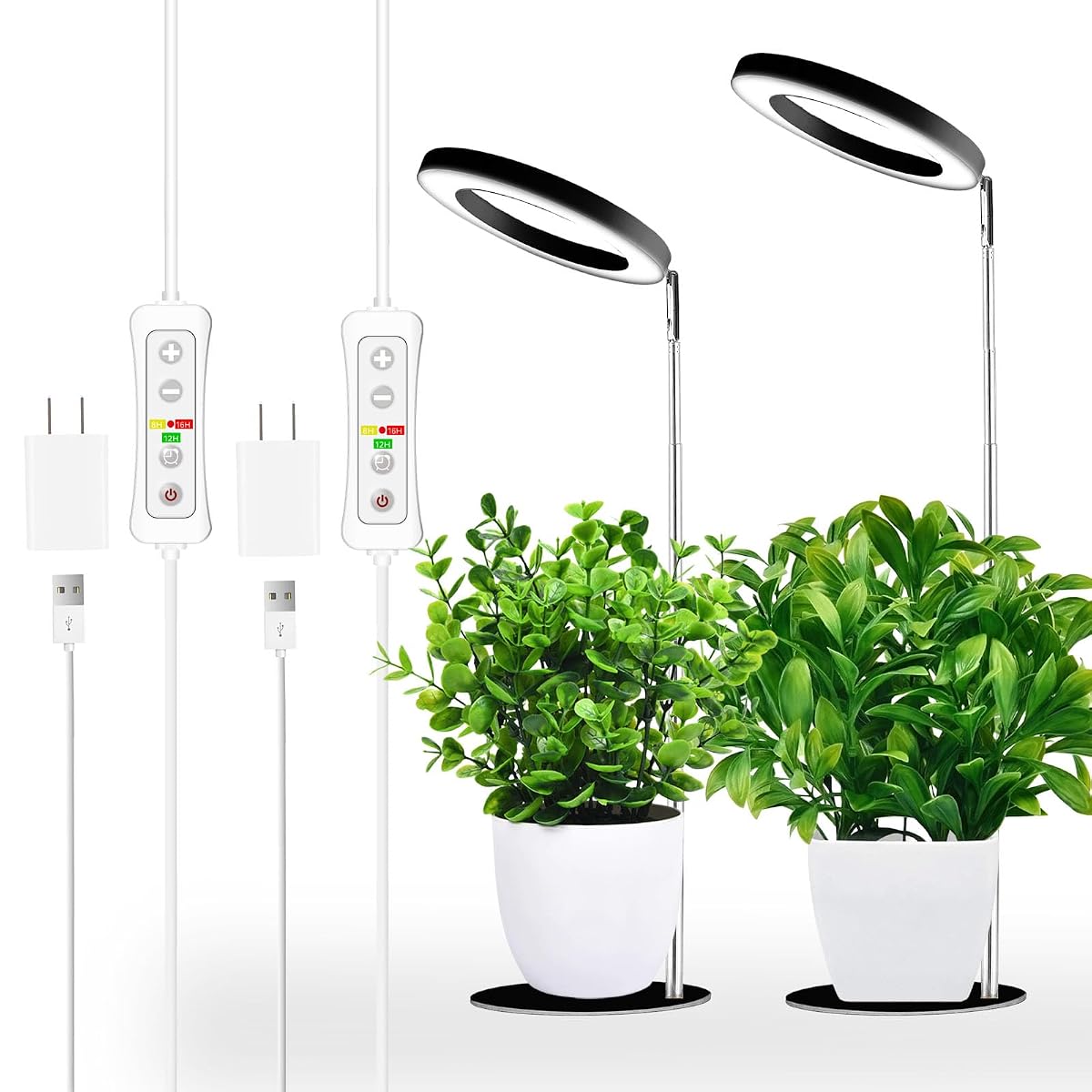
Look for a grow light that’s actually marketed for plant growth (not just “bright room light”), ideally one that mentions full spectrum or PAR coverage.
You don’t need to become a science nerd here.
You just need to know the brightness on the box is not the whole story.
How Long Should the Light Stay On?
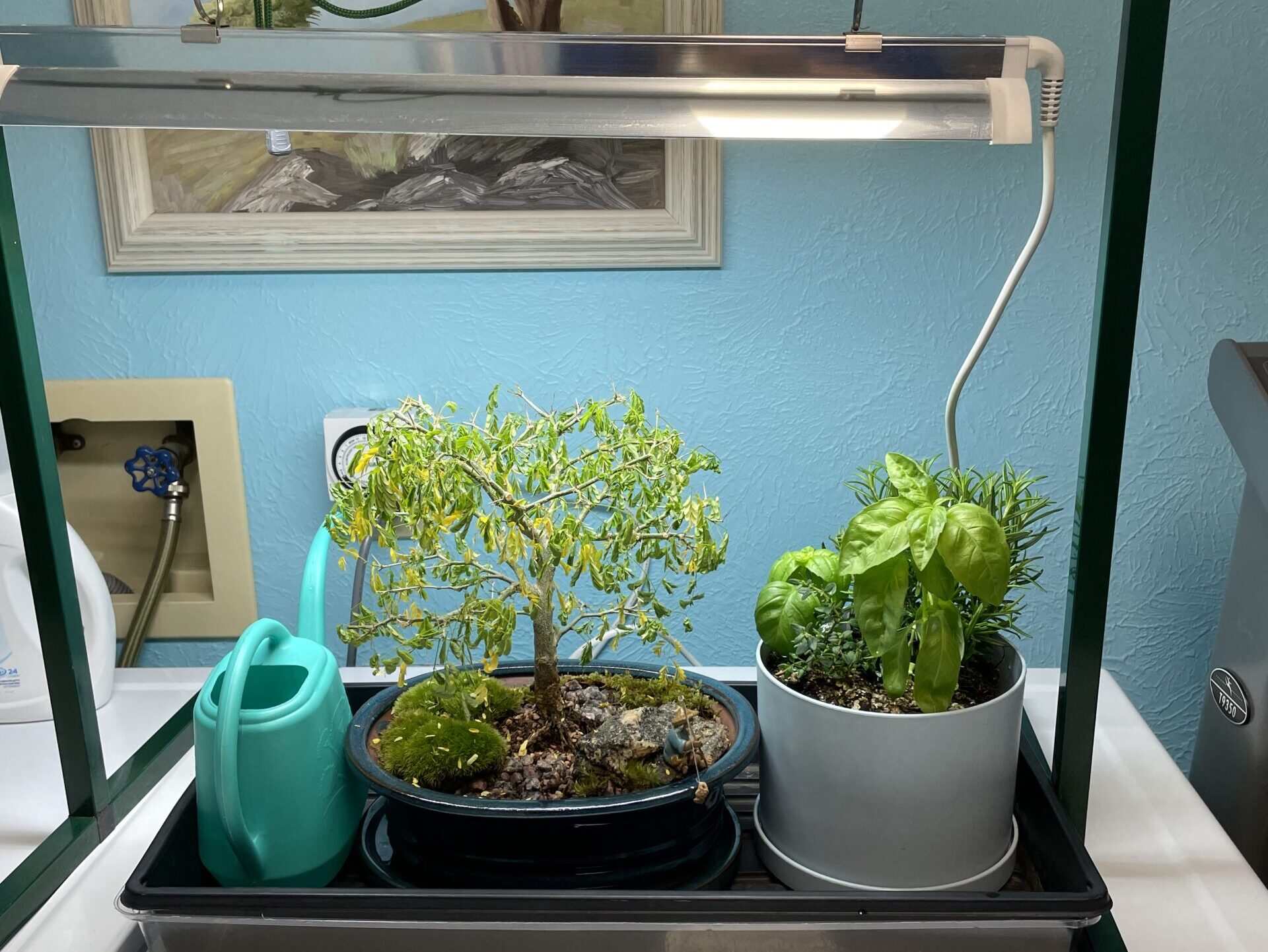
I used to think more hours equals more growth. Logical, right? More sun-time, happier plant.
Except herbs don’t actually work that way.
What matters is the total amount of usable light your plant soaks up over the whole day, not just how many hours the switch is flipped to “on.”
A weak light running 18 hours can still leave your herbs starving.
A good light running 12 hours can outgrow it easily.
Your real-world rule of thumb: Aim for 14 to 16 hours of light per day for most kitchen herbs (basil, mint, parsley, cilantro, oregano).
Set a cheap outlet timer and forget about it.
Your plant doesn’t care if you remember to turn it off at 9pm versus 9:15pm, so stop stressing over the exact minute.
What it does care about is darkness.
Real, uninterrupted darkness.
Leave your herbs in darkness

This one surprised me the first time I learned it, and it explains so many things.
Herbs need their dark hours to be dark. Not “dim because the hallway light is on” dark. Not “phone screen glow at 2am” dark.
A little light leak during what’s supposed to be nighttime can confuse your plant’s internal clock.
Basil and cilantro especially will respond by bolting (shooting up to flower) way earlier than they should, which makes the leaves taste bitter and the whole plant lose its bushy shape.
If your grow light setup lives somewhere with streetlights, a TV, or a hallway fixture nearby, just toss a towel over the area during dark hours or move the setup somewhere quieter at night.
Cheap fix, huge payoff.
Place the Light at the right place

This is where most people get it wrong, and I get it, because the advice out there is useless. “Hang it a few inches above the plant” tells you nothing.
Here’s what actually matters: Light fades fast the further it gets from your plant. Not a little fast. A lot fast.
Move your light from 12 inches away to 24 inches away, and you’re not cutting the light in half.
You’re cutting it down to a quarter of what it was.
Your plant goes from thriving to barely surviving with what feels like a small adjustment.
What this means for you: When you’re adjusting your light height, small moves matter a lot. If your herbs start looking pale or stretched, don’t just nudge the light up an inch and hope.
Get it noticeably closer, then watch for a few days.
And here’s the part nobody warns you about: Your plant is growing toward that light every single day.
The gap between your light and your herb’s leaves is shrinking on its own, all week long, without you touching anything.
This means a light height that was perfect on day one can become too intense by week three.
Your once happy basil starts looking bleached and crispy on top, and you have no idea why because you “didn’t change anything.”
You did change something. Your plant grew.
Check the height weekly, not just on setup day, and raise your light (or lower your plant) as the gap closes.
I call this the Weekly Lift Check, and it’s the single habit that separates people with thriving windowsill herbs from people who give up after one sad basil plant.
Lookout for problems

Plants can’t talk, but they absolutely send signals.
The problem is most beginners read the signals wrong, and end up making things worse.
Pale, almost bleached leaves on top, but the plant is otherwise green and healthy looking?
Your gut reaction will be to feed it more fertilizer, thinking it’s hungry.
Don’t.
This is usually the light being too close or too intense, basically sunburn. Move it back a few inches before you touch the plant food.
Tall, skinny, stretched out stems with big gaps between leaves? Most people assume this means “needs more light” and push it closer.
Sometimes that’s right.
But if the leaves are still a healthy green color, the real issue might be the light’s spectrum or just too much heat, and cranking up the intensity will make the stretching worse, not better.
The tell: Pale and stretchy means it needs more light.
Green and stretchy means something else is going on, usually heat or spectrum.
One side of your herb looks great, the other side looks miserable, same plant, same light?
Your shelf, a nearby cabinet, or even the light’s own casing is probably casting a shadow over part of the pot.
Rotate your plants a quarter turn every few days like you’re basting a chicken. It sounds silly. It works.
Set up a multi-tier shelf
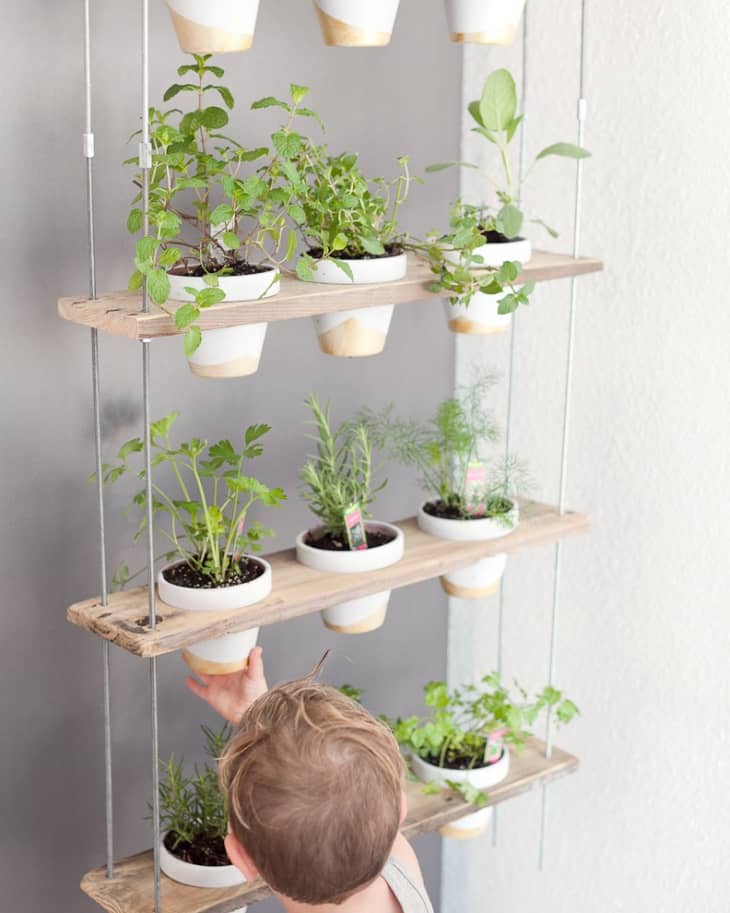
If you’re going full plant-mom mode with one of those tiered grow light shelves (no judgment, I have two), there’s a hidden trap waiting for you.
The shelf above casts shadows down onto the shelf below it.
The metal lip, the support bars, even the light fixture itself can block out chunks of light to the plants underneath, and you won’t notice until your lower shelf herbs are noticeably worse than your top shelf ones.
Before you load up plants on every level, do a quick flashlight test.
Turn off the room lights, turn on your grow light, and look at where the shadows fall on the shelf below.
Move your trickier, more light hungry herbs (rosemary, thyme) away from the shadow zones, and tuck your easier going herbs (mint, parsley) into the dimmer spots.
Match the herb to the Light

Not all herbs are equally dramatic about their light needs, and treating them all the same is a setup for frustration.
Easier, more forgiving herbs (great for beginners): Mint, parsley, cilantro, chives.
These will tolerate a slightly weaker or further away light without throwing a fit.
Medium fussiness: Basil, oregano, thyme, sage.
These want a solid, consistent light source and will sulk (in the form of stretching or pale leaves) if it’s too weak.
The diva herbs: Rosemary, lavender.
These two want the most light of the bunch, almost full sun levels indoors, and are usually the first to look leggy and miserable under a weak setup.
If you’re a true beginner, start with the forgiving group.
Save rosemary and lavender for once you’ve got your light placement dialed in.
There’s no shame in letting mint be your training wheels herb.
Set the dimer
:max_bytes(150000):strip_icc():format(webp)/spr-otk-grow-lights-test-mars-hydro-week-6-robert-dencklau-17-a82c40de7d464eaa84e66c6bba0c8f92.jpeg)
Here’s a small thing that takes ten seconds and prevents a lot of stress for your plant.
Don’t just slam the light on and off like a switch.
If your timer or light has a dimming feature, set it to gradually brighten over 15 to 30 minutes instead of going from pitch black to full blast instantly.
Same thing on the way down at night.
Think about how rough it feels when someone flips on the bedroom lights at full brightness while you’re still half asleep.
Your herbs feel something similar.
A gentle ramp keeps them less stressed, and a less stressed plant is a better growing plant.
Adjust the lighting regularly
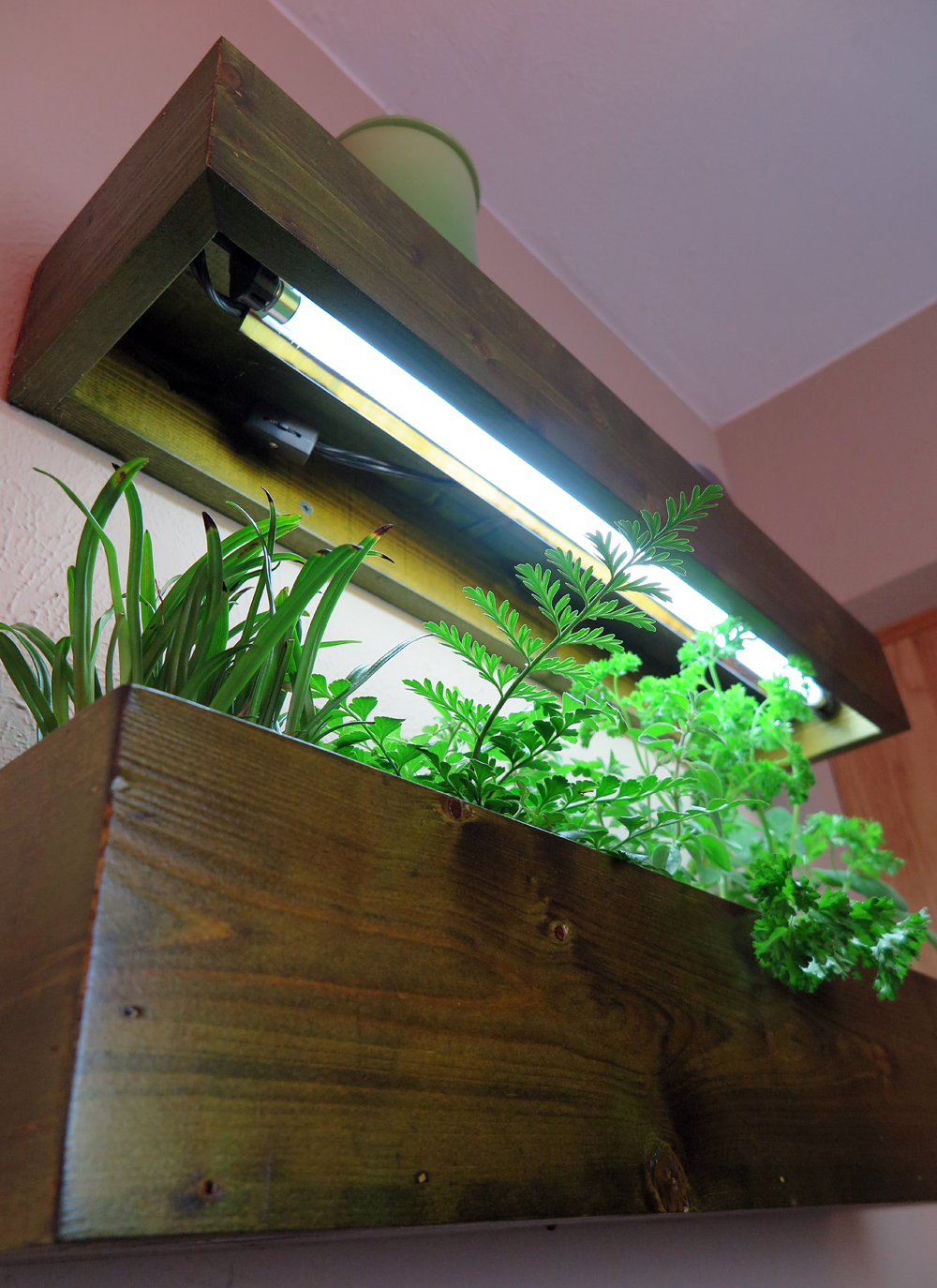
If you take away exactly one thing from this whole article, make it this: your grow light setup is never “done.”
It’s correct on day one, and then your plant starts growing toward it, slowly shrinking that gap every single day until what was perfect becomes too much.
Most people set their light once and never touch it again, then wonder why their thriving herb garden suddenly tanked three weeks in.
Make that Weekly Lift Check part of your routine, the same way you’d remember to water.
Glance at the gap between your light and the top leaves, adjust if it’s closing in, and you’ll skip the entire stretch-then-bleach-then-give-up cycle that ends most people’s indoor herb gardens.
Your basil will thank you. Or, well, it won’t, because it’s basil. But it’ll look amazing, and that’s basically the same thing.
FAQs
How to use grow lights for indoor plants for beginners
Pick a light made for plants, set it on a timer for 14 to 16 hours a day, and place it close enough that your plant gets strong light without getting scorched.
Check the height once a week, since your plant keeps growing toward the light.
Watch the leaves for clues (pale means too close, leggy and green means something else), and adjust from there instead of guessing.
What grow light setting is best for herbs?
Full spectrum white light is your best friend here.
Skip the colored blue and red light combos you see marketed for flowering plants, since herbs are all about leafy growth, not blooms.
If your light has a dimmer, run it at full strength for most kitchen herbs.
The diva herbs like rosemary especially want all the intensity you can give them.
How many hours of grow light for herbs?
14 to 16 hours a day covers almost every kitchen herb you’d want to grow.
Put it on a cheap plug timer so you’re not the one in charge of remembering.
Your herbs need that consistency way more than they need you nailing the exact hour every single day.
What herbs grow best under grow lights?
Basil, mint, parsley, chives, cilantro, and oregano are your easy wins.
They’re forgiving, fast growing, and basically impossible to mess up once your light setup is right.
Rosemary and lavender are pickier and want more intense light. Save those two for once you’ve got a few easy wins under your belt.
How long should I leave grow lights on for indoor plants?
Most leafy plants and herbs want 12 to 16 hours of light a day.
Succulents and cacti can get away with less, closer to 10 to 12 hours, since they’re used to intense but shorter bursts of sun in the wild.
Whatever number you land on, keep the dark hours dark and uninterrupted.
That part matters just as much as the light itself.
What two colors of light encourage flowering?
Red and blue light are the classic combo marketed for flowering, with red being the bigger driver.
You’ll see this all over hydroponic and tomato growing gear.
Here’s the catch for herb growers though.
You’re not trying to make your basil flower, you’re trying to keep it leafy and bushy for as long as possible.
A full spectrum white light will serve your kitchen herbs far better than a flowering focused red and blue setup.
How much does it cost to run a grow light 12 hours a day?
This depends on the wattage of your specific light and your electricity rate, but here’s a number to anchor you.
A small 20 watt grow light running 12 hours a day costs somewhere around a dollar or two a month for most people.
Even a bigger 50 watt light barely cracks five dollars a month at average electricity rates.
Grow lights are one of the cheapest hobbies you’ll ever maintain, so don’t let cost talk you out of trying one.
Do herbs need a lot of light to grow?
Yes, more than most kitchen counters can offer on their own.
Most herbs want the equivalent of a bright, sunny windowsill or stronger, which most homes simply don’t have year round.
This is exactly why grow lights come in and why your windowsill basil kept disappointing you. It was never getting enough.
Can I grow herbs inside with a grow light?
Yes, and it’s one of the most satisfying small wins in home gardening.
Fresh basil or mint without a single trip to the grocery store feels like a tiny superpower once you’ve got it dialed in.
A grow light removes the guesswork that comes with relying on whatever sunlight your windows happen to offer.
Which houseplants do well under grow lights?
Pothos, snake plants, ZZ plants, philodendrons, and most ferns all thrive under a grow light, even the lower light ones that don’t strictly need it.
Succulents and cacti do well too, though they’ll want a stronger, more intense light than your average leafy houseplant.
If a plant tag says low to medium light, it’ll usually do just fine, or even better, under a grow light.
When should I stop using grow lights?
If you’ve got a spot getting six or more hours of strong, direct natural sunlight, you can probably ease off the grow light there.
Many people switch their herbs outside for the summer and bring the grow light back out once fall hits and the natural light gets weaker.
If you’re growing year round indoors with no strong natural light source, there’s no real stopping point.
The grow light just becomes a permanent part of your setup, same as a sunny window would be for anyone else.
Can I use grow lights at night instead of day?
Yes, your plant has no idea what time it is on your actual clock.
What it cares about is a consistent block of light followed by a consistent block of uninterrupted darkness, in whatever order fits your schedule.
This is great news for anyone who works during the day and wants to enjoy their plants in the evening.
Just keep the timing consistent day to day instead of shifting it around.
How many hours of grow light for rosemary?
Rosemary is one of the higher light herbs out there, so aim for 14 to 16 hours a day with a strong, full intensity light.
It’s also a good idea to keep rosemary closer to the light than your easier herbs, since it’s used to growing in full, baking sun in its native Mediterranean habitat.
If your rosemary still looks pale or stretched after that, it’s probably craving a more intense light, not just more hours.
Can you give a plant too much grow light?
Yes, and this surprises a lot of beginners who assume more light is always better. Too much intensity, especially from a light placed too close, can bleach the upper leaves, crisp up the edges, and stress your plant out almost as much as too little light would.
The leaves nearest the bulb pale out first if this is happening. Pull the light back a few inches and you’ll usually see new growth bounce back within a week or two.
Related Posts: