Do Indoor Herbs Need a Grow Light?
Last Updated on June 24, 2026 by Duncan
Some herbs need a grow light. Some don’t. And the ones that “don’t” usually still want one come winter.
I know that’s not the clean yes or no you were hoping for.
But anyone who gives you a flat yes or no on this topic has never actually grown herbs through a full year in a real apartment with real windows and real seasons.
The Windowsill Myth Nobody Wants to Bust
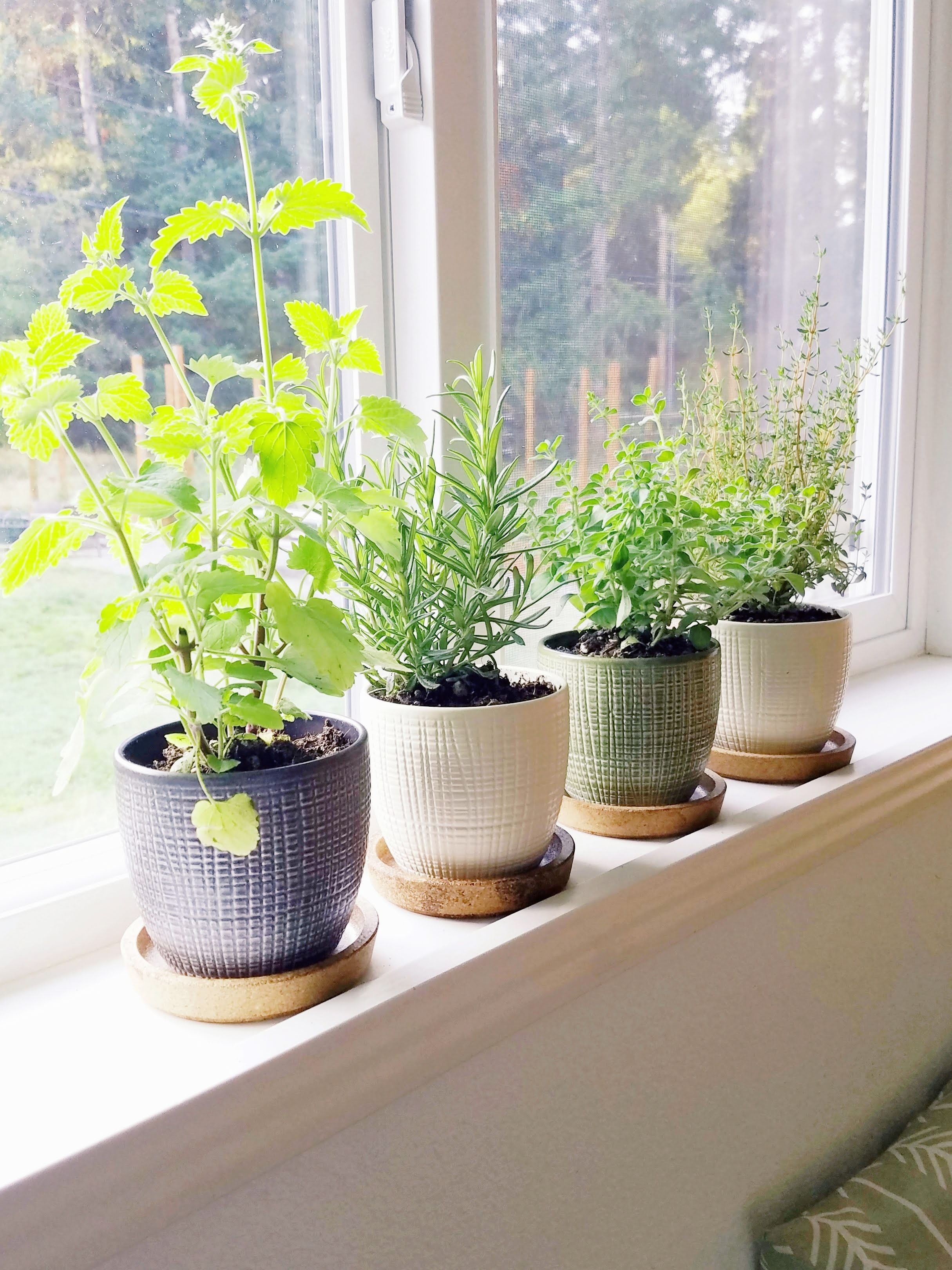
Here’s the advice you’ve read a hundred times. Put your herb on a sunny windowsill and call it a day.
Cute idea. Doesn’t hold up.
Your eyes are bad at judging light. I mean genuinely bad.
A windowsill can look bright and sunny to you while your basil is quietly starving for light all afternoon.
Your brain adjusts to brightness the same way it adjusts to smells in your own house. You stop noticing.
The plant doesn’t get that luxury.
This is why so many of us have grown a “sunny windowsill basil” that turned into a tall, floppy, sad looking thing with leaves spaced out like a teenager going through a growth spurt.
That stretching has a name.
It’s called legginess, and it almost always means the plant is reaching for light it isn’t getting.
So Which Herbs Need a Grow Light
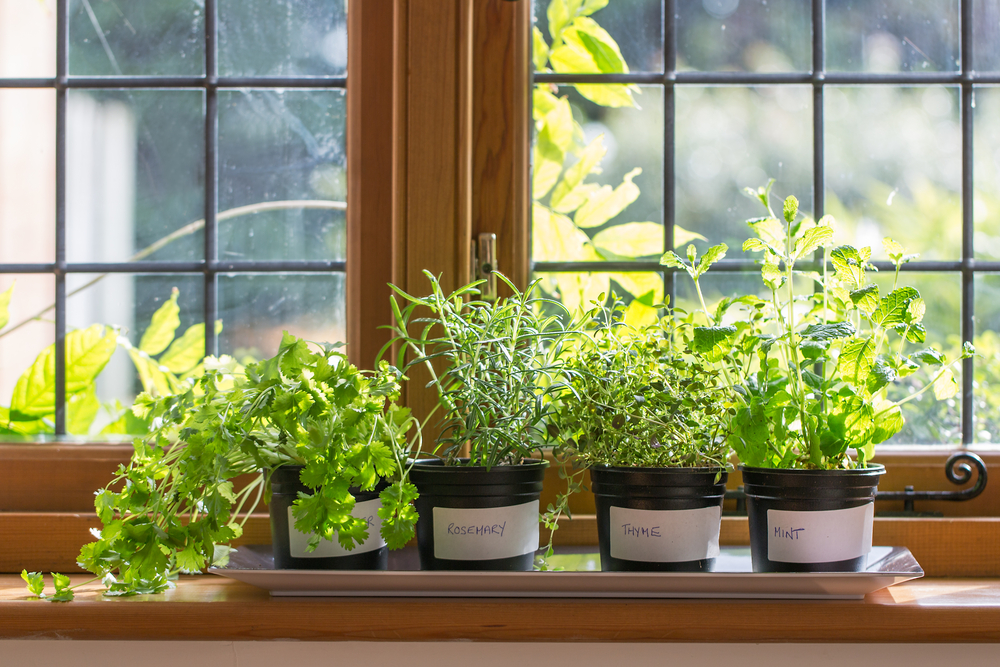
Not all herbs are created equal here, and this is where most articles get lazy.
These herbs are light hungry divas and usually need help indoors:
- Basil
- Rosemary
- Thyme
- Oregano
These herbs grow wild in sunny Mediterranean hillsides. They did not evolve to live their best life in your hallway corner.
These herbs are more chill and can often get by on bright window light alone:
- Mint
- Parsley
- Cilantro
- Chives
Mint in particular will grow in a closet out of spite. I’ve seen it happen.
So if your basil is struggling but your mint is thriving in the same room, that’s not random bad luck. That’s botany doing exactly what botany is supposed to do.
What happens when your indoor herb isn’t getting enough light?

Forget soil for a second. Forget your watering schedule.
When a herb isn’t getting enough light, here’s what actually happens, in order.
First, the stem stretches out, trying to reach better light.
Second, the leaves get smaller and thinner because the plant is rationing its energy. Third, and this is the part nobody talks about, the flavor gets weaker.
Yes. Weak light makes weak flavored herbs.
The oils that give basil its punch and rosemary its bite are tied to how much light the plant gets.
A struggling, light starved herb isn’t just ugly. It’s bland.
You’re growing flavorless garnish at that point, not an actual ingredient worth cooking with.
The Seasonal Trap you should watch out
Here’s something that took me embarrassingly long to figure out.
A windowsill that’s perfectly fine for your herbs in July can become a light desert by December.
The sun sits lower in the sky, the days get shorter, and the same window is suddenly delivering a fraction of the light it was giving in summer.
Your plant looks the same on the outside for a while. Inside, it’s slowly running on empty.
This is why so many people swear their herbs “did great all summer then died for no reason in winter.”
There was a reason. It just wasn’t dramatic enough to notice happening.
How to Tell If Your Herb Needs a Grow Light

You don’t need fancy equipment to figure this out. You need to know what to look for.
Check the space between leaves on the stem.
If that space looks longer than it used to, or longer than a healthy plant photo online, your herb is stretching for light.
Check the leaf color. A pale, washed out green compared to a deep, rich green is a red flag.
Check the leaf size on new growth.
If new leaves are noticeably smaller than older ones, the plant is cutting corners because it doesn’t have enough energy to go around.
If you’re nodding along to two or more of these, it’s time for a grow light. Not a “maybe someday” grow light. A “this weekend” grow light.
Some of the grow lights that you can go for include:
KEELIXIN 5-Head Adjustable LED Grow Light
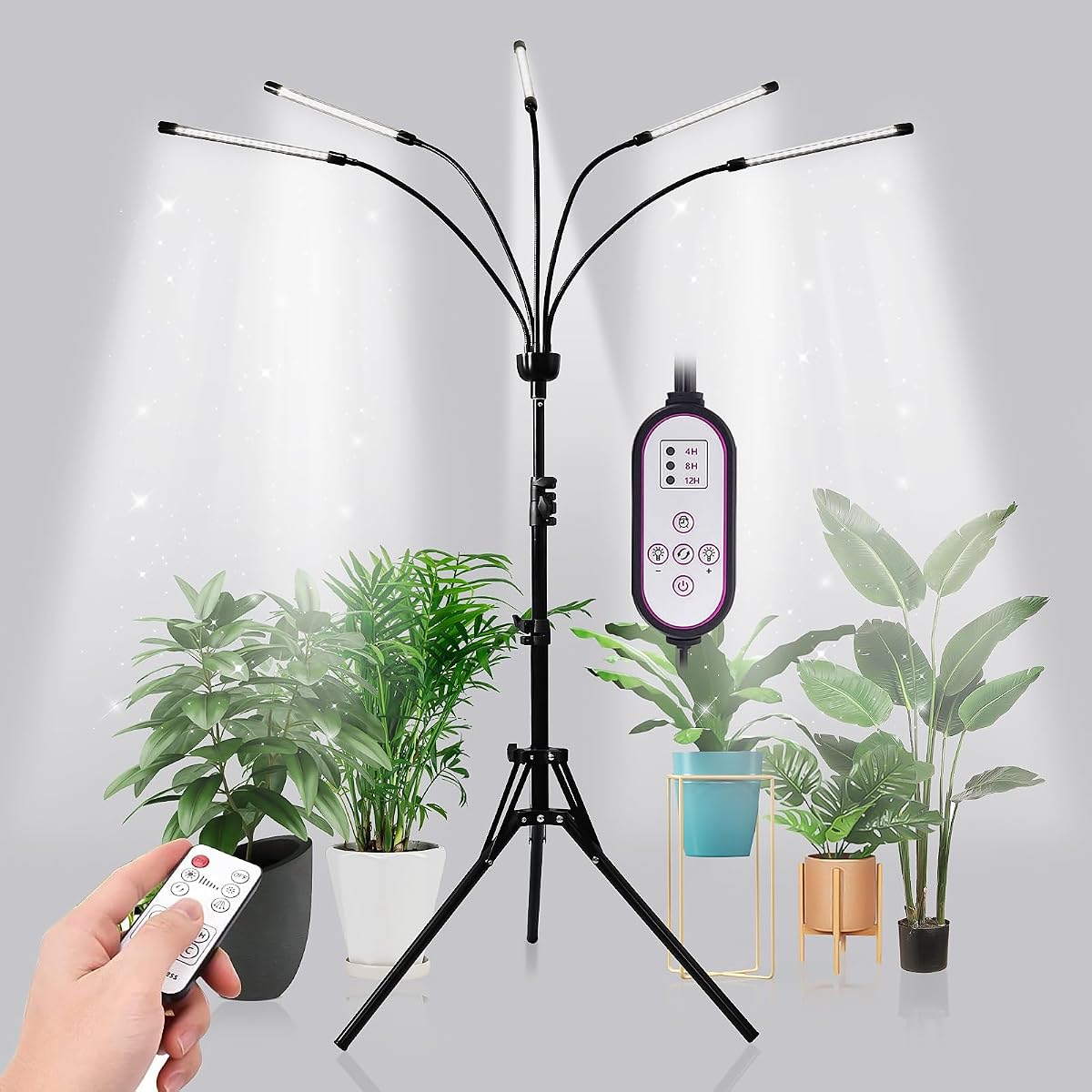
The gooseneck heads in this grow light are a real plus, since you can angle individual lights toward different pots instead of lighting one fixed zone, which solves the “basil and mint crammed under one light” problem we talked about.
The red and blue mode also matches the color science from the FAQ section, red for rooting and flowering, blue for compact leafy growth.
The catch is the timer tops out at 12 hours, and our recommended window for sun hungry herbs like basil and rosemary is 14 to 16 hours.
You’d need to run it on manual or pair it with a separate outlet timer to hit that range consistently.
It’s also worth noting the listing leans on marketing language like “5 times faster growth” without giving any actual light intensity numbers (PPFD), which is the gap most budget grow lights have.
It’s a reasonable starter pick for a kitchen herb setup, just don’t expect lab-grade specs behind the claims.
Yadoker grow light
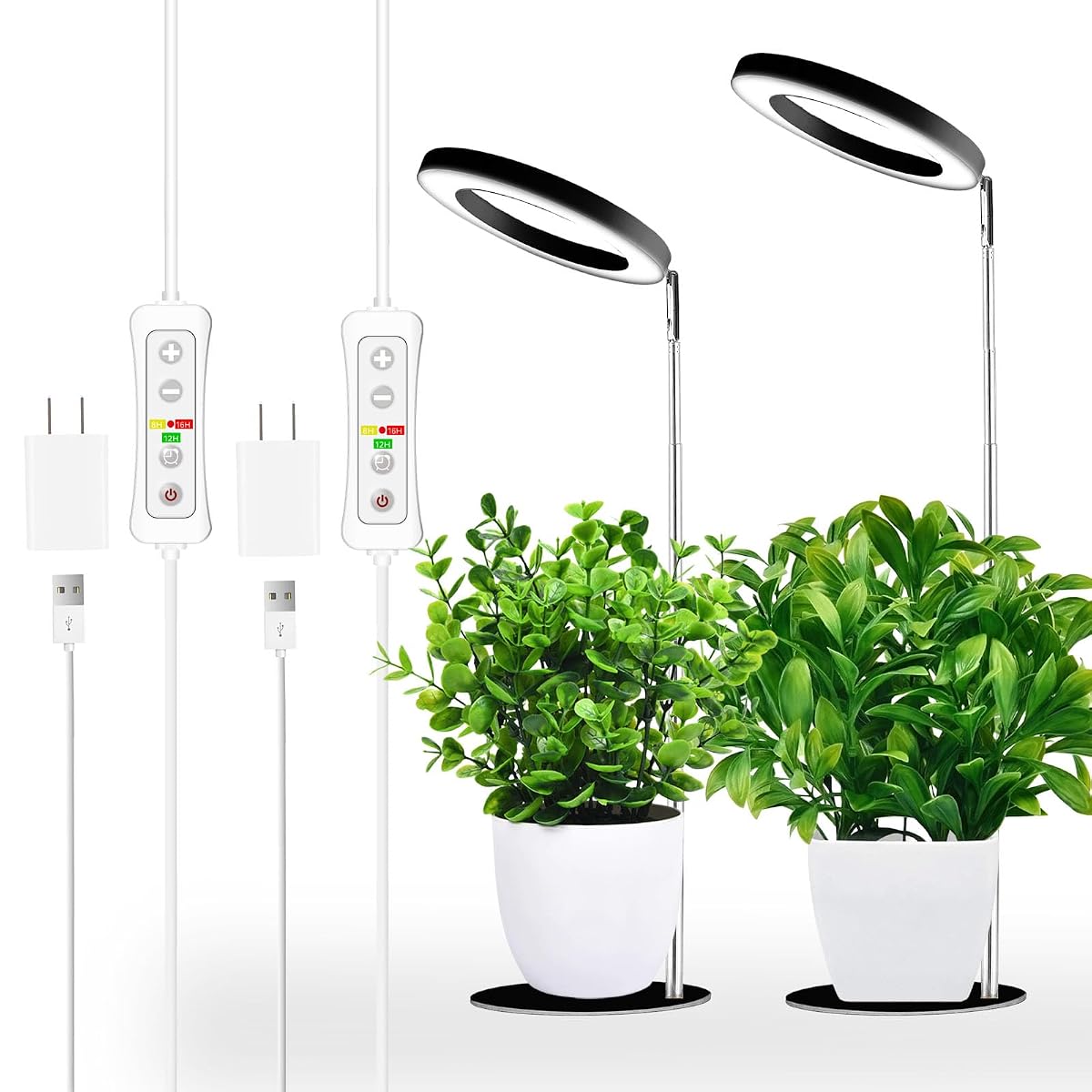
Yadoker is one of the few budget brands that actually publishes real PPFD numbers instead of hiding behind lumens.
Their basic halo light comes in around 150-250 PPFD, while their “Plus” halo light reaches 400-600 PPFD.
That’s not just marketing fluff, it directly tells you whether the light is suited for shade tolerant herbs like mint and parsley (the lower range covers that fine) or sun hungry herbs like basil and rosemary (you’d want to be solidly in that 400-600 range).
The grow light feels more decorative and beginner friendly, good for someone who doesn’t want their windowsill to look like a science lab.
The KEELIXIN wins on raw flexibility with its five independently aimable heads and remote control.
But Yadoker wins on transparency, since giving you actual PPFD numbers means you can match the light to your specific herbs instead of guessing, which is exactly the kind of detail we flagged as missing from most of these budget listings in the article.
bseah Full Spectrum Grow Light
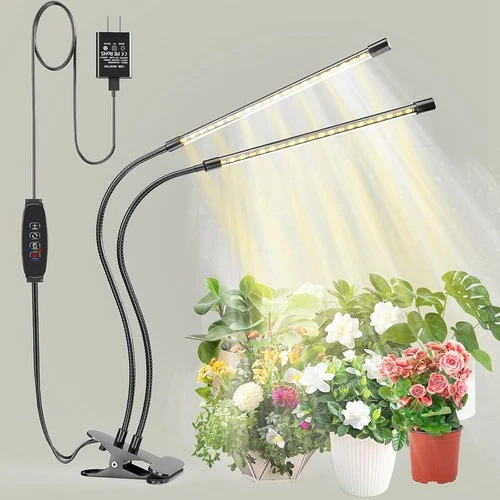
This is the cheapest, smallest, single-pot option of the three.
Good for a single windowsill basil plant or a seedling tray you’re just trying to get through winter, not a serious multi-herb setup like the KEELIXIN or Yadoker can handle.
The yellow and white combo here is a bit of an odd duck compared to the red and blue setups we’ve seen on the other lights.
The brand frames yellow light as supporting blooming and fruiting, and white light as supporting stems and leaves, which isn’t the spectrum breakdown most horticulture sources point to.
Red and blue tend to be the workhorse colors for photosynthesis, so this one is leaning on a less conventional spectrum story.
It’s also a single small clip light, not a multi-head fixture, so it’s realistically meant for one pot at a time rather than a full herb garden setup.
And a look at customer reviews on this one turns up a recurring theme:
A handful of buyers reported the timer drifting out of sync or stopping working after a couple weeks, along with the unit running dimmer than expected.
Not universal complaints, but enough to flag as a pattern worth knowing about before buying.
LEOTER 4-Head Gooseneck Grow Light

This one is the “more heads, same modest punch” option.
It beats a single clip light for spreading coverage across several small pots, but real-world feedback suggests it’s better suited to seedlings, succulents, or shade tolerant herbs like mint and parsley than to powering serious basil or rosemary growth on its own.
The four heads mean you can spread light across a wider row of pots than the single-head bseah, which is a real plus for a small herb shelf.
But this is also where independent feedback gets less flattering than the marketing copy.
A carnivorous plant forum thread digging into this exact light found the output disappointing even with the brightness maxed out, with one grower abandoning it for a stronger dedicated grow light instead.
UK buyer reviews echo a similar “it’s fine, nothing dramatic” verdict, describing it as an average product for beginners with somewhat weak arms that drift out of position over time.
What should you consider when buying grow light for your herbs?

Skip the bulb that brags about being “super bright.”
Brightness to your eyes and usable light for a plant are two completely different things.
Look for a grow light that’s labeled full spectrum or specifically marketed for plant growth, not general home lighting repurposed with a green sticker slapped on it.
Distance matters.
Most small grow lights for herbs should sit somewhere around 12 to 18 inches above the plant.
Too close and you’ll scorch leaves. Too far and you’re basically back to square one.
And here’s a tip that took me too long to learn. Move the light up as your plant grows.
A fixed height light on a fast growing basil plant becomes too close within a couple of weeks, and suddenly you’ve got crispy, burnt leaf tips.
How Long Should the Light Stay On?
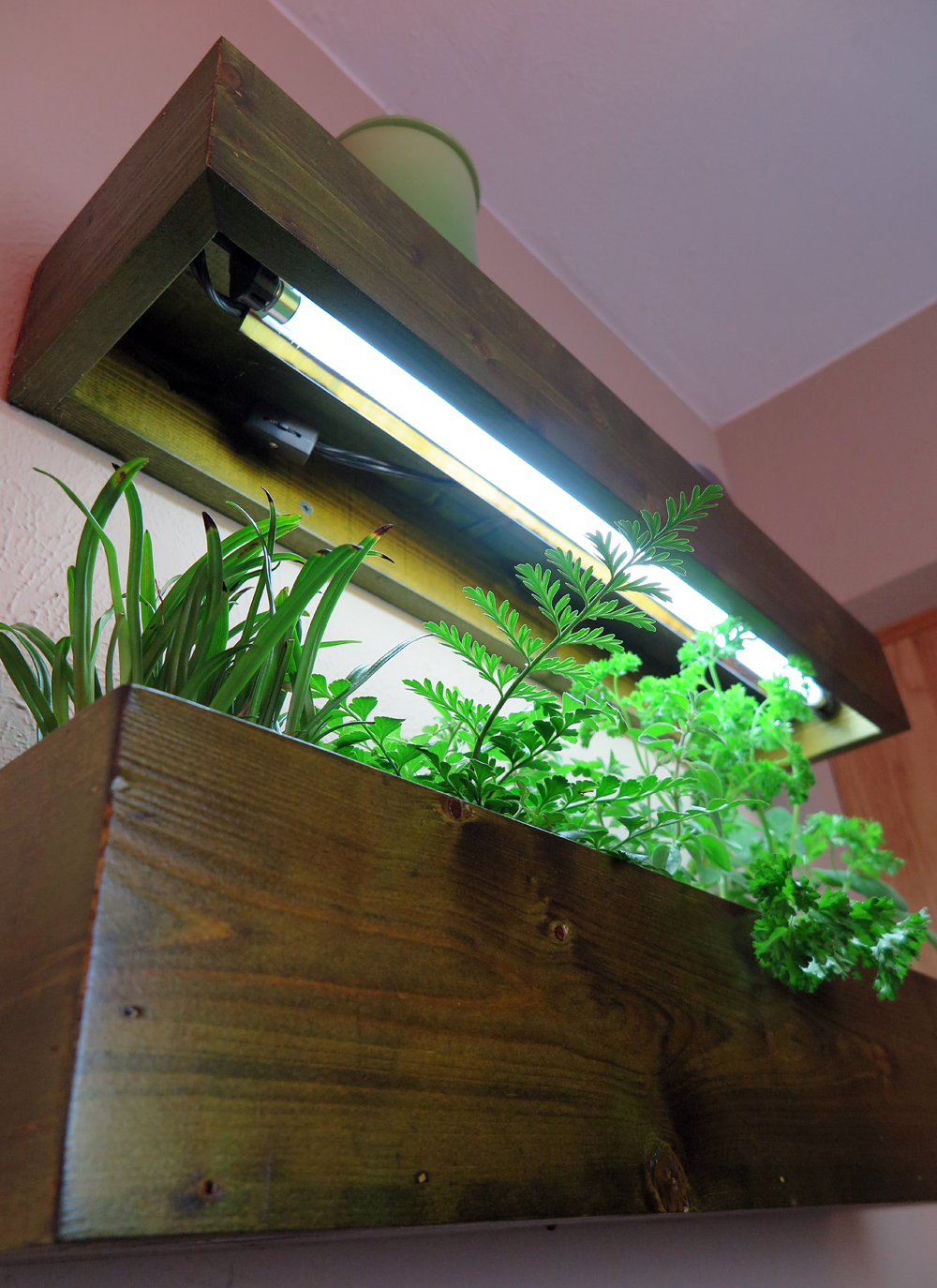
Fourteen to sixteen hours a day is the sweet spot for most kitchen herbs.
Here’s the part that surprises people. More hours isn’t automatically better.
Plants need darkness too.
It’s part of their internal clock, and running a light 24/7 because you figure “more light, more growth” can actually mess with how the plant develops and even weaken flavor over time.
A great way to go about it is to get a cheap timer outlet. Set it, forget it, stop worrying about whether you remembered to turn the light off before bed.
The Mistake Almost Everyone Makes
Putting a sun loving basil plant and a shade tolerant mint plant under the exact same light, at the exact same distance, expecting both to be happy.
One of them always loses in that setup.
Group your herbs by how much light they actually want, not by how cute they look together on your windowsill.
I learned this one by killing a perfectly good rosemary plant that I’d shoved next to a thriving mint.
The mint was so happy it practically took over the tray while the rosemary slowly gave up next to it.
A Tiny Detail Nobody Mentions: Airflow
This sounds unrelated to light, but stick with me.
Plants under strong light need fresh air moving around their leaves, or they can’t use that light efficiently.
Still, stagnant air right against the leaf surface creates a tiny bottleneck that slows everything down.
Thankfully, a cheap desk fan on low, pointed nearby (not blasting directly on the plant like a hurricane), can genuinely help your herbs use the light you’re already giving them.
It’s the most underrated five dollar fix in indoor herb growing.
So, Do You Need a Grow Light?

If you’re growing basil, rosemary, thyme, or oregano indoors and you live anywhere that gets real winters, yes. You almost certainly need one, at least for part of the year.
If you’re growing mint, parsley, cilantro, or chives near a genuinely bright window, you might be fine without one, especially in spring and summer.
But here’s my honest, twenty years in the dirt opinion.
A small, inexpensive grow light is one of the best investments you can make if you want herbs that taste like something, instead of sad little leaves you’re growing more out of guilt than enjoyment.
FAQs
You came here with one question and now you probably have five more. That’s how this hobby works. Here’s the rapid fire round.
What kind of light do I need to grow herbs indoors?
You want full spectrum light, meaning it covers the blue and red wavelengths plants use for photosynthesis, not just whatever looks pleasant to your eyes.
Most small grow lights made for kitchen herbs are LED, and a lot of them now look like normal white light to you while still being tuned for plant growth behind the scenes.
You don’t need the old fashioned purple glowing panel from a basement weed grow setup to get this right anymore.
What is the difference between LED lights and LED grow lights?
A regular LED bulb from your hardware store is built for your eyes.
It’s tuned to look warm and cozy or crisp and bright, and most of its output sits in the green and yellow part of the spectrum, which is the part plants barely touch for energy.
An LED grow light is built for chlorophyll, not your living room vibe.
It’s weighted toward red and blue wavelengths, the exact ranges a plant pulls the most energy from.
Same basic technology, completely different application.
Can any LED light be used as a grow light?
Technically, sort of. Practically, no.
A random LED desk lamp will give your herb something, and something beats nothing.
But it’s a bit like feeding someone exclusively bread and calling it a balanced diet. They’ll survive.
They won’t thrive, and you’ll see it in slow growth and weak flavor.
If you’re serious about herbs that taste like something, spend the extra few dollars on a light made for plants, not a repurposed desk lamp.
How many hours a day should herbs be under a grow light?
Fourteen to sixteen hours is the range I come back to over and over, and a cheap outlet timer is what makes that effortless instead of one more thing you forget.
Skip the urge to run it around the clock.
Your herbs need a real dark stretch every day to develop properly and hold onto their flavor, the same way you need actual sleep instead of a twenty four hour scroll session.
Can you grow herbs indoors without a grow light?
Yes, for some herbs, in the right window, during the right season.
Mint, parsley, cilantro, and chives can genuinely do well in a bright window with no extra light at all, especially from spring through early fall.
Basil, rosemary, thyme, and oregano are far less forgiving, and most homes without a true south facing window will struggle to keep them happy through fall and winter without backup.
If you only remember one thing from this entire article, remember this.
The plant will tell you the truth even when your eyes can’t.
Watch the stems, watch the leaves, and let that guide whether you should get a grow light.
Do Herbs Need a Lot of Light to Grow?
Some do, some don’t.
Sun loving herbs like basil and rosemary want serious light.
Shade tolerant herbs like mint and parsley can get by on a lot less and still taste exactly like they should.
What Is the Best Light for Growing Herbs Indoors?
A full spectrum LED grow light made specifically for plants, positioned close enough to actually reach the leaves.
A true south facing window comes in a close second, on the rare occasion you have one and it isn’t blocked by a building, a tree, or your neighbor’s questionable curtain choices.
What Herbs Grow Best Under Grow Lights?
Basil tops this list every time.
It responds to a grow light almost dramatically, going from leggy and sad to thick and bushy within a couple weeks.
Rosemary, thyme, and oregano follow close behind, since all four evolved soaking up strong direct sun.
What Color Light Is Best for Root Growth?
Red light gets most of the credit here.
It plays a big role in triggering root development, which is part of why a lot of grow lights lean red heavy for cuttings and young seedlings still establishing themselves.
Once the plant is rooted and growing, pair that red with blue, which keeps new growth compact and leafy instead of tall and stretchy.
What Color Light Helps Plants Grow Fastest?
A balanced mix of red and blue, often labeled full spectrum, drives the fastest overall growth for most herbs.
Red fuels growth and flowering, blue keeps the plant compact and bushy, and your herbs want both working together rather than leaning on just one.
What Color Light Do Plants Grow Worst In?
Green light.
It sounds backwards since plants are green, but that’s the whole reason.
Leaves reflect green light instead of absorbing it, which is exactly why they look green to us in the first place.
Pure green light gives a plant very little to work with.
What Can I Use Instead of a Grow Light?
Your brightest, most reliably sunny window first, paired with something reflective nearby like a white wall, a mirror, or even a sheet of foil to bounce extra light back onto the plant.
Rotating the pot every few days helps too, since it stops one side from stretching toward the window like it’s auditioning for a dance recital while the other side sulks in the shade.
If your window situation is genuinely rough, lean into the shade tolerant herbs like mint, parsley, and chives instead of fighting an uphill battle with basil.
How Many Hours of Grow Light Does Rosemary Need?
The same general range as the rest of the sun loving crew, 14 to 16 hours a day.
Rosemary forgives a lot of mistakes, mainly the overwatering kind, but it does not forgive a lack of light.
Skimp here and you’ll end up with a woody, sparse plant instead of a full, fragrant one.
Is It Bad to Leave Grow Lights on for 24 Hours?
For most herbs, yes, even though it feels like more light should mean more growth.
Plants use their dark period to process what they soaked up during the light period, almost like digesting a meal.
Skip that window for the long haul and you’ll often end up with a stressed, oddly growing plant instead of a thriving one.
Do Plants Grow Faster With 24 Hours of Light?
Not usually, and definitely not for kitchen herbs.
A handful of fast growing crops can occasionally handle it short term, but most plants, herbs very much included, need that daily dark stretch to actually use the light they already received.
When Should You Turn on Grow Lights for Indoor Plants?
The honest answer is whenever your natural light stops covering the need, and that point usually creeps up earlier than people expect.
Most of us wait until the plant looks obviously unhappy, when the smarter move is starting supplemental light as soon as the days get noticeably shorter, somewhere around early fall for most climates.
What Are the Drawbacks of Using Grow Lights for Indoor Plants?
They use electricity, so your power bill ticks up a little, especially running more than one.
Some lights run warm and can dry out soil faster, so you’ll likely water a touch more often.
Cheap lights can also throw an odd colored glow into a room you’re trying to relax in, which is exactly why the newer full spectrum, white looking options have gotten so popular.
What Is a Good Cheap Grow Light?
Look for a small clip on or stand mounted LED panel labeled full spectrum, with an adjustable arm so you can raise it as your plant grows.
You don’t need an expensive setup for a few kitchen herbs.
You need the right kind of light, positioned at the right distance, run on a consistent schedule.
How Long Should Indoor Plants Be Under a Grow Light?
For most herbs and a lot of common houseplants, somewhere between 12 and 16 hours covers it, depending on how much natural light they’re already grabbing elsewhere in the day.
Think of the grow light as filling a gap in their day, not running the entire show by itself.
Quick Save-This-Pin Checklist
- Basil, rosemary, thyme, oregano: usually need a grow light, especially fall and winter
- Mint, parsley, cilantro, chives: often fine with bright window light alone
- Stretched stems and pale, small leaves: your sign to add a grow light now
- Light distance: 12 to 18 inches from the plant, raised as it grows
- Run time: 14 to 16 hours a day on a timer, not 24/7
- Group plants by light needs, not by how nice they look together
- Add a small fan nearby for better results from the same light
Related Posts: