Why Do I Keep Killing My Herbs? 10 Things You Keep Doing Wrong
Last Updated on June 24, 2026 by Duncan
If you’ve ever stood in your kitchen holding a sad, crispy basil plant wondering what you did wrong, welcome. You’re in good company.
I’ve killed more herbs than I can count. Rosemary, thyme, three different basils, a cilantro that lasted exactly nine days.
And here’s the thing I wish someone had told me years ago: it almost never has anything to do with how much you love your plants or how green your thumb is.
It’s about a handful of sneaky little details nobody warns you about. So let’s fix that.
You are not seperating your herbs
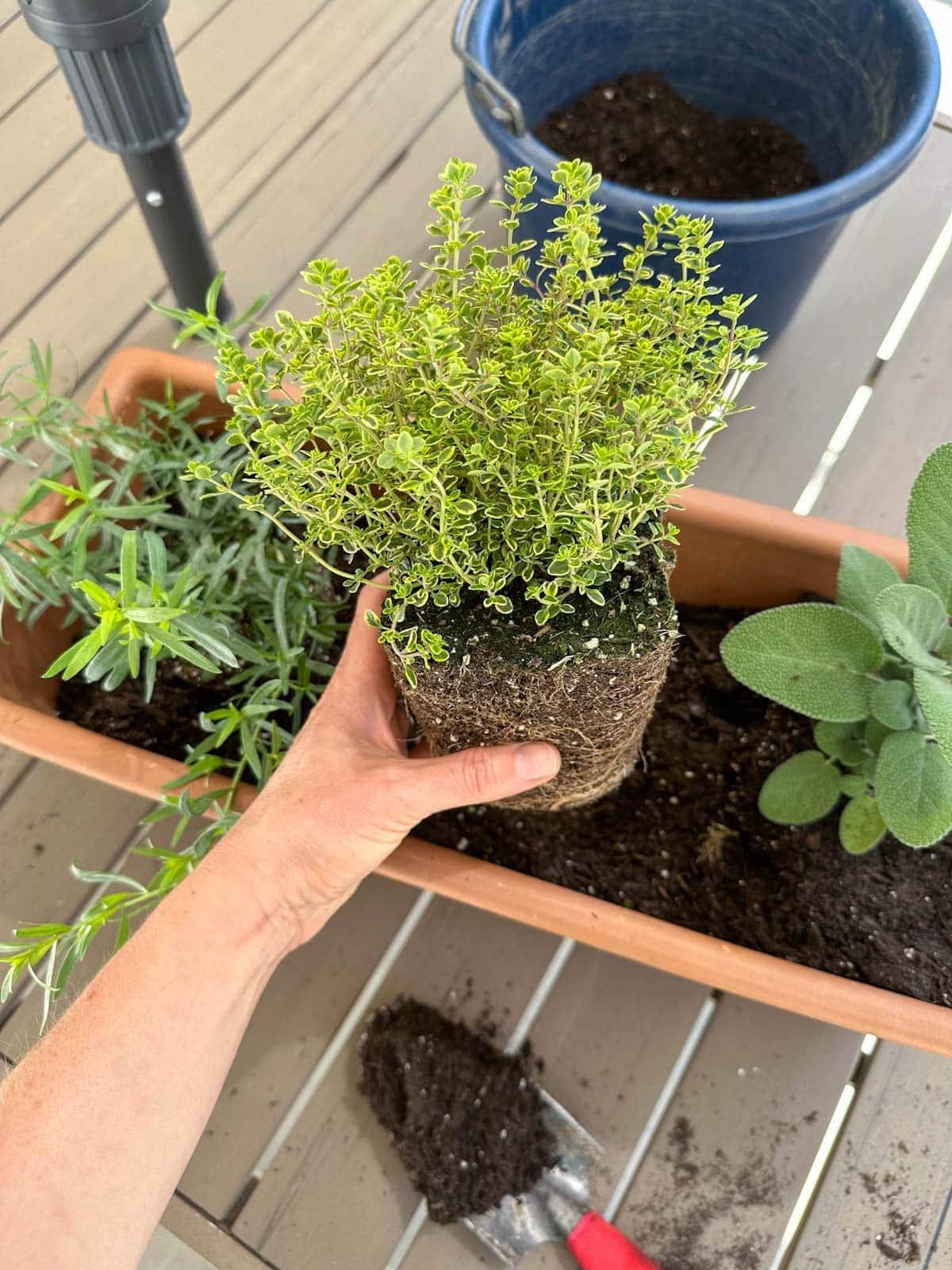
You know that gorgeous, full basil plant you grab from the produce section? It looks like one plant. It is not one plant.
It’s usually eight to fifteen baby seedlings crammed into one tiny pot, all fighting for the same tiny patch of soil.
They were grown to look pretty on a shelf for a week, not to live in your kitchen for months.
Within a week or two, they start choking each other out. You water it, you give it sun, you do everything right, and it dies anyway.
You didn’t fail. The pot failed before it even got to you.
The fix: The day you bring it home, gently pull it apart into smaller clumps and give each one its own pot.
It feels aggressive but it’s the only way that plant has a real shot.
Your pot is not draining

This one gets almost everyone, including me, for years.
You buy a pretty ceramic pot with no hole in the bottom because it matches your kitchen. You plop the plastic nursery pot inside it. You water like normal.
Except now every time you water, the extra drains straight into that pretty pot and just sits there.
Your plant’s roots are basically standing in a puddle you can’t even see.
Lift the inner pot out and check after you water. If there’s water pooling at the bottom, dump it out every single time. Or drill a hole.
Or just use the decorative pot as a fancy sleeve and keep the plant in something with drainage.
You are overwatering your herbs

Everyone tells you to stick your finger in the soil to see if it’s dry. Here’s the problem with that.
The top inch of soil dries out way faster than the soil down where the actual roots are.
So your finger says “dry, water me” while the roots are still sitting in plenty of moisture. You end up overwatering based on bad information.
Here’s what I do instead, and it sounds silly until you try it.
Pick up the pot when it’s freshly watered and notice how heavy it feels. Pick it up again a few days later. When it feels noticeably lighter, that’s your real signal.
Your hands know more than your finger does.
You are loving your herbs the wrong way

This is the one that took me embarrassingly long to learn.
Basil, mint, and cilantro are thirsty little drama queens.
They want consistent moisture and they will wilt dramatically the second they get dry, mostly for attention.
Rosemary, thyme, oregano, and lavender are the opposite. They grew up in dry, rocky, sun baked hillsides and they hate having wet feet.
Water them like you water your basil and you will rot the roots without even realizing that’s what’s happening.
I kept giving my rosemary the same care as my basil for an entire summer before I figured out why it kept turning brown and crunchy. It wasn’t thirsty. It was drowning.
The fix: Group your moisture lovers together and your drought lovers together.
Water them on completely different schedules. Treat them like the different personalities they actually are.
Your “Bright Windowsill” Probably Isn’t as Bright as You Think
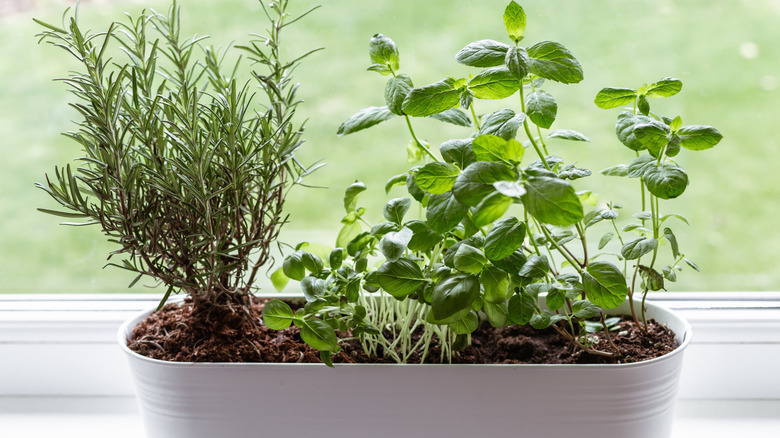
I know, the windowsill looks sunny. It feels sunny when you stand there with your coffee.
But glass blocks a surprisingly large chunk of the light your plant actually needs, and the light drops off fast the further the plant sits from the window.
A spot that feels bright to your eyes can still leave your herbs starving for real light.
That’s why your herbs go tall, pale, and floppy instead of bushy and full.
They’re stretching toward whatever scraps of light they can find. People blame this on watering when it’s a light problem in disguise.
The fix: Push your herbs as close to the window glass as you can during the day, and if they still look stretched and sad after a few weeks, it’s time for a cheap grow light.
It is not cheating. It is the difference between surviving and thriving.
Your herbs are getting too cold
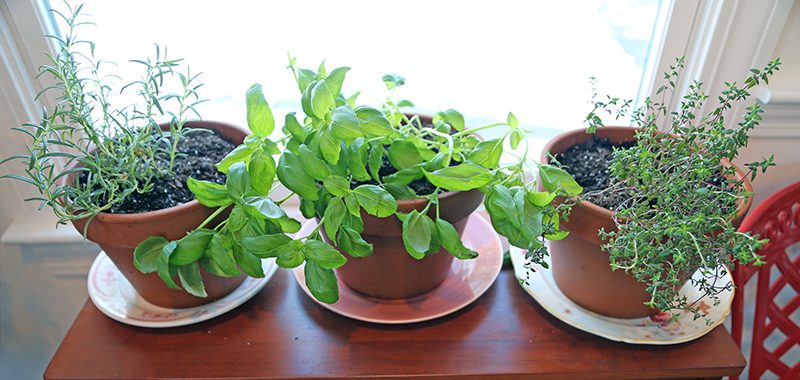
Here’s the plot twist nobody mentions.
The same window giving your herbs daytime light can chill them at night.
Glass loses heat fast once the sun goes down, and the air right against it can get noticeably colder than the rest of your room.
Your basil could be sitting in a cold pocket every single night without you ever knowing.
The fix: Slide your herbs a few inches away from the glass once it gets dark, especially in colder months. A tiny move, and you have a much happier plant.
Your pot is too big
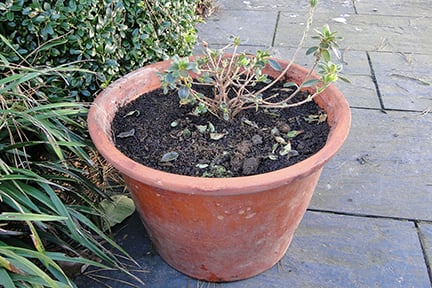
This one feels so wrong it trips people up constantly.
Your instinct says a struggling plant needs more room to grow, so you move it into a much bigger pot to “give it space.”
That bigger pot now holds way more soil and way more water than those small roots can actually use.
All that extra wet soil just sits there around roots that can’t reach it, and it starts to rot. You think you’re being generous. You’re actually setting up a slow motion disaster.
The fix: Size up gradually. A pot just one or two inches bigger in diameter is plenty. Plants don’t need a mansion, they need a cozy apartment that fits.
You don’t have enough fresh air

We talk about light and water constantly and never mention airflow, which feels like a crime because it matters a ton.
Herbs sitting in still, stagnant air are way more likely to develop mold, mildew, and weak floppy stems.
Moving air keeps moisture from settling on the leaves and helps your plant grow sturdier.
I started putting a small fan on low near my herb shelf for a few hours a day and the difference in stem strength within a couple weeks was obvious. Like night and day.
The fix: Crack a window when you can, or run a small fan nearby for a couple hours a day. Your herbs want a breeze, not a sealed little terrarium of doom.
You are using too much fertilizer
:max_bytes(150000):strip_icc():format(webp)/bhg-fertilizing-houseplants-2a803afbbd5449ee8ce09e5d09131705.jpg)
More fertilizer does not mean more growth.
In a small pot, those nutrients build up fast because there’s nowhere for the extra to go.
That buildup shows up as crispy brown leaf edges or stunted growth, and people usually read that as “needs more food” and make it worse.
The fix: Feed lightly, way less than the package says, and every month or so run plain water through the pot until it drains out the bottom a few times.
Think of it as flushing the system clean.
You Harvest Your Herbs the Wrong Way
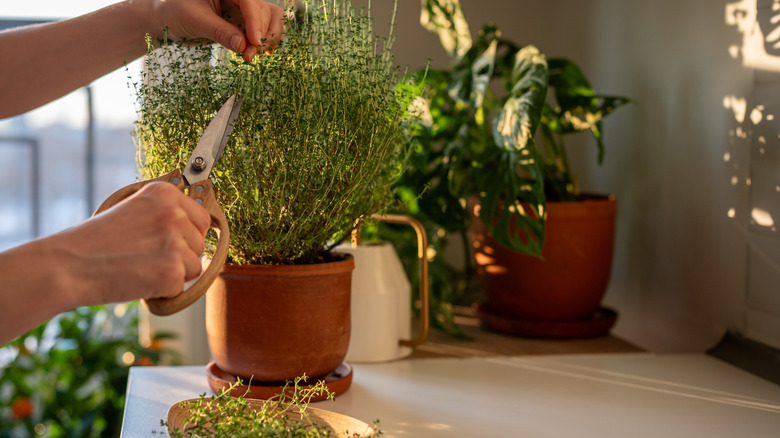
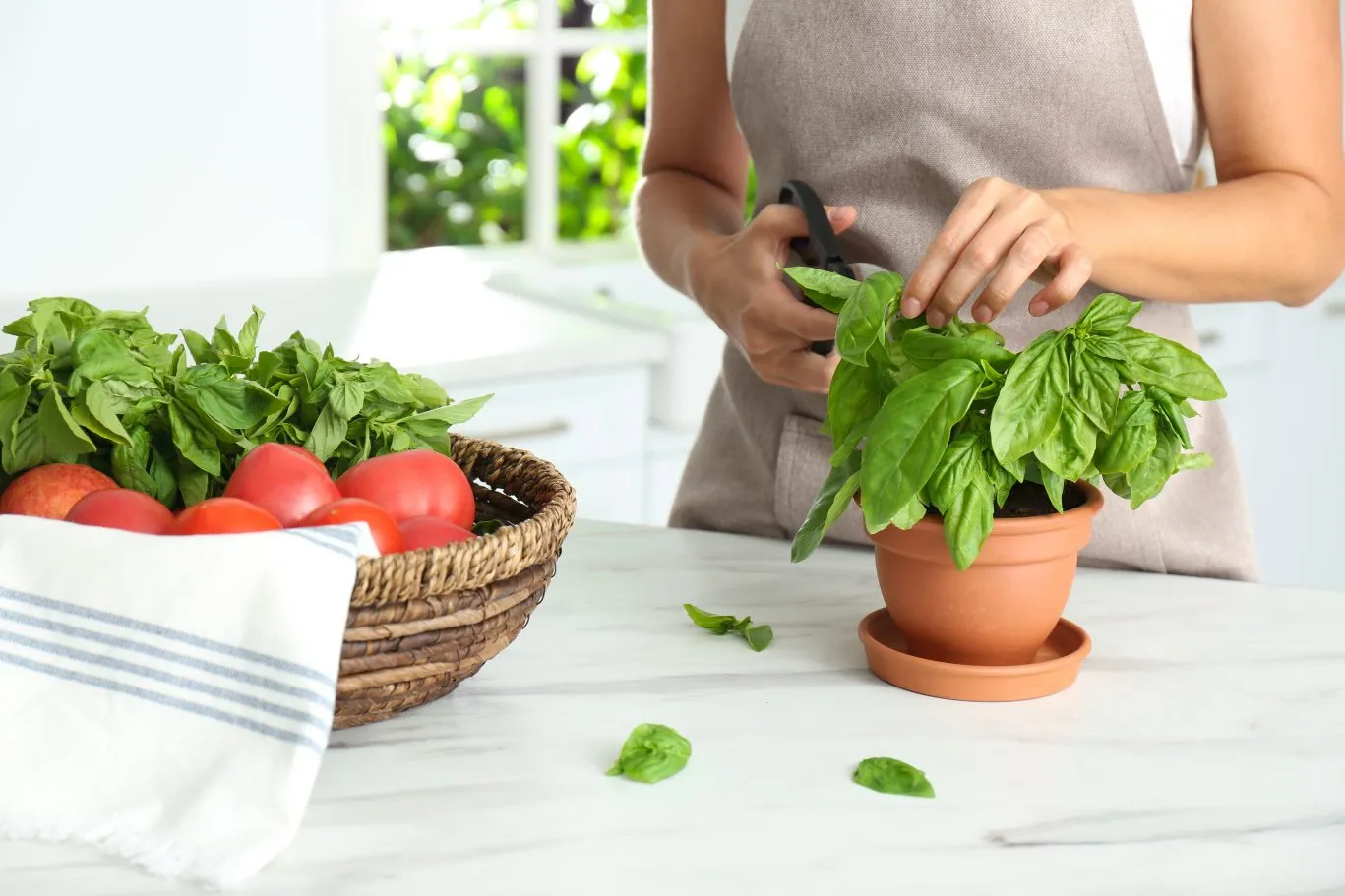
Snipping random leaves off the top whenever you need them for dinner feels harmless. It’s actually one of the sneakier ways people stall their plant’s growth.
Taking more than about a third of the plant at once shocks it and can stall new growth for weeks. And where you cut matters just as much as how much.
The fix: Cut just above a pair of leaves rather than mid stem. This tells the plant to branch out and grow fuller instead of just taller.
Your basil will thank you by getting bushier instead of leggier.
The One Thing That Ties All of This Together
If you remember nothing else from this article, remember this one idea. I call it the sweet spot rule.
Almost every “mystery” herb death, the wilting, the yellowing, the moldy spots, the leggy stretching, comes back to one thing. Your herb’s temperature and humidity are out of balance with each other.
Too hot and dry, and your plant loses water faster than its roots can replace it, so it wilts even with damp soil.
Too cold and humid, and growth turns weak and mold loves to move in.
So next time something looks off, don’t immediately blame the watering can. Ask yourself if the air around your plant feels too harsh or too stale, and adjust from there.
You’re Not Bad at This
Here’s what I want you to take away from all of this. You were never doing a bad job. You were just working with information that left out the parts that actually matter.
Now you know about the overcrowded seedlings, the sneaky decorative pot puddle, the cold window at night, the oversized pot trap, and the air quality nobody talks about.
Fix even two or three of these and watch what happens. Your herbs are not fragile little divas. They just needed you to know their secrets.
Frequently Asked Questions
Why is my indoor herb garden dying?
Most of the time it isn’t one big thing, it’s two or three small things stacking on top of each other.
Maybe the light is dimmer than it looks, the pot has no drainage, and you’re watering on a schedule instead of based on need.
Go back through the list above and check each one off, the culprit is usually hiding in there somewhere.
How do you keep an indoor herb garden alive?
Give each herb the kind of care it actually needs instead of one generic routine for all of them.
Check pot weight instead of poking the soil, keep your moisture lovers and your drought lovers separate, and don’t skip airflow.
Consistency beats intensity here, a little attention every few days wins over a big watering binge once a week.
What are the most common mistakes people make growing herbs indoors?
Overcrowded grocery store pots, decorative pots with no drainage hole, and oversized pots are the top three silent killers.
Right behind those is not enough light, even when a spot looks bright to your eyes.
None of these feel dramatic in the moment, which is exactly why they’re so easy to miss.
How do you bring herb plants back to life?
First figure out if the problem is too much water or too little, since the fixes are opposite.
Trim off anything fully brown and crispy, move the plant to better light, and let the soil dry out a bit if it’s been soggy.
Give it one to two weeks before you decide it’s a lost cause because herbs often bounce back slower.
Will dead herbs grow back?
If the stems are still green or a little flexible underneath the damage, there’s a real chance.
Snip back the dead parts, keep the soil at a steady moisture level, give it good light, and wait.
If the stems are brown, brittle, and snap dry with no green inside, that one isn’t coming back.
How do you stop herbs from dying?
Start with the basics that get skipped the most, drainage, the right pot size, and matching each herb’s actual water needs.
Add good airflow and consistent light on top of that and you’ve covered most of what kills indoor herbs.
It’s less about doing more and more about doing the right handful of things.
What is the lifespan of an indoor herb?
This depends a lot on which herb you’ve got.
Basil, cilantro, and dill are annuals, meaning they’re built to live one season and naturally decline no matter what you do.
Rosemary, thyme, oregano, sage, and mint are perennials and can live for years indoors with the right care, so don’t blame yourself when your basil “dies” right on schedule.
How do you save a dying herb?
Stop watering immediately and check the roots if you can, mushy brown roots mean rot and dry crumbly roots mean thirst.
Trim away the damaged parts, repot into fresh soil if rot is the issue, and move it somewhere with better light and airflow.
Then be patient as recovery is rarely instant.
How do you grow herbs without killing them every time?
Stop following one generic care routine for every herb you own, that’s the biggest shift.
Learn which of your herbs are thirsty and which are drought loving, fix your pot situation, and pay attention to light instead of assuming the windowsill is handling it.
Small adjustments compound fast once you know what to actually look for.
What are the 9 immortal herbs?
You’ll see slightly different versions of this list floating around, but it usually points to the herbs that are nearly impossible to kill even with inconsistent care.
Think rosemary, thyme, oregano, mint, sage, chives, lemon balm, marjoram, and lavender.
They’re tough, drought tolerant, and forgiving of the occasional missed watering, basically the low maintenance friend group of the herb world.
How do you successfully grow herbs indoors?
Match each herb to the right pot size and soil type, give it real light instead of guessing, and keep the air around it moving.
Water based on weight, not by poking the soil, and don’t overcrowd your plants.
Do those things consistently and you’ll be shocked how much easier this gets.
Why do my indoor herbs always die?
If this keeps happening over and over, there’s usually a repeating pattern rather than bad luck.
Check if you’re always buying the same overcrowded grocery store herbs, always using pots without drainage, or always placing them somewhere that looks bright but isn’t.
Fix the repeating pattern and you fix the repeating problem.
Related Posts: