
9 Flowers for Protection from Evil Every Garden Should Have
Last Updated on July 6, 2026 by Duncan
Protective flowers have been part of gardening traditions for centuries.
Think European doorstep herbs, Latin American home altars, and the little pot of rosemary your grandmother kept on her porch.
This isn’t about being superstitious.
It’s about creating a home that feels safe, smells amazing, and quietly tells the world you take your space seriously.
If you are looking for flowers to ward off evil, there are many that you can go for.
Keep your flowers alive
Here’s something nobody tells you.
A dying plant by your front door does the opposite of protecting you.
A wilted, brown, half dead shrub doesn’t say “guarded and cared for.”
It says “nobody’s paying attention here.”
In almost every tradition that uses plants for protection, a thriving plant is the whole point.
The health of the plant is the protection.
So before we get into which flowers to plant, hear this.
You can grow every flower on this list, and if you let them die, you’ve done nothing.
A struggling geranium is not a shield. It’s just a struggling geranium.
Keep that in mind as we go. The magic isn’t in the species. It’s in the care.
The flowers that protect you from evil
1. Marigolds
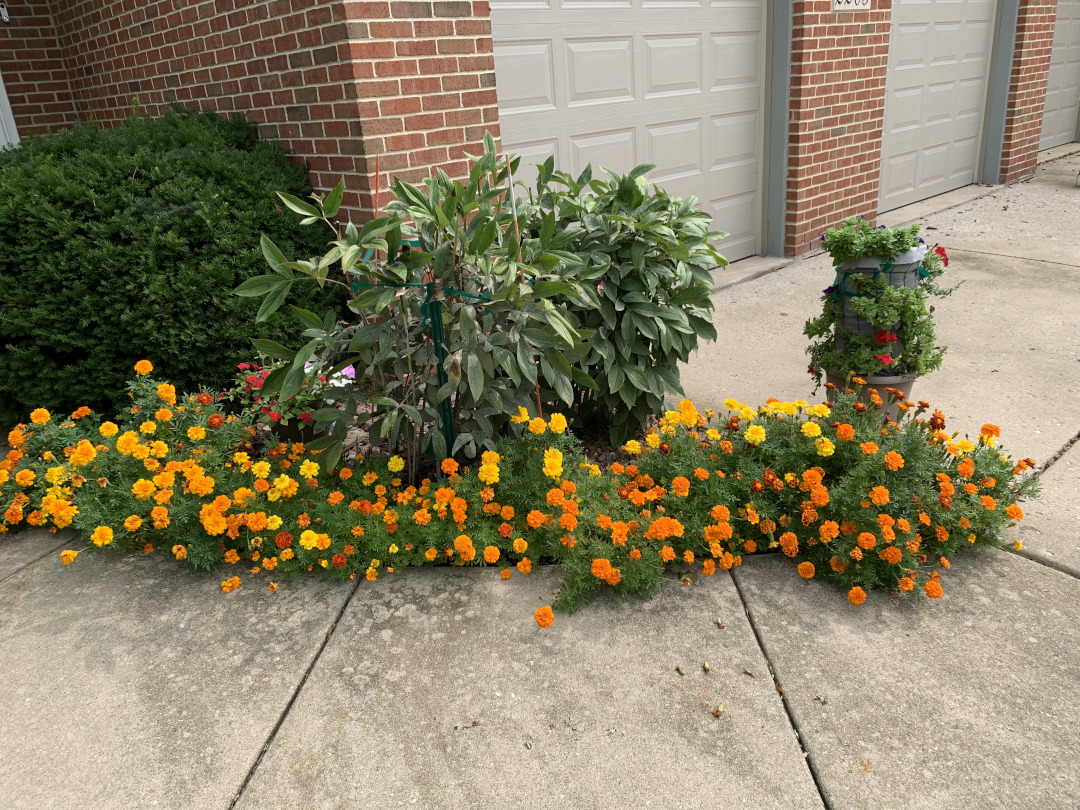
Marigolds are the friend who shows up uninvited, and you’re glad they did.
Their bright orange and gold color mimics the sun, and light has long been considered a natural enemy of darkness.
In Mexican tradition, the strong scent is said to act like a beacon, guiding good spirits home while confusing anything unwelcome.
This is why you see them everywhere during Día de los Muertos.
They also repel garden pests with their strong scent, so they’re doing double duty.
Plant them along your walkway or porch steps where you’ll brush past them.
That smell releasing every time someone walks by isn’t just pest control.
It’s a signal, to bugs and to bad energy alike, that this house is watched.
Give them full sun.
They’re stubborn and forgiving, which makes them perfect for beginners who kill everything else.
Special tip: Plant marigolds in odd numbers, three or five, rather than pairs.
Odd numbers are considered luckier in most folk traditions that use this flower for protection.
Deadhead the spent blooms weekly.
A marigold covered in old, brown flowers loses its visual punch, and that bright color is a big part of what makes it work.
2. Rosemary

If your family kept rosemary by the door, they were onto something.
Rosemary has been burned, hung, and planted for protection since ancient Greece and Rome, tied to memory, loyalty, and warding off illness.
Many old traditions specifically link it to protecting sleep, which is why it was planted under bedroom windows for generations.
It’s not a delicate accent plant either.
It grows into a full, woody shrub that can act as a real barrier near a doorway or window.
Brush against it and that sharp, clean scent hits you right away.
Strong smells trigger alertness in your brain.
Give rosemary well drained soil and lots of sun.
It hates wet feet, so don’t drown it out of love.
Special tip: Snip a few sprigs and keep them in a small vase indoors, near your bed or front door.
Bringing a piece of it inside is thought to extend that same watchful energy into the rooms where you spend your time.
3. Lavender

Lavender gets treated like the soft, pretty one of the group.
Don’t underestimate it.
Its purple color has long been tied to spirituality and higher protection.
Its calming scent was traditionally believed to ward off nightmares and evil spirits that target people while they sleep.
Protection isn’t only about keeping bad things out.
It’s also about creating a home that feels peaceful enough that bad energy has nowhere to grip.
A house full of anxious, exhausted people already feels unsettled, and lavender helps with both sides of that equation.
It’s been used for centuries to ward off negative energy while calming the nervous system of everyone in the house.
Plant it somewhere you’ll walk past daily, like a front path or a window you open often. You want that scent drifting into your life constantly, not hiding in a back corner.
Special tip: Tuck a small dried bundle under your pillow or near your headboard, especially during stressful seasons of life.
The outdoor plant handles your entryway, but folklore is clear that the bedroom is where lavender earns its keep.
4. St. John’s Wort

Its name comes from its bloom time around the feast of St. John, a day historically tied to fire, sun, and burning away darkness.
Its yellow flowers were seen as capturing that same purifying energy.
It has been associated with protection and driving away darkness since medieval times, traditionally hung over doors and windows for that exact reason.
In a warmer climate, it will reward you with bright yellow blooms all summer.
In a cold, wet one, check your hardiness zone before falling in love with it.
Special tip: Traditionally, this plant was harvested and hung on the actual feast day in late June, when it was believed to be most potent.
You don’t need to be that precise, but drying a few stems at peak summer bloom gives you an indoor bundle for the colder months.
5. Basil

Basil isn’t just for your pasta sauce.
It has been considered sacred in several cultures, tied to purification and used to bless homes before negative energy can settle in.
In many traditions, it’s placed near entrances to keep negativity from crossing the threshold.
Some traditions credit it with protecting the household from arguments and bad luck.
I keep a pot right by my back door, partly for cooking and partly because it makes the whole entryway smell alive.
A home that smells good and feels tended to is a home that feels protected.
That’s not folklore. That’s just true.
Special tip: Pinch off flower buds as soon as they appear. This keeps the plant full and fragrant instead of leggy.
6. Roses
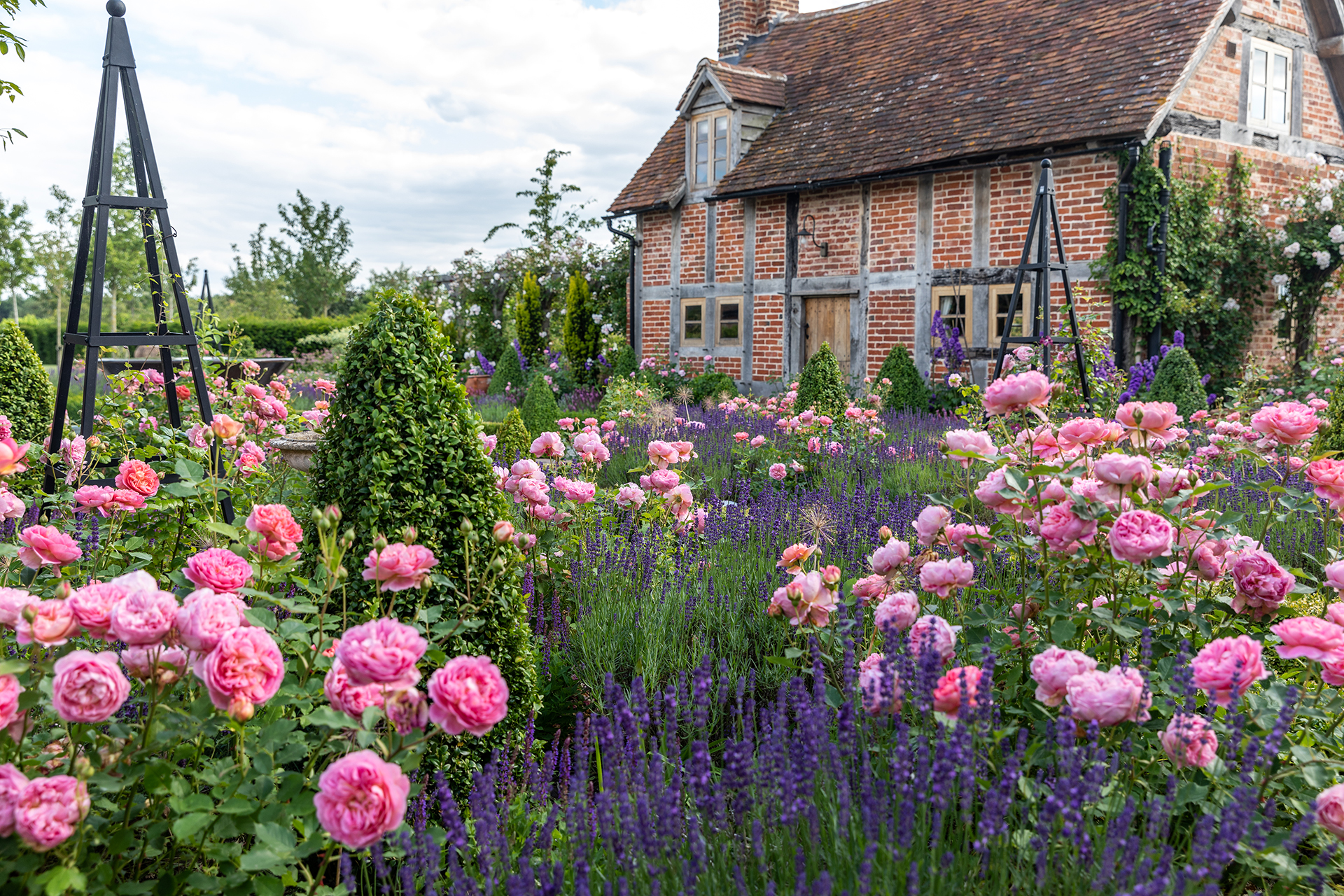
Roses have symbolized love and protection together for centuries, on the belief that the same flower guarding your heart can guard your home.
Red roses were often linked to protection against jealousy and the evil eye.
Roses get planted for their beauty, but their thorns do more work.
A thorny plant near a fence line or window creates real physical barrier for anything trying to get too close.
Most beginners skip this part.
They plant one small rose bush far from anything it could guard.
Put roses near vulnerable entry points, like ground floor windows, instead of tucked away in a decorative bed in the middle of the yard.
Special tip: Choose a thornier, old fashioned variety over a modern thornless hybrid if protection is your goal.
Breeders spent decades removing thorns for easier handling, and that convenience strips the plant of its traditional job.
7. Rue

It’s one of the oldest plants tied to warding off the evil eye, a belief that still shows up in Roman, Italian, and Mediterranean tradition today.
Fair warning, it has a strong, bitter scent and it’s not for everyone. While this is the case you should note that the bitter taste and sharp scent were considered signs of its potency.
If you want serious old world credibility in your garden, this is it.
Give it full sun and don’t overwater. It’s tough once established.
Special tip: Wear gloves when handling rue, since the sap can irritate skin in strong sunlight.
Many old traditions treat this plant as one that demands careful handling, which fits its reputation well.
8. Angelica

Angelica root has been called “the root of the Holy Ghost” in some folk traditions, believed to protect against illness and evil alike.
Its name comes from the belief that it was a gift of angelic protection to humans, said to guard against plague and evil during dark periods of European history.
Its umbrella shaped blooms were seen almost like a canopy of protection.
It’s also a tall, dramatic plant that adds real presence to a garden, not just symbolism.
Special tip: Plant angelica somewhere it has room to reach its full height, four to six feet in the right conditions.
A cramped, stunted angelica loses the commanding presence that’s central to its whole reputation.
9. Elder
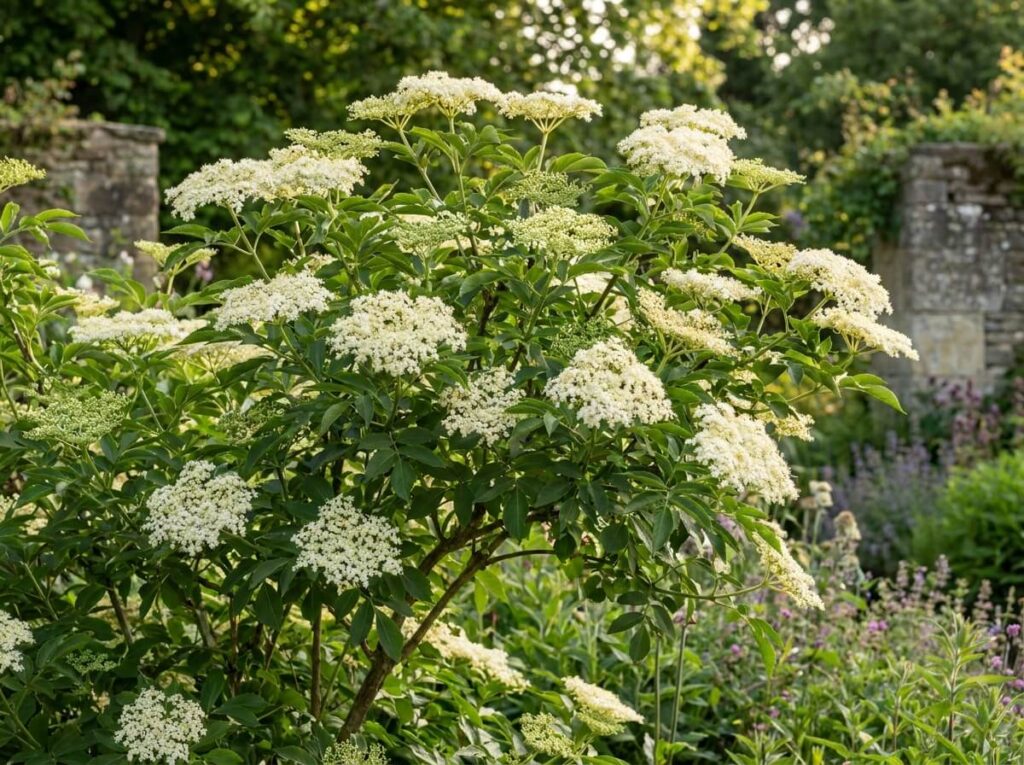
Old European belief held that elder trees housed protective spirits, sometimes called the Elder Mother, who guarded the home and land where the tree grew.
Because of this, it was often planted at the edge of a property to mark and protect its boundary.
Across British and European tradition, the elder tree was considered so protective that people wouldn’t cut one down without asking its permission first.
That tells you everything about how seriously this plant was taken.
Elder produces clusters of small white flowers in late spring, followed by dark berries in late summer.
It grows fast and tall, so it works best along a fence line rather than a small entryway bed.
Special tip: Let elder grow near your property line rather than close to your house.
Tradition holds that its protective spirit prefers to guard the edges of your land, watching over what comes and goes.
How to plant the flowers for maximum protection
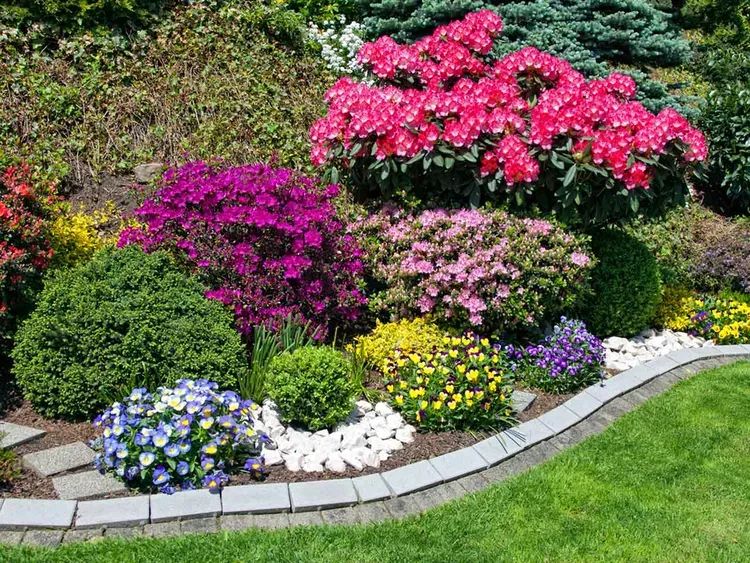
Plant your thorniest, boldest options, like roses or hawthorn, at a slight angle near your front entrance, not dead center.
People naturally brush past plants placed diagonally to a walkway, which means more scent release and more of that “this space is guarded” feeling.
Keep low growers like marigolds and basil closest to the ground along your path.
Mid height plants like lavender and rosemary should sit around hip height near the door.
Save your tallest plants, like angelica or elder, for the back or sides as a full guarding presence.
Add a dusk-blooming or evening-fragrant variety near windows you open at night.
Moonflower and evening primrose extend that alert feeling into the hours when you’re asleep and most vulnerable.
Don’t crowd the flowers
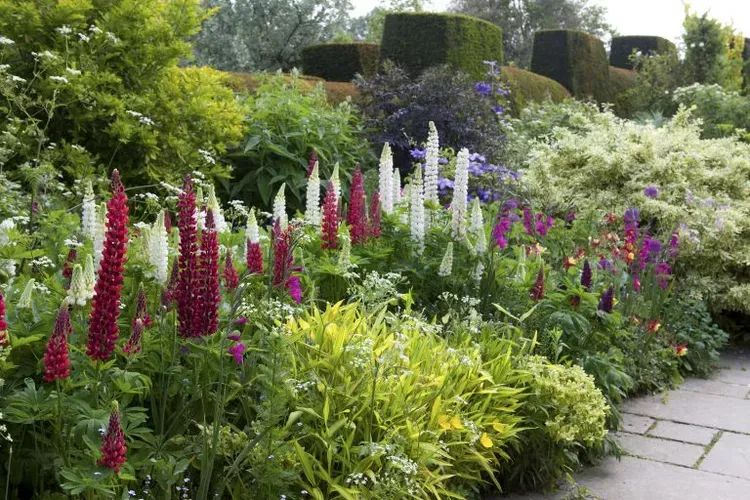
People cram five different protective plants into one tiny bed by the front door, hoping for maximum protection fast.
Here’s what happens instead. The plants fight for water, light, and root space.
Within a year, one plant wins and the other four die a slow, ugly death.
Now you have one survivor and a bed full of sad brown stems.
Space your plants properly.
Give each one room to grow into the job you’re asking it to do.
A garden with three thriving protective plants beats a graveyard of five dying ones every time.
How to stay protected throughout the year

Protective planting isn’t a one time purchase. It’s a relationship you maintain.
Spring: Plant new additions right after the last frost, when soil is warming and roots can establish before summer heat hits.
Summer: Prune spent blooms so plants keep producing fresh scent and flowers instead of going dormant early.
Fall: Cut back anything woody before the first hard frost, never after. Pruning too late leaves your plants weak right when you need that barrier the most.
Winter: Check on evergreen plants like rosemary if you’re in a mild climate. If yours dies back in cold weather, plan to replace it in spring instead of staring at a sad twig all winter.
St. John’s Wort in particular dies back to the ground in most climates once the cold hits, so don’t panic when it disappears.
Mulch around the base to protect the roots, and trust it will come back strong once the soil warms.
FAQs
What herbs ward off evil spirits?
Rosemary, rue, basil, and St. John’s Wort top the list across most folk traditions.
Rosemary is tied to purification and protecting sleep, rue is one of the oldest herbs linked to warding off the evil eye, and basil is used to bless and cleanse a home’s energy.
Sage also deserves a mention. Burning dried sage to clear a space is one of the most widely recognized cleansing practices around.
What smells do evil spirits hate?
Sharp, strong scents show up again and again in protective folklore.
Think rosemary, sage, rue, garlic, and frankincense.
The common thread is intensity.
These aren’t soft, subtle smells, and that’s the point.
Tradition consistently links strong, sharp fragrances to alertness and repelling negative energy.
Soft or sweet scents are more often linked to calming and inviting good energy in.
What things do witches hate?
This depends heavily on which tradition you mean, since witches in folklore, fairy tales, and modern Wicca are three very different things.
In old European folklore, witches were said to dislike iron, salt, rowan wood, and St. John’s Wort.
In fairy tale tradition, running water and herbs like rue were believed to block a witch’s power.
Worth remembering that modern Wiccans and pagans are real people practicing a real spiritual path, so most of this folklore comes from centuries of fear rather than how actual practitioners live today.
Which flowers offer protection from evil?
Your strongest options are marigold, rosemary, lavender, rue, St. John’s Wort, basil, roses, angelica, and elder.
Each one has its own folklore reason for being considered protective, from marigold’s sun like color to elder’s reputation guarding property lines.
The key is choosing a few that suit your climate, planting them where you’ll interact with them daily, and keeping them healthy.
A thriving plant does far more protective work than a struggling one.
Which flower does Jesus like?
The lily is most closely associated with Jesus and Christian tradition, particularly the white lily, which symbolizes purity and resurrection and ties closely to Easter.
The passionflower is another one worth knowing.
Its unusual structure was historically interpreted by Christian missionaries as representing elements of the crucifixion, including the crown of thorns.
Myrtle also carries deep symbolism tied to peace and divine love.
None of these are framed as protection flowers specifically.
But their sacred symbolism is exactly why you’ll often see them in church gardens and religious arrangements.
Parting shot
Your garden can be more than a nice view from the kitchen window.
It can be a real, living boundary around the place you’re supposed to feel safest.
Pick two or three flowers from this list that suit your climate and your space.
Plant them where you’ll walk past them, brush against them, and smell them constantly.
Then keep them alive.
That’s the whole secret.
Not the species. Not the folklore.
The care.