
Hang These Bird Feeders and Your Garden Will Never Be Quiet Again
There is something quietly magical about watching birds land in your garden.
There is no denying that a well-chosen bird feeder transforms any outdoor space even a small balcony or a single window sill into a living, breathing nature scene.
Whether you are just getting started or looking to upgrade your setup, this guide covers every angle: creative feeder ideas, the best buys, how to attract more birds, how to style your feeder beautifully, and exactly where to put everything for the best results.
Quick-Start Checklist: First thing you should do
Before diving in, here is everything you need to get started. Tick these off and you will have started on the right footing:
- Choose one feeder style to start with (a simple tube feeder is ideal for beginners)
- Pick up a bag of black-oil sunflower seeds. This is the best all-rounder and tends to attract plenty of birds.
- Find a spot 1.5–3 meters from a shrub or tree for natural cover
- Hang at least 1.5 meters off the ground
- Add a small birdbath within 5 meters of the feeder
- Refill at the same time each morning for the first two weeks
- Clean the feeder after the first bag is finished
That is genuinely all it takes to get started. Everything else in this guide is about making it better.
Bird Feeder Ideas
DIY Feeders
Mason Jar Tube Feeder

This Classic DIY Repurpose features a wide-mouth mason jar with a copper or wooden tube base.
To attract birds, fill it with black-oil sunflower seeds, hang it from a shepherd’s hook, and watch finches and chickadees flock.
Costs under $5 to build, lasts for years, and looks gorgeous against a timber fence or garden wall.
Pine Cone Feeder
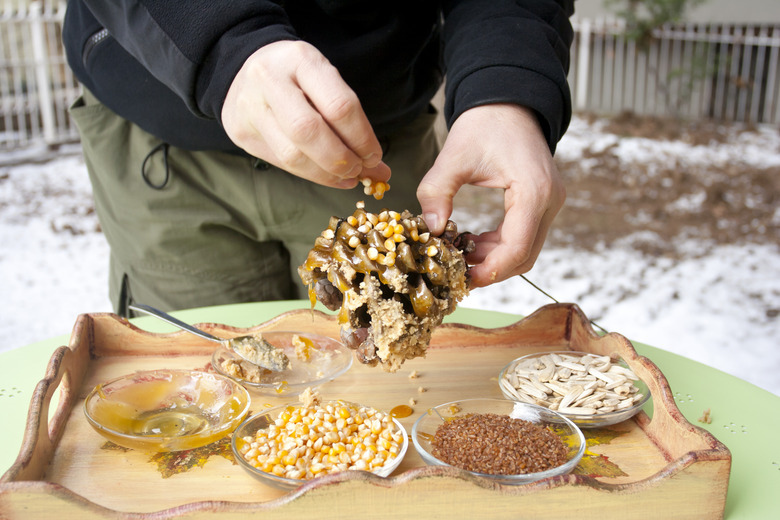
Perfect for Kids Roll pine cones in peanut butter and birdseed, tie with natural twine, and hang from a low branch.
No tools, no cost, and endlessly entertaining for children.
Use chunky peanut butter for extra seed grip.
Terracotta Pot Feeder
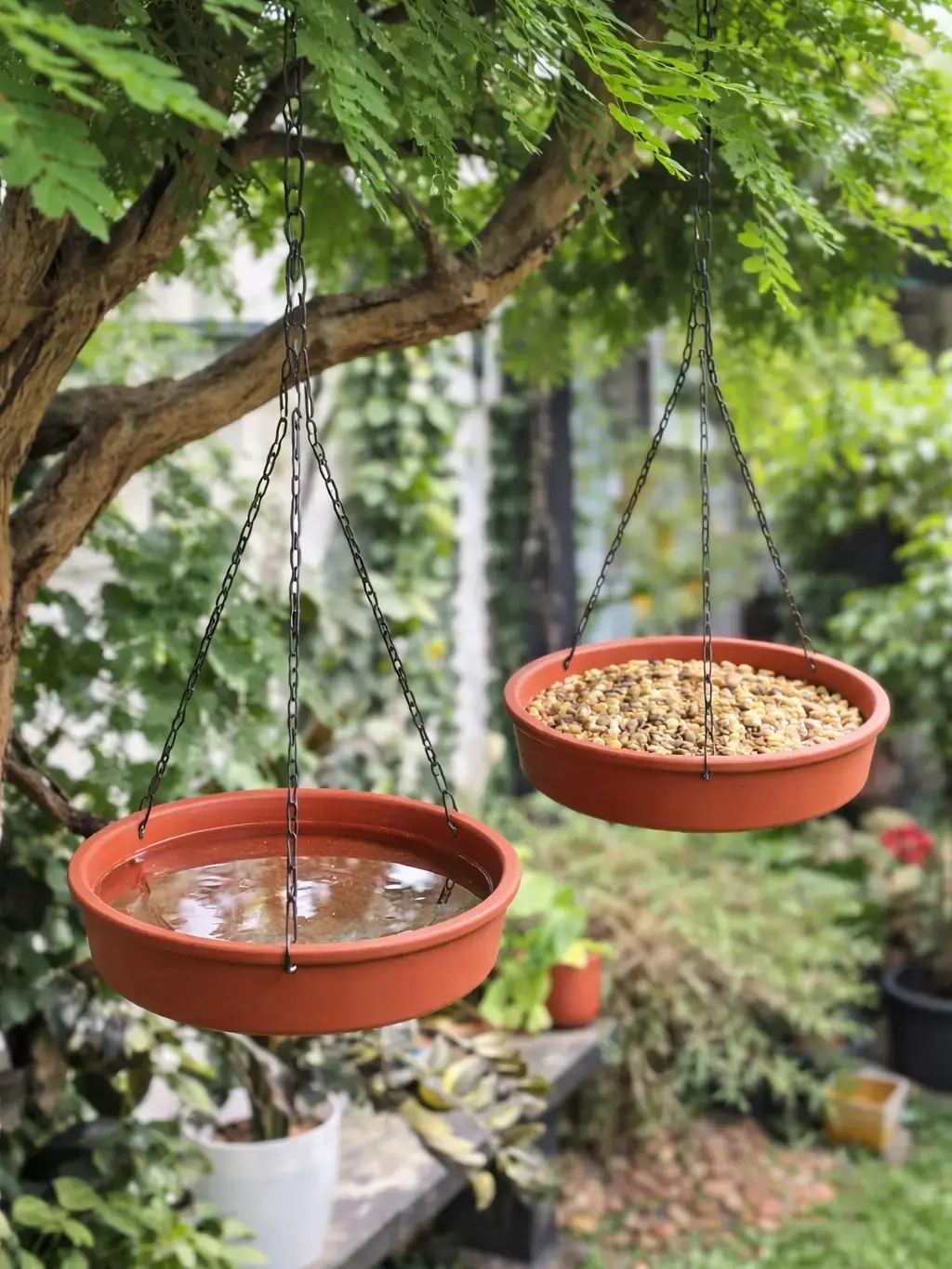
Garden-Style Charm Stack two terracotta saucers back-to-back with a bolt through the center and hang. Fill the top dish with seed mix.
It looks like it belongs in a cottage garden and weathers beautifully over time.
Wooden Pallet Feeder

Rustic Statement Piece Cut a small section of pallet wood, sand the edges, add a lip around the base to hold seed, and hang with rope.
Paint or leave raw for a farmhouse aesthetic. Robins and sparrows love an open platform like this.
Wine Bottle Gravity Feeder

Stylish Upcycle Invert an empty wine bottle filled with seed into a drilled wooden base.
Seed releases gradually as birds feed. Elegant, conversation-worthy, and completely free if you save your bottles.
Log Suet Feeder

Woodpecker Magnet Drill 2–3cm holes into a short thick log, pack with homemade suet (lard mixed with oats, seeds, and dried fruit), and hang vertically.
Woodpeckers, nuthatches, and treecreepers go wild for these.
Teacup Feeder
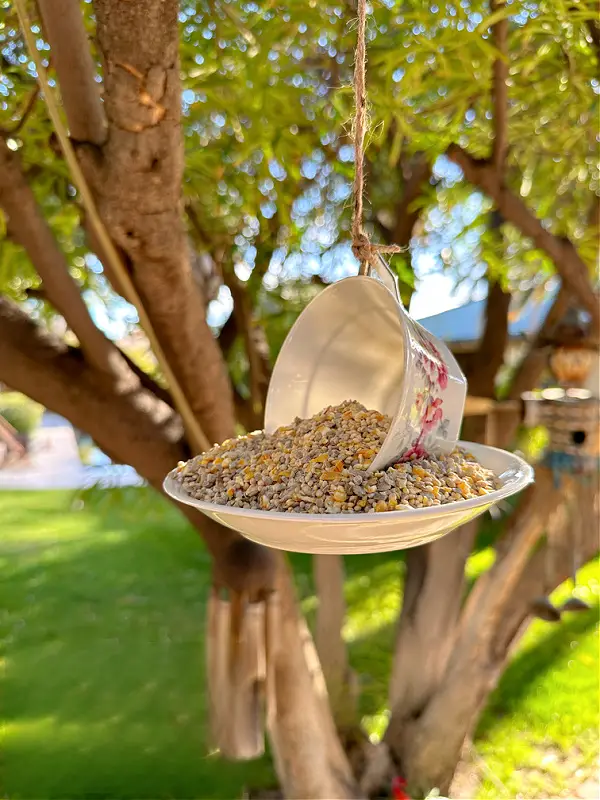
Whimsical Décor Piece Glue a vintage teacup and saucer together at an angle, drill a hole through the handle, thread wire through, and hang.
Fill the saucer with seed. Charming, inexpensive, and endlessly Pinterestable.
Buy It
Squirrel-Proof Cage Feeder
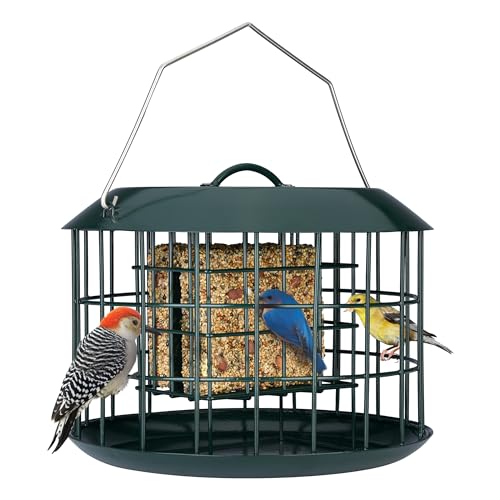
Last update on 2026-06-24 / Affiliate links / Images from Amazon Product Advertising API
A cage-style feeder surrounds a central seed tube with a metal grid that lets small birds through but blocks squirrels and larger birds. Look for powder-coated steel as it lasts outdoors for years without rusting.
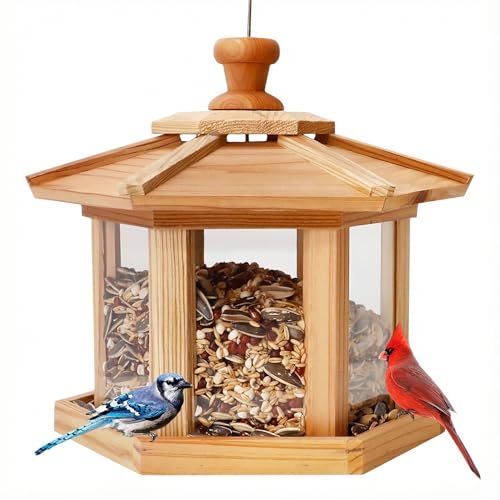
Cottage-Style Cedar Platform Feeder
Last update on 2026-06-24 / Affiliate links / Images from Amazon Product Advertising API
Open tray feeders double as garden art. Cedar weathers beautifully, naturally resists rot, and gives your garden a classic country look. Choose one with a pitched roof to keep seed dry in rain.
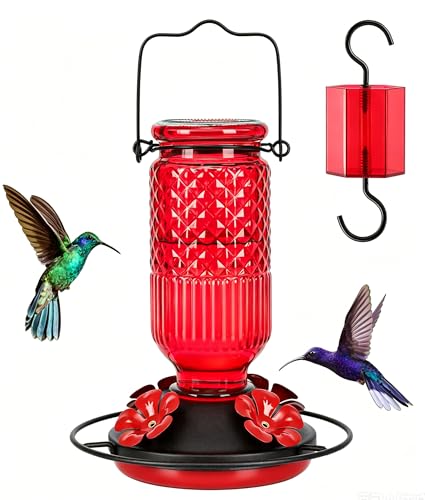
Glass Nectar Feeder for Hummingbirds
Last update on 2026-06-24 / Affiliate links / Images from Amazon Product Advertising API
Hand-blown glass feeders with red accents are irresistible to hummingbirds. Fill with a simple 4:1 water-to-white-sugar solution, no red dye needed, and never use honey as it can cause a fatal fungal infection.
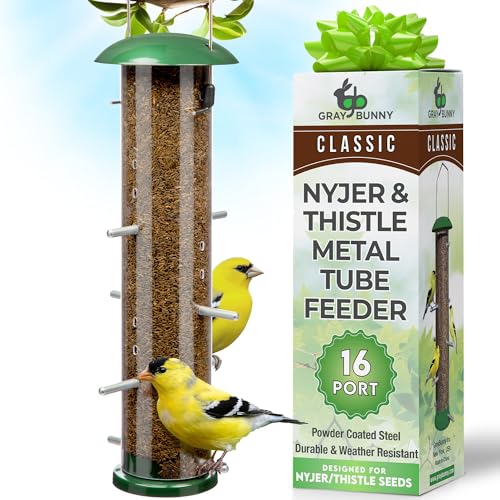
Nyjer Sock Feeder
Last update on 2026-06-24 / Affiliate links / Images from Amazon Product Advertising API
A simple mesh sock feeder filled with nyjer (thistle) seed is the single best way to attract goldfinches. Hang two or three together for a stunning display when a flock arrives.
Heated Bird Bath Feeder Combo

Last update on 2026-06-24 / Affiliate links / Images from Amazon Product Advertising API
In colder climates, a combined heated bath and feeding station keeps water liquid through winter and becomes the most popular spot in the garden from November through March.
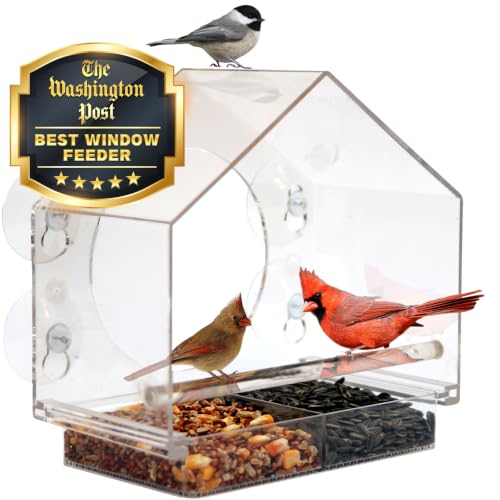
Window-Mount Suction Cup Feeder
Last update on 2026-06-24 / Affiliate links / Images from Amazon Product Advertising API
A small acrylic feeder that sticks directly to a window pane. Birds land just centimeters from your face. Its brilliant for flats, home offices, and anyone who wants an incredibly close view without a garden.
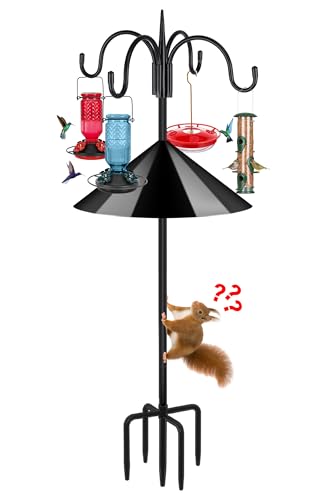
Squirrel Baffle Pole System
Last update on 2026-06-24 / Affiliate links / Images from Amazon Product Advertising API
A full feeding station on a metal pole with a cone-shaped baffle halfway up. Hang multiple feeder types at different heights. For example, you can have suet cage, nyjer sock, or platform tray and you will attract five or six species at once.
Common Beginner Mistakes to Avoid
Even the most enthusiastic new feeder owner can accidentally make their garden less appealing to birds. Here is what to watch out for.
Buying cheap mixed seed

You should know that budget seed bags are packed with filler grains like milo and red millet that most garden birds end up wasting.
To avoid wastage, make an effort to spend a little more on pure sunflower, nyjer, or safflower and you will get far more bird visitors and far less mess.
Putting the feeder in the wrong spot
A feeder placed in the middle of an open lawn with no nearby cover will sit empty for weeks. Birds need a quick escape route.
Move it within two meters of a shrub or hedge and activity picks up almost immediately.
Forgetting to clean it
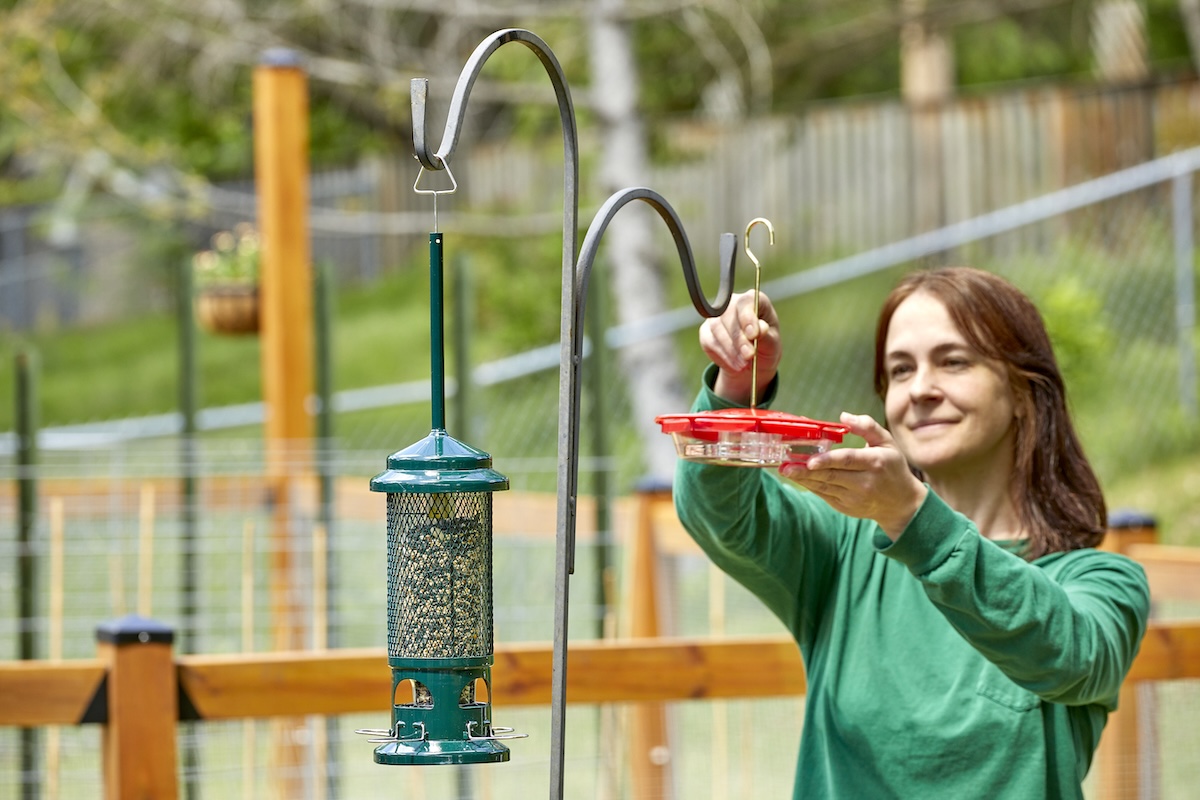
A feeder with old, wet, or moldy seed is worse than no feeder at all. It can spread disease through an entire local bird population.
Set a reminder to scrub yours every two weeks. The beauty is that it takes less than five minutes.
Giving up too soon
New feeders can take one to three weeks before birds discover them, especially in areas without an established bird population nearby. Be patient, keep it filled, and they will come.
Only putting out one type of food
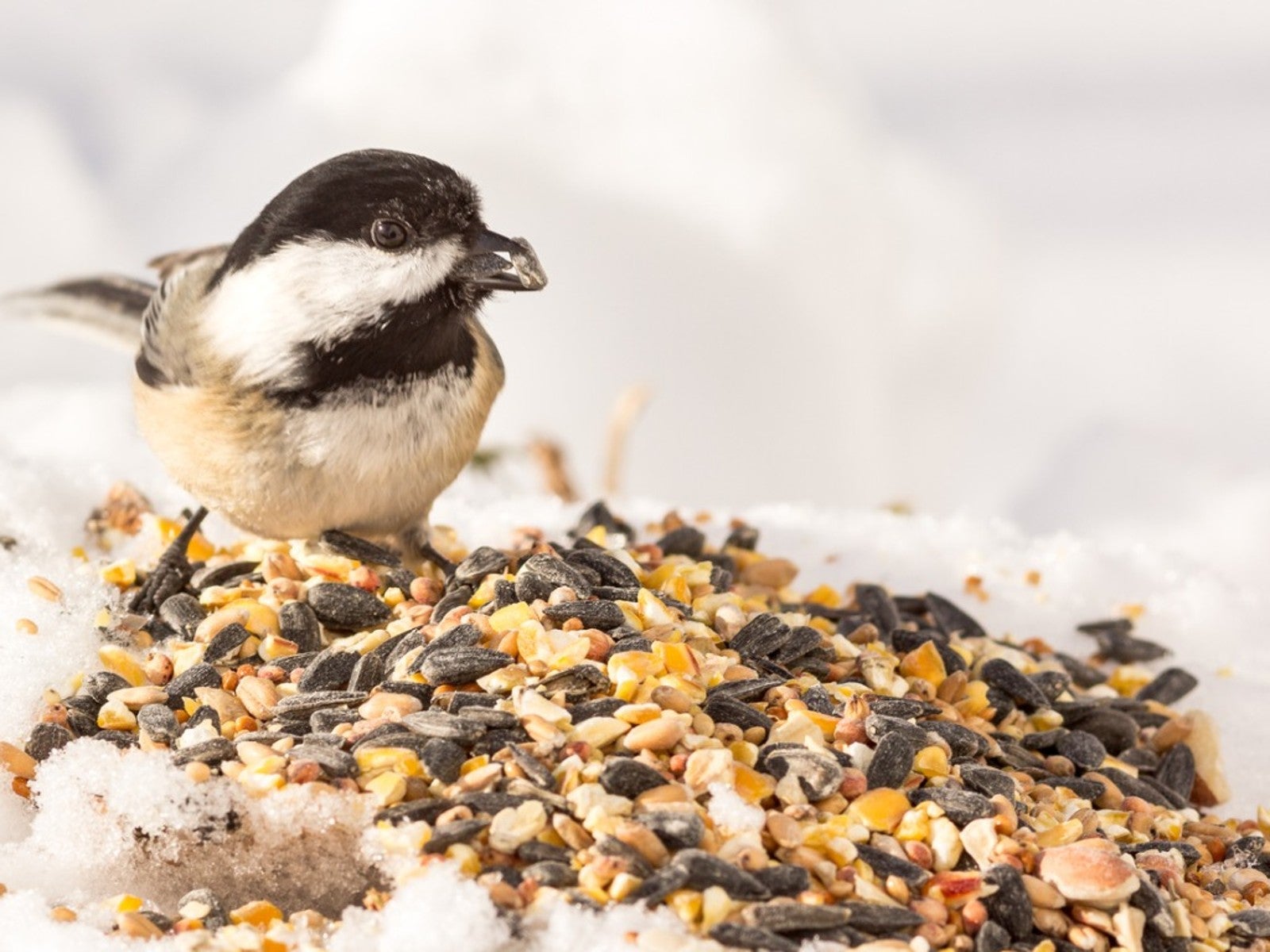
Different birds eat different types of foods.
This means a single seed mix will attract sparrows and pigeons but miss out on woodpeckers, hummingbirds, goldfinches, and nuthatches.
Variety in food means variety in visitors.
So, if you want to attract a wide range of birds, have a wide variety of bird seeds.
How to Attract Birds to Your Feeder
Use the right seed for your target birds
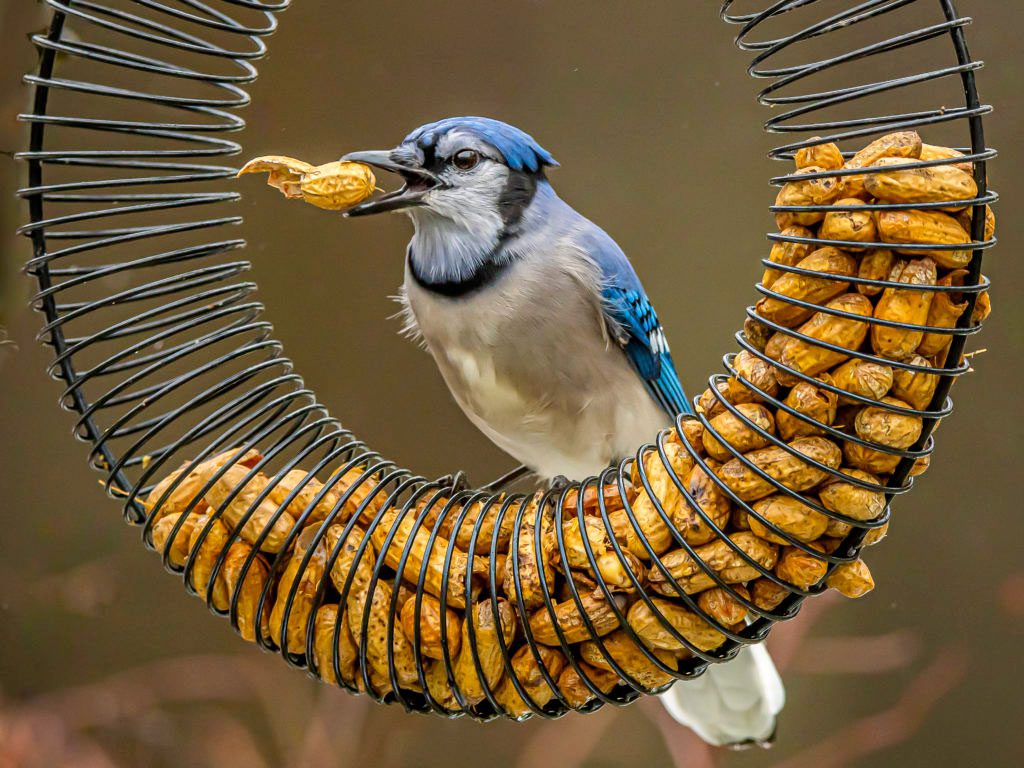
Black-oil sunflower seeds are the single best all-rounder most garden birds eat them. Nyjer (thistle) is essential for goldfinches.
Safflower deters squirrels while attracting cardinals, chickadees, and doves. Avoid cheap mixed seed bags full of filler grains most birds simply kick to the ground.
Keep it clean
You should thoroughly clean Scrub feeders every one to two weeks with a 1:9 bleach-water solution, rinse thoroughly, and allow to dry before refilling.
Moldy or wet seed carries bacteria and can seriously harm birds. During wet seasons, empty and refill more frequently to prevent clumping
Add a birdbath
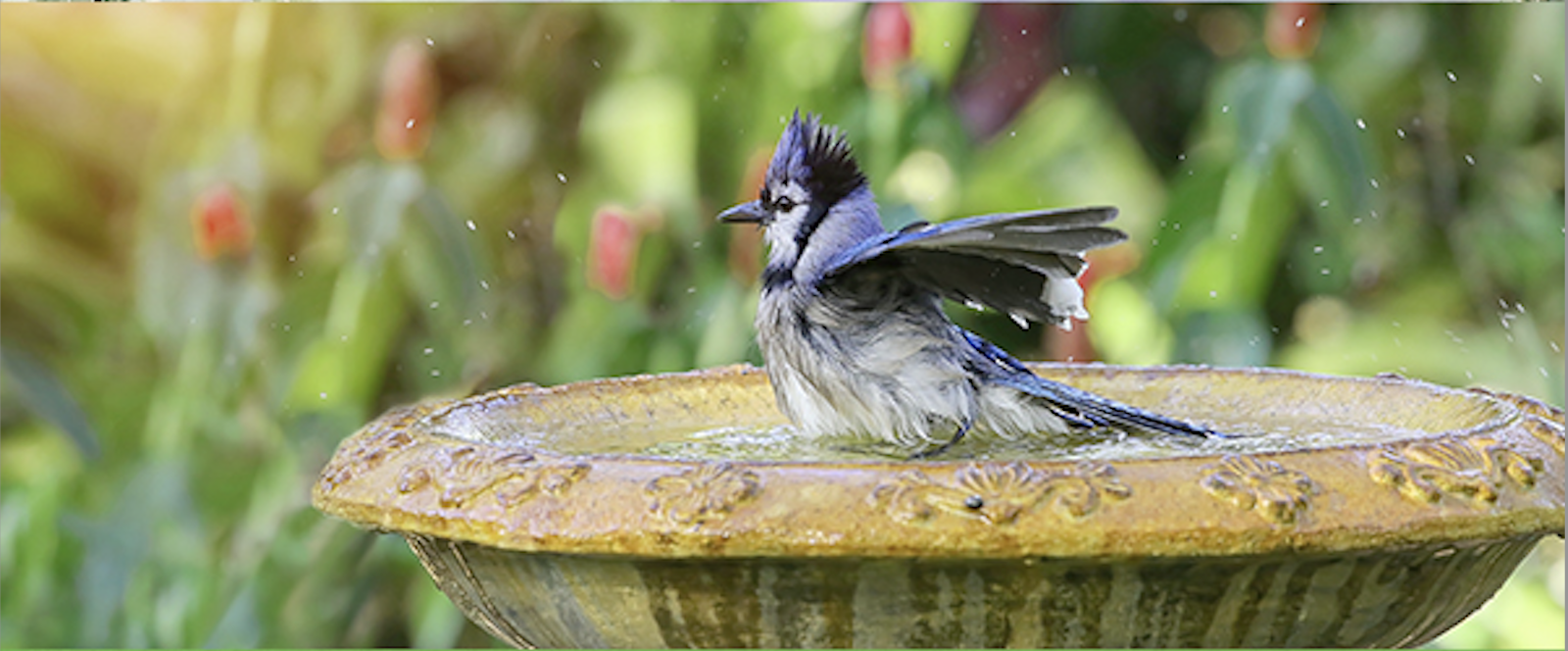
A birdbath placed 3–5 meters from your feeder doubles your garden’s appeal almost overnight. Birds need water for drinking and bathing year-round.
Remember to change it every two days to prevent mosquito larvae and keep it topped up through dry summer spells.
Be consistent with refilling as birds are creatures of habit. Refill at roughly the same time each morning and they will start arriving in anticipation.
A feeder that runs empty repeatedly gets abandoned as birds find a more reliable source and rarely return.
Plant native shrubs and trees nearby
Berry-producing plants like holly, elderberry, hawthorn, and dogwood provide natural cover, nesting spots, and supplemental food.
This makes a garden with a feeder and natural planting becomes a genuine destination rather than a quick pit stop.
Offer multiple feeder types at once
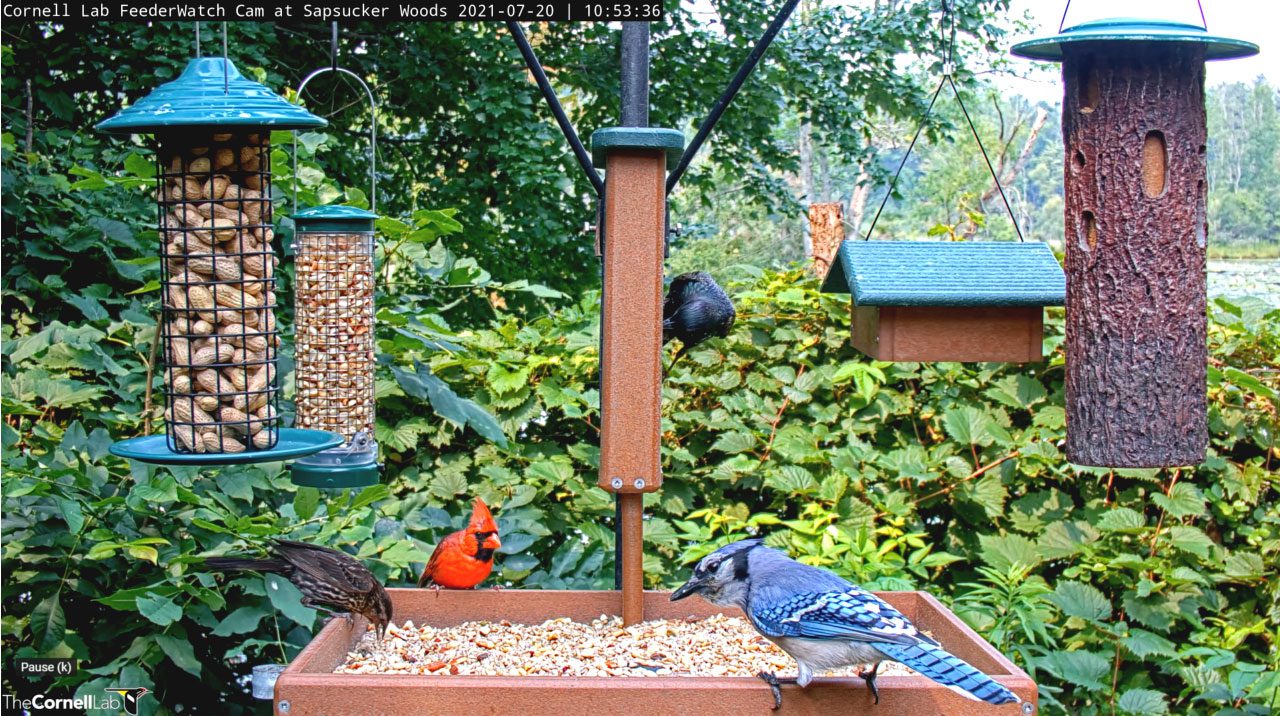
Different birds feed at different heights and from different feeder styles.
A suet cage, a hanging tube feeder, and a ground tray together can attract three times as many species as a single feeder alone.
Go easy on the tidiness
Birds love a slightly wild corner. Leave a patch of long grass, a log pile, or a dense shrub undisturbed.
These provide insects, shelter, and nesting material that make your garden irresistible beyond just the feeder.
How to style Your Feeder to Match Your Garden Aesthetic
A bird feeder does not have to be an afterthought.
It can be one of the most beautiful things in your outdoor space. When you install it you want it to look like a part of your garden, right? And its possible.
To help you out, here is how to match your feeder to your garden’s personality.
Cottage and Country look
Go for aged wood, copper accents, and climbing plants around the pole.
A cedar platform feeder or a terracotta saucer feeder nestled among lavender and roses looks like it has always been there. Stick to natural tones such as sage green, rust, cream.
Modern and Minimal
Choose clean geometric shapes in matte black or brushed steel.
A sleek acrylic tube feeder or a minimalist hanging disc feeder suits a contemporary garden with decking, gravel, and architectural planting.
Less is more so one statement feeder outperforms a cluttered collection.
Boho and Eclectic Mix textures
The most common textures to go with include macramé hangers, painted terracotta, mismatched vintage teacup feeders, and woven basket trays.
Layer heights, use bold colors, and hang feeders among trailing plants and fairy lights for a maximalist outdoor room feel.
Rustic and Farmhouse
Reclaimed wood, galvanized metal, and rope are your best friends.
A pallet feeder, a wine bottle gravity feeder, and a log suet feeder together create a cohesive, relaxed aesthetic that looks effortlessly put-together.
Color coordination tip: Match your feeder colors to your outdoor cushions, planters, or fence paint.
It sounds like a small detail but it makes all the difference between a feeder that looks placed and one that looks designed.
Which Feeder Attracts Which Bird? A Quick Reference Guide
| Bird | Favourite Food | Best Feeder | Best Season to Spot |
|---|---|---|---|
| Cardinals | Safflower, sunflower | Platform feeder | Year-round, most active in winter |
| Goldfinches | Nyjer seed | Tube or sock feeder | Summer — bright yellow plumage peaks |
| Chickadees | Sunflower, peanuts | Tube feeder | Year-round, fearless at feeders |
| Woodpeckers | Suet, peanuts | Suet cage or log feeder | Autumn & winter when suet is out |
| Hummingbirds | Nectar (4:1 solution) | Glass nectar feeder | Late spring through early autumn |
| Mourning doves | Millet, sunflower | Ground or platform feeder | Year-round, especially spring mornings |
| Nuthatches | Sunflower, suet | Tube or suet cage | Autumn & winter |
| Robins | Mealworms, berries | Open tray or ground | Spring & summer breeding season |
| Blue jays | Peanuts, sunflower | Platform feeder | Year-round, bold and easy to spot |
| Sparrows | Millet, mixed seed | Platform or ground tray | Year-round, most active at dawn |
Placement Tips for Best Results
Have a safe window distance
Place feeders either within one meter of a window or more than three meters away.
The danger zone is 1–3 meters as birds can strike glass at full speed. Window decals on the glass itself also help break up reflections.
Have natural cover nearby
Position feeders 1.5–3 meters from a shrub, hedge, or tree.
Birds feel exposed in the open and will hesitate to visit a feeder with no nearby escape route.
The closer to cover, the more species and the longer they will stay.
Cat-proof the feeders
You should hang feeders at least 1.5 meters off the ground and well away from fences or surfaces a cat could jump from.
A smooth metal pole with a cone-shaped baffle is the most effective deterrent as cats cannot grip or climb past it.
Provide a shade in the summer
Full sun heats the seed and ferments nectar rapidly.
A dappled spot under a tree or on a north-facing fence keeps food fresh much longer and is more comfortable for birds to feed in during hot weather.
Position it away from competing noise
Birds avoid areas with sudden loud or unpredictable noise.
This calls for you to keep feeders away from air conditioning units, busy gates, or areas of high foot traffic.
A quieter corner of the garden, even if slightly less visible from indoors, will attract significantly more activity.
Seasonal Bird Feeding Guide
You want to to properly feed your birds so that they stay around for long. To help you out, here is how to go about it:
Spring
Breeding season boost Birds are nesting and need high-protein food.
Offer mealworms, peanuts, and suet pellets alongside your usual seed.
Avoid whole peanuts in spring as the parent birds can accidentally feed them to chicks and cause choking.
Switch to peanut granules or crushed peanuts instead.
Summer
Hydration is everything as heat spoils seed and ferments nectar fast so clean feeders more frequently.
To be on the safe side, do it every week if possible.
Keep your birdbath topped up daily.
Nyjer and sunflower hearts are ideal in summer as they leave no messy husks to rot in the heat.
Autumn
Stock up and prepare This is the time to expand your setup before winter.
Add a suet cage, stock up on seed, and consider a feeding station pole so you can hang multiple feeders at once.
At this time, birds are building fat reserves before the cold and they will visit more frequently than at any other time of year.
Winter
Your feeder becomes a lifeline in cold weather as natural food sources disappear entirely.
Your feeder can genuinely be the difference between survival and starvation for local birds.
Offer high-fat foods such as suet blocks, peanut butter, fat balls, and sunflower hearts.
If temperatures drop below freezing, check your birdbath daily and break any ice that forms.
Never use antifreeze or salt to thaw it as its harmful to birds.
Frequently Asked Questions
How long does it take for birds to find a new feeder?
Usually one to three weeks, sometimes longer in quieter areas. Hang the feeder in a visible spot near existing vegetation, keep it consistently filled, and be patient. Once one bird finds it, others follow quickly.
What is the best bird feeder for beginners?
A simple hanging tube feeder filled with black-oil sunflower seeds. It attracts the widest range of species, is easy to fill and clean, and requires no special setup.
Should I feed birds all year or just in winter?
Year-round feeding is beneficial and increasingly recommended by ornithologists. Summer feeding supports birds through breeding season when natural food can be scarce.
Just adjust what you offer such as high-protein foods in spring and summer, high-fat foods in autumn and winter.
How do I stop squirrels from raiding my feeder?
Use a squirrel-proof cage feeder, mount your feeder on a smooth metal pole with a baffle, and position it at least two meters from any surface a squirrel could jump from.
Safflower seed is also naturally disliked by squirrels but loved by many garden birds so it’s wise to use it instead.
How do I store birdseed to keep it fresh?
Store in a sealed airtight container. Metal is best as squirrels cannot chew through it and remember to store it in a cool, dry place out of direct sunlight.
Most seed stays fresh for up to six months when stored correctly. Always smell seed before refilling. Rancid seed smells sour and should be discarded.
Is it safe to feed birds bread?
Occasional small amounts of plain wholegrain bread will not harm birds, but it has almost no nutritional value and fills them up without fueling them.
Avoid white bread, moldy bread, or large quantities. Stick to proper birdseed, suet, and mealworms for genuinely healthy feeding.