15 Herbs You Can Grow Indoors Without Sunlight
Last Updated on June 23, 2026 by Duncan
If you have killed three basil plants this year and you are starting to think you have a black thumb, I need you to hear this first. It is not you. It is the herb.
Some herbs need full sun like they need oxygen.
Others could not care less if they ever see a windowsill.
After almost two decades of growing herbs indoors, in dark apartments, basements, and one truly cursed studio with a single north facing window, I have learned which herbs forgive you and which ones hold a grudge.
This list is for every renter, every shaded apartment dweller, and every busy woman who wants fresh herbs without redecorating her whole kitchen around a plant.
Let’s get into it.
First, a quick reality check
“No sunlight” does not mean “no light at all.” Plants still need light to live.
What it means is no direct sun streaming through a window for hours a day.
You have two solid options here:
A bright spot near an east or north facing window works for the low light herbs on this list.
A cheap grow light works for literally anything, including the divas like basil and rosemary.
I personally run a $20 clip on grow light over my kitchen counter and it has done more for my herb game than any windowsill ever did. Just saying.
The Low Light Champions (these herbs barely notice the lack of sun)
1. Mint
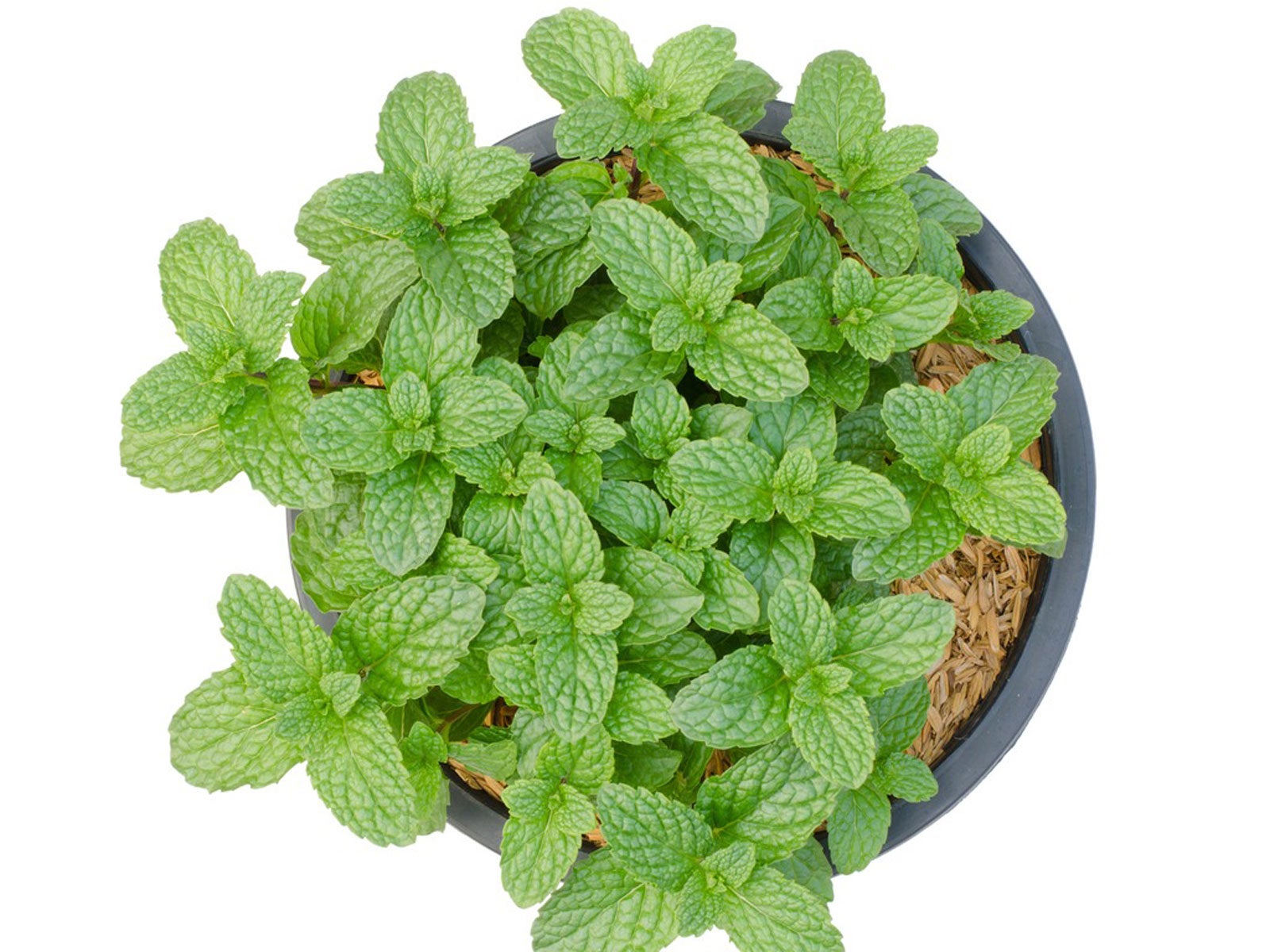
Mint is basically the herb world’s cockroach. Indestructible, a little chaotic, and impossible to truly kill.
It thrives in low light and honestly grows better when you ignore it a bit.
I once forgot about a mint plant in my hallway for two weeks and it rewarded me with new growth out of spite.
Mojitos, tea, that one fancy salad you saw on Pinterest? Mint has your back.
2. Parsley
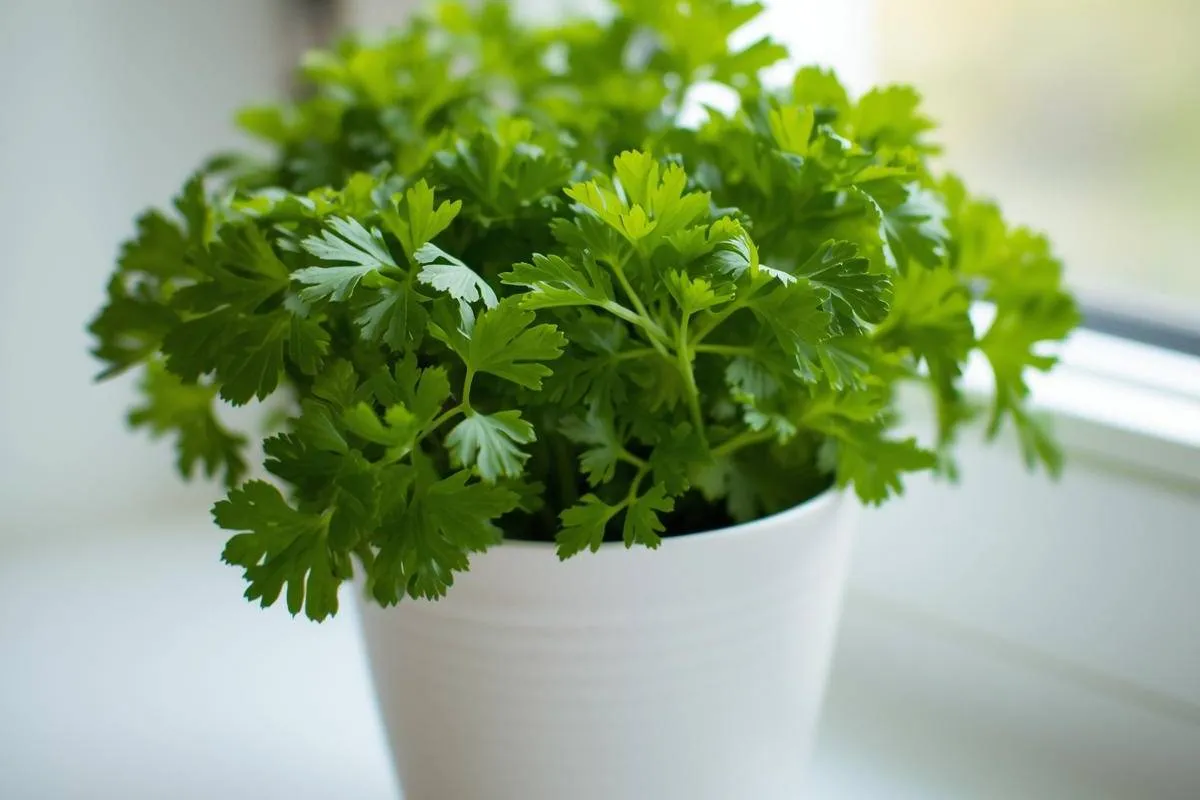
Parsley is the quiet overachiever of the herb shelf.
It does not need direct sun and it does not throw a fit if your apartment is a little dim.
It grows slow and steady, which honestly feels like a relief after dealing with drama queens like basil.
Curly or flat leaf, both work fine indoors.
3. Chives
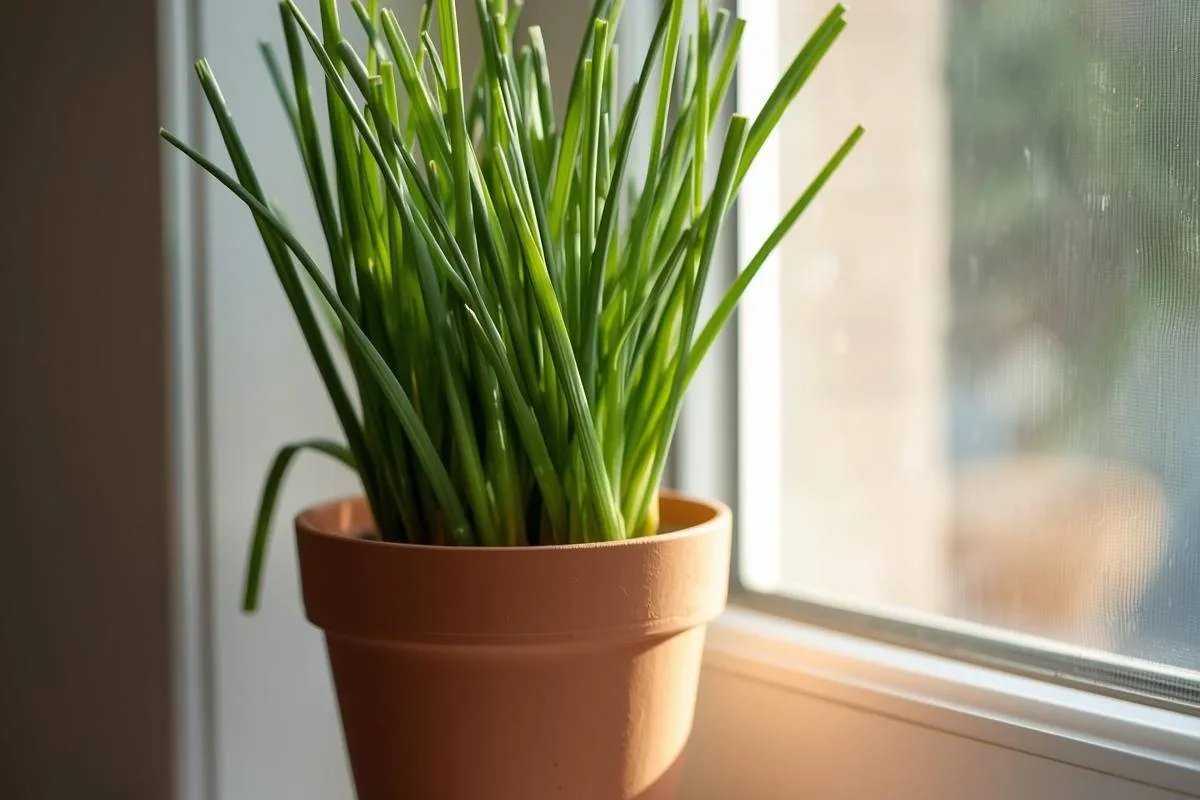
If you want a “set it and forget it” herb, chives are it.
They tolerate low light beautifully and just keep regrowing after you snip them.
I treat mine like a renewable resource. Cut what you need, it grows back in days, repeat forever.
4. Lemon Balm
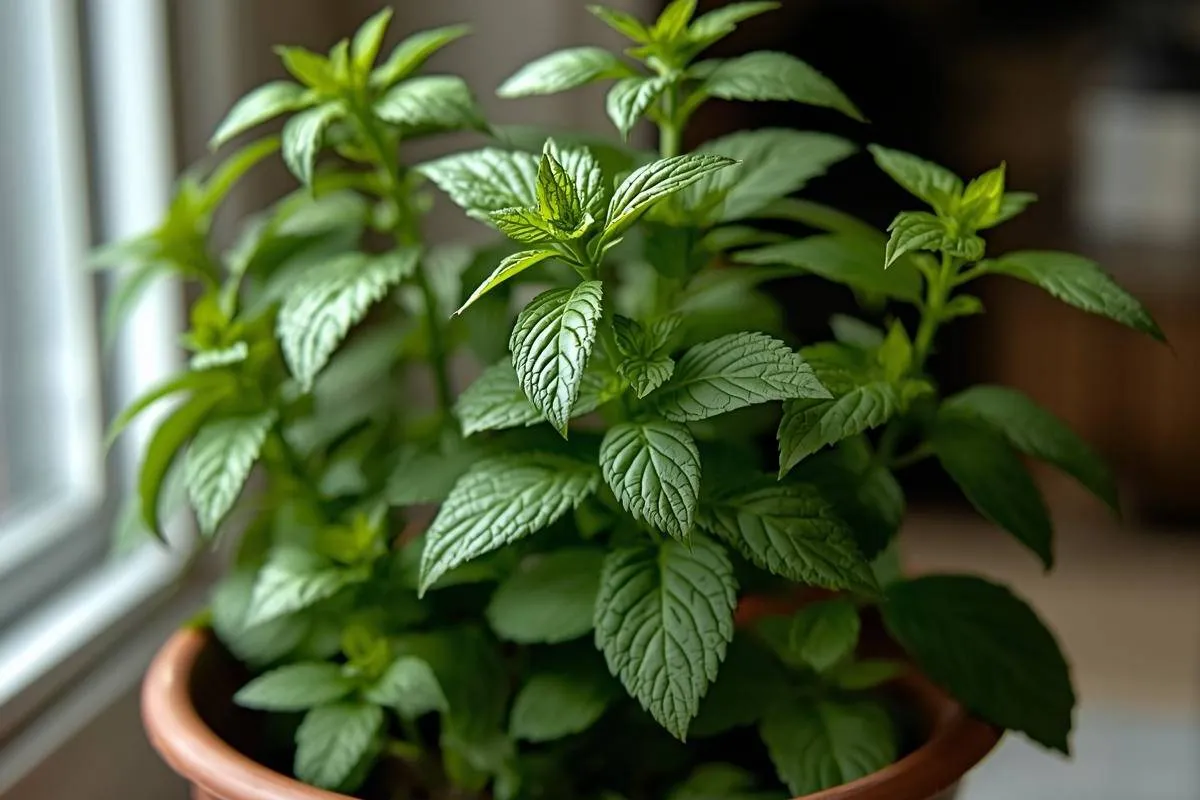
This one smells like a citrus candle and grows like it is trying to take over your counter.
Lemon balm handles low light without complaint and adds a soft lemony note to teas and water.
Fair warning, it spreads fast. Give it its own pot, not a shared one.
5. Cilantro
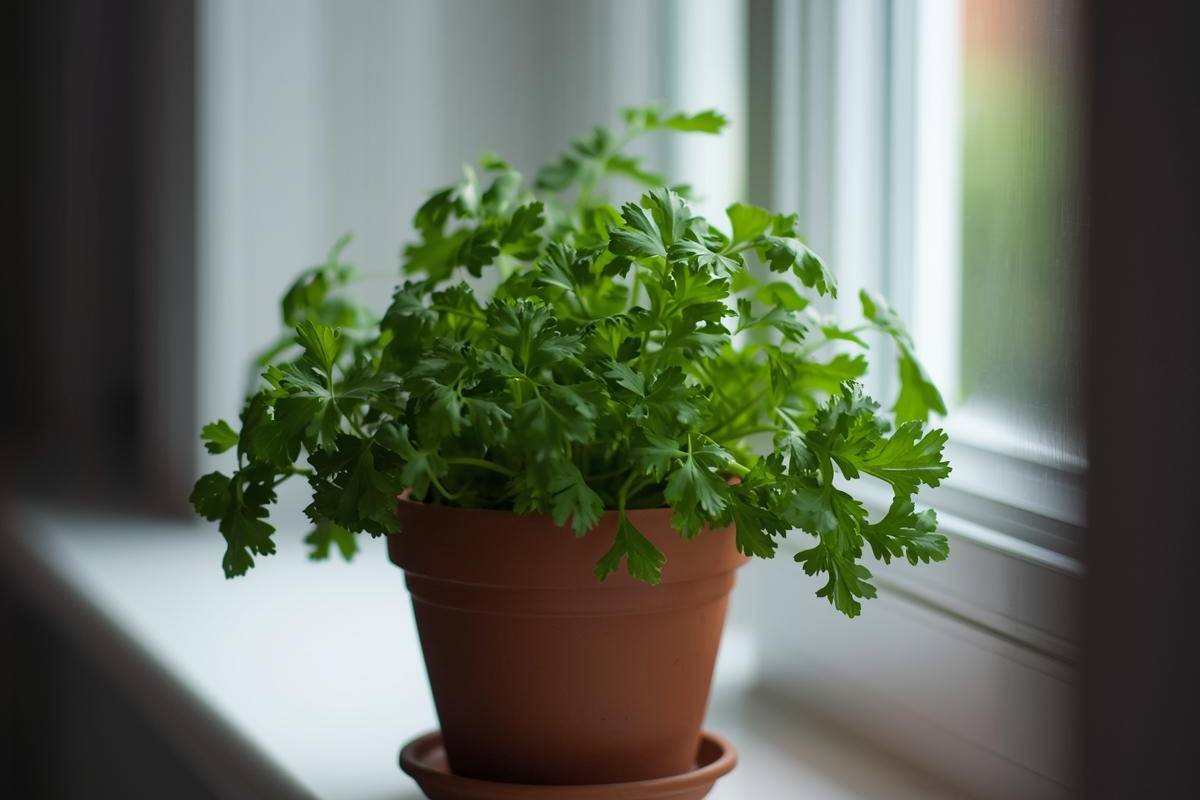
Cilantro is a little more particular than the others on this list, but it still does fine without direct sun if it gets decent bright indirect light.
The real trick with cilantro is keeping it cool.
Hot rooms make it bolt and go bitter overnight. Keep it near a cooler spot in your kitchen and harvest often.
6. Watercress

Most people have never even thought about growing this indoors, which is exactly why I am including it.
Watercress loves low light and loves water even more.
It grows almost like a houseplant that happens to be delicious.
Peppery, fresh, and a fun way to feel like a plant person who is ahead of the curve.
7. Green Onions (Scallions)
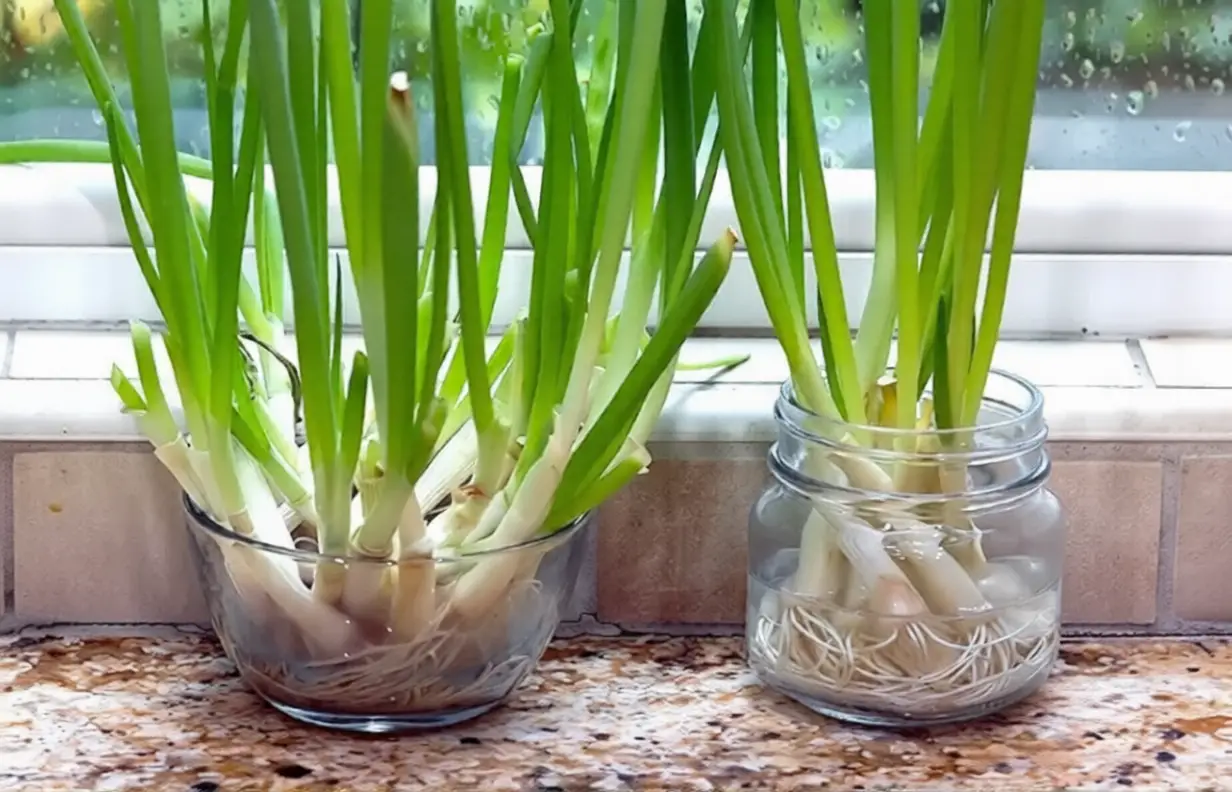
Okay, technically a vegetable, but every recipe treats them like an herb so we are counting them.
Stick the root ends in a glass of water on any counter, dim light included, and watch them regrow within days.
This is the easiest “win” on this entire list. If you need a confidence boost, start here.
8. Tarragon
:max_bytes(150000):strip_icc():format(webp)/tarragon-care-growing-guide-5024873-3-d258029f9f9843549781de05e8c76150.jpg)
Tarragon has a quiet elegance to it, both in flavor and in how low maintenance it is indoors.
It tolerates lower light and brings a subtle anise flavor that makes simple chicken or eggs taste fancy.
I genuinely think this herb is underrated. Nobody talks about it enough.
The “Needs a Little Grow Light Help” Crew
These herbs can absolutely live without a sunny window, but they do want more light than a dim corner provides.
Thankfully, a basic grow light fixes the problem.
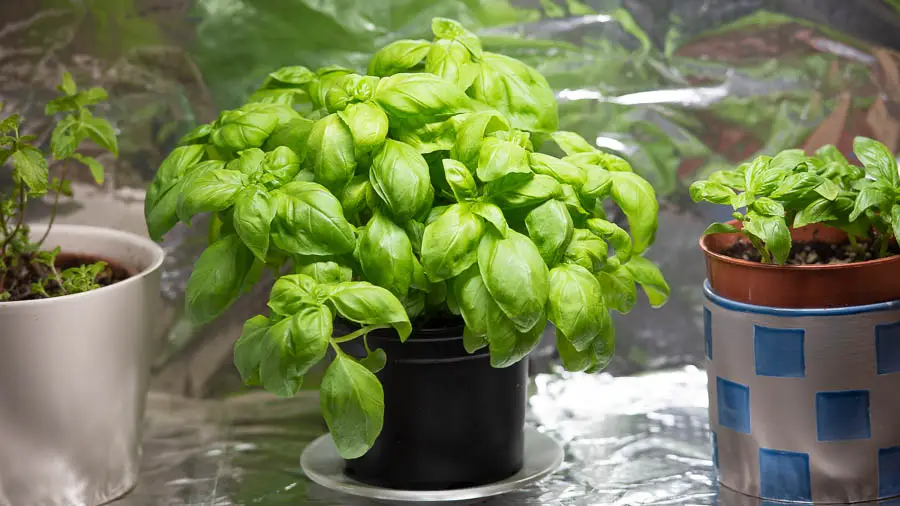
9. Basil

Basil is gorgeous, fragrant, and frankly a little needy.
Without strong light it gets tall, floppy, and weirdly sad looking.
With a grow light, though, it becomes the herb that makes your homemade pasta taste like it came from a restaurant.
Worth the small investment.
10. Rosemary

Rosemary wants to pretend it is on a hillside in the Mediterranean, not your apartment.
It is one of the trickier herbs to grow indoors period, sunlight or not, because it hates humidity and stagnant air.
A grow light plus a fan nearby makes a real difference.
Skip this one if you are new to indoor herbs and want an easy win.
11. Thyme
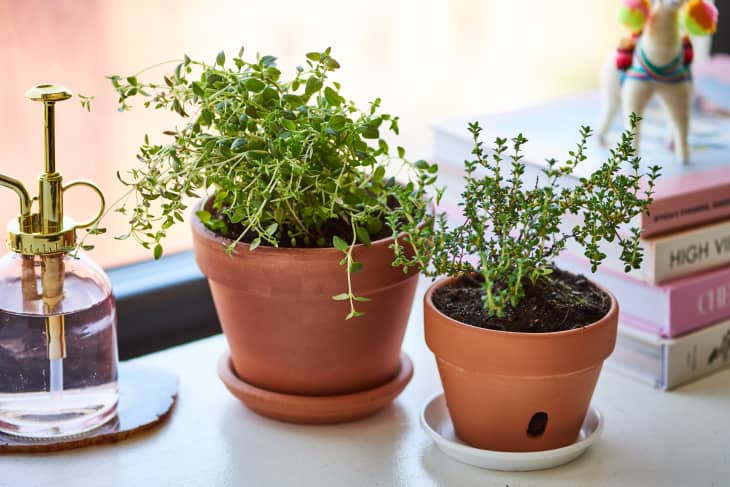
Thyme is more forgiving than rosemary but still appreciates a grow light over a dim windowsill.
It is slow growing, so do not panic if it does not look dramatically different week to week.
Good things take time. Thyme included.
12. Oregano

Oregano under a grow light gets bushy and strong fast.
Without enough light it gets thin and stretched out, reaching for something that is not there.
If your oregano looks like it is trying to escape the pot sideways, that is your sign it needs more light.
13. Marjoram
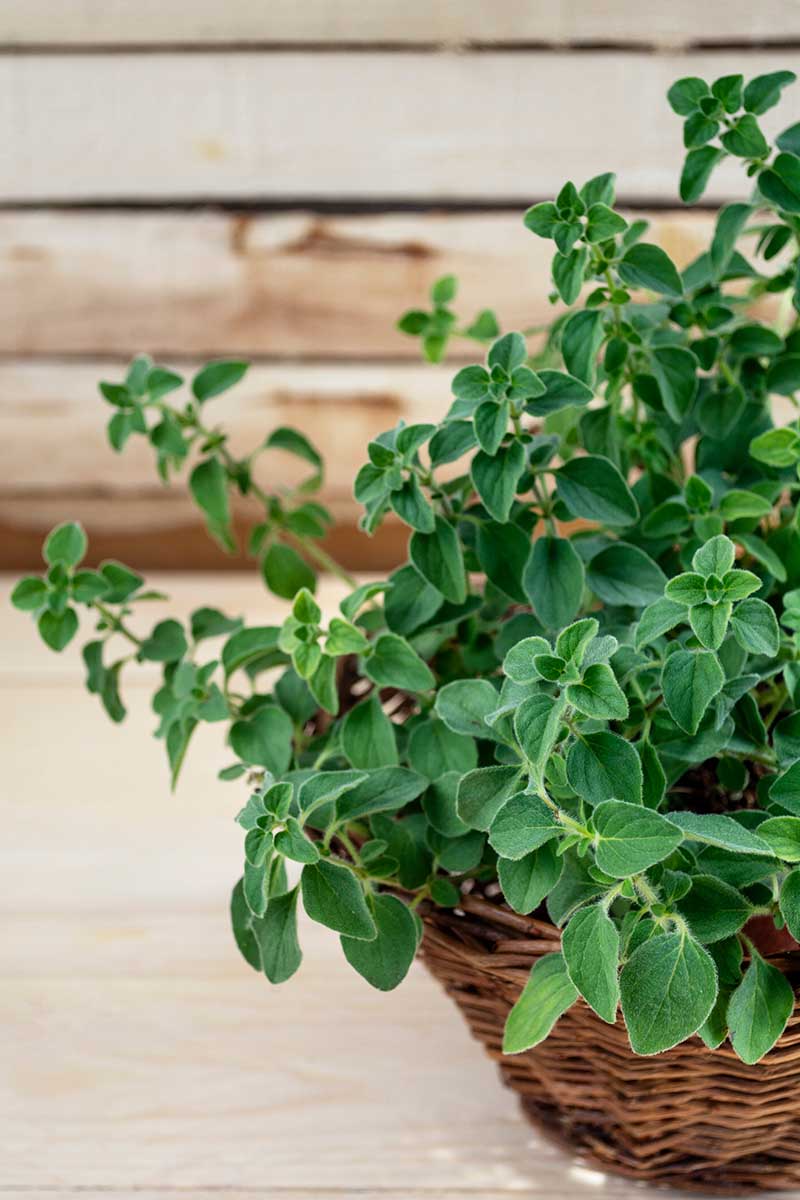
Marjoram is basically oregano’s softer, gentler cousin.
Same light needs, milder flavor, and it pairs beautifully with eggs, soups, and roasted vegetables.
I like having both oregano and marjoram going at once. They cover different moods in cooking.
14. Dill

Dill needs decent light to avoid going to seed too early, which is the plant version of giving up.
A grow light keeps it producing those feathery leaves longer instead of rushing to flower.
Once dill bolts, the flavor turns bitter fast. Catch it early.
15. Lemongrass

Lemongrass is the wildcard here. It grows tall, smells incredible, and genuinely wants bright light to thrive.
A grow light makes this possible even in a no sun apartment.
It takes patience, but homemade Thai soup with fresh lemongrass is a flex worth waiting for.
Best practices for growing indoor herbs without sunlight
Picking the right herb is only half the battle.
How you set things up matters just as much, and this is where most people quietly sabotage themselves without realizing it.
Some of the things you should do to stay in the good books of your herbs include:
Get a grow light, even a cheap one
I know, I know, you wanted to skip this.
But a basic clip on grow light from any home store will outperform a dim windowsill every single time.
You do not need anything fancy or expensive.
Just something that turns on for part of the day and points at your plants.
Give your herbs some darkness
Plants need darkness as much as they need light. Yes, really.
Leave a grow light on 24 hours a day and your herbs will grow weaker, not stronger.
Aim for around 12 to 16 hours on and let the rest be dark. A cheap outlet timer does this for you so you never have to think about it again.
Water less
This is the number one killer of indoor herbs, full stop.
Low light means slower growth, and slower growth means your plant is drinking less water than it would outside in the sun.
Stick your finger an inch into the soil before watering.
If it feels damp, walk away.
Overwatering in low light is basically a death sentence dressed up as kindness.
Give them airflow
A small fan on low, even just the breeze from an open window or a ceiling fan, makes a real difference.
Stagnant air invites mold, mildew, and weak floppy stems.
I learned this the hard way after losing a whole tray of seedlings to a moldy mess in a closed up room.
Now I keep a tiny desk fan running near my herbs and have never had the problem again.
Rotate your pots
Even with a grow light, plants lean toward whatever light source they have.
Give your pots a quarter turn every few days so they grow upright instead of sideways and lopsided.
It takes ten seconds and saves you from ending up with a herb that looks like it is trying to crawl out of the pot.
Skip the giant pots
A huge pot with a tiny plant in low light is a recipe for soggy soil that never dries out.
To be on the safe side match your pot size to your plant size and size up only as it grows.
Bigger is not always better here. Sometimes bigger just means wetter, longer, and moldier.
Feed lightly, not heavily
Herbs grown without strong sun are not photosynthesizing at full speed, so they do not need the same heavy feeding schedule you would use outdoors.
A diluted liquid fertilizer every couple of weeks is enough.
Overfeeding a slow growing plant does not speed it up. It just builds up salts in the soil and stresses the roots.
Keep the temperature steady
Drafty windowsills and spots near heating vents create temperature swings that stress herbs more than people expect.
A consistent room temperature, somewhere around 65 to 75 degrees, keeps things predictable.
Consistency beats perfection every time with indoor herbs. They would rather have “fine and steady” than “great one day, terrible the next.”
So which herbs should you actually start with?
If you want instant gratification with almost zero effort, start with mint, chives, and green onions. They are basically foolproof.
If you are ready to invest in a cheap grow light, basil and oregano will reward you fastest.
And if you want to feel like the most interesting plant person at brunch, grow watercress or tarragon and watch people ask what it even is.
Here is the truth nobody tells you. You do not need a sunny windowsill to have a thriving herb garden.
You need to pick herbs that match the light you actually have, not the light you wish you had.
Pin this, save it, come back to it next time you are standing in the gardening aisle wondering what will actually survive in your space.
Your future self, and your future dinners, will thank you.
FAQ
How do I care for an indoor herb garden
Keep them consistently watered without drowning them, give them a steady light source, and let them breathe with a little airflow. That is really the whole formula.
Most indoor herb gardens fail from inconsistency, not lack of effort. Pick a routine you can actually stick to and your herbs will be fine.
What are common mistakes growing indoor herbs?
Overwatering tops the list by a mile.
Right behind it is cramming a sun loving herb like basil or rosemary into a dark corner and wondering why it is sulking.
Other big ones include using a pot with no drainage hole, skipping a grow light entirely, and forgetting that herbs need a dark period just as much as a light one.
Can a herb garden survive indoors?
Absolutely, and honestly some herbs do better indoors than out since you control the conditions completely.
No pests blowing in, no surprise frost, no neighborhood cat using your basil as a bed.
The key is matching each herb to the light and space you actually have, not the setup you saw on Pinterest.
What indoor plants thrive without sunlight?
Beyond herbs, plants like pothos, snake plants, and ZZ plants are famous for tolerating low light beautifully.
If we are sticking to herbs specifically, mint, parsley, chives, and lemon balm are your best bet.
These are the plants that make low light apartments feel less impossible to decorate with greenery.
How do I create an indoor herb garden?
Start small.
Pick two or three herbs you actually cook with, grab pots with drainage holes, decent potting soil, and a light source if your space is dim.
Group herbs with similar light and water needs together so you are not babysitting ten different routines. Expand once you have a rhythm down.
Can herbs grow indoors without sunlight?
Yes, as long as “without sunlight” means without direct sun, not without any light at all.
Low light tolerant herbs do fine near a bright window, and a basic grow light opens the door to pretty much any herb you want.
The herbs themselves are flexible. It is the setup that needs adjusting.
What is the easiest herb to grow indoors?
Mint, hands down.
It tolerates low light, forgives inconsistent watering, and genuinely seems to grow faster the more you ignore it.
Chives and green onions are close runners up if you want something even more low key.
Can you grow herbs indoors without sunlight?
Yes. This is not a trick question, and it is not even that hard once you pick herbs that match your light situation.
The herbs on this list prove it every day in apartments with zero direct sun.
Can normal household lights replace sunlight?
Not really, and this trips people up constantly.
Regular lamps and ceiling lights are not bright enough or the right spectrum to substitute for real sunlight or a proper grow light.
If you want herbs that need more than ambient light, invest in an actual grow light.
It is a small cost that solves a problem regular bulbs simply cannot.
Related Posts: