How to Regrow Damaged Grass
Last Updated on March 3, 2026 by Duncan
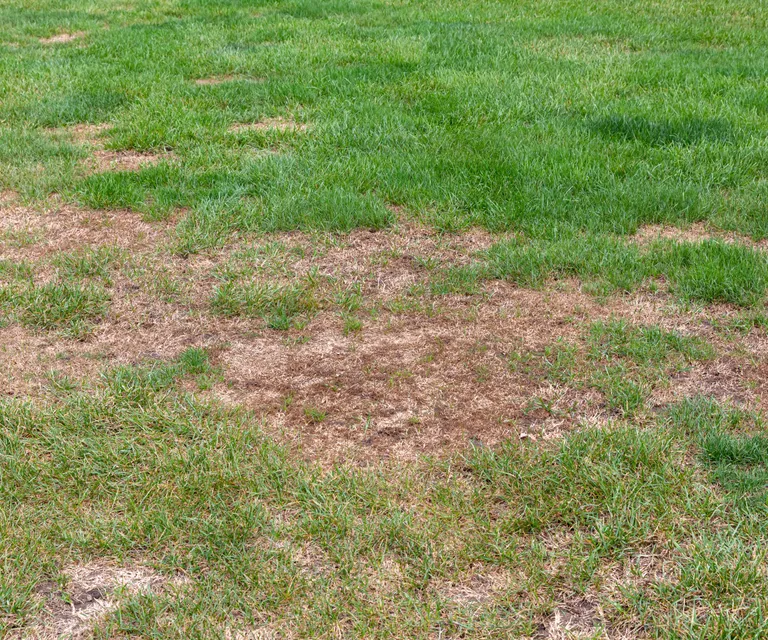
Lawns frequently get tatty or patchy after a summer of heavy use or periods of hot, dry weather. Frosty or soggy winters can also be damaging, particularly if the lawn is frequently trodden on.
Perhaps your lawn has dips or lumps that make mowing difficult, or sparse sections near the margins where border plants overhang. Repairing these areas will help to prevent undesired weeds from colonizing bare areas and improve the overall appearance of the grass.
Spring and autumn are good periods to restore a lawn because the weather is wet and temperate. Under these conditions, the lawn will most likely recover well.
However, if your lawn is in extremely poor condition, you may need to consider completely re-growing it rather than simply mending it.
How to regrow bare patches
You can mend damaged or bare parts of the lawn by spreading lawn seed or patching them with a piece of turf excavated from another area of the lawn, or new turf if available.
The latter yields immediate effects, although sowing seed may be simpler and less expensive if you don’t have any spare turf to use as a patch.
If the bare patch was caused by shade, use a lawn seed mix designed for shady areas; if the grass is heavily used, select a robust utility lawn seed mix.
How to regrow bare patches using lawn seed
Lawn seed is easy to sow, reasonably inexpensive, and you can customize the seed mix to your growing conditions. If you decide to go this way, you should know that it will take several months to get established.
Start by cutting off the damaged section of turf in a square using a flat-bladed spade, then slice below it to lift it to a depth of around 5cm (2in).
To create a level surface, lightly fork or dig the soil in the square, then add topsoil or garden compost. You should then firm gently with your feet.
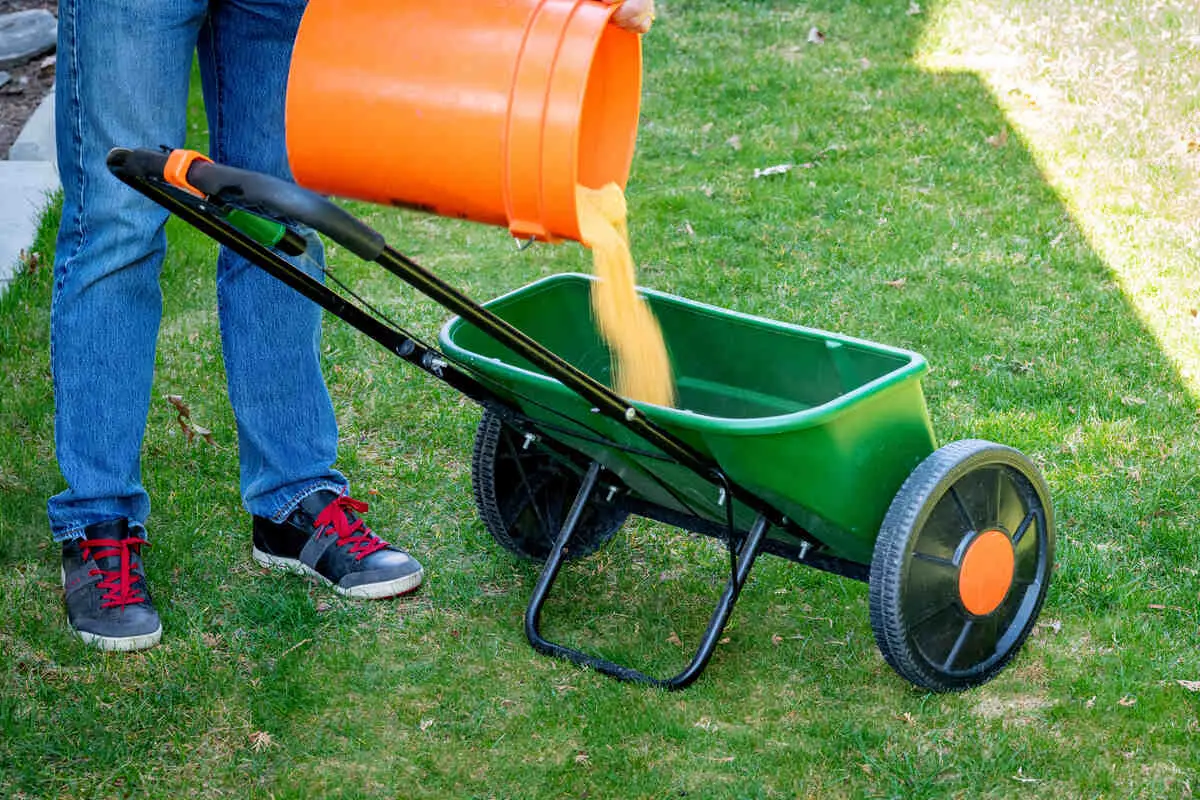
Once you are done, spread grass seed evenly over the prepared soil at the recommended rate on the packet, often 15-25g per square meter (½-¾ oz per square yard).
To protect the seeds from birds, cover them lightly with topsoil or homemade compost. To keep birds away, cover with fleece and pin down the borders.
Water slowly using a watering can equipped with a rose to avoid dislodging the seeds.
Pre-germinating seeds before sowing can yield better results. If you want to go this route, fill a bucket with moist peat-free multi-purpose compost and cover with clingfilm.
Place the bucket is a warm area, but no higher than 15°C (60°F). After three days, check for germination and repeat daily until little white roots form. You should then sow the mixture as described above.
How to regrow bare patches with turf
For an immediate remedy, patch the damaged spot with healthy grass from another part of the lawn where it would not be missed, or use new turf if available.
What you need to do is cut off the damaged section of turf in a square using a half-moon edging iron or a flat-bladed spade, then slice below it to lift it to a depth of around 5cm (2in).
Lightly fork over the earth in the square, add some topsoil or garden compost, then firm softly with your feet to create a level surface.
You should cut out an identical-sized square of healthy turf from an inconspicuous region of the lawn or from a recently purchased turf roll.
Place the healthy piece of turf in the prepared square and firm it down, making sure it sits at the same level as the surrounding lawn.
You should compress the turf edges with the back of a rake and brush a sandy lawn top-dressing into the crevices surrounding them.
Once you are done, water thoroughly.
How to regrow lawn edges
Lawn edges are frequently damaged by foot traffic or shading from overhanging plants. It goes without saying that a nice, well-defined edge makes the entire lawn look much smarter, so you should fix any worn sections and re-cut the edges regularly.
To fix a worn edge:
Carefully cut out the damaged area with square cuts on three sides, then use a spade to slice beneath, seeking to keep the turf intact. The piece should include both the worn portion and some healthy turf on the inside.
To level the square, delicately fork over the earth and include topsoil or garden compost. Firm with your feet.
Turn the damaged square 180° and reinsert it such that the inner, cut edge coincides with the grass edge and the damaged edge faces inward. This provides a firm, healthy outer border for the lawn.
If the bare or sparse region that was formerly the lawn edge is a thin strip (20 cm/8 in or less), rake the soil lightly and sow grass seed. To repair a bare patch, first cut away the larger damaged area and then follow the process above.
Tricks to even out bumps and hollows
Using a flat-bladed shovel, make an H-shaped incision into the uneven area and peel back the turf.
Fork the base and either remove surplus soil or add new topsoil to elevate the level.
Firm the earth until it is level, then reinstall the two turf flaps.
Check whether the lawn is level and correct it if required.
Compress the turf edges using the back of a rake. Brush a sandy lawn top-dressing into the gaps where the grass was cut.
Water thoroughly.
FAQs
Will watering the dead grass bring it back to life?
Unfortunately, no amount of water can rejuvenate dead grass. A healthy dormant lawn can survive for several weeks without rain or irrigation, but there is no way to revive dead grass with watering.
If your grass is dormant rather than dead, it will begin to green up again once it receives the necessary water. The amount of water your lawn requires is determined by a variety of factors, including the type of grass, your location, and the weather in your area.
Is it possible for dead or brown grass to go green again?
Will the dead grass grow back? If your grass is truly dead, the only way to restore it is to grow new grass.
On the other hand, you can turn brown grass green with proper care. Often, this only means more water, nutrients, and cooler temperatures for northern lawns and warmer temperatures for southern lawns.
If your grass has turned dark due to lawn disease or insect damage, you may need to treat it. Work with professionals who will help you determine whether your grass is brown due to dormancy or damage and get it back on track.
Can you reseed dead grass?
When dealing with dead grass, the first thing that comes to mind is most likely overseeding. Overseeding will help rejuvenate your grass, but it must be done properly to be effective.
Tossing seeds onto dead, thatched grass might result in weak or spotty growth. And you don’t want this.
Start with breaking up dense dirt and thatch, and if you have cool-season grass, overseed it. Aeration improves air, water, and nutrient penetration into the soil, as well as the new seed’s interaction with the soil, promoting germination and seedling establishment.
For cold-season grasses, do this in late summer and fall, when the soil is still warm but daytime temperatures are cool, providing ideal conditions for grass seed to develop in time for the following spring.
Will raking dead grass promote its growth?
Raking dead grass won’t help it grow. However, raking can help remove thatch, which may allow living grass to grow stronger and healthier. Raking is a helpful way for lawn areas that have not emerged from dormancy and is one piece of the jigsaw for mending damaged areas.
Does fertilizer revive dead grass?
Fertilizer can be extremely effective at strengthening a living lawn, but it cannot bring a dead lawn back to life or revive dead grass. To achieve the best results, apply fertilizer when your grass is actively developing.
The timing of this depends on several factors, including the grass species you have and the weather in your area. Fertilization is a good practice in general and is part of the lawn care treatment your local lawn specialist will use when developing a customized plan for your grass.
Should you mow dead grass?
If your grass has completely stopped growing, it is either dead or dormant and will not regrow. In both cases, avoid mowing for the time being.
Mowing dead grass is meaningless, since dead grass is dead; however, mowing a dormant lawn will weaken your grass, making it more vulnerable to catastrophic injury. And you don’t want this, do you?
Related Posts: