Can I Put Grass Seed Over Existing Grass?
Last Updated on April 21, 2026 by Duncan
Yes — and it’s one of the best things you can do for a struggling lawn. The process is called overseeding, and when done correctly, it fills in thin or bare patches, crowds out weeds, and revives a tired yard without the cost and effort of a complete renovation.
That said, despite what any say that you should simply scatter seed over your lawn and hope for the best, it rarely works. Seeds need direct soil contact, consistent moisture, and proper preparation to germinate.
This guide walks you through everything you need to know — from choosing the right seed to watering the new growth.
What Is Overseeding?
Overseeding means spreading grass seed over an existing lawn rather than tearing it out and starting from scratch. It works by introducing new grass plants into thin or worn areas, which gradually thickens the turf as a whole.
Done regularly, overseeding can:
- Fill in bare or thin patches without re-sodding
- Introduce improved grass varieties that are more drought- or disease-resistant
- Help cool-season lawns stay green longer into winter
- Reduce weed pressure by leaving less open soil for weeds to colonize
Choosing the Right Grass Seed
Before you buy a bag of seed, make sure it’s the right match for your existing lawn and your climate.
Cool-season grasses (Kentucky bluegrass, tall fescue, perennial ryegrass) thrive in northern states and higher elevations where summers are mild. If you have this grass on your lawn, you should overseed in early fall — typically late August through October — when soil is still warm but air temperatures are cooling down. Spring overseeding is a secondary option, though summer heat can stress new seedlings.
Warm-season grasses (Bermuda, Zoysia, St. Augustine, centipede) are suited to the South and Southwest. If you’re overseeding for winter, use a cool-season grass like annual ryegrass in early fall. For permanent overseeding of warm-season turf, I recommend that you do it in late spring or early summer — when soil temps hit at least 65–70°F — is the window.
Matching your existing variety: If possible, use a seed that matches or complements what’s already in your lawn. Mixing incompatible grass types can result in a patchy, uneven appearance. Check the seed label for variety names and look up which zone they’re suited for.
When to Overseed
Timing is the single biggest factor in overseeding success. The ideal window depends on your grass type:
| Grass Type | Best Time to Overseed | Soil Temperature |
|---|---|---|
| Cool-season (fescue, bluegrass, ryegrass) | Late summer to early fall | 50–65°F |
| Warm-season (Bermuda, Zoysia) | Late spring to early summer | 65–70°F |
| Ryegrass (for winter color in South) | Early fall | Below 75°F |
Avoid overseeding during drought conditions, extreme heat, or right before a frost. This is because new seedlings are fragile — they need at least 6–8 weeks of moderate growing conditions to establish before facing temperature extremes.
How to Overseed Your Lawn: Step by Step
1. Mow Short and Bag the Clippings
Cut your existing grass shorter than usual — down to about 1.5 to 2 inches. This reduces competition and lets sunlight reach the soil surface, which new seedlings need. Bag or rake up the clippings so they don’t smother the seed.
2. Dethatch If Needed
Thatch is the layer of dead grass stems and roots that builds up between the soil and the green grass above. A thin layer (under ½ inch) is fine, but anything thicker blocks seeds from reaching the soil.
Use a dethatching rake for small areas or rent a power dethatcher for larger lawns. If your thatch layer is thick and compacted, this step is non-negotiable.
3. Aerate the Soil
Aeration is the most important prep step that I have seen most homeowners skip. Don’t be one of them. You should use a core aerator to pull small plugs of soil from the ground, creating channels that allow seed, water, and nutrients to penetrate the root zone.
For a thick, established lawn, aeration dramatically improves overseeding results. You can rent a core aerator from a hardware store for a few hours. Leave the soil plugs on the lawn — they’ll break down on their own.
4. Test and Amend Your Soil (Optional but Worth It)
If your lawn has been struggling for a while, a basic soil test — available through your local cooperative extension office or a garden center — will tell you whether your soil pH is off or if it’s low in key nutrients. Most grasses prefer a pH of 6.0–7.0.
If your pH is too low (acidic), apply lime. If it’s too high (alkaline), sulfur can bring it down. Getting your soil chemistry right gives the new seed a much better shot at establishing.
5. Pre-Moisten the Lawn
Don’t seed into dry soil. Run your sprinklers for a few hours a day for two or three days before sowing. You want the top inch or two of soil to be consistently moist — not soggy, just damp.
6. Apply the Seed
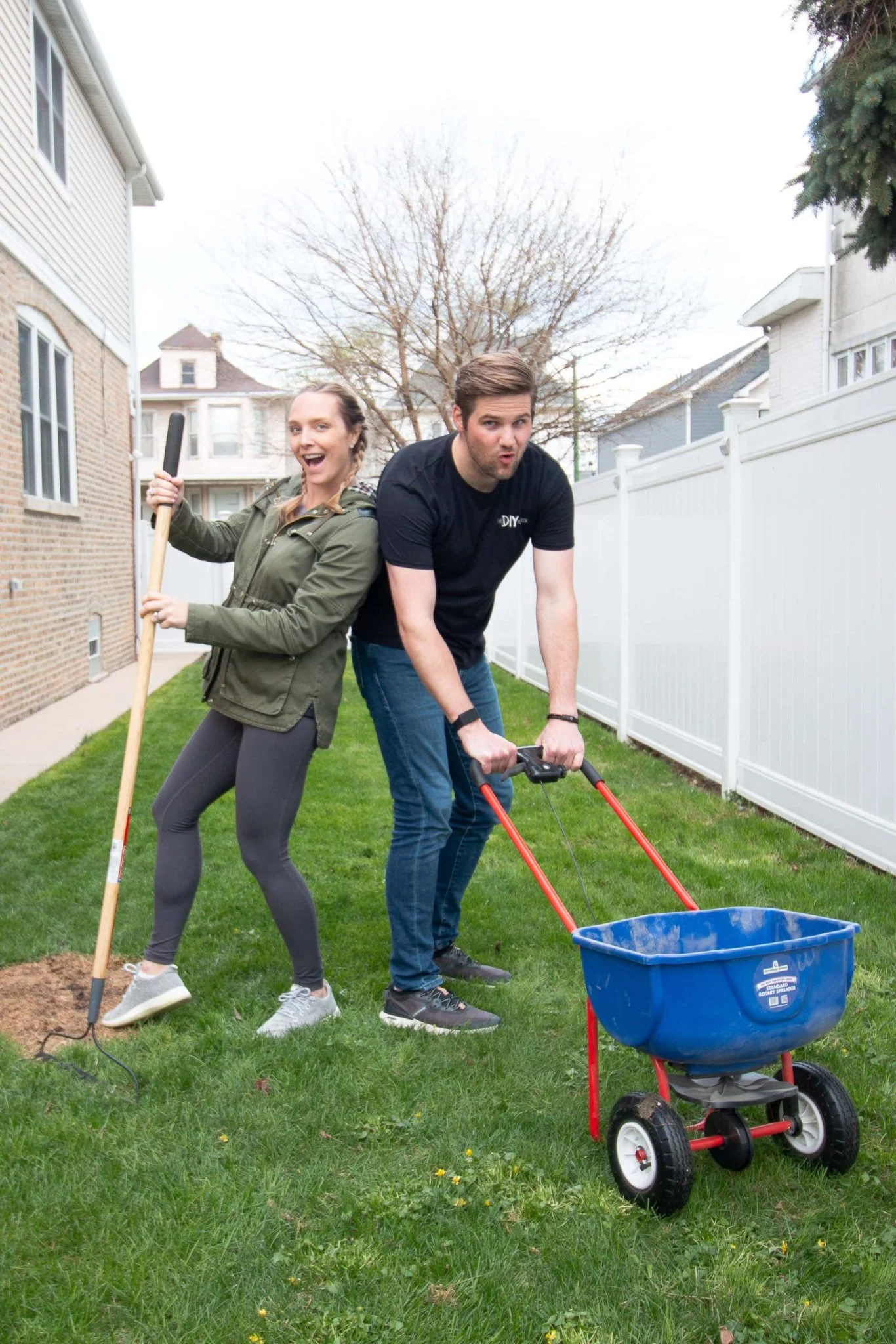
Use a broadcast spreader or a drop spreader for even coverage. Hand-spreading works for small areas but makes it hard to get consistent density over a larger lawn.
A good approach: divide your total seed into two equal halves, then spread one half walking north-to-south and the second half walking east-to-west. This cross-hatch pattern gives you the most even coverage.
Seeding rates vary by grass type, so check the bag. As a general guide:
- Overseeding (filling in thin areas): use roughly half the rate for a new lawn
- Heavily damaged or nearly bare areas: use the full new-lawn rate
7. Press the Seed into the Soil
Good seed-to-soil contact is critical. Seeds resting on top of thatch or loose debris dry out quickly and are easy pickings for birds.
After spreading, use a lawn roller to press the seed firmly into the soil. If you don’t have one, a lawnmower with the blade off (using just its roller) works, or even walking methodically up and down the lawn in different directions.
8. Apply a Starter Fertilizer
New grass seedlings need phosphorus to develop a strong root system. Use a starter fertilizer — not your regular lawn fertilizer — at the rate listed on the bag. Starter fertilizers are typically labeled for new seedings and have a higher middle number (phosphorus) in the N-P-K ratio.
Avoid fertilizers with weed killers (herbicides) at this stage — they can prevent grass seed from germinating.
9. Water Daily Until Established
Keep the seed moist but not waterlogged. For the first two to three weeks, water lightly once or twice a day — just enough to keep the top inch of soil consistently moist. Once seedlings are visibly established and about an inch tall, you can gradually taper to a deeper but less frequent watering schedule.
Common Overseeding Mistakes to Avoid
Seeding too late in the season. Grass seed needs weeks to establish before it faces frost or summer heat. Seeding at the wrong time is the most common reason overseeding fails.
Skipping aeration. Without aeration, seed sits on a compacted surface and struggles to make contact with soil. Don’t skip this step if your lawn is dense and compacted.
Using the wrong seed. Warm-season grass won’t establish in fall temperatures, and cool-season seed sown in summer heat will struggle to germinate.
Watering too heavily. Flooding seeds washes them away and encourages disease. Light, frequent watering is far better than heavy, infrequent soaks.
Mowing too soon. Wait until new seedlings are at least 3 inches tall before mowing for the first time. Mow too early and you uproot fragile new plants. Keep blades sharp so the young grass doesn’t tear.
FAQs
How long does it take for overseeded grass to grow?
Most grass varieties begin to germinate within 7 to 21 days, depending on the species and conditions. Perennial ryegrass is the fastest (5–10 days); Kentucky bluegrass can take up to three weeks. You’ll typically see a noticeably thicker lawn within 6 to 8 weeks of overseeding under good conditions.
Should I overseed every year?
Not necessarily. A healthy, thick lawn may only need overseeding every 2 to 3 years. However, if your lawn thins out regularly due to heavy traffic, heat stress, or shade, incorporating overseeding into your annual fall routine will keep it dense and resilient year-round.
Can I overseed in spring?
Yes, though fall is the better option for cool-season grasses because seedlings have more time to establish before facing summer stress. Spring overseeding works well for warm-season grasses. If you do overseed in spring, be prepared to water frequently and keep foot traffic off new growth.
Do I need to put topsoil down before overseeding?
In most cases, no. If the soil is badly depleted or uneven in spots, you can apply a very thin layer (no more than ¼ inch) of topsoil or compost before seeding to help. But avoid adding more than that — burying grass seed too deep prevents germination.
What’s the difference between overseeding and reseeding?
Overseeding means adding seed to an existing lawn to thicken it. Reseeding (or renovation) means removing the existing grass entirely and starting from scratch — a much more intensive process typically reserved for severely damaged or dead lawns.
Final Thoughts
Overseeding is one of the most cost-effective ways to maintain a lush, healthy lawn. The key is timing, preparation, and consistent watering in the weeks after seeding. Get those three things right, and you’ll see a noticeably thicker lawn within a couple of months — no sod, no complete renovation required.
Related Posts: