What Can You Spray On Grass in The Spring?
Last Updated on April 21, 2026 by Duncan
Spring is the most important window in the lawn care calendar — and also the most time-sensitive. My rule is, miss the pre-emergent window and you’re fighting crabgrass all summer.
Fertilize too early and you push weak growth the roots can’t support. Apply fungicide after a disease has spread and you’re already playing catch-up.
This guide breaks down every spray and treatment worth applying in spring, what each one does, when to apply it, and in what order — so you’re not guessing at the garden center.
The Spring Spray Schedule at a Glance
Timing matters more than any individual product. Here’s the right sequence:
| Order | Product | When to Apply | Soil Temp Trigger |
|---|---|---|---|
| 1 | Pre-emergent herbicide | Early spring, before weed germination | 50–55°F |
| 2 | Liquid iron or foliar fertilizer | Early-to-mid spring, as grass greens up | Grass actively growing |
| 3 | Spring fertilizer (N-P-K) | Mid-spring, after grass breaks dormancy | 55–65°F |
| 4 | Post-emergent herbicide | When weeds are visible and actively growing | Weeds present |
| 5 | Fungicide (if needed) | Before humid weather arrives | History of disease |
| 6 | Insecticide (if needed) | As soil warms, before larvae hatch | Pest pressure present |
These don’t all have to happen in the same week — and most shouldn’t. Space them out and let each treatment do its job before moving to the next.
1. Pre-Emergent Herbicide
Pre-emergents are the most time-critical product on this list, which is why they go first. They work by creating a chemical barrier in the soil that prevents weed seeds from germinating — but they only work before the seeds sprout.
I have found that once crabgrass, goosegrass, or annual bluegrass pushes through the soil surface, pre-emergents have no effect on them.
When to apply: When soil temperatures consistently reach 50–55°F at a 2-inch depth. This typically coincides with forsythia blooming in most regions, but a cheap soil thermometer takes the guesswork out entirely. Too early and the barrier breaks down before weed season peaks; too late and seeds have already germinated.
What they target: Crabgrass, goosegrass, annual bluegrass (poa annua), spurge, and most other summer annual weeds.
Liquid vs. granular: Both work well. Liquid pre-emergents tend to give more even coverage and are good for smaller lawns. Granular products (often called “crabgrass preventers”) are easier to apply on large areas and typically need to be watered in within 24–48 hours to activate.
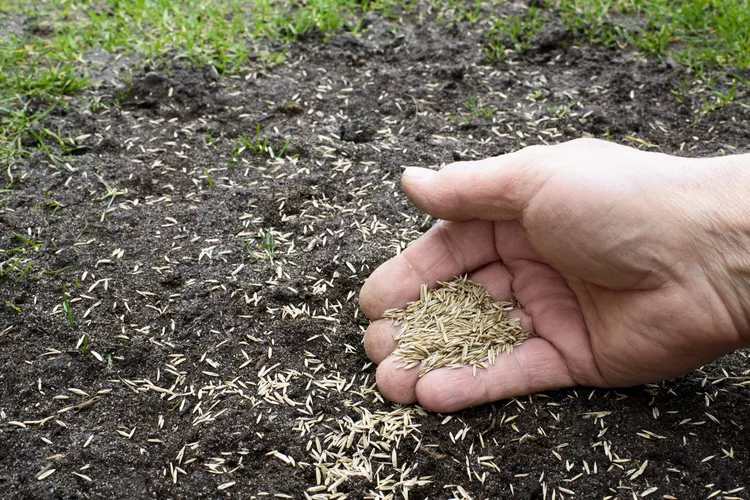
Important: Most pre-emergents will also prevent grass seed from germinating. If you plan to overseed in spring, either use a seed-safe pre-emergent (such as products containing siduron) or skip pre-emergent entirely in those areas and plan your overseeding for fall instead.
2. Liquid Iron
This is one of the most underused spring treatments, and one of the most effective for getting a fast, deep green without pushing excessive blade growth.
Grass needs iron to produce chlorophyll. In spring, soils are often cool and slightly saturated from winter rain, which limits nutrient uptake — including iron.
Spraying a liquid iron solution directly on the blades bypasses the soil and delivers immediate color improvement, typically within 24–48 hours.
Why use iron instead of just fertilizing? A heavy nitrogen application in early spring pushes rapid shoot growth before the root system is ready to support it. This leads to lush but shallow growth that’s more vulnerable to disease and summer stress. Liquid iron gives you the visual green-up without overstimulating the plant.
Application: Liquid iron comes in concentrate form and you apply it with a pump or backpack sprayer. Remember to follow the label rate carefully as too much iron can temporarily stain hardscaping and patios.
3. Spring Fertilizer
Once your grass has broken dormancy and is actively growing — typically when soil temperatures reach 55–65°F — it’s time to feed it. A spring fertilizer provides the nitrogen, phosphorus, and potassium (N-P-K) the lawn needs after winter.
Understanding the N-P-K numbers: The three numbers on every fertilizer bag (e.g., 24-0-10) represent the percentage of nitrogen, phosphorus, and potassium. In spring, you’re primarily after nitrogen for green-up and growth, and potassium for stress tolerance. Phosphorus (the middle number) is less critical unless a soil test shows a deficiency.
Liquid vs. granular:
- Liquid fertilizers absorb through the leaves as well as the roots and deliver visible results within days. They’re great for quick green-up but require more frequent re-application.
- Granular fertilizers release nutrients more slowly and are easier to apply evenly across a large area. Slow-release granular products are often the better choice for spring because they feed over a longer period without creating a sudden flush of growth.
Don’t fertilize too early. Applying nitrogen to dormant or barely-active grass in late winter wastes product and encourages weed growth in the bare spots. Wait until you’ve mowed the lawn at least once and it’s clearly growing before fertilizing.
Get a soil test first if you can. A basic soil test (available through your county extension office or many garden centers) tells you what your soil actually needs — pH, nutrient levels, and any deficiencies.
Without it, you’re applying products based on guesswork. A soil test is especially worth doing if your lawn has looked yellow, thin, or patchy despite regular care, since those symptoms are often caused by pH or nutrient imbalances rather than a lack of fertilizer.
4. Post-Emergent Herbicide
Pre-emergents protect against weeds that haven’t appeared yet. Post-emergent herbicides handle the weeds that are already growing — whether they slipped through before you applied a pre-emergent, germinated from the previous fall, or are perennial weeds that re-emerge each year.
Selective vs. non-selective:
- Selective post-emergents kill specific weed types (broadleaf or grassy) without damaging your lawn grass. These are what you want for spot-treating dandelions, clover, chickweed, and similar broadleaf weeds. Common active ingredients include 2,4-D, MCPP, and dicamba.
- Non-selective herbicides (like glyphosate) kill everything they contact — grass included. Only use these if you’re planning to completely clear the area.
When to apply: Post-emergent herbicides are most effective when weeds are young and actively growing — typically 4–6 weeks after germination. Applying to stressed, drought-affected, or dormant weeds significantly reduces efficacy.
You shoudl avoid spraying when temperatures are above 85°F, which can cause volatilization and damage to nearby desirable plants.
Liquid application tips: Use a pump or backpack sprayer set to a coarse spray pattern to reduce drift. Don’t spray on windy days. Add a surfactant (a few drops of dish soap or a commercial spreader-sticker) to help the herbicide adhere to waxy or hairy weed leaves.
5. Fungicide (If Your Lawn Has a History of Disease)
Not everyone needs to spray fungicide in spring. But if your lawn has had issues with brown patch, dollar spot, red thread, spring dead spot, or other fungal diseases in previous years, a preventive fungicide application in early spring — before warm, humid conditions arrive — is much more effective than treating an active infection.
How lawn fungicides work:
- Systemic fungicides are absorbed by the grass and protect from the inside. They provide longer-lasting protection and are the better choice for prevention.
- Contact fungicides work on the surface and need to be reapplied more frequently. They’re better for managing an active outbreak quickly.
Key timing rules:
- Apply before conditions favor disease — warm days, cool nights, and prolonged moisture are the trigger combination
- Don’t apply to drought-stressed grass; healthy, well-watered turf is far more disease-resistant
- Rotate between different fungicide classes seasonally to prevent resistance
When not to bother: If your lawn has never had a fungal disease problem and you practice good lawn practices (appropriate mowing height, avoiding overwatering, not fertilizing excessively), a preventive fungicide application is often unnecessary.
6. Insecticide (For Grub and Surface Pest Control)
Spring is when grubs laid the previous summer resume feeding near the soil surface before maturing into beetles. If your lawn suffered from irregular brown patches last fall that lifted away from the soil like carpet (a telltale grub sign), a spring insecticide application can interrupt the cycle.
Timing for grubs: Apply in early spring before the larvae mature and pupate — once they transform into beetles, soil insecticides are much less effective. Soil temperature is the guide: grubs become active as soil warms above 50°F.
Surface feeders such as armyworms, chinch bugs, and sod webworms appear later in spring as temperatures climb. Treat when you observe damage — irregular yellow or brown patches, or visible larvae when you part the grass — rather than on a calendar schedule.
Liquid vs. granular insecticides: Liquid systemic insecticides (applied with a sprayer and watered in) give better soil penetration for grub control. Granular products are easier to apply uniformly across a large lawn.
What NOT to Spray in Spring
Knowing what to avoid is just as important as knowing what to use:
Weed-and-feed products on newly seeded areas. These combination products contain both fertilizer and herbicide, and the herbicide component will kill grass seedlings just as readily as weed seedlings. Wait until you have mowed new grass at least three times before applying any weed-control product.
Heavy nitrogen fertilizer on dormant grass. If your lawn hasn’t broken dormancy yet, I’ve found that nitrogen just sits in the soil or runs off. Feed once the grass is actively growing.
Non-selective herbicides near desirable plants. Glyphosate kills everything it touches. Be extremely careful with drift and overspray near garden beds, hedges, or trees.
Fungicide when there’s no disease history or current pressure. Unnecessary fungicide use is expensive, can disrupt beneficial soil microbes, and contributes to resistance. Reserve it for lawns with documented problems.
Application Best Practices
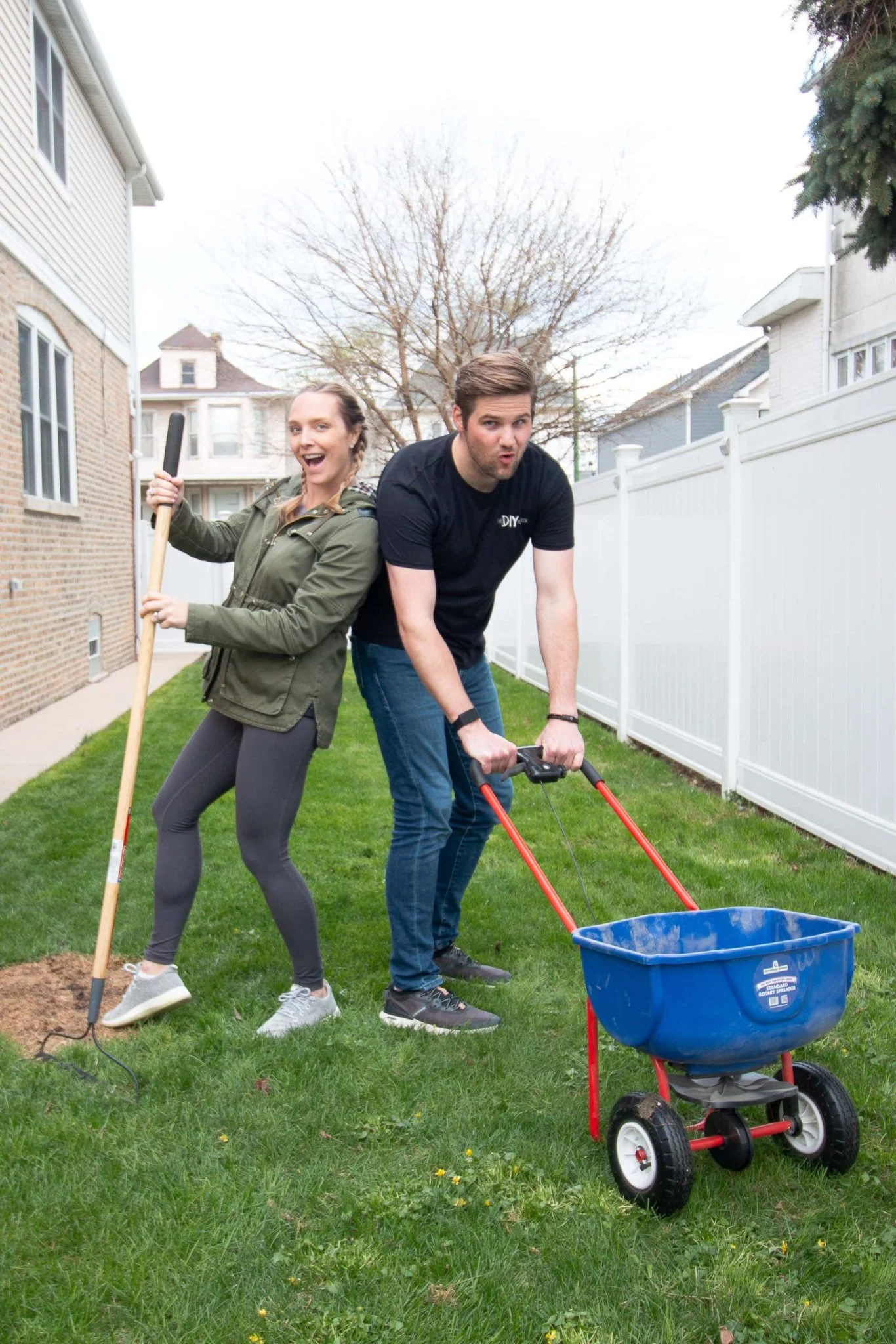
Match the tool to the job. A pump-up sprayer or backpack sprayer is ideal for spot-treating weeds and applying liquid iron, herbicides, or fungicides. A hose-end sprayer works for larger areas with liquid fertilizers. For granular products, a broadcast or drop spreader gives more consistent coverage than hand-spreading.
Calibrate your sprayer. A mis-calibrated sprayer leads to under-application (poor results) or over-application (turf damage and waste). Run water through your sprayer over a measured area and calculate your output per 1,000 square feet before mixing product.
Check the forecast. Most liquid treatments need to dry on the lawn for at least 2–4 hours before rain. Rain shortly after application washes herbicides off weed leaves and dilutes pre-emergents before they can form their barrier. You shoudl aim for a dry window of at least 24 hours when applying anything except fertilizers that need to be watered in.
Don’t spray on windy days. Drift from herbicides onto garden beds, vegetable patches, or your neighbor’s lawn is a serious problem. Spray only when wind speeds are below 5–10 mph, and use a hood or shield attachment on your sprayer nozzle for spot treatments.
Read the label — every time. Label rates are set based on efficacy and safety testing. Applying more than the label rate doesn’t improve results; it creates turf stress, increases chemical runoff, and can void the product’s registration.
FAQs
Do I need to apply all these products?
No. Start with pre-emergent and fertilizer — those are the two products that benefit almost every lawn in spring. Post-emergents, fungicides, and insecticides are situation-specific. Only add them if your lawn has a documented weed, disease, or pest problem.
Can I overseed and use pre-emergent at the same time?
Not with most standard pre-emergents. They prevent all seed germination, including grass seed. If you need to overseed in spring, either use a siduron-based pre-emergent (which is seed-safe for most cool-season grasses) or skip pre-emergent in those areas. Fall is generally the better season to overseed anyway.
Should I aerate before or after applying spring treatments?
Aerate before applying pre-emergent. Aeration punches holes in the pre-emergent barrier if done after application, potentially allowing weeds to germinate through those gaps.
How long should I wait between applying different products?
A general guideline: wait at least a week between pre-emergent and fertilizer applications. For post-emergents and fertilizers, wait until weeds are actively growing before treating them, then fertilize a week or two later. Never apply multiple products on the same day unless the label explicitly allows it.
What’s the fastest way to green up a lawn in spring?
Liquid iron gives the quickest visible improvement — often within 24–48 hours — without the risks of an aggressive nitrogen application on grass that’s just waking up. It’s the fastest safe green-up method available.
Can I use these products on a newly seeded or sodded lawn?
Avoid most herbicides (pre- and post-emergent) on newly seeded areas for at least 6–8 weeks, or until the lawn has been mowed three times.
New sod can typically handle a light fertilizer application after 4–6 weeks but check the supplier’s recommendations. When in doubt, wait — young turf is far more sensitive to chemical stress than an established lawn.
Related Posts: