How to Take Care of a Bird Bath
Last Updated on July 9, 2026 by Duncan
A bird bath can transform an ordinary backyard into one filled with birdsongs, splashing water, and colorful visitors.
It doesn’t matter whether your garden is large or small.
Birds only care about one thing: finding a reliable source of clean water.
That’s where many homeowners get frustrated.
They buy a beautiful bird bath, fill it with water, and expect birds to flock to it.
For a few days, everything looks promising. Then the water turns cloudy, algae starts creeping in, and the birds stop visiting.
It isn’t because your bird bath is the wrong style.
It’s because birds judge a bird bath differently than we do.
They aren’t impressed by decorative designs or expensive materials.
They’re looking for clean water, a safe place to land, and an easy escape if danger appears.
Once you understand that, caring for a bird bath becomes much simpler.
Over the years, I’ve found that the busiest bird baths aren’t always the newest or the fanciest.
They’re the ones that receive small, consistent attention.
A few minutes every couple of days will do far more than one deep cleaning every few weeks.
Instead of thinking about your bird bath as a garden ornament, think of it as a neighborhood watering hole.
If the water is fresh, birds remember.
If it isn’t, they’ll find another place to visit.
The Three Things Every Bird Looks For
Whenever I set up a bird bath, I follow one simple rule.
I call it the Visibility, Safety, and Freshness Triangle.
Every successful bird bath gets these three things right.
Visibility
Birds have to find your bird bath before they can use it.
Many homeowners hide theirs beneath trees or inside thick flower beds because it looks attractive.
From the air, however, the water almost disappears.
Choose a location where sunlight can reflect off the surface for part of the day.
A gentle ripple from a small bubbler or fountain makes the water even easier to spot.
Sometimes moving a bird bath only a few feet into a more open area is enough to attract twice as many visitors.
Safety
Once birds notice the water, they look for danger.
Can they see a cat hiding nearby?
Is there somewhere to escape if a hawk flies overhead?
Birds don’t like feeling trapped.
Keep dense shrubs and tall grasses several feet away from the bird bath.
They provide shelter after bathing without creating perfect hiding places for predators.
A nearby tree branch is another bonus.
Many birds land there first, check their surroundings, then hop down to the water once they feel comfortable.
Freshness
This is where most bird baths succeed or fail.
Many people wait until the water looks dirty before cleaning it.
Birds notice the change much sooner.
Every few days, run your fingers around the inside of the bowl.
If it feels slippery, it’s time for a quick scrub and fresh water.
That thin, slick coating is the beginning of algae growth.
Removing it early keeps the water inviting and makes future cleaning much easier.
Why Bird Bath Care Matters

A bird bath isn’t just a place where birds grab a quick drink.
It’s where they bathe, cool down during hot weather, clean their feathers, and prepare for flight.
Clean feathers help birds stay warm, fly efficiently, and protect themselves from the weather.
Dirty water works against all of that.
As birds visit throughout the day, the water collects dust, pollen, feathers, droppings, and tiny bits of debris.
During warm weather, that mixture can become stale surprisingly fast.
The good news is that preventing problems is much easier than fixing them.
Small, regular habits keep a bird bath fresh without turning it into another weekend chore.
I’ve found that homeowners who enjoy the busiest bird baths aren’t spending hours cleaning.
They’re simply paying attention.
They notice when the water level drops.
They remove a handful of leaves while watering the garden.
They replace the water before it becomes a problem instead of after.
Those little habits are what keep birds coming back day after day.
How Often Should You Clean a Bird Bath?

Forget the old advice about cleaning your bird bath once a week.
Birds don’t care what day it is.
A bird bath can stay clean for several days during cool weather.
During a summer heat wave, it may need fresh water every day.
The trick is learning to read the bird bath instead of following a calendar.
Some of the best practices you should do include:
Check It Every Time You’re Outside
You don’t need to make a special trip.
If you’re watering flowers, pulling weeds, or enjoying your morning coffee, take a quick look at the bird bath.
Ask yourself a few simple questions.
- Is the water still clear?
- Are there leaves or feathers floating in it?
- Has the water level dropped?
- Does the bowl feel slippery?
That quick inspection takes less than a minute and catches problems before birds notice them.
Touch the Bowl, Not Just the Water
This is one habit I recommend to every new bird bath owner.
Don’t rely on your eyes alone.
Run your fingers around the inside of the bowl every few days.
If it feels smooth, you’re in good shape.
If it feels slick, clean it.
That slippery film is called biofilm.
It’s the first stage of algae growth and the easiest time to remove it.
Wait another day or two, and you’ll spend much longer scrubbing.
Take note of the weather
Summer is when bird baths work the hardest.
Birds drink more often.
They bathe more often.
The water evaporates faster.
During long stretches of hot weather, I usually replace the water every day or every other day.
It sounds like a lot of work, but it quickly becomes part of the routine.
Fresh, cool water is one of the best gifts you can give wildlife during a heat wave.
Rain Doesn’t Clean a Bird Bath
After a storm, many people assume nature has done the work for them.
Take another look.
Rain often washes dust, pollen, leaves, and bird droppings into the bowl.
The water may be full, but it isn’t necessarily fresh.
I always check my bird bath after heavy rain.
Sometimes it only needs a few leaves removed.
Other times, it needs a complete refill.
Busy Bird Baths Need More Attention
A popular bird bath gets dirty faster.
That’s something to celebrate.
If birds are lining up throughout the day, they’re also leaving behind feathers, dirt, and tiny amounts of waste.
The more visitors you have, the more often you’ll need to refresh the water.
Think of it as a sign that your yard has become part of the neighborhood.
Let the Seasons Set the Schedule
Every season brings different challenges.
Spring covers the water with pollen and flower petals.
Summer speeds up algae growth and evaporation.
Fall fills the bowl with leaves and twigs.
Winter may leave you dealing with ice or mineral deposits.
Instead of sticking to one routine all year, adjust your care to match the season.
Your bird bath will stay cleaner, and you’ll spend less time dealing with stubborn problems.
The Easiest Habit You’ll Ever Build

Here’s the routine I’ve followed for years.
Every morning, before I water anything else, I stop by the bird bath.
If the water looks fresh, I top it off.
If I see debris, I scoop it out.
If the bowl feels slippery, I give it a quick scrub.
The whole process rarely takes more than three minutes.
Those few minutes save far more time later, and the birds reward the effort every single day.
Once this habit becomes part of your gardening routine, keeping a bird bath clean stops feeling like another chore.
It simply becomes part of enjoying your garden.
How to Clean a Bird Bath the Right Way

Cleaning a bird bath isn’t about making it look brand new.
It’s about giving birds a safe place to drink and bathe every single day.
You don’t need expensive cleaners or a long checklist. A few simple steps will keep the water fresh and the bowl inviting.
Empty the Water First
One of the biggest mistakes homeowners make is adding fresh water to old water.
It seems harmless, but the dirt, pollen, bird droppings, and bacteria are still sitting in the bowl.
Always empty the bird bath completely before refilling it.
If you have flower beds nearby, pour the old water onto your plants.
They’ll benefit from the moisture, and you won’t create a slippery patch on your patio.
Scrub the Bowl With a Stiff Brush

Once the bowl is empty, use a stiff brush to remove dirt and the slippery film that builds up on the surface.
Pay special attention to the sides.
That’s usually where biofilm appears first.
Don’t worry about making the bowl look perfect.
Your goal is a clean, smooth surface, not a showroom finish.
Skip the Dish Soap
Many people assume dish soap is the safest choice because it’s used on plates and glasses.
For bird baths, it’s better to leave it in the kitchen.
Soap can leave behind a thin residue that’s difficult to rinse away completely.
Birds don’t need perfumes, dyes, or cleaning agents in their bath water.
Most routine cleaning only requires water and a good scrub brush.
Use White Vinegar for Mineral Stains
If your bird bath develops white, chalky stains from hard water, plain water may not remove them.
Mix one part white vinegar with nine parts water.
Let the solution sit for a few minutes before scrubbing.
When you’re finished, rinse the bowl thoroughly with clean water.
If you can still smell vinegar, rinse again.
Save Bleach for Rare Situations
Most bird baths never need bleach.
If your local wildlife agency reports a disease outbreak among birds, or you’ve uncovered a neglected bird bath that’s covered in grime, a diluted bleach solution can help disinfect it.
The important part is the rinse.
Then another rinse.
And one more after that.
If there’s any smell left behind, keep rinsing before filling the bowl with fresh water.
Don’t Forget the Fountain
If your bird bath has a fountain or bubbler, clean that too.
Tiny leaves, algae, and grit collect inside the pump over time.
A fountain that slows down usually isn’t broken.
It just needs cleaning.
Checking it every couple of weeks keeps the water moving and helps the pump last much longer.
Small Habits That Keep a Bird Bath Clean
Deep cleaning is only part of the story.
The easiest bird baths to maintain belong to people who do a few small things every time they’re outside.
Remove Debris As You See It
Don’t wait until cleaning day.
If you spot a few leaves while watering your flowers, scoop them out.
The same goes for feathers, twigs, flower petals, and seed hulls.
The less organic material sitting in the water, the slower algae grows.
Keep the Water Full

Birds prefer a full bird bath.
As the water level drops, it warms up faster and becomes more concentrated with dirt.
During hot weather, check the water every morning.
A quick refill keeps it cooler and makes your yard a dependable stop for thirsty birds.
Watch the Birds
The birds themselves are often your best guide.
If they’re drinking, bathing, and lingering for a few minutes, everything is probably in good shape.
If they land, look around, and fly away without touching the water, take a closer look.
Check for warm water.
Look for slime inside the bowl.
See whether nearby plants have grown tall enough to block their view.
Birds notice small changes long before we do.
Learning to watch their behavior is one of the easiest ways to stay ahead of problems.
Keep Your Brush Nearby
Here’s one trick that has saved me countless hours.
Store your scrub brush close to the bird bath.
If you have to hunt through the garage every time the bowl needs cleaning, you’ll be tempted to put it off.
When everything is within reach, cleaning takes only a couple of minutes.
That’s the secret to a bird bath that stays fresh all season.
Not longer cleaning sessions.
Just quick, consistent care that fits naturally into your gardening routine.
Be strategic with the bird bath placement

You can have the cleanest bird bath in the neighborhood, but if it’s in the wrong spot, birds may never use it.
Location has just as much impact as maintenance.
I’ve seen homeowners move a bird bath less than ten feet and go from seeing one or two birds a day to a steady stream of visitors from sunrise to sunset.
Birds are always asking the same question:
“Is this worth the risk?”
Your job is to make the answer an easy yes.
Give Birds an Open View
Birds don’t like surprises.
Before they land, they scan the area for predators, noisy activity, and escape routes.
A bird bath hidden behind tall shrubs or tucked deep inside flower beds limits their view.
Instead, place it where birds can look around without feeling boxed in.
An open lawn, a garden border, or the edge of a flower bed usually works much better than the middle of dense landscaping.
Keep Shelter Within Easy Reach
Birds still want a safe place to retreat.
A nearby tree or large shrub gives them somewhere to perch before and after bathing.
Aim to keep that cover about 8 to 12 feet away.
That’s close enough for a quick escape but far enough to stop cats from hiding right beside the water.
Whenever I choose a location, I imagine a bird needing to reach safety in one second.
If that seems possible, I’ve probably found a good spot.
Choose Morning Sun and Afternoon Shade
If I could only give one placement tip, this would be it.
Morning sun encourages birds to visit early, when they’re naturally most active.
Afternoon shade keeps the water cooler, slows evaporation, and reduces algae growth.
A bird bath sitting in direct afternoon sun can become surprisingly warm.
Cool water stays inviting much longer.
Stay Away From Bird Feeders
Many people place a bird bath directly beneath a feeder.
It feels convenient.
It creates extra work.
Seed hulls, dropped food, and bird droppings quickly end up in the water.
Keeping the bird bath several feet away means cleaner water and fewer cleaning sessions.
Birds don’t mind flying a short distance between food and water.
Avoid Heat-Trapping Surfaces
Take a look at what’s around your bird bath.
Brick walls, concrete patios, driveways, and stone paths all absorb heat.
That heat reflects back into the bowl, warming the water throughout the afternoon.
Whenever possible, place your bird bath near grass, mulch, or garden beds instead.
The surrounding area stays cooler, and so does the water.
Make It Easy to See From Above

Birds often discover water by spotting sunlight reflecting off the surface.
If the bowl is hidden beneath heavy tree cover, it can disappear from view.
Leave enough open sky above the bird bath for light to reach the water during part of the day.
A small bubbler or solar fountain adds gentle movement that catches a bird’s eye without creating too much splashing.
Seasonal Care Keeps Your Bird Bath One Step Ahead
Bird baths don’t need the same attention in every season.
As your garden changes, your maintenance routine should change too.
Spring
Spring brings nesting season, muddy feet, flower petals, and clouds of pollen.
You may notice a yellow coating on the water after a windy day.
That’s often pollen rather than algae.
Even so, replace the water before it begins breaking down.
Spring is also a good time to inspect your bird bath for cracks or damage caused by winter weather.
Summer
Summer is the busiest season for any bird bath.
Birds drink more.
They bathe more.
Water evaporates faster.
Check the water every morning during hot weather.
Replace it whenever it feels warm or starts looking stale.
A little extra attention during summer keeps your bird bath busy even on the hottest days.
Fall
Autumn fills bird baths with leaves, twigs, and seeds.
Remove debris whenever you notice it.
If leaves stay in the water for several days, they begin to decompose and encourage algae growth.
This is also a good time to trim back plants that grew around the bird bath during summer.
Birds appreciate the extra visibility.
Winter
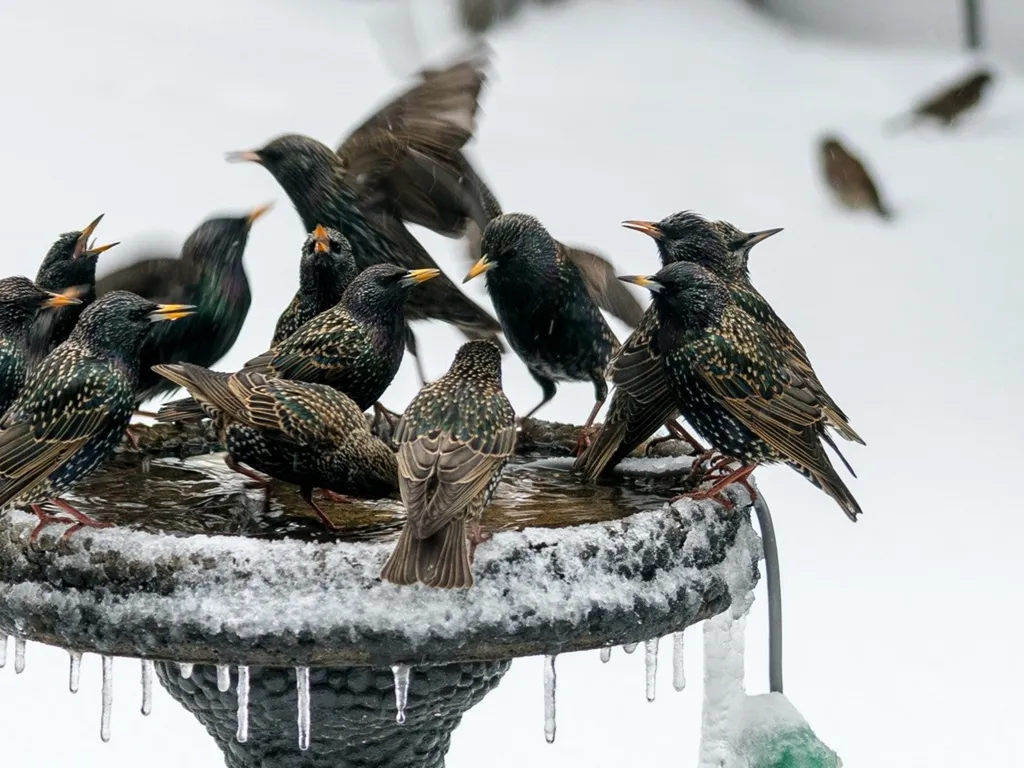
Don’t assume birds stop needing water once the temperature drops.
Fresh water can be harder to find during winter than food.
If your climate is mild, continue refreshing the water whenever temperatures allow.
In colder regions, a bird bath heater can keep water available without freezing.
If your bird bath isn’t designed for freezing conditions, empty it and store it before winter weather causes cracks.
Common Bird Bath Mistakes

Even experienced gardeners make these mistakes from time to time.
The good news is they’re easy to avoid.
- Adding fresh water to old water instead of replacing it completely.
- Waiting until algae appears before cleaning the bowl.
- Placing the bird bath directly beneath a bird feeder.
- Letting shrubs grow so close that birds can’t see approaching predators.
- Ignoring the fountain pump until it stops working.
- Using household soaps or scented cleaners.
- Leaving fallen leaves in the water for days.
- Assuming birds have lost interest instead of checking for a problem.
Small mistakes rarely stay small.
Fix them early, and your bird bath will continue attracting birds throughout the year.
How to keep birds coming to your bird bath
After years of watching birds, I’ve learned one simple truth.
Birds reward consistency.
A bird bath doesn’t have to be perfect. It just has to be dependable. When birds know they’ll find fresh water in a safe place, they’ll return again and again.
Here are a few habits that make a noticeable difference.
Add a Few Flat Stones
If your bird bath has a deep bowl, place two or three flat stones in the water.
They create shallow areas for smaller birds and give bees and butterflies a safe place to drink.
It’s a small change that makes your bird bath useful for much more than birds.
Keep a Brush Close By
Store a dedicated scrub brush near your bird bath.
If it’s within arm’s reach, you’ll be much more likely to spend two minutes cleaning the bowl instead of putting it off until the weekend.
Small conveniences create lasting habits.
Move It If Birds Ignore It
Don’t assume the bird bath is the problem.
Sometimes the location simply isn’t working.
If birds rarely visit after a couple of weeks, move it to another part of the garden.
Even shifting it a few feet can improve visibility, provide better afternoon shade, or create a safer approach.
Watch the Birds, Not the Calendar
The birds will tell you how well you’re doing.
A busy bird bath usually means you’re providing everything they need.
If your regular visitors suddenly disappear, investigate before assuming they’ve moved elsewhere.
Most of the time, the cause is easy to fix.
Think Like a Bird
Before walking away from your bird bath, ask yourself four questions.
- Can birds easily see the water?
- Can they escape if danger appears?
- Is the water fresh and cool?
- Would I feel comfortable stopping here if I were a bird?
If the answer is yes to all four, you’ve created a place birds will want to visit.
FAQs
What can I put in a bird bath to keep it clean?
Plain water and regular maintenance are your best tools here.
Skip any commercial “bird bath cleaner” tablets that promise to keep algae away for weeks, since many rely on chemicals you don’t want birds drinking.
A splash of white vinegar during cleaning and a quick scrub with a stiff brush does more than any product on a shelf.
If you want to slow down algae between cleanings, keep the bath out of dappled shade and add moving water, since still water in partial sun is the perfect algae breeding ground.
How do you attract birds to a bird bath?
Sound is your secret weapon. Birds hear moving water long before they see it, so a small drip, fountain, or solar powered wiggler pulls in birds from yards away that would never notice a still bowl.
Keep the water shallow at the edges so smaller birds can wade in gradually.
Place the bath near enough to cover that birds feel safe, but not so close that a cat can ambush from the bushes.
How often do you change the water in a bird bath?
Every two to three days when it’s warm out, and you can stretch that to five or six days once temperatures drop.
Warm weather speeds up bacteria growth and gives mosquitoes just enough time to hatch if you let the water sit too long.
If the water looks cloudy, smells off, or has any film on the surface before that schedule rolls around, dump it early. Trust your nose over the calendar.
Do I just put water in a bird bath?
Yes, plain water is exactly what you want. No additives, no sugar, no bleach, nothing fancy.
Birds need clean drinking and bathing water, not a science experiment.
The only thing worth adding is something for grip, like a few pebbles or a flat rock, if the bottom of your bath is smooth and slippery.
What can I put in a bird bath instead of water?
Nothing works as a real substitute.
Water is the entire point, so anything else defeats the purpose of having a bird bath at all.
If you’re trying to solve a specific problem, like freezing in winter, the fix is a submersible bird bath heater that keeps actual water from turning to ice, not a swap for water itself.
What goes in a bird bath but doesn’t get wet?
Usually this means a perch or a spot for birds to rest and dry off without stepping back into the water.
A flat rock that pokes up just above the surface works great for this, and it doubles as a foothold for smaller birds.
Decorative pieces like a solar light or small figurine set at the rim rather than in the basin also count, as long as they’re not blocking birds from reaching the water.
Where is the best place to put a bird bath?
Look for a spot three to ten feet from a shrub or tree, close enough that birds feel they can dash to safety, but far enough that nothing can hide and pounce.
Morning sun with afternoon shade is ideal, since it warms the water without letting algae take over by midday.
Keep it somewhere you can actually see from a window too, since half the fun is watching.
Where not to put a bird bath?
Skip deep, dense shade directly under a thick canopy, since dappled light is a breeding ground for algae without enough sun to keep it in check.
Avoid placing it directly against a fence, wall, or dense hedge where a cat could hide within pouncing distance.
And keep it away from bird feeders if you can, since dropped seed and droppings near the bath speed up contamination and mold.
Final Thoughts
Taking care of a bird bath isn’t difficult.
The secret isn’t buying the most expensive model or using special cleaning products.
It’s paying attention.
Fresh water, a clean bowl, and a safe location will do more for your feathered visitors than any decorative feature ever could.
Remember the Visibility, Safety, and Freshness Triangle every time you care for your bird bath.
If birds can easily find the water, feel safe while using it, and trust that it’s clean, they’ll keep coming back.
Related Posts: