How to Keep Birds from Pooping in a Bird Bath
Last Updated on August 18, 2026 by Duncan
You filled your bird bath with fresh water, admired how beautiful it looked, and by the next morning it was full of droppings.
If that sounds familiar, you’re not alone.
The good news is you don’t have to choose between attracting birds and keeping your bird bath clean.
While you can’t stop birds from pooping, you can make simple changes that keep the water cleaner for much longer.
One thing surprises many homeowners.
Birds don’t usually dirty the water while they’re bathing.
Most of the mess happens before or after they get in.
They land on the rim, preen their feathers, watch the yard, wait for another bird to leave, and eventually leave behind a dropping.
That’s why so much online advice misses the mark.
It focuses on cleaning dirty water instead of preventing the behavior that causes the problem.
After years of watching birds in my own garden, I’ve noticed one pattern again and again.
The cleanest bird baths aren’t the ones that get scrubbed every day.
They’re the ones that encourage birds to drink, bathe, and move on instead of settling in for a long visit.
In this guide, I’ll show you why birds poop in bird baths, what encourages them to linger, and the simple changes that can dramatically reduce the mess.
Why do birds poop in bird baths?
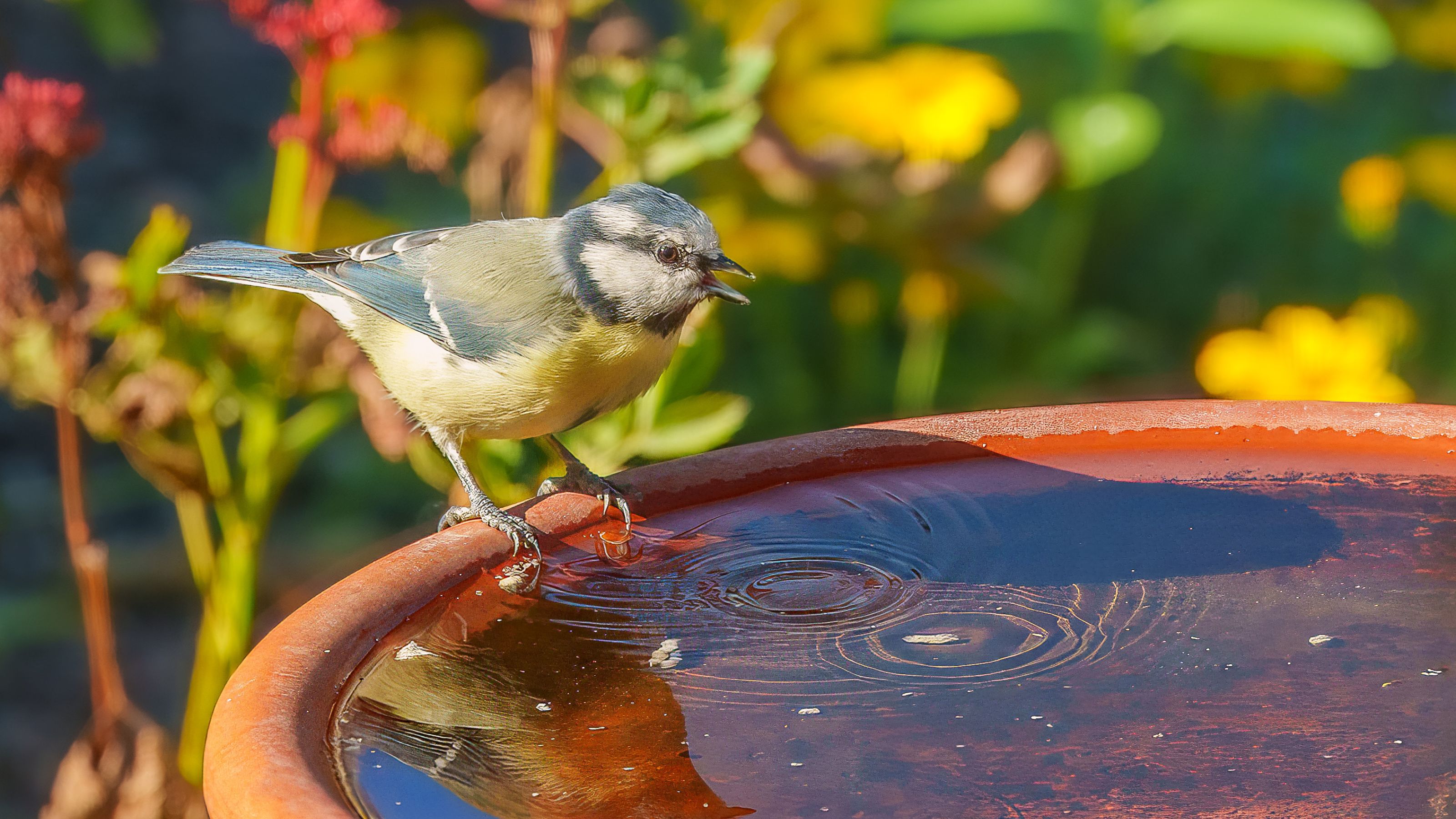
It can feel like birds are making a mess on purpose, especially after you’ve cleaned the bird bath for the third time in a week.
They aren’t.
Birds have fast digestive systems.
Small birds eat often, burn energy quickly, and produce waste throughout the day. Frequent droppings are simply part of being a bird.
The key is understanding when those droppings happen.
Most birds don’t dirty the water because they’re splashing around.
They do it because they spend too much time sitting around the bird bath before or after bathing.
Watch your backyard for a few minutes.
A bird lands on the rim, looks around, waits for another bird to leave, enjoys a quick bath, shakes out its feathers, preens for a while, then flies away.
That visit may last several minutes.
The longer a bird stays, the greater the chance it leaves a dropping behind.
I’ve seen this play out over and over.
Bird baths where birds came in, bathed, and left stayed surprisingly clean.
The ones that became neighborhood gathering spots always needed more attention.
That’s why as an experienced bird gardener you need to pay close attention to behavior instead of relying on cleaning alone.
Waiting birds create most of the mess
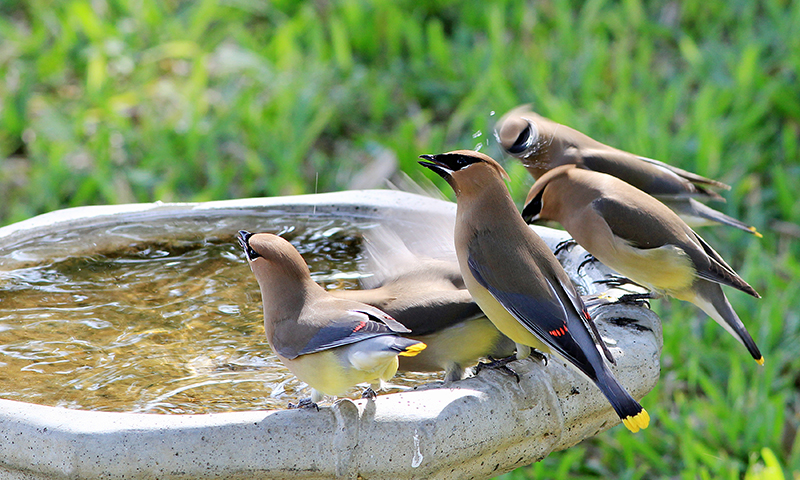
Many people picture one bird quietly using the bird bath.
That’s rarely what happens.
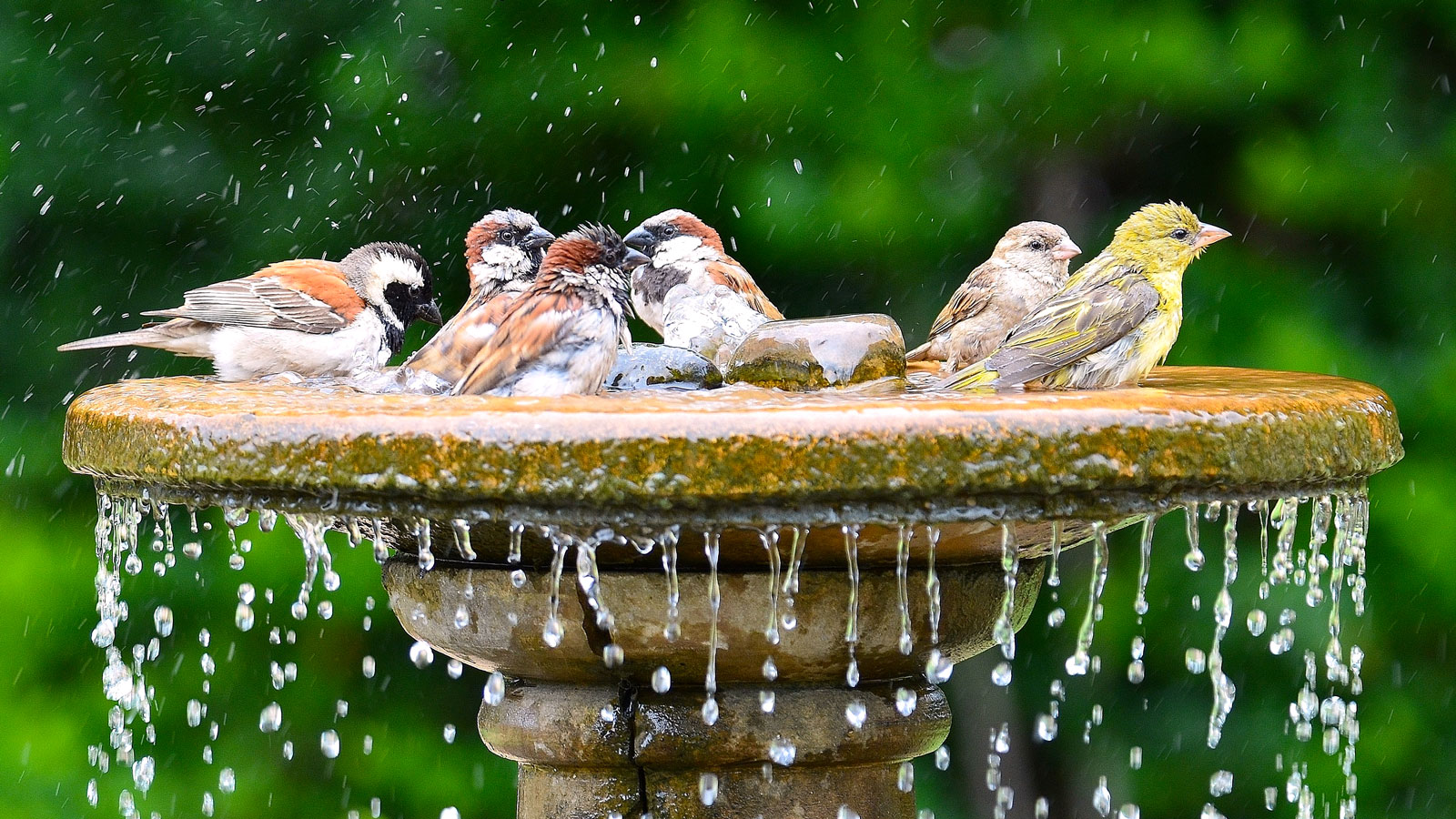
During the busiest parts of the day, several birds often arrive together.
While one bird is bathing, the others wait nearby.
Some perch on the rim.
Others sit on decorative rocks or low branches.
Those waiting birds are responsible for many of the droppings you find.
That’s one reason simple bird baths often stay cleaner than elaborate ones. The fewer places birds have to lounge, the sooner they move on.
Why some bird baths stay cleaner
:max_bytes(150000):strip_icc():format(webp)/GettyImages-949127592-794d56d9b7f9487dbc7c09cf9c4af75f.jpg)
Have you ever noticed that one bird bath stays fresh while another gets dirty almost overnight?
The difference often isn’t the birds.
It’s the setup.
A bird bath with overhead branches, a nearby feeder, and comfortable perches encourages birds to stay longer.
One with open space above it, fresh water, and fewer places to sit encourages quick visits.
That small difference in bird behavior has a huge impact on how often you’re cleaning the basin.
Can You Stop Birds From Pooping in a Bird Bath?

If you’re hoping for a trick that guarantees a spotless bird bath every day, there isn’t one.
Birds poop.
That’s part of sharing your garden with wildlife.
The goal isn’t to stop birds from pooping.
The goal is to stop your bird bath from becoming their favorite place to do it.
That simple change in thinking makes every solution in this guide much more effective.
Some of the things you need to do include:
1. Keep birds moving instead of lounging

If you remember only one thing from this guide, make it this:
The shorter a bird stays, the cleaner your bird bath will be.
Many homeowners focus on cleaning routines.
I’ve found it’s far more effective to change how birds use the bird bath.
Think of it as the “drink, bathe, and go” approach.
Your bird bath should be a quick stop, not a destination.
The next time you’re outside, spend a few minutes watching your visitors.
You’ll notice some birds land, take a quick drink, splash around, and fly away. Others perch on the rim, look around the yard, preen their feathers, and wait before leaving.
Those longer visits are usually when the droppings happen.
One trick I’ve used in busy gardens is adding a second bird bath. It spreads birds across two water sources instead of forcing everyone to crowd around one basin.
Less waiting means less lingering, and that usually means cleaner water.
Fresh water also helps.
Birds are looking for a clean place to drink and bathe, not somewhere to spend the afternoon.
Empty the basin completely and refill it instead of simply topping it off.
The goal is simple.
Encourage birds to stop by, freshen up, and continue on their way.
2. Remove overhead perches
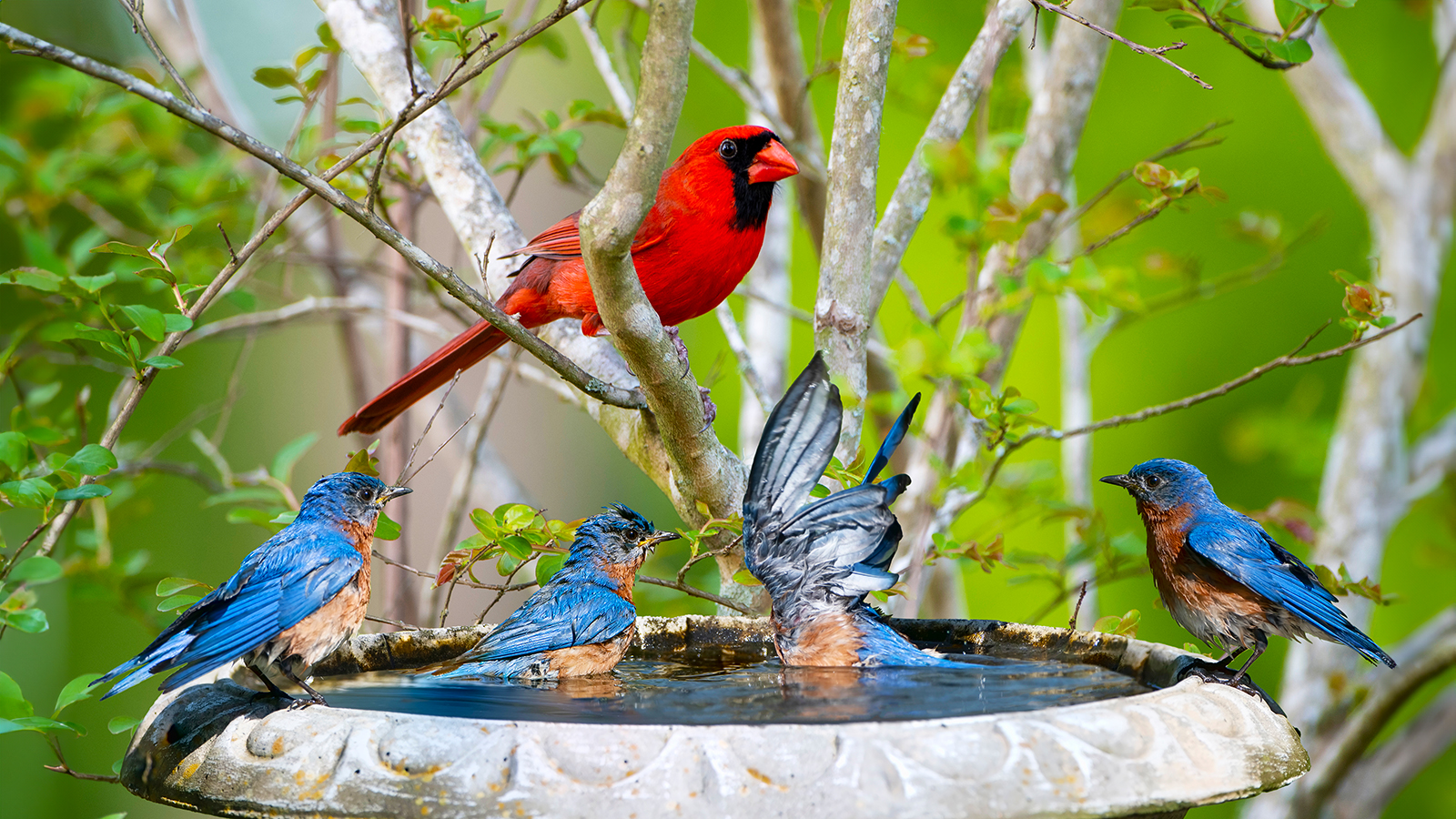
If your bird bath keeps filling with droppings, stop looking at the water.
Look up.
One branch hanging above the basin can create far more mess than anything happening inside the bird bath.
Birds rarely fly straight into the water.
Most land on a nearby perch first to check for danger before hopping down to bathe.
If that perch sits directly above the bird bath, it’s only a matter of time before droppings land in the water.
One habit I’ve developed over the years is doing a quick sky check whenever I install a new bird bath.
Stand beside it and look straight up.
Do you see tree branches, utility wires, roof edges, hanging baskets, or garden structures overhead?
If so, you’ve probably found one reason your bird bath gets dirty so quickly.
You don’t have to remove every nearby tree.
Birds still need places to perch and escape if they feel threatened.
The key is keeping those perches beside the bird bath instead of directly over it.
Sometimes moving the bird bath just a few feet is enough to solve the problem.
It’s one of the easiest changes you can make, yet it’s often overlooked.
3. Move bird feeders away from the bird bath
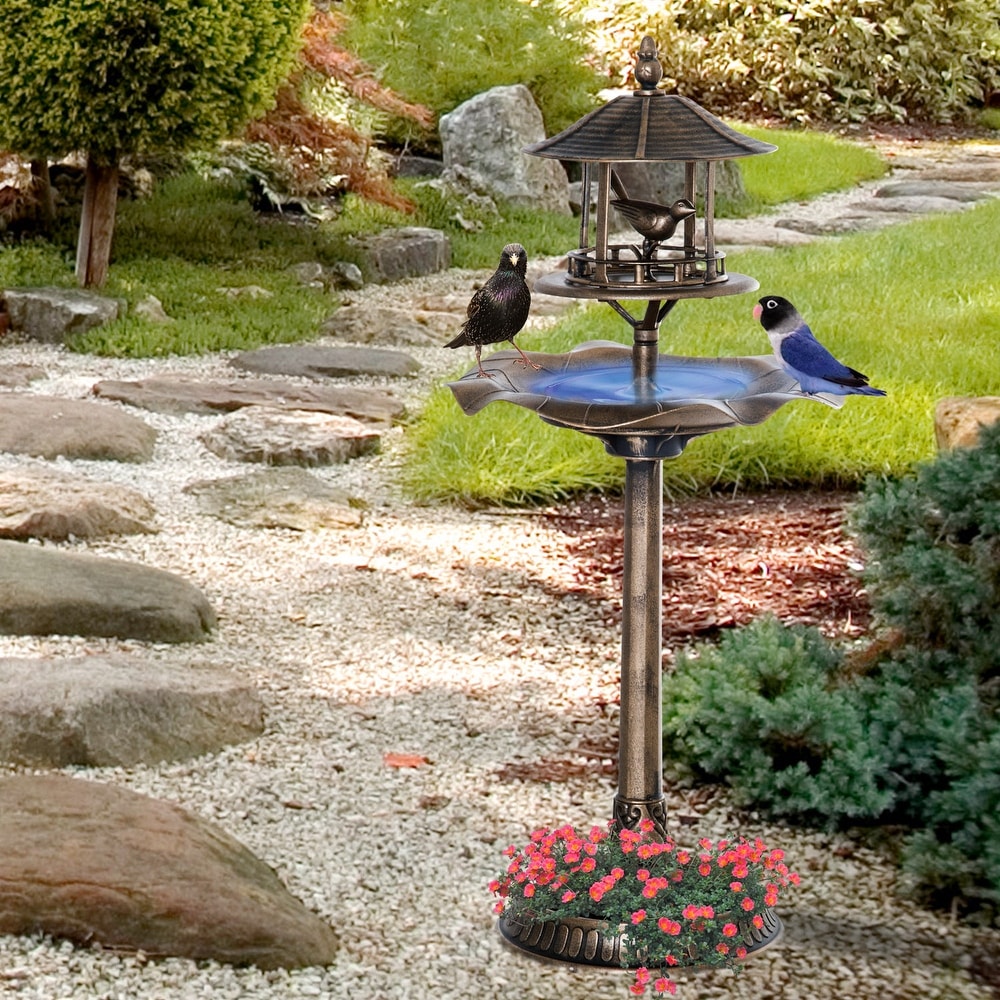
A bird feeder beside a bird bath looks like the perfect backyard setup.
For cleaning, it’s one of the worst.
Birds naturally travel back and forth between food and water.
A busy feeder creates constant traffic around the bird bath, leading to crowded rims, longer visits, and more droppings.
It also brings extra mess.
Seed hulls, feathers, dust, and bits of food often end up in the water, making it look dirty long before it’s time for the next cleaning.
I’ve had much better results by giving each area its own purpose.
The feeder becomes a dining room.
The bird bath becomes a place to drink and bathe.
Keeping them about 15 to 30 feet apart usually reduces congestion without making either one harder for birds to find.
If your yard is small, don’t worry about measuring every foot.
Even moving the feeder to another corner can make a noticeable difference.
After making the change, spend a few mornings watching the bird bath.
You’ll often see fewer birds waiting around, shorter visits, and cleaner water with no extra effort on your part.
4. Add gentle water movement
One of the best upgrades for a bird bath isn’t a bigger bowl.
It’s moving water.
You don’t need a large fountain or a dramatic spray.
A gentle ripple is enough to catch a bird’s attention.
In nature, birds instinctively seek moving water because it’s often cleaner and fresher than still water.
That same instinct draws them to a bird bath with a soft trickle or light ripple.
I’ve also noticed another benefit.
Birds tend to spend less time sitting on the rim when the water is moving.
They arrive, investigate, bathe, and fly off.
Still water often encourages the opposite.
Birds pause longer before getting in, then spend extra time perched around the edge.
A small solar bubbler, dripper, or low-flow pump works well for most gardens.
Keep the movement gentle.
If water splashes out of the basin or the spray looks too strong for small birds, dial it back.
5. Keep your bird bath simple
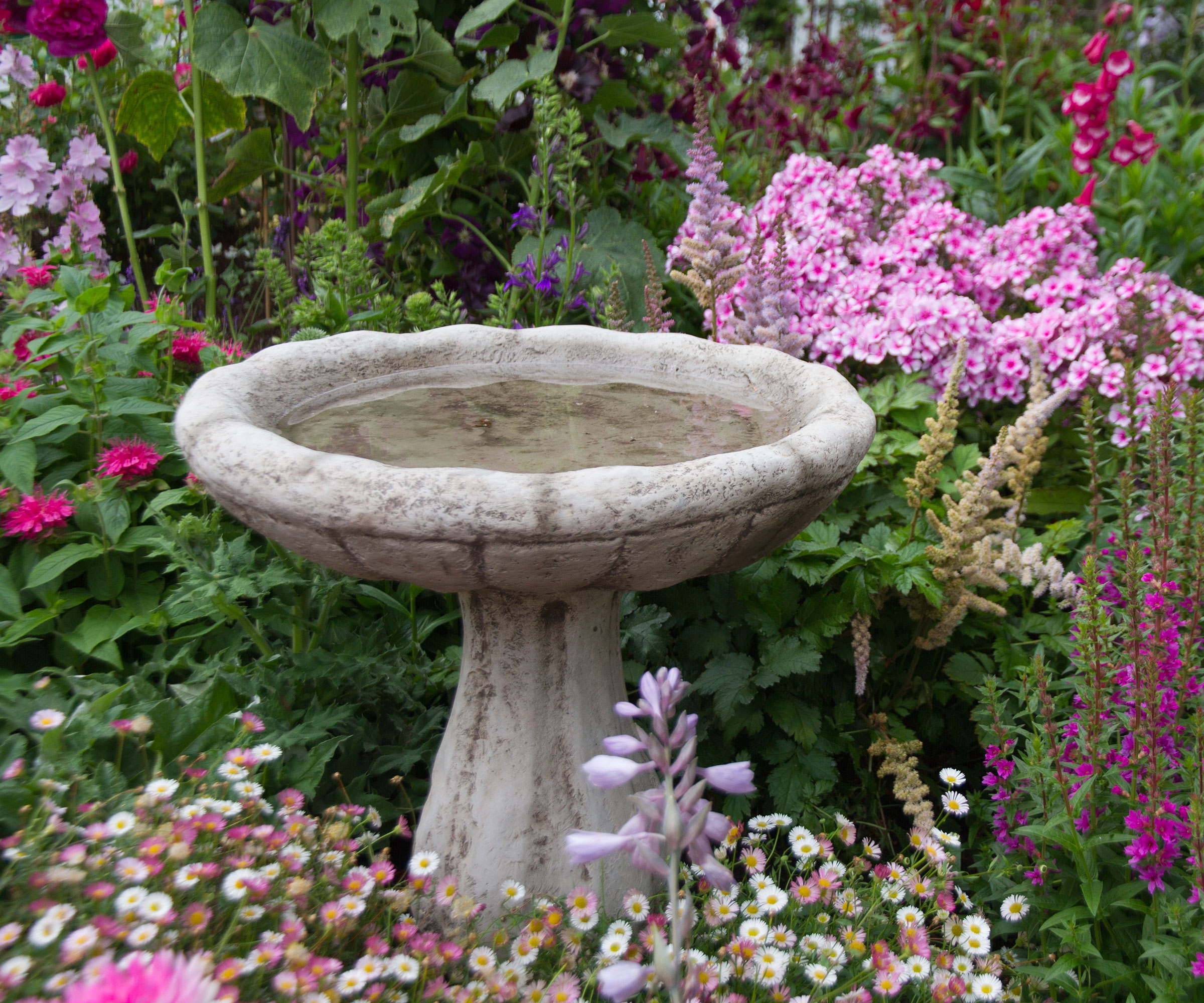
Many decorative bird baths are designed to impress people.
Not birds.
Wide rims, oversized bowls, and large decorative rocks often encourage birds to stay longer than necessary.
A wide rim becomes a waiting bench.
Large rocks become tiny patios where birds can stand, preen, and watch the yard.
Every extra minute increases the chance of finding droppings in the water.
If your bird bath includes decorative stones, keep only what’s needed to help smaller birds feel secure.
The same goes for oversized bowls.
A giant bird bath may look impressive, but it also attracts larger groups. While one bird bathes, several others often wait around the edge.
More visitors usually mean more cleaning.
The bird baths that have given me the fewest problems are often the simplest. Fresh water, a safe location, and a practical design are all birds need.
6. Have a decoy perch

I call this the Decoy Perch Trick, and it’s the single most useful thing I can teach you.
Put a stake, a small trellis, a shepherd’s hook, or even a leafy branch about three to five feet away from your bird bath.
Make it a little taller than the bath itself, maybe six to twelve inches higher.
Birds naturally gravitate toward the highest safe spot around.
Give them one that isn’t attached to your bath, and they’ll use it to dry off and preen instead of sitting on your bath’s edge.
Basically, you’re giving them a bathroom that isn’t your bathroom. Smart, right?
7. Don’t overfill your bird bath
A lot of people fill their bird baths way too deep.
Anything over two inches turns your bath into a shallow wading pool where birds stand around at the edges sipping instead of hopping fully in.
More standing at the edge means more mess right at the edge.
Aim for around one to one and a half inches of water at the sloped part, with maybe two inches at the deepest center point.
This encourages a quick, full dip instead of a long standing hangout session.
Shorter visits, less lingering, less cleanup for you.
How Often Should You Clean a Bird Bath?
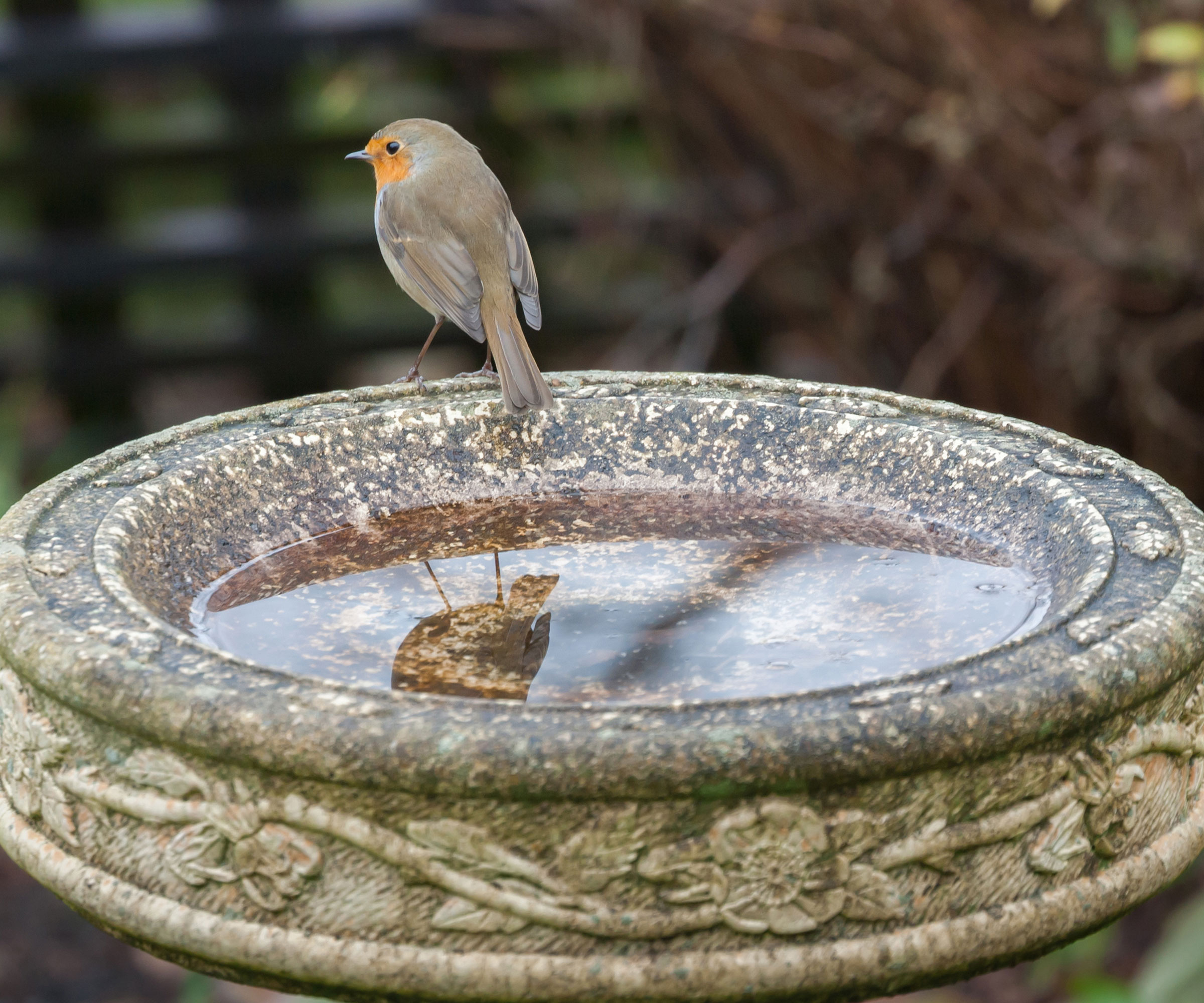
There’s no perfect schedule because every garden is different.
Instead, match your routine to the number of birds visiting.
Every Day
- Empty the bird bath completely.
- Refill it with fresh water.
- Rinse away loose debris.
Every Few Days
Give the basin a quick scrub to remove pollen, dirt, and early algae before they build up.
Once a Week
Do a deeper cleaning, including the bowl, rim, pedestal, and any pumps or bubblers.
Rinse everything thoroughly before refilling the bath.
Clean It Immediately If You Notice:
- Cloudy water
- Several droppings
- Green algae
- Bad odors
- Mosquito larvae
- Large amounts of leaves or seed hulls
During spring and summer, you’ll probably clean more often because birds visit more frequently and warm weather speeds up algae growth.
Don’t aim for perfection.
A feather floating in the water isn’t a problem.
A buildup of waste is.
Expect More Cleaning During Busy Seasons
Bird activity changes throughout the year.
Your cleaning routine should change with it.
Spring is often the busiest season.
Birds are nesting, raising young, and visiting water more often.
By early summer, fledglings begin exploring the garden.
They spend longer in the bird bath, splash enthusiastically, and aren’t nearly as tidy as adult birds.
Heat waves bring another surge in visitors.
I’ve watched the same birds return to a bird bath several times in one afternoon just to cool off.
Winter can be surprisingly busy too if your bird bath is one of the few reliable water sources nearby.
Instead of wondering why the water suddenly gets dirty, expect these seasonal changes and adjust your routine.
One trick that’s worked well in my garden is setting out a second bird bath during peak seasons.
It spreads birds across two water sources, reduces crowding, and keeps both bird baths cleaner with minute extra effort.
The birds don’t mind sharing your yard.
They just appreciate having a little more space.
Replace the Water Every Day

One of the easiest ways to keep a bird bath clean is also one of the most overlooked.
Don’t top off the water.
Replace it.
Adding fresh water to yesterday’s dirty water doesn’t remove droppings, pollen, feathers, or algae.
It simply dilutes them.
Empty the basin completely, give it a quick rinse, and refill it with fresh water.
The whole job takes only a few minutes.
During hot weather, you may need to do it twice a day.
Birds visit more often when temperatures rise, and warm water becomes dirty much faster.
I’ve made it part of my morning garden routine.
While I’m watering containers or checking on flowers, I refresh the bird bath as well.
It’s a small habit that prevents much bigger cleaning jobs later.
FAQs
Is it normal for birds to poop in a bird bath?
Yes.
Birds naturally produce frequent droppings because they digest food quickly. The goal is to reduce how often those droppings end up in the water.
Why does my bird bath get dirty so fast?
Birds are probably spending too much time there.
Nearby feeders, overhead branches, wide rims, and decorative rocks all encourage longer visits.
Will moving water stop birds from pooping?
No.
It encourages birds to drink and bathe sooner, which often shortens their visits and helps keep the water cleaner.
How far should a bird feeder be from a bird bath?
About 15 to 30 feet works well for most gardens.
This reduces traffic while keeping both easy for birds to find.
How often should I replace the water?
Daily is ideal.
During very hot weather or busy nesting season, replacing it twice a day keeps the water fresh.
Is bird poop dangerous?
Bird droppings can introduce bacteria and parasites over time.
Regular cleaning and fresh water help keep the bird bath safe for visiting birds.
Final Thoughts
The biggest lesson I’ve learned after years of caring for bird baths is surprisingly simple.
You can’t stop birds from pooping.
But you can stop giving them reasons to stay.
A bird bath with open space above it, fresh water, gentle movement, and fewer places to lounge naturally stays cleaner.
Birds arrive.
They drink.
They bathe.
Then they continue with their day.
That’s exactly what you want.
You’ll never eliminate every feather or dropping, and you shouldn’t expect to.
A bird bath is meant to be used.
With a few thoughtful changes, you’ll spend less time cleaning, enjoy healthier birds, and have more time to sit back and appreciate the wildlife your garden attracts.
Related Posts: