16 Indoor Herb Garden Problems That Are Secretly Killing Your Herbs
Last Updated on June 22, 2026 by Duncan
So you bought the cute little pots.
You picked out basil, mint, and rosemary because they smelled amazing at the store.
Three weeks later your kitchen looks like a tiny plant graveyard and you’re wondering what you did wrong.
I’ve been growing herbs indoors for years and I promise you, it’s not you. It’s the advice you’ve been given.
Here are the real problems that wreck indoor herb gardens, and what actually works instead.
1. The herbs not receiving enough light
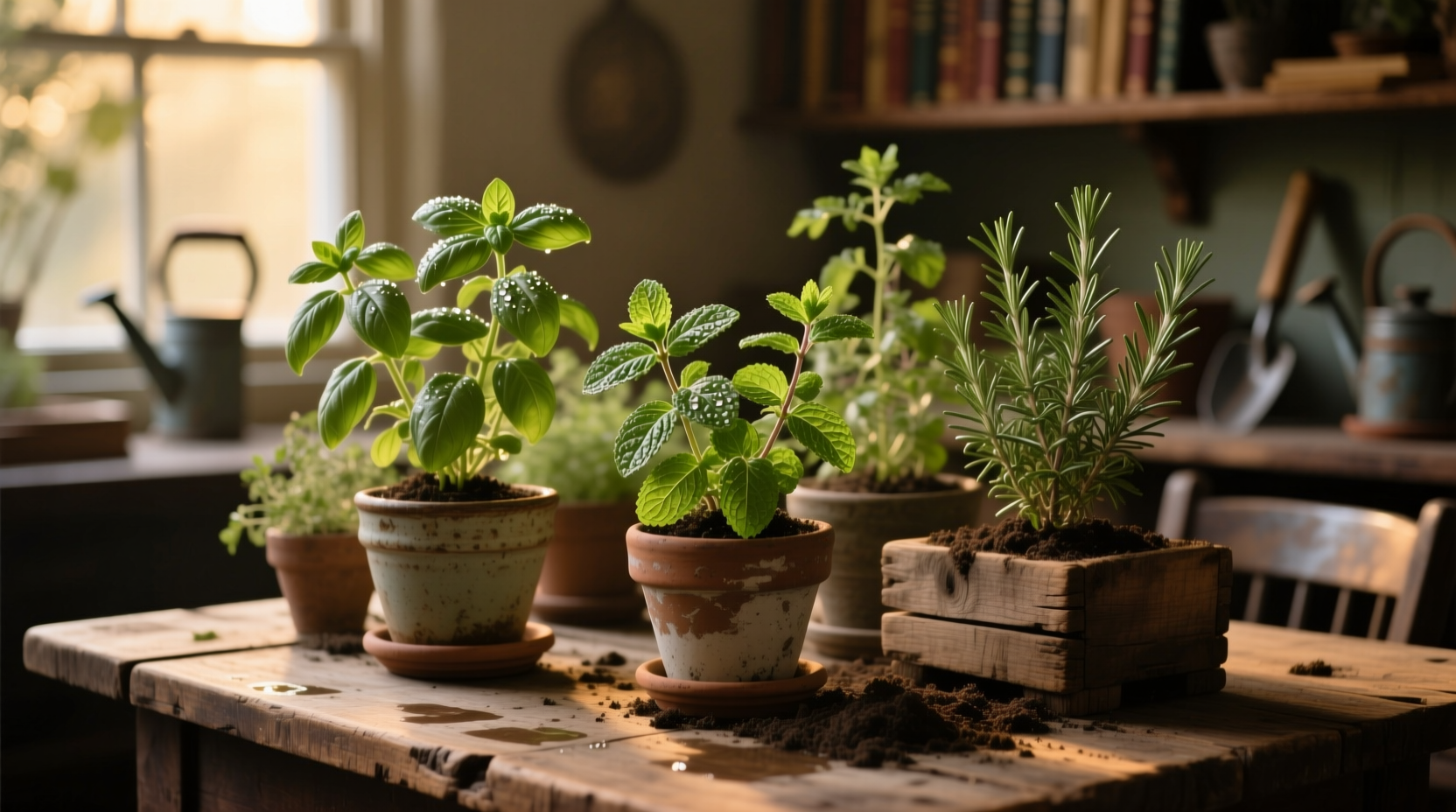
This is a common problem with those living in small apartments without enough lighting.
Everyone says “just put it on a sunny windowsill” like that solves everything. It doesn’t.
Window light drops off fast the further your plant sits from the glass.
Even a few inches back and your herb is basically getting dim mood lighting instead of real sun.
If your basil looks tall and stretchy with leaves spaced way apart, that’s not growth. That’s your plant desperately reaching for light it’s not getting.
Get a simple grow light to fix the problem.
It feels like overkill until you see how much faster and bushier your herbs grow under one.
2. Overwatering

Overwatering kills more indoor herbs than anything else. I say this with love because I’ve done it too.
When a plant looks a little sad, our first instinct is to give it water. But a tired looking herb is way more likely to be drowning than thirsty.
Stick your finger in the soil before you water.
If it’s still damp an inch down, walk away. Your basil will survive a day of dryness.
It will not survive root rot.
3. Poor drainage
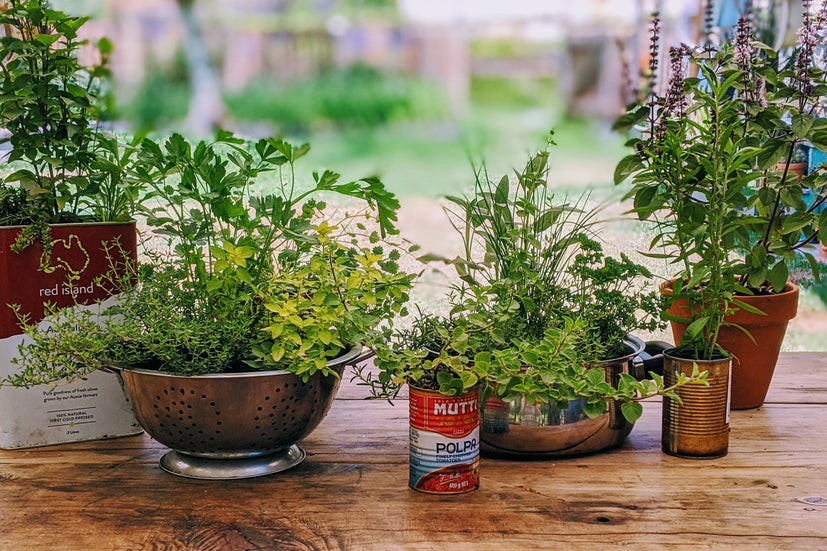
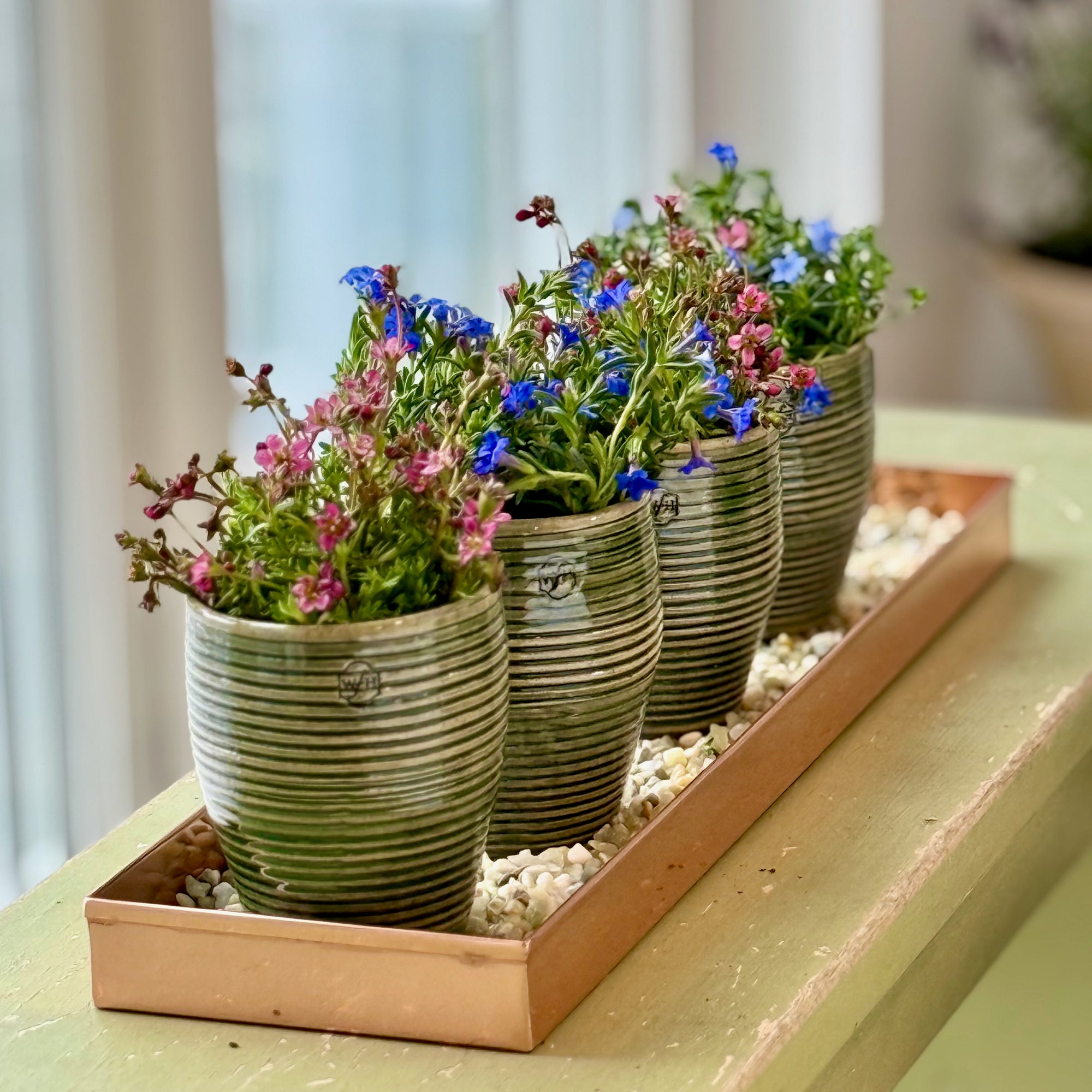
I get it, the ceramic pot from the home decor aisle is adorable. It’s also a death trap if water has nowhere to go.
Without drainage, water just sits at the bottom and your roots sit in it like a swamp.
You should note that roots need air just as much as they need water.
Either drill a hole in the bottom or use it as a decorative cover and keep your herb in its plastic nursery pot inside it.
Yes, it’s a boring tip, it will save your plant every time.
4. Using regular garden soil
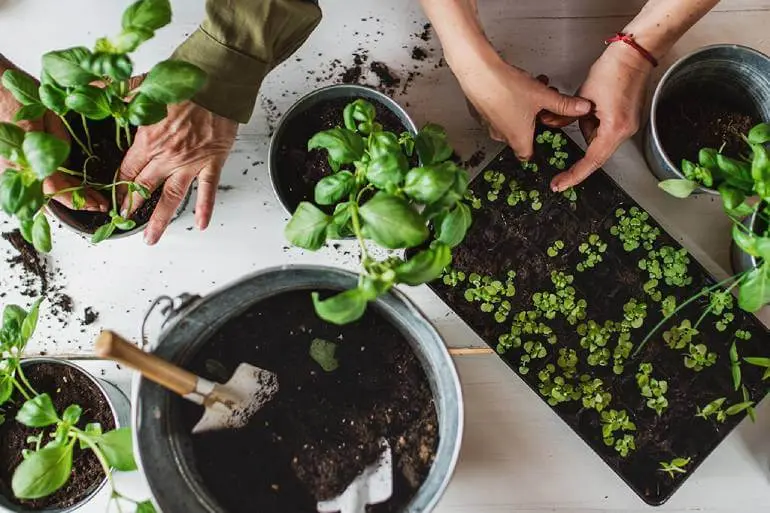
You must be wondering what is wrong with garden soil.
Well, garden soil is dense. It compacts in containers and holds water way longer than it should indoors.
This is one of those things nobody tells you until your herb is already rotting.
To be on the safe side, always use a potting mix made for containers, not soil straight from your backyard or a garden bed.
It’s cheap, it’s at every store, and it makes a big difference.
5. Planting mismatching herbs together
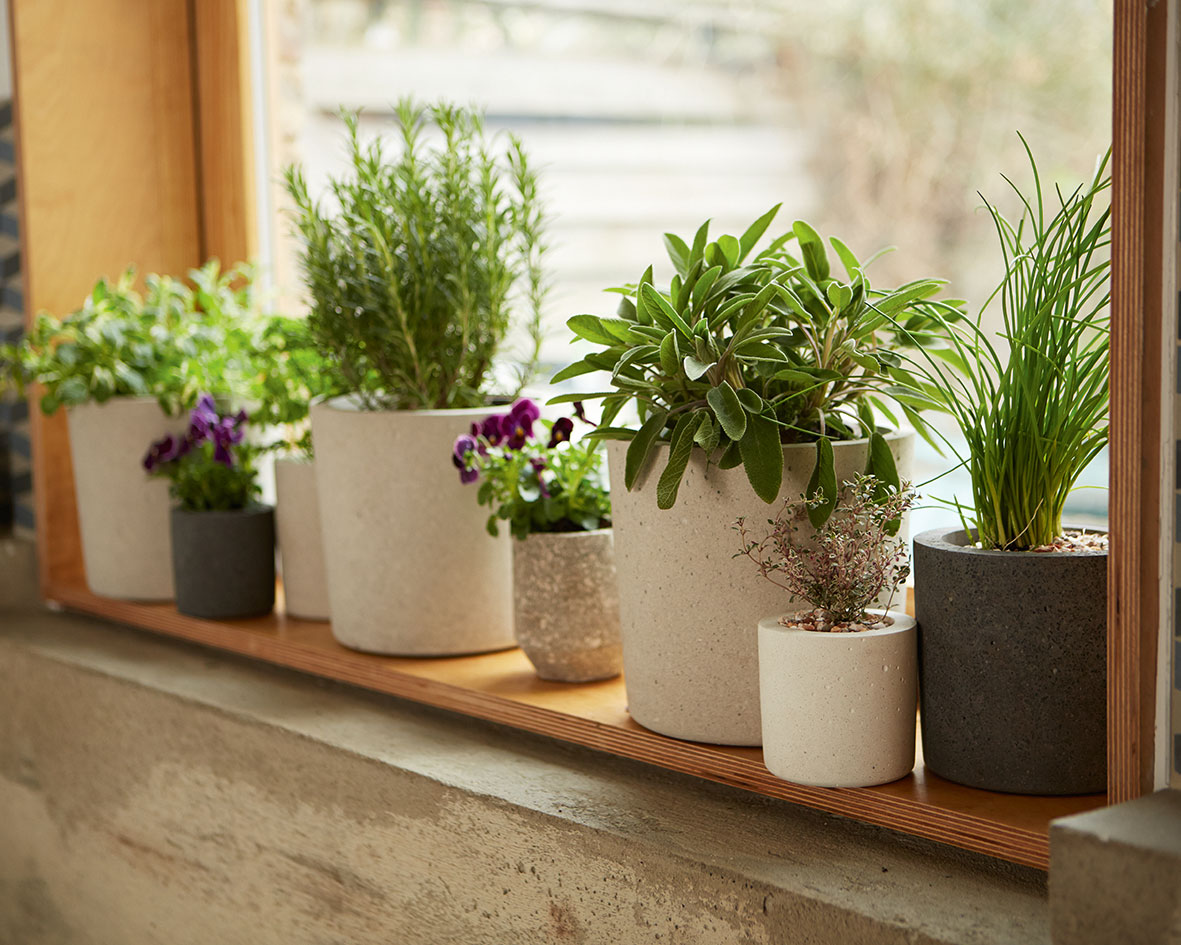
Those adorable “herb garden starter kits” with five different herbs in one tray? They’re kind of a trap.
Rosemary and thyme like to almost dry out between waterings.
Basil and mint want to stay consistently moist.
Put them in the same container and one of them is always suffering.
Give Mediterranean herbs their own pot, and moisture loving herbs their own pot. Your future self will thank you.
To learn some of the herbs that don’t below together read 9 Herb Combos That Should Never Be Planted Together (And What Happens If You Do)
6. Using tap water
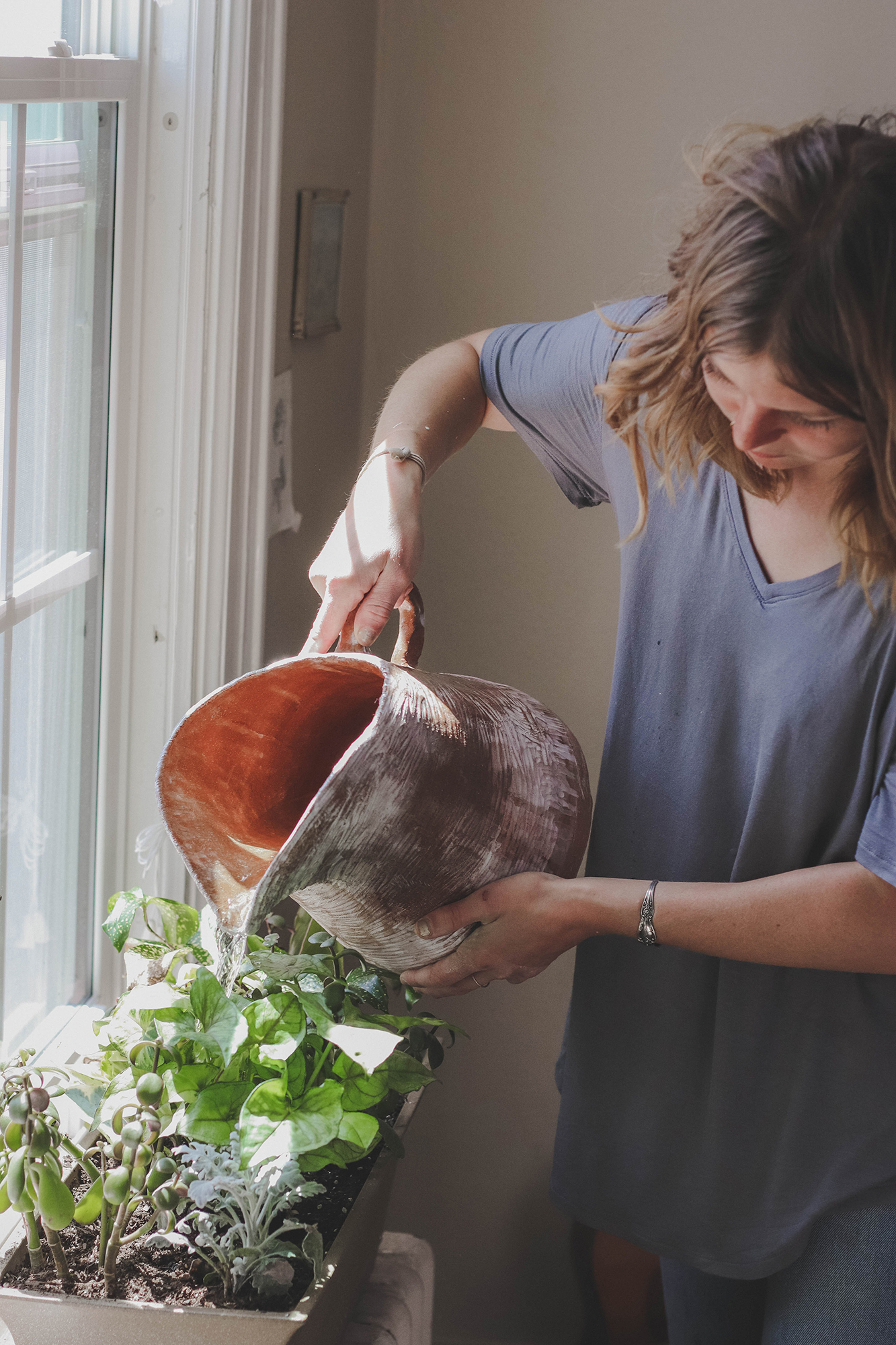
This one surprises people every time.
Heavily treated tap water can leave behind salts and minerals that build up in the soil over time.
If you notice a white crust on top of your soil, that’s it. It’s not mold, it’s mineral buildup, and it can actually burn your roots.
Every few weeks, run extra water through the pot until it drains out the bottom for a minute. Think of it as flushing the system.
7. Zero air moving in your kitchen
Stagnant air is sneaky.
It doesn’t look dangerous, but it’s a perfect setup for mold, mildew, and floppy weak stems.
Herbs that grow outside get wind. Indoors, you have to fake it.
Getting a cheap desk fan on low, a few feet away, pointed so the leaves gently sway, makes a real difference.
Your herbs will literally grow sturdier stems because of it.
8. Ignoring fertilizer completely or overdoing it
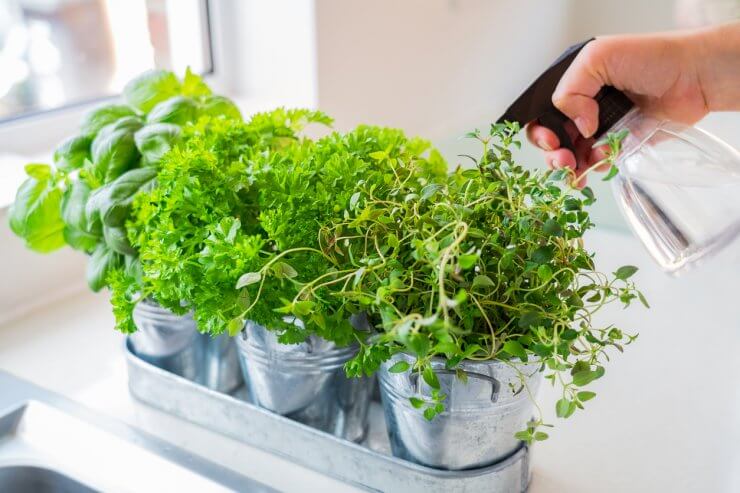
Both extremes cause problems.
No fertilizer eventually leaves your herb pale and weak because container soil runs out of nutrients fast.
Too much fertilizer burns the roots and leaves a salty residue, similar to the tap water issue.
Funny how two opposite mistakes land you in the same spot.
A diluted liquid fertilizer every couple of weeks during active growth is enough. More is not better here.
9. Picking the wrong herbs that hate being indoors
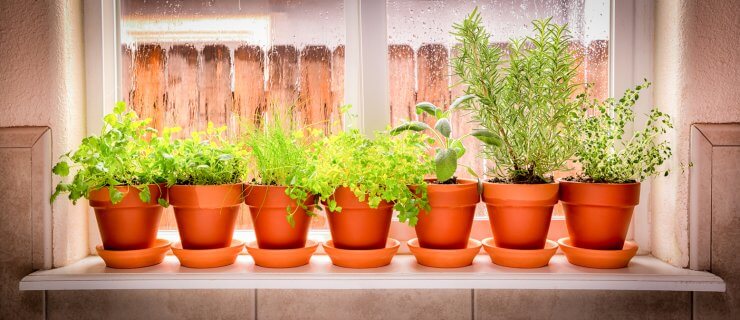
Not every herb is cut out for apartment life.
Cilantro bolts and goes to seed almost the second it gets stressed indoors.
Rosemary is gorgeous but notoriously fussy about humidity and airflow.
If you’re newer to this, basil, mint, chives, and parsley are far more forgiving.
Save the high maintenance herbs for once you’ve got a few wins under your belt.
If you must have an indoor herb, do your research and find one that might be ideal for your apartment.
10. Planting an already exhausted herb

You know the ones, the little plastic wrapped basil from the produce section.
They look healthy on the shelf but they were grown packed tightly for fast sale, not for a long life on your counter.
They often crash within a couple weeks no matter what you do. It’s not a reflection of your plant care.
To be on the safe side, buy from a nursery or garden center when you can, or start from seed. You’ll get a sturdier plant that’s built to last.
11. Bugs
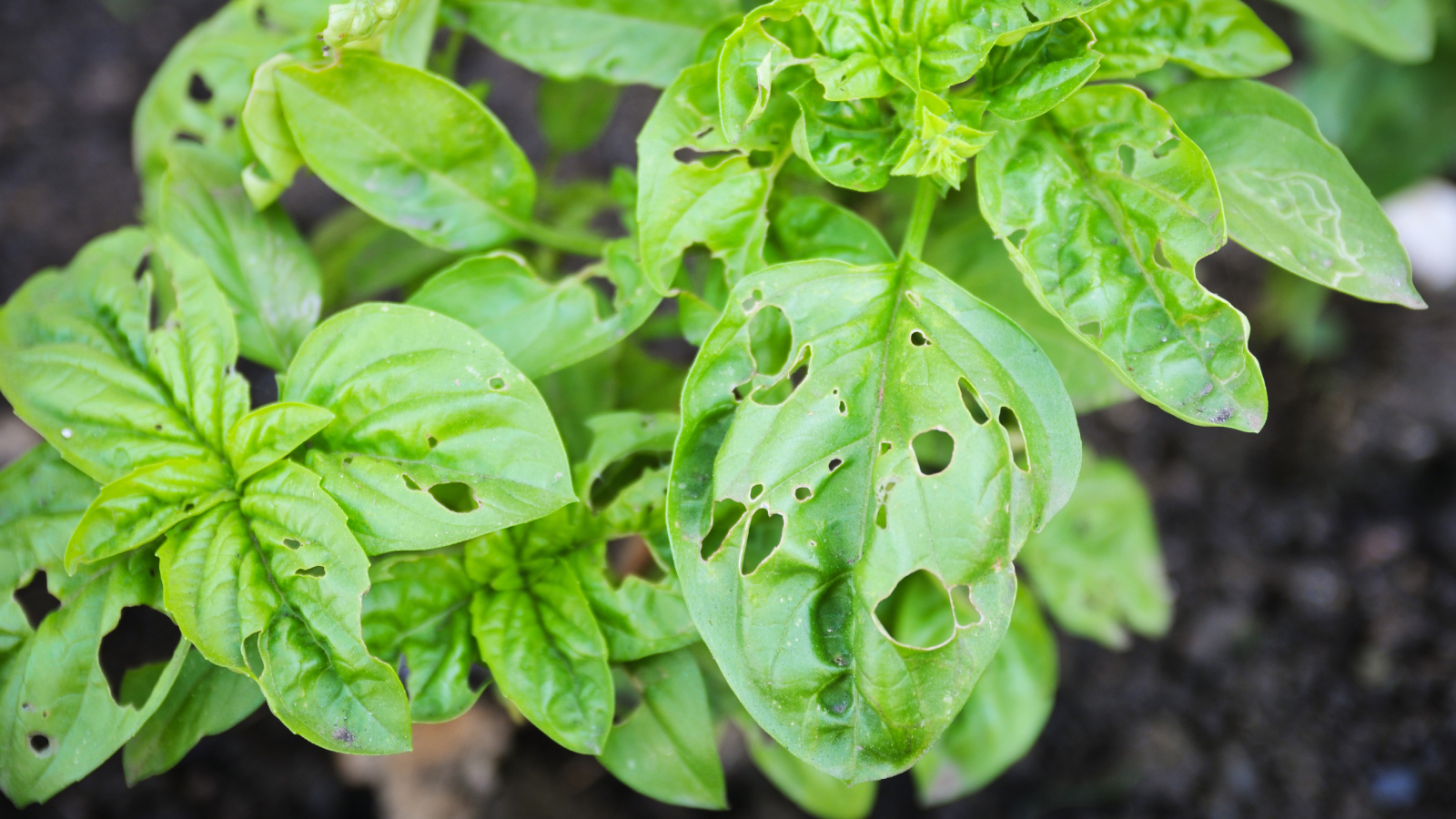
Fungus gnats love overly wet soil.
If you’re seeing little flies hovering near your pots, your watering habits are the real issue, not the bugs themselves.
Spider mites are the opposite problem.
They thrive in dry indoor air, especially in winter with the heat running, and they’re nearly invisible until your leaves start looking speckled.
Check the undersides of your leaves regularly.
Catching pests early is the difference between a quick fix and starting over.
If you have to use a fungicide, get one that is safe for you and your pets.
12. Wrong harvesting
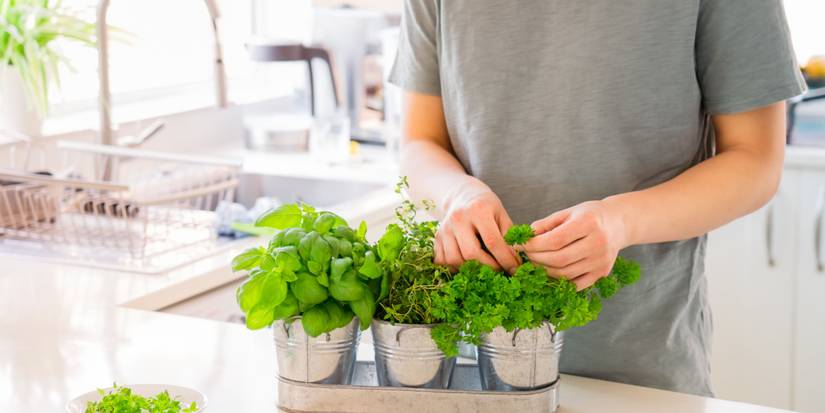
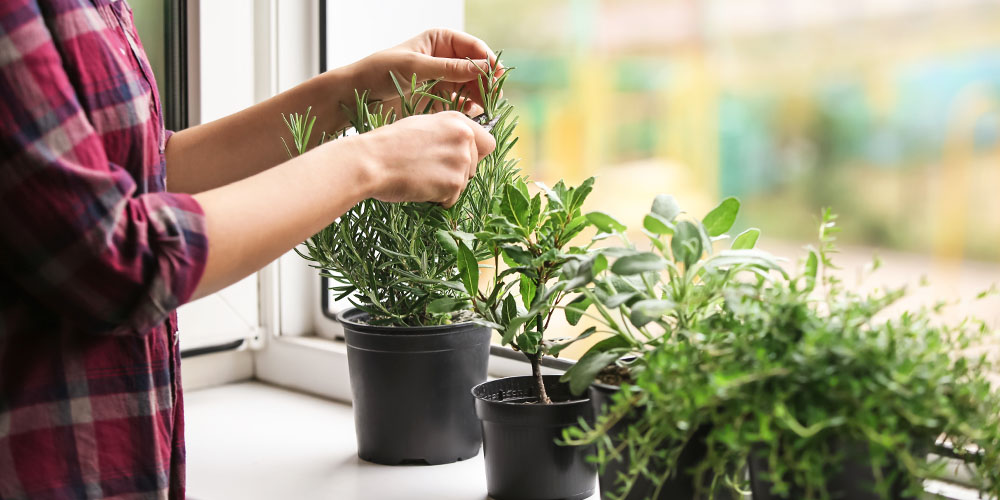
Snipping just the top leaves feels natural but it actually stops your plant from getting bushier.
Over time you end up with one tall, woody, sad looking stem.
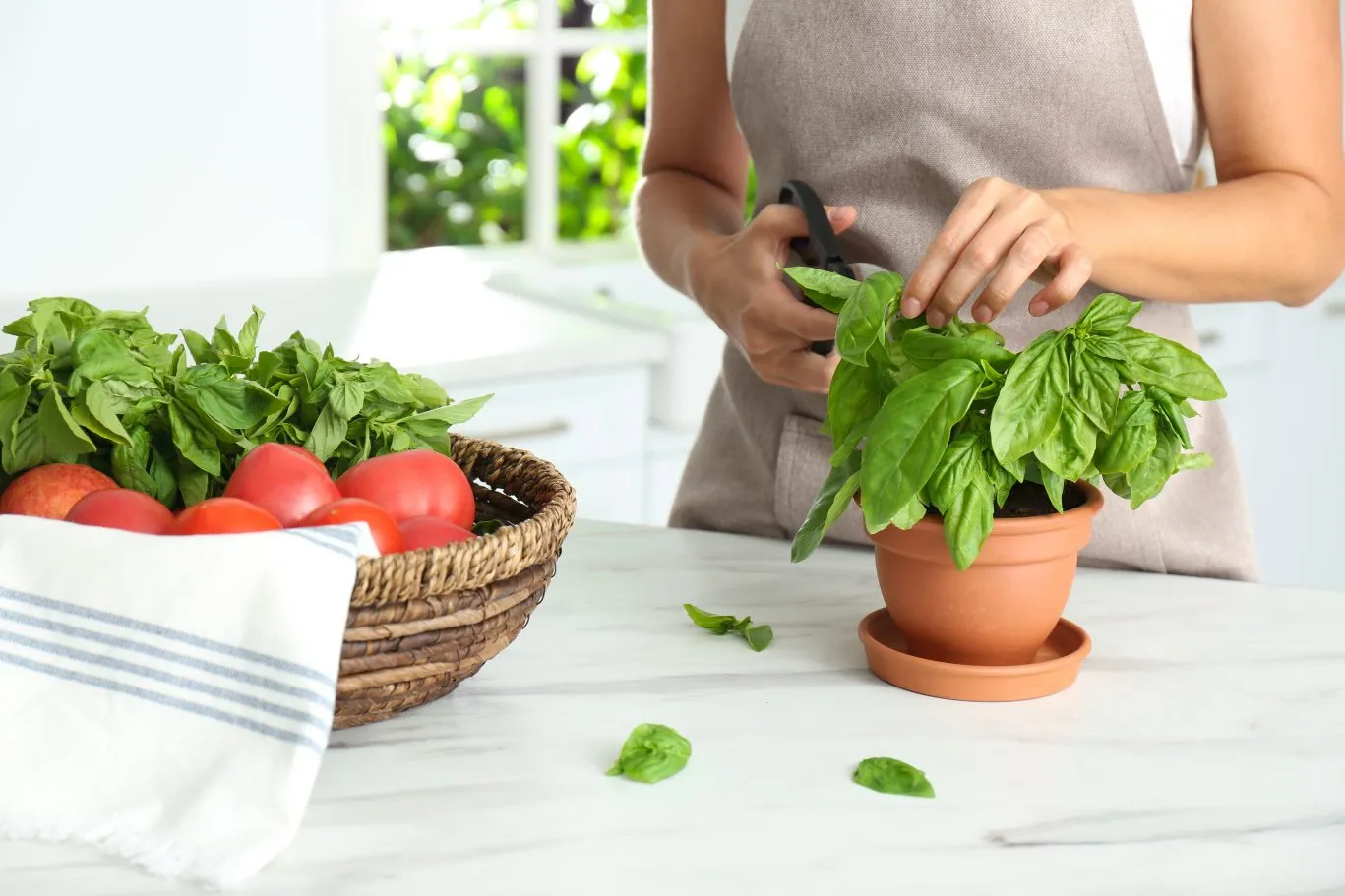
Cut just above where two leaves meet on the stem instead. This tells the plant to branch out into two stems right at that point.
It feels small but it’s the difference between a leggy herb and a full, lush one.
13. Herbs getting too cold

That perfect spot by the window for light? It can also be a cold trap at night, especially in winter.
Sudden temperature swings stress herbs more than people realize. Same goes for sitting too close to a heating vent or AC unit.
Move your pots a few inches away from window glass and vents. Small adjustment, big payoff.
14. Forgeting about your herbs

Be honest, this happens to almost everyone.
Life gets busy and suddenly you haven’t checked on your herb in ten days.
The panic response is usually to drown it in water and hope for the best. That almost always backfires.
Set a recurring reminder on your phone. It sounds unnecessary until it saves your third basil plant this year.
15. Expecting nonstop harvests
Herbs aren’t machines.
If you’re constantly cutting from the same plant without giving it time to recover and regrow, it gets weaker and weaker.
This is especially true in lower light indoor setups where regrowth is naturally slower than outdoors.
To stay on the good side, rotate which plant you harvest from, and don’t take more than about a third of the plant at once.
16. Failing to rotate the pot
Plants lean toward their light source, which means one side grows while the other side sulks. Over time you get a lopsided, awkward looking herb.
It’s such a small thing but almost nobody does it.
Give your pot a quarter turn every few days.
This way you have even and full growth on all sides.
Frequently Asked Questions
What are common mistakes growing indoor herbs?
Overwatering tops the list, hands down.
Right behind it is not enough light, using the wrong pot, and grouping herbs together that need totally different care.
Most of these mistakes feel like acts of love.
They just happen to be the wrong kind.
What are some common problems with herb gardens?
Pretty much everything above, plus a few sneaky ones.
Pests, drafty windows, mineral buildup from tap water, and harvesting in a way that stunts growth instead of helping it.
The good news is every single one of these has a simple fix once you know what to look for.
Why do my indoor herbs keep dying?
Nine times out of ten it’s one of three things.
Too much water, not enough light, or a pot with nowhere for water to drain.
Start there before you blame yourself or assume you just have a black thumb.
You probably don’t.
How do I have a successful indoor herb garden?
Give your herbs real light, a pot with drainage, and let the soil dry out a bit between waterings. That’s honestly most of the battle right there.
Everything else, like airflow and fertilizer, just helps your herbs go from surviving to thriving.
How Do I keep an herb garden alive?
Check the soil before you water instead of watering on a schedule.
Rotate your pots so they grow evenly, and harvest the right way so your plants keep branching out.
Consistency matters more than perfection here. A little attention regularly beats a lot of attention occasionally.
How Do I keep pests away from herb garden?
Check the undersides of your leaves once a week, it sounds tedious but it catches problems early.
Avoid overwatering since that’s basically an invitation for fungus gnats.
If you do spot something, a diluted neem oil spray handles most common indoor pests without any drama.
How often do indoor herbs need to be watered?
There’s no magic number, and honestly anyone who gives you one exact answer is guessing.
It depends on your pot size, the herb, and the season.
Check the soil with your finger first. Water when it’s dry an inch down, not on a set schedule.
How do I make my indoor herbs bushier?
Harvest just above a leaf node instead of snipping random leaves off the top.
This tells your plant to branch into two stems right at that cut.
Pair that with enough light and you’ll notice a fuller plant within a few weeks.
What are the best herbs for beginners?
Basil, mint, chives, and parsley are about as forgiving as it gets.
They tolerate a little neglect and still bounce back.
Save the finicky ones like rosemary and cilantro for after you’ve got some confidence built up.
What is the most healing herb?
This one’s more about personal preference than a single right answer.
Peppermint is loved for settling an upset stomach, and chamomile is a classic for winding down before bed.
Just keep in mind these are traditional comfort herbs, not a replacement for actual medical advice if something’s seriously bothering you.
What indoor herbs grow well together?
Group by water needs, not by what smells good together in a recipe.
Rosemary, thyme, and oregano are happy as roommates since they all like to dry out a bit between waterings.
Basil, mint, and parsley pair well together too since they all prefer to stay consistently moist.
Parting shot
Indoor herb gardening is genuinely one of the most rewarding little hobbies you can pick up.
It’s also full of advice that sounds right but quietly sets you up to fail.
Fix even three or four of these and you’ll notice the difference within a couple of weeks. Your future fresh basil margaritas will thank you.
Related Posts: