12 Golden Bird Feeder Rules Every Backyard Birder Should Know
Last Updated on June 30, 2026 by Duncan
So you got a bird feeder. Maybe it was a gift, maybe you bought one. Either way, welcome to the club.
Here’s the thing nobody warns you about:
Hanging up a feeder and filling it with seed is the easy part.
Keeping birds coming back, keeping squirrels and rats away, and not accidentally running a tiny bird hospital in your backyard?
That takes a little know-how.
Thankfully I’ve had feeders up for over a decade and I know all the rules you have to abide by for you to run a successful bird feeder.
These rules include:
Give the birds 360 degrees of open air

You can buy the fanciest, most expensive seed blend on the market.
But if your feeder is in the wrong spot, the birds simply won’t show up, or worse, they’ll show up and get hurt.
To avoid this you need to be strategic how you go about it. Some of the rules you need to pay attention to include:
Give the birds an escape route
Birds are constantly checking their exits like they’re casing the room at a party.
If your feeder is crammed against a fence or wall with no open space around it, birds feel trapped and they’ll skip it entirely.
To attract the birds, give them 360 degrees of open air to fly into.
Give them somewhere to hide
I know, contradictory. You want a tree or shrub about 10 to 15 feet away so birds have a staging area to watch from before committing to the feeder.
Too close and predators use it as a launchpad.
Too far and birds feel exposed the whole time they’re eating.
Watch your windows
This one breaks my heart every time I see it happen.
Feeders placed about 10 to 20 feet from a window are the most dangerous spot you could pick.
Birds get spooked, take off at full speed, and don’t have time to course correct before smacking into the glass.
Either put your feeder right up against the window, within a few feet, or move it way out past 30 feet.
There is no safe in-between.
Keep the bird feeder clean
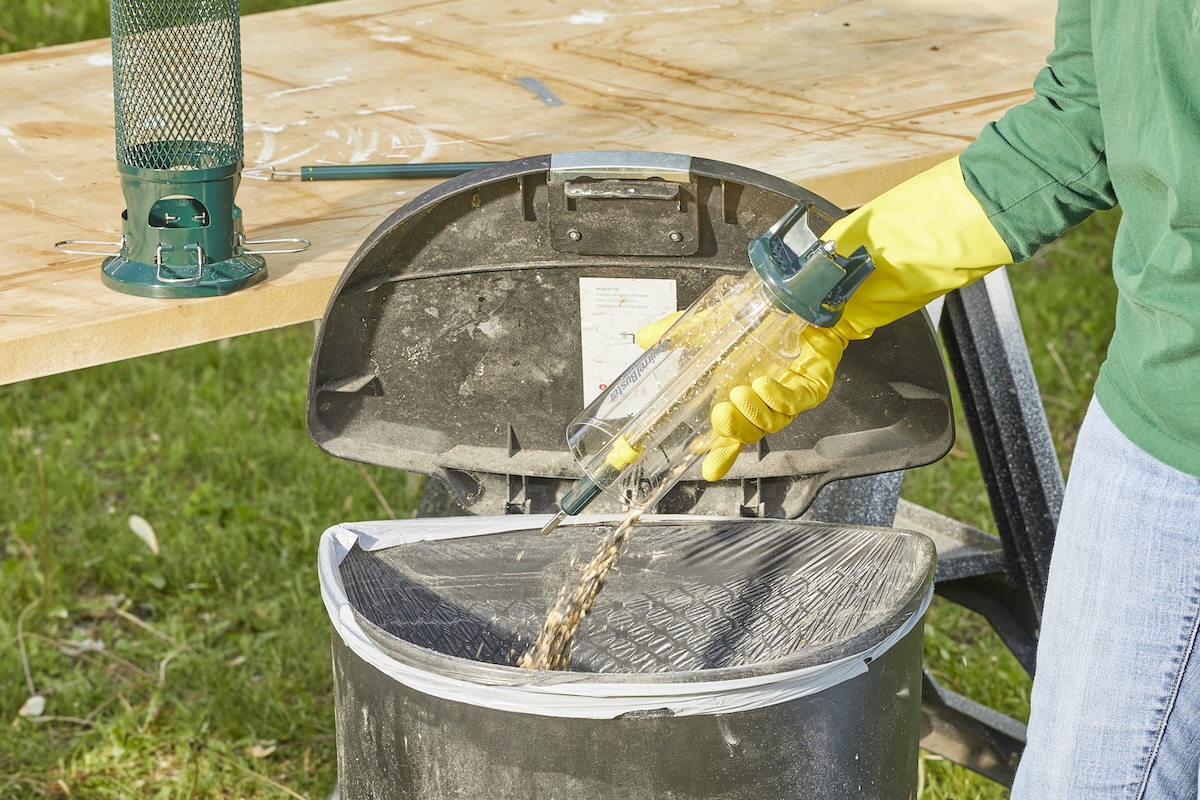
I get it. Cleaning a bird feeder sounds like the most tedious chore imaginable.
But here’s the part that made me start taking it seriously.
A dirty feeder is basically a petri dish with a roof.
Wet seed, bird droppings, and warm weather create the perfect breeding ground for mold and bacteria that can genuinely make birds sick.
There’s a reason vets see spikes in sick songbirds during humid stretches, and it traces straight back to gross feeders.
For a great experience:
Clean the feeder every one to two weeks
You can do it more often if you live somewhere humid or it’s been raining a lot.
A simple scrub with diluted bleach water, rinse it well, and let it dry completely before refilling.
Skipping the drying step is a rookie mistake as wet feeders just invite mold right back in.
Check after every rain
If seed looks clumped together instead of loose, toss it.
Clumped seed means moisture got in, and birds can’t eat it anyway.
A feeder that looks full isn’t always a feeder that’s working.
Don’t overfill it
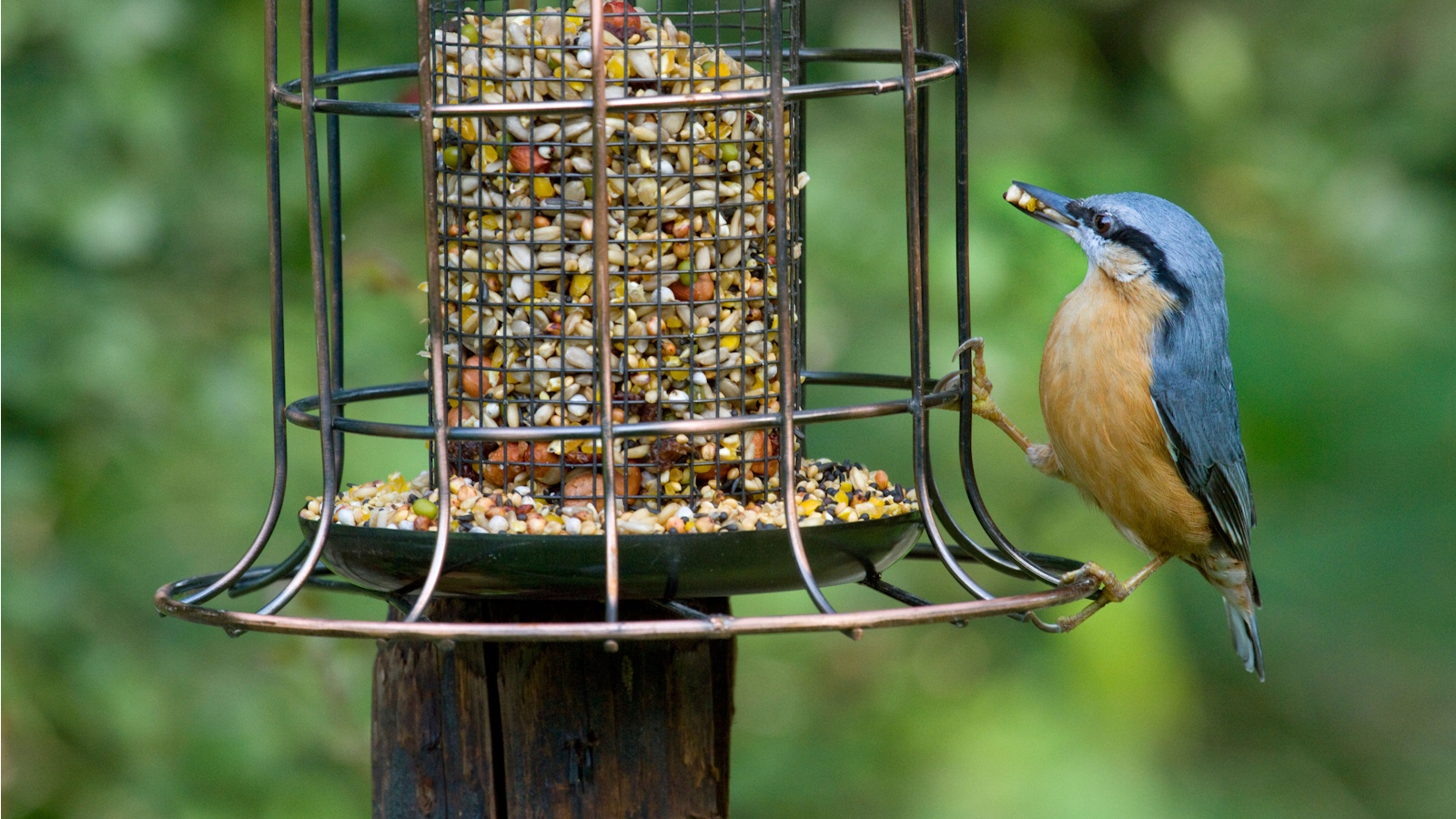
This one surprises people every time I bring it up.
You’d think more food means more birds which means you’re doing great but that’s not the case.
Overfilling leads to spillover on the ground, which attracts mice and rats.
Rats attract hawks and owls looking for an easy meal, and guess who else is hanging around that feeder?
Your songbirds.
When you overfill your feeder you accidentally turn your cute feeding station into a predator buffet without realizing it.
The right way to go about it is to fill it to about three quarters, not all the way to the top.
Refill more often instead of stockpiling.
Your birds will be just as happy and your yard won’t turn into a rodent convention center.
Fill your bird feeder before 6 AM
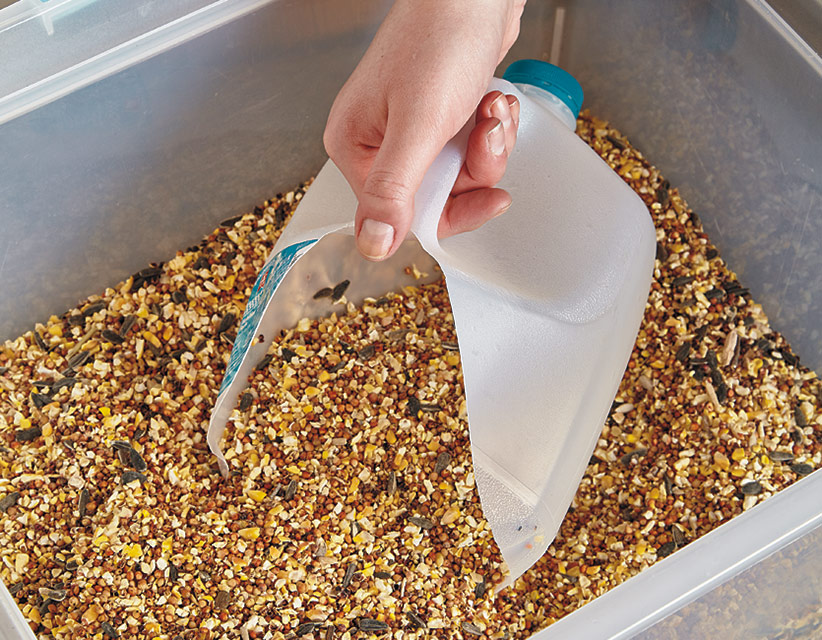
If you only refill your feeder whenever you happen to remember, you’re missing the most important window of the day.
The right thing to do is to fill it early, ideally before sunrise
Birds burn through a shocking amount of fat overnight just staying warm, especially in colder months.
The first thing they need at daybreak is fuel, and if your feeder is empty at 6am, they’ll move on to a neighbor’s yard who has their act together.
Refilling at noon feels productive but it’s honestly missing the point.
Mornings are when it counts most.
Have multiple feeders 15 to 20 feet apart to prevent feeder bullying

If you’ve ever noticed one bossy bird hogging your feeder while everyone else watches sadly from a branch, you’ve witnessed what I call feeder bullying.
It’s real and it happens constantly.
One aggressive species, often house sparrows or grackles, will claim a single feeder and chase off the smaller, shyer birds.
Within a week you’ll notice one species stop vising the bird feeder.
To avoid this:
Set up two or three feeders spaced 15 to 20 feet apart instead of one giant one.
It breaks up that dominance and gives the quieter birds their own space to eat in peace.
Think of it like setting up multiple snack tables at a party so nobody has to fight over the chips.
Hang the feeder 5-6 feet above the ground
Hanging a feeder too low is an open invitation to every cat in the neighborhood.
To protect your feeder:
Aim for five to six feet off the ground.
That’s high enough to be out of an easy cat pounce range but low enough that you can still refill it without dragging out a ladder every time.
If squirrels are a constant problem for you, raise it a bit higher and make sure there’s nothing within a four to five foot jump radius.
This is because squirrels can launch surprisingly far when there’s food on the line.
Place the feeder in a quiet corner
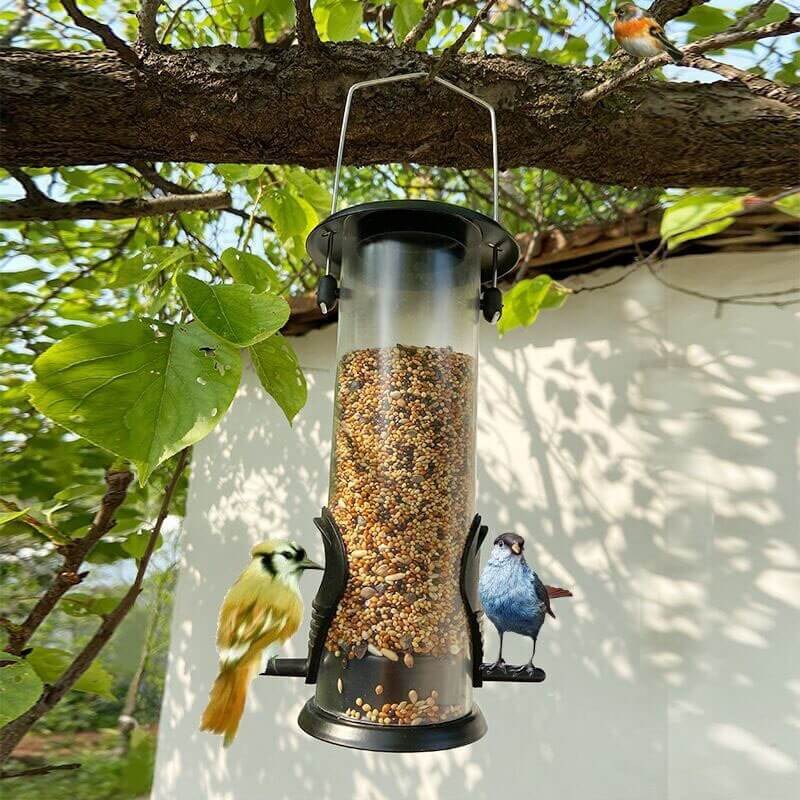
This one took me years to figure out.
If your feeder is near wind chimes, an AC unit, or a busy street, birds spend more time on edge listening for danger and less time actually eating.
It doesn’t mean you need a silent backyard oasis.
It just means if you’ve got a noisy corner of your yard, that’s not your best feeder spot.
Try a quieter area instead and watch how much longer birds linger.
Parting shot
If you remember nothing else from this, remember this.
Every choice you make about your feeder, where you put it, how clean it is, how full it is, comes down to one thing:
Are you making your birds feel safe enough to relax and eat?
Birds are constantly doing a mental math problem between hunger and danger.
Your job isn’t really about picking the perfect seed blend.
It’s about removing every little stressor so they choose to stay longer, eat more, and keep coming back.
Get that part right and the rest takes care of itself.
FAQs
Where should you not put a bird feeder?
Skip anywhere within 10 to 20 feet of a window, that’s the danger zone for collisions.
Also avoid spots low to the ground near shrubs where cats can hide, and noisy corners near AC units or wind chimes where birds stay too jumpy to relax and eat.
How do you set up a bird feeder?
Hang it five to six feet off the ground, give it open space on all sides so birds have an escape route, and keep a tree or shrub about 10 to 15 feet away as a watch spot.
Fill it before sunrise and you’re set.
What is the 5 7 9 bird rule?
This one floats around online but it’s not an official wildlife guideline, more of a casual rule of thumb some feeder owners use.
The general idea is keeping feeders at least 5 feet off the ground, 7 feet from launch points like fences or branches, and 9 feet from windows to cut down on predator access and window strikes.
Treat it as a helpful memory trick rather than gospel.
When should you not feed the birds?
If you’ve got an active outbreak of avian disease reported in your area, take feeders down for a couple weeks to stop the spread.
Also pull feeders if you’ve spotted sick or dead birds nearby, or if bears are active in your region during warmer months.
Can you put Vaseline on a bird feeder pole?
Yes, and it works surprisingly well as a cheap squirrel deterrent.
A thick layer makes the pole too slippery for them to climb.
Just reapply every so often since rain and heat will wear it down.
Do birds get sad when you stop feeding them?
Birds won’t get emotionally attached the way we imagine, but they will notice and move on to a more reliable food source.
The bigger concern is timing.
Stopping abruptly in harsh winter weather when natural food is scarce can be tough on them, so it’s kinder to taper off gradually if you need to stop.
What not to put in a bird feeder?
Skip bread, it has zero nutritional value and fills birds up without actually feeding them.
Avoid anything moldy, salted, or seasoned, and steer clear of cheap seed mixes loaded with filler grains like milo that most birds just toss aside.
How do you protect a bird feeder from rain?
Look for one with a built in roof or dome, those are worth the extra few dollars.
If yours doesn’t have one, you can add a separate weather baffle above it.
Drainage holes in the bottom matter too, since trapped moisture is what turns seed moldy.
What food should you never feed birds?
Avocado, chocolate, caffeine, and anything with salt are all genuinely harmful to birds.
Bread and crackers aren’t toxic but they’re empty calories that can cause malnutrition over time if that’s all birds are eating.
What happens if my bird feeder gets wet?
Wet seed clumps together and birds can’t get to it, plus it starts molding fast, sometimes within a couple days in humid weather.
Always check after rain and toss anything that looks clumpy or smells off before refilling.
How do I stop pigeons from eating my bird feeder?
Switch to a tube feeder with small perches, pigeons are too bulky to balance on them comfortably.
You can also try safflower seed, which pigeons tend to avoid but smaller songbirds happily eat.
Why put coffee grounds around bird feeders?
Some people swear by sprinkling used coffee grounds around the base to deter ants and certain pests, and a few say it discourages cats due to the smell.
It’s not a guaranteed fix, but it’s cheap, you’re probably already making coffee anyway, and it doesn’t hurt to try.
What do you seal a bird feeder with?
If you’re building or refinishing a wooden feeder, use a non-toxic, water based sealant or exterior wood finish that’s safe once fully cured.
Avoid anything with strong chemical fumes, since birds will be in close contact with it daily.
What can I put under a bird feeder to keep cats away?
Chicken wire laid flat on the ground works great, cats hate the feeling on their paws.
Pinecones or decorative thorny mulch around the base does the trick too, and it looks intentional rather than like a defense system.
Related Posts: