25 DIY Backyard Fireplaces That Won’t Cost You a Fortune
Last Updated on June 19, 2026 by Duncan
Let’s be honest. You don’t need a $4,000 stone fireplace to enjoy a cold beer outside in October.
You need something that holds a fire, doesn’t fall apart in a season, and didn’t make your wallet cry.
I’ve built more backyard fire setups than I can count, mostly because I kept changing my mind about what I wanted.
Some were genius.
A few were disasters that my neighbor still brings up at parties.
Here’s everything I learned, minus the disasters (mostly).
Like the squirrels figured out a long time ago, the good stuff is usually just sitting around your yard already.
You just have to look at it differently.
1. The Cinder Block Classic

This is the one everyone starts with, and there’s a reason.
Stack cinder blocks in a circle or square, two or three rows high, and you’ve got a fire pit for about fifty bucks.
It’s not pretty. Nobody is putting this on a magazine cover.
But it’s fireproof, it’s stable, and it’s the kind of thing you build on a Saturday morning before lunch.
My first one is still sitting in my parents’ yard, eight years later, looking exactly as ugly as the day I built it.
And that’s actually the point.
2. The Dry Stack Fieldstone Pit
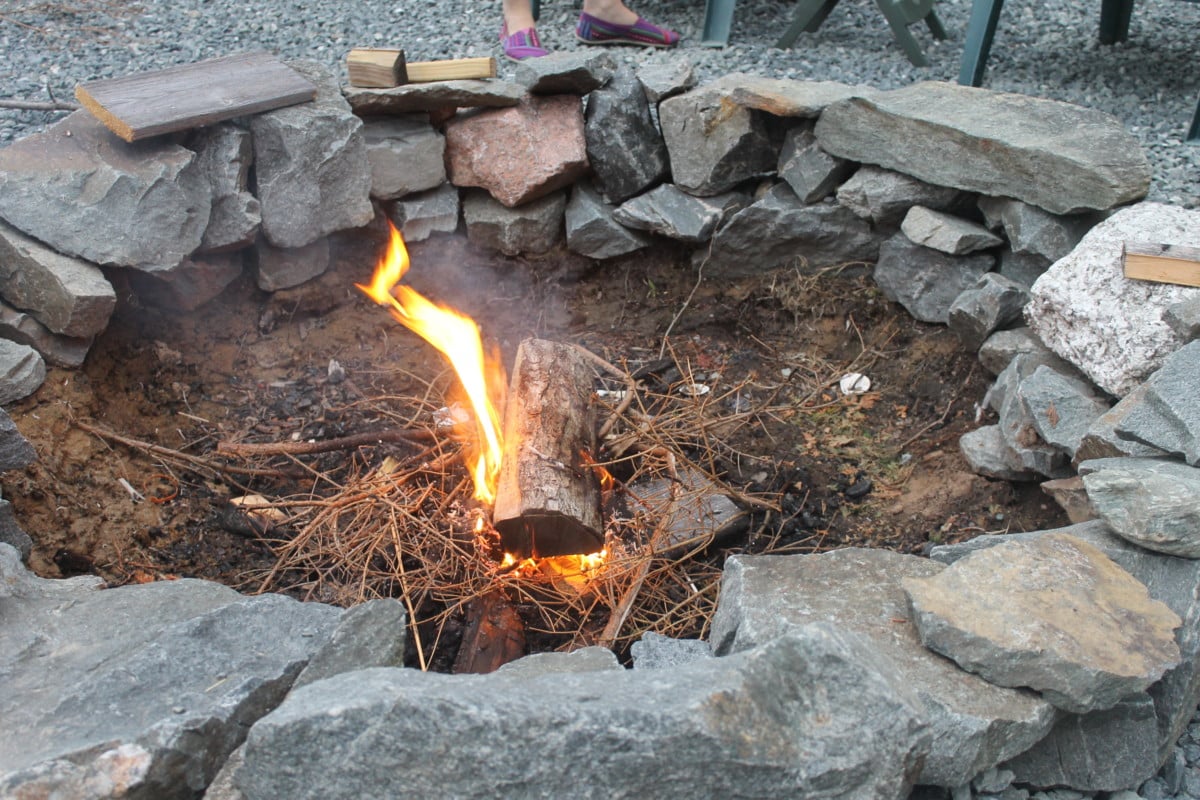
If your property has rocks lying around (and most older properties do), you’ve already got free materials.
Stack them without mortar, fit the flat sides against each other like a puzzle, and let gravity do the work.
The trick nobody tells you is that dry stacking takes patience, not skill.
You’re going to rebuild a section three or four times before it sits right.
Give yourself a whole weekend, not an afternoon.
Rushing this one is how you end up with a wobbly stone falling on your foot at 9pm.
3. The Old Washtub Fire Bowl

Got a galvanized metal washtub rusting in the garage?
That’s a fire bowl waiting to happen.
Drill a few drainage holes in the bottom so rainwater doesn’t sit and rust it out faster, set it on bricks or a metal stand so it’s off the grass, and you’re done.
This is the fastest one on the list.
I’m talking twenty minutes, including the trip to find your drill.
Just don’t put it directly on a wood deck.
Heat travels through metal fast, and scorched decking is not a fun Tuesday.
4. The Tractor or Wheel Rim Ring

If you live anywhere near a farm, junkyard, or a guy named Kev who collects “stuff,” a heavy steel wheel rim makes an excellent fire ring.
It’s already round, already metal, and usually free if you ask nicely.
Set it on pavers or gravel, never directly on grass, and you’ve got a ring that will outlast you.
These things are basically indestructible.
The only downside is they’re heavy.
Plan on a second person or a dolly, not your back.
5. The Galvanized Cattle Trough Pit

Farm supply stores sell these for animals to drink out of, but they make a surprisingly good elevated fire bowl.
Buy one secondhand if you can, since a slightly dented trough works just as well as a shiny new one.
Set it on cinder blocks so air can circulate underneath, which actually helps the fire breathe better.
You get a raised fireplace that looks intentional instead of like you raided a barn.
Fair warning, the metal gets hot fast and stays hot a while after the fire’s out.
Keep curious toddlers and overconfident dogs at a distance.
6. The Paver Circle Pit
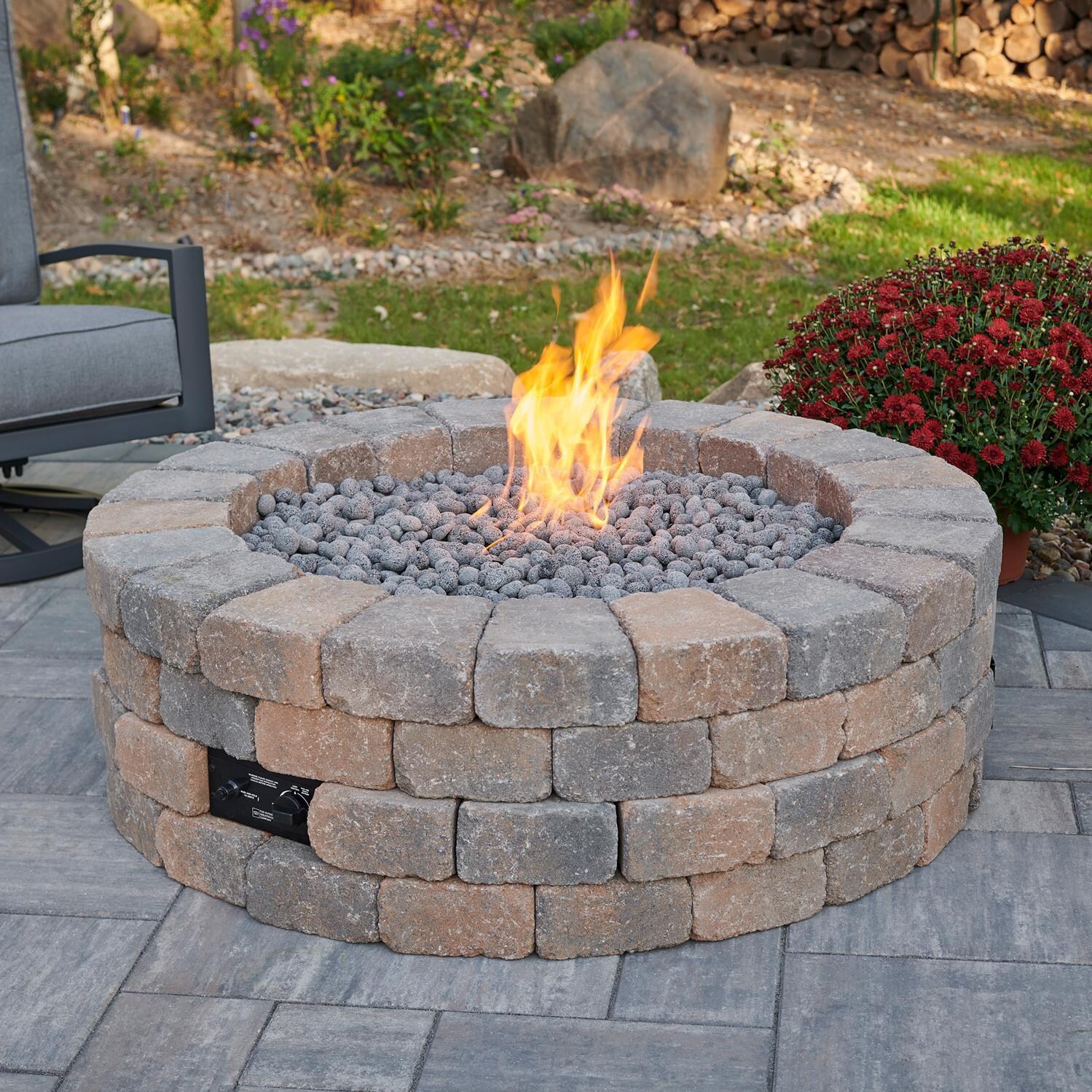)
You can use standard concrete pavers, the kind sold by the pallet at any hardware store.
Simply place these on their edge in a circle to form a simple fire ring.
No cutting, no mortar, just careful placement.
This one is forgiving if you mess up the first row, since pavers are cheap enough to buy a few extra.
I always tell people to buy ten percent more than they think they need.
The look is clean and modern without trying too hard, which is exactly what you want if your patio already has a style going on.
7. The U Shaped Reclaimed Brick Fireplace

This is your first step up toward an actual fireplace rather than just a pit.
Build three low walls in a U shape using reclaimed brick, leaving the front open so people can sit around it.
The U shape does something clever. It blocks wind from two sides while still letting heat radiate out toward your seating.
Just don’t use leftover house brick that was never meant to touch direct flame.
It looks identical to firebrick until it starts flaking apart in your second fire, and then you’re rebuilding the thing you just finished.
8. The Gabion Cage Pit

A gabion is just a wire mesh cage you fill with rocks, normally used for retaining walls.
Turn a small one into a fire pit and you get a modern, industrial look that costs almost nothing if you’re filling it with rocks you already have.
This is the build for someone who wants their backyard to look like it came from a design magazine without paying design magazine prices.
You need to fill the cage tightly, or the rocks will settle unevenly over time and the whole thing starts leaning.
Pack it like you’re loading a dishwasher for a dinner party as every gap matters.
9. The Poured Concrete Ring

Buy a few bags of concrete mix and an old bucket to use as a mold, and you can pour your own fire ring for less than a store bought one.
Grease the bucket, pour the concrete around it in a donut shape, let it cure, then pop the bucket out.
This sounds harder than it is.
I did my first one with a five gallon bucket and a length of cardboard tube, and it worked fine.
Give it a full week to cure before you light anything in it.
Rushing this step is how concrete cracks from trapped moisture turning to steam.
10. The Cob Fireplace

Cob is just a mix of clay, sand, and straw, and if your yard has clay heavy soil, you might already own the main ingredient.
People have built fireplaces this way for centuries because it’s basically free and incredibly forgiving to shape.
You can sculpt cob into curves, benches, even little shelves for your drink.
It looks handmade in the best possible way, like something out of a storybook cottage.
It does need a dry season to fully cure, so don’t start this one in October expecting a fire by November.
Patience is the actual price you’re paying here, not money.
11. The Retired Washing Machine Drum Pit

That stainless steel drum from a dead washing machine is already perforated, which means it’s basically designed for airflow.
Pull it out, clean it up, and you’ve got a fire pit that looks like you bought it from a trendy outdoor store.
This is one of my favorite “trash to treasure” builds because it genuinely surprises people. Nobody guesses what it used to be until you tell them.
Set it on a few bricks for stability and to keep it off the grass.
The holes that used to spin your laundry now let air feed the fire beautifully.
12. The Busted Kettle Grill Bowl

When a kettle grill’s legs finally give out but the bowl is still solid, don’t toss the whole thing.
The bowl alone makes a perfectly good fire bowl once you set it on a sturdy base.
This is a five minute project if you already have the dead grill sitting around.
You’re basically just removing the broken parts and keeping the good one.
It won’t hold a huge fire, but for a couple of chairs and a quiet evening, it’s more than enough.
13. The Mini Chimenea
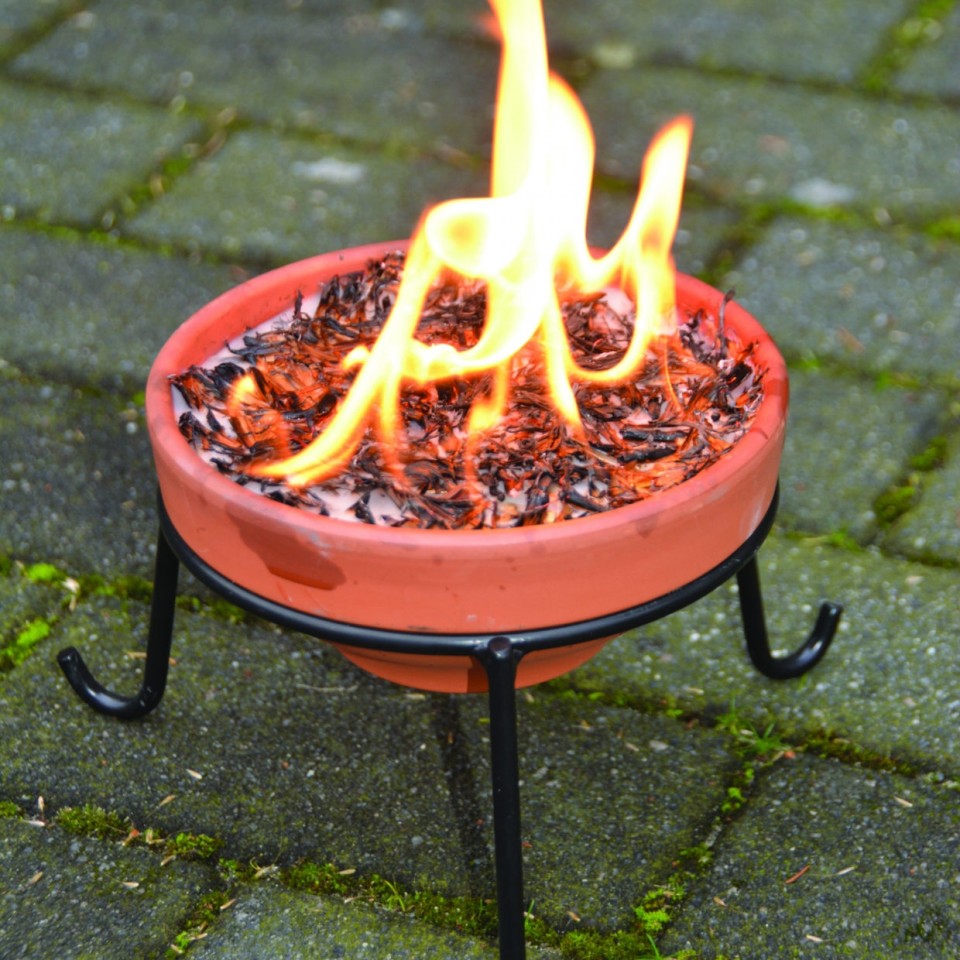
Stack a few clay flue tiles or large terracotta pipe sections to build your own version of a chimenea, the classic bulb shaped clay fireplace.
You get that cozy, almost campfire-in-a-bottle feel without buying the imported version.
These work best for small, contained fires, not bonfires.
Think of it as patio mood lighting with heat, not your main backyard hangout spot.
Clay is sensitive to sudden temperature swings, so build your fire up slowly instead of dumping in a pile of logs at once.
Slow and steady keeps the clay from cracking on you.
14. The Stacked Stone Bench Fireplace

If you’re handy and patient, build your fire pit with a low stacked stone bench wrapped around two or three sides.
Suddenly you’ve solved the eternal backyard problem of “where does everyone sit.”
This build takes longer than a basic pit, maybe a few weekends instead of one.
But it solves two problems with one project, which is the kind of efficiency I can get behind.
People will assume you hired someone.
Let them believe it, you earned that.
15. The Sunken Fire Pit
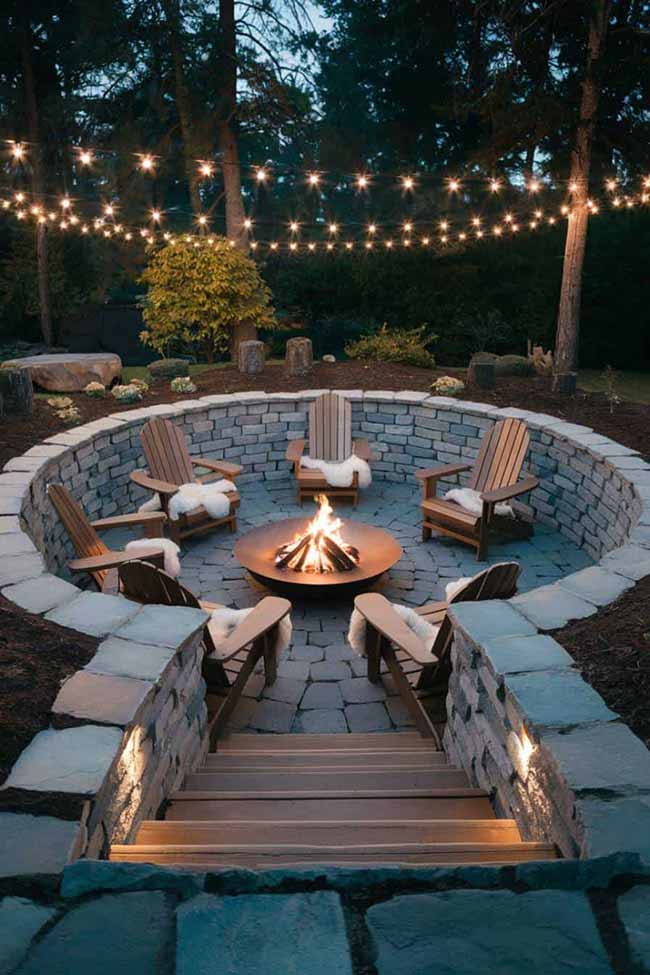
Sometimes the cheapest fireplace is the one you dig.
A sunken pit lined with brick or stone sits below grade, which gives you natural wind protection without building a single wall.
This works especially well if your yard already has a slight slope you don’t know what to do with.
Use the dirt you dig out to level a low spot elsewhere in the yard.
Just make sure you’re not digging into a drainage path, or your fire pit becomes a small pond every time it rains.
I learned that one the hard way.
16. The Retaining Wall Block Raised Hearth

Those interlocking blocks sold for garden retaining walls stack easily without mortar and create a clean, raised fireplace look.
Many of them even have a curved option specifically made for circular fire pits.
This is the build for people who want something that looks store bought but priced like a weekend project.
The blocks practically assemble themselves.
Raised height means less bending over to tend the fire, which your back will thank you for after the second hour of a long evening.
17. The Terracotta Flower Pot Stack Chimenea
You can turn three or four terracotta pots of decreasing size, stacked and the bottoms knocked out, into a rustic little fireplace.
It’s quirky, it’s cheap, and it photographs beautifully covered in string lights.
This one is more about charm than serious heat output.
Don’t expect to roast a full dinner over it, expect to enjoy a glass of wine next to it.
Terracotta cracks if it gets too hot too fast, same as the chimenea above.
Small, steady fires are the name of the game.
18. The Cob Keyhole Fireplace and Oven Combo
Take the cob idea from before and add a small attached channel leading to a little oven chamber, and you’ve built what’s called a keyhole design.
One fire heats your seating area and bakes a pizza at the same time.
This is the ambitious build on this list, the one you brag about for years.
It’s also genuinely one of the cheapest, since the main material is mud you’re shaping with your hands.
Set aside real time for this one, easily a few weekends across a dry stretch of weather.
But the payoff is a backyard feature nobody else on your street has.
19. The Steel Fire Ring With Brick Skirt

Can’t decide between a simple metal ring and a built fireplace? Do both.
Buy a basic steel fire ring insert and surround it with a low brick or block skirt for looks and a tiny bit of wind protection.
This hybrid approach gives you the durability of steel doing the actual fire holding, with the visual upgrade of masonry around the outside.
Best of both budgets, frankly.
It’s also the easiest to fix later.
If the steel ring eventually rusts out, you replace just that piece instead of rebuilding the whole structure.
20. The Tuscan Dry Stack With a Mortar Cap
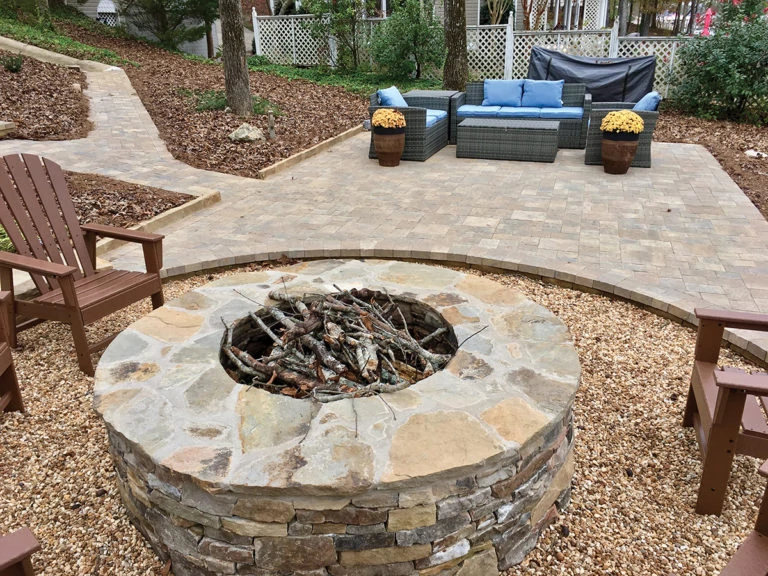
Dry stack your stone walls the whole way up, no mortar needed for stability, then add a single mortared cap stone on top for a clean, finished edge.
You save money on mortar while still getting that polished, intentional look on the top course.
This little trick fools almost everyone into thinking the whole thing is professionally mortared.
Nobody checks the bottom rows, they just see the neat top edge.
It’s a small move that makes a big difference in how “finished” the project looks for almost no extra cost.
21. The Scrap Steel Disc Bowl

Old plow discs, large manhole covers, even thick steel discs from a scrap yard can become the bowl of a fire pit when you set them into a simple metal or block stand.
Scrap yards often sell these by weight, which makes them shockingly cheap.
This is the build for someone who likes a slightly industrial, weathered look.
The rust patina that develops over time only adds character, no maintenance required.
Ask the scrap yard what the metal used to be before you buy it.
Some industrial scrap has coatings you don’t want heating up and smoking into your yard.
22. The Garden Wall Built In Fireplace

If you’re already planning a garden wall or raised bed border, build a small fireplace right into it.
You’re not adding a whole new structure, you’re just adding a function to one you were building anyway.
This is the smartest budget move on the entire list because you’re sharing material and labor costs across two projects instead of paying for them separately.
Two birds, one pile of cinder blocks.
The only catch is you need to plan this from the start.
Adding a fireplace into an already finished wall means tearing part of it back out.
23. The Broken Slab Salvage Pit

Got a stack of cracked concrete pavers or broken patio slabs you were planning to haul to the dump? Don’t.
Use the broken pieces as a rough base layer or low retaining wall around your fire area.
This is as close to a free fireplace as you’ll ever build.
You’re literally using material that was headed for the landfill.
It won’t look refined, but there’s something satisfying about a fireplace built entirely from stuff you were about to throw away.
Function over polish, every time.
24. The Pallet Wood Bench Surround

This one isn’t the fire pit itself, it’s the seating around it, which honestly is half the experience anyway.
Break down a couple of free pallets and build low benches around your existing fire bowl or pit.
Never burn pallet wood in the fire itself, since it’s often treated with chemicals you don’t want to breathe.
Use it for the furniture around the fire instead, where it belongs.
This is the cheapest way to turn a fire pit into an actual hangout spot instead of just a hole that gets warm.
25. The Mismatched Brick Mosaic Pit
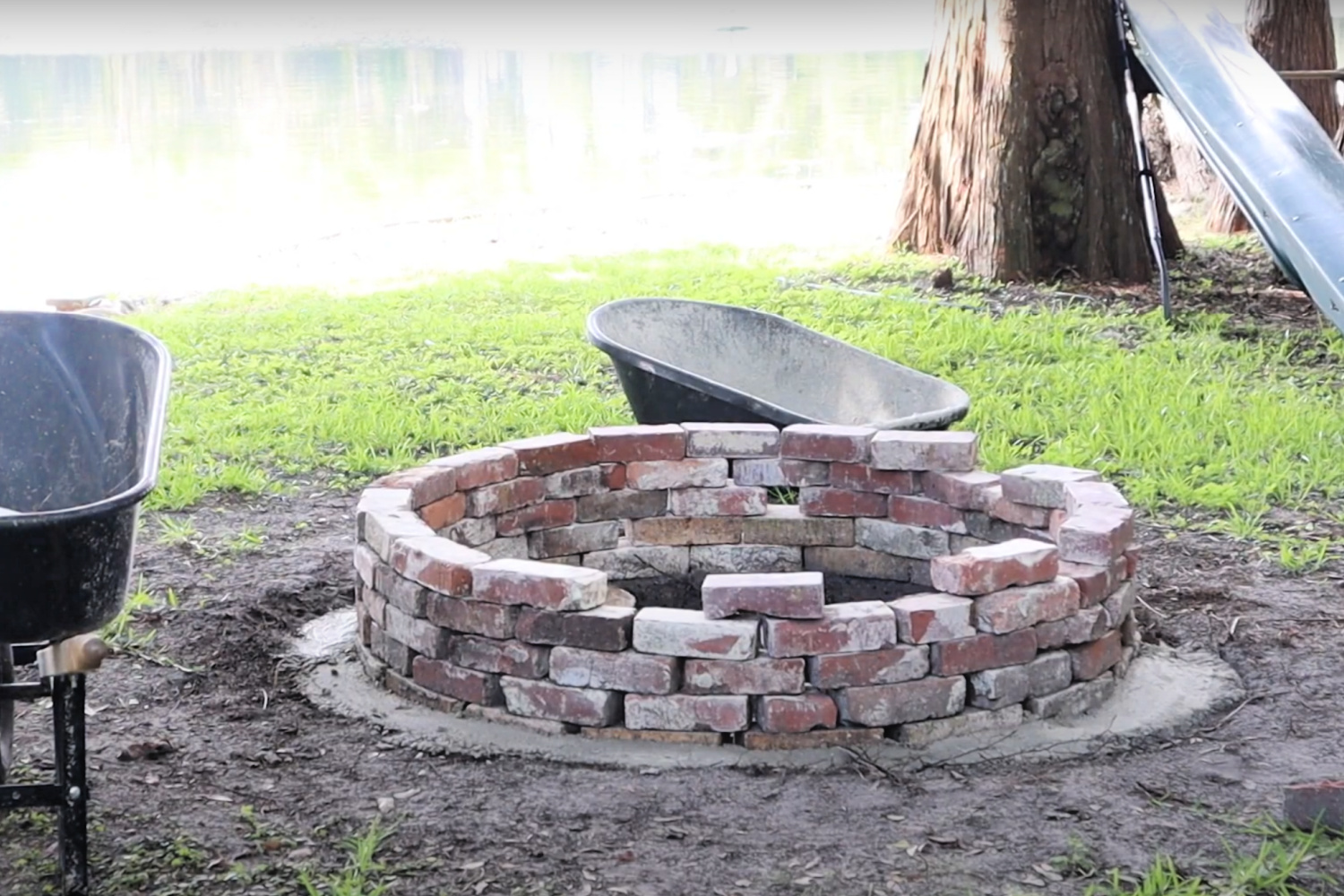
If you’ve done any other masonry project around the house, you probably have a small pile of leftover brick or block scraps sitting somewhere.
Use them.
Build a small fire pit out of whatever odd pieces you’ve got, mortared together in whatever pattern they naturally fall into.
It won’t match anything, and that’s sort of the charm.
It becomes a little patchwork record of every other project you’ve ever done in that yard.
This is genuinely a zero cost build if you’ve been doing yard work for a few years. Consider it the payoff for never throwing anything away.
A Quick Word Before You Start
Whatever you build, give it a few small fires before you go all in with a roaring bonfire.
New mortar, new stone, and new clay all need to dry out gradually, or trapped moisture turns to steam and cracks things from the inside.
Also, check your local rules on open flame and how far it needs to sit from your house or fence.
It’s a boring step, but it’s a lot less boring than an argument with your insurance company later.
Pick the one that matches what you’ve already got lying around.
That’s really the secret to all twenty five of these, the best backyard fireplace is usually the one built from whatever you were about to throw away anyway.
Related Posts: