Does Wet Grass Dull Mower Blades Faster?
Last Updated on April 23, 2026 by Duncan
Yes, wet grass dulls mower blades faster than dry grass. According to a University of Wisconsin study, grass is approximately 80% water — so cutting it wet forces the blade to push against significantly more weight with each rotation.
This extra resistance speeds up blade wear and makes the engine work harder, dulling the blade faster than it would when cutting dry grass.
Beyond blade dulling, mowing wet grass causes five additional problems worth knowing about.
5 Problems Caused by Mowing Wet Grass
1. You Damage Your Lawn
Wet grass blades bend under the weight of moisture instead of standing upright, causing the mower to drag and shred rather than cut cleanly.
The result is a ragged, uneven lawn that looks worse than before mowing. Torn grass blades are also significantly more prone to disease.
2. You Can Ruin Your Mower
Damp clippings clog the mower deck and block the discharge chute, causing the engine to overwork. Clumps of wet grass that are left on the lawn can suffocate the grass beneath, creating dead spots.
Wet grass also makes post-mow cleanup harder and causes rust damage to blades and other metal components over time.
3. You Compact the Soil
The combined weight of a push mower and the operator walking behind it compresses damp soil, leading to soil compaction. Compacted soil restricts the flow of oxygen, nutrients, and water to grass roots, limiting root growth and overall lawn health.
4. You Expose Your Grass to Fungal Disease
Wet conditions are ideal for common lawn fungi including brown patch, anthracnose, and red thread. Cutting wet grass makes it easy for fungal spores to spread across the lawn. The stress of mowing also weakens the grass, making it more vulnerable to infection.
5. You Risk Injuring Yourself
Wet grass is slippery, and mowing it significantly increases the risk of slips and falls — particularly dangerous near a machine with spinning blades. The risk is even greater on slopes and hilly terrain. If the ground is wet and sloped, it is safer to wait or hire a professional.
How Long Should You Wait After Rain to Mow?
Wait 24 to 48 hours after rain stops before mowing. This gives both the grass blades and the top layer of soil enough time to dry out.
Actual drying time varies — a sunny, breezy day dries a lawn much faster, while overcast and humid conditions may require the full 48 hours or longer.
Tips for Mowing Wet Grass When You Have No Choice
If the grass has grown too long to wait any longer, these steps help minimize the damage:
Raise the Cutting Height
Taller grass handles the stress of wet mowing better. A higher cut also produces smaller clippings that are less likely to form large clumps and smother sections of the lawn.
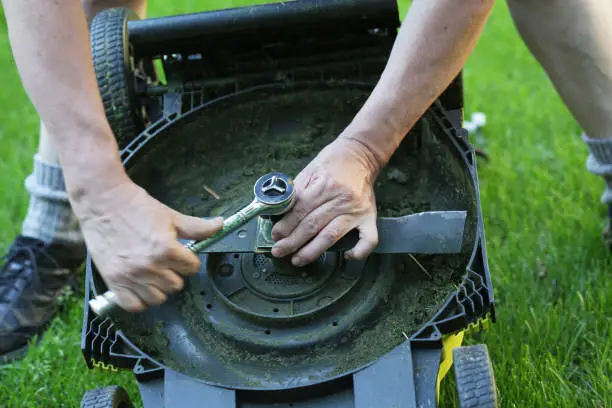
Sharpen Your Mower Blades
Sharp blades cut through wet grass cleanly rather than shredding it. Dull blades make wet mowing significantly harder on both the lawn and the mower. Note that over-sharpening blades can make them brittle and more likely to break if they hit debris like rocks or sticks.
Inspect and Clear the Deck Regularly
Take frequent breaks on larger lawns to check the mower deck and discharge chute for clogs. Always turn off the mower completely before reaching near the deck or discharge area.
Avoid Slopes
Skip any sloped areas of the property and return when the grass has fully dried. A fall on a slope near a running mower can cause serious injury. If slopes are a recurring problem, consider leveling the lawn or hiring a professional for those sections.
Use a Gas or Battery-Powered Mower — Not Electric
Electric corded mowers should never be used on wet grass — electricity and moisture are a dangerous combination, and most manufacturers explicitly advise against it. A battery-powered or gas mower is the safer option in damp conditions.
Mow Slowly and Use a Half-Cut Pattern
Slowing your pace gives the mower more time to process heavier, wetter clippings and reduces clogging. Use a half-cut strategy: instead of cutting the full width of the mower deck in one pass, overlap so you’re cutting only half the deck width at a time.
This reduces clogging and ensures thorough coverage. Moving slowly also reduces your risk of slipping.
Quick-Reference Summary
| Problem | Why It Happens | How to Reduce It |
|---|---|---|
| Blades dull faster | Wet grass is heavier; more resistance per cut | Sharpen blades before mowing wet grass |
| Lawn looks ragged | Wet blades bend instead of standing upright | Raise cutting height; use sharp blades |
| Mower clogs and rusts | Wet clippings cake on the deck and chute | Clear deck frequently; clean after use |
| Soil compaction | Mower weight compresses damp soil | Avoid heavy mowers; mow slowly |
| Fungal disease spreads | Moisture and stress create ideal conditions | Wait for grass to dry when possible |
| Injury risk increases | Wet grass is slippery | Avoid slopes; wear grip footwear |
Related Posts: