How to Arrange Your Herb Garden For Maximum Growth
Last Updated on June 29, 2026 by Duncan
If you’ve ever planted a “perfect” herb garden in spring and watched half of it turn into a sad, leggy mess by midsummer, this is for you.
The problem usually isn’t your green thumb. It’s your layout.
Stop grouping herbs by recipe
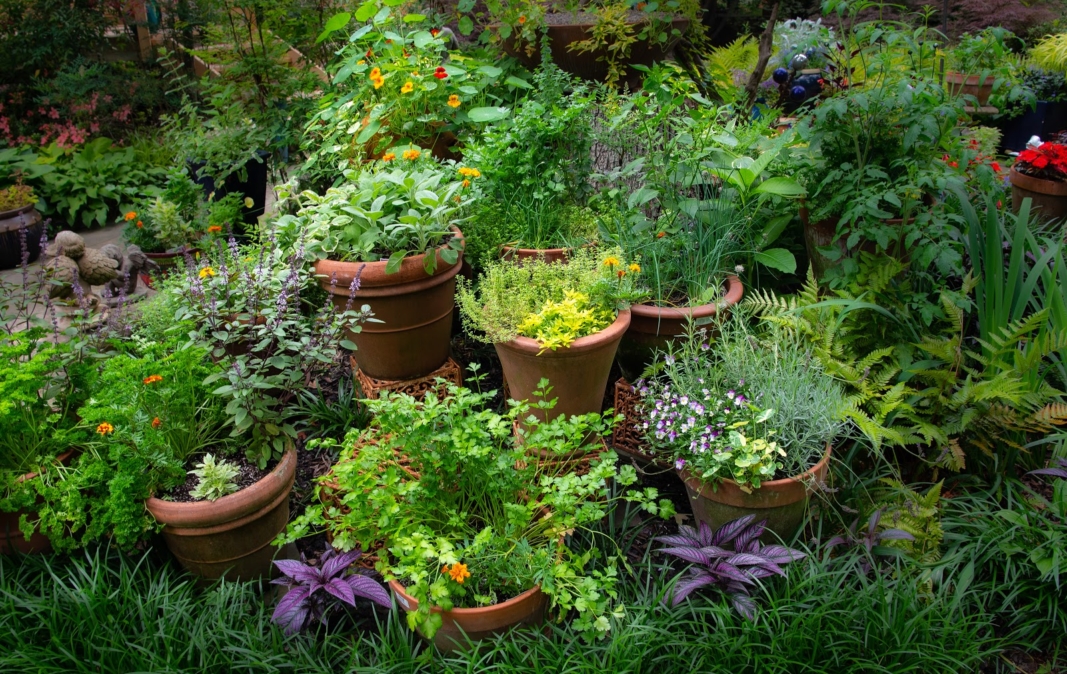
Every blog tells you to plant “Italian herbs together” or “tea herbs together.” Cute idea. Terrible plan.
Basil and oregano show up in the same pasta sauce, sure.
But basil wants water like it’s training for a marathon, and oregano wants you to practically forget it exists.
Plant them side by side in the same soil and you’re guaranteed to overwater one and drown the other.
Here’s the rule I use: group by thirst, not by taste.
Meet the thirst line
Picture an invisible line running across your garden bed. On one end is the driest, sunniest, best draining spot you’ve got.
On the other end is the spot that stays a little damp and shady longer.
That’s your Thirst Line. Every herb you plant gets sorted onto it based on what it actually wants, not what sounds nice together in a cookbook.
Rosemary, thyme, sage, oregano, and lavender all live on the dry end.
They’re basically the low maintenance friend who thrives on being slightly ignored.
Give them too much water and too much rich soil and they’ll sulk, get leggy, or just rot at the roots.
Basil, parsley, cilantro, mint, and chives live on the damp end.
They’re thirstier, they like a little more attention, and they’ll wilt dramatically if you forget about them for two days.
Once you organize by the Thirst Line instead of by what you cook with, your whole garden gets easier.
You’re not babying one corner while drowning another.
Know your herbs garden space
Before you buy a single seedling, spend a week just watching your space.
Where does the sun actually hit at 2pm? Where does water pool after it rains?
That low spot by your fence that looks fine in October?
It’s where cold air settles overnight.
It will frost first and hardest every single time, even if the rest of your yard is technically in a warmer zone.
I learned this the hard way with a thyme plant I babied all summer, only to lose it to a random October frost while plants ten feet away were fine.
Cold sinks. Plan for it.
Don’t place the herbs by the door
:max_bytes(150000):strip_icc():format(webp)/SPR-herb-garden-ideas-7370817-hero-4ec27ed7a3a245d2bdd0f3e4f61a8a86.jpg)
I get it.
You want your herbs by the kitchen door so you can grab basil mid recipe in your socks.
Adorable instinct, often the wrong spot.
That soil near your patio or back door usually gets extra runoff from lawn watering.
It’s rich, moist soil, which sounds great until you remember your rosemary and sage want to struggle a little to taste their best.
Here’s the workaround: Keep your high reach, high frequency herbs (basil, chives, parsley, mint) close to the door where that moisture works in their favor.
Push your dry climate herbs (rosemary, thyme, sage) further out where the soil drains better and nobody’s hose is accidentally drowning them.
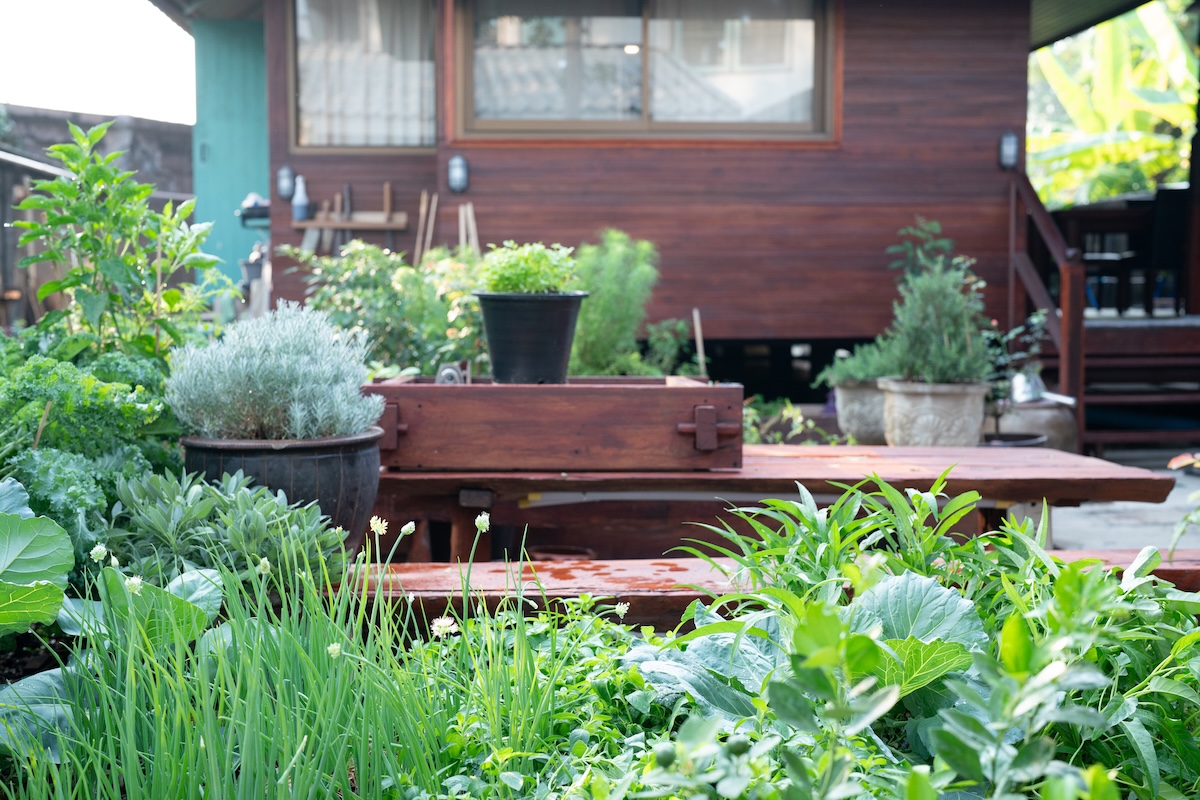
Keep the common herbs within three feet
Here’s something nobody tells you.
Herbs planted more than a few steps off your usual path get harvested less.
Not because they grew wrong, but because you, a busy human with things to do, won’t walk the extra fifteen feet for a sprig of thyme on a busy day.
Keep your most used herbs within three to four feet of wherever you actually walk.
Basil, chives, parsley, mint. The stuff you grab constantly.
Save the back of the bed for herbs you harvest in bigger batches less often, like dill for pickling or fennel for that one soup you make twice a year.
Watch out for the bullies

Mint will take over your entire garden if you let it.
I once let a single mint plant loose in a shared bed and by August it had wandered two feet into my neighbor’s tomato patch.
Mint doesn’t share.
Mint colonizes.
Same goes for lemon balm and tarragon.
If you want these in your garden (and you should, mint tea is wonderful), plant them in a bottomless pot sunk into the ground, at least ten inches deep.
Think of it as mint jail. A nice, sunny jail, but jail.
Fennel is the other troublemaker.
It releases chemicals into the soil that make life harder for plants growing near it.
Give fennel its own space, away from the rest of the squad.
Give your herbs room to breathe

Tight spacing looks lush and Pinterest worthy on day one.
By midsummer in a humid climate, it’s a mildew factory.
When herbs are crammed together, the air gets trapped and stays damp around the leaves.
That damp, stagnant air is exactly what powdery mildew and fungal rot love.
This is the real reason your oregano gets that dusty white coating every August, and it’s not because you watered too much.
Give your plants enough space for air to move between them.
Your garden will look slightly less Instagram perfect in June and significantly healthier in August.
Which is worth the trade.
Put the tall herbs on the north side
androsemary_4f244b4bac06490c7b6e62a4fd13356e.jpg)
If you’re in the Northern Hemisphere, plant your tallest herbs, such as dill, fennel, lovage, on the north side of your bed.
Why? As the season goes on and the sun’s angle drops, tall plants cast longer shadows.
If your dill is in front, it’ll slowly shade out everything behind it just when those shorter herbs need full sun the most.
This is sneaky because it doesn’t show up on day one.
Your layout looks perfectly sunny in May, then your basil starts looking stretched and sad in July, and you have no idea why.
It’s the dill. It’s always the dill.
Plant in waves
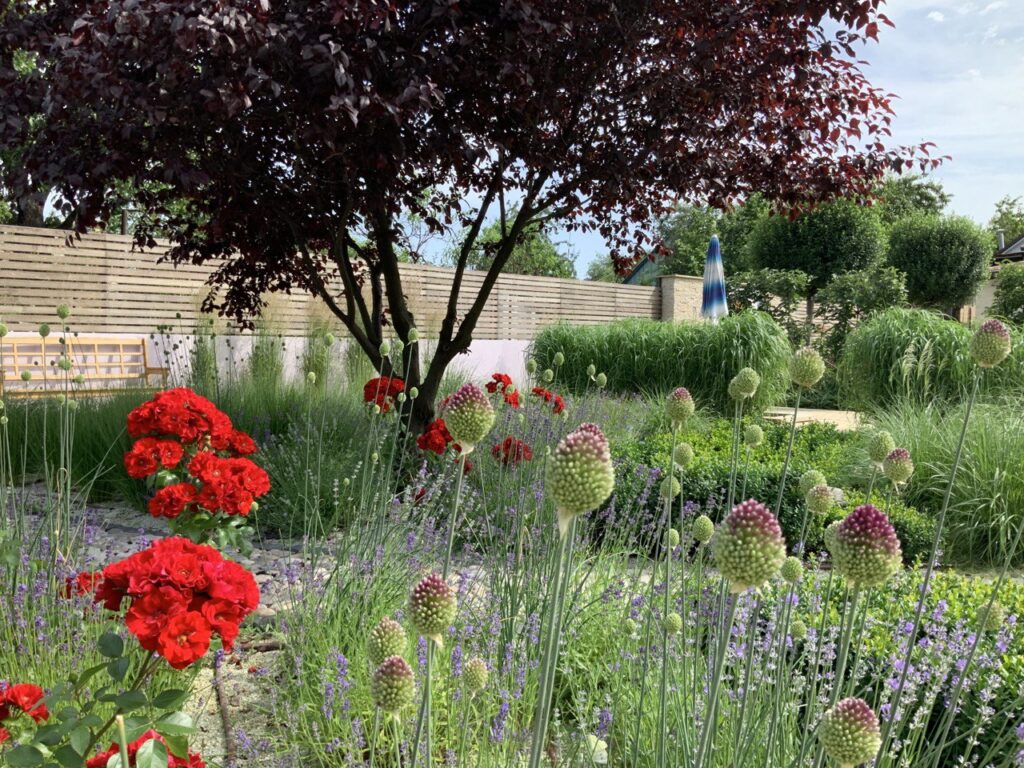
Cilantro and basil don’t bolt because of a date on the calendar.
They bolt because of heat and daylight hours, and that timing shifts every year depending on your weather.
Instead of planting all your cilantro in one go and watching it all go to seed at the same time, plant a little every three to four weeks.
This way you’ll always have fresh cilantro instead of one big harvest followed by weeks of nothing.
Check your soil
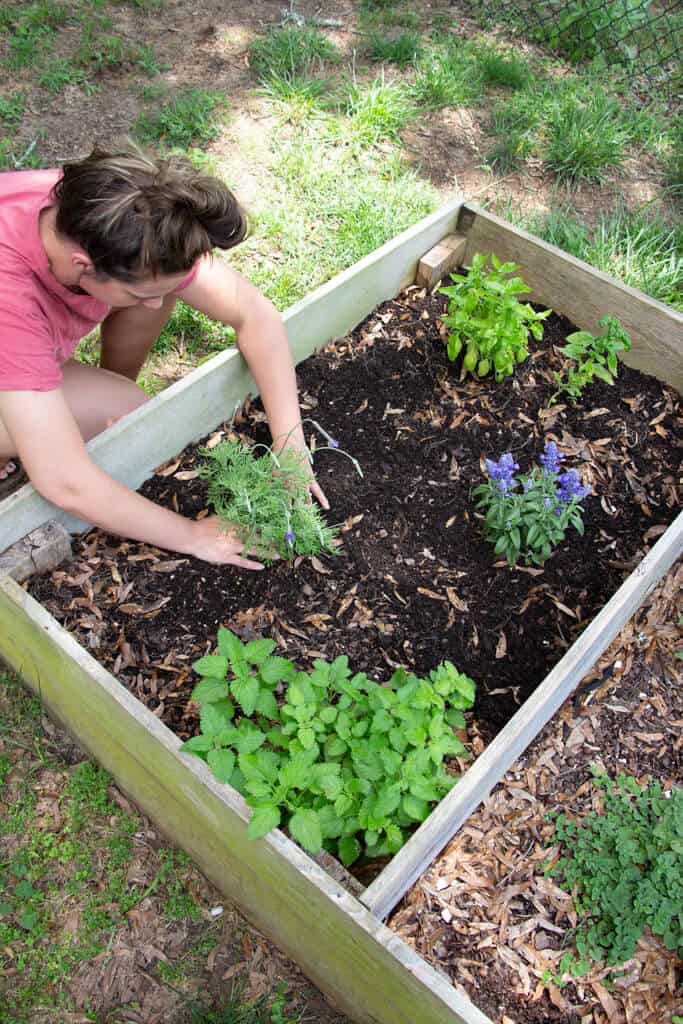
If your rosemary looks sad and you’re blaming the cold, check the soil first.
Dig a hole, fill it with water, and time how long it takes to drain.
If it takes hours, that’s your real problem.
Rosemary doesn’t mind cold nearly as much as it minds wet feet.
If your basil is leggy and pale, check what’s around it.
Something taller might be stealing its light by midsummer even if it wasn’t a problem in spring.
If something is “doing great” in a spot that should be too dry or too rich for it, don’t assume you got lucky. Double check your spacing and airflow before you trust it.
How to arrange your herb garden
- Group herbs by water needs, not by what recipe they go in
- Watch your yard for a week before planting to spot sun patterns and cold pockets
- Keep frequently used herbs within a few steps of your usual path
- Cage spreaders like mint, lemon balm, and tarragon in sunken pots
- Give fennel its own space, away from other herbs
- Leave breathing room between plants to avoid mildew
- Plant tall herbs like dill on the north side so they don’t shade out shorter ones later
- Succession plant basil and cilantro every few weeks instead of all at once
Your herb garden doesn’t need to be complicated.
It just needs to be arranged around what each plant wants, instead of what looks good.
Get the layout right and the rest takes care of itself.
FAQs
How should I set up my herb garden?
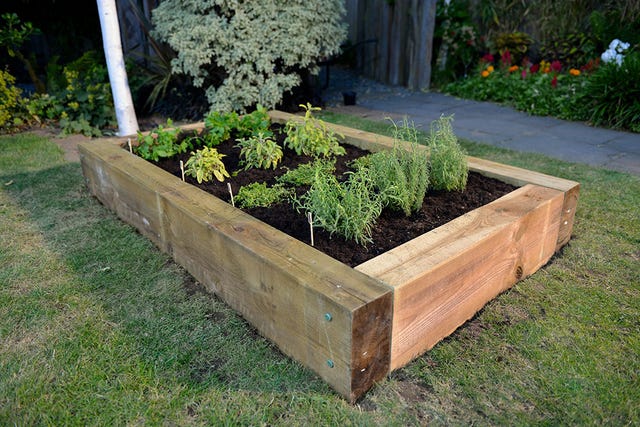
Start by grouping herbs based on how much water they want, not what recipe they end up in.
Put thirsty herbs like basil, parsley, and mint together in richer, damper soil.
Put dry climate herbs like rosemary, thyme, and sage together in a spot with great drainage and a little neglect.
What herbs should never be planted together?
Fennel is the big one.
It releases compounds into the soil that make life harder for a lot of its neighbors, so give it its own space.
You also should have mint away from pretty much everything unless it’s contained, because it will quietly take over the whole bed if you let it.
How do I store fresh herbs from a garden long term?
Drying works great for woody herbs like rosemary, thyme, and oregano.
Just hang small bundles upside down somewhere dry and out of direct sun for a couple weeks.
For soft herbs like basil, cilantro, and parsley, freeze them chopped into ice cube trays with a little olive oil or water for an easy flavor bomb later.
Which herbs can be planted together?
Herbs with similar water and sun needs are your best matches.
Rosemary, thyme, sage, and oregano are a happy little dry climate crew.
Basil, parsley, cilantro, and chives get along on the wetter side of the garden.
How to create an herb garden for beginners?

Pick five herbs you actually cook with, not five herbs that look nice in photos.
Sort them by water needs first, then plant the thirsty ones close to your hose and the dry ones further out.
Start small then grow over time.
What are the common problems with herb gardens?
Overwatering Mediterranean herbs like rosemary and sage is probably the most common one.
Mint escaping its boundaries is a close second.
Powdery mildew from plants packed too tightly together rounds out the top three.
What is the best layout for an herb garden?

A gradient from dry and sunny on one end to a little damper and shadier on the other, with your herbs sorted along that line based on what they want.
Keep your most used herbs close to your usual path, and push taller herbs like dill toward the back so they don’t shade out shorter plants later in the season.
Can I plant flowers next to herbs?
Yes, and you should.
Flowers like marigolds, nasturtiums, and borage attract pollinators and beneficial insects, which helps your whole garden.
Just don’t expect them to single handedly solve a pest problem, since that effect is usually pretty minor on its own.
How do I keep pests away from herb garden?

Good airflow and healthy soil do more work than any companion plant ever will.
Check your herbs every few days and pick off pests like aphids or caterpillars by hand before they multiply.
A light spray of insecticidal soap or neem oil handles most outbreaks if hand picking isn’t cutting it.
Will a herb garden come back every year?
Some of it, yes.
Rosemary, thyme, sage, oregano, and chives are perennials in most climates and will come back on their own.
Basil, cilantro, and dill are annuals, so you’ll be replanting those each spring.
What herbs cannot grow next to each other?
Fennel and basically everything is a rough match because of what it does to the soil.
Mint and anything that isn’t contained is also a bad pairing, since mint plays a long game and eventually wins.
What herbs grow all year long?
In mild climates, rosemary, thyme, sage, and bay can stick around all year.
Chives often push through even in colder zones and come back early in spring.
In harsher winters, expect most herbs to slow down or die back, even the perennial ones.
What herbs like full sun?

Rosemary, thyme, oregano, sage, lavender, and basil all want six to eight hours of direct sun a day.
These are the herbs that get sad and floppy in shade, so don’t tuck them under a tree thinking they’ll figure it out.
How do you keep herbs growing all summer?
Harvest regularly.
Cutting herbs back encourages more growth instead of stunting the plant, so the more you use them, the bushier they get.
Pinch off flower buds on herbs like basil as soon as you see them to keep the leaves coming instead of the plant focusing on seed.
How do you stop herbs from bolting?
Pinch off flower buds the moment they appear, especially on basil and cilantro.
Plant a little extra in partial afternoon shade if your summers run hot, since heat is usually the trigger.
Succession planting every few weeks also means you’re never relying on one batch to hold out all season.
What do you do when herbs are flowering?
You can still use the leaves, though the flavor often gets a little stronger or more bitter once flowering starts.
The flowers themselves are usually edible too and make a pretty garnish.
If you want seeds for next year, just let a few plants flower and go to seed on purpose.
Should flowers be removed from herbs?
For herbs you’re growing mainly for leaves, like basil and cilantro, yes.
Pinching the flowers off keeps the plant focused on leaf growth instead of seed production.
If you don’t mind a slightly different flavor or you want to save seeds or feed the bees, it’s fine to let a few go ahead and bloom.
Related Posts: