Should You Wear Hearing Protection While Mowing Lawn?
Last Updated on April 29, 2026 by Duncan
Yes — and the reason most people underestimate the risk is because they’re wrong about where lawn mower noise actually comes from.
Most homeowners assume that hearing protection is something professionals need, not people doing a quick weekend mow.
The data says otherwise. According to the Hearing Loss Association of America, 1 in 5 Americans lives with hearing loss — and that number rises to 1 in 3 by age 65.
A significant portion of those cases are linked to recreational and work-related noise exposure, including lawn equipment.
The mower doesn’t care whether you’re a landscaping contractor or a homeowner with a quarter-acre lot. The decibels are the same either way.
The Source of Lawn Mower Noise Is Not What You Think
Here’s something most people don’t know: the loudest part of a running lawn mower is not the engine — it’s the spinning blades.
If you’ve ever had a deck belt snap mid-mow, you’ve experienced this firsthand.
The moment the blades stop spinning, the noise drops dramatically. The engine, which is still running, suddenly sounds almost quiet by comparison.
The blades cutting through air at high speed, along with the turbulence created inside the cutting deck, generate the majority of the acoustic output.
This has two practical implications:
- Blade condition directly affects noise level. Dull, unbalanced, or damaged blades create more turbulence and vibration as they spin, producing measurably more noise than sharp, well-balanced blades. Keeping your mower blades sharp and in good condition is one of the few things you can do to reduce the noise at its source — not just at your ears.
- Riding mowers are not necessarily quieter just because you’re further from the engine. On a ride-on mower, you’re seated directly above or just behind the cutting deck — often the loudest position possible relative to the blade noise.
Who Needs Hearing Protection? Everyone Who Mows.
A common and dangerous assumption is that short mowing sessions don’t carry meaningful risk. This is incorrect for two reasons.
First, noise-induced hearing loss (NIHL) is cumulative. Each exposure that exceeds the safe threshold adds to the total damage — the ears don’t reset between sessions.
Someone who mows for 45 minutes every week across a 26-week season accumulates nearly 20 hours of high-decibel exposure annually, and that compounds over years.
Second, a standard petrol push mower operates at 88–96 dB — well above the 85 dB level at which the CDC identifies regular exposure as harmful. At 90 dB, safe unprotected exposure time is approximately 2 hours per day under OSHA guidelines.
Most people hit that threshold within a single mowing session on a medium or large lawn.
The noise level doesn’t discriminate by lawn size or session length. Wear protection every time.
Your Two Main Options: Earmuffs and Earplugs
Earmuffs
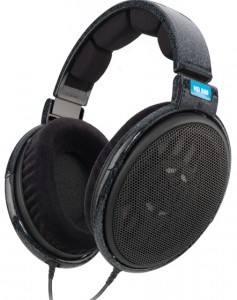
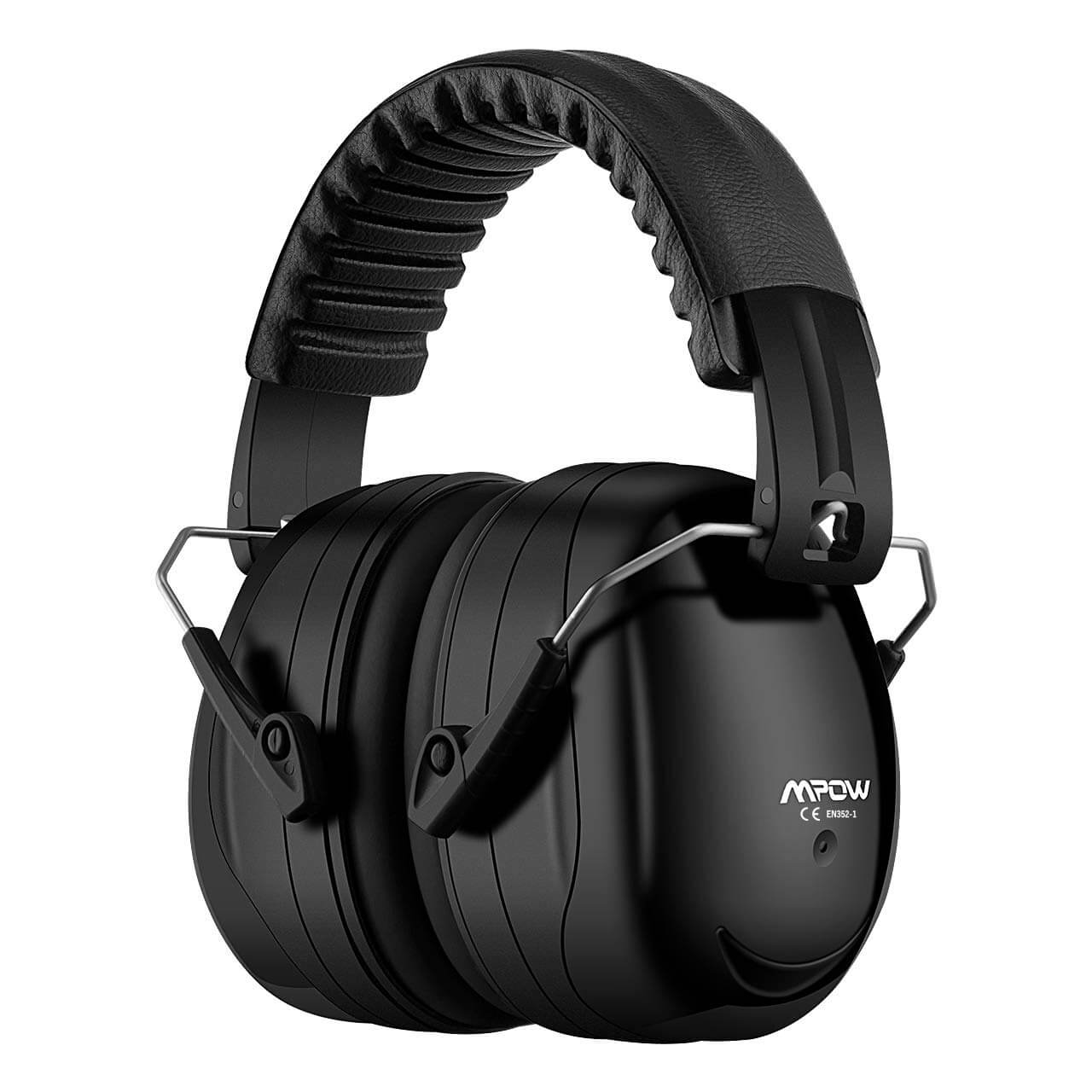
Over-ear earmuffs are the most reliable and easiest-to-use hearing protection for lawn mowing. They consist of hard acoustic cups lined with sound-absorbing foam that form a seal around the outer ear, blocking noise before it reaches the ear canal.
Why earmuffs are the better default choice for most homeowners:
- They are harder to fit incorrectly than earplugs — you put them on and the seal is either present or obviously absent.
- They work over time without degrading in the way disposable foam earplugs do.
- They can be removed and reapplied quickly during breaks without needing to be rolled or reinserted.
When buying earmuffs, the critical specification is the Noise Reduction Rating (NRR) — a standardized measure of how many decibels the device attenuates under test conditions.
For use with a petrol mower generating 88–96 dB, look for earmuffs with an NRR of 25 dB or higher.
An important caveat: real-world noise reduction is typically about half the stated NRR due to fit variation, movement, and seal breaks caused by glasses or hair. ]
Earmuffs rated NRR 30 dB deliver roughly 15 dB of real attenuation in field conditions — which is still meaningful, bringing a 95 dB mower down to an effective 80 dB at the ear.
Fit is everything. Earmuffs that don’t seal properly around the ears are providing little protection.
If you order online and find the fit is poor or sound leaks noticeably, return them for a better-fitting model. Do not use ill-fitting earmuffs and assume you’re protected.
Brands with a strong track record for build quality and consistent NRR performance include 3M, Husqvarna, and Howard Leight.
You can also browse the best headphones and earmuffs for mowing for reviewed options at different price points.
For a broader comparison of protection options at different price ranges, see the guide to best hearing protection for lawn mowing.
Earplugs
Earplugs are small foam or silicone inserts that sit inside the ear canal and physically block sound. They are lighter, cooler, and less bulky than earmuffs — advantages that matter during a hot summer mowing session.
Standard foam earplugs (disposable): These are the most widely available type. They compress for insertion and expand inside the ear canal to form a seal.
On paper, many foam earplugs carry high NRR ratings (28–33 dB) — often higher than over-ear earmuffs. In practice, they are frequently used incorrectly, which significantly reduces their protection.
How to insert foam earplugs correctly:
- Roll the earplug tightly between your thumb and index finger until it’s compressed into a thin cylinder.
- With your free hand, reach over the top of your head and gently pull your outer ear upward and back — this straightens the ear canal.
- Insert the compressed plug quickly and hold it in place for 20–30 seconds while it expands.
- When fully expanded, the plug should feel snug with ambient sounds noticeably muffled. If you can still hear clearly, the plug is not sealed — remove and reinsert.
Moldable earplugs: These are made from silicone putty or thermoplastic material. Thermoplastic versions are softened in warm water, cooled slightly, and then inserted to mold to the shape of your specific ear canal.
Once set, they conform precisely to your anatomy, providing a better seal than off-the-shelf foam for most users.
For frequent or extended mowing sessions, custom-molded earplugs made by an audiologist from ear canal impressions are the best-performing option.
They cost $50–$200 upfront but last for years, fit perfectly every time, and are significantly more comfortable for sustained wear than any off-the-shelf alternative.
Brands worth considering: Howard Leight (Max-1 line) and 3M are consistently rated highly for foam earplug performance. For reusable silicone options, Mack’s and Hearos produce reliable products.
Addressing Common Misconceptions
“Earplugs can damage your ears”
This concern comes up often and deserves a direct answer. Standard foam and silicone earplugs are made from soft, compressible materials that cannot puncture the eardrum or cause physical injury when inserted correctly.
The material is too pliable to exert meaningful pressure on the ear canal walls.
The actual risks from earplugs are limited and preventable:
- Ear canal infections can occur if earplugs are stored unclean, inserted with dirty hands, or shared between users. Wash reusable earplugs with mild soap after every use and store them in their case.
- Impacted earwax is theoretically possible if earplugs repeatedly push wax deeper into the canal — but this is rare with correct, shallow insertion technique.
- Poor protection from no-name products is a real concern. Earplugs from unverified manufacturers may use materials that don’t compress and recover correctly, provide no genuine NRR attenuation, or irritate the ear canal. Stick to brands with verifiable ANSI-tested NRR ratings.
“I only mow for 30 minutes — it’s not long enough to matter”
At 90 dB, OSHA’s safe exposure limit is 2 hours per day. A 30-minute session at that level uses a quarter of your daily safe exposure allowance.
Across 26 mowing weeks per year, that’s 13 hours of above-threshold exposure annually — and it accumulates with every other loud noise you encounter that day.
“My electric mower is quiet enough that I don’t need protection”
Battery and corded electric mowers typically operate at 75–82 dB — quieter than petrol mowers, but still within range of cumulative hearing fatigue over frequent use.
For casual, infrequent mowing with an electric mower, short sessions carry lower immediate risk. For anyone mowing regularly through a full season, protection is still the right call.
Using Radio Earmuffs Safely
Radio headphones designed for lawn mowing are a popular choice — they provide the passive noise-blocking of earmuffs while letting you listen to music, podcasts, or radio.
Used correctly, they are a genuine solution that makes mowing more enjoyable without compromising hearing safety.
The risk is volume creep. With a loud mower running nearby, the instinct is to turn up the audio until the music is clearly audible over the engine.
If you do this, you may be listening at 90–100 dB through the speakers — negating the protection entirely and adding a second noise source to the mix.
Safe practices for radio earmuffs:
- Set your volume before starting the mower, at a comfortable conversational level.
- Choose models with a maximum audio output cap of 82 dB — manufacturers that include this spec are worth prioritizing.
- If someone standing nearby can hear your audio, the volume is too high.
- Use as an enhancement to protection, not a substitute for it. The passive NRR of the earmuffs is doing the real work; the audio is simply occupying your attention.
Reducing Noise at the Source
While hearing protection handles noise at the ear, it’s worth reducing mower noise at the source where possible. Two straightforward actions make a measurable difference:
Keep blades sharp. A sharp blade cuts cleanly through grass with less turbulence than a dull one.
Dull blades tear grass and spin with more vibration, generating additional acoustic energy inside the deck. Sharpen blades every 20–25 hours of use, and replace them when they’re too worn or damaged to sharpen safely.
Check blade balance. An unbalanced blade wobbles as it spins, creating vibration that translates directly into increased noise and mower vibration. After sharpening, always check balance with a blade balancer and correct any imbalance before reinstalling.
Refer to our guide on high-lift mower blades for more on blade selection and maintenance.
Neither of these fully replaces hearing protection, but they reduce the base noise level you’re protecting against — which is always beneficial.
Quick Reference: Which Protection Should You Choose?
| Situation | Recommended Protection |
|---|---|
| Standard petrol push mower, typical session | Earmuffs, NRR 25+ |
| Ride-on or zero-turn mower | Earmuffs, NRR 28+ |
| Short session, electric mower | Foam earplugs or earmuffs, NRR 22+ |
| You want to listen to music while mowing | Radio earmuffs with volume cap |
| Frequent mowing, hot climate | Moldable or custom-fit earplugs |
| Infrequent use, tight budget | Bulk foam earplugs (Howard Leight, 3M) |
Final Thoughts
Hearing loss from lawn mowing is preventable with a piece of equipment that costs between $1 and $80 and takes three seconds to put on.
The only reason most homeowners skip it is that the damage is invisible and gradual — there’s no immediate signal that anything is going wrong. By the time the effects are noticeable, the damage is already permanent.
Wear your hearing protection. Keep your blades sharp to reduce noise at the source. And if you haven’t had a hearing test in several years, consider scheduling one — especially if you’ve been mowing without protection for a long time.
Related Posts: