29 Container Gardening Flower Combinations for Full Sun (That Thrive The Entire Summer)
Last Updated on June 16, 2026 by Duncan
I’ve stood in garden centers confidently picking out “full sun” plants, driven home feeling like a genius, and then watched my beautiful pot turn into a sad tangle of crispy stems by July. Sound familiar?
Here’s what nobody tells you: “full sun” is not a plant guarantee. It’s a starting point.
The real magic and the real heartbreak happens in the details. Which direction does your patio face? What color is your pot? Are you watering at 6am or 6pm?
After years of trial, error, and one particularly humbling summer where I lost six pots to what I later learned was root zone overheating (not drought), I finally cracked the code.
These 29 combinations are battle-tested. Some are classics done right. Some are unusual pairings that will make your neighbors stop and stare.
Let’s get into it.
First, One Thing You Need to Know Before You Plant Anything
Your pot color matters more than you think.
A black or dark-colored pot sitting in direct sun can heat the soil inside to 130°F or higher. That’s not a typo. And at those temperatures, roots start dying.
You’ll think the plant is thirsty, water it more, and accidentally drown already-damaged roots.
The plant looks wilted from drought but it’s actually cooking from the outside in.
Do yourself a favor and use light-colored, white, terracotta, or double-walled containers for any spot that gets afternoon sun.
It’s the single most impactful upgrade you can make before spending a dime on plants.
Also, get a pot that holds at least 15 gallons for mixed combinations.
Smaller pots dry out too fast and overheat too easily.
I know the big pots are heavy and expensive. Get them anyway.
You’ll thank me in August.
The Thermal Succession Framework (Read This, It Changes Everything)
Here’s the thing most articles won’t tell you: A full-sun container doesn’t have one season. It has three phases, and the plants that look amazing in May can look completely dead in August.
And not because you failed, but because you planted the wrong cast for the wrong act. Here are the phases you should know about:
Phase 1 (Weeks 1 to 6): Cool-tolerant plants carry the show while the heat-lovers establish their roots.
Phase 2 (Weeks 6 to 10): The cool-season plants start declining and the heat-lovers take over. This is supposed to happen. Don’t panic.
Phase 3 (Weeks 10 onward): Only the true heat warriors matter now. Everything else is a bonus.
I’ll flag which phase each combination is optimized for so you can plan accordingly. Now, let’s get to the good stuff.
29 Full Sun Container Flower Combinations That Actually Deliver
1. The Classic Thriller: Zonal Geranium + Alyssum + Trailing Verbena
This is a combination that’s been on every grandmother’s front porch for 50 years. And honestly? There’s a reason.
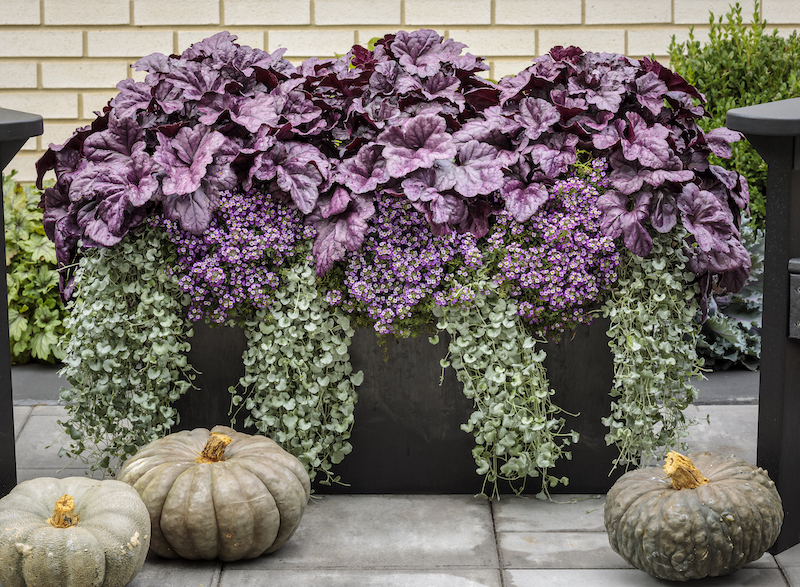
Plant a bold red or coral zonal geranium in the center, surround it with white sweet alyssum, and let purple trailing verbena drape over the edge.
The alyssum smells like honey, the verbena flowers nonstop, and the geranium just won’t quit.
The catch nobody mentions: Don’t deadhead your alyssum aggressively. Just give it a light shear every few weeks.
It bounces back within days and actually blooms more when you treat it a little rough.
Best phase: Works all three phases. This combo is that reliable friend who never cancels plans.
2. The Hot Tropic: Canna + Pentas + Trailing Sweet Potato Vine
This one turns heads.
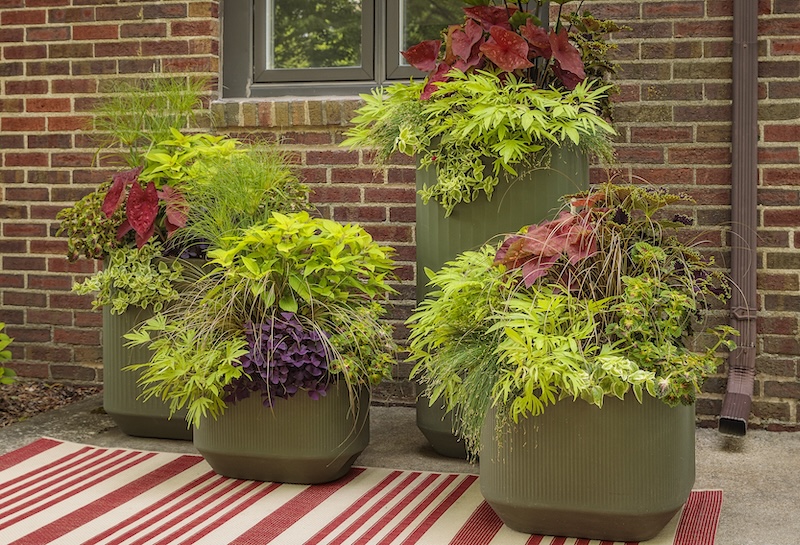
A tall bronze-leafed canna in the center, surrounded by hot-pink pentas, with a chartreuse sweet potato vine spilling over the sides.
Here’s the insider warning: Sweet potato vine is an absolute beast. It will eventually try to take over the whole pot if you let it.
Trim it back by one-third every three weeks or it will swallow the pentas whole. I’m not joking. I once came back from a two-week vacation to find my pentas completely buried.
The payoff is worth it though.
This combination looks lush and tropical even in the worst July heat.
Best phase: Phase 2 and 3 star. Plant it in late spring.
3. The Desert Sunset: Portulaca + Gazania + Dusty Miller

If you forget to water, this is your combination.
I’m not encouraging neglect but let’s be honest about who we are.
Portulaca (also called moss rose) blooms in jewel-bright colors and actually thrives in dry, hot, sandy conditions.
Pair it with gazania, which opens its daisy-like flowers in the sun and closes them at night like it’s punching out for the day.
Silver dusty miller adds a soft, reflective backdrop that makes the colors pop.
This combo wants almost no fertilizer, very little water, and absolutely no shade.
It’s the opposite of needy and produces results that look like you tried really hard.
Best phase: Peak performer in Phase 2 and 3. Gets better the hotter it gets.
4. The Blue Hour: Salvia ‘Victoria Blue’ + Yellow Marigold + White Vinca
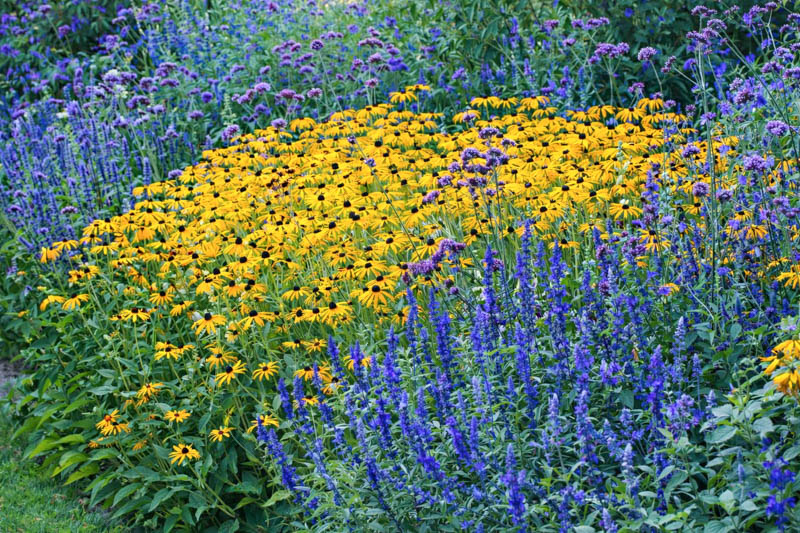
The color contrast here is shockingly good for three plants that cost about $4 each.
Salvia ‘Victoria Blue’ sends up gorgeous purple-blue spikes all summer long with almost zero maintenance.
Yellow marigolds add punch and also naturally deters aphids and whiteflies from the whole container.
White vinca fills the gaps and blooms straight through heat that would kill most plants.
Here’s a tip that changed everything for me with marigolds: Remove the spent blooms while they’re still small and slightly squishy, not after they’ve gone fully dry and seedy.
This ay you’ll get twice the rebloom.
Best phase: All three phases. One of the most reliable full-season performers on this list.
5. The Silver Storm: Artemisia + Lavender + Purple Verbena

This one is for the person who loves a sophisticated, almost monochromatic look.
Silvery-white artemisia anchors the pot with feathery, aromatic foliage. Compact lavender adds height and fragrance (and attracts every bee in a half-mile radius, just so you know).
Purple trailing verbena softens the edges.
The mistake people make: Lavender hates wet feet. Make sure your pot has drainage holes you can actually see working.
If water sits in a saucer under this combination for more than 30 minutes, you’re heading for root rot.
Best phase: Best in Phase 1 and early Phase 2.
Lavender can struggle in high-humidity midsummer heat in southern climates.
6. The Fire & Ice: Red Salsa Salvia + White Bacopa + Silver Plectranthus
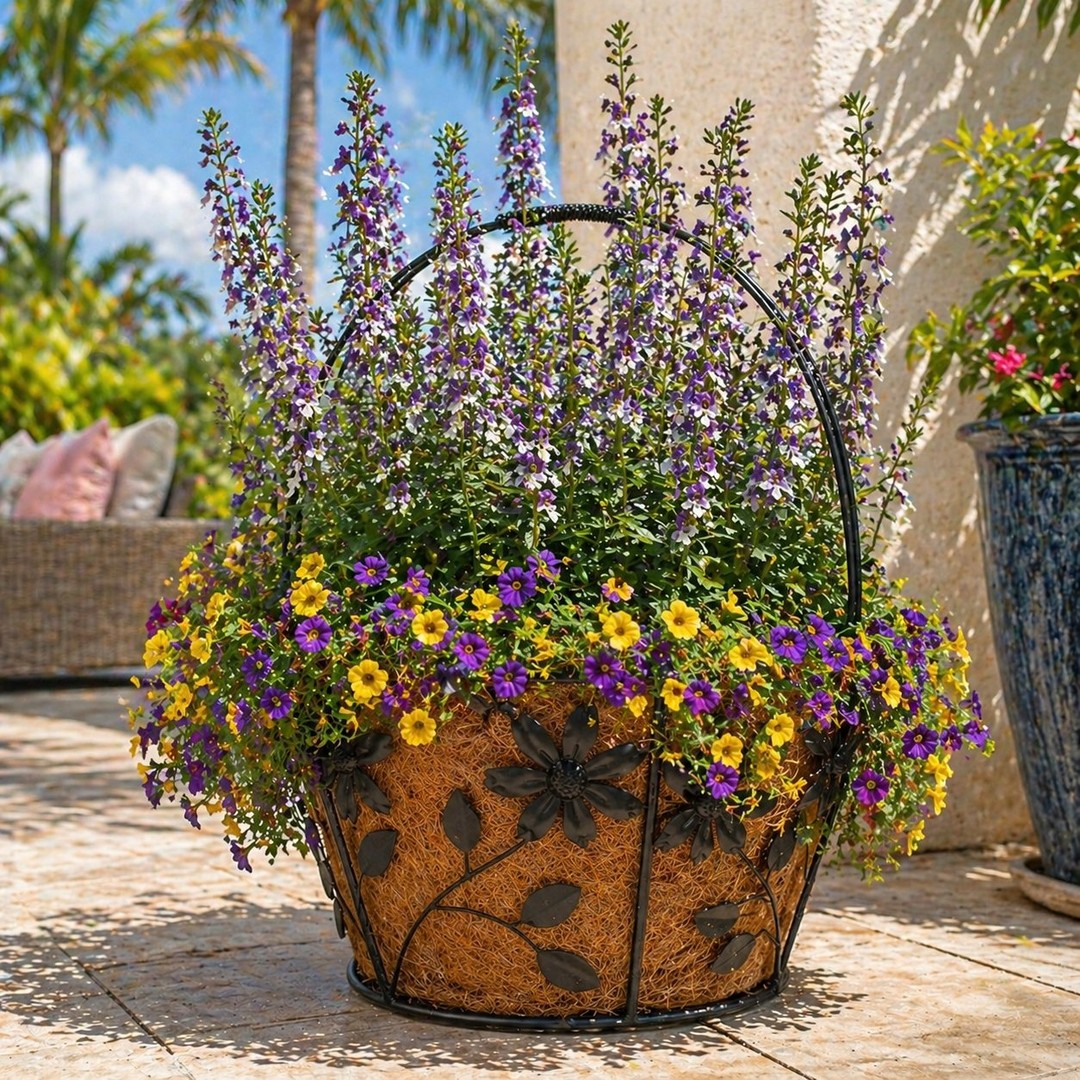
This combination looks like it was designed by someone who studied color theory, but it takes maybe 10 minutes to put together.
Salsa salvia (not the culinary type, the ornamental type) pumps out blazing red flowers from June through frost.
Bacopa trails in a delicate white foam over the edges.
Silver plectranthus, also called silver spurflower, provides bold, textural contrast without competing for the spotlight.
One thing to know about bacopa: It will pout and stop blooming briefly if it dries out too hard even once.
Give it a light shear and consistent moisture and it comes roaring back.
Best phase: Phase 1 through Phase 3. Stalwart.
7. The Moody Garden: Black-eyed Susan + Chocolate Cosmos + Dark Calibrachoa

This one is for people who are tired of seeing the same cheerful yellow-and-red combinations everywhere.
Black-eyed Susans (Rudbeckia) bring golden warmth while chocolate cosmos, which actually smells faintly of chocolate, add deep burgundy drama.
A deep purple or near-black calibrachoa spills over the edges and blooms in tiny flowers that look like miniature petunias.
Critical note on calibrachoa: It is extremely sensitive to alkaline water. If you’re using tap water and your city has hard water, your calibrachoa will start yellowing and stalling out around week 6 to 8.
Use rainwater when you can, or add a tiny splash of white vinegar to your watering can occasionally to acidify the soil.
Best phase: Phase 2. Rudbeckia especially hits its stride in the heat.
8. The Cottage Garden: Osteospermum + Nemesia + Lobularia
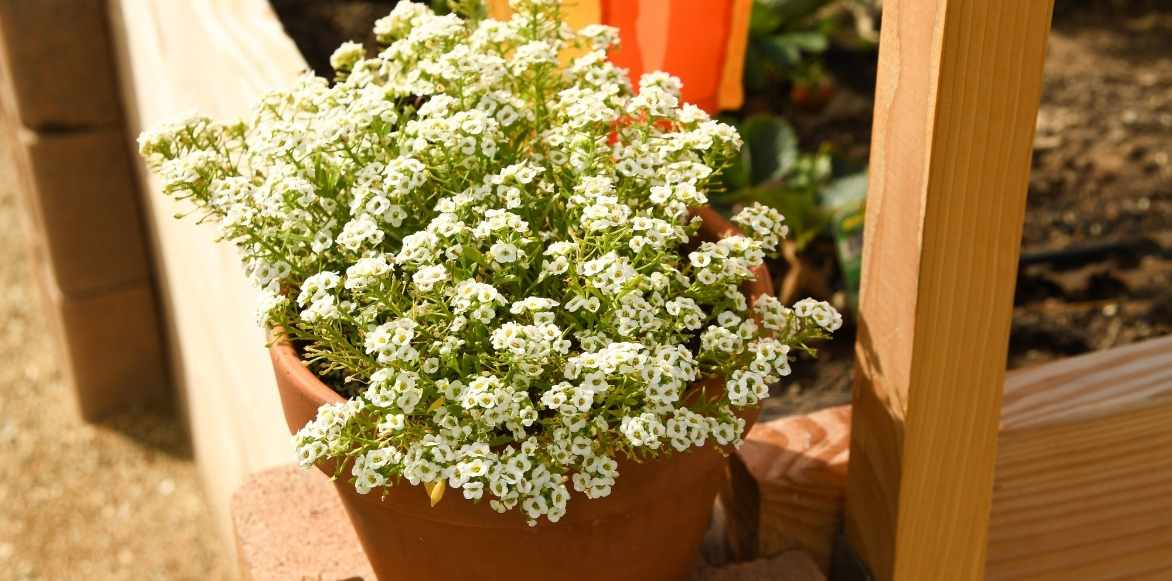
This is a Phase 1 superstar that will absolutely carry your early season.
Osteospermum (African daisy) flowers are gorgeous in creamy whites, purples, and pinks.
Nemesia fills in with delicate bicolor blooms. Lobularia provides honeyed fragrance and delicate white flowers at the base.
Here’s the reality check: Osteospermum hates extreme heat.
In many climates, it will essentially go dormant by midsummer.
Don’t throw the pot out. When temperatures drop in September, it comes back.
Plan for this and consider adding a heat-tolerant backup like vinca around week 8.
Best phase: Phase 1 star, Phase 2 fader. Know this going in.
9. The Citrus Burst: Lantana + Lemon Verbena + Yellow Creeping Jenny

If you want a pot that smells incredible and looks like summer citrus peel, this is your answer.
Lantana is one of the toughest full-sun plants alive.
It blooms in multicolored clusters of yellow, orange, and pink, handles drought like a champ, and recovers from heat stress faster than anything else I’ve ever grown.
Pair it with the intensely lemon-scented lemon verbena (brush the leaves as you walk by) and let golden creeping jenny trail down the sides.
Important: Lantana is toxic to pets and children. So, be ultra-cautious before planting it.
Best phase: Phase 2 and 3. Gets genuinely better the hotter it is.
10. The Pollinator Magnet: Agastache + Calibrachoa + Gaillardia

This combination will have more bees and butterflies visiting your porch than you’ve ever seen. It’s basically a wildlife documentary in a pot.
Agastache, also called hummingbird mint, sends up tall spikes of orange or blue-purple flowers that smell like anise.
Gaillardia (blanket flower) bursts with red and yellow daisy blooms on and on through the heat.
While Calibrachoa fills in the edges with tiny cheerful faces.
This combo works visually because it layers height beautifully without any one plant overwhelming the others.
Taking care of it is easy. Just watch that calibrachoa and keep the pH in check.
Best phase: Phase 2 through 3.
11. The Minimalist: Single-Variety Wave Petunia in a Big Pot

Sometimes the most impactful thing you can do is stop overthinking it.
One variety of Wave or Supertunia petunia in a large pot, allowed to cascade freely, can be absolutely stunning.
Deep purple ‘Blue Velvet’, the brilliant magenta ‘Supertunia Vista Bubblegum’, or the candy-striped ‘Priscilla’ are all showstoppers on their own.
Here’s the pro move with petunias: Around week 8 to 10, the stems go woody and the flowers retreat to the tips only.
Don’t cut it all back at once. Cut about one-third of the stems back hard each week over three weeks.
This rolling cutback keeps flowers coming while the plant recovers.
I learned this the hard way after shearing my entire pot in late July and having nothing but green stumps for three weeks.
Best phase: All phases, with proper management.
12. The Evening Show: White Angelonia + Purple Salvia + Silver Artemisia
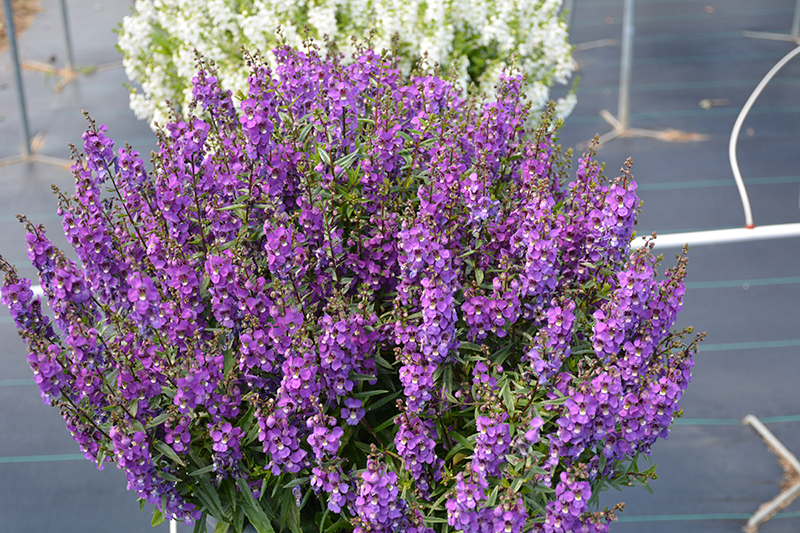
This combination is specifically designed to look spectacular from about 5pm onward.
The whites glow in the low evening light, the purple deepens beautifully in dusk, and the silver acts as a natural reflector.
Angelonia, sometimes called summer snapdragon, is criminally underused.
It tolerates heat, drought, and humidity better than actual snapdragons and blooms continuously.
It also has a faint grape soda scent when you rub the flowers. I don’t know why more people don’t grow this plant.
Plant the salvia off-center toward the back and let the angelonia take up the front third of the pot.
Best phase: Phase 2 and 3.
13. The Neighborhood Showstopper: Elephant Ears + Supertunia + Licorice Plant
:max_bytes(150000):strip_icc():format(webp)/elephant-ear-plants-2132884-15-c8a2fff099f24f75b9d7c69dc0caa0e0.jpg)
This is a big, bold, statement combination.
Elephant ears (Colocasia) in the center give you a dramatic tropical focal point with leaves that can get enormous by midsummer.
Bright pink Supertunias ring the middle zone while silver licorice plant trails over the edges and ties the whole thing together.
You need a big pot for this. Seriously. 20 gallons minimum.
Elephant ears are thirsty in full sun so plan to water daily in peak summer. And yes, they’re worth it.
Best phase: Builds through all phases. Hits peak drama in Phase 2 and 3.
14. The Spice Market: Ornamental Pepper + Marigold + Creeping Zinnia

Ornamental peppers are way underrated as container plants.
The tiny colorful fruits turn heads, the plants are compact and tidy, and they’re genuinely heat-loving in a way most flowers pretend to be.
Pair them with marigolds and creeping zinnia (Sanvitalia) for a warm, spiced palette of yellows, oranges, and reds.
This combination looks like the gardening equivalent of a Moroccan souk.
Note: Ornamental peppers are typically very spicy and not really meant for eating.
If you have curious kids or dogs who like to mouth things they shouldn’t, stick to combination 9 or something similarly non-edible.
Best phase: Phase 2 through 3.
15. The Romantic: Dusty Miller + Pink Calibrachoa + White Bacopa

Some people want their containers to look like a French country cottage.
If this is you, this is the combination that gives you that look.
Dusty miller’s silvery foliage makes everything around it look more expensive. Soft pink calibrachoa provides the romance.
White bacopa gives delicate foam at the edges.
Together they’re understated, elegant, and somehow look like they cost three times what they did.
Watch your pH for the calibrachoa (noticing a pattern?). And keep bacopa consistently moist or it sulks.
Best phase: Phase 1 into early Phase 2.
16. The Prairie Fire: Rudbeckia + Orange Celosia + Bronze Fennel

This one is for the gardener who wants their container to look like a late-summer prairie field.
Rudbeckia’s golden yellow daisies, orange crested celosia, and the feathery bronze foliage of fennel make a combination that feels wild and intentional at the same time.
Celosia is one of the best-kept secrets in container gardening as it blooms in the most intense jewel tones, handles brutal heat without flinching, and the plume types look like velvet fire.
Bronze fennel is a little trickier in a container because it gets tall, but the airy texture it provides is unmatched.
Keep it trimmed to maintain balance and consider it Phase 3’s secret weapon.
Best phase: Phase 2 and 3 superstar.
17. The Low Fuss Heroes: Vinca + Purslane + Moss Rose
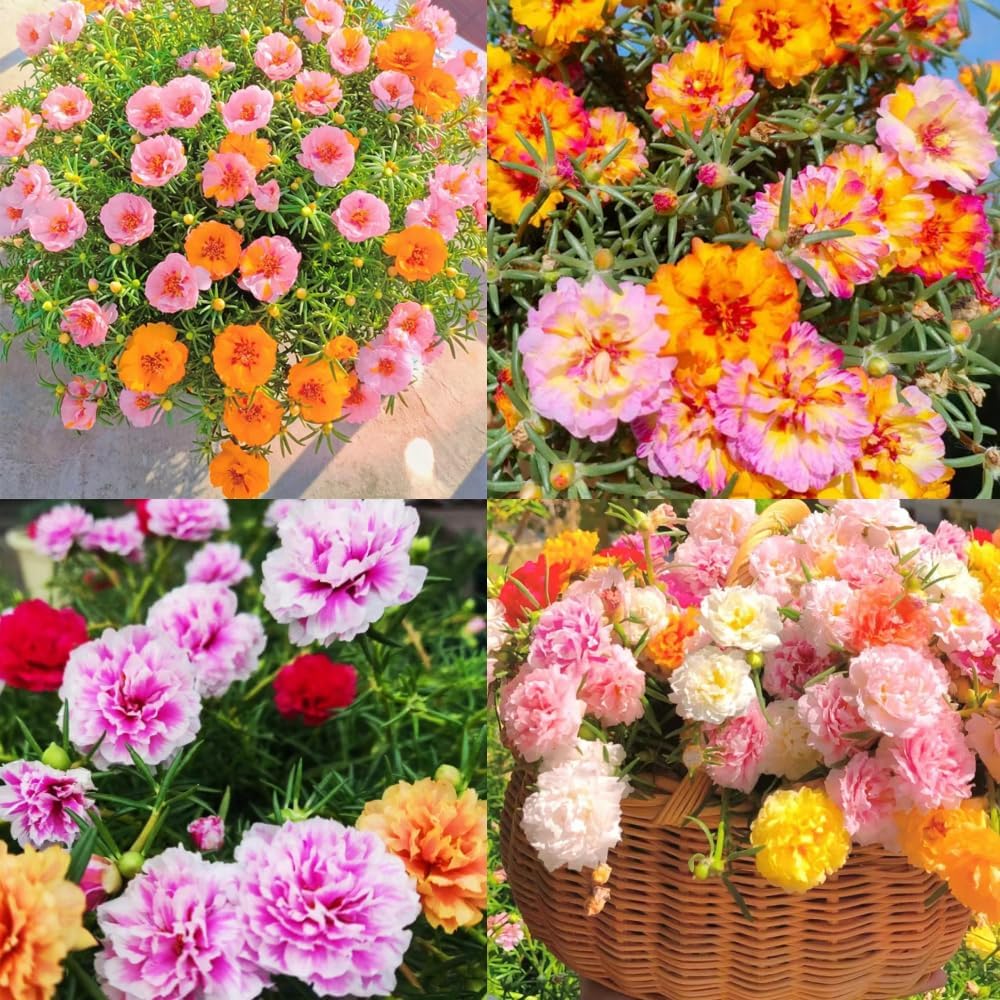
You want honesty? This combination is what I plant when I know I’m going to neglect the pot.
Vinca (annual type, Catharanthus) is almost indestructible in heat.
Purslane (the ornamental kind, Portulaca grandiflora’s cousin) thrives on neglect.
Moss rose laughs at drought. Together these three can go several days without water in summer heat and still look relatively decent.
Don’t put this combination in front of your house if you want people to be impressed. Put it in the corner of the backyard where you forget to water. It’ll be fine.
Best phase: Phase 2 and 3. Genuinely gets better in heat.
18. The Vertical Drama: Fountain Grass + Gaura + Trailing Petunia

Ornamental fountain grass in a container is a bit of a secret weapon.
The arching blades catch every breeze and add movement to the pot in a way no flowering plant can replicate.
Pair it with white gaura, which produces tiny butterfly-like flowers on wiry stems that dance in the wind, and a trailing petunia for color at the base.
The whole combination has an airy, kinetic quality that looks more like landscape design than container planting.
Best phase: Builds through Phase 1 and 2, absolutely shines in Phase 3 when gaura and fountain grass hit full maturity.
19. The Mediterranean Terrace: Lavender + Trailing Rosemary + White Osteospermum

This combination smells like a vacation.
Lavender and rosemary are both drought-tolerant, fragrant, and thrive in full sun with excellent drainage.
White osteospermum ties it together with clean, daisy-like flowers. The whole pot looks like something from a Tuscan balcony.
The critical rule: Drainage, drainage, drainage.
These three plants will develop root rot faster than almost anything else if the potting mix stays wet.
Use a mix with extra perlite maybe 30% perlite by volume and never let the pot sit in a saucer of standing water.
Best phase: Phase 1 star. Lavender and osteospermum both fade in peak summer heat in humid climates.
20. The Color Block: Single Color Groups in a Long Planter

Sometimes the most sophisticated design choice is radical simplicity.
Fill a rectangular planter with three distinct blocks of color using only one or two species: a mass of white impatiens (sun-tolerant variety), transitioning into purple petunias, transitioning into bright yellow marigolds.
No mixing within blocks. Clean, graphic, bold.
This is the kind of container design that photographs beautifully and stops people dead on the sidewalk.
The key is commitment. Don’t add “just one more thing.” Keep the blocks clean.
Best phase: All phases depending on species chosen.
21. The Hummingbird Diner: Red Salvia + Cuphea + Agastach
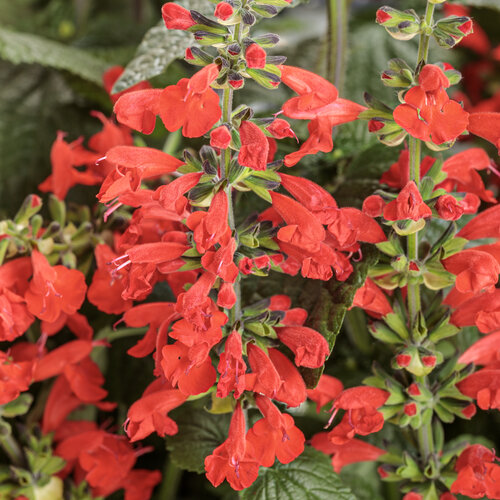
If you’ve ever wanted hummingbirds visiting your patio daily, this is how you bait the trap.
Red salvia is a hummingbird favorite. Cuphea, especially the variety called ‘Bat Face’, has tubular orange and purple flowers that are almost comically popular with hummingbirds.
Agastache, as mentioned earlier, adds more tubular blooms in a different color range to keep the meal interesting.
Plant this somewhere you can see it from a comfortable chair. Then sit in that chair with coffee and watch the show. This is not gardening advice. This is life advice.
Best phase: Phase 2 and 3. All three plants love the heat.
22. The Chartreuse Anchor: Potato Vine + Blue Salvia + Orange Zinnia

The chartreuse (bright yellow-green) of sweet potato vine does something really useful: it makes every color next to it vibrate with intensity.
Orange and chartreuse are near-complementary on the color wheel, which is why zinnia next to sweet potato vine looks so electric.
Add blue salvia for the triple contrast and you have a combination that’s genuinely eye-catching from 50 feet away.
Manage the sweet potato vine every few weeks.
I know I keep saying this. It’s because I keep forgetting to do it myself and regretting it.
Best phase: Phase 2 and 3.
23. The Early Bird: Pansy + Snapdragon + Trailing Lobelia

This combination is specifically for the gardener who wants color the moment spring arrives.
Pansies and snapdragons both perform best in cool temperatures and can handle a light frost, which means you can plant this 2 to 3 weeks before your last frost date.
Trailing lobelia (the intense electric blue type) fills the edges and provides color before most summer annuals are even available at nurseries.
You know going in that this combination won’t make it through August.
Plan to replace it with a heat-tolerant combination around week 8. Think of it as act one of a two-act show.
Best phase: Phase 1 exclusively. These plants live for cool spring weather.
24. The Texture Play: Ornamental Kale + Dusty Miller + Yellow Lantana

Yes, ornamental kale is traditionally a fall plant.
But in early spring and very late fall, it’s extraordinary in full sun containers.
The ruffled, sculptural kale heads in purple, white, or pink are visually fascinating in a way no flowering plant quite matches.
Pair them with the silver lace of dusty miller and a few yellow lantana plants for warm color contrast.
This is a shoulder-season combination as it thrives in spring and fall. Don’t try to force it through a hot summer.
Best phase: Phase 1 (spring) and a fall replant.
25. The Night Bloomer: Four O’Clocks + White Nicotiana + Moonflower Vine
:max_bytes(150000):strip_icc():format(webp)/how-to-grow-four-oclocks-mirabilis-jalapa-1402907_03-2dbae106953040979c18a9cba4699b89.jpg)
This one is for the person whose patio is more of an evening hangout spot.
Four o’clocks are exactly what they sound like. They open in late afternoon and stay open through the night.
White nicotiana (flowering tobacco) blooms with intensely fragrant white flowers that perfume the air after sunset.
If you can manage it, train a moonflower vine on a small trellis in the center of a large pot and add white blooms that can reach dinner-plate size and only open after dark.
This combination smells unbelievable on a warm summer evening.
It’s also a conversation starter because most guests have never seen plants that specifically perform at night.
Best phase: Phase 2 and 3.
26. The Balcony Standard: Geranium + Bacopa + Ivy
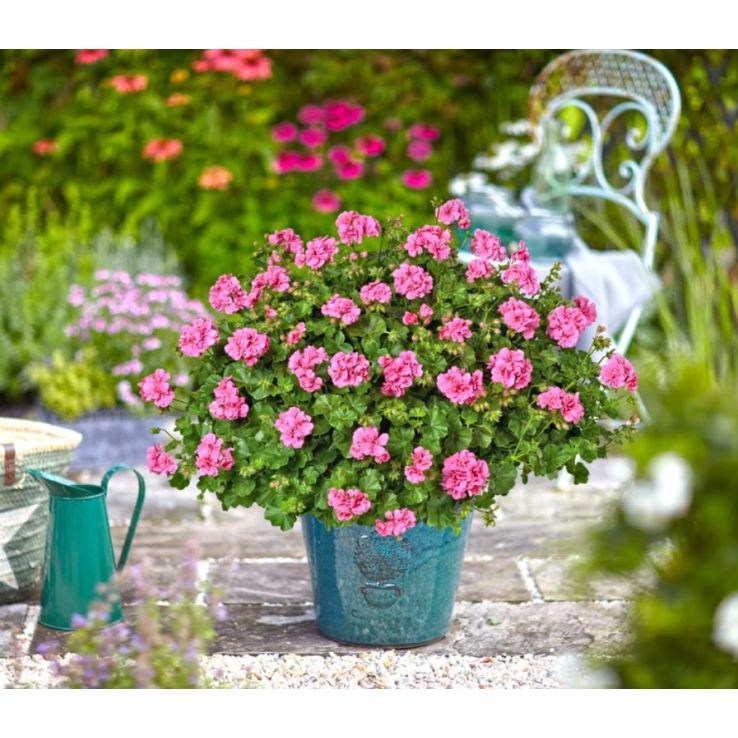
This is the balcony combination you see hanging from apartment buildings all over Europe. There’s a reason. It works.
Bright red or deep pink geraniums in the center, white bacopa draping over the sides, green ivy filling the base.
It’s classic, it’s cheerful, it’s proven across literally centuries of European container gardening tradition. Sometimes the classics are classics for a reason.
The only modern upgrade I’d suggest: Swap regular ivy for ‘Glacier’ ivy with white-edged leaves. The variegation adds a brightness that solid green ivy can’t match.
Best phase: All three phases with consistent deadheading of geraniums.
27. The Sun Worshipper: Gaillardia + Mexican Sunflower + Trailing Marigold
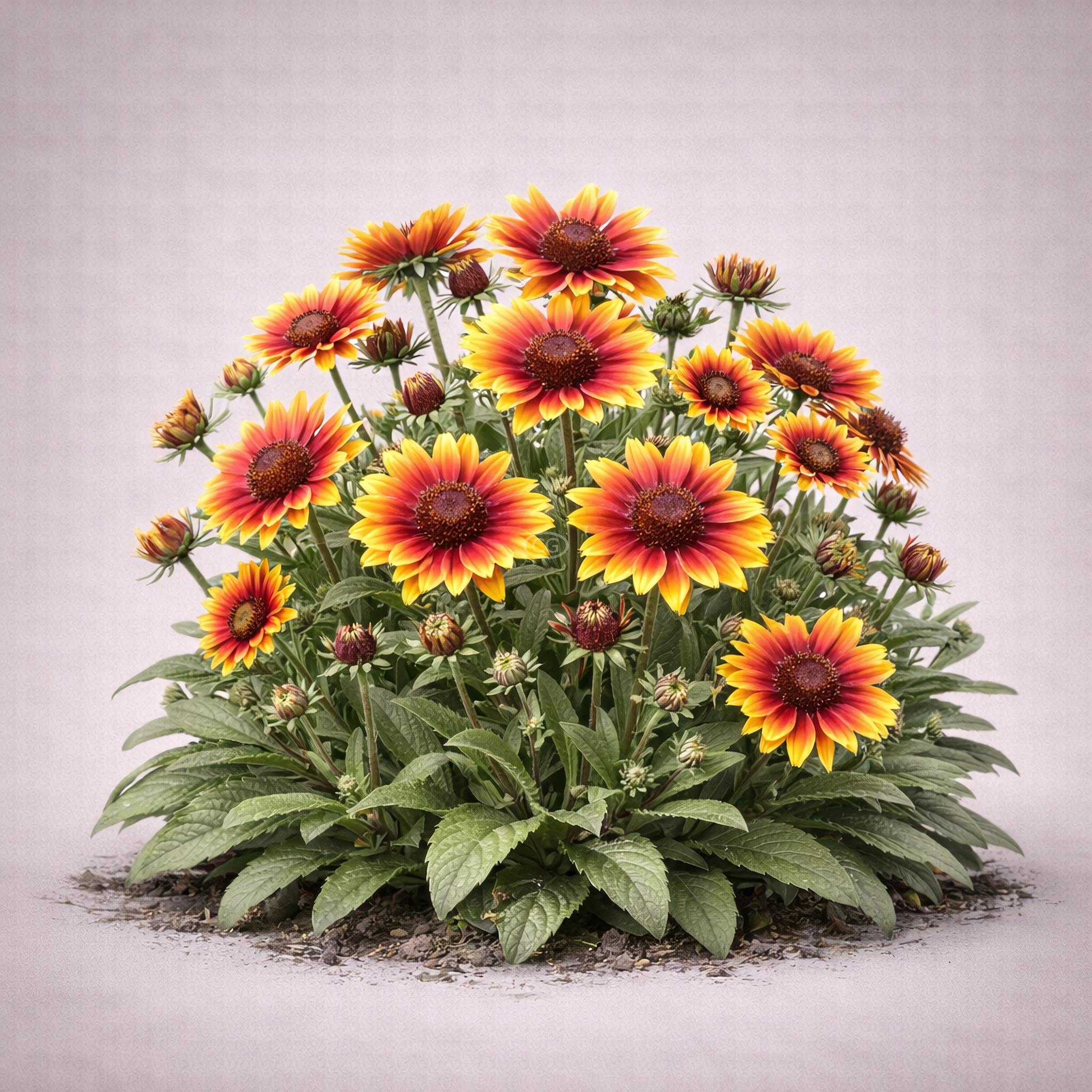
This combination is Phase 3’s ultimate triumph. It gets better every week through the hottest part of summer.
Gaillardia blooms relentlessly in red and yellow.
Mexican sunflower (Tithonia) grows tall about 3 to 4 feet in a big container with vivid orange blooms that look like the sun decided to become a flower.
Trailing marigold anchors the edges.
The secret to Tithonia in containers: Pinch it back twice in the first 6 weeks to encourage bushiness.
If you let it grow straight up without pinching, you’ll get a tall, leggy single stem with flowers only at the top.
Pinch it and you get a bush covered in blooms.
Best phase: Phase 2 and 3. This is your midsummer to frost combination.
28. The Spiller Showcase: Mixed Trailing Petunias + Creeping Jenny + Bacopa
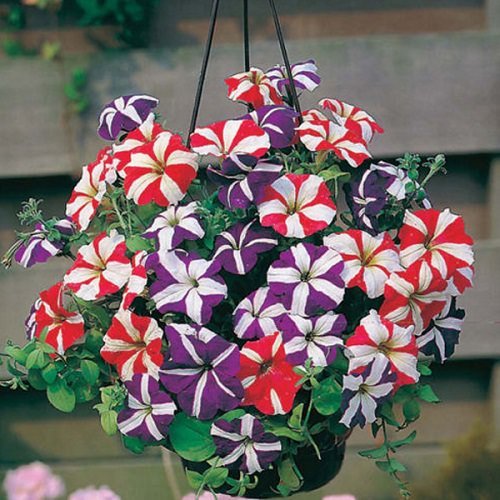
Sometimes you want a container that looks like it’s overflowing onto the ground. This is that container.
Choose three to four trailing petunia varieties in complementary colors, combine them with golden creeping jenny, and soften the edges with white bacopa.
Plant in a tall urn or elevated planter so the trails can reach their full 2 to 3 foot length.
Let these plants cascade.
Don’t keep trimming them back out of tidiness anxiety.
The spillage is the whole point.
The best versions of this container look almost reckless, like someone spilled a bucket of flowers.
Best phase: All phases. Just keep up with the petunia rolling cutback strategy after week 8.
29. The Repeat Bloomer Machine: Deadhead-Free Dream Combo

Here’s the thing. Most people want a container that looks great without intensive maintenance.
I chose this combination specifically because everything in it is self-cleaning or blooms so abundantly that spent flowers disappear naturally.
Plant impatiens (sun-tolerant New Guinea type), vinca, and calibrachoa together.
None of these need regular deadheading.
They just bloom and bloom and bloom.
New Guinea impatiens have larger flowers than regular impatiens and handle sun much better.
Vinca sheds its own spent flowers.
Calibrachoa is self-cleaning.
If you want something beautiful that lets you leave for a two-week vacation without coming home to a deadheading crisis, this is it.
Best phase: All phases, with calibrachoa pH management.
The Three Mistakes That Kill Beautiful Container Combinations
Since I’ve had you here this long, let me save you from the three errors that consistently undo otherwise great container gardens.
Watering at the wrong time. Water in the morning, ideally before 8am.
Evening watering in warm soil keeps roots warm and wet all night, which is basically a welcome mat for fungal disease.
Midday watering is okay in emergencies, but let the hose run for 15 seconds first if it’s been sitting in the sun as water in a black hose can reach 140°F and will shock roots on contact.
Ignoring pH creep. If your tap water is alkaline (most city water is), the minerals concentrate in your container soil over the summer.
By August, your pH may be high enough that iron becomes unavailable to your plants even if it’s there.
Yellow new growth that looks like a nutrient deficiency? That’s probably pH. Check it with a $10 soil test kit.
Cutting back too aggressively at once. I already mentioned rolling cutbacks for petunias, but the principle applies everywhere.
When plants get leggy or woody in midsummer, don’t shear the whole thing at once.
Instead cut one-third of stems back hard over three consecutive weeks.
Continuous blooms instead of a three-week recovery blackout.
One Last Thing
Gardening is supposed to feel good. Don’t let perfect be the enemy of actually planting something.
Pick one combination from this list that excites you, buy the plants, put them in a decent-sized light-colored container with good drainage, and water them in the morning.
That’s it.
You’ll figure out the rest as you go.
And when something doesn’t work and sometimes it won’t, now you at least know why.
Happy planting!
Related Posts: